
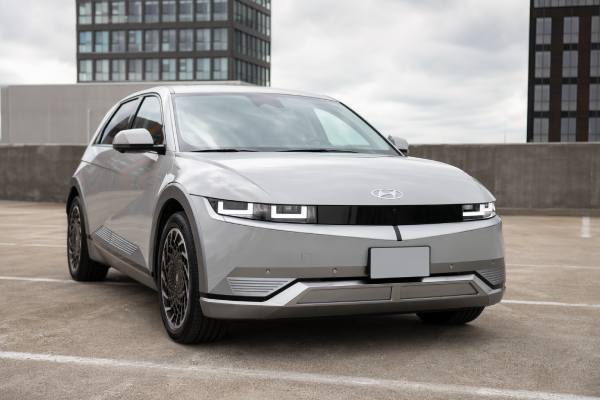
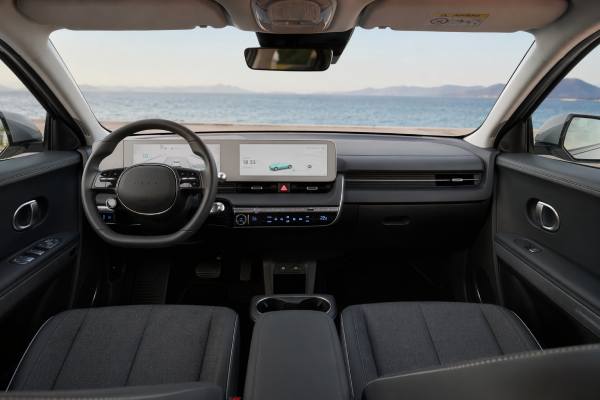
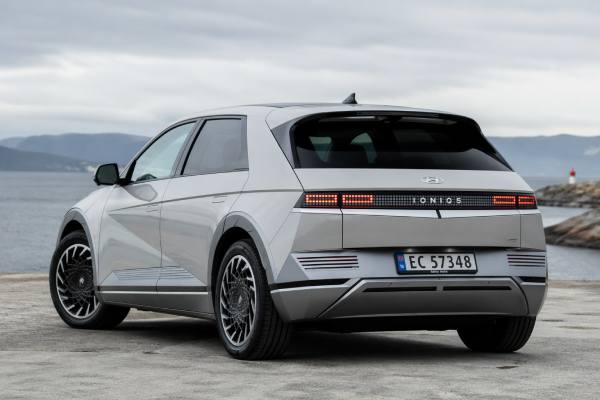
The 168 kW rear-wheel-drive Hyundai IONIQ 5 is the version that many buyers end up wanting after the initial excitement around the range settled. It keeps the simple single-motor layout of the entry car, but pairs it with the larger 77.4 kWh battery, stronger 228 hp output, and the same E-GMP architecture that made the model line feel unusually advanced when it arrived. That means an 800 V class electrical system, very rapid DC charging, generous cabin space, and better long-trip ability than the smaller-battery variant. It is also the cleaner used buy for drivers who want efficiency without the cost, weight, and tyre appetite of the dual-motor AWD model. The trade-off is familiar: software status, recall completion, and charging-system condition matter more than they do on a typical petrol crossover. Buy the right example, though, and this long-range rear-drive IONIQ 5 still feels modern, roomy, and impressively usable.
Owner Snapshot
- One of the most efficient and best-balanced versions of the early IONIQ 5 range.
- Larger 77.4 kWh battery makes this the more convincing motorway and family-use model.
- Very fast DC charging is a real ownership advantage, not just a brochure number.
- ICCU recall history, AC charging behavior, and software campaign completion must be checked carefully.
- Tire rotation is due every 12,000 km, and reduction gear fluid should be checked every 60,000 km.
What’s inside
- Hyundai IONIQ 5 Long-Range Character
- Hyundai IONIQ 5 Technical Figures
- Hyundai IONIQ 5 Trims and ADAS
- Known Faults and Recall Work
- Service Plan and Used Checks
- Driving Feel and Energy Use
- Rival Comparison and Verdict
Hyundai IONIQ 5 Long-Range Character
This is the IONIQ 5 that turns the concept into a genuinely rounded everyday car. The smaller 58 kWh version is tidy and easy to recommend for shorter use, while the AWD model grabs attention with stronger acceleration. The 168 kW rear-drive long-range car sits in the middle and ends up being the one with the broadest appeal. It adds the larger 77.4 kWh battery and a stronger rear motor, but keeps the lighter, cleaner feel of a single-motor rear-drive setup. In practice, that gives it enough performance to feel properly effortless, while preserving the better efficiency and calmer chassis balance that many owners value more than headline pace.
There is also an important timeline detail here. The 228 hp, 77.4 kWh rear-drive specification effectively belongs to the updated long-range version introduced during the 2022 calendar year for the following model-year cycle, then carried through the pre-facelift 2023 and 2024 run. That matters because buyers still see early long-range IONIQ 5s with the previous 72.6 kWh battery and lower 160 kW output. They look similar, and many used listings do a poor job of separating them. If you want the car covered here, you are looking for the later long-range rear-drive setup with the larger battery and 168 kW motor, not the earlier 160 kW extended-range version.
Why does this version stand out? First, it makes better use of Hyundai’s E-GMP platform. The long 3,000 mm wheelbase gives the cabin a lounge-like feel, but the larger battery gives the shape the usable range it always seemed to deserve. Second, the 800 V class charging system is still one of the strongest reasons to buy an early IONIQ 5. Even several years later, the car’s ability to take a high DC charge rate over the useful middle of the battery remains a real advantage on longer trips. That means the car does not need the very biggest battery in the segment to feel competitive away from home.
The rear-drive layout also suits the platform. There is no torque steer to mask, no front motor to carry, and no extra complexity in the front driveline. The result is a more relaxed front axle, a little less weight, and slightly better efficiency than the AWD version. It is not a sports crossover, but it is one of the most coherent versions in the lineup.
As a used car, this model makes the most sense for buyers who want one EV to do nearly everything: commuting, family use, occasional longer runs, and year-round daily duty. The caution is simple. This is still an early-generation Hyundai EV with a meaningful software and recall history. Buying one purely on mileage or price is a mistake. Buying one with clear dealer history, recall completion, correct charging behavior, and the right trim can be a very smart move.
Hyundai IONIQ 5 Technical Figures
Powertrain, battery and efficiency
| Specification | Value |
|---|---|
| Motor type | Permanent-magnet synchronous motor |
| Motor layout | Single rear motor |
| Drive type | Rear-wheel drive |
| Max power | 228 hp (168 kW) |
| Max torque | 350 Nm (258 lb-ft) |
| Battery chemistry | Lithium-ion polymer, NMC cathode |
| Battery gross capacity | 77.4 kWh |
| Battery usable capacity | 74.0 kWh |
| Battery layout | Floor-mounted traction battery |
| Pack structure | 384 cells, 192s2p |
| Nominal system voltage | 697 V |
| Electrical architecture | 800 V class |
| Thermal management | Liquid-cooled battery and power electronics |
| Heat pump | Optional or standard depending on trim and market |
| Official test standard | WLTP and EPA |
| Official range | 476 to 507 km (296 to 315 mi) WLTP; 303 mi EPA |
| Official efficiency | 17.0 to 18.0 kWh/100 km WLTP; 30 kWh/100 mi EPA |
| Typical real mixed range | About 390 km (242 mi) |
Charging and driveline
| Specification | Value |
|---|---|
| Transmission | Single-speed reduction gear |
| Final drive ratio | 4.706 |
| Differential | Open rear differential with brake-based stability control |
| AC connector | Type 2 |
| AC supply support | Single-phase and three-phase, nominal 400 V three-phase |
| DC connector | CCS Combo 2 |
| Charging port location | Right rear quarter |
| Onboard charger | 10.5 to 10.9 kW AC |
| DC fast-charge peak | 233 kW |
| Typical DC average, 10% to 80% | 196 kW |
| Typical DC 10% to 80% | 17 to 18 minutes |
| Typical AC 0% to 100% | About 8 hours at 11 kW |
| Battery preconditioning | Yes, navigation-triggered on supported software |
| Vehicle-to-load output | 3.6 kW AC |
Performance, chassis and dimensions
| Specification | Value |
|---|---|
| 0–100 km/h | 7.3 s |
| Top speed | 185 km/h (115 mph) |
| Towing capacity, braked | 1600 kg (3527 lb) |
| Towing capacity, unbraked | 750 kg (1653 lb) |
| Payload | About 515 kg (1135 lb) |
| Front suspension | MacPherson strut |
| Rear suspension | Multi-link |
| Steering | Rack-mounted motor-driven power steering |
| Steering ratio | 14.26:1 |
| Turning circle | 11.98 to 12.0 m (39.3 ft) |
| Front brakes | Ventilated discs, 325 mm |
| Rear brakes | Solid discs, 325 mm |
| Wheel and tyre sizes | 235/55 R19 or 255/45 R20 |
| Ground clearance | 155 mm (6.1 in) |
| Length | 4635 mm (182.5 in) |
| Width | 1890 mm (74.4 in) |
| Height | 1605 mm (63.2 in) |
| Wheelbase | 3000 mm (118.1 in) |
| Kerb weight | About 1930 to 2010 kg (4255 to 4431 lb) |
| GVWR | About 2450 kg (5401 lb) |
| Cargo volume | 527 L seats up; 1578 to 1587 L seats folded |
| Front trunk | 57 L |
Safety and service capacities
| Specification | Value |
|---|---|
| Euro NCAP | 5 stars; Adult 88%, Child 86%, Vulnerable Road Users 63%, Safety Assist 88% |
| IIHS | Top Safety Pick+ for 2024 model year |
| IIHS headlight rating | Good on projector-light trims; Acceptable on reflector-light trims |
| ADAS suite | AEB, junction assist, adaptive cruise, lane keep assist, lane follow assist, blind spot systems, rear cross-traffic assist, speed limit assist, Highway Drive Assist |
| Reduction gear oil | HK ATF 65 SP4M-1; rear 3.4 to 3.5 L |
| Brake fluid | SAE J1704 DOT 4 LV / FMVSS 116 DOT-4 / ISO 4925 Class 6 |
| A/C refrigerant | R-1234yf or R-134a, depending on system version |
| A/C compressor oil | POE J639; 150 g without heat pump or 180 g with heat pump |
| Wheel nut torque | 108 to 127 Nm (79 to 94 lb-ft) |
Hyundai IONIQ 5 Trims and ADAS
For this specific rear-drive long-range variant, the UK and broader European trim structure is the clearest way to understand what buyers are actually shopping for. The 77.4 kWh, 228 hp rear-wheel-drive car was commonly sold in Premium, Ultimate, and later Namsan Edition form, with equipment differences that matter more than the badges first suggest. Premium is often the most rational used buy. It typically keeps the better efficiency of 19-inch wheels, offers the larger battery and stronger motor, and avoids some of the weight and tyre-cost penalty that comes with the flashier upper trims. Ultimate adds more comfort and tech, while Namsan Edition becomes the styling-heavy version with features such as the vision roof and digital side mirrors in some markets.
The most important options are mechanical or functional, not decorative. Heat pump availability matters. On some trims it was optional, while upper trims often bundled it more generously. For buyers in colder climates, this is not a trivial box on a brochure. It affects cabin efficiency, winter comfort, and how gracefully the car copes with low-temperature energy use. Battery heating and battery conditioning matter just as much. The later 77.4 kWh version arrived alongside better cold-weather charge preparation, making the car far more convincing on winter road trips than early software behavior would suggest.
Wheel choice also changes the ownership picture. Premium on 19-inch wheels is the range-friendly, comfort-friendly sweet spot. Ultimate and Namsan on 20-inch wheels look better to many eyes and often bring a richer cabin, but they do cost the car some ride softness and some usable distance. The difference is not huge in isolation, yet on a cold motorway journey it becomes noticeable. In used buying terms, the 19-inch car is often the smarter long-term bet unless you specifically want the highest trim features.
Quick visual identifiers help when used listings are vague. A Premium car commonly has the simpler wheel package and a more restrained interior spec. Ultimate cars usually bring 20-inch wheels, richer seat trim, additional camera and parking hardware, a head-up display, ventilated seats, and the Bose audio upgrade. Namsan Edition adds its own distinctive cues, including the vision roof and more obvious premium detailing. These clues matter because sellers often advertise an IONIQ 5 simply by battery size and color, while omitting the exact feature mix that materially changes ownership.
Safety remains a strong point across the line. Euro NCAP’s five-star result applies to the model family and gives the IONIQ 5 a solid passive-safety foundation. In North America, the 2024 model achieved Top Safety Pick+ status, helped by stronger performance in updated crash testing. IIHS also highlights a useful trim difference: projector-headlight cars score better than reflector-headlight versions. That means top-trim lighting is not only a styling upgrade but also a meaningful functional one for night driving.
The ADAS suite is broad and generally well judged. Depending on trim and market, you can expect forward collision avoidance with car, pedestrian, cyclist, and junction functions; adaptive cruise with stop and go; lane follow and lane keep systems; blind spot monitoring and intervention; rear cross-traffic assist; intelligent speed limit assist; and Highway Drive Assist. The practical caveat is that all this hardware increases the importance of correct post-repair calibration. Windscreen replacement, bumper work, radar alignment, camera replacement, or even poor-quality body repairs can leave a sophisticated car feeling clumsy.
Known Faults and Recall Work
The long-range rear-drive IONIQ 5 is not a fundamentally fragile EV, but it does have a recognizable set of issues that every buyer should understand before treating it like a low-maintenance appliance. The battery and motor themselves have not developed the kind of widespread failure pattern that would make the model line hard to recommend. The trouble spots sit around power management, charging support, software refinement, and some quality details.
The biggest watchpoint is the ICCU, the Integrated Charging Control Unit. This is the issue that deserves to dominate any pre-purchase conversation. When the ICCU fails or begins to fail, the car can stop charging the 12 V battery correctly. The result can be warning messages, reduced power, fail-safe operation, or in the worst case a no-go or stop-now event. Hyundai responded with recalls and revised remedies that include software updates, inspection, and replacement of the ICCU and fuse where required. A used car with uncertain ICCU history is not automatically one to reject, but it is one to treat carefully until the VIN history is confirmed.
A second, more everyday issue is interrupted AC charging or unexpectedly slow Level 2 charging. This has shown up on some cars as a charging session that cuts back or restarts after heat build-up or cable-connection protection logic intervenes. Hyundai’s fix has often been software-based through the Vehicle Charging Management System. In ownership terms, that means you should not just confirm that the car can DC fast-charge. You should also confirm that it AC charges steadily at home or on a wallbox without repeated interruptions.
Battery conditioning updates are another important piece of the story. Earlier cars did not always have the most useful cold-weather charging behavior out of the box, and Hyundai issued software campaigns to improve battery preconditioning when navigating to a DC charger. If you live in a colder climate, this matters almost as much as the battery size itself. A well-updated car feels much quicker and more predictable at public chargers in winter than an early, untouched car.
The most common issue patterns break down like this:
- Common, medium-to-high severity: ICCU faults, 12 V charging issues, related warning messages, and recall work.
- Common, low-to-medium severity: AC charging interruptions, charging-port or latch complaints, and software complaints that are fixable with updated control logic.
- Occasional, low severity: tailgate rattle, interior trim creaks, and minor fit-and-finish irritations.
- Occasional, low-to-medium severity: friction-brake noise or corrosion because strong regeneration means the discs sometimes do too little work in gentle driving.
- Rare, medium-to-high severity: HV isolation warnings, moisture-related connector trouble, or more serious charging-system faults that require deeper diagnosis.
Battery degradation itself is usually not the thing that ruins these cars. The liquid-cooled pack generally ages reasonably well when used normally, and the larger 77.4 kWh pack gives more buffer than the smaller-battery car. Heavy DC charging, extreme heat, repeated very high-speed use, and long periods parked at full charge are still not ideal, but this is not a model with a reputation for rapid, routine pack collapse. What matters more is confirming that the battery has not already been through module replacement, repeated fault tracing, or unusually erratic fast-charging behavior that points to a hidden issue.
Chassis and driveline problems are less dramatic. Some owners report minor drive-unit or reduction-gear whine, but it is not a defining weakness of the model. Suspension wear tends to follow wheel size and road quality more than any inherent design flaw. Heavier 20-inch cars on rough roads will use tyres and front-end consumables faster than 19-inch cars driven more gently. Corrosion concerns are mostly the usual underbody fasteners, brake hardware, and neglected road-salt exposure rather than a widely feared structural defect.
For used buyers, the safest approach is to ask for proof of recall completion, invoices for any ICCU or charging-system work, evidence of battery-conditioning or other control-unit updates, and a clean charging demonstration. This is a model that rewards paperwork more than promises.
Service Plan and Used Checks
The long-range rear-drive IONIQ 5 is one of those EVs that looks nearly maintenance-free on paper but still benefits from a disciplined routine in the real world. The official guidance is light, yet the best owners treat it as a car with important inspections rather than as a machine that needs nothing. That approach pays off because most expensive surprises on this model come from electronics, charging hardware, or neglected brake and tyre condition, not from classic engine-related wear.
A sensible working schedule looks like this:
- Every month:
- Check tyre pressures and inspect tyres for shoulder wear or impact damage.
- Check both coolant reservoirs visually.
- Inspect the charge-port area for dirt, water traps, torn seals, or latch issues.
- Confirm exterior lights and basic driver-assistance cameras are clean.
- Every 12,000 km or 12 months:
- Rotate tyres.
- Inspect brake pads, brake disc faces, caliper movement, and parking brake operation.
- Inspect suspension joints, dampers, bushes, and steering components.
- Test the 12 V battery and clean its terminals.
- Check wheel alignment if the steering is off-center or the tyres show uneven wear.
- Check brake fluid level and overall cooling-system condition.
- Every 24 months:
- Replace or at least closely inspect the cabin air filter sooner if the car lives in city dust or high-pollen conditions.
- Replace brake fluid on a conservative owner schedule if moisture content is rising or the car sees hard use.
- Inspect A/C performance and verify the correct refrigerant service approach for heat-pump or non-heat-pump cars.
- Every 60,000 km:
- Check the reduction gear fluid condition and service history.
- Investigate any driveline hum, seepage, or vibration instead of dismissing it as normal EV noise.
- Severe-use schedule:
- Shorten inspection intervals if the car sees frequent DC fast charging, repeated high-speed motorway work, trailer use, very hot climates, or heavy winter salt exposure.
The key service decision data is straightforward. The rear reduction gear uses HK ATF 65 SP4M-1 and takes about 3.4 to 3.5 liters. Brake fluid is DOT 4 LV / ISO 4925 Class 6. Wheel nuts are tightened to 108 to 127 Nm. A/C refrigerant and compressor oil amounts depend on whether the car has the heat pump and on the exact system version, which is why correct VIN-based service information matters here more than on simpler cars.
As a used buy, this version is worth shopping carefully rather than cheaply. The best targets are 2023 or 2024 cars with the 77.4 kWh battery, complete dealer history, and documented campaign completion. Premium on 19-inch wheels is the efficiency-minded choice. Ultimate is the comfort and equipment sweet spot if you want features such as the richer seat package, better lighting, HUD, and extra cameras. A heat-pump-equipped car is especially appealing in colder markets. What to avoid is not a specific color or seat trim, but vague history. A cheap example with no software record, no recall proof, and no charging demonstration can become expensive quickly.
A focused used inspection should cover five areas:
- Traction battery health: ask for a battery report, compare displayed range with state of charge and temperature, and watch how the car behaves from low state of charge through fast charging.
- Charging hardware: inspect the port flap, latch, seals, pins, and cable fit. Confirm AC charging is stable and DC charging starts cleanly.
- Cooling and thermal management: check for correct coolant type, clean heat exchangers, fan operation, and no stored warning history.
- Chassis and body: inspect inner tyre shoulders, brakes, underbody panels, battery shield area, and any signs of crude jack or lift damage.
- Electronics: confirm all ADAS functions, camera clarity, parking sensors, infotainment response, navigation charger routing, and update history.
The long-term outlook is good when the car has been kept current. Battery life is usually not the fear point. The more likely higher-cost ownership events are ICCU-related work outside warranty windows, charging-system electronics, tyres, and the usual suspension consumables. In that sense, the IONIQ 5 is durable, but only when bought with evidence.
Driving Feel and Energy Use
On the road, the 228 hp rear-drive IONIQ 5 feels like the mature version of the concept. It is not especially dramatic, yet it is very well judged. Step-off response is immediate, but not spiky. The rear-drive layout gives the car a clean, natural sense of shove from rest, and the single-speed reduction gear keeps the delivery smooth and quiet. The 0–100 km/h time of 7.3 seconds is quick enough for confident merging and passing, but the bigger difference over the smaller-battery car is not raw acceleration. It is the way this version feels more relaxed because you are not always working around a shorter range window.
Ride quality is one of its strongest qualities. The wheelbase is long, the mass is carried low, and the suspension is tuned more for composure than for artificial sportiness. On 19-inch wheels the car settles well over broken surfaces and feels almost large-car calm. On 20-inch wheels it stays controlled, but road noise and edge impacts become more noticeable. The body does not feel especially agile in a playful sense, yet it is stable, predictable, and confidence-building. That matches the car’s mission better than a sharper setup would.
Steering feel is accurate rather than rich. You place the car easily, and straight-line stability is good, but feedback is limited. That is typical for the class. Braking is more interesting because regenerative braking is such a central part of the driving experience. Hyundai’s paddle-based system is one of the more intuitive setups in the segment. You can move between a freer coasting feel and stronger regeneration without turning every drive into a menu exercise, and most owners adapt quickly. One-pedal driving is useful in traffic, though the handoff between regen and friction braking still feels more polished in some rivals.
In real efficiency terms, this model usually lands where buyers want it to. In mild city and suburban use, low-to-mid teens kWh/100 km are realistic with a gentle foot. Mixed driving often lands around 17 to 19 kWh/100 km. Highway use is where the battery earns its keep: at steady motorway speeds, something around 21 to 26 kWh/100 km is a realistic band depending on temperature, wind, speed, and wheel choice. That translates into a typical real mixed range around 390 km, with mild-weather highway driving often sitting in the mid-300 km zone and cold-weather motorway work falling much lower.
Official range tells only part of the story. The most efficient 19-inch UK trim reached 507 km WLTP, while 20-inch versions dropped into the high-400 km range. In U.S. EPA form, the long-range RWD car sits at 303 miles. In day-to-day use, the difference between those figures and reality depends heavily on speed. This car is efficient, but it is still a relatively broad crossover, and high-speed aero drag is the real enemy.
Charging performance is the counterweight. On home AC power, a full charge at around 11 kW is an overnight job of roughly eight hours. On a powerful DC charger, 10% to 80% in around 18 minutes is still genuinely impressive when the battery is warm and preconditioned. That means the long-range rear-drive IONIQ 5 is not just easy to live with locally. It is easy to travel in, provided the car is updated and the charger is capable enough.
Rival Comparison and Verdict
Against rivals, this version of the IONIQ 5 makes the strongest case for itself when you care about balance rather than bragging rights. It is not the cheapest used EV in the class, and it is not the sportiest. What it offers is a particularly convincing mix of charging performance, cabin space, efficiency, and long-distance comfort.
The most obvious rival is the Kia EV6 Long Range RWD. Mechanically, it is very close because it shares the same platform family. The Kia feels lower, tighter, and more overtly driver-oriented, while the Hyundai feels roomier, calmer, and more lounge-like. If you want the better-cornering sibling, the EV6 is easier to admire. If you want the one that feels more spacious and more family-friendly without losing the fast-charging advantage, the IONIQ 5 is the stronger choice.
The Volkswagen ID.4 is a more traditional alternative. It has a familiar upright shape, generally good comfort, and an easier visual style for some buyers. What it does not match as convincingly is the Hyundai’s 800 V class charging capability or its sense of EV-first packaging. The ID.4 can be a pleasant daily companion, but the IONIQ 5 feels more technically ambitious and usually more rewarding on longer trips.
The Nissan Ariya is another credible comparison. In some trims it brings a more premium-feeling cabin and a softer overall character, but it does not feel as spacious inside as the Hyundai’s long wheelbase suggests it should, and it does not have the same charging reputation. The Ariya’s appeal is polish. The IONIQ 5’s appeal is engineering substance and interior cleverness.
The Tesla Model Y remains the benchmark for efficiency and software integration in this broad space, but it takes a different approach. It generally wins on outright range efficiency and charging-network convenience in Tesla-friendly regions. The Hyundai answers with a more distinctive cabin, better ride comfort on rough roads, simpler physical controls for key functions, and a less austere ownership feel. On a used buy, some buyers will still prefer the Hyundai’s character even if the Tesla looks stronger on pure numbers.
That leads to the verdict. Among early IONIQ 5 variants, the 168 kW long-range rear-drive car is arguably the sweet spot. It has enough power, the better battery, the better trip usefulness, and the cleaner single-motor layout. It avoids the standard-range car’s obvious motorway limitation and the AWD car’s efficiency penalty. It is not perfect, because the recall and software history matter, but when those details are in order this remains one of the most satisfying used electric crossovers of its generation.
References
- IONIQ 5 enhancements for MY23 final 2022 (Technical Specifications)
- 2024 IONIQ 5 Product Guide 2023 (Technical Specifications)
- 9. Maintenance – Hyundai | UK | User Manuals 2022 (Owner’s Manual)
- Official Hyundai IONIQ 5 2021 safety rating 2021 (Safety Rating)
- 2024 Hyundai Ioniq 5 2024 (Safety Rating)
Disclaimer
This article is for informational purposes only and is not a substitute for professional diagnosis, repair, or official workshop guidance. Specifications, torque values, service intervals, software actions, and procedures can vary by VIN, market, build date, and equipment, so always verify details against the official service documentation for the exact vehicle.
If this guide was useful, please consider sharing it on Facebook, X, or another social platform to support our work.