

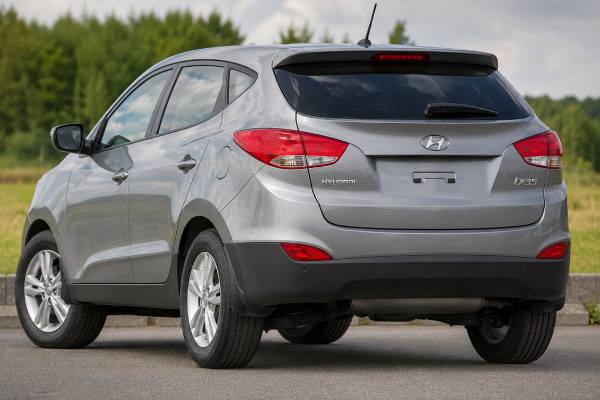
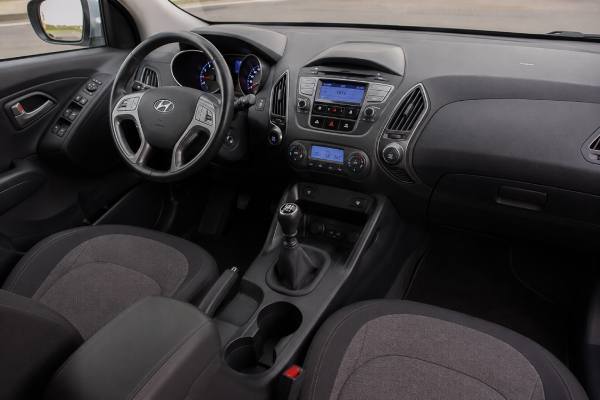
The Hyundai ix35 4WD with the 136 hp R 2.0 CRDi diesel is a compact SUV aimed at drivers who want diesel torque, family practicality, and extra traction without moving into a larger, heavier 4×4. Sold during the early LM-generation years, it sits between simple front-wheel-drive crossovers and more serious towing or off-road SUVs.
Its appeal is easy to understand: a strong 2.0-litre common-rail diesel, a useful 4WD system, a roomy cabin, and sensible running costs when maintained properly. The key to buying one now is condition. These cars are old enough for diesel emissions parts, clutch components, suspension joints, brake hardware, and 4WD driveline fluids to matter more than badge, mileage, or trim alone.
Final Verdict
The 2010–2013 Hyundai ix35 4WD R 2.0 CRDi 136 hp is a good used choice for buyers who want a practical diesel SUV with strong low-rev torque, winter confidence, and family-friendly space without premium-brand repair prices. It suits mixed commuting, rural driving, light towing, and poor-weather use better than short urban-only journeys. The main tradeoff is age-related diesel and driveline maintenance: DPF/EGR issues, clutch wear, 4WD fluid neglect, and recall status can turn a cheap example into an expensive one. Buy it only with clear service history, a clean cold start, working 4WD, and verified recall completion.
| Pros | Cons |
|---|---|
| 320 Nm diesel torque suits hills, loads, and relaxed cruising | Short urban trips can clog DPF and soot up EGR hardware |
| 4WD adds useful winter traction over 2WD ix35 versions | Transfer case and rear differential need fluid history checked |
| Cabin and boot space are strong for a compact SUV | Ride can feel firm on 18-inch wheels and worn suspension |
| Euro NCAP-era safety performance was strong for its class | No modern AEB, adaptive cruise, or lane-keeping assistance |
| Parts availability is generally good across Europe and beyond | Clutch, dual-mass flywheel, and diesel repairs can be costly |
Table of Contents
- ix35 4WD Diesel Overview
- ix35 2.0 CRDi Specifications
- Trims, Safety and Driver Assistance
- Reliability, Common Issues and Recalls
- Maintenance and Used Buying Guide
- Driving, Performance and Economy
- How the ix35 Compares to Rivals
ix35 4WD Diesel Overview
The ix35 4WD 2.0 CRDi 136 hp is best understood as a road-focused compact SUV with genuine all-weather traction rather than a heavy-duty off-roader. It replaced the older Tucson in many markets and shared much of its engineering thinking with the Kia Sportage of the same era.
This version uses Hyundai’s R-series 2.0-litre diesel, commonly identified as the D4HA engine family. In 136 hp form it makes its strongest case through torque rather than top-end power. The 320 Nm torque figure arrives low in the rev range, which is why the car feels stronger in normal driving than the horsepower number suggests.
The LM-generation ix35 has a transverse engine layout and an electronically controlled 4WD system. In normal driving it behaves mainly like a front-drive SUV to save fuel. When the front wheels lose grip, the system can send torque to the rear axle. Many versions also have a low-speed 4WD lock function for snow, mud, gravel starts, or slippery ramps, but this is not a substitute for proper off-road gearing.
For buyers, the key attraction is balance. You get more cabin height and luggage space than a hatchback, better traction than a 2WD crossover, and more reasonable running costs than larger SUVs. The 2.0 CRDi is also the engine to choose if you want the ix35 for frequent motorway use, rural roads, mountain regions, or towing.
The main weakness is that this diesel needs the right usage pattern. A car that spent its life on longer journeys with regular oil changes is usually a much safer buy than a low-mileage example used only for school runs. The diesel particulate filter, exhaust gas recirculation system, turbo controls, fuel filter, and battery all suffer when a diesel is repeatedly run cold and shut down early.
The ix35 is not a luxury SUV. Interior materials are durable rather than rich, road noise is noticeable on coarse surfaces, and ride quality depends heavily on wheel size and suspension condition. Still, for a buyer who values simple practicality, strong diesel torque, and useful 4WD, a well-kept 136 hp 2.0 CRDi remains a sensible used SUV.
ix35 2.0 CRDi Specifications
The 136 hp ix35 4WD uses a 2.0-litre turbocharged common-rail diesel engine, a front-transverse layout, and an on-demand 4WD system. Most European data for this exact output points to a 6-speed manual gearbox, although some markets and years also listed a 6-speed automatic with the 2.0 CRDi family. The most important numbers for ownership are the torque output, fuel economy range, kerb weight, 4WD system, tyre size, and service-fluid requirements.
| Item | Hyundai ix35 4WD R 2.0 CRDi 136 hp |
|---|---|
| Engine family / code | Hyundai R-series diesel / D4HA |
| Fuel type | Diesel |
| Displacement | 1,995 cc / 2.0 litres |
| Configuration | Inline 4-cylinder, DOHC, 16 valves |
| Induction | Turbocharger with intercooler |
| Fuel system | Common-rail direct injection |
| Power | 136 hp / 100 kW at 4,000 rpm |
| Torque | 320 Nm / 236 lb-ft at 1,800–2,500 rpm |
| Bore × stroke | 84 mm × 90 mm |
| Compression ratio | 16.5:1 |
| Emissions equipment | Diesel particulate filter on DPF-equipped versions |
| Emissions standard | Euro 5 in typical European specification |
| Official combined economy | About 5.7–5.8 L/100 km (41–41.3 mpg US / 49–49.6 mpg UK) |
| Item | Specification or practical note |
|---|---|
| Layout | Front engine, transverse installation |
| Primary gearbox | 6-speed manual in common 136 hp 4WD listings |
| Automatic availability | 6-speed automatic was market-dependent on 2.0 CRDi versions |
| Drive type | On-demand 4WD / AWD |
| 4WD behaviour | Front-biased in normal use, rear torque added when needed |
| Low-speed 4WD lock | Available on many 4WD versions for slippery low-speed use |
| Rear driveline | Transfer case, prop shaft, rear differential and coupling |
| Item | Value |
|---|---|
| Body style | 5-door compact SUV, 5 seats |
| Length | 4,410 mm (173.6 in) |
| Width | 1,820 mm (71.6 in), excluding mirrors |
| Height | 1,660 mm / 1,670 mm with roof rails |
| Wheelbase | 2,640 mm (103.9 in) |
| Turning circle | About 10.58 m |
| Kerb weight | About 1,525–1,600 kg depending trim and equipment |
| Gross vehicle weight | About 2,140 kg |
| Boot volume | 591–1,436 litres |
| Fuel tank | About 55–58 litres depending market documentation |
| Front suspension | MacPherson struts |
| Rear suspension | Independent multi-link |
| Common tyre sizes | 215/70 R16, 225/60 R17, 225/55 R18 |
| Item | Value or recommendation |
|---|---|
| 0–100 km/h | About 10.2–11.3 seconds depending specification |
| Top speed | About 180–181 km/h (112 mph) |
| Braked towing capacity | Market-dependent; commonly 1,600–2,000 kg |
| Normal tyre pressure | 33 psi / 2.3 bar / 230 kPa |
| High-load tyre pressure | Up to about 38–39 psi depending axle and tyre |
| Wheel nut torque | 88–107 Nm (65–79 lb-ft) |
| Engine oil capacity | About 8.0 litres on 2.0 diesel versions |
| Recommended diesel oil grade | 5W-30 commonly listed; ACEA C3 for DPF-equipped cars |
| Brake / clutch fluid | FMVSS116 DOT 3 or DOT 4 |
| Rear differential oil | API GL-5 SAE 75W-90 hypoid gear oil |
| Transfer case oil | API GL-5 SAE 75W-90 hypoid gear oil |
The figures above should be treated as the correct technical baseline for this variant, not as a substitute for a VIN-specific service book. Hyundai sold the ix35 across many regions, and tow ratings, fuel tank listings, tyre equipment, trim names, and service schedules vary by market.
Trims, Safety and Driver Assistance
Trim names varied by country, but the 2.0 CRDi 4WD usually sat above the cheapest petrol and 1.7 diesel versions. In many markets, the 4WD diesel was paired with mid-to-high equipment grades because buyers choosing the larger diesel and all-wheel-drive system often wanted towing ability, winter use, or a more complete family SUV.
Trims and useful identifiers
Common European and UK-style equipment grades included names such as Comfort, Style, Premium, and market-specific equivalents. Equipment differences mattered more than the badge on the tailgate.
Useful identifiers include:
- 2.0 CRDi badge or documentation: the 136 hp diesel should show as a 2.0 CRDi, not the smaller 1.7 CRDi.
- 4WD switch or 4WD lock button: a quick interior clue that the car is not a front-wheel-drive model.
- Rear differential and prop shaft underneath: the most reliable physical confirmation of 4WD.
- 17- or 18-inch wheels: higher trims often used larger wheels, which look better but can make the ride firmer.
- Navigation and rear camera: fitted to many higher-spec cars, but not universal.
- Panoramic roof: desirable, but check for smooth operation, leaks, drain blockage, and roof-blind faults.
- Heated seats and leather trim: common on premium-grade cars in colder markets.
Mechanical differences are modest compared with some rivals. The main mechanical split is not a sport suspension or special differential, but the engine, gearbox, and 2WD versus 4WD driveline. The 1.7 CRDi was generally front-wheel drive only, while the 2.0 CRDi unlocked 4WD availability.
Safety ratings
The ix35 performed strongly in the 2010 crash-test context. The Euro NCAP-tested Hyundai ix35 2.0 diesel Style LHD achieved a five-star rating, with 90% adult occupant protection, 88% child occupant protection, 54% pedestrian protection, and 71% safety assist.
That result was good for the class and era, especially for adult and child protection. The weaker point was pedestrian protection, which was normal for many SUVs of this generation. ANCAP also carried over a rating for 4×2 and 4×4 variants built from August 2010, while noting that equipment and specifications can vary by market.
Safety equipment and ADAS
Typical safety equipment includes front airbags, front side airbags, curtain airbags, ABS, electronic brake-force distribution, electronic stability control, traction control, seatbelt pretensioners, front seatbelt reminders, ISOFIX child-seat anchor points, and a three-point centre rear belt.
Higher trims may add rear parking sensors, a reversing camera, automatic headlights, and rain-sensing wipers. These are convenience and visibility features rather than modern driver-assistance systems.
Do not expect current ADAS. The 2010–2013 ix35 does not have the safety technology found in newer Tucson models, such as autonomous emergency braking, adaptive cruise control, blind-spot intervention, lane-keeping assist, or rear cross-traffic braking. That does not make it unsafe for its age, but it changes how you should compare it with newer used SUVs.
After body repairs, wheel-alignment work, steering repairs, or windscreen replacement, check that warning lights clear normally and that any camera or parking aid works correctly. The car is not ADAS-heavy, but ABS, ESC, steering-angle, and 4WD warning lights still need proper diagnostic attention.
Reliability, Common Issues and Recalls
A well-maintained ix35 2.0 CRDi can be durable, but neglected examples can become expensive quickly. The most important risk areas are diesel emissions hardware, clutch and flywheel wear, suspension and brake ageing, 4WD driveline service history, and unresolved safety recalls.
| Issue area | Prevalence | Cost / severity | What to check |
|---|---|---|---|
| DPF, EGR and intake soot | Common on short-trip diesels | Medium to high | Warning lights, limp mode, smoke, poor regeneration history |
| Clutch and dual-mass flywheel | Occasional to common with age | Medium to high | Slipping, judder, rattling, high bite point, poor gear engagement |
| Fuel filter and water contamination | Occasional | Low to medium | Hard starting, cutting out, water-in-fuel warning |
| 4WD coupling, transfer case, rear diff | Occasional | Medium to high | Fluid changes, whining, binding, warning lights, rear traction |
| Suspension links, bushes and wheel bearings | Common with age and rough roads | Low to medium | Knocks, uneven tyre wear, wandering, humming wheel bearings |
| Brake corrosion and ABS/ESC faults | Common with age; recall-related on some VINs | Medium to high | Rusty discs, seized sliders, warning lights, recall completion |
Diesel emissions and intake issues
The DPF is the first thing to think about if the car has been used mainly in town. A healthy DPF needs exhaust temperature and time to regenerate. If the car does only short cold trips, soot loading rises and the engine may trigger limp mode or dashboard warnings.
Symptoms include poor throttle response, frequent cooling-fan operation after short drives, rising oil level, diesel smell, warning lights, and failed emissions tests. The cause may be the DPF itself, but it can also be a faulty thermostat, boost leak, EGR problem, injector issue, mass-airflow sensor fault, or pressure sensor problem. Replacing the DPF without fixing the root cause is a common expensive mistake.
EGR and intake soot are normal diesel-ageing issues. Rough idle, hesitation, smoke, and poor low-speed response can point to EGR valve sticking or intake restriction. A diagnostic scan and live-data check are more useful than guessing.
Clutch, flywheel and gearbox behaviour
Manual ix35 diesels can suffer clutch wear, dual-mass flywheel noise, clutch hydraulic faults, or notchy gear engagement. This is especially likely if the car has towed, driven in heavy traffic, or been used by drivers who ride the clutch.
On a test drive, start from cold, listen for flywheel rattle, check for vibration through the pedal, accelerate hard in a high gear to test for slip, and make sure reverse engages cleanly. A burning smell after hill starts or traffic driving is a warning sign.
The 6-speed manual should feel positive rather than delicate. Some notchiness when cold can be normal with age, but crunching, jumping out of gear, or persistent difficulty selecting first and reverse needs investigation.
Timing chain and engine condition
The R 2.0 CRDi uses a timing chain rather than a routine timing belt. That does not mean it can be ignored. A chain system still depends on clean oil, correct oil specification, stable oil pressure, healthy tensioners, and intact guides.
Listen for rattling at cold start, especially a metallic chain noise that lasts more than a brief moment. Also check for cam/crank correlation fault codes, rough running, and delayed oil-pressure warning light behaviour. Chain work is not a cheap preventive job, so the best protection is frequent oil changes and avoiding cars with unclear maintenance records.
4WD system and chassis ageing
The ix35 4WD system is useful but often neglected. Many owners service the engine and brakes but never change transfer case or rear differential oil. On a used car, that matters.
During inspection, check for leaks around the transfer case, rear differential, axle seals, and prop shaft. Drive slowly in a tight circle and listen for binding, groaning, or clunks. Find a loose or slippery surface and confirm the rear wheels help when the front wheels start to slip. A permanent 4WD warning light is not something to dismiss.
Suspension wear is normal at this age. Anti-roll bar links, control-arm bushes, ball joints, shock absorbers, rear multi-link bushes, and wheel bearings are all inspection items. Uneven tyre wear usually points to worn parts or poor alignment rather than a tyre problem alone.
Recalls and service actions
Recall coverage varies by market and VIN. The important point is not whether someone online says the model was recalled; it is whether the exact car’s VIN has completed all campaigns.
Known recall themes affecting ix35/Tucson-family vehicles in some markets include:
- ABS/ESC control-unit electrical short risk: some affected vehicles required fuse-box or fuse-related rectification, with owners advised in some notices to park outside until completed.
- Seatbelt pretensioner cable issue: some ix35 vehicles were recalled because the pretensioner cable crimping could affect restraint performance or create injury risk.
- Market-specific diesel fuel leak campaigns: some mid-production diesel vehicles were subject to fuel-feed related attention in certain regions.
Ask the seller for dealer recall printouts. Then check with Hyundai using the VIN. If the car is imported, do not rely only on the registration-country database; ask a dealer to check Hyundai’s system directly.
Maintenance and Used Buying Guide
Maintenance quality matters more than mileage on this ix35. A 190,000 km car with short oil intervals, documented filters, fresh driveline fluids, and completed recalls is usually safer than a 110,000 km car with vague history and repeated short-trip diesel use.
| Item | Practical interval | Why it matters |
|---|---|---|
| Engine oil and filter | 10,000–15,000 km or annually | Protects turbo, chain tensioner, bearings, and DPF system |
| Engine air filter | Inspect yearly; replace about 20,000–30,000 km | Prevents airflow errors, smoke, and turbo contamination |
| Cabin filter | Every year | Improves demisting, HVAC airflow, and cabin smell |
| Fuel filter | About 30,000 km, sooner with poor fuel or winter issues | Protects high-pressure injection and prevents cutting out |
| Coolant | Replace if history unknown, then per coolant specification | Protects aluminium engine, radiator, heater core, and EGR cooler |
| Brake / clutch fluid | Every 2 years | Reduces corrosion and preserves pedal feel |
| Manual gearbox oil | 60,000–90,000 km on used examples | Helps shift quality and bearing life |
| Transfer case oil | About 60,000 km, sooner after towing | Often neglected on 4WD SUVs |
| Rear differential oil | About 60,000 km, sooner after towing | Prevents whine, wear, and expensive driveline repair |
| Auxiliary belt and hoses | Inspect yearly; replace cracked, noisy, or oil-soaked parts | Prevents charging, cooling, and breakdown problems |
| Timing chain system | Inspect by symptoms, noise, and diagnostic data | Chain is not routine, but failure is expensive |
| Tyre rotation and alignment | Every 10,000–15,000 km or after suspension work | Protects tyres and 4WD driveline balance |
| 12 V battery | Test yearly after 4 years of age | Weak batteries create diesel starting and module faults |
For fluids, use ACEA C3 low-SAPS oil on DPF-equipped cars, commonly in 5W-30 viscosity unless the service book for your market specifies otherwise. Rear differential and transfer case oil should meet API GL-5 SAE 75W-90. Brake and clutch systems use DOT 3 or DOT 4 fluid. Wheel nuts should be tightened to 88–107 Nm, not simply hammered on with an impact gun.
Pre-purchase inspection checklist
Before buying, check the car cold. A warm engine can hide chain rattle, glow-plug issues, injector correction problems, and smoke.
Prioritize these checks:
- Start from cold and listen for timing-chain rattle, injector knock, flywheel noise, and belt squeal.
- Scan all modules, not only the engine ECU. Include ABS, ESC, 4WD, airbag, body, and instrument cluster modules.
- Confirm DPF soot load, differential pressure, recent regeneration behaviour, and fault-code history.
- Check for oil leaks around the turbo, intercooler hoses, crankcase breather, sump, and timing cover.
- Inspect coolant level, coolant colour, radiator condition, and heater performance.
- Test clutch bite point, slip, judder, dual-mass flywheel noise, and all gears.
- Inspect transfer case, rear differential, prop shaft, CV boots, and axle seals.
- Look for corrosion on subframes, brake pipes, rear suspension arms, door bottoms, tailgate edges, and underbody seams.
- Check brake discs for heavy rust, seized sliders, uneven pad wear, and ABS warning lights.
- Verify tyre match across all four corners. Mixed sizes or uneven wear can stress a 4WD system.
- Test air conditioning, heater fan speeds, rear camera, parking sensors, window regulators, central locking, and panoramic roof if fitted.
Which version to seek
For this specific 136 hp diesel, the best buy is usually a mid-to-high trim car on 17-inch wheels, with complete service records and no modification history. The 18-inch wheel versions look sharper, but they are less forgiving over rough roads and can accelerate suspension wear.
A manual 4WD is appealing if the clutch is healthy and you want lower mechanical complexity than an older automatic. If considering an automatic, check fluid condition, shift quality from cold, flare between gears, torque-converter lock-up behaviour, and whether the fluid has ever been serviced.
Avoid cars with deleted DPF systems, tuning boxes, unexplained smoke, 4WD warning lights, mismatched tyres, or “just needs a sensor” descriptions. On an old diesel SUV, those phrases often hide expensive diagnosis.
Driving, Performance and Economy
The ix35 2.0 CRDi 136 hp feels stronger than its horsepower figure because the torque arrives early. It is not fast, but it is relaxed, flexible, and well suited to the kind of driving where compact petrol SUVs often feel strained.
Powertrain character
Below 1,500 rpm, the engine can feel a little flat, especially in a higher gear. From around 1,800 rpm it pulls with real confidence, and the 320 Nm torque band makes everyday driving easy. You do not need to rev it hard; the engine is happiest when shifted early and kept in the middle of its torque range.
Turbo lag is present but not severe for the era. A healthy car should build boost smoothly, without sudden smoke clouds, limp mode, or a flat spot that feels like the engine is refusing to accelerate. If it does, check boost hoses, vacuum controls, EGR operation, fuel filter condition, and DPF pressure.
The 6-speed manual suits the diesel. Gear ratios allow relaxed motorway cruising, and the engine has enough torque to avoid constant downshifts. The clutch should not be heavy, grabby, or noisy. Any judder on take-off needs attention.
Ride, handling and noise
The ix35 drives like a compact road SUV, not a soft luxury car. Steering is light and easy in town, but feedback is limited. It corners safely and predictably, with some body roll and a clear front-heavy feel if pushed hard.
Ride quality depends heavily on wheel size and suspension condition. On 16- or 17-inch wheels, it is generally comfortable enough for daily use. On 18-inch wheels, sharp potholes and broken urban surfaces are more noticeable. Worn rear bushes, tired dampers, and cheap tyres make the car feel far older than it should.
Cabin noise is acceptable but not outstanding. The diesel is audible when cold, wind noise rises at motorway speed, and tyre roar depends on tyre brand and road surface. A good set of tyres can noticeably improve refinement.
Braking feel is adequate for family use, but old examples need careful brake inspection. Rusty discs, sticking calipers, old fluid, and tired tyres can make the car feel less secure than the original safety rating suggests.
Real-world fuel economy
Official combined consumption sits around 5.7–5.8 L/100 km, but real-world use is usually higher. A healthy 2.0 CRDi 4WD typically returns about:
- Urban use: 8.0–9.5 L/100 km (25–29 mpg US / 30–35 mpg UK)
- Mixed driving: 6.5–7.5 L/100 km (31–36 mpg US / 38–43 mpg UK)
- Steady motorway use: 6.0–7.0 L/100 km (34–39 mpg US / 40–47 mpg UK)
Cold weather, winter tyres, short trips, roof bars, towing, and heavy loads can push those numbers up. A car that never reaches full temperature will also use more fuel and be harder on the DPF.
Traction, towing and load use
The 4WD system is most useful on wet roads, snow, gravel, steep driveways, muddy tracks, and winter mountain routes. It improves traction when pulling away and adds confidence on low-grip surfaces, but it does not turn the ix35 into a ladder-frame off-roader. There is no low-range gearbox, and ground clearance is still crossover-like.
For towing, the 2.0 CRDi is the engine to have. The torque helps with hill starts and motorway gradients, and the 4WD system helps traction on wet campsites or boat ramps. Tow ratings vary by market, with many listings between 1,600 and 2,000 kg braked. Always check the VIN plate, local registration document, towbar rating, and nose-weight limit before towing.
When towing regularly, shorten engine oil, gearbox oil, transfer case oil, rear differential oil, coolant, and brake service intervals. Also inspect the clutch and cooling system carefully. A cheap ix35 that has towed heavily without fluid history can be a false economy.
How the ix35 Compares to Rivals
The ix35 2.0 CRDi 4WD competes most directly with the Kia Sportage 2.0 CRDi AWD, Nissan Qashqai 2.0 dCi 4×4, Toyota RAV4 diesel AWD, Honda CR-V diesel AWD, Ford Kuga TDCi AWD, Volkswagen Tiguan 2.0 TDI 4Motion, and Mitsubishi ASX diesel 4WD.
Against the Kia Sportage, the ix35 is very close mechanically. The Kia often has sharper styling and a slightly different cabin feel, while the Hyundai can be better value depending on market. Condition and service history should decide between them more than brand preference.
Against the Nissan Qashqai 2.0 dCi 4×4, the ix35 feels roomier and more SUV-like. The Qashqai is easier to place in town and may feel lighter, but the Hyundai’s boot space and cabin width are useful advantages. Both need careful diesel and driveline checks at this age.
Against the Toyota RAV4 diesel AWD, the Hyundai usually wins on purchase price and equipment for the money. The Toyota has a stronger durability image, but good examples often cost more. A poorly maintained RAV4 is still risky, while a well-kept ix35 can be the better buy.
Against the Honda CR-V diesel AWD, the ix35 is less polished and not as spacious, especially in rear-seat comfort and cargo flexibility. The CR-V feels more mature on long journeys, but the Hyundai is often cheaper and easier to find in well-equipped trim.
Against the Ford Kuga TDCi AWD, the Hyundai is less engaging to drive but more straightforward as a family tool. The Kuga has better steering and a more planted feel on twisty roads. The ix35 counters with simpler appeal, good equipment, and strong torque.
Against the Volkswagen Tiguan 2.0 TDI 4Motion, the Hyundai usually costs less to buy and may offer more kit for the same money. The Tiguan has a more premium cabin and sharper road manners, but repair costs and DSG-related concerns can be higher on some versions.
The best reason to choose the ix35 is value. It is not the most refined, most dynamic, or most prestigious SUV in the class. Its strength is the combination of practical space, strong diesel torque, useful 4WD, good safety for its era, and broad parts availability. Buy the cleanest, best-documented example, not the cheapest one.
References
- HYUNDAI IX35 OWNER’S MANUAL Pdf Download | ManualsLib 2010–2013 (Owner’s Manual)
- Hyundai ix35 2.0 CRDi (136 Hp) | Technical specs, data, fuel consumption, Dimensions 2026 (Technical Data)
- Hyundai ix35 | Safety Rating & Report | ANCAP 2010 (Safety Rating)
- HYUNDAI iX35 2013 – Check if a vehicle, part or accessory has been recalled – GOV.UK 2022 (Recall Database)
- REC-000608 – Hyundai Motor Company Australia Pty Ltd – HYUNDAI ix35 | Vehicle Recalls 2014 (Recall Database)
Disclaimer
This article is for informational purposes only and is not a substitute for professional diagnosis, repair, inspection, or manufacturer service guidance. Specifications, torque values, fluid capacities, maintenance intervals, recall applicability, towing limits, and repair procedures can vary by VIN, market, equipment, production date, and service history. Always verify critical information against the official service documentation, VIN plate, local Hyundai dealer records, and your market’s recall database.
If this guide helped you, please share it on Facebook, X/Twitter, or your preferred platform to support our work and help other used-car buyers make better decisions.