

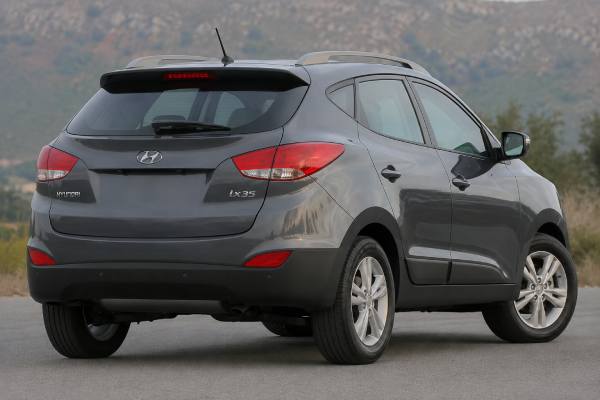
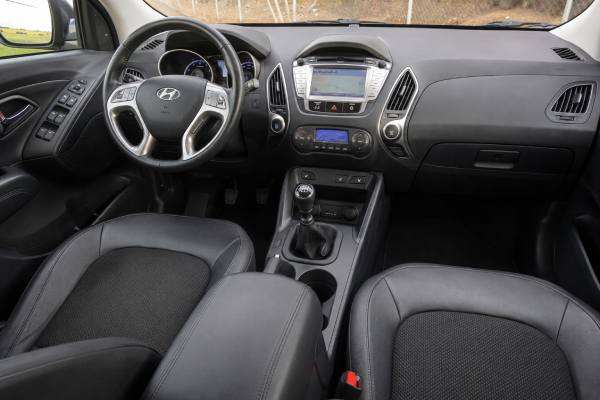
The Hyundai ix35 (LM) with the R 2.0 CRDi diesel is the stronger, torquier diesel version of Hyundai’s first-generation ix35 crossover. Sold in many markets from 2010 through 2013 before the facelift arrived, it sits between simple family SUV practicality and light-duty all-weather usefulness. The 136 hp version is not the fastest ix35 diesel, but its 320 Nm of torque, six-speed manual gearbox, and available torque-on-demand 4WD make it one of the more rounded choices for long-distance use, hills, poor weather, and family load carrying.
Its appeal today depends heavily on condition. A well-serviced example can be a practical, comfortable, and inexpensive used SUV. A neglected one can bring diesel-related bills, clutch wear, DPF problems, suspension knocks, and electrical annoyances. The best buying approach is to treat service history, recall proof, underbody condition, and cold-start behaviour as more important than mileage alone.
Final Verdict
The Hyundai ix35 LM 2.0 CRDi 136 hp diesel is a sensible used SUV for drivers who want useful torque, good cabin space, strong equipment, and more grip than the smaller 1.7 CRDi versions. It suits families, rural drivers, commuters, and owners who regularly cover longer journeys where the diesel engine and DPF can work properly. Its main tradeoff is that age now matters more than badge reputation: clutch, dual-mass flywheel, DPF, suspension, and ABS recall history can change the ownership cost quickly. Buy one only with clear service records, verified recall completion, and a clean cold start.
| Pros | Cons |
|---|---|
| Strong 320 Nm diesel torque suits hills and loaded family use | Not as quick or refined as the 184 hp 2.0 CRDi |
| Torque-on-demand 4WD improves traction in wet or loose conditions | 4WD adds tyres, driveline fluid, and rear coupling inspection needs |
| Spacious cabin and large boot make it practical for family duty | Interior plastics and road noise feel older than newer rivals |
| Timing-chain R diesel avoids scheduled timing-belt replacement | Chain rattle, DPF soot, and EGR issues still need checking |
| Good safety score for its 2010-era class | No modern AEB, adaptive cruise, or lane-keeping assistance |
Table of Contents
- Hyundai ix35 2.0 CRDi Overview
- 2.0 CRDi Specifications and Technical Data
- Trims, Options, Safety and Assistance
- Reliability, Common Issues and Recalls
- Maintenance and Used Buying Guide
- Driving, Performance and Fuel Economy
- How the ix35 2.0 CRDi Compares
Hyundai ix35 2.0 CRDi Overview
The ix35 2.0 CRDi 136 hp is best understood as the sensible torque-rich diesel in the LM range, not the sporty one. It gives the ix35 enough pulling power to feel relaxed in daily driving, especially compared with the smaller 1.7 CRDi, while keeping fuel use reasonable for a compact SUV of this age.
The LM-generation ix35 replaced the older Tucson in many European and international markets. It used a more modern crossover shape, a five-seat cabin, independent rear suspension, and a broad engine range that included petrol engines, the 1.7 CRDi diesel, the 2.0 CRDi 136 hp diesel, and the stronger 184 hp 2.0 CRDi diesel.
The 136 hp R 2.0 CRDi is a common-rail turbo diesel with four cylinders, 16 valves, intercooling, and a timing chain. In markets such as the UK and Ireland, this version was commonly paired with 4WD and a six-speed manual gearbox. Some continental European markets also offered front-wheel-drive 2.0 CRDi 136 hp versions, so buyers should always confirm the drivetrain on the exact car.
As a used vehicle, the ix35’s strengths are straightforward: space, high seating, comfortable road manners, useful torque, simple controls, and generous equipment for the money. It is not a premium-feeling SUV, and it does not have modern driver-assistance technology, but it remains a practical family car when bought carefully.
The key ownership point is diesel suitability. This engine is happiest with regular longer runs, good oil, clean filters, and enough exhaust temperature to keep the diesel particulate filter working. A low-mileage car used mainly for short city trips can be a worse buy than a higher-mileage car with strong motorway service history.
2.0 CRDi Specifications and Technical Data
The 2.0 CRDi 136 hp uses Hyundai’s R-series D4HA diesel engine, mounted transversely in the front of the ix35. The most common 2010–2013 European setup combines a six-speed manual gearbox with torque-on-demand 4WD, although market differences exist. The engine’s main appeal is not peak horsepower but the broad 320 Nm torque band from low revs.
| Item | Hyundai ix35 R 2.0 CRDi 136 hp |
|---|---|
| Engine code | D4HA, Hyundai R 2.0 CRDi family |
| Fuel type | Diesel, Euro 5-era emissions equipment |
| Layout | Front transverse inline-four |
| Displacement | 1,995 cc, 2.0 litres |
| Valvetrain | DOHC, 16 valves |
| Induction | Turbocharged and intercooled |
| Fuel system | Common-rail direct injection |
| Power | 100 kW / 136 PS, often listed as 134 bhp |
| Torque | 320 Nm (236 lb-ft) at 1,800–2,500 rpm |
| Bore x stroke | 84 mm x 90 mm |
| Compression ratio | 16.5:1 on the 136 hp manual version |
| Timing drive | Timing chain |
| Item | Typical 2.0 CRDi 136 hp data |
|---|---|
| Gearbox | Six-speed manual on the 136 hp version |
| Drive type | 4WD in many UK/Ireland 2.0 CRDi 136 models |
| 4WD system | Torque-on-demand system, front-biased in normal driving |
| Front suspension | MacPherson struts with coil springs |
| Rear suspension | Multi-link with anti-roll bar |
| Brakes | Ventilated front discs, solid rear discs |
| Braked towing capacity | Up to 2,000 kg on 2.0 CRDi manual 4WD |
| Unbraked towing capacity | 750 kg |
| Ground clearance | About 170 mm |
| Item | Value |
|---|---|
| Body style | Five-door compact SUV, five seats |
| Length | 4,410 mm (173.6 in) |
| Width | 1,820 mm (71.7 in), excluding mirrors |
| Height | 1,660–1,670 mm, depending on trim and rails |
| Wheelbase | 2,640 mm (103.9 in) |
| Turning circle | About 10.6 m kerb-to-kerb |
| Kerb weight | About 1,679 kg for UK 2.0 CRDi manual 4WD |
| Gross vehicle weight | 2,140 kg |
| Boot capacity | 591 L SAE seats up, 1,436 L seats folded |
| Fuel tank | 55 L on typical manual diesel versions |
| Item | 2.0 CRDi 136 hp manual 4WD |
|---|---|
| 0–100 km/h / 0–62 mph | About 10.2–11.3 seconds, depending on source and market |
| Top speed | About 180 km/h (112 mph) |
| Official urban economy | About 6.7 L/100 km (35 mpg US / 42 mpg UK) |
| Official extra-urban economy | About 5.1 L/100 km (46 mpg US / 55 mpg UK) |
| Official combined economy | About 5.7–5.9 L/100 km (40–41 mpg US / 48–50 mpg UK) |
| CO2 emissions | About 149–154 g/km on manual 4WD versions |
| Item | Useful value |
|---|---|
| Engine oil capacity | About 8.0 L on 2.0 diesel; verify by dipstick |
| Engine oil quality | ACEA C3 for DPF-equipped diesel versions |
| Coolant capacity | About 8.5 L for diesel engine cooling system |
| Manual transaxle fluid | API GL-4, SAE 75W/85 |
| Automatic transaxle fluid | Hyundai ATF SP-IV where automatic is fitted |
| Brake/clutch fluid | DOT 3 or DOT 4 |
| Common tyre sizes | 225/60 R17 and 225/55 R18 |
| Normal tyre pressure | 33 psi / 2.3 bar front and rear |
| Wheel-nut torque | 88–107 Nm (65–79 lb-ft) |
Trims, Options, Safety and Assistance
The ix35 2.0 CRDi 136 hp was usually sold in better-equipped trims because the 2.0 diesel and 4WD positioned it above the smaller 1.7 CRDi. The exact names vary by market, but the mechanical difference to confirm is simple: 2.0 CRDi 136 hp manual, front-wheel drive or 4WD depending on country, versus the higher-output 184 hp 2.0 CRDi often paired with automatic 4WD.
Trims and equipment identifiers
In the UK-style 2010–2012 range, the 2.0 CRDi 136 hp manual 4WD appeared in Style and Premium forms. Style was already well equipped, with 17-inch alloy wheels, air conditioning, Bluetooth, heated front and outer rear seats, reversing sensors, front fog lights, six speakers, USB/Aux connections, and a full-size alloy spare wheel.
Premium added the features that are easiest to spot on a used car: panoramic sunroof, 18-inch alloy wheels on many 2.0 CRDi versions, keyless entry and start, dual-zone climate control, rain-sensing wipers, automatic headlights, privacy glass, roof rails, electric folding mirrors, leather-and-cloth trim, and cruise control. A Media Pack could add touchscreen navigation, a rear-view camera, and upgraded audio.
The quick checks are practical:
- Badge and drivetrain: look for 4WD badging and confirm on the VIN/build data, not just the advert.
- Wheels: 17-inch wheels are common on Style; 18-inch wheels often identify Premium 2.0 CRDi models.
- Cabin tells: keyless start, panoramic roof, dual-zone climate control, and leather/cloth trim point to Premium.
- Infotainment: factory navigation and rear camera usually indicate an option pack, not a different engine.
- Facelift signs: 2013-on facelift cars gained styling and lighting updates, with LED rear light signatures on many versions.
Safety ratings and crash protection
The ix35 achieved a five-star Euro NCAP rating under the 2010 test era, with strong adult and child occupant scores for the time. ANCAP also listed the ix35 as a five-star vehicle for relevant 4×2 and 4×4 variants, with the note that the rating applied to vehicles built from August 2010 after steering-column-related changes.
Standard safety equipment was solid for the period. Typical cars have six airbags, anti-lock brakes, electronic brake-force distribution, electronic stability control, traction control, hill-start assist, downhill brake control, active front head restraints, front seatbelt reminders, seatbelt pretensioners, passenger airbag deactivation, rear ISOFIX child-seat anchorages on the outer seats, childproof rear locks, and side-impact bars.
The limitation is modern active safety. The ix35 does not offer the sort of assistance now expected in newer SUVs: autonomous emergency braking, adaptive cruise control, lane centering, blind-spot monitoring, rear cross-traffic braking, and traffic-sign recognition were not part of the 2010–2013 equipment set. Buyers moving from a newer car should judge it as a safe older SUV, not as a current-generation driver-assistance vehicle.
ADAS calibration is therefore limited. There are no camera/radar AEB calibrations to budget for, but wheel alignment, steering-angle sensor calibration, ABS/ESC fault correction, and tyre-size matching still matter. After suspension work, steering work, wheel bearing replacement, or ABS module-related repairs, make sure warning lights clear and stability control behaves normally on a road test.
Reliability, Common Issues and Recalls
A well-maintained ix35 2.0 CRDi can be durable, but age has moved these cars into the inspection-sensitive part of their lives. The most important risks are not one catastrophic engine flaw but the combined effect of diesel emissions hardware, clutch wear, 4WD components, suspension ageing, corrosion, and unfinished recall work.
| Issue | Prevalence | Cost tier | What to check |
|---|---|---|---|
| DPF soot loading | Occasional, higher on short-trip cars | Medium to high | Warning lights, limp mode, frequent regens, poor service history |
| EGR/intake deposits | Occasional on older diesels | Medium | Hesitation, smoke, rough running, fault codes |
| Clutch and dual-mass flywheel wear | Common with age and towing | High | Judder, vibration, slipping, rattles at idle |
| Suspension bushes and links | Common on high-mileage cars | Low to medium | Knocks, wandering, uneven tyre wear |
| Wheel bearings | Occasional | Medium | Humming that changes with road speed |
| 4WD coupling or rear driveline wear | Occasional | Medium to high | Binding, vibration, mismatched tyres, neglected fluids |
| Parking sensors, camera, and switches | Common age-related nuisance | Low to medium | Intermittent beeps, dead camera, sticky buttons |
Engine and emissions system
The R-series diesel is generally respected, but it still needs diesel-appropriate use. Repeated short trips can prevent proper DPF regeneration, especially if the car is shut down during regens or run with old oil, clogged filters, or thermostat problems. Warning lights, rising oil level, fan running after shutdown, heavy fuel smell, and limp mode all need proper diagnosis rather than repeated forced regens.
EGR valve and intake contamination can cause rough running, hesitation, smoke, or poor low-rpm response. A boost leak from a split hose or loose clamp can feel similar, so a smoke test and live data check are better than guessing parts. A healthy 2.0 CRDi should start cleanly, settle quickly, and pull strongly from below 2,000 rpm once warm.
The timing chain is not a scheduled belt service item, but it is not something to ignore forever. Cold-start chain rattle, cam/crank correlation codes, poor starting, or metal debris in oil are reasons to investigate chain stretch, guides, and tensioner condition.
Transmission, clutch and 4WD
The six-speed manual suits the engine, but clutch condition is central to buying well. A worn clutch or dual-mass flywheel can turn a cheap ix35 into an expensive one. On a test drive, use higher gears from low revs to check for slip, listen for flywheel rattle at idle, and feel for judder when pulling away uphill.
The 4WD system is not designed for heavy off-roading. It is useful for slippery roads, gravel tracks, wet grass, and snow, but tyre matching matters. Running different tyre brands, tread depths, or sizes front to rear can stress the coupling and driveline. On a tight low-speed turn, the car should not hop, bind, or grind.
Recalls and service actions
Recall history varies by country, model year, VIN range, and engine. Important ix35-related items to check include:
- ABS/ESC electrical short recalls: several markets have issued recalls or campaigns involving ABS control unit electrical short risk. Remedies can include fuse changes or dealer inspection. Confirm by VIN.
- Seatbelt pretensioner campaigns: some vehicles built around late 2011 to mid-2012 were linked to pretensioner concerns. Check dealer records.
- Fuel leak reports: some mid-production diesel cars were associated with fuel leak or diesel smell concerns. Any fuel smell, power loss, or wetness around fuel lines needs immediate attention.
- Market-specific petrol recalls: some ix35 recalls involve petrol engines such as the 2.4 MPI and do not automatically apply to the 2.0 CRDi diesel.
Do not rely on a seller saying “no recalls.” Use an official VIN check, dealership records, and market recall databases. A completed recall should show on dealer history or an invoice, and the instrument panel should be free of ABS, ESC, airbag, and engine warning lights.
Maintenance and Used Buying Guide
For a used ix35 2.0 CRDi, a conservative maintenance schedule is better than stretching intervals to the longest official allowance. These cars are now old enough that time, corrosion, rubber ageing, and previous owner habits matter as much as mileage.
| Item | Practical interval for used examples |
|---|---|
| Engine oil and filter | Every 15,000 km / 10,000 miles or 12 months |
| Engine air filter | Every 30,000–60,000 km, sooner in dusty use |
| Cabin filter | Every 12–24 months |
| Fuel filter | Every 30,000 km / 2 years; sooner with poor fuel |
| Brake/clutch fluid | Every 2 years |
| Coolant | About 90,000 km / 5 years, then shorter repeat intervals |
| Manual gearbox oil | Inspect for leaks; refresh around 80,000–100,000 km if keeping long-term |
| Rear differential/4WD fluids | Inspect regularly; refresh if towing, wet use, or unknown history |
| Auxiliary belt and hoses | Inspect yearly; replace for cracks, glazing, swelling, or age |
| Timing chain system | No belt interval; inspect if noisy, coded, or poorly maintained |
| Tyre rotation and alignment | Every 10,000–15,000 km or with uneven wear |
| 12 V battery | Test yearly after year four; replace when weak |
Use the right oil. DPF-equipped diesels need low-ash ACEA C3 oil of the correct viscosity for climate and service documentation. Cheap high-ash oil can shorten DPF life. The 2.0 CRDi’s oil capacity is large, so bargain servicing that uses the wrong grade or underfills the engine is a real red flag.
Pre-purchase inspection checklist
Before buying, check the ix35 from cold. A warm engine can hide glow plug issues, injector imbalance, chain noise, smoke, and rough idle. The engine should start without long cranking, settle smoothly, and not produce heavy blue or white smoke.
Prioritize these checks:
- Full service history with oil quality, not just stamps.
- Recall completion proof for ABS/ESC and seatbelt campaigns.
- DPF status, fault-code scan, and soot-load data where possible.
- Evidence of clutch or dual-mass flywheel replacement on high-mileage cars.
- Matching tyres of the same size, similar tread depth, and suitable load rating.
- No driveline binding on tight turns.
- Dry engine, gearbox, transfer area, rear differential, and cooling system.
- No diesel smell near the engine bay or fuel filter.
- Working air conditioning, parking sensors, camera, Bluetooth, and keyless system.
- No panoramic roof leaks, damp carpets, or blocked drains.
- Underbody inspection for brake pipes, subframes, suspension arms, sills, and rear mounting points.
- Smooth ABS/ESC operation with no warning lights after a full drive cycle.
Versions to seek or avoid
The best buy is usually a privately owned or carefully maintained 2.0 CRDi manual 4WD with complete service records, matching quality tyres, no tow-abuse signs, and a clean MOT or roadworthiness history. Premium trim is desirable if the sunroof, climate control, keyless entry, and electrical equipment all work properly.
Be cautious with cars that have done only short urban journeys, especially if the seller cannot explain DPF maintenance. Avoid cars with unresolved ABS, ESC, airbag, or engine lights. Walk away from examples with heavy clutch slip, driveline binding, cooling-system pressure issues, fuel smells, or obvious underbody corrosion unless the price leaves a large repair budget.
Long-term durability is good when the engine is serviced early, the DPF is allowed to regenerate, the 4WD system gets matched tyres, and suspension wear is dealt with promptly. Neglect usually shows first through poor starting, smoke, drivetrain vibration, warning lights, and repeated cheap tyre replacement.
Driving, Performance and Fuel Economy
The ix35 2.0 CRDi 136 hp drives like a practical diesel crossover: torquey, secure, and easy rather than sharp or sporty. It has enough performance for family use, but the chassis and cabin are tuned more for comfort and confidence than enthusiastic driving.
Around town, the engine’s low-rpm torque makes it easier to drive than the smaller 1.7 CRDi when the car is loaded. There can be some diesel grumble at idle and low speed, and the clutch action on worn cars may feel heavy or uneven. Once moving, the engine pulls cleanly from about 1,700–1,800 rpm and works best when short-shifted rather than revved hard.
On faster roads, the ix35 feels stable and predictable. Steering is light rather than communicative, which suits parking and daily use but does not give much road feel. The suspension copes well with normal roads, although 18-inch wheels can make broken surfaces feel firmer than 17-inch wheels. Rear suspension bushes, anti-roll-bar links, and tired dampers can make older cars feel loose, so a sloppy test drive should not be dismissed as “normal SUV feel.”
The manual gearbox is generally straightforward. Good examples shift cleanly, while worn ones may feel notchy or vague. If the gearbox baulks when cold, the clutch bites very high, or there is vibration through the pedal, budget carefully.
The 4WD system is front-biased in everyday use and sends torque rearward when conditions demand it. It is useful on wet lanes, steep driveways, snowy roads, muddy parking areas, and gravel tracks. It does not turn the ix35 into a serious off-roader. Ground clearance and approach/departure angles are modest, and the road tyres fitted to most cars limit grip long before the driveline does.
Fuel economy depends heavily on use. On open roads, a healthy 2.0 CRDi manual can often return about 5.8–6.8 L/100 km, equal to roughly 35–41 mpg US or 42–49 mpg UK. Mixed use is more commonly around 6.5–7.5 L/100 km, or 31–36 mpg US and 38–43 mpg UK. Heavy city use, winter driving, short trips, roof bars, towing, and underinflated tyres can push consumption into the 8.0–9.0 L/100 km range.
For towing, the 2.0 CRDi manual’s torque and braked rating are useful, but condition matters. Watch coolant temperature, clutch smell, brake condition, rear suspension sag, and service history. A moderate trailer can increase fuel use by 25–45 percent, and towing on hills accelerates clutch, brake, tyre, and suspension wear.
How the ix35 2.0 CRDi Compares
The ix35 2.0 CRDi 136 hp competes well as a value-focused used family SUV, especially when equipment and warranty-era build quality are considered. Its main weakness against the best rivals is polish: some competitors steer better, ride more quietly, or offer nicer cabin materials.
| Rival | How it compares with ix35 2.0 CRDi | Best reason to choose it |
|---|---|---|
| Kia Sportage 2.0 CRDi | Very similar mechanical base and ownership profile | Alternative styling, often strong equipment value |
| Nissan Qashqai 2.0 dCi | More car-like and popular, but less roomy than ix35 | Easy urban size and broad used-market supply |
| Ford Kuga 2.0 TDCi | Sharper handling, but tighter cabin and boot | Drivers who care more about road feel |
| Volkswagen Tiguan 2.0 TDI | More premium cabin feel, often higher repair costs | Interior quality and stronger resale appeal |
| Toyota RAV4 2.2 D-4D | Roomier and practical, but diesel condition is critical | Space, simplicity, and Toyota familiarity |
| Honda CR-V diesel | More spacious and refined, usually more expensive | Family room, comfort, and long-distance manners |
| Skoda Yeti 2.0 TDI | Smaller but cleverer inside and more agile | Compact size and flexible seating |
The Kia Sportage is the closest rival because it shares much of the same era, engineering philosophy, and diesel-SUV use case. Buy whichever has better history and condition. The Nissan Qashqai is easier to find and feels lighter, but the ix35 offers a stronger, more substantial feel in 2.0 CRDi form. The Volkswagen Tiguan is more refined but can be more expensive to repair, especially if DSG, emissions, or 4Motion systems need work.
For most used buyers, the ix35 wins when value, equipment, torque, and family usability matter more than badge prestige. It loses when the buyer wants modern safety assistance, premium cabin finish, sporty handling, or the lowest possible diesel running costs.
References
- 2012-Hyundai-ix35-UK.pdf 2012 (Brochure)
- HYUNDAI IX35 OWNER’S MANUAL Pdf Download 2010 (Owner’s Manual)
- Hyundai ix35 | Safety Rating & Report | ANCAP 2010 (Safety Rating)
- HYUNDAI iX35 2013 – Check if a vehicle, part or accessory has been recalled – GOV.UK 2022 (Recall Database)
- REC-000608 – Hyundai Motor Company Australia Pty Ltd – HYUNDAI ix35 | Vehicle Recalls 2014 (Recall Database)
Disclaimer
This article is for informational purposes only and is not a substitute for professional diagnosis, repair, or inspection. Specifications, torque values, service intervals, fluid requirements, recall eligibility, and repair procedures can vary by VIN, market, model year, trim, equipment, and previous repairs. Always verify the exact vehicle against official Hyundai service documentation, dealer records, and local recall databases before buying, servicing, towing, or repairing.
If you found this guide useful, please consider sharing it on Facebook, X/Twitter, or your preferred automotive forum to support our work.