

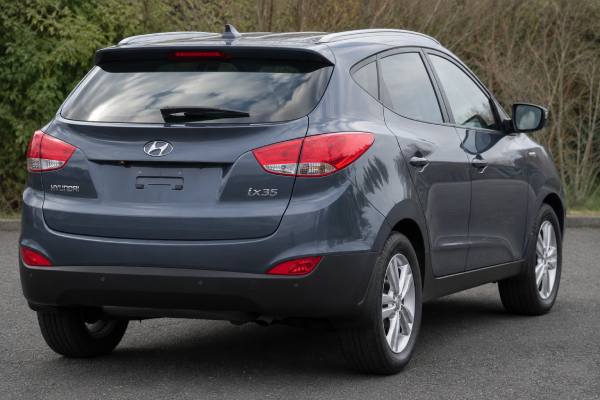
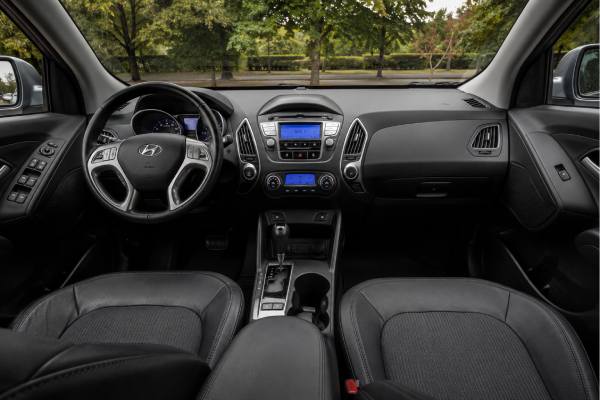
The Hyundai ix35 FWD with the U II 1.7 CRDi diesel is the sensible, economy-focused version of Hyundai’s first-generation LM compact SUV. Sold in many European markets from 2010 to 2013 in this 115 hp form, it pairs a 1.7-litre common-rail diesel engine with a 6-speed manual gearbox and front-wheel drive. It is not the strongest ix35 for towing or performance, but it is one of the more efficient and straightforward versions to own.
For used buyers, the appeal is clear: practical cabin space, strong standard safety equipment for its era, low official CO₂ figures, and running costs that can stay reasonable if the diesel emissions system is kept healthy. The main decision point is whether your driving pattern suits an older diesel SUV.
Final Verdict
The Hyundai ix35 FWD 1.7 CRDi is a good used choice for drivers who want a roomy, economical compact SUV for regular mixed or motorway use rather than heavy towing or short urban hops. Its strongest appeal is the combination of practical space, simple front-wheel-drive layout, a manual gearbox, and relaxed diesel torque. The tradeoff is that the 115 hp engine feels modest when fully loaded, and diesel hardware such as the DPF, EGR system, clutch, and fuel system needs proper use and servicing. Buy only with clear service history, completed recall checks, clean cold-start behaviour, and evidence of regular quality oil changes.
| Pros | Cons |
|---|---|
| Economical 1.7 CRDi suits steady commuting and motorway use | Short-trip use can clog the DPF and EGR system |
| FWD layout avoids 4WD transfer-case and rear-differential costs | Less grip and towing confidence than 2.0 CRDi 4WD versions |
| Cabin and boot space are strong for a compact SUV | Interior trim can show family-use wear on older examples |
| Six airbags, ESC, ISOFIX, and five-star crash rating | No modern AEB, lane keeping, or adaptive cruise systems |
| Manual gearbox and 260 Nm torque feel relaxed in normal driving | Clutch and dual-mass flywheel condition matters at higher mileage |
| Good parts availability through Hyundai/Kia shared diesel hardware | Recall status must be checked carefully by VIN and market |
Table of Contents
- Hyundai ix35 1.7 CRDi Overview
- Specifications and Technical Data
- Trims, Safety, and Driver Assistance
- Reliability, Common Issues, and Service Actions
- Maintenance and Buyer’s Guide
- Driving and Performance
- How the ix35 1.7 CRDi Compares to Rivals
Hyundai ix35 1.7 CRDi Overview
The ix35 1.7 CRDi FWD is the economy-minded diesel version of the LM-generation ix35. It makes most sense as a family crossover for drivers covering enough open-road mileage to keep the diesel particulate filter healthy.
This model replaced the earlier Tucson name in many markets and sat in the fast-growing compact SUV class alongside the Nissan Qashqai, Kia Sportage, Ford Kuga, Volkswagen Tiguan, and Skoda Yeti. In some markets, the same basic vehicle continued under the Tucson name, but the ix35 badge is the one most European buyers associate with this 2010–2013 generation.
The 1.7 CRDi engine is part of Hyundai-Kia’s U II diesel family. In this specification it produces 85 kW, commonly listed as 114 bhp or 115 hp depending on rounding, with 260 Nm of torque from low engine speeds. That matters more than the headline horsepower because the engine is designed to pull cleanly without needing high revs. It is paired with a 6-speed manual gearbox and front-wheel drive only.
The main reason to choose this version over the 2.0 CRDi is running cost. The 2.0-litre diesel is stronger and available with 4WD, but it uses more fuel and brings extra driveline complexity. The 1.7 CRDi keeps the ix35 lighter, simpler, and cheaper to run, as long as the car is not used mainly for very short journeys.
As a used SUV, the ix35 has three big strengths. First, it is roomy for its footprint, with a high driving position, wide-opening doors, and a large boot. Second, standard equipment was generous compared with many rivals of the period. Third, Hyundai’s warranty coverage when new helped many cars build a better early service record than some cheaper used SUVs.
The weaknesses are also easy to understand. The ride can feel firm on rough roads, the cabin is practical rather than premium, and the 1.7 diesel is not quick when loaded with passengers and luggage. It is best seen as a steady, efficient compact SUV, not a sporty crossover or a heavy-duty tow car.
For today’s buyer, condition matters more than trim. A tidy Style with full service records is usually a better buy than a neglected Premium with a panoramic roof, worn clutch, blocked DPF, and patchy recall history.
Specifications and Technical Data
The 2010–2013 Hyundai ix35 1.7 CRDi FWD uses a transverse 1.7-litre four-cylinder common-rail diesel, a 6-speed manual gearbox, and front-wheel drive. Its technical layout is simple by SUV standards: no AWD system, no automatic transmission on this engine, and no petrol-style ignition components. The key ownership points are the diesel emissions system, service quality, clutch condition, and whether the car’s use pattern suits a DPF-equipped diesel.
| Item | Hyundai ix35 1.7 CRDi FWD |
|---|---|
| Engine family / code | Hyundai-Kia U II / D4FD |
| Fuel type | Diesel |
| Layout | Inline-4, transverse front engine |
| Displacement | 1,685 cc / 1.7 litres |
| Valvetrain | DOHC, 16 valves |
| Induction | Turbocharged and intercooled |
| Fuel system | Common-rail direct injection |
| Power | 85 kW / 114 bhp / about 115 hp at 4,000 rpm |
| Torque | 260 Nm / 192 lb-ft from 1,250–2,750 rpm |
| Bore × stroke | 77.2 × 90 mm |
| Compression ratio | 17.0:1 |
| Emissions standard | Euro 5 |
| Diesel particulate filter | Fitted on DPF-equipped Euro 5 versions |
| Item | Specification |
|---|---|
| Transmission | 6-speed manual |
| Drive type | Front-wheel drive |
| AWD system | Not fitted to the 1.7 CRDi FWD version |
| Clutch type | Manual clutch with dual-mass flywheel on typical diesel versions |
| Item | Value |
|---|---|
| Body style | 5-door compact SUV / crossover |
| Seats | 5 |
| Length | 4,410 mm |
| Width | 1,820 mm excluding mirrors |
| Height | 1,660–1,670 mm depending on trim and roof rails |
| Wheelbase | 2,640 mm |
| Turning circle | 5.3 m radius |
| Front suspension | MacPherson struts with coil springs |
| Rear suspension | Multi-link with anti-roll stabiliser bar |
| Common tyre size | 225/60 R17 |
| Boot capacity | 591 litres seats up; 1,436 litres seats folded |
| Kerb weight | About 1,537 kg for 1.7 CRDi 2WD UK-spec models |
| Fuel tank | 55 litres |
| Item | Official figure |
|---|---|
| 0–62 mph / 0–100 km/h | 12.4 seconds |
| Top speed | 108 mph / 173 km/h |
| Urban economy | 6.3 L/100 km / 44.8 mpg UK / 37.3 mpg US |
| Extra-urban economy | 4.8 L/100 km / 58.9 mpg UK / 49.0 mpg US |
| Combined economy | 5.8 L/100 km / 48.7 mpg UK / 40.6 mpg US |
| CO₂ emissions | 139 g/km on common UK 1.7 CRDi specifications |
| Braked towing capacity | 1,200 kg |
| Unbraked towing capacity | 750 kg |
| Noseweight | 50 kg |
| Maximum roof load | 100 kg |
| Item | Useful value or note |
|---|---|
| Engine oil capacity | About 5.3 litres service fill |
| Typical oil grade | Low-SAPS 5W-30 or 0W-30 diesel oil to the correct ACEA specification |
| Coolant capacity | About 8.5 litres total system capacity |
| Manual gearbox oil | 75W-85 API GL-4 type fluid where specified |
| Brake and clutch fluid | DOT 3 or DOT 4, according to market documentation |
| Timing drive | Timing chain; no routine timing-belt replacement |
| Wheel nut torque | Common handbook range: 88–107 Nm / 65–79 lb-ft |
Trims, Safety, and Driver Assistance
For the 1.7 CRDi FWD, trim choice mostly affects comfort equipment rather than mechanical hardware. The engine, manual gearbox, front-drive layout, brakes, and suspension are broadly the same between the common Style and Premium versions.
Trims and equipment
In the UK-market 2012 range, the 1.7 CRDi 2WD manual was offered in Style and Premium. Style was already well equipped for the period, with 17-inch alloy wheels, air conditioning, Bluetooth, front fog lights, electric windows, heated front seats, heated outer rear seat bases, rear parking sensors, steering wheel audio controls, USB/Aux inputs, and a trip computer.
Premium added a more upmarket feel rather than extra performance. Typical Premium features included cruise control, dual-zone climate control, automatic headlights, rain-sensing wipers, privacy glass, roof rails, electric folding mirrors, keyless entry with push-button start, a panoramic sunroof, and leather-and-cloth seat trim. A useful detail for buyers is that Premium 1.7 CRDi cars commonly retained 17-inch wheels, while some 2.0 CRDi Premium versions used 18-inch wheels.
Option packs could add items such as navigation, a reversing camera, upgraded audio, leather trim elements, and an auto-dimming mirror. On a used car, these features are nice to have but not more important than mechanical condition. A panoramic roof should be checked for smooth operation, water leaks, blocked drains, and wind noise.
Quick identifiers include the 1.7 CRDi badge, manual gear lever, 2WD/FWD absence of rear differential hardware, and trim features such as roof rails, climate control, keyless start, and panoramic glass on Premium cars. VIN and build data remain the safest way to confirm exact specification.
Crash safety ratings
The ix35 performed well in period crash testing. Euro NCAP awarded the model five stars in 2010, with strong adult and child occupant scores for the test protocol of the time. The tested vehicle was a left-hand-drive 2.0 diesel Style, so it was not the exact 1.7 CRDi FWD version, but the result is still relevant to the body structure and core restraint systems.
The headline scores were:
| Category | Score |
|---|---|
| Adult occupant protection | 90% |
| Child occupant protection | 88% |
| Pedestrian protection | 54% |
| Safety assist | 71% |
| Overall rating | Five stars under the 2010 protocol |
Do not compare that five-star result directly with a modern five-star SUV. Test protocols have become tougher, especially for active safety, pedestrian protection, and crash-avoidance systems.
Safety systems and ADAS
The ix35 1.7 CRDi came from an era before advanced driver-assistance systems became common in family SUVs. Its safety equipment is more about crash protection and stability control than radar-based driver support.
Common safety equipment included:
- Front airbags, front side airbags, and full-length curtain airbags.
- Anti-lock braking system with electronic brake-force distribution.
- Electronic Stability Programme, usually labelled ESP.
- Traction control.
- Hill-start Assist Control.
- Downhill Brake Control.
- Emergency Stop Signal.
- Front seatbelt pretensioners and front seatbelt reminders.
- Rear ISOFIX points on the outer rear seats.
- Passenger airbag deactivation switch.
What it generally does not have is just as important: no autonomous emergency braking, no lane-keeping assist, no adaptive cruise control, no blind-spot monitoring, and no modern driver-monitoring system. Parking sensors and a reversing camera, where fitted, are convenience aids rather than crash-avoidance ADAS.
After suspension repairs, steering work, wheel alignment, ABS repairs, or accident damage, the steering-angle sensor and stability-control system should be checked for correct calibration. If parking sensors or a reversing camera are fitted, check them after bumper repairs because wiring, sensor alignment, and water ingress can cause faults.
Reliability, Common Issues, and Service Actions
A well-maintained ix35 1.7 CRDi can be durable, but neglect shows quickly on older diesel SUVs. The most important checks are DPF health, clutch and flywheel condition, clean cold starting, suspension wear, brake corrosion, and recall completion.
| Issue area | Prevalence | Cost tier | Typical clues |
|---|---|---|---|
| DPF loading or regeneration problems | Common on short-trip cars | Medium to high | Warning light, limp mode, frequent fan running, oil dilution |
| EGR valve and intake carbon | Occasional to common | Medium | Flat response, rough idle, smoke, fault codes |
| Clutch and dual-mass flywheel wear | Occasional at higher mileage | Medium to high | Rattle, judder, slipping, vibration on take-up |
| Suspension links, bushes, and wheel bearings | Common with age | Low to medium | Knocks, uneven tyre wear, droning road noise |
| Brake corrosion and sticking calipers | Common on low-use cars | Low to medium | Heat at one wheel, scraping, poor handbrake action |
| ABS/ESP recall-related electrical risk | VIN-dependent | Recall repair | Must be checked through official recall channels |
Diesel engine and emissions system
The D4FD 1.7 CRDi is not a fragile engine by design, but it dislikes missed oil changes, poor-quality oil, and repeated cold short trips. The DPF needs regular exhaust temperature to regenerate. Cars used only for school runs, short urban errands, or stop-start traffic can suffer blocked DPFs, failed regenerations, warning lights, limp mode, and contaminated engine oil.
Symptoms and likely causes:
- DPF warning, limp mode, or repeated regeneration smell: blocked or overloaded DPF, failed pressure sensor, split pressure hose, or unsuitable use pattern.
- Hesitation and rough idle: EGR valve sticking, intake deposits, injector correction issues, or air leaks.
- Excessive smoke under load: boost leak, turbo control issue, injector wear, clogged air filter, or EGR fault.
- Hard starting: weak battery, glow plug issue, fuel filter restriction, injector leak-off, or low rail pressure.
- Whistling or loss of boost: split intercooler hose, loose clamp, vacuum control problem, or turbo actuator issue.
The timing chain does not have the scheduled replacement burden of a timing belt. That does not make it maintenance-free forever. Cold-start rattles, timing-correlation fault codes, metal contamination in the oil, or poor running should prompt proper diagnosis of chain stretch, guides, and tensioner condition.
Manual gearbox, clutch, and driveline
The 6-speed manual is generally straightforward, but the clutch and dual-mass flywheel are important inspection points. A tired flywheel can rattle at idle, clonk when shutting off, or judder when pulling away. A worn clutch may slip in higher gears under load. These repairs are not unusual on older diesel SUVs and can change the value of the car.
Because this version is front-wheel drive, it avoids 4WD transfer-case, propshaft, rear-differential, and rear-coupling issues. That is a real advantage for low-cost ownership. Check instead for driveshaft clicking on full lock, gearbox oil leaks, worn engine mounts, and vibration under acceleration.
Chassis, brakes, and corrosion
Age-related suspension wear is normal. Listen for knocks from drop links and bushes, check front lower arms, inspect rear multi-link bushes, and look for uneven tyre wear that suggests poor alignment. Wheel bearings can drone with speed, especially on cars driven over rough roads or fitted with poor tyres.
Brakes need careful inspection because many ix35 1.7 CRDi examples have lived as family cars rather than high-mileage fleet vehicles. Low use can leave discs rusty, sliders sticky, and rear brakes dragging. Brake pipes, subframes, suspension mounts, rear trailing-arm areas, and underbody seams should be checked on cars from wet or salted-road climates.
Electrical, trim, and comfort features
The ix35 is not overloaded with electronics by modern standards, but older examples can still suffer from parking sensor faults, rear camera faults, door-lock issues, window regulator problems, air-conditioning weakness, and water ingress. Premium models with panoramic roofs need extra checks for smooth operation, drain blockage, staining around the headlining, and damp carpet.
The stop-lamp switch and brake-pedal related circuits can create confusing symptoms on many Hyundai/Kia vehicles of this era, including warning lights or brake-light faults. Any ESP, ABS, brake-light, or shift-related warning should be diagnosed rather than ignored.
Recalls, service campaigns, and VIN checks
Recall status is one of the most important checks on any ix35. Recall coverage varies by country, VIN, production date, and local importer action. Some markets have listed ABS/ESP or HECU-related fire-risk recalls involving electrical short-circuit concerns, with remedies such as fuse changes or dealer inspections. Australia also published a 2025 recall affecting 2012–2013 iX35 vehicles where brake fluid could enter the ABS control module and create a fire risk.
Before buying, ask for:
- Official VIN recall printout from Hyundai or the national recall database.
- Dealer invoice or campaign record showing completion.
- Evidence that any interim safety advice was followed if the recall was open.
- Confirmation that no ABS, ESP, brake, or engine-warning lights remain.
Do not rely only on a seller saying “it has no recalls.” Check by VIN.
Maintenance and Buyer’s Guide
The safest maintenance approach is to treat this as an older DPF-equipped diesel that benefits from regular annual servicing. Even where a market allowed longer official intervals, a used ix35 1.7 CRDi is usually better served by shorter oil changes and proactive fluid replacement.
| Item | Practical interval |
|---|---|
| Engine oil and oil filter | Every 10,000–15,000 km or 12 months |
| Engine air filter | Every 30,000–60,000 km; sooner in dusty areas |
| Cabin filter | Every 12–24 months |
| Fuel filter | Every 30,000–60,000 km, or sooner with poor fuel quality |
| Brake and clutch fluid | Every 2 years |
| Coolant | Replace if history is unknown; then about every 3–5 years |
| Manual gearbox oil | Inspect for leaks; replace around 90,000–120,000 km for longevity |
| Auxiliary belt and hoses | Inspect yearly; replace if cracked, noisy, swollen, or glazed |
| Timing chain | Inspect by symptoms; replace only if noisy, stretched, or out of spec |
| Brakes | Inspect every service; clean sliders on low-use cars |
| Tyres and alignment | Rotate 10,000–15,000 km; align if wear is uneven |
| 12 V battery | Test yearly after 4 years; replace before weak-start symptoms worsen |
| DPF health | Check soot load and pressure readings during diagnostic inspection |
Use the correct low-SAPS diesel oil for DPF-equipped engines. Cheap oil of the wrong ash content can shorten DPF life. Fuel filters also matter on common-rail diesels because water or debris can damage expensive injection components.
Used buying checklist
A good ix35 1.7 CRDi should start cleanly from cold, idle evenly, pull smoothly from low rpm, and show no warning lights. The clutch should bite cleanly without judder, and the engine should shut down without a harsh flywheel clatter.
Before committing, check:
- Full service history, not just stamped gaps.
- Correct oil grade and regular oil-filter replacement.
- Fuel filter replacement evidence.
- Recall completion by VIN.
- Cold start after the car has sat overnight.
- DPF differential pressure and regeneration history using diagnostics.
- Turbo boost behaviour under load.
- EGR and intake condition if there are smoke or hesitation symptoms.
- Clutch bite point, slipping, judder, and flywheel noise.
- Gear selection quality when cold and hot.
- Suspension knocks over rough roads.
- Brake disc corrosion, caliper drag, and handbrake function.
- Underbody corrosion, brake pipes, rear suspension arms, and subframes.
- Air conditioning performance.
- Water leaks around panoramic roof, tailgate, and footwells.
- Tyre brand, tread pattern match, and uneven wear.
Best versions to seek
For this exact engine, condition beats trim. A clean Style with regular servicing, fresh tyres, working air conditioning, and no DPF warnings is a strong buy. A Premium is attractive if the panoramic roof, keyless entry, climate control, parking aids, and electronics all work properly.
Avoid cars with repeated DPF warning history, unexplained limp mode, heavy clutch judder, coolant loss, poor starting, visible oil leaks, missing recall records, or sellers who will not allow a cold start and diagnostic scan.
The long-term durability outlook is positive for a maintained example used in the right conditions. The ix35 1.7 CRDi is not a car to buy cheaply and neglect. It rewards boring maintenance.
Driving and Performance
The ix35 1.7 CRDi drives like a practical diesel crossover: stable, easy, and economical, but not quick. Its best performance is in the 1,500–3,000 rpm range, where the 260 Nm torque makes normal traffic and motorway cruising feel relaxed.
Powertrain character
The 1.7 CRDi has useful low-rpm pull, but it is not a fast engine in a 1.5-tonne SUV. Turbo response is acceptable once rolling, yet it can feel flat below the boost threshold, especially with passengers, luggage, hills, or air conditioning load. The 6-speed manual helps because the gearing lets you keep the engine in its torque band.
Expect a diesel grumble when cold and some vibration through the cabin compared with newer mild-hybrid and petrol SUVs. Once warm, the engine settles down. At motorway speeds, it is more relaxed than the power figure suggests because sixth gear keeps revs sensible.
The clutch should feel progressive. Heavy pedal feel, judder, or rattling from the bellhousing area points toward clutch or dual-mass flywheel wear, not “normal diesel character.”
Ride, handling, steering, and braking
The ix35 feels secure rather than agile. Straight-line stability is good, and the high seating position gives a clear view in traffic. Steering is light enough for town use, although it does not give much road feel. Through bends, the car leans more than a hatchback, but it remains predictable if the tyres and suspension are in good condition.
Ride comfort depends heavily on tyres and suspension condition. On 17-inch wheels, the 1.7 CRDi usually rides better than 18-inch versions, but sharp bumps can still feel firm. Worn rear bushes, tired dampers, cheap tyres, or incorrect pressures make the car feel noisier and less settled.
Braking performance is adequate for normal family use. The more important point on used cars is consistency: the pedal should feel firm, the car should stop straight, and no wheel should run hot after a drive.
Real-world fuel economy
Official economy figures are based on older test cycles and are optimistic in modern real driving. A healthy ix35 1.7 CRDi can still be efficient for an SUV of its age.
Typical real-world expectations:
| Use pattern | Expected economy |
|---|---|
| Urban short trips | 6.8–8.0 L/100 km / 35–42 mpg UK / 29–35 mpg US |
| Steady highway at 100–120 km/h | 5.2–6.2 L/100 km / 46–54 mpg UK / 38–45 mpg US |
| Mixed commuting | 5.8–6.8 L/100 km / 42–49 mpg UK / 35–41 mpg US |
| Cold weather and short use | Often 15–25% worse, with higher DPF risk |
The car is happiest when it regularly gets 20–30 minutes of warm running. That gives the diesel emissions system a better chance to complete regeneration cycles. If most trips are below 10 minutes, a petrol rival may be a better used choice.
Load and towing
The 1.7 CRDi FWD is rated to tow up to 1,200 kg braked in common UK specifications, but it is not the strongest ix35 tow vehicle. For occasional small trailers, garden waste, bikes, or a light camping trailer, it is fine if the clutch and brakes are healthy. For heavier caravans, steep routes, or frequent towing, the 2.0 CRDi 4WD is better suited.
With a full cabin and luggage, acceleration becomes modest. Plan overtakes early and use the gearbox. Fuel economy under load or towing can worsen sharply, often by 20–40% depending on speed, hills, wind, and trailer shape.
How the ix35 1.7 CRDi Compares to Rivals
The ix35 1.7 CRDi sits in the practical middle of the early-2010s compact SUV class. It is usually cheaper and better equipped than premium-feeling rivals, but less polished to drive than the best European alternatives.
| Rival | How it compares |
|---|---|
| Kia Sportage 1.7 CRDi | Very similar mechanical package; styling and trim preference often decide. |
| Nissan Qashqai 1.5 dCi | More car-like and economical, but usually less spacious and less SUV-like. |
| Volkswagen Tiguan 2.0 TDI | More refined and stronger, but often costlier to buy and repair. |
| Ford Kuga 2.0 TDCi | Better handling and stronger engines, but higher running costs. |
| Skoda Yeti diesel | More versatile and compact, but less conventional in styling and boot shape. |
| Toyota RAV4 diesel | Often more durable-feeling, but usually dearer and less common in this niche. |
Against the Kia Sportage, the ix35 is mostly a matter of taste. The two share a broadly similar era, market position, and diesel logic. Buy whichever has the better condition, service history, and recall record.
Against the Nissan Qashqai, the ix35 feels larger and more SUV-like. The Qashqai is easier in town and often more efficient, but the Hyundai has a stronger sense of cabin space and equipment value.
Against the Volkswagen Tiguan and Ford Kuga, the ix35 is less sharp and less refined. The Tiguan feels more premium, while the Kuga is better for keen drivers. The Hyundai fights back with simpler value, generous kit, and usually lower purchase prices.
The best reason to buy the ix35 1.7 CRDi is not that it beats every rival in one area. It is that it combines space, economy, equipment, and straightforward ownership in a balanced package. Choose it for value and practicality, not excitement.
References
- 2012-Hyundai-ix35-UK.pdf 2012 (Brochure)
- Hyundai ix35 | Safety Rating & Report | ANCAP 2010 (Safety Rating)
- HYUNDAI iX35 2013 – Check if a vehicle, part or accessory has been recalled – GOV.UK 2022 (Recall Database)
- REC-006298 – Hyundai Motor Company – HYUNDAI iX35 2012 – 2013 | Vehicle Recalls 2025 (Recall Database)
- Hyundai Owners manuals | Hyundai Motor UK 2026 (Owner’s Manual Portal)
Disclaimer
This article is for informational purposes only and is not a substitute for professional diagnosis, repair advice, or official Hyundai service information. Specifications, torque values, service intervals, fluid requirements, recall coverage, and procedures can vary by VIN, market, production date, trim, and equipment. Always verify against the official owner’s manual, workshop documentation, dealer records, and national recall database for the exact vehicle.
If this guide helped you, please consider sharing it on Facebook, X/Twitter, or your favourite car community to support our work.