

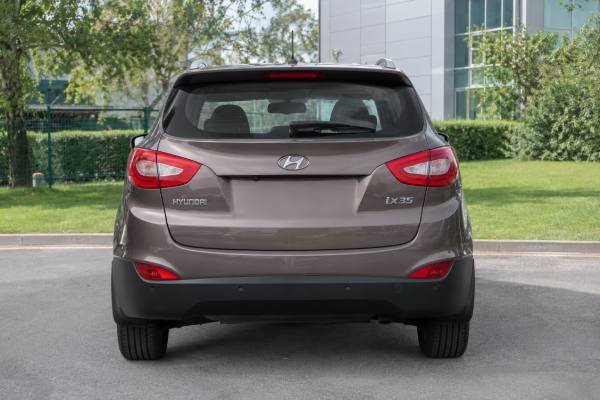
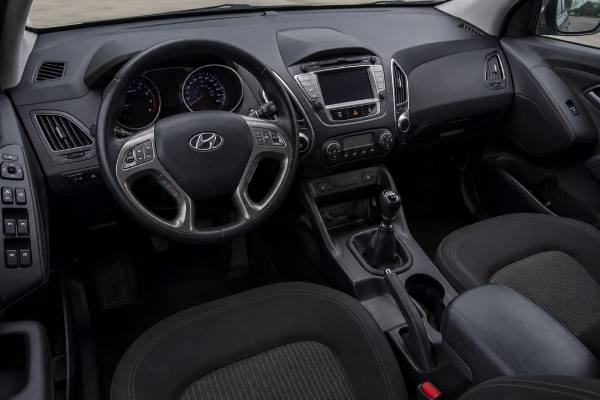
The facelifted Hyundai ix35 2.0 GDi 4WD is the petrol, all-wheel-drive version of Hyundai’s first-generation LM compact SUV. Sold in many markets from 2013 to 2015 before the Tucson name returned, it combines a naturally aspirated 2.0-litre direct-injection petrol engine with a practical five-seat body, a 6-speed manual or 6-speed automatic transmission, and an on-demand 4WD system.
This version is not the most economical ix35, and it is not as torquey as the 2.0 CRDi diesel, but it appeals to buyers who want simpler petrol ownership, winter traction, good cabin space, and fewer diesel-emissions concerns. The key is buying one with clean oil history, a healthy driveline, no unresolved recall work, and no neglected 4WD or brake-system maintenance.
Final Verdict
The Hyundai ix35 2.0 GDi 4WD is a sensible used compact SUV for drivers who want petrol reliability, useful all-weather traction, and family-friendly space without moving into a larger, costlier SUV. Its strongest appeal is its simple, naturally aspirated character paired with a roomy cabin and generally affordable parts. It suits mixed family use, light towing, winter roads, and owners who do moderate annual mileage. The main tradeoff is fuel economy: the 2.0 GDi is thirstier than the diesel and needs clean oil, good plugs, and attention to direct-injection carbon build-up. Buy only after confirming recall completion, service history, and 4WD system condition.
| Pros | Cons |
|---|---|
| Roomy cabin and boot for a compact SUV | Real-world fuel use is high for 166 hp |
| Petrol engine avoids diesel DPF and injector worries | Direct injection can develop intake carbon build-up |
| On-demand 4WD improves winter and wet-road traction | 4WD coupling, rear diff, and tyres need inspection |
| Facelift cabin and equipment feel more modern | Limited driver-assistance technology by current standards |
| Good parts availability through Tucson/Sportage family links | Recall history makes VIN checking essential |
Table of Contents
- Hyundai ix35 2.0 GDi 4WD Overview
- Specifications and Technical Data
- Trims, Safety, and Driver Assistance
- Reliability, Common Issues, and Recalls
- Maintenance and Used Buying Guide
- Driving, Performance, and Fuel Economy
- How the ix35 2.0 GDi 4WD Compares to Rivals
Hyundai ix35 2.0 GDi 4WD Overview
The 2013–2015 facelift ix35 2.0 GDi 4WD is best understood as a practical petrol family SUV with extra traction, not as an off-roader or performance crossover. Its 166 hp engine is smooth enough for daily use, but the 4WD system and SUV body add weight, so it rewards relaxed driving more than hard acceleration.
The LM-generation ix35 replaced the earlier Tucson in many global markets, then was itself replaced by the next Tucson. The 2013 facelift brought a cleaner exterior, improved interior materials, updated infotainment availability, revised lighting on some trims, and a more modern petrol engine range in several markets. The 2.0 GDi D-CVVT version uses Hyundai’s Nu-family direct-injection four-cylinder engine, known as G4NC in many listings.
D-CVVT means dual continuously variable valve timing. In plain terms, the engine can adjust intake and exhaust valve timing to improve drivability, emissions, and efficiency. GDi means gasoline direct injection, where fuel is injected directly into the combustion chamber rather than upstream in the intake port. This improves combustion control but also means the intake valves do not get the same fuel-washing effect as older port-injected engines.
The 4WD system is an on-demand setup. Most of the time, the ix35 behaves like a front-wheel-drive SUV. When the system detects slip or predicts the need for more traction, it can send torque to the rear wheels. A 4WD lock mode is useful at low speeds on snow, mud, wet grass, or loose gravel, but it is not meant for dry-road cornering or heavy off-road use.
For used buyers, the petrol 2.0 GDi is attractive if most driving is urban, short-distance, or low annual mileage. That is exactly the pattern where many older diesels become troublesome. The downside is consumption. A diesel ix35 is much more efficient on long journeys, while the 2.0 GDi 4WD often returns economy closer to a larger SUV than a small hatchback.
The best examples are privately owned cars with regular oil changes, matched tyres, no warning lights, clean coolant, smooth gear changes, and documented recall completion. Avoid cars with vague service history, mismatched tyre brands across axles, whining rear driveline noises, rough idle, heavy oil use, or signs of water entering the cabin.
Specifications and Technical Data
The ix35 2.0 GDi 4WD uses a front-mounted transverse petrol engine, a 6-speed manual or 6-speed automatic transmission, and an on-demand all-wheel-drive system. The most important technical points are the naturally aspirated 2.0-litre direct-injection engine, modest torque output, practical SUV dimensions, and the fuel-use penalty that comes with 4WD.
| Item | Hyundai ix35 2.0 GDi 4WD |
|---|---|
| Production years | 2013–2015 facelift LM generation |
| Engine family/code | Hyundai Nu 2.0 GDi, commonly G4NC |
| Fuel type | Petrol/gasoline |
| Displacement | 1,998 cc, 2.0 litres |
| Layout | Inline-4, DOHC, 16 valves, D-CVVT |
| Fuel system | Gasoline direct injection |
| Induction | Naturally aspirated |
| Power | 166 hp / 122 kW at 6,200 rpm |
| Torque | 205 Nm / 151 lb-ft at 4,000 rpm |
| Bore × stroke | 81.0 × 97.0 mm |
| Compression ratio | 11.5:1 |
| Timing drive | Timing chain |
| Item | Manual | Automatic |
|---|---|---|
| Transmission | 6-speed manual | 6-speed automatic |
| Drive type | On-demand 4WD | On-demand 4WD |
| 0–100 km/h | About 10.7 seconds | About 11.0 seconds |
| Top speed | About 195 km/h | About 180 km/h |
| Official combined economy | 7.6 L/100 km | 8.2 L/100 km |
| Urban economy | 9.9 L/100 km | 10.6 L/100 km |
| Extra-urban economy | 6.3 L/100 km | 6.8 L/100 km |
| Emissions standard | Euro 5 | Euro 5 |
| Item | Value |
|---|---|
| Body style | 5-door compact SUV |
| Seats | 5 |
| Length | 4,410 mm / 173.6 in |
| Width | 1,820 mm / 71.7 in |
| Height | About 1,655 mm / 65.2 in |
| Wheelbase | 2,640 mm / 103.9 in |
| Turning circle | About 10.6 m / 34.7 ft |
| Kerb weight | About 1,450–1,469 kg |
| Gross vehicle weight | About 2,030 kg |
| Boot volume | 591–1,436 litres / 20.9–50.7 cu ft |
| Fuel tank | 55 litres / 14.5 US gal |
| Item | Value or note |
|---|---|
| Front suspension | MacPherson strut independent |
| Rear suspension | Independent multi-link/coil spring layout |
| Front brakes | Ventilated discs |
| Rear brakes | Solid discs |
| Steering | Electric power-assisted rack and pinion |
| Common tyres | 225/60 R17 or 225/55 R18 |
| Typical tyre pressure | 2.3 bar normal load; higher under maximum load |
| Wheel-nut torque | 88–107 Nm / 65–79 lb-ft |
| Engine oil capacity | About 4.1 litres drain and refill |
| Petrol engine oil grade | ACEA A3/A5; viscosity by climate |
| Automatic transmission fluid | ATF SP-IV specification |
| Coolant capacity | About 6.7 litres petrol engine |
Trims, Safety, and Driver Assistance
Equipment varies strongly by market, so trim names matter less than the actual fitted features. The best used ix35 2.0 GDi 4WD cars usually have climate control, alloy wheels, parking sensors or camera, Bluetooth, cruise control, and a documented 4WD system rather than just cosmetic SUV styling.
In Europe and nearby markets, trim names commonly included versions similar to Classic, Comfort, Style, Premium, Executive, or market-specific equivalents. In Australia and some other right-hand-drive markets, Active, Elite, and Highlander-style grades were used. The 2.0 GDi 4WD was not offered in every country, and some markets paired petrol AWD mainly with automatic transmission.
Functional differences to check include transmission, wheel size, lighting, infotainment, parking camera, panoramic roof, and whether the vehicle has full-size or temporary mobility-kit spare equipment. A panoramic roof is attractive but should be checked for drain function, rattles, and smooth blind operation. Larger 18-inch wheels sharpen the look but make the ride firmer and tyres more expensive.
Quick identifiers include 4WD badging, a 4WD lock button in the cabin, rear differential and driveshaft hardware underneath, GDi engine cover markings, and VIN/build data. Do not rely only on tailgate badges because badges can be removed or replaced.
The ix35 achieved a five-star Euro NCAP result when tested in 2010, with strong adult and child occupant protection for its period. The rating belongs to the LM generation and is useful context for facelift cars, although testing standards have become much tougher since then. Compared with modern compact SUVs, the ix35 lacks the active crash-avoidance systems that now heavily influence safety ratings.
Safety equipment typically includes front airbags, front side airbags, curtain airbags, anti-lock brakes, electronic stability control, traction control, seat-belt reminders, ISOFIX/LATCH child-seat mounting points, and three-point belts for rear seating positions. Depending on market and trim, reversing sensors, a rear camera, hill-start assist, downhill brake control, tyre-pressure monitoring, and active front head restraints may be fitted.
Advanced driver-assistance technology is limited. Do not expect factory autonomous emergency braking, adaptive cruise control, lane-keeping assist, blind-spot monitoring, or traffic-sign recognition on most 2013–2015 ix35 examples. After windscreen replacement, suspension repairs, or steering work, confirm that stability-control and steering-angle systems have no stored faults.
Reliability, Common Issues, and Recalls
A well-serviced ix35 2.0 GDi 4WD can be durable, but neglected examples can become expensive because the engine, automatic transmission, 4WD coupling, tyres, and brakes all depend on regular care. The biggest used-buy priorities are engine oil history, clean driveline operation, brake-system recall status, and evidence that the car has not been run cheaply on mismatched tyres.
| Issue area | Prevalence | Symptoms | Likely remedy |
|---|---|---|---|
| GDi intake carbon | Occasional | Rough idle, hesitation, weak low-speed response | Diagnosis, induction cleaning, correct oil service |
| Oil consumption | Occasional | Low dipstick level, smoke, noisy cold starts | Consumption test, PCV check, engine inspection |
| Timing chain wear | Rare to occasional | Rattle at start-up, timing correlation fault codes | Chain, guides, tensioner inspection or replacement |
| Ignition coils/plugs | Common with age | Misfire, flashing engine light, poor fuel economy | Replace plugs and faulty coils with correct parts |
| 4WD coupling or rear driveline | Occasional | AWD warning, binding, clunks, rear-end noise | Scan system, inspect coupling, diff, tyres, fluids |
| Suspension wear | Common with mileage | Knocks, wandering, uneven tyre wear | Drop links, bushes, ball joints, alignment |
| Brake corrosion | Common with age | Judder, dragging, poor handbrake action | Caliper service, discs/pads, brake-fluid change |
The 2.0 GDi’s direct-injection system is efficient on paper, but it makes oil quality and driving pattern more important. Cars used only for short urban trips can suffer fuel dilution, moisture build-up, carbon deposits, and faster oil ageing. A long motorway run helps, but it does not replace proper maintenance.
Listen carefully on a cold start. A brief noise is not automatically a disaster, but a sharp chain rattle, persistent ticking, or knock from the lower engine is a reason to walk away unless a specialist has diagnosed it. Check for stored misfire, camshaft timing, fuel pressure, oxygen sensor, and catalyst-efficiency codes.
The 6-speed automatic is usually smooth when healthy. Harsh engagement, flares between gears, vibration on light throttle, or delayed reverse engagement point to a car that needs proper diagnosis. “Sealed for life” language should not stop a buyer from valuing evidence of clean ATF service, especially on an older SUV used in traffic or for towing.
The 4WD system depends on four matching tyres with similar tread depth. Different rolling diameters can confuse the driveline and stress the coupling. During a test drive, turn slowly in both directions, accelerate on a loose or wet surface if safe, and check for warning lights. Underneath, inspect the rear differential, coupling, driveshaft boots, prop shaft, and mounting bushes.
Recall history is important. Some ix35/Tucson-era Hyundai vehicles have been subject to ABS/HECU/ESC electrical short or fire-risk recalls in specific markets and VIN ranges. UK recall data lists an ABS control-unit short concern for 2013 iX35 vehicles, while Australian and Irish notices identify brake-fluid or fuse-protection related concerns on certain production ranges. A used buyer should verify by VIN with Hyundai or the official recall database in the country where the car is registered, not by model year alone.
Maintenance and Used Buying Guide
The safest maintenance approach is to service the ix35 2.0 GDi more often than the longest possible interval, especially if it does short trips, city driving, cold starts, towing, or dusty-road use. A realistic used-car plan is oil every 10,000–12,000 km or yearly, plus scheduled checks for brakes, tyres, coolant, transmission fluid, and the 4WD driveline.
| Interval | Recommended work |
|---|---|
| Every 10,000–12,000 km or 12 months | Engine oil and filter; inspect leaks, belts, hoses, brakes, tyres, lights |
| Every 15,000–20,000 km | Cabin filter; inspect engine air filter and replace sooner in dust |
| Every 30,000 km | Replace spark plugs if standard plugs are fitted; inspect ignition coils |
| Every 45,000–60,000 km | Engine air filter; inspect fuel system, vapour hoses, suspension, steering |
| Every 2 years | Brake fluid; inspect calipers, discs, handbrake, brake hoses |
| Every 60,000–80,000 km | Consider ATF service on automatics; inspect manual gearbox oil condition |
| Every 60,000–90,000 km | Inspect transfer coupling, rear differential, driveshafts, prop shaft |
| Every 90,000 km or 5 years | Coolant inspection or replacement depending on service history and market guidance |
| At every tyre change | Match all four tyres; align suspension; rotate tyres if wear pattern allows |
| From 8–10 years old | Test 12 V battery, starter, alternator output, earth points, charging voltage |
Use the correct oil specification and viscosity for climate. The owner information for petrol engines lists ACEA A3/A5 quality and climate-based viscosity choices such as 5W-30 or 5W-40. In hot climates or hard use, a high-quality oil that matches the manual and local dealer guidance matters more than chasing the thinnest possible oil.
The timing chain has no routine replacement interval like a timing belt. It should be inspected if there is start-up rattle, timing-related fault codes, poor running, or evidence of long oil-change neglect. Replacing only the chain without checking guides, tensioner, sprockets, and oil-pressure condition is a false economy.
For the automatic, insist on smooth shifts from cold and hot. If fluid has never been changed, a gentle service with correct ATF SP-IV is usually preferable to aggressive flushing on a high-mileage unknown gearbox. For manuals, check clutch bite, gear selection, bearing noise, and any vibration under acceleration.
A strong buying checklist should include:
- VIN recall check with printed or digital proof of completion.
- Oil-change records with dates and mileage, not just stamps.
- Cold start after the car has sat overnight.
- Full diagnostic scan of engine, ABS/ESC, 4WD, airbag, and transmission modules.
- Four matching tyres with similar tread depth.
- Inspection of rear differential, coupling, prop shaft, CV joints, and boots.
- Brake-fluid condition, caliper movement, and handbrake operation.
- Coolant level, radiator condition, water pump area, and heater performance.
- Check for damp carpets, blocked roof drains, tailgate leaks, and corrosion underneath.
- Road test over bumps, at motorway speed, and during tight low-speed turns.
The most attractive cars are usually mid-to-high trims with sensible wheels, working air conditioning, clean MOT/inspection history, no tow abuse, and no cheap electrical modifications. Avoid a high-spec car if the panoramic roof, navigation, reverse camera, 4WD system, or automatic gearbox is already faulty; the repair bill can erase the value advantage.
Driving, Performance, and Fuel Economy
The ix35 2.0 GDi 4WD drives like a comfortable, slightly heavy compact SUV. It is easy to use, stable on the motorway, and confident in poor weather, but it does not feel fast and needs revs when fully loaded or climbing hills.
In city driving, the engine is smooth and quiet at light throttle. The automatic suits stop-start use better, while the manual gives more control and slightly better official economy. The 205 Nm torque peak arrives at 4,000 rpm, so it does not have the low-rpm pull of the 2.0 CRDi diesel. Press the throttle hard and the engine becomes louder rather than effortlessly quick.
The steering is light, parking is easy, and visibility is decent, although the rear pillars and high tail can make a reversing camera valuable. Ride quality is best on 17-inch wheels. The 18-inch setup looks sharper but can make broken urban roads feel more abrupt.
Handling is secure rather than entertaining. The ix35 leans if pushed, but it is predictable and well suited to family driving. The stability-control system is reassuring in rain and winter conditions. The on-demand 4WD system is most useful when pulling away on slippery surfaces, climbing snowy streets, crossing wet fields, or driving on rough tracks. It is not a low-range off-road system, and ground clearance, tyres, and approach angles limit serious off-road work.
Braking feel is adequate when the system is fresh. On older cars, rusty rear discs, sticky calipers, old fluid, and budget tyres have a bigger effect on stopping confidence than the original brake design. A straight, smooth stop from motorway speed is a useful test-drive check.
Official combined consumption is 7.6 L/100 km for the manual and 8.2 L/100 km for the automatic, but real driving is usually higher. Expect roughly 9.0–11.5 L/100 km in mixed use, 10.5–13.0 L/100 km in heavy urban driving, and 7.5–9.0 L/100 km on relaxed highways. That equals about 20–31 mpg US or 24–37 mpg UK depending on route, speed, gearbox, tyres, and weather.
Towing ability depends on market, gearbox, and exact homologation. Many listings show higher braked ratings for manual petrol versions and lower ratings for automatics, while some market brochures list 1,600 kg braked and 750 kg unbraked. For legal towing, use the VIN plate, registration document, and local Hyundai data rather than a generic internet figure. In practice, the petrol 2.0 GDi can tow light trailers well enough, but the diesel is better for heavy caravans because it has much more low-rpm torque.
How the ix35 2.0 GDi 4WD Compares to Rivals
The ix35 2.0 GDi 4WD is strongest against rivals when price, equipment, space, and petrol simplicity matter more than fuel economy or brand prestige. It is less appealing if the buyer wants sharp handling, modern ADAS, premium cabin quality, or diesel-like towing strength.
| Rival | Where the ix35 is stronger | Where the rival may be better |
|---|---|---|
| Kia Sportage 2.0 petrol AWD | Very similar platform, often strong equipment value | Sportage styling and trim availability may suit some buyers |
| Nissan Qashqai petrol | ix35 has more SUV presence and cargo space | Qashqai often feels lighter and more economical |
| Toyota RAV4 petrol AWD | ix35 can be cheaper with good equipment | RAV4 usually has stronger resale and durability reputation |
| Honda CR-V petrol AWD | ix35 is more compact and often less expensive | CR-V offers a larger cabin and excellent practicality |
| Volkswagen Tiguan petrol 4Motion | ix35 has simpler value appeal and lower purchase cost | Tiguan feels more refined and premium inside |
| Mazda CX-5 petrol AWD | ix35 may cost less on the used market | CX-5 is sharper to drive and often more efficient |
Against the Kia Sportage, the ix35 is mechanically close. The best choice often comes down to condition, history, equipment, and price rather than a clear engineering advantage. Both need the same caution around GDi engine maintenance, AWD hardware, suspension wear, and recall checks.
Against the Qashqai, the ix35 feels more substantial and has a more traditional SUV shape. The Nissan is usually easier on fuel and easier to place in tight streets, but the Hyundai offers a roomier, more rugged-feeling package.
Against the RAV4 and CR-V, the ix35 wins mainly on purchase value. Toyota and Honda rivals often command higher used prices because of their reputations, but a clean ix35 with full service history can be a better buy than a neglected premium-priced alternative.
The most important comparison is not badge against badge. It is condition against condition. A well-maintained ix35 2.0 GDi 4WD with completed recalls, good tyres, clean fluids, and a quiet driveline is far more desirable than a higher-rated rival with hidden corrosion, poor service records, and warning lights.
References
- Hyundai ix35 (Facelift 2013) 2.0 GDI (166 Hp) 4X4 | Technical specs, data, fuel consumption, Dimensions 2026 (Specifications)
- HYUNDAI IX35 OWNER’S MANUAL Pdf Download | ManualsLib 2013 (Owner’s Manual)
- Hyundai ix35 | Safety Rating & Report | ANCAP 2010 (Safety Rating)
- HYUNDAI iX35 2013 – Check if a vehicle, part or accessory has been recalled – GOV.UK 2022 (Recall Database)
- REC-006298 – Hyundai Motor Company – HYUNDAI iX35 2012 – 2013 | Vehicle Recalls 2025 (Recall Database)
Disclaimer
This article is for informational purposes only and is not a substitute for professional diagnosis, repair advice, or official service documentation. Specifications, torque values, maintenance intervals, fluids, towing limits, recall applicability, and repair procedures can vary by VIN, market, equipment, production date, and previous service history. Always verify critical information against the official owner’s manual, service manual, VIN plate, dealer records, and local Hyundai recall database before buying, servicing, towing, or repairing the vehicle.
If this guide helped you, please consider sharing it on Facebook, X/Twitter, or your preferred social platform to support our work.