

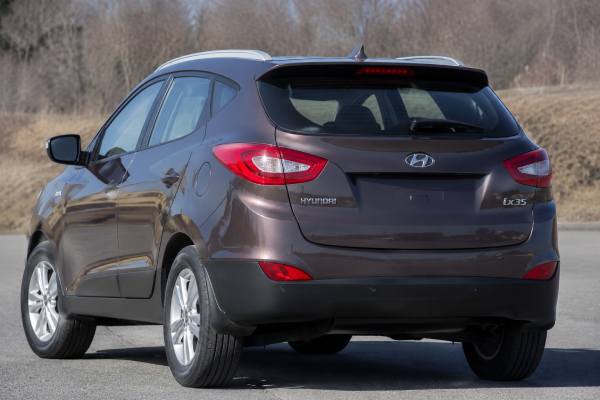
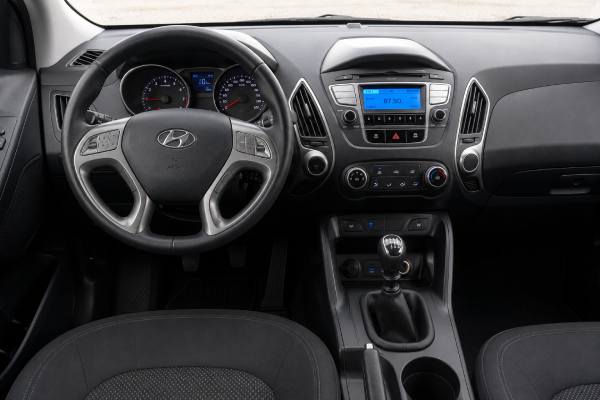
The facelift Hyundai ix35 4WD with the 184 hp 2.0 CRDi diesel is one of the stronger versions of Hyundai’s LM-generation compact SUV. Sold in many markets from 2013 to 2015, it combines a torquey R-series diesel engine, available manual or automatic transmission, and an electronically controlled 4WD system in a practical five-seat body.
Its appeal is simple: it gives family SUV practicality, useful winter traction, good equipment, and strong mid-range performance without moving into the running-cost territory of larger SUVs. The best examples are not necessarily the lowest-mileage cars. They are the ones with regular oil changes, documented drivetrain-fluid service, completed safety campaigns, and evidence that the diesel emissions system has not spent its life doing short cold trips.
Final Verdict
The Hyundai ix35 4WD 2.0 CRDi 184 hp is a strong used choice for drivers who want a compact SUV with real diesel torque, decent towing ability, winter confidence, and generous equipment for the money. It suits commuters, families, and rural owners who cover longer journeys more than short urban hops. Its main tradeoff is age-related diesel and AWD maintenance: DPF, EGR, timing-chain noise, automatic shift quality, and rear driveline condition matter more than badge appeal. Buy one only with service proof, recall checks, clean cold-start behavior, and no warning lights from the ABS, engine, transmission, or 4WD systems.
| Pros | Cons |
|---|---|
| 184 hp diesel gives strong mid-range pull for hills and towing | Short-trip use can clog DPF and EGR hardware |
| 4WD improves wet-road, snow, gravel, and light-trailer traction | Rear coupling, transfer case, and differential need fluid attention |
| Facelift models often have good equipment and improved cabin feel | Modern ADAS such as AEB and adaptive cruise is generally absent |
| Five-seat cabin and large boot make it genuinely family usable | Ride can feel firm on 18-inch wheels and tired suspension |
| Manual versions can tow well in many European specifications | Automatic versions use more fuel and need careful shift checks |
Table of Contents
- Hyundai ix35 184 CRDi Overview
- Specifications and Technical Data
- Trims, Options, Safety and Driver Assistance
- Reliability, Common Issues and Service Actions
- Maintenance and Buyer’s Guide
- Driving, Performance and Efficiency
- How the Hyundai ix35 Compares to Rivals
Hyundai ix35 184 CRDi Overview
The 184 hp Hyundai ix35 2.0 CRDi 4WD is the version to consider if you want the strongest diesel performance in the facelift LM range. It is not a hardcore off-roader or a sporty SUV, but it is a capable all-weather family crossover with useful torque, a large boot, and better long-distance manners than the smaller petrol versions.
The LM-generation ix35 replaced the first Tucson in many markets and was itself replaced by the next Tucson after 2015. The 2013 facelift brought updated exterior lighting, revised trim details, equipment changes, and a more mature cabin. Under the bonnet, this version uses Hyundai’s R-series 2.0-litre common-rail diesel, commonly identified as the D4HA engine family.
The key attraction is torque. With 392 Nm available from low revs, the 184 hp diesel pulls confidently from motorway speeds, climbs hills without constant downshifts, and feels much more relaxed with passengers or a trailer than the lower-output diesel and petrol versions. The 4WD system is normally front-biased but can send torque rearward when the front wheels lose grip. Many versions also have a low-speed 4WD lock mode for snow, mud, grass, or loose tracks.
It is best understood as a road-biased SUV with extra traction, not a ladder-frame 4×4. Ground clearance, tyres, approach angles, and cooling capacity all matter if the car is used heavily off-road or for frequent towing. For normal winter roads, rural lanes, wet motorways, and occasional rough access tracks, the setup works well.
Used buyers should focus on condition rather than specification alone. A well-maintained ix35 2.0 CRDi 4WD can cover high mileages, but neglected diesel hardware and ignored drivetrain fluids can turn a cheap SUV into an expensive one. The most important checks are cold-start noise, engine warning lights, DPF history, transmission behavior, 4WD operation, suspension condition, brake corrosion, and proof that relevant ABS/ESC safety campaigns have been completed.
Specifications and Technical Data
The facelift ix35 2.0 CRDi 184 hp 4WD uses a front-transverse four-cylinder diesel with common-rail injection, turbocharging, an intercooler, and a diesel particulate filter. It was offered with a 6-speed manual or 6-speed automatic transmission depending on market and trim. The specification is strongest when viewed as a practical torque-led SUV package: useful power, meaningful towing capacity, and a simple five-seat body.
| Item | Hyundai ix35 2.0 CRDi 184 hp 4WD |
|---|---|
| Engine family | Hyundai R II / D4HA diesel |
| Displacement | 2.0 litres / 1,995 cc |
| Layout | Inline-4, front transverse |
| Valvetrain | DOHC, 16 valves |
| Bore × stroke | 84.0 × 90.0 mm |
| Compression ratio | 16.5:1 |
| Induction | Turbocharged and intercooled |
| Fuel system | Common-rail direct diesel injection |
| Maximum power | 184 hp / 135 kW at 4,000 rpm |
| Maximum torque | 392 Nm / 289 lb-ft at 1,800–2,500 rpm |
| Emissions equipment | Euro 5 with diesel particulate filter |
| Version | Urban | Extra-urban | Combined |
|---|---|---|---|
| 6-speed manual 4WD | 7.2 L/100 km | 5.3 L/100 km | 6.0 L/100 km |
| 6-speed automatic 4WD | 9.1 L/100 km | 6.0 L/100 km | 7.1 L/100 km |
| Item | Specification |
|---|---|
| Manual transmission | 6-speed manual |
| Automatic transmission | 6-speed torque-converter automatic |
| Drive type | Electronically controlled on-demand 4WD/AWD |
| 4WD lock function | Low-speed lock mode fitted on many versions |
| Front suspension | MacPherson struts |
| Rear suspension | Independent multi-link layout with coil springs |
| Front brakes | Ventilated discs with ABS |
| Rear brakes | Disc brakes |
| Steering | Electric power-assisted rack and pinion |
| Item | Figure |
|---|---|
| Body style | 5-door compact SUV, 5 seats |
| Length | 4,410 mm |
| Width | 1,820 mm |
| Height | 1,655–1,660 mm depending specification |
| Wheelbase | 2,640 mm |
| Turning circle | 10.58 m |
| Curb weight | About 1,525 kg manual; about 1,601 kg automatic |
| Gross vehicle weight | 2,140 kg |
| Maximum payload | About 539–615 kg depending transmission |
| Cargo capacity | 591 litres seats up; 1,436 litres seats folded |
| Fuel tank | 55 litres in published facelift technical data |
| Common tyre sizes | 225/60 R17 or 225/55 R18 |
| Item | Figure |
|---|---|
| 0–100 km/h | 9.8 seconds |
| Top speed | 194–195 km/h depending transmission |
| Braked towing capacity | Up to 2,000 kg manual in many European specs; 1,600 kg automatic or some markets |
| Unbraked towing capacity | 750 kg in many published specifications |
| Typical towball limit | About 80 kg where specified |
| Item | Useful value |
|---|---|
| Engine oil capacity | About 8.0 litres |
| Typical diesel oil grade | ACEA C3 low-SAPS 5W-30 for DPF-equipped engines |
| Coolant capacity | About 8.5 litres |
| Brake and clutch fluid | DOT 3 or DOT 4 |
| Automatic transmission fluid | Hyundai SP-IV specification |
| Transfer case oil | API GL-5 SAE 75W-90, about 0.6 litres |
| Rear differential oil | API GL-5 SAE 75W-90, about 0.65 litres |
Trims, Options, Safety and Driver Assistance
Trim names vary by country, but the 184 hp CRDi 4WD was usually positioned as a better-equipped diesel rather than a budget model. Mechanical differences between trims are limited; the meaningful changes are wheels, lighting, infotainment, upholstery, parking aids, comfort equipment, and whether the car has manual or automatic transmission.
Trims, equipment and quick identifiers
European facelift cars commonly appeared in mid- and upper-grade trims, with names such as Style, Premium, Executive, Comfort, SE, Premium, or Premium Panorama depending on market. The strongest diesel 4WD versions often came with 17- or 18-inch alloy wheels, roof rails, cruise control, Bluetooth, climate control, heated seats, parking sensors, a rear-view camera, touchscreen navigation, upgraded audio, leather or part-leather upholstery, bi-xenon headlights, a panoramic roof, and keyless entry.
Quick ways to identify the correct version include:
- Look for CRDi and 4WD badging, though badges can be removed or replaced.
- Check the VIN, build plate, registration data, and engine code rather than trusting advert text.
- Inspect underneath for a prop shaft, rear differential, and rear driveline hardware.
- Confirm the engine output, because 2.0 CRDi ix35 models were sold in more than one power level.
- Check whether it is the facelift body, with updated lighting and trim details from 2013 onward.
The facelift period brought equipment improvements such as LED daytime running lights on many grades, updated interior finishes, revised instrument and infotainment options, and features such as tyre-pressure monitoring on some market versions. By 2015, the ix35 was reaching the end of its cycle as Hyundai prepared the Tucson replacement, so late cars can be well equipped but still lack the advanced driver-assistance systems common on newer SUVs.
Safety ratings and crash protection
The ix35 achieved a five-star Euro NCAP result under the 2010 test protocol. The published category scores were strong for the period: adult occupant protection at 90%, child occupant protection at 88%, pedestrian protection at 54%, and safety assist at 71%. That is good context for a 2010-era compact SUV, but it should not be read as equivalent to a five-star result under newer, much tougher Euro NCAP test regimes.
In Australia and some other markets, the ix35 also carried a five-star safety rating for relevant model years. Buyers should still confirm the exact local rating because crash-test equivalence, model-year coverage, and equipment assumptions can differ between regions.
Standard or widely fitted safety equipment included front airbags, front side airbags, curtain airbags, active front head restraints, ABS, electronic brake-force distribution, electronic stability control, traction control, hill-start assistance, downhill brake control, emergency stop signal, rollover-related stability functions, and ISOFIX child-seat mounting points.
Driver assistance and calibration points
The ix35 is from the pre-mainstream ADAS era. Parking sensors, a rear camera, automatic headlights, rain-sensing wipers, tyre-pressure monitoring, and Smart Parking Assist appeared on some trims, but features such as autonomous emergency braking, adaptive cruise control, lane centering, blind-spot intervention, and modern traffic-sign recognition were generally not part of this model’s core safety package.
After accident repair, suspension work, steering work, windscreen replacement, or ABS/ESC repairs, make sure related sensors are calibrated or checked. The key systems are steering-angle sensing, yaw-rate and wheel-speed sensors, TPMS, parking sensors, reversing camera alignment, rain/light sensors, and xenon headlamp leveling where fitted.
Reliability, Common Issues and Service Actions
A well-serviced ix35 2.0 CRDi 4WD is generally durable, but age now matters as much as mileage. The main risk areas are diesel emissions hardware, timing-chain noise, automatic transmission behavior, AWD driveline wear, suspension parts, electrical faults, and safety recalls involving ABS/ESC modules in some markets.
| Issue | Prevalence and cost | Symptoms | Likely remedy |
|---|---|---|---|
| DPF, EGR and intake soot | Common with short trips; medium to high cost | Limp mode, frequent regens, smoke, warning lights | Diagnose properly, clean or replace failed parts, fix driving pattern |
| Timing-chain stretch or tensioner wear | Occasional; high cost if ignored | Cold-start rattle, uneven running, timing faults | Inspect chain system and replace chain kit when out of spec |
| Turbo control or boost leaks | Occasional; medium to high cost | Low power, whistle, underboost codes, black smoke | Check hoses, actuator, vacuum control, intercooler and turbocharger |
| Fuel filter, injector or glow-plug faults | Occasional; medium cost | Hard starting, rough idle, diesel knock, water warning | Replace filter, test injectors, check glow system and fuel pressure |
| 6-speed automatic shift faults | Occasional with age; medium to high cost | Delayed engagement, flare, harsh changes, shudder | Scan TCU, service SP-IV fluid, investigate before slipping worsens |
| Manual clutch and dual-mass flywheel | Occasional; medium to high cost | Judder, rattle, clutch slip, vibration on take-up | Replace clutch kit and flywheel if worn |
| 4WD coupling, transfer case or rear differential | Occasional; medium to high cost | AWD warning, binding, rear noise, poor traction | Service oils, scan AWD module, repair coupling or sensors |
| Suspension, wheel bearings and brake corrosion | Common age wear; low to medium cost | Knocks, humming, uneven tyres, seized rear brakes | Replace worn bushes, bearings, links, discs, pads and calipers |
| A/C condenser, compressor or pipe leaks | Common with age; low to medium cost | Weak cooling, oily stains, compressor noise | Leak test, replace failed part, recharge by weight |
Diesel-specific reliability points
The 2.0 CRDi is strongest when it receives frequent oil changes and regular fully warm journeys. Repeated short trips are hard on the DPF because the exhaust may not stay hot enough for clean regeneration. They also encourage EGR and intake contamination. A car used mainly for school runs may have lower mileage but worse diesel-system health than a higher-mileage motorway car.
On a cold start, listen for chain rattle at the front of the engine. A brief diesel clatter is normal, but a sharp metallic rattle, unstable idle, or timing-related fault codes should not be dismissed. Also check for oil leaks, coolant loss, boost-hose oil mist, injector correction values, and excessive smoke under load.
Driveline and chassis wear
The 4WD hardware is useful but adds service items. The transfer case and rear differential need clean oil, and the rear coupling should engage smoothly without warning lights or binding. On a test drive, use a tight low-speed turn on a clear surface, accelerate firmly on a loose or wet surface if safe, and check for thumps, grinding, or delayed rear engagement.
Automatic cars should engage Drive and Reverse promptly, shift cleanly when cold and hot, and avoid flares between gears. A fluid change cannot fix a badly worn transmission, but preventive SP-IV fluid service is much cheaper than replacing a gearbox. Manual cars need clutch bite-point checks, dual-mass flywheel noise checks, and a hill-start slip test.
Recalls, service actions and verification
ABS, ESC, or HECU-related recalls have affected ix35 vehicles in several markets. The core concern is that brake fluid or an internal module fault can lead to an electrical short circuit and, in some cases, a fire risk while parked or driving. The affected production ranges, remedies, and campaign codes vary by country, so a generic internet list is not enough.
Before buying, ask for dealer proof that all open campaigns have been completed. Then run an official VIN recall check through Hyundai or the local transport authority. Also check for any market-specific airbag, seatbelt pretensioner, fuse, ESC, or ABS module actions. A clean dashboard does not prove recall completion; only the VIN record and dealer history do.
Software updates can also matter. Engine, transmission, infotainment, TPMS, and stability-control modules may have revised calibrations for drivability, shift quality, warning-light behavior, and sensor logic. If the car has unexplained warning lights or rough transmission behavior, diagnosis should include software level checks, not just parts replacement.
Maintenance and Buyer’s Guide
The best ix35 2.0 CRDi 4WD to buy is the one with a clear maintenance trail. Mileage is less important than oil quality, diesel-use pattern, clean transmission behavior, documented AWD-fluid service, and proof that safety recalls have been handled.
| Item | Practical interval | Why it matters |
|---|---|---|
| Engine oil and filter | 10,000–15,000 km or 12 months | Use low-SAPS diesel oil to protect turbo, chain and DPF |
| Engine air filter | 15,000–30,000 km | Shorten interval for dusty roads or rural use |
| Cabin filter | Every year or 15,000 km | Improves HVAC airflow and reduces window misting |
| Diesel fuel filter | About 30,000 km, or sooner if contaminated | Protects high-pressure pump and injectors |
| Brake fluid | Every 2 years | Moisture damages braking and ABS hydraulic components |
| Coolant | Follow manual; commonly refreshed every 3–5 years | Protects aluminum engine, radiator, heater core and EGR cooler |
| Automatic transmission fluid | About 60,000 km for preventive service | Especially important for towing, hills and city heat |
| Manual gearbox oil | 60,000–90,000 km in hard use | Helps shift quality and bearing life |
| Transfer case and rear differential oil | 40,000–60,000 km | Often neglected on AWD SUVs |
| Timing chain system | Inspect for noise, stretch and timing faults | No routine belt interval; replace when wear is present |
| Auxiliary belt, pulleys and hoses | Inspect annually; replace around 90,000–120,000 km if worn | Prevents roadside failures and overheating |
| Brake pads, discs and calipers | Inspect at every service | Rear brakes can corrode or seize on low-use cars |
| Tyre rotation and alignment | 10,000–15,000 km | Protects AWD system and prevents uneven tyre wear |
| 12 V battery | Test yearly after 4 years | Weak batteries can trigger misleading electronic faults |
| Area | What to check |
|---|---|
| Engine cold start | Chain rattle, smoke, rough idle, warning lights and glow-plug behavior |
| DPF and EGR | Regeneration history, soot load, limp-mode codes and short-trip use |
| Transmission | Auto shift flare or manual clutch slip and flywheel vibration |
| 4WD system | Rear engagement, warning lights, coupling noise, matching tyres |
| Fluids | Oil grade, coolant condition, brake fluid age, AWD-fluid records |
| Suspension and steering | Ball joints, bushes, links, wheel bearings and uneven tyre wear |
| Body and water leaks | Tailgate area, door seals, sunroof drains and damp carpets |
| Electronics | TPMS, parking camera, navigation, keyless entry, window switches and A/C |
| Recalls | Official VIN check for ABS, ESC, fuse, airbag or seatbelt campaigns |
Which version should you buy?
The 6-speed manual is attractive if you tow, drive rural roads, and want lower fuel use, but only if the clutch and dual-mass flywheel are healthy. The automatic is easier in traffic and suits relaxed family use, but it uses more fuel and needs a careful hot test drive. Any hesitation, thump, flare, or delayed engagement should be diagnosed before purchase.
Higher trims are pleasant because they add heated seats, better lighting, navigation, camera systems, leather, upgraded audio, and panoramic roof options. The tradeoff is repair cost. Xenon lights, sunroofs, smart keys, parking systems, and infotainment units are useful when working but expensive when neglected.
Avoid cars with no oil history, unresolved warning lights, repeated DPF faults, mismatched tyres, signs of towing abuse, unexplained coolant loss, noisy timing chains, contaminated transmission fluid, or missing recall records. A slightly higher-priced example with full documentation is usually cheaper to own than a bargain car needing diesel, AWD, and electronic repairs at once.
Long-term durability outlook
A properly maintained ix35 2.0 CRDi 4WD can be a long-lived SUV. Many of the expensive failures are not random; they are linked to poor oil service, short-trip diesel use, ignored warning lights, old transmission fluid, neglected AWD oils, or corrosion around brakes and suspension. For long-term ownership, plan for preventive servicing rather than waiting for failures. The engine itself is capable, but the whole vehicle is now old enough that every purchase should include a diagnostic scan and a lift inspection.
Driving, Performance and Efficiency
The 184 hp ix35 CRDi feels stronger than its modest SUV image suggests. It is not sporty, but the torque makes it relaxed on hills, confident when loaded, and far more flexible than the smaller engines in the range.
The engine’s best work happens between about 1,800 and 2,500 rpm, where the full 392 Nm is available. Below that, there can be some turbo lag, especially in a high gear or with the automatic holding a tall ratio. Once the turbo is awake, the car pulls cleanly and does not need to be revved hard. This suits motorway driving, overtaking, mountain roads, and towing.
The manual gearbox gives more control on hills and can return better fuel economy, but it needs a healthy clutch and smooth shifting action. The automatic is more relaxed in town, though it can feel less eager if the fluid is old or the engine is outside its torque band. During a test drive, check both gentle shifts and full-throttle kickdown, then repeat when the car is fully warm.
Ride, handling and noise
The ix35 has secure road manners rather than sharp handling. It tracks well on motorways, feels stable in bad weather, and gives the driver a raised view without feeling as large as a full-size SUV. The steering is light and easy for parking, though feedback is limited. Body roll is present if you push hard into corners, but normal family driving feels predictable.
Ride comfort depends heavily on wheel size and suspension condition. Seventeen-inch wheels are usually more forgiving, while 18-inch wheels look better but can feel firmer over broken roads. Worn rear bushes, tired dampers, old tyres, or incorrect pressures can make the car feel noisier and more unsettled than it should.
Cabin noise is acceptable for the class and age. The diesel is audible at cold start and under acceleration, but it settles at cruising speed. Wind and tyre noise increase on rough asphalt, especially with budget tyres or worn wheel bearings.
Real-world fuel economy
The official combined figures are 6.0 L/100 km for the manual and 7.1 L/100 km for the automatic. In real use, a healthy manual often returns about 6.5–7.5 L/100 km in mixed driving, while the automatic is more commonly around 7.5–8.8 L/100 km. That equals roughly 31–36 mpg US for many mixed-use manuals and about 27–31 mpg US for many automatics.
Steady highway driving can bring figures close to 6.0–7.0 L/100 km if speeds are moderate and the tyres are correct. Urban driving, winter use, short journeys, roof boxes, towing, and aggressive acceleration can push consumption into the 9.0–10.0 L/100 km range or higher. Cold weather and repeated DPF regenerations can add a noticeable penalty.
Traction, snow and towing
The 4WD system is useful in rain, snow, loose gravel, muddy parking areas, and wet hills. It cannot replace proper winter tyres, but with good tyres it makes the ix35 much more confident than a front-wheel-drive crossover. The lock mode is most useful at low speeds on slippery surfaces; it is not designed for fast off-road driving.
For towing, the diesel torque is the main advantage. Manual versions in many European specifications are rated up to 2,000 kg braked, while automatic and some market versions are often rated around 1,600 kg. Always follow the exact VIN plate and local handbook figures. With a moderate trailer, expect fuel use to rise by 20–40%, and pay attention to brake condition, cooling health, nose weight, tyre pressures, and transmission-fluid service.
How the Hyundai ix35 Compares to Rivals
The ix35 2.0 CRDi 184 hp 4WD competes best on value, equipment, torque, and everyday practicality. Some rivals feel sharper, larger, more premium, or more modern, but the Hyundai remains attractive when bought carefully and maintained properly.
| Rival | Where the ix35 is stronger | Where the rival may be better |
|---|---|---|
| Kia Sportage 2.0 CRDi AWD | Very similar hardware, often strong used value | Some buyers prefer the Kia styling and cabin layout |
| Honda CR-V 2.2 i-DTEC AWD | Usually cheaper with strong equipment | CR-V offers more space and a more refined family feel |
| Toyota RAV4 2.2 D-4D AWD | Stronger value and often more generous kit | RAV4 has a robust reputation and larger-SUV practicality |
| Ford Kuga 2.0 TDCi AWD | More straightforward, roomy, and value-led | Kuga handles better and feels more driver-focused |
| Volkswagen Tiguan 2.0 TDI 4Motion | Lower purchase price and strong standard equipment | Tiguan feels more premium and may tow with greater polish |
| Nissan Qashqai or X-Trail diesel AWD | More torque-rich in this 184 hp form | Nissan alternatives may be lighter, simpler, or roomier by model |
Choose the ix35 if you want a compact diesel SUV with strong torque, 4WD traction, good boot space, and a lot of equipment for the price. Choose a Honda CR-V or Toyota RAV4 if maximum family space and a calmer ownership reputation matter more. Choose a Ford Kuga if handling is a priority. Choose a Tiguan if you want a more premium cabin and are comfortable with potentially higher parts and drivetrain-service costs.
The biggest reason to choose the Hyundai is not that it beats every rival on one single metric. It is that it balances power, practicality, traction, and price well. The biggest reason to walk away is poor maintenance history. Among diesel AWD SUVs of this age, condition is the real comparison test.
References
- Hyundai ix35 (Facelift 2013) 2.0 CRDi (184 Hp) 4X4 | Technical specs, data, fuel consumption, Dimensions 2026 (Technical Data)
- New HYUNDAI ix35 2014 (Manufacturer Brochure)
- Hyundai ix35 – Euro NCAP Results 2010 2010 (Safety Rating)
- REC-006298 – Hyundai Motor Company – HYUNDAI iX35 2012 – 2013 | Vehicle Recalls 2025 (Recall Database)
- Recalls by manufacturer (2025) – RSA 2025 (Recall Database)
Disclaimer
This article is for informational purposes only and is not a substitute for professional diagnosis, repair, inspection, or official service documentation. Specifications, torque values, fluid capacities, service intervals, towing limits, recall coverage, and repair procedures can vary by VIN, market, equipment, software level, and model-year detail. Always verify critical information against the official owner’s manual, workshop data, dealer records, and the vehicle’s VIN plate before servicing, buying, towing, or repairing the car.
If this guide helped you, please consider sharing it on Facebook, X/Twitter, or with another Hyundai ix35 owner. It helps support our work and makes practical used-car information easier to find.