

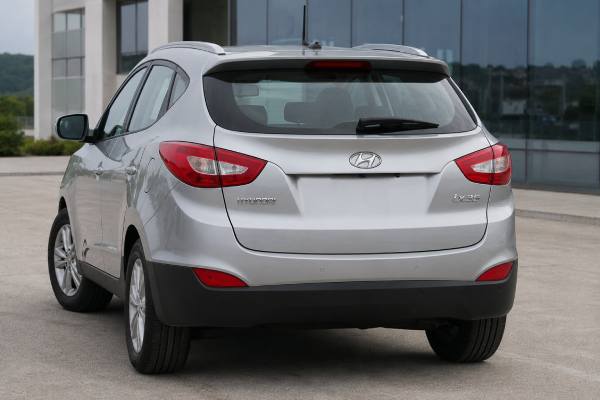
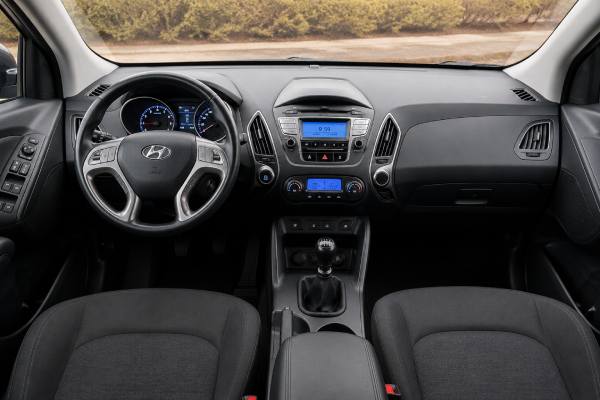
The Hyundai ix35 FWD with the 1.6-litre Gamma GDi petrol engine is the simple, front-wheel-drive version of Hyundai’s first-generation LM compact SUV. Sold in Europe and several other markets from around 2010 to 2013 in this form, it combines a roomy body, a naturally aspirated petrol engine, a 6-speed manual gearbox, and lower running complexity than diesel or AWD versions.
It is not the punchiest ix35, and it is not the best one for towing or frequent mountain driving. Its appeal is different: good cabin space, straightforward mechanical layout, decent official economy, and generally sensible maintenance costs. For used buyers, the important questions are engine condition, clutch wear, service history, rust underneath, and whether any ABS/ESC fire-risk recall work has been completed.
Final Verdict
The Hyundai ix35 1.6 GDi FWD is a good used compact SUV for drivers who want space, a high driving position, and petrol simplicity without AWD or diesel emissions hardware. It suits family errands, commuting, and moderate annual mileage better than heavy towing or fast motorway work, because the 135 hp engine needs revs and the manual gearbox does most of the work. Its main ownership tradeoff is that direct injection can bring intake carbon, oil-use, and timing-chain checks as mileage rises. Buy only with strong service records, a clean cold start, no clutch slip, and confirmed recall completion.
| Pros | Cons |
|---|---|
| Roomy LM-generation cabin with useful rear-seat and boot space | 1.6 GDi feels modest when fully loaded or climbing hills |
| FWD manual layout avoids AWD and automatic-transmission complexity | Clutch wear is common on city-driven or tow-used examples |
| Naturally aspirated petrol engine has no turbocharger to maintain | Direct injection can develop intake-valve carbon deposits |
| Good 2010-era crash-test result with standard ESC and airbags | No modern AEB, adaptive cruise, or lane-keeping assistance |
| Parts supply is generally strong thanks to Tucson/Sportage links | Recall status must be checked carefully by VIN |
Table of Contents
- Hyundai ix35 1.6 GDi Overview
- Specifications and Technical Data
- Trims, Options, Safety and Assistance
- Reliability, Common Issues and Service Actions
- Maintenance and Buyer’s Guide
- Driving and Performance
- How the Hyundai ix35 Compares to Rivals
Hyundai ix35 1.6 GDi Overview
The 1.6 GDi FWD is the most mechanically straightforward petrol ix35 of this period. It uses the LM-generation SUV body, front-wheel drive, a naturally aspirated direct-injection four-cylinder engine, and a 6-speed manual gearbox.
This version sits below the stronger 2.0 petrol and diesel ix35 models. That matters because the 1.6 GDi is not an all-purpose family tow car; it is a sensible everyday crossover for buyers who value space and low mechanical complexity more than effortless torque.
In European-market form, the engine is usually known as the 1.6 GDi Gamma, often listed with engine code G4FD. Output is around 135 PS, or about 133 hp depending on the market’s measurement convention, with peak torque of about 164–167 Nm. On paper, that looks adequate. In real driving, the torque arrives fairly high in the rev range, so the car feels best when driven smoothly and kept in the right gear.
The front-wheel-drive layout is a major part of this version’s appeal. There is no rear differential, transfer coupling, AWD clutch pack, or extra propshaft hardware to inspect. That saves weight, reduces complexity, and usually lowers repair exposure. It also means traction is ordinary on snow, mud, wet grass, and steep loose surfaces. Good tyres matter more than any badge on this variant.
The ix35 body is practical. The high roofline, wide-opening doors, and elevated seats make it easy to load children, shopping, luggage, and bulky items. The rear seat is adult-friendly for a compact SUV of its age, and the boot is large enough for family use. The cabin plastics are more durable than plush, but most controls are simple and easy to understand.
Where the ix35 shows its age is in refinement and driver assistance. It predates the modern small-SUV norm of standard autonomous emergency braking, lane-keeping assistance, digital displays, and connected infotainment. Higher trims may have navigation, rear camera, climate control, and panoramic roof equipment, but the core car remains a 2010-era crossover.
For used buyers, the best examples are not necessarily the lowest-mileage ones. A regularly serviced car with clean oil history, smooth clutch action, matching tyres, no warning lights, and completed recall work is a safer bet than a cheaper car with patchy records. The 1.6 GDi can last well, but it dislikes neglected oil changes, poor-quality fuel, repeated short trips, and being driven hard from cold.
Specifications and Technical Data
The Hyundai ix35 1.6 GDi FWD uses a transverse petrol engine, front-wheel drive, and a 6-speed manual transmission. It is the lightest and least complex powertrain configuration in the LM ix35 range, but it also has the least torque. The key technical point is that this is a naturally aspirated direct-injection petrol SUV, not a turbocharged engine and not an AWD model.
| Item | Hyundai ix35 1.6 GDi FWD |
|---|---|
| Engine family / code | Gamma 1.6 GDi, commonly listed as G4FD |
| Fuel type | Petrol / gasoline |
| Configuration | Inline-four, transverse front-mounted |
| Displacement | 1,591 cc / 1.6 litres |
| Induction | Naturally aspirated |
| Fuel system | Gasoline direct injection |
| Valvetrain | DOHC, 16 valves |
| Maximum power | 135 PS / 133 hp / 99 kW |
| Maximum torque | 164–167 Nm / about 121–123 lb-ft |
| Timing drive | Timing chain |
| Emissions standard | Euro 5 on typical 2010–2013 European examples |
| Official combined fuel economy | About 6.4–6.8 L/100 km, depending on listing and trim |
| Item | Specification |
|---|---|
| Transmission | 6-speed manual |
| Drive type | Front-wheel drive |
| Automatic availability | Not typical for this 1.6 GDi FWD version |
| AWD hardware | Not fitted to the FWD model covered here |
| Item | Specification |
|---|---|
| Body style | 5-door compact SUV |
| Seats | 5 |
| Length | 4,410 mm / 173.6 in |
| Width | 1,820 mm / 71.7 in |
| Height | About 1,660 mm / 65.4 in |
| Wheelbase | 2,640 mm / 103.9 in |
| Turning circle | About 10.6 m / 34.7 ft |
| Kerb weight | About 1,305–1,427 kg, depending on trim and method |
| Gross vehicle weight | About 1,830 kg |
| Boot capacity | Up to about 591 L seats up; about 1,436 L seats folded |
| Fuel tank | About 55 L |
| Towing capacity | About 1,200 kg braked; 750 kg unbraked on many listings |
| Item | Specification |
|---|---|
| Front suspension | Independent MacPherson strut |
| Rear suspension | Independent multi-link |
| Front brakes | Ventilated discs |
| Rear brakes | Solid discs |
| Steering | Rack-and-pinion with electric assistance |
| Common tyre sizes | 215/70 R16 or 225/60 R17 |
| Common wheel sizes | 16-inch or 17-inch alloy/steel wheels by trim |
| Metric | Figure |
|---|---|
| 0–100 km/h | About 11.1 seconds |
| Top speed | About 178 km/h / 111 mph |
| Best use case | Commuting, family use, light touring |
| Less suitable for | Heavy towing, regular full-load mountain driving |
Trims, Options, Safety and Assistance
Trim names vary by country, but the 1.6 GDi FWD usually sits in the lower and middle parts of the ix35 range. The core mechanical package stays broadly the same: 1.6 GDi petrol engine, manual gearbox, and front-wheel drive.
In the UK and similar European markets, trim names commonly included versions such as Classic, Style, Comfort, Active, SE, Premium, or market-specific equivalents. The exact labels changed by year and country, so equipment should be checked by the individual car rather than by badge alone.
Trim and equipment differences
Lower trims usually focus on the essentials: manual air conditioning, cloth seats, basic audio, steel or smaller alloy wheels, electric windows, central locking, and the standard safety package. These cars are often the best value if condition is good, because they avoid some age-sensitive luxury features.
Middle and higher trims may add:
- dual-zone climate control
- larger alloy wheels
- rear parking sensors or reversing camera
- touchscreen navigation
- upgraded audio
- cruise control
- heated front seats
- leather or part-leather upholstery
- automatic headlights and wipers
- panoramic glass roof on some versions
The panoramic roof is desirable but should be inspected carefully. Check for smooth operation, blocked drains, wind noise, water stains on the headlining, and evidence of previous sealant work. Larger wheels improve appearance but may make the ride firmer and tyres more expensive.
The 1.6 GDi model is easy to identify because it is typically badged as GDi or 1.6 GDi and paired with a manual gear lever. The FWD version has no AWD switch and no rear-driveline hardware underneath. On a lift, a FWD car will not have the rear differential and propshaft seen on AWD ix35 models.
Safety ratings
The ix35 performed well for its era. In 2010 testing, the model achieved a five-star Euro NCAP rating, with strong adult- and child-occupant scores for a compact SUV of that period. ANCAP also lists the ix35 with a five-star result for 4×2 and 4×4 variants built from August 2010, noting standard dual front airbags, side airbags, head-protecting side curtains, ABS, electronic brakeforce distribution, and electronic stability control.
That rating should be understood in context. A five-star 2010 result is not directly equal to a five-star result under modern test protocols. Since then, crash-test bodies have increased emphasis on active safety, vulnerable-road-user detection, lane support, and crash-avoidance technology. The ix35’s structure and passive safety package were strong for the time, but it does not have the active safety suite expected on newer SUVs.
Safety systems and child-seat provisions
Typical safety equipment includes:
- front airbags for driver and passenger
- front side airbags
- curtain airbags for front and rear outer occupants
- anti-lock braking system
- electronic brakeforce distribution
- electronic stability control
- traction control
- front seat-belt pretensioners
- three-point rear seat belts
- ISOFIX child-seat mounting points on the rear outer seats
The rear bench is practical for family use, although fitting three child seats across is tight, as in most compact SUVs of this width. Check seat-belt retraction, buckles, ISOFIX covers, rear-door child locks, and the condition of the rear-seat fabric if the car has been used heavily as family transport.
Advanced driver assistance is limited. Do not expect autonomous emergency braking, adaptive cruise control, lane-keeping assistance, blind-spot monitoring, or traffic-sign recognition on 2010–2013 1.6 GDi models. Parking sensors, a reversing camera, and navigation are the main convenience features to look for on better-equipped cars.
Reliability, Common Issues and Service Actions
A well-maintained ix35 1.6 GDi can be a dependable used SUV, but neglected examples can become expensive. The biggest inspection areas are the GDi engine, timing-chain behaviour, clutch condition, suspension wear, corrosion, and recall completion.
Common and occasional issues
| Issue | Prevalence | Severity | What to check |
|---|---|---|---|
| Intake-valve carbon build-up | Occasional to common with age | Medium | Hesitation, rough idle, weak high-rpm pull |
| Oil consumption | Occasional | Medium to high | Low oil level, smoke, oily plugs, owner top-up history |
| Timing-chain noise or stretch | Occasional at higher mileage | High | Cold-start rattle, cam/crank correlation faults |
| Clutch wear | Common on city cars | Medium | High biting point, slip in high gear, judder |
| Suspension bushes and links | Common with age | Low to medium | Knocks over bumps, uneven tyre wear |
| ABS/ESC recall exposure | VIN-dependent | High | Official recall lookup and dealer confirmation |
The 1.6 GDi’s direct-injection system improves efficiency but can leave the back of the intake valves without the washing effect of port injection. Over time, oil vapour from the crankcase ventilation system can form deposits. Symptoms include an uneven idle, hesitation, reduced power, and sometimes misfire codes. Walnut-shell cleaning or a professional intake clean may be needed on higher-mileage cars.
Oil use should be taken seriously. Some engines remain very stable between services, while others consume oil as mileage rises. Low oil level is especially harmful because the timing chain, cam phasers, and upper engine depend on clean oil pressure. Check the dipstick before and after a test drive, look for oil leaks, and ask whether the owner has been topping up.
Timing chains are not routine service items in the same way as timing belts, but they are not magic lifetime parts. Rattle on cold start, chain slap, camshaft correlation fault codes, or poor running can point to chain stretch, worn guides, or tensioner problems. Repair is more expensive if ignored.
Clutch condition is important because the 1.6 GDi needs more gear-changing than the diesels. Urban driving, hill starts, and towing can wear the clutch faster. During a test drive, accelerate from low revs in a higher gear and watch for engine speed rising without matching road speed. Also check for judder when pulling away and noise from the release bearing.
Suspension issues are usually age-related rather than dramatic. Anti-roll-bar links, control-arm bushes, rear suspension bushes, wheel bearings, and dampers can wear. A tired ix35 may still drive acceptably, so listen carefully over rough roads and inspect tyre wear patterns.
Corrosion and body checks
The ix35 is not generally remembered as a rust disaster, but age, road salt, coastal use, and poor accident repair matter. Inspect:
- front and rear subframes
- suspension mounting points
- brake pipes and fuel lines
- rear wheel arches
- lower door seams
- tailgate edges
- exhaust hangers and heat shields
- towbar mounting points if fitted
A towbar is not automatically bad, but on this 1.6 GDi it should prompt more questions. Ask what was towed, how often, and whether the clutch has been replaced.
Recalls and service actions
The major recall theme for this generation is ABS/ESC or HECU electrical short/fire risk on affected VIN ranges. Different markets describe the remedy differently, including replacement of an under-bonnet fuse-box multi-fuse with a lower-rated part or other ABS/HECU-related rectification. Some official notices advise owners of affected vehicles to park outside and away from structures until repair is completed.
Because recall coverage depends on VIN, market, build date, and campaign expansion, never rely only on the model year. Check the VIN with Hyundai or the relevant national recall database, then ask the seller for written proof that the work was completed. If the seller says “it was probably done,” treat it as not proven.
Maintenance and Buyer’s Guide
The best ix35 1.6 GDi is one that has had clean oil, regular filters, brake-fluid changes, good tyres, and prompt recall work. The worst one is a cheap, short-trip car with missed services, clutch slip, low oil, and dashboard warning lights.
| Item | Practical interval | Buyer note |
|---|---|---|
| Engine oil and filter | Every 10,000–15,000 km or 12 months | Use shorter intervals for city or short-trip use |
| Engine air filter | Inspect yearly; replace about every 30,000–45,000 km | Replace sooner in dusty areas |
| Cabin filter | Every 12 months | Cheap and improves ventilation performance |
| Spark plugs | Typically around 75,000–90,000 km | Use correct specification plugs |
| Brake fluid | Every 2 years | Important for ABS/ESC hydraulic health |
| Coolant | Follow manual; commonly long-life coolant by time/mileage | Check for old coolant, staining, or overheating history |
| Manual gearbox oil | Inspect for leaks; replace preventively around 90,000–120,000 km | Especially useful on high-mileage cars |
| Timing chain | No routine belt-style interval | Inspect for rattle, stretch, tensioner and fault-code symptoms |
| Auxiliary belt and hoses | Inspect annually after 5 years | Replace cracked belts or swollen hoses |
| Tyres and alignment | Rotate/check every 10,000–15,000 km | Uneven wear may reveal suspension or alignment faults |
| 12 V battery | Test yearly after 4 years | Weak batteries can trigger misleading warning lights |
Oil choice should follow the owner’s manual and market specification, but many 1.6 GDi listings show low-viscosity fully synthetic oils such as 5W-30 or 0W-30 where approved. Oil capacity is commonly listed around 3.3–4.2 litres depending on source and drain method, so the practical rule is simple: fill by specification, then verify with the dipstick on level ground.
Brake pads and discs are not especially unusual, but rear brakes can corrode on cars used lightly. Check for pulsing, scraping, rusty disc faces, sticky calipers, and parking-brake performance. Brake pipes deserve close inspection on older cars in salted climates.
Tyres have a large effect on this car. Cheap mismatched tyres can make the ix35 noisy, vague, and poor in the wet. Because this is FWD, the front tyres do much of the work. A car with four matching premium or mid-range tyres usually signals a more careful owner than one wearing random budget rubber.
Pre-purchase checklist
Before buying, check the following:
- VIN recall status with an official Hyundai dealer or national database
- oil-change history with dates and mileage
- cold-start timing-chain noise
- engine idle quality from cold and hot
- clutch bite point, slip, and judder
- gearbox shift quality, especially first, second, and reverse
- coolant level and signs of overheating
- oil leaks around timing cover, sump, and cam cover
- intake hesitation or misfire under load
- ABS, ESC, airbag, and engine warning lights
- suspension knocks over rough roads
- tyre brand, age, tread, and wear pattern
- rust on subframes, brake pipes, sills, and suspension mounts
- water leaks around panoramic roof or tailgate
- working air conditioning and heater fan speeds
- all keys, locking, windows, mirrors, and infotainment functions
The best years are usually the later, well-maintained examples within the 2010–2013 range, especially cars with clear service records and fewer early-production niggles. A higher-trim car can be attractive, but do not pay extra for equipment that is already failing. A clean basic car is usually better than a tired Premium-style car with roof, camera, navigation, and electrical faults.
Long-term durability outlook
With regular oil changes and sensible use, the 1.6 GDi ix35 can cover high mileage, but it is not a neglect-tolerant old-school petrol engine. Direct injection, timing-chain hardware, cam phasers, catalytic converter health, and oil control all depend on maintenance quality.
For a buyer planning to keep the car for several years, budget for catch-up work after purchase: oil service, brake fluid, filters, spark plugs if due, gearbox oil, alignment, and a proper diagnostic scan. Doing that early is often cheaper than waiting for small issues to become large ones.
Driving and Performance
The ix35 1.6 GDi FWD drives like a practical compact SUV, not a sporty crossover. It is stable, easy to place, and comfortable enough for daily use, but the engine needs revs and the chassis favours security over excitement.
Around town, the high seating position and light steering make it easy to drive. Visibility is generally good, although thick rear pillars mean parking sensors or a reversing camera are worth having. The manual gearbox is straightforward, but tired examples can feel notchy, especially when cold.
At low rpm, the 1.6 GDi is smooth but not muscular. This is the biggest difference between it and the 1.7 or 2.0 diesel versions. The petrol engine pulls cleanly when healthy, but it does not have the easy mid-range shove that makes a loaded SUV feel relaxed. For overtaking, hills, and motorway slip roads, expect to change down.
The official 0–100 km/h time of about 11.1 seconds tells the story. It is not slow in an unusable way, but it needs planning when carrying passengers or luggage. The top speed of about 178 km/h is irrelevant for most owners; what matters more is the 80–120 km/h passing feel, where the car performs best if kept in the correct gear.
Ride comfort is generally acceptable. On 16-inch wheels with taller tyres, the ix35 deals better with broken roads and potholes. On 17-inch wheels, it can feel firmer and noisier, though still reasonable for this class. The rear multi-link suspension is more sophisticated than a simple torsion beam and helps the car remain composed with passengers aboard.
Handling is safe rather than sharp. The steering is light and not especially talkative, but the car tracks predictably. Push harder and the front tyres run wide before the car does anything dramatic. Electronic stability control is standard and is one of the model’s important safety strengths.
Cabin noise is average for its era. Wind noise and tyre roar become more noticeable at motorway speeds, especially on coarse surfaces or budget tyres. The engine is quiet when cruising but becomes more vocal when revved, which happens more often in this 1.6 GDi than in torquier versions.
Real-world fuel economy
Official combined consumption is often listed around the mid-6 L/100 km range, but real-world economy depends heavily on use. Many owners should expect:
- city driving: about 8.0–9.5 L/100 km, or roughly 25–29 mpg US / 30–35 mpg UK
- mixed driving: about 7.2–8.5 L/100 km, or roughly 28–33 mpg US / 33–39 mpg UK
- steady highway driving: about 6.3–7.5 L/100 km, or roughly 31–37 mpg US / 38–45 mpg UK
Short winter trips can push consumption higher because the engine spends more time warming up. Roof bars, underinflated tyres, sticky brakes, and aggressive acceleration also hurt economy.
Towing and load use
Although many listings show a braked towing figure around 1,200 kg for the 1.6 GDi, this is not the ix35 version to choose for frequent caravan towing. The engine has enough power for light trailers, but limited torque means more clutch work and more downshifting. For regular towing, the diesel ix35 models are better suited.
With passengers and luggage, the 1.6 GDi remains usable but less relaxed. On long climbs, expect third or fourth gear rather than leaving it in sixth. That is not a fault; it is simply the nature of a naturally aspirated 1.6-litre petrol engine in a family SUV body.
How the Hyundai ix35 Compares to Rivals
The ix35 1.6 GDi competes most closely with compact SUVs and crossovers such as the Kia Sportage 1.6 GDi, Nissan Qashqai 1.6 petrol, Mitsubishi ASX 1.6, Toyota RAV4 petrol, Volkswagen Tiguan petrol, and Honda CR-V petrol. Its strongest cards are space, value, simple FWD mechanicals, and a solid safety result for the time.
| Rival | Where the ix35 is strong | Where the rival may be better |
|---|---|---|
| Kia Sportage 1.6 GDi | Very similar mechanical base and cabin practicality | Styling and trim availability may appeal more |
| Nissan Qashqai 1.6 petrol | ix35 feels roomier and more SUV-like | Qashqai can feel lighter and easier in town |
| Mitsubishi ASX 1.6 | ix35 has a more substantial cabin feel | ASX can be simpler and lighter |
| Volkswagen Tiguan petrol | ix35 often costs less to buy used | Tiguan has a more premium interior and stronger engines |
| Honda CR-V petrol | ix35 is usually cheaper and more compact | CR-V offers more space and stronger long-term reputation |
| Toyota RAV4 petrol | ix35 can be better value for equipment | RAV4 usually has stronger resale and durability perception |
Compared with the Kia Sportage, the ix35 is the closest match. The two share the same era, platform thinking, and similar petrol/diesel engine strategy. Choosing between them is mostly about condition, price, service history, trim, and personal preference.
Against the Nissan Qashqai, the Hyundai feels a little more substantial and roomy. The Qashqai may feel more car-like and lighter, but early petrol Qashqais are not dramatically stronger. Families who want boot space may prefer the ix35.
Against the Mitsubishi ASX, the ix35 feels more polished inside, though the ASX can appeal to buyers who want simplicity and lower weight. Both need careful inspection at this age.
The Volkswagen Tiguan is more premium and may drive with more polish, but used petrol Tiguans can bring higher purchase prices and more complex turbocharged engine concerns depending on version. The ix35’s appeal is that it is simpler and often cheaper.
The Honda CR-V and Toyota RAV4 are larger-feeling alternatives with strong reputations, but they often cost more on the used market. For buyers who only need a compact family SUV and do not need AWD, the ix35 can be the better-value choice.
The final comparison is within the ix35 range itself. The 1.7 CRDi is better for economy and torque, but it adds diesel emissions and fuel-system considerations. The 2.0 petrol gives more relaxed performance, but usually uses more fuel. The 2.0 CRDi AWD is the better tow car, but it is heavier and mechanically more complex. The 1.6 GDi FWD is the sensible choice when petrol simplicity, lower annual mileage, and urban/suburban use matter most.
References
- Hyundai ix35 1.6 GDI (135 Hp) | Technical specs, data, fuel consumption, Dimensions 2026 (Specifications)
- Hyundai Owners manuals | Hyundai Motor UK 2026 (Owner’s Manuals)
- Hyundai ix35 | Safety Rating & Report | ANCAP 2026 (Safety Rating)
- HYUNDAI iX35 2013 – Check if a vehicle, part or accessory has been recalled – GOV.UK 2026 (Recall Database)
- REC-006298 – Hyundai Motor Company – HYUNDAI iX35 2012 – 2013 | Vehicle Recalls 2025 (Recall Database)
Disclaimer
This article is for informational purposes only and is not a substitute for professional diagnosis, repair, or inspection. Specifications, torque values, service intervals, fluids, procedures, trim equipment, and recall coverage can vary by VIN, market, model year, and installed equipment. Always verify details against the official service documentation for the exact vehicle and consult a qualified technician when making repair or purchase decisions.
If you found this guide useful, please consider sharing it on Facebook, X/Twitter, or your preferred car community to support our work.