

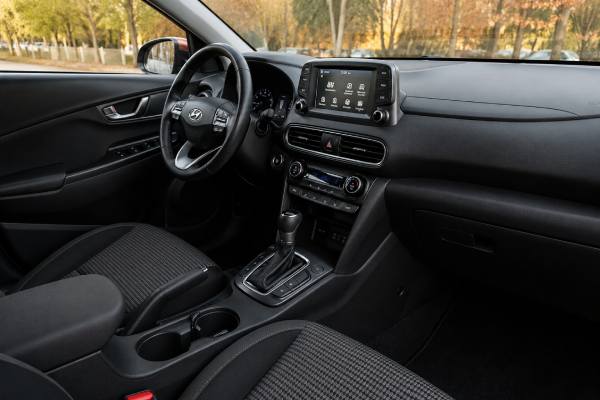
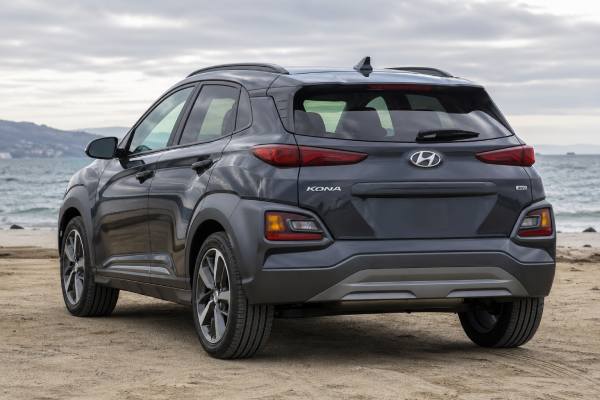
The 2018–2020 Hyundai KONA AWD with the 2.0 MPI engine sits in a very useful middle ground. It is not the quicker 1.6 turbo Kona, and it is not the later hybrid or EV, but for many owners it is the easier version to understand and live with long term. You get a naturally aspirated 2.0-liter four-cylinder, a conventional six-speed automatic, and an on-demand all-wheel-drive system that adds real wet-weather and winter traction without making the vehicle feel overly complex. AWD versions also bring a multi-link rear suspension, which helps them feel a bit more composed than front-drive models on broken pavement. The trade-off is modest straight-line pace and one major ownership caution: affected 2019–2020 Nu 2.0 cars need careful recall and oil-consumption history checks. Bought carefully and serviced on time, this Kona is a practical, efficient, easy-to-park small SUV with honest manners and strong everyday usability.
Owner Snapshot
- Smooth six-speed automatic and on-demand AWD make it easy to drive in traffic and poor weather.
- AWD versions get a multi-link rear suspension, which helps ride control and stability.
- Compact outside size and useful cargo space make it a strong city-and-suburb daily driver.
- The main caution is the Nu 2.0 piston oil-ring recall on affected 2019–2020 builds; proof of repair matters.
- A sensible baseline is engine oil and filter every 12,000 km or 12 months in normal use, sooner in severe service.
Navigate this guide
- Hyundai KONA OS AWD in context
- Hyundai KONA OS AWD specifications
- Hyundai KONA OS AWD trims and safety
- Reliability, faults, and recalls
- Maintenance and buyer advice
- Driving manners and economy
- KONA AWD versus rivals
Hyundai KONA OS AWD in context
This version of the first-generation KONA matters because it is the simple mechanical choice in the range. The 2.0 MPI engine avoids the extra heat, plumbing, and gearbox character that come with the 1.6 turbo and dual-clutch setup. In return, you accept slower acceleration and a less energetic top end. For many used-car buyers, that is a fair trade.
In AWD form, the OS-generation KONA becomes more than a styling exercise. Hyundai paired the on-demand all-wheel-drive system with a different rear suspension layout than the front-drive car, switching to a multi-link setup. That improves body control over mid-corner bumps and helps the vehicle feel more planted on rough roads. It does not turn the Kona into a trail SUV, but it does make it one of the more confidence-inspiring subcompact crossovers for wet roads, slush, and light snow.
The best way to think about this model is as a small, practical commuter with useful traction and predictable controls. The 2.0-liter engine makes its power in a straightforward way. There is no strong turbo surge, but there is also no awkward low-speed clutch behavior. The six-speed automatic suits the engine well in city driving, where smooth take-offs and clean throttle response matter more than outright pace.
Packaging is another strength. The cabin is not huge, especially in the rear seat, but the upright body and sensible dashboard layout make the car easy to place and easy to live with. Cargo space is competitive for the class, and the tailgate opening is useful enough for daily shopping, small strollers, airport bags, or folded sports gear. Visibility is generally good, and the small footprint makes tight parking less stressful than in larger compact SUVs.
There are, however, two ownership warnings. The first is the well-known recall and campaign history tied to certain Nu 2.0 MPI engines, especially 2019–2020 vehicles in affected production ranges. Any used example should be checked carefully for recall completion, oil-consumption history, and dealer records. The second is trim complexity. In many markets, especially North America, the 2.0 AWD sat below the better-equipped turbo models. That means some 2.0 AWD cars have solid core safety equipment but miss nicer headlights, stronger ADAS packages, or richer interior trim.
Overall, the KONA AWD 2.0 MPI is at its best when you judge it on ownership logic rather than brochure excitement. It is compact, efficient enough, simple by modern standards, and more comfortable in bad weather than its size suggests.
Hyundai KONA OS AWD specifications
For this exact article, the focus is the 2018–2020 Hyundai KONA AWD with the naturally aspirated 2.0 MPI four-cylinder and six-speed automatic. Some equipment and published figures vary by country, but the core hardware stayed broadly consistent across these years.
| Item | Specification |
|---|---|
| Code | Nu 2.0 MPI |
| Engine layout and cylinders | Inline-4, DOHC, 16 valves, 4 cylinders, 4 valves per cylinder |
| Bore × stroke | 81 × 97 mm (3.18 × 3.82 in) |
| Displacement | 2.0 L (1,999 cc) |
| Induction | Naturally aspirated |
| Fuel system | MPI / PFI |
| Compression ratio | 12.5:1 |
| Max power | 147 hp (110 kW) @ 6,200 rpm |
| Max torque | 179 Nm (132 lb-ft) @ 4,500 rpm |
| Timing drive | No routine timing-belt replacement item; chain-driven layout in service practice |
| Rated efficiency | 2019 AWD official rating: 9.4 city / 7.8 highway / 8.7 combined L/100 km (25 / 30 / 27 mpg US; 30.0 / 36.0 / 32.4 mpg UK). 2020 AWD official rating: 9.0 city / 7.8 highway / 8.4 combined L/100 km (26 / 30 / 28 mpg US; 31.2 / 36.0 / 33.6 mpg UK) |
| Real-world highway @ 120 km/h (75 mph) | Typically about 8.2–9.0 L/100 km (26–29 mpg US / 31–35 mpg UK), depending on tyres, weather, and load |
| Item | Specification |
|---|---|
| Transmission | 6-speed automatic with manual shift mode; retail literature does not consistently publish a consumer-facing code |
| Drive type | On-demand AWD with driver-selectable lock mode at low speed |
| Differential | Open differentials with coupling-based AWD and brake-based torque distribution |
| Suspension (front / rear) | MacPherson strut / multi-link |
| Steering | Column-mounted motor-driven power steering, rack-and-pinion; overall ratio 13.8:1 |
| Brakes | Front ventilated discs 305 mm (12.0 in), rear solid discs 284 mm (11.2 in) on AWD applications |
| Wheels and tyres | 205/60 R16, 215/55 R17, or 235/45 R18 depending on trim; most common used-market sizes are 205/60 R16 and 215/55 R17 |
| Ground clearance | 170 mm (6.7 in) |
| Length / width / height | 4,165 / 1,800 / 1,550 mm (163.97 / 70.86 / 61.02 in) |
| Wheelbase | 2,600 mm (102.36 in) |
| Turning circle | 10.6 m (34.8 ft) kerb-to-kerb |
| Kerb weight | About 1,399–1,418 kg (3,085–3,126 lb), trim dependent |
| GVWR | 1,900 kg (4,189 lb) |
| Fuel tank | 50 L (13.2 US gal / 11.0 UK gal) |
| Cargo volume | 544 L (19.2 ft³) seats up / 1,296 L (45.7 ft³) seats down, SAE method |
| Acceleration 0–100 km/h | Not consistently published for every 2.0 AWD market spec; in practice expect a high-9-second to low-10-second result |
| Top speed | Varies by market and tyre specification; not consistently published for this exact AWD setup |
| Braking distance 100–0 km/h | Not consistently published in official consumer literature for this exact variant |
| Towing capacity | In U.S. consumer literature, trailer towing is listed as not recommended |
| Payload | Roughly 482–501 kg (1,063–1,104 lb), derived from GVWR and curb-weight range |
| Item | Specification |
|---|---|
| Engine oil | SAE 5W-20, API latest / ILSAC latest; 4.0 L (4.23 US qt) |
| Coolant | Phosphate-based ethylene glycol mix; 6.5 L (6.8 US qt) |
| Transmission fluid | ATF SP-IV type; 6.7 L (7.08 US qt) |
| Transfer case oil | API GL-5 SAE 75W-90 hypoid gear oil; 0.38–0.42 L (0.36–0.40 US qt) |
| Rear differential oil | API GL-5 SAE 75W-90 hypoid gear oil; 0.47–0.52 L (0.44–0.49 US qt) |
| Brake fluid | DOT 4 LV / ISO 4925 Class 6; 0.7–0.8 L (0.74–0.85 US qt) |
| A/C refrigerant | R-1234yf; 450 ± 25 g (15.87 ± 0.88 oz) |
| A/C compressor oil | PAG; 120 ± 10 mL (4.23 ± 0.35 fl oz) |
| Key torque spec | Wheel lug nuts: 107–127 Nm (79–94 lb-ft) |
| Euro NCAP | 5 stars for launch-era Kona range; 87% adult occupant, 85% child occupant, 62% vulnerable road users, 60% safety assist |
| IIHS | Strong crashworthiness results, but award outcome and headlight ratings depend on trim and option content |
| ADAS suite | Forward collision warning / AEB, lane keeping support, driver attention warning were widely available; blind-spot monitoring and rear cross-traffic alert depended on trim and year |
The key takeaway from the numbers is simple: the Kona AWD 2.0 is compact, reasonably light, and efficient enough, but not performance-led. Its appeal comes from balanced hardware, not headline outputs.
Hyundai KONA OS AWD trims and safety
For trims and options, the clearest baseline region is North America, because Hyundai’s official trim sheets there separate the 2.0 AWD models from the 1.6 turbo AWD versions very clearly. Other markets used different naming and equipment mixes, so VIN-level confirmation is always the smart move.
In 2018, the Kona arrived with the 2.0 engine in core trims and the 1.6 turbo in higher trims. That pattern continued through 2019 and 2020. In used-market terms, the 2.0 AWD versions are the practical trims, while the turbo AWD versions are the more premium and more performance-focused ones.
A quick used-buyer guide for 2.0 AWD trims looks like this:
- SE AWD: usually the simplest version, often on 16-inch wheels, with cloth trim and fewer comfort extras.
- SEL AWD: the best-known middle grade, often with 17-inch wheels, heated front seats, blind-spot monitoring, rear cross-traffic alert, and more convenience equipment.
- SEL Plus AWD: a 2020 sweet spot in many markets, usually adding a sunroof, power driver seat, upgraded audio, and a more complete everyday feature set.
The easiest visual identifiers are the wheels, roof equipment, and cabin details. A plain 16-inch-wheel car with a simpler interior is usually an entry trim. A 17-inch-wheel car with heated-seat controls, proximity key, and roof rails is often an SEL-type grade. A sunroof, power driver’s seat controls, and upgraded audio cues usually point to SEL Plus or above. Exterior badging alone is not always enough, so the window sticker, VIN lookup, and dealer build record remain the best way to verify original equipment.
Year-to-year changes matter because Hyundai gradually improved safety and convenience packaging. Early cars already had a respectable base of active safety equipment for the class. By 2020, blind-spot and rear cross-traffic features were easier to get on mainstream trims, and the range structure felt more polished. The main mechanical distinction stayed the same: 2.0 cars used the six-speed automatic, while upper turbo trims used the dual-clutch transmission.
Safety ratings need context. The Kona performed well in major crash programs, but you should not assume every AWD 2.0 has identical safety hardware. Euro NCAP’s launch-era result was strong, with a five-star overall score and solid adult and child occupancy percentages. IIHS crashworthiness results were also good, but the best overall award picture depended on specific front crash prevention equipment and, importantly, headlight configuration.
That headlight point matters in the used market. Better LED headlight setups on higher trims can materially improve nighttime usability compared with lower-grade halogen systems. On some years, the strongest IIHS headlight ratings were tied to the richer trim combinations rather than the basic 2.0 AWD versions.
The core passive safety package is sound. Expect front airbags, front side airbags, full-length curtain airbags, strong stability and traction controls, ABS, and child-seat anchors. LATCH and ISOFIX practicality is acceptable rather than outstanding. Also remember that windshield, forward camera, and ADAS-related repairs can require proper calibration after glass replacement, suspension work, or even alignment correction. That is easy to overlook on used cars and worth asking about if the vehicle has had front-end repair.
Reliability, faults, and recalls
The Kona AWD 2.0 can be a durable small SUV, but its reliability story depends heavily on whether the right campaigns, inspections, and servicing were done. This is not a model to buy blind.
The biggest issue is the common, high-cost one: the Nu 2.0 piston oil-ring recall on affected 2019–2020 production. In plain terms, certain engines were built with oil rings that could damage the cylinder bore over time. The ownership pattern is familiar: oil consumption starts to climb, the engine may develop abnormal knocking noise, warning lights can appear, and in worst cases the failure can escalate to severe engine damage. The right response is not guesswork. You want proof that the VIN was checked, the recall remedy was completed if applicable, and any follow-up diagnostic work was documented.
A closely related issue is the occasional to common, medium-to-high-cost campaign and software side of the same problem. On affected vehicles, Hyundai used inspection procedures and updated engine-monitoring logic to catch abnormal engine vibration or knock patterns. If a seller says the car had “a software update for the engine,” that can be a good sign, but it is not enough on its own. You still want the dealer invoice trail, the campaign completion record, and a clean explanation of whether the engine was tested, updated, or replaced.
The next issue is usually occasional, low-to-medium cost: steering column or MDPS noise. Some cars develop a click, clunk, or bearing noise through the steering system, especially during low-speed turning. The usual pattern is that the car still steers normally, but feels less refined than it should. This is often traced to a small steering-column-related bearing or MDPS wear point rather than to major rack failure. It is rarely a deal-breaker, but it should be priced into the purchase.
Another concern, mainly for U.S.-market key-start vehicles, is occasional, medium-cost risk rather than mechanical failure: anti-theft vulnerability on cars without an immobilizer. Push-button start cars are much less concerning here. If you are looking at a U.S. used example, verify whether the anti-theft campaign or software update was completed and whether the car has any history of theft attempt damage around the steering column or ignition trim.
There are also ownership issues that are not dramatic, but matter. AWD fluid neglect is one. The transfer case and rear differential do not hold much oil, and many small crossovers get treated as maintenance-free appliances. That is not ideal. Mismatched tyres are another. Because the AWD system reacts to wheel-speed differences, uneven tread wear or mixed tyre brands can create driveline stress, strange behavior in poor weather, and more noise than the car should have.
Before buying, ask for these checks:
- full service history, not just stamped oil changes
- recall and campaign completion proof
- cold-start video or in-person cold-start inspection
- engine oil level and consumption history
- quiet steering at parking speeds
- matching tyre brand, size, and similar tread depth on all four corners
- no warning lights, especially engine and AWD-related lights
- signs of underbody impact, rust, or past front-end repair
The good news is that the Kona AWD 2.0 does not have a long list of chronic exotic failures. The bad news is that one major engine issue dominates the story. A well-documented car can be a smart buy. A vague car with missing records is a gamble.
Maintenance and buyer advice
This Kona rewards ordinary, timely maintenance more than heroic repair work. The trick is to be stricter than the average owner. If you follow the schedule, monitor fluids, and react early to changes in oil use or engine sound, ownership is usually straightforward.
| Item | Distance or time | Notes |
|---|---|---|
| Engine oil and filter | Every 12,000 km or 12 months normal use | Use SAE 5W-20; shorten to about 6,000 km or 6 months in severe service, frequent short trips, dust, heavy traffic, or repeated cold starts |
| Tyre rotation | Every 12,000 km | Especially important on AWD cars to keep tread depth even |
| Cabin air filter | Every 24,000 km or 12 months | Earlier in dusty or urban stop-start use |
| Engine air filter | Inspect regularly, usually replace around 48,000 km | Shorten interval in dusty conditions |
| Drive belts | First inspect at 96,000 km or 72 months, then every 24,000 km or 24 months | Look for cracks, glazing, noise, and tension issues |
| Coolant | First replace at 192,000 km or 10 years, then every 48,000 km or 24 months | Use the correct phosphate-based coolant mix |
| Spark plugs | About 156,000 km | Replace earlier if drivability issues or misfire history appears |
| Automatic transmission fluid | Factory schedule is light under normal use; severe-use service around 96,000 km | For long-term ownership, many careful owners prefer a conservative drain-and-fill strategy before six figures |
| Transfer case and rear differential oil | Inspect regularly; proactive service around 60,000–90,000 km is sensible | Especially wise for snow, hills, heat, or frequent city use |
| Brake fluid | Inspect regularly; practical replacement every 2–3 years | Moisture matters more than mileage here |
| Brake pads and rotors | Inspect at every service | Watch for uneven wear and corrosion from low-use driving |
| Timing chain | No routine replacement interval | Inspect if rattle, timing-correlation faults, or abnormal startup noise appear |
| 12 V battery | Test from year 4 onward | Typical replacement window is around 4–6 years |
| Alignment | Check yearly or after tyre wear, impact, or suspension work | Important for tyre life and AWD smoothness |
The essential fluid and quick-check numbers worth keeping in mind are simple:
- engine oil: 4.0 L, SAE 5W-20
- automatic transmission fluid: 6.7 L, SP-IV type
- coolant: 6.5 L
- transfer case oil: 0.38–0.42 L
- rear differential oil: 0.47–0.52 L
- wheel lug nut torque: 107–127 Nm
For buying advice, the best used examples are usually later cars with complete documentation. A 2020 SEL AWD or 2020 SEL Plus AWD often gives the best ownership balance because it combines the simpler 2.0 and six-speed automatic with better feature content and a more complete everyday equipment list. A good 2018 can still be worth buying, but you want condition and history to be excellent. A 2019–2020 car with missing campaign records should be treated cautiously.
What to inspect before purchase:
- oil level before and after test drive
- startup noise from fully cold
- smoke, rough idle, or warning lights
- smooth six-speed shifts with no flare or banging
- quiet steering at low speed
- even tyre wear and four matching tyres
- leaks around drivetrain seals and underbody
- clean coolant condition
- proper operation of camera, blind-spot monitoring, and lane-support systems
- proof that recalls and software campaigns were completed
Cars to avoid include any example with repeated top-offs between services, vague engine-repair history, theft damage, mismatched tyres, or a seller who cannot explain recall work. Long-term durability is decent when the engine issue has been handled and the car is maintained on time. Ignore that history, and the value case falls apart quickly.
Driving manners and economy
The Kona AWD 2.0 is not quick, but it is easy to like from the driver’s seat. Around town, the naturally aspirated engine and torque-converter automatic feel cleaner and calmer than some small turbo and dual-clutch rivals. Initial throttle response is predictable, parking-speed modulation is easy, and there is less low-speed hesitation than many buyers expect in this class.
Ride quality is one of the model’s understated strengths, especially on 16-inch and 17-inch wheel packages. The AWD car’s multi-link rear suspension gives it a more settled feel over broken pavement than the front-drive version. That does not mean plush luxury-car comfort, but it does mean fewer sharp rear-end reactions over patched roads and speed humps. Straight-line stability is good for a short-wheelbase crossover, and the steering is light, accurate, and easy to place in city traffic.
In corners, the Kona stays tidy rather than playful. There is enough grip for normal driving, but the real payoff is composure, not excitement. Good tyres matter more than many owners realize. A cheap or mismatched set can make the car noisier, less precise, and less convincing in bad weather.
Noise levels are acceptable rather than class-leading. The engine is quiet at low loads, but you hear it when climbing grades or joining fast traffic because it has to work. At highway speed, tyre and wind noise depend a lot on trim and tyre choice. The 16-inch and 17-inch cars are usually the easier long-distance companions.
Real-world efficiency is respectable:
- city: about 9.0–10.5 L/100 km (22–26 mpg US / 26–31 mpg UK)
- highway: about 7.5–9.0 L/100 km (26–31 mpg US / 31–37 mpg UK)
- mixed: about 8.4–9.5 L/100 km (25–28 mpg US / 30–34 mpg UK)
Cold weather, winter fuel, roof accessories, and short-trip use can easily add 0.7–1.5 L/100 km. At a true 120 km/h cruise, expect consumption near the upper end of the highway range rather than brochure numbers.
The AWD system is useful but should be understood correctly. It improves launch traction and poor-weather security, and the lock mode can help in snow, slush, or loose surfaces at low speed. It is not a rock-crawling setup, and ground clearance is still modest. For most owners, its value is simple: it makes the Kona feel more secure when conditions are bad.
As for load and towing, this is not the Kona’s strong suit. In official U.S. literature, towing is not recommended. Think of it as a people-and-gear crossover, not a light tow rig.
KONA AWD versus rivals
The used-car strength of the KONA AWD 2.0 is balance. It is not the roomiest, fastest, or most rugged choice, but it avoids several common trade-offs better than many rivals.
Against the Subaru Crosstrek 2.0 AWD, the Hyundai feels more compact and easier to thread through city spaces. The Subaru usually offers a more upright cabin and a stronger outdoors image, but the Kona often feels more responsive at low speed and less bulky in daily parking and commuting.
Against the Honda HR-V AWD of the same era, the Kona usually wins on infotainment ease, safety-tech value, and general cabin modernity. The Honda counters with a more versatile interior and clever packaging, but it can feel slower and noisier under load.
Against the Mazda CX-3 AWD, the Kona is usually the more rational purchase. The Mazda offers sharper steering and a more premium flavor, but the rear seat and cargo space are noticeably tighter. The Hyundai is easier to recommend as the only car in a household.
Against the Kia Seltos 2.0 AWD, the answer depends on what you value. The Seltos gives you more rear-seat and cargo room and feels closer to a compact SUV. The Kona feels tidier, easier to park, and often slightly more cohesive in its smaller footprint.
So who should choose the Kona AWD 2.0? Buyers who want:
- a small SUV that is easy to park and easy to live with
- conventional automatic-transmission behavior
- useful winter traction without a big fuel penalty
- sensible safety content and strong everyday ergonomics
Who should look elsewhere? Buyers who need strong passing power, serious towing ability, or maximum rear-seat space.
In the used market, the Kona AWD 2.0 makes the most sense as a careful, documentation-led purchase. If the engine campaign history is clear and the car has been maintained properly, it remains one of the more convincing practical subcompact AWD SUVs from its era.
References
- 2020 Kona Specifications 2020 (Specifications)
- OS CAN-E 7.qxp 2020 (Owner’s Manual)
- 2020 Hyundai Kona 2020 (Safety Rating)
- Euro NCAP | Hyundai KONA 2017 (Safety Rating)
- Recall 203 Dealer Best Practice 2021 (Recall Database)
Disclaimer
This article is for informational purposes only and is not a substitute for professional diagnosis, inspection, or repair. Specifications, torque values, service intervals, equipment, and procedures can vary by VIN, model year, market, drivetrain calibration, and trim level, so always verify details against the correct official service documentation for the exact vehicle.
If this guide helped you, please consider sharing it on Facebook, X, or other social platforms to support our work.