

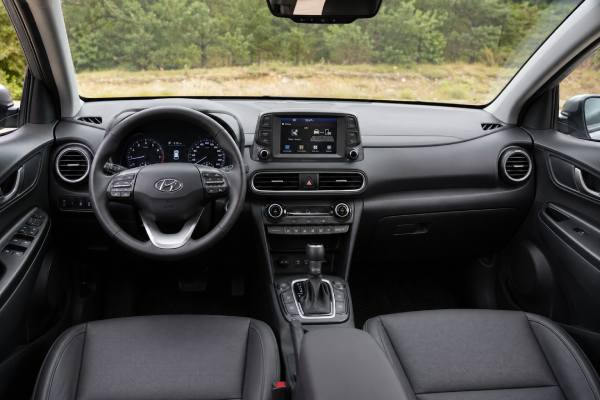
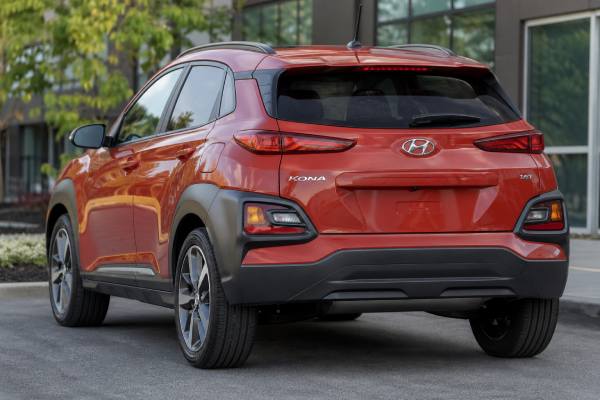
The 2018–2020 Hyundai KONA (OS) 1.6 CRDi 136 hp is the version of the first-generation KONA that makes the most practical sense for drivers who actually cover distance. It combines the tidy footprint and easy parking manners of a small crossover with a genuinely useful diesel torque band, a modest kerb weight, and fuel use that can stay impressively low on mixed roads. In its most common European form, it is a front-wheel-drive seven-speed dual-clutch car rather than a heavy, over-complicated SUV, and that is a large part of its appeal. The trade-off is just as important: this is a modern emissions-controlled diesel, so it rewards longer runs and regular servicing far more than short cold city hops. This guide focuses on the OS-generation European and UK-style car and points out where trim, wheel size, and late-2020 facelift changes can materially alter the ownership experience.
Owner Snapshot
- Strong mid-range torque and very good motorway fuel economy for a small crossover.
- Compact outside, but usefully packaged inside with a low-stress driving position.
- Good safety foundation for its class, especially on better-equipped trims.
- Mostly short urban use can accelerate DPF-related headaches and make this diesel the wrong choice.
- A sensible oil and filter baseline is every 15,000 km or 12 months, sooner in severe use.
What’s inside
- Hyundai KONA OS diesel overview
- Hyundai KONA OS diesel specs
- Hyundai KONA OS trims and safety
- Reliability issues and service actions
- Maintenance plan and buying checks
- Road manners and real use
- KONA diesel versus key rivals
Hyundai KONA OS diesel overview
The OS-generation KONA arrived as one of the more style-led small crossovers, but the 1.6 CRDi 136 hp version is better understood as the grown-up, long-distance choice in the range. Where the small petrols fit urban use and the 1.6 T-GDi chases performance, the diesel is the one that turns the KONA into a genuine all-round commuter and family support car. It has enough torque to feel easy and relaxed in daily traffic, yet it is light enough that 136 hp does not feel strained or inadequate.
That balance is the core reason this version still has a market. It is not especially quick by modern standards, but it is more than fast enough for real roads. On a motorway it settles well, holds speed without drama, and can return numbers that make more sense than many small petrol SUVs. For buyers who regularly cover mixed suburban, regional, or motorway mileage, that matters more than brochure sprint figures.
This KONA also benefits from being small in the right ways. At just over 4.16 metres long, it is easy to place in town, easy to park, and far less intimidating than larger SUVs. Yet it still offers a commanding seating position, decent front-seat space, and enough luggage room for normal family use. It is not a class leader for outright rear-seat generosity, but it avoids feeling cramped in the way some style-first crossovers do.
The other important point is that the 1.6 CRDi KONA is not one single identical car across all markets and all 2018–2020 registrations. Most buyers searching this version are really looking at the pre-facelift OS car, often with front-wheel drive and the seven-speed dual-clutch transmission. Late 2020 cars can overlap with facelift changes, updated trim structures, and in some markets mild-hybrid hardware. That means buyers should never assume that a 2020 registration automatically matches a 2018 or 2019 equipment list.
For ownership, the main strength is efficiency with usable torque. The main caveat is that this is still a Euro 6-era diesel with DPF and emissions-control complexity. That does not make it a bad engine. It simply means the car suits the right pattern of use. Give it regular longer runs, warm it properly, and service it on time, and it can be a smart compact SUV. Use it only for cold-start urban crawling, and it becomes much easier to own the wrong KONA.
Hyundai KONA OS diesel specs
Because Hyundai published some data differently across regions, the figures below reflect the most relevant open European and UK information for the 136 hp diesel KONA OS. Where public factory material does not clearly publish a figure, it is better to say so than to guess.
| Item | Hyundai KONA (OS) 1.6 CRDi 136 hp |
|---|---|
| Code | 1.6 CRDi 136 PS, D4FE family |
| Engine layout and cylinders | Inline-4, DOHC, 16 valves, 4 valves per cylinder, 77.0 × 85.8 mm (3.03 × 3.38 in) |
| Displacement | 1.6 L (1,598 cc) |
| Induction | Turbocharged |
| Fuel system | Common-rail direct injection |
| Compression ratio | 15.9:1 |
| Max power | 136 hp (100 kW) @ 4,000 rpm |
| Max torque | 320 Nm (236 lb-ft) @ 1,750–2,250 rpm |
| Timing drive | Confirm by VIN and service documentation before ordering parts |
| Rated efficiency | 4.4 L/100 km (53.5 mpg US / 64.2 mpg UK), official combined for UK 2WD DCT diesel spec |
| Real-world highway @ 120 km/h | Usually around 5.2–6.0 L/100 km when healthy and properly warmed up |
| Item | Hyundai KONA (OS) 1.6 CRDi 136 hp |
|---|---|
| Transmission | 7-speed DCT; public UK material does not consistently list the internal gearbox code |
| Drive type | Usually FWD / 2WD in the common 2018–2020 European form covered here |
| Differential | Open |
| Suspension (front / rear) | MacPherson strut / coupled torsion beam axle |
| Steering | Motor-driven power steering; 2.5 turns lock-to-lock |
| Brakes | Ventilated front discs, solid rear discs; open public sheets do not consistently publish disc diameters |
| Wheels and tyres | 215/55 R17 on SE, 235/45 R18 on Premium and Premium SE |
| Ground clearance | Market-dependent and not clearly published in the open UK diesel spec sheet |
| Length / Width / Height | 4,165 / 1,800 / 1,565 mm (164.0 / 70.9 / 61.6 in) |
| Wheelbase | 2,600 mm (102.4 in) |
| Turning circle | 10.6 m (34.8 ft) |
| Kerb weight | 1,342 kg (2,959 lb) |
| GVWR | 1,880 kg (4,145 lb) |
| Fuel tank | 50 L (13.2 US gal / 11.0 UK gal) |
| Cargo volume | 334 / 1,116 L (11.8 / 39.4 ft³) on the UK diesel sheet; some brochures quote higher figures depending on load-floor setup and measurement basis |
| Item | Hyundai KONA (OS) 1.6 CRDi 136 hp |
|---|---|
| Acceleration | 0–100 km/h / 0–62 mph in 10.2 s |
| Top speed | 192 km/h (119 mph) |
| Braking distance | Not consistently published in open official material |
| Towing capacity | Verify by VIN, market, and plate data; public open diesel table formatting is inconsistent for this exact variant |
| Payload | 538 kg (1,186 lb) |
| Engine oil | Use the exact low-SAPS Hyundai and ACEA diesel spec stated for your VIN-market car; open public documents do not cleanly publish one universal fill figure |
| Coolant | Hyundai long-life coolant to VIN-specific spec; confirm total capacity in workshop data |
| Transmission fluid | DCT fluid to the correct gearbox specification; quantity should be verified before service |
| A/C refrigerant | OS-generation owner-manual material indicates R-134a in relevant markets; always confirm the under-bonnet label first |
| A/C compressor oil | Confirm by refrigerant label and service literature |
| Key torque specs | Wheel nuts: 107–127 Nm (79–94 lb-ft) |
| Crash ratings | Euro NCAP: 5 stars; Adult 87%, Child 85%, Vulnerable Road Users 62%, Safety Assist 60% |
| ADAS suite | Launch-era cars commonly include Driver Attention Alert, Lane Keeping Assist, Hill Start Assist Control, and Downhill Brake Control; higher trims add more radar-based features |
The spec story is simple: this KONA is not a numbers monster, but it is well judged. The engine’s torque output is the headline, not the power figure. That is why it feels easier in day-to-day use than a small naturally aspirated crossover, and why it remains relevant for buyers who want low running costs without dropping into a slower economy special.
Hyundai KONA OS trims and safety
For 2018 launch-era UK and European-style cars, the KONA was sold in a familiar walk-up trim structure rather than in a confusing maze of appearance packs. That makes used-car shopping easier, but only if buyers remember that trim names and standard equipment changed with time. Early cars were commonly grouped as S, SE, Premium, Premium SE, and in some launch material Premium GT. The diesel did not always appear in every market and every trim, so it is safer to decode the actual car in front of you rather than rely on a classified ad headline.
In practical used-market terms, SE and Premium are the trims most buyers will meet in the diesel sweet spot. SE usually means the smaller running-cost burden, with 17-inch wheels and a more forgiving ride. Premium and Premium SE add the nicer cabin touches, larger wheels, and more comfort and safety equipment, but they also increase tyre cost and reduce ride compliance on poor roads. That trade-off matters more on this KONA than many shoppers expect.
Quick identifiers help. A 17-inch car often points to a simpler, more sensible ownership package. An 18-inch car looks stronger but rides firmer and costs more on tyres. Premium SE-type cars are the ones most likely to bring blind-spot monitoring and rear cross-traffic alert. The early top-end cars are also more likely to have the richer lighting and convenience features that make the cabin feel newer than the car’s age suggests.
Safety is one of the OS KONA’s real strengths. Even before you step into the option tree, the model launched with a stronger active-safety story than many small crossovers of the same period. Hyundai’s early UK material lists Driver Attention Alert, Lane Keeping Assist, Hill Start Assist Control, and Downhill Brake Control as standard across the line, while higher trims brought blind-spot detection and rear cross-traffic support. That gives even modestly specified cars a decent baseline.
Crash performance is also solid for the class. The KONA achieved a 5-star Euro NCAP rating, with particularly respectable adult and child occupant results for the period. For family buyers, that matters more than brochure theatrics. On used examples, also check the practical basics: rear-seat condition, head restraints, seat-belt retractors, tyre age, and whether any ADAS camera or radar warning lights are present.
One major year-to-year note: late-2020 facelift cars are a different equipment conversation. Hyundai expanded SmartSense features, changed trim naming in some markets, and added newer convenience tech. Those updates can be worthwhile, but they also mean that a 2020 KONA may not line up neatly with the equipment logic of a 2018 or 2019 car. For that reason, the safest buying method is still old-fashioned: decode the VIN, inspect the wheels, lights, screen layout, and safety menu, and confirm exact equipment from the car itself.
Reliability issues and service actions
The 1.6 CRDi KONA is best described as a generally sound small diesel crossover that becomes far less pleasant when used outside its ideal duty cycle. There is no single headline diesel defect that defines every OS KONA, but there are several repeat checks that matter a great deal when buying or maintaining one. Most of them are predictable modern-diesel themes rather than model-specific horror stories.
| Prevalence and cost tier | What to watch for | Why it happens |
|---|---|---|
| Common / low to medium | DPF loading, brake corrosion, battery weakness, tyre edge wear | Short trips, low annual mileage, long parking periods, potholes, poor alignment |
| Occasional / medium | DCT hesitation or shudder at crawl speed, wheel-bearing or drop-link noise, sensor or camera warnings | Wear, software calibration, rough roads, prior body or windscreen work |
| Less common / high | Turbo or boost-leak faults, emissions-sensor issues, clutch-pack or actuator work on neglected gearboxes | Deferred servicing, interrupted regenerations, age, heat cycles, hard urban use |
The most typical ownership complaint is not outright engine failure. It is diesel aftertreatment frustration. When these cars are used mainly for cold-start commuting and never get a proper run, owners can see frequent regenerations, rising fuel consumption, warning lamps, or a car that feels more strained than it should. The symptom chain is familiar: repeated interrupted regens, soot loading, then unhappy owners blaming the engine itself. The remedy is usually better use pattern, a diagnostic check, and catching the problem before it becomes an expensive DPF job.
The seven-speed dual-clutch transmission also deserves realistic expectations. It is not automatically unreliable, but it does not behave like a soft torque-converter automatic in slow traffic. Slight hesitation, sharper low-speed take-up, or a fussy crawl can be normal. What is not normal is persistent shudder, violent engagement, repeated overheating behavior, or obvious clutch slip. A software update or clutch adaptation may help, but rough behavior after that needs deeper inspection.
Other common used-car items are more ordinary. Uneven tyre wear can point to alignment or suspension wear. Light front-end knocks often lead to links or bushings. Cars that sit unused can rust their rear brakes surprisingly quickly. A weak 12 V battery can also create false comfort and ADAS faults that look more serious than they are.
Software and calibration matter more than many buyers think. Hyundai dealers are supposed to check for recommended updates during servicing, and on a modern KONA that can affect driveability, warning behavior, and infotainment bugs. On safety-equipped cars, ADAS calibration after windscreen replacement or minor accident repair is especially important.
For recalls and service actions, do not rely on forum memory or seller promises. Campaign status is VIN-specific and market-specific. Ask for dealer invoices, retailer printouts, and a live official VIN recall check. That is more valuable than a stack of generic receipts.
Maintenance plan and buying checks
A good maintenance plan for this KONA has to do two things at once: respect Hyundai’s official service framework and also reflect the reality of a modern small diesel used in mixed private ownership. That means the smartest plan is usually a little more conservative than the bare minimum, especially if the car sees short trips, winter use, towing, or heavy urban traffic.
| Item | Sensible interval | What matters |
|---|---|---|
| Engine oil and filter | Every 10,000–15,000 km or 12 months; 7,500 km or 6 months in severe use | The single best defense against diesel and turbo wear |
| Cabin air filter | Every 15,000–30,000 km or 12–24 months | Keeps HVAC performance and demist speed healthy |
| Engine air filter | Inspect each service; replace around 30,000–45,000 km sooner in dust | Dirty filters hurt economy and turbo response |
| Fuel filter | Per official schedule or sooner if poor fuel, surging, or hard starts appear | Important on a common-rail diesel |
| Brake fluid | Every 2 years | Cheap insurance for pedal feel and corrosion control |
| Coolant | Check level every service; replace only to the VIN-specific long-life schedule | Do not guess the chemistry or mix ratio |
| DCT fluid and leaks | Inspect every service; proactive fluid service around 60,000–80,000 km is sensible where specialist advice supports it | Useful on cars that spend time in town |
| Brake pads and discs | Inspect every 15,000 km or annually | Rear brake corrosion on low-mileage cars is common |
| Tyre rotation and alignment | Rotate at 10,000–15,000 km; align whenever wear looks uneven | Especially important on 18-inch cars |
| Belts, hoses, and visible leaks | Inspect annually, especially after 60,000 km | Helps catch age-related issues before breakdowns |
| 12 V battery test | Annually from year four onward | Weak batteries can trigger nuisance faults |
| Timing components | Confirm exact design and service logic by VIN before major maintenance | Do not assume chain or belt from internet listings alone |
| Item | Buyer and owner note |
|---|---|
| Engine oil | Use only the low-SAPS diesel oil grade and approval specified for the VIN-market car |
| Coolant | Use Hyundai-compatible long-life coolant only; verify exact capacity before ordering |
| DCT fluid | Use the correct Hyundai gearbox fluid; quantity and procedure must match the transmission |
| Brake fluid | Use the specification listed for the car’s market and braking system |
| A/C system | Confirm refrigerant type from the under-bonnet label before service |
| Wheel nuts | 107–127 Nm (79–94 lb-ft) |
As a buyer, the inspection priorities are straightforward. Ask for full service history, proof of annual servicing, and evidence that the car has not lived a pure short-trip life. Look for excessive soot around the tailpipe, warning lights, rough idle, hesitating DCT pull-away, damp boost hoses, uneven front tyre wear, and rusty rear discs on low-mileage examples.
The best versions to seek are usually the simple, honest ones: an SE or Premium with strong history, no warning lights, and regular open-road use. A 17-inch wheel car is often the smartest buy if comfort and costs matter. Late-2020 facelift diesels can be attractive for newer tech, but they are not automatically better value if your priority is simpler ownership. The cars to avoid are neglected urban diesels with patchy servicing, repeated electrical excuses, or sellers who cannot prove software, campaigns, and maintenance.
Long-term durability is respectable when the car’s use pattern fits the engine. That is the key sentence for this KONA.
Road manners and real use
On the road, the 1.6 CRDi KONA is better than it looks on paper. The headline 0–100 km/h time does not suggest excitement, but the engine’s mid-range shove is what makes the car agreeable. It pulls cleanly from low revs, feels relaxed at everyday speeds, and rarely asks the driver to work hard. In real traffic that counts for more than a dramatic top-end rush.
Ride and handling are well judged for the class, though not identical across wheel sizes. The 17-inch cars are the easy recommendation because they round off broken surfaces better and feel more settled over sharp edges. The 18-inch cars look better and turn in a little more crisply, but they transmit more of the road into the cabin and can feel busy on poor urban tarmac. Neither version is sporty in a hot-hatch sense, but the KONA is tidy, predictable, and easy to trust.
Straight-line stability is good for a short crossover. Steering is light enough for town use and clean enough for faster roads, even if it does not deliver rich feedback. Braking is secure and confidence-inspiring when the system is healthy, although lightly used cars can suffer from rusty discs and a first stop that feels less clean than it should.
Noise levels are acceptable rather than class-leading. Cold starts remind you this is a diesel, and coarse urban surfaces do send some tyre noise into the cabin, especially on larger wheels. Once warm and cruising, though, the KONA settles down well. That is where the diesel powertrain makes sense: it feels calmer and less strained than many small turbo petrol SUVs at motorway pace.
The seven-speed DCT is a mixed but understandable partner. At speed it suits the engine well and helps economy. In low-speed traffic it can feel more deliberate than a conventional automatic. Owners who expect instant, creamy creep may call that a flaw. Drivers who understand dual-clutch behavior will usually just adapt.
Real-world fuel use is one of this car’s main advantages. Expect roughly 5.5–6.5 L/100 km in heavy urban running, around 5.0–5.8 L/100 km on steady highway work, and roughly 5.2–6.0 L/100 km mixed if the car is healthy. Winter, short journeys, roof loads, and 18-inch wheels can all move those numbers upward. Under moderate load, the KONA stays competent, but like most small diesels, it loses its efficiency edge if used as a permanently overloaded mini-tow car. It is happiest as a lightly loaded everyday distance machine.
KONA diesel versus key rivals
The 1.6 CRDi KONA sits in a crowded field, so its value only becomes clear when you compare its character, not just its spec sheet. It does not beat every rival in every category. What it does well is bring together efficiency, safety, size, and everyday ease in a package that still feels modern enough.
| Rival | Where the rival may do better | Where the KONA answers back |
|---|---|---|
| SEAT Arona 1.6 TDI | Lighter feel, simpler presentation, often cheaper to buy | Stronger safety story, more substantial cabin feel, more distinctive design |
| Renault Captur dCi / Blue dCi | Softer ride in some versions, clever packaging | More planted feel, stronger equipment logic, less fussy styling inside |
| Volkswagen T-Roc 1.6 TDI | More mature motorway character, more conventional ergonomics | Often better value, easier to park, stronger trim-for-money on the used market |
| Peugeot 2008 BlueHDi | More design flair and, in some versions, a plusher ride | Simpler driving position, easier control layout, less polarising cabin design |
Against those rivals, the KONA’s biggest advantage is balance. It is not the roomiest, not the plushest, and not the sharpest to drive, but it rarely feels badly compromised. It is compact without being cramped, efficient without being painfully slow, and safety-conscious without becoming overcomplicated in early trim levels. That makes it a strong used buy for someone who wants a diesel crossover that still feels manageable and modern.
Its weakest point in comparison is that diesel suitability question. Some rivals are a bit more forgiving of short urban patterns or have a more relaxed automatic character. The KONA diesel is better when driven properly and regularly. That means the best owner profile is clear: mixed-road or high-mileage use, sensible servicing, and a buyer who values low running costs more than outright pace.
So which rivals beat it? If you want the most conventional motorway cruiser, a T-Roc may feel more mature. If you want softer French-style ride tuning or packaging tricks, a Captur or 2008 can appeal more. But if you want a small SUV that blends strong economy, solid safety credentials, tidy dimensions, and sensible real-world usability, the Hyundai KONA (OS) 1.6 CRDi 136 hp remains one of the smarter choices in its class.
References
- Hyundai Kona – Specifications 2018 (Specifications)
- OWNER’S MANUAL 2019 (Owner’s Manual)
- Euro NCAP | Hyundai KONA 2017 (Safety Rating)
- Hyundai Motor UK announces all-new Kona pricing and specifications 2017 (Press release)
- Home | Hyundai Recalls & Service Campaigns 2026 (Recall Check)
Disclaimer
This article is for informational purposes only and is not a substitute for professional diagnosis, inspection, or repair. Specifications, torque values, maintenance intervals, capacities, and procedures can vary by VIN, market, production date, transmission, trim, and fitted equipment, so always verify against the official service documentation for the exact vehicle.
If this guide helped you, please consider sharing it on Facebook, X, or your preferred social platform to support our work.