
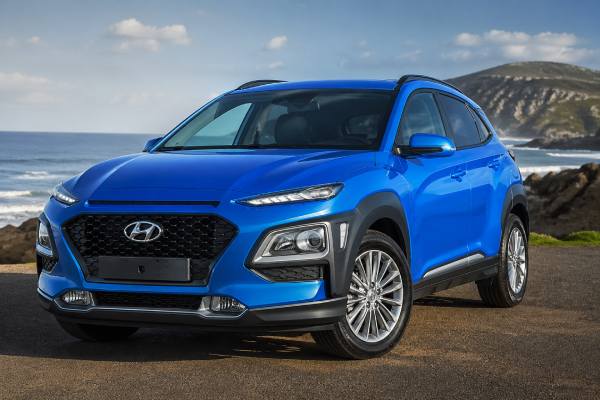
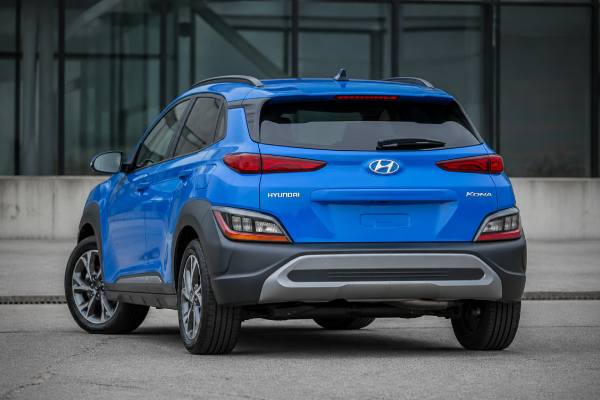
The facelifted 2020–2023 Hyundai KONA OS with the 1.6 CRDi 48V diesel is one of the most technically interesting versions of the first-generation KONA. It combines a proven 1.6-liter common-rail diesel with a 48-volt mild-hybrid system, giving it better stop-start smoothness, a little extra low-speed support, and stronger official efficiency than the earlier non-hybrid diesel. Hyundai also used the facelift to sharpen the design, improve cabin tech, and expand SmartSense safety features, so this version feels more modern than the original OS KONA without changing the core packaging.
As a used buy, it makes the most sense for drivers who still cover regular longer trips and want compact-SUV practicality without hybrid-only limitations. The caution is equally important: this is still a modern emissions-controlled diesel, so service history, mileage pattern, and the condition of the DPF, EGR, and 48-volt hardware matter far more than a clean body or a glossy trim level.
Owner Snapshot
- Strong long-distance economy and useful low-rpm pull for a compact SUV.
- The 48-volt system improves stop-start refinement and helps smooth urban driving.
- Facelift models gained better infotainment, updated styling, and broader SmartSense coverage.
- Short-trip use and neglected servicing can create costly diesel-emissions problems.
- A sensible real-world service rhythm is every 15,000 km or 12 months, with tyre rotation every 10,000 to 15,000 km.
Contents and shortcuts
- Hyundai KONA facelift diesel explained
- Hyundai KONA 48V spec data
- Hyundai KONA versions and driver aids
- Known faults and campaign checks
- Service plan and smart buying
- Road manners and real economy
- Where it stands among rivals
Hyundai KONA facelift diesel explained
The facelifted KONA diesel is not just the old OS car with new lights. Hyundai made visible styling changes, but the more important ownership changes happened underneath. The 1.6 CRDi 136 PS engine moved into the facelift range with 48-volt mild-hybrid support as standard, and buyers could choose either a six-speed intelligent manual transmission in front-wheel-drive form or a seven-speed dual-clutch transmission, with four-wheel drive available in some markets. That gives this version a broader range than the earlier 115 hp diesel and makes it more appealing to buyers who want something more relaxed and more flexible on long trips.
The 48-volt system itself is modest but useful. Hyundai paired the diesel engine with a Mild Hybrid Starter Generator linked by belt, a 48-volt lithium-polymer battery mounted below the luggage area, and a DC/DC converter. In practice, that means cleaner stop-start restarts, better energy recovery under braking, and a small but noticeable improvement in how the car feels in mixed traffic. It does not turn the KONA into a full hybrid, but it makes the diesel feel less old-school in urban use.
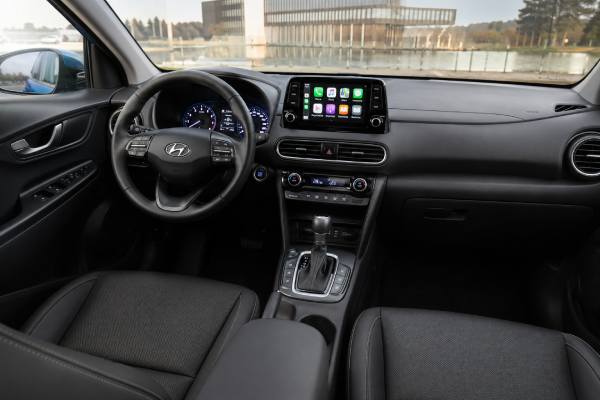
The facelift also helps the cabin. The interior looks cleaner, the digital display options are better, and later cars feel closer to Hyundai’s newer products than the earlier OS models did. There is also a broader set of active-safety and convenience features, including Lane Follow Assist, improved Forward Collision-Avoidance Assist, and upgraded connected services depending on market and trim.
This is still a KONA, though, which means the same core strengths and limitations remain. It is compact outside, easy to park, and surprisingly useful in front-seat space. Rear-seat room is fair rather than generous, and the boot is practical without being class-leading. For a small household, commuting couple, or frequent solo long-distance driver, that balance works well. For a family regularly carrying taller adults in the back, it can feel tight.
The main reason to choose this version over a petrol KONA is not speed. It is long-range efficiency and easy cruising. The diesel’s broad torque delivery suits the KONA well, especially on secondary roads and motorways. Buyers who cover 20,000 km a year or more still tend to understand exactly why this version existed. Buyers doing nothing but short urban hops usually do not.
Hyundai KONA 48V spec data
For the facelift period, Hyundai’s official European technical data and regional brochure material show that the 1.6 CRDi 48V 136 PS line came in two main forms: a 2WD six-speed intelligent manual and a 7DCT version that could be paired with AWD in relevant markets. That distinction matters because the driveline changes the rear suspension layout, kerb weight, boot-space detail, towing, and real-world feel.
| Item | 1.6 CRDi 48V 2WD 6iMT | 1.6 CRDi 48V 4WD 7DCT |
|---|---|---|
| Code | 1.6 CRDi 48V / Smartstream diesel MHEV | 1.6 CRDi 48V / Smartstream diesel MHEV |
| Engine layout and cylinders | Inline-4, DOHC, 4 valves per cylinder | Inline-4, DOHC, 4 valves per cylinder |
| Bore × stroke | 77.0 × 85.8 mm (3.03 × 3.38 in) | 77.0 × 85.8 mm (3.03 × 3.38 in) |
| Displacement | 1.6 L (1,598 cc) | 1.6 L (1,598 cc) |
| Induction | Turbocharged | Turbocharged |
| Fuel system | Common-rail direct injection diesel | Common-rail direct injection diesel |
| Compression ratio | 15.9:1 | 15.9:1 |
| Max power | 136 hp (100 kW) @ 4,000 rpm | 136 hp (100 kW) @ 4,000 rpm |
| Max torque | 280 Nm (207 lb-ft) @ 1,500–3,000 rpm | 320 Nm (236 lb-ft) @ 2,000–2,250 rpm |
| Timing drive | Belt-driven cam system | Belt-driven cam system |
| Mild-hybrid system | 48 V MHSG, DC/DC converter, lithium-polymer battery | 48 V MHSG, DC/DC converter, lithium-polymer battery |
| Battery capacity | 0.44 kWh | 0.44 kWh |
| Transmission | 6-speed intelligent manual | 7-speed dual-clutch automatic |
| Drive type | FWD | AWD |
| Differential | Open front differential | Open differentials with electronically managed torque distribution |
| Rated efficiency | 4.9–5.1 L/100 km mixed WLTP (48.0–46.1 mpg US / 57.6–55.4 mpg UK) | 5.6 L/100 km mixed WLTP (42.0 mpg US / 50.4 mpg UK) |
| Real-world highway @ 120 km/h (75 mph) | Typically about 5.8–6.4 L/100 km | Typically about 6.3–7.0 L/100 km |
| Item | 2WD 6iMT | 4WD 7DCT |
|---|---|---|
| Suspension (front/rear) | MacPherson strut / CTBA torsion beam | MacPherson strut / multi-link |
| Steering | Rack and pinion with motor-driven power steering; 2.5 turns lock-to-lock | Rack and pinion with motor-driven power steering; 2.5 turns lock-to-lock |
| Brakes | Front ventilated discs 15–16 in; rear solid discs 15 in | Front ventilated discs 15–16 in; rear solid discs 15 in |
| Wheels and tyres | 205/60 R16 or 215/55 R17 | 205/60 R16 or 215/55 R17 depending trim |
| Ground clearance | 170 mm (6.7 in) | 171 mm (6.7 in) |
| Approach / departure / breakover | 17° / 29° / 16° | 17° / 29° / 16° |
| Length / width / height | 4,205 / 1,800 / 1,565 mm (165.6 / 70.9 / 61.6 in) | 4,205 / 1,800 / 1,565 mm (165.6 / 70.9 / 61.6 in) |
| Wheelbase | 2,600 mm (102.4 in) | 2,600 mm (102.4 in) |
| Turning circle | 10.6 m (34.8 ft) | 10.6 m (34.8 ft) |
| Kerb weight | About 1,340 kg (2,954 lb) | About 1,445 kg (3,186 lb) |
| GVWR | 1,875 kg (4,133 lb) | 1,965 kg (4,332 lb) |
| Fuel tank | 50 L (13.2 US gal / 11.0 UK gal) | 50 L (13.2 US gal / 11.0 UK gal) |
| Cargo volume | 374 / 1,156 L VDA (13.2 / 40.8 ft³) | 374 / 1,296 L VDA (13.2 / 45.8 ft³) |
| Towing capacity | 1,200 kg braked / 600 kg unbraked (2,646 / 1,323 lb) | 1,250 kg braked / 600 kg unbraked (2,756 / 1,323 lb) |
| Payload | About 535 kg (1,179 lb) | About 520 kg (1,146 lb) |
| Item | Specification or note |
|---|---|
| Acceleration | 0–100 km/h in 10.3 s (2WD 6iMT) or 10.5 s (4WD 7DCT) |
| Top speed | 190 km/h (118 mph) for 2WD 6iMT; 185 km/h (115 mph) for 4WD 7DCT |
| Braking distance | Factory sources used here do not publish a verified 100–0 km/h distance for this exact variant |
| Engine oil | Low-SAPS diesel oil meeting Hyundai-approved ACEA class for DPF-equipped engines; verify viscosity and fill by VIN before purchase |
| Coolant | Phosphate-based ethylene-glycol coolant with deionized or distilled water; exact fill should be checked by VIN |
| Transmission and driveline fluids | Public brochure sources do not publish complete fill quantities; verify 7DCT, transfer case, and rear differential specs by VIN |
| A/C refrigerant | R-1234yf on most European facelift cars; exact charge varies by market and equipment |
| Key torque spec | Wheel nuts typically 107–127 Nm (79–94 lb-ft); confirm against the exact service document for the vehicle |
| Crash ratings | Euro NCAP 5 stars; Adult 87%, Child 85%, Vulnerable Road Users 62%, Safety Assist 60% |
| ADAS suite | FCA, LKA, LFA, LVDA, ISLW, SCC, BCA, RCCA and related SmartSense items depending on year and trim |
The most important spec detail is the driveline split. The front-drive 6iMT is the efficiency-led choice. The 4WD 7DCT version is heavier and thirstier, but it gives you more torque, better rear suspension, and more all-weather ability.
Hyundai KONA versions and driver aids
For facelift buyers, equipment matters almost as much as the engine. Hyundai broadened the KONA line with updated standard technology, new infotainment, refreshed interior trim, and the first N Line appearance package. That means the 1.6 CRDi 48V can feel either like a sensible, efficient commuter SUV or a more premium-looking compact crossover, depending on market and trim.
Across Europe, the basic pattern is straightforward. Entry and mid-level versions typically use 16- or 17-inch wheels, manual or simpler automatic climate control, fabric upholstery, and the core safety package. Higher trims bring the larger screens, better materials, keyless features, heated seats, upgraded audio, and the richer SmartSense suite. N Line models are the easiest to identify visually because they use body-colour cladding treatment, unique bumpers, model-specific wheels, and sportier cabin trim. They look more assertive, but on the used market the key question is still condition, not styling.
The facelift improved the cabin in ways owners will notice every day. The instrument display was upgraded, Bluelink connectivity spread further through the range, and the dashboard design became cleaner. Hyundai also added an electric parking brake in response to customer demand. That makes late facelift cars feel more modern and slightly more premium than the earlier OS KONA, especially in high trims.
Safety equipment is one of the biggest reasons to choose the facelift over the earlier diesel. Hyundai expanded SmartSense and made more active-safety features standard or widely available. Forward Collision-Avoidance Assist with pedestrian detection became easier to find, and features such as Lane Following Assist and Leading Vehicle Departure Alert were added or upgraded. Depending on trim and market, buyers could also get Smart Cruise Control, Blind-Spot Collision-Avoidance Assist, Rear Cross-Traffic Collision-Avoidance Assist, Intelligent Speed Limit Warning, high-beam assist, rear occupant alerts, and better parking assistance.
That matters because the Euro NCAP result for the KONA range still reads well, but real-world used-car safety depends on what a specific trim actually has. A five-star platform is good. A five-star platform with working FCA, LFA, and radar-based rear-cross-traffic support is better. On a used facelift car, check that every ADAS feature works exactly as it should. After windscreen replacement, radar alignment work, or rear bumper repairs, recalibration can be missed.
For family buyers, rear ISOFIX mounting, reversing camera availability, better lighting on higher trims, and a clear cabin layout all help. The KONA is not the roomiest car in the class, but the facelift does enough in safety and everyday tech to keep it competitive deep into the used market.
Known faults and campaign checks
The facelift 1.6 CRDi 48V is best understood as a condition-dependent used buy rather than a model with one defining defect. The underlying platform is solid enough, but the mild-hybrid diesel adds layers: DPF, EGR, SCR or AdBlue-related emissions hardware in many markets, 48-volt belt-start hardware, and either the 6iMT system or a 7DCT and optional AWD. That is a lot to inspect.
The highest-prevalence issues are still diesel-ownership issues rather than KONA-only disasters. Cars used for repeated short urban trips are more likely to develop DPF loading, incomplete regeneration history, sticky EGR behaviour, or warning lights tied to NOx and emissions monitoring. These faults can remain medium-cost annoyances when caught early, but neglected cars can escalate into expensive parts replacement and endless diagnostic labour. The best examples are the ones that did regular open-road mileage and were serviced by the book.
The 48-volt system itself is not usually the first item to fail, but it does add diagnosis complexity. The Mild Hybrid Starter Generator, 48-volt battery, and DC/DC converter are generally durable when the car is healthy, yet intermittent starting behaviour, charging anomalies, or strange stop-start behaviour should never be ignored on a test drive. Because this is a light electrification system rather than a full hybrid, owners sometimes underestimate it. That is a mistake. When faults appear, dealer-level diagnostics are often the shortest route to the truth.
Transmission choice changes the risk profile. The 6iMT is mechanically simpler than the 7DCT, but it still uses clutch-by-wire logic rather than a purely traditional manual feel. The 7DCT version brings smoother long-distance driving and, in some markets, the only route to AWD, but it also introduces the usual used DCT watchpoints: hesitation, hot-traffic shudder, delayed engagement, and awkward low-speed creep. Not every slightly odd shift is a failure, but repeated shudder and warning messages are red flags.
There is also at least one official campaign area that used buyers should check carefully. Hyundai KONA OS vehicles built up to October 2021 were included in a fuel-system-related recall concerning fuel-filter material potentially damaging the high-pressure pump. That can overlap early facelift production, so a 2021 mild-hybrid diesel should be checked by VIN rather than assumed to be clear.
Rust is not the headline issue on these cars, but older examples should still be checked under the rear axle area, subframe edges, brake lines, and any place where winter salt can collect. On AWD cars, worn or mismatched tyres also deserve serious attention because they can stress the driveline and distort how the car feels on the road.
Service plan and smart buying
For a used 1.6 CRDi 48V KONA, the best maintenance strategy is conservative rather than optimistic. Hyundai’s official schedules in this era could look quite long on paper, especially under normal-use assumptions, but a modern mild-hybrid diesel with a DPF and urban stop-start exposure is not a car to service lazily. Shorter intervals are cheap insurance.
| Item | Practical interval | Why it matters |
|---|---|---|
| Engine oil and filter | Every 15,000 km or 12 months | Protects turbocharger, emissions hardware, and belt-driven hybrid starter system |
| Engine air filter | Inspect every service, replace around 30,000 to 45,000 km | Helps maintain airflow, economy, and turbo response |
| Cabin air filter | Every 30,000 km or 24 months, sooner in dusty use | Improves HVAC performance and cabin air quality |
| Fuel filter | Inspect closely and replace early if fuel quality or running symptoms suggest it | Critical on common-rail diesel systems |
| Brake fluid | Every 24 months | Important for pedal feel, corrosion control, and ADAS braking performance |
| Coolant | Long-life item, but inspect every service and verify first-replacement timing by VIN | Protects engine and thermal stability |
| Tyre rotation | Every 10,000 to 15,000 km | Important for wear balance and AWD driveline health where fitted |
| Transfer case and rear differential | Inspect at 60,000 km intervals on AWD cars | Prevents expensive AWD neglect |
| 12 V and 48 V system checks | At every annual service | Electrical weakness causes odd stop-start and charging complaints |
| Timing components and belts | Inspect to schedule and any time oil leaks, noise, or age-related wear appear | This engine does not reward neglect here |
Fluid choice matters as much as interval. This engine needs the right low-SAPS oil for a DPF-equipped diesel, not a generic diesel oil chosen by price. Coolant should be the correct phosphate-based mix, and AWD cars should not have their rear driveline fluids treated as lifetime folklore. Even if a public brochure does not list every fill quantity, the exact service data can always be checked by VIN before ordering fluids.
As a buyer’s guide, focus on operating pattern first. The ideal car has clear evidence of regular longer journeys, not years of cold-start city use. Then check the paperwork: full service history, correct oil specification, recall completion, and invoices for any emissions or driveline work. On the test drive, make sure the car warms normally, pulls cleanly without hesitation, shows no warning lights, and restarts smoothly through the mild-hybrid system. On 7DCT cars, traffic-speed behaviour matters more than a single wide-open-throttle run.
Recommended versions depend on priorities. The 2WD 6iMT is the simplest and usually the most economical long-term choice. The AWD 7DCT is the better all-weather and more refined setup, but only if it has been maintained properly and driven on a matching tyre set. Avoid cars with patchy servicing, repeated warning-light stories, cheap mismatched tyres, or sellers who describe repeated DPF work as “normal for all diesels.” That usually means deferred maintenance, not honest disclosure.
Road manners and real economy
The facelift diesel KONA is more satisfying to drive than many people expect, especially if they only know the earlier lower-power models. The 136 hp output is not dramatic, but the real story is torque and drivability. It feels stronger than the power figure suggests, particularly from low and middle revs, and that makes the car easy to drive smoothly on everyday roads.
The front-drive 6iMT version is the efficiency-led choice. It feels lighter on its feet, slightly simpler in character, and well matched to the diesel’s torque curve. Hyundai’s intelligent manual is not a conventional old-style manual in feel, but once you are used to it, it works well enough and contributes to the mild-hybrid strategy. The AWD 7DCT version is more substantial. It gives you a more settled rear axle, better wet-weather traction, and a more relaxed long-distance feel, but it is also heavier and less frugal.
Ride quality depends on wheel size and driveline. Cars on smaller wheels are the easiest everyday proposition. Higher trims with larger alloys look better and turn in a bit more cleanly, but they also transmit more road texture into the cabin. The AWD car’s multi-link rear axle helps body control and composure, especially on faster roads, while the 2WD torsion-beam setup keeps things simpler and lighter. Neither version is sporty in a hot-hatch sense, but both feel stable and predictable.
Noise, vibration, and harshness are respectable rather than class-leading. Cold-start diesel clatter is still present, but once warm, the engine settles down well. The facelift improvements and updated cabin design help the car feel less busy than the older OS version. At motorway speed, this is one of the KONA variants that genuinely suits distance driving.
Real-world economy is where the diesel still makes its case. The front-drive 48V car can return very strong numbers for a small SUV if used properly. Mixed driving in a healthy example often lands around 5.3 to 6.1 L/100 km. Steady 100–120 km/h highway work usually falls in the high-5s to low-6s. Heavy urban use, winter conditions, short trips, and repeated interrupted regenerations push the figure upward quickly. The AWD 7DCT car generally needs a bit more fuel, often around 6.2 to 7.0 L/100 km in mixed real use.
That gap explains the buying logic. Choose the 2WD version if economy and simplicity matter most. Choose the AWD DCT if you need extra traction, better ride composure at speed, or tow occasionally. Both are competent. The better fit depends on how the car will actually be used.
Where it stands among rivals
By the time the facelift KONA 1.6 CRDi 48V arrived, the diesel small-SUV field was already shrinking. That actually helps the KONA today, because it gives this version a clearer identity in the used market. It is one of the last compact crossovers to combine diesel torque, mild-hybrid support, useful technology, and a genuinely compact footprint.
| Model | Main strength | Main drawback | Why choose the KONA instead |
|---|---|---|---|
| Peugeot 2008 1.5 BlueHDi | Very efficient and stylish inside | Driving position and cabin layout are not for everyone | The KONA feels more conventional, easier to live with, and often more ruggedly engineered |
| Renault Captur Blue dCi | Comfortable ride and good packaging | Less distinctive driveline range and a lighter-duty feel in some trims | The KONA often feels more solid and offers a broader active-safety story |
| Volkswagen T-Roc TDI | Refined long-distance manners and strong badge appeal | Usually more expensive to buy like-for-like | The KONA tends to offer stronger value and more equipment per budget |
Against the Peugeot 2008, the Hyundai’s main advantage is familiarity. The KONA’s ergonomics are straightforward, and its cabin, while not as design-led, is easier to adapt to immediately. Against the Captur, the KONA usually feels more substantial and better tied down on faster roads. Against the T-Roc, the Hyundai wins on equipment value, especially if you find a higher-trim facelift car with the better SmartSense set.
The real appeal of the facelift KONA diesel is balance. It is not the roomiest rival and not the most luxurious. But it combines a useful size, strong fuel efficiency, a better-than-expected highway character, and a modern-enough safety and infotainment package. That matters because the best used cars are often the ones with fewer obvious weaknesses, not the ones with a single standout statistic.
For drivers still doing regular longer mileage, the 1.6 CRDi 48V facelift KONA remains a credible and often underrated choice. It is compact enough for town, efficient enough for distance, and advanced enough to feel newer than many diesel rivals from the same years. The catch is simple: buy with paperwork, not optimism.
References
- 202009_Technical Data_new Kona and all-new Kona N Line 2020 (Technical Specifications)
- DIS3_CATALOGO_NUEVO_KONA_2021.indd 2020 (Brochure)
- Hyundai unveils enhancements for Kona and launches all-new Kona N Line 2020 (Press Release)
- Pricing and specifications for Kona Hybrid and the new N Line 2020 (Press Release)
- Hyundai KONA 2017 (Safety Rating)
Disclaimer
This article is for informational purposes only and is not a substitute for professional diagnosis, inspection, or repair. Specifications, torque values, service intervals, fluid requirements, procedures, and equipment can vary by VIN, market, trim, emissions calibration, and drivetrain, so always verify the exact details against official service documentation for the specific vehicle.
If you found this guide useful, please consider sharing it on Facebook, X, or another platform to support our work.