
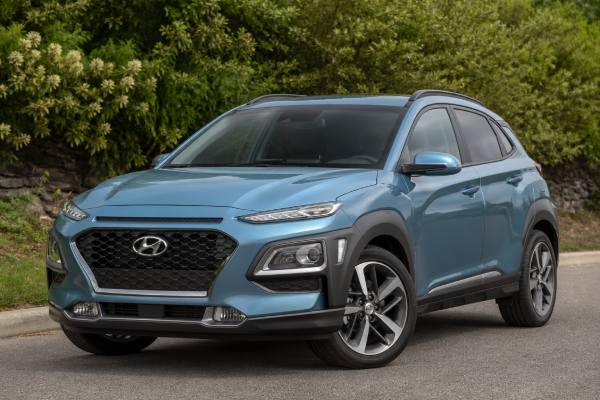
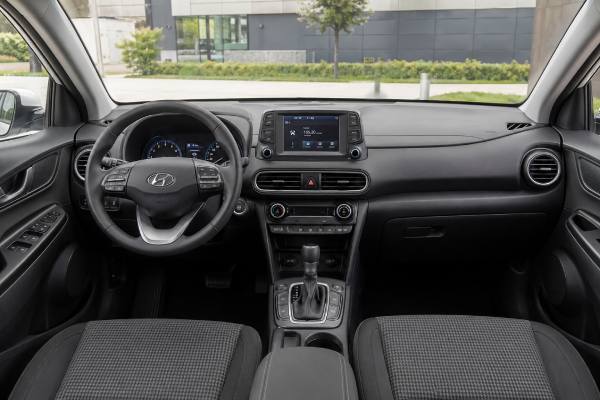
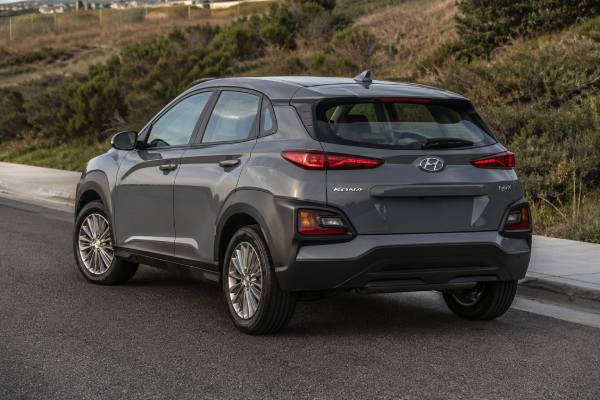
The 2019–2020 Hyundai KONA Hybrid is the first electrified version of the original OS-series KONA, and it remains one of the more interesting small hybrids from its era. Instead of using a typical e-CVT layout, Hyundai paired a 1.6-liter Atkinson-cycle petrol engine with a permanent-magnet electric motor, a small lithium-ion polymer battery, and a 6-speed dual-clutch transmission. That gives this KONA a slightly more conventional driving feel than many rival hybrids, while still delivering genuinely low fuel use in mixed driving. It also benefits from a well-packaged cabin, useful safety technology, and a stronger engineering identity than some fashion-first small SUVs. For owners, the appeal is easy to understand: compact size, efficient daily running, and less mechanical stress than the turbocharged petrol KONA models. The main caveats are modest boot flexibility compared with larger hybrids, brake corrosion on lightly used cars, and the need to verify software updates and service history on any used example.
Essential Insights
- Strong real-world fuel economy without needing to plug in or change driving habits.
- Hybrid system is smoother and less stressed than many small turbo-petrol alternatives.
- Compact exterior size makes it easy to use in town while still feeling stable on faster roads.
- Regenerative braking can leave friction brakes underused, so rusty discs and sticky rear brakes are worth watching.
- A typical routine service interval is every 10,000 miles or 12 months, with shorter intervals in severe use.
Explore the sections
- Hyundai KONA Hybrid ownership profile
- Hyundai KONA Hybrid technical facts
- Hyundai KONA Hybrid grades and protection
- Trouble spots and campaign checks
- Service planning and used-buy tips
- Everyday driving and fuel results
- Rival small hybrid SUV verdict
Hyundai KONA Hybrid ownership profile
The first-generation Hyundai KONA arrived as a bold-looking small SUV, but the hybrid version added more than an economy badge. It gave the OS-series KONA a distinct engineering role within the range. This was the model for buyers who liked the compact footprint and upright seating position of the standard car, but wanted lower fuel use, quieter urban running, and a powertrain better suited to daily commuting than the more expensive and thirstier turbocharged petrol versions.
What makes the KONA Hybrid especially interesting is the way Hyundai tuned the ownership experience. Many hybrid rivals from this period leaned heavily on CVT-style drivetrains that maximize efficiency but can feel detached under load. Hyundai took a different route. The KONA Hybrid combines a 1.6 GDi Atkinson-cycle petrol engine with a traction motor and a 6-speed dual-clutch automatic. On paper, that does not sound as simple as a power-split system, but in practice it gives the car a more familiar step-through response on the road. For some drivers, that alone is a major selling point.
The combined output of 141 hp and 265 Nm is not headline-grabbing, yet it suits the car well. In city traffic, the hybrid system helps the KONA move off cleanly and quietly. On suburban and secondary roads, it feels brisk enough rather than fast. This is not a performance SUV, but it does not feel slow in normal use. The compact body also helps. The KONA Hybrid is easy to park, easy to judge in traffic, and comfortable for people who want crossover visibility without stepping into a larger and heavier family SUV.
Ownership costs are one of its strongest arguments. Fuel consumption is one part of that story, but not the whole story. The naturally aspirated hybrid engine is usually a lower-stress proposition than a small turbo engine asked to work hard in a crossover body. The hybrid battery is also relatively small, which limits complexity and replacement cost compared with a large EV battery pack. In most markets, Hyundai also backed the electrified hardware with long battery coverage, which improved buyer confidence.
There are still trade-offs. The KONA Hybrid is not the most spacious vehicle in the class, especially in the rear seat and luggage area compared with larger dedicated hybrid crossovers. The dual-clutch gearbox also deserves more attention than a traditional torque-converter automatic would. It is generally smoother and less problematic here than in Hyundai’s higher-torque turbo applications, but it still benefits from proper calibration, matching tyres, and a driver who does not force it to creep uphill for long periods.
As a used buy, the 2019–2020 KONA Hybrid works best for people who want a small, efficient SUV with a more natural driving feel than many hybrids offer. It is not the biggest or the quickest, but it is one of the most balanced small hybrid crossovers of its time when it has been maintained correctly.
Hyundai KONA Hybrid technical facts
The 2019–2020 Hyundai KONA Hybrid used Hyundai’s 1.6 GDi hybrid powertrain in a compact front-wheel-drive crossover body. The exact trim mix varied by market, but the core mechanical package stayed consistent: naturally aspirated 1.6-liter direct-injection petrol engine, permanent-magnet electric motor, lithium-ion polymer battery, and a 6-speed dual-clutch transmission.
| Item | Specification |
|---|---|
| Code | 1.6 GDi HEV / Kappa-family hybrid setup |
| Engine layout and cylinders | Inline-4, DOHC, 16 valves, 4 valves per cylinder |
| Bore × stroke | 72 × 97 mm (2.83 × 3.82 in) |
| Displacement | 1.6 l (1,580 cc) |
| Motor | Single front-mounted PMSM traction motor |
| System voltage | 240 V |
| Battery chemistry | Lithium-ion polymer |
| Battery capacity | 1.56 kWh |
| Induction | Naturally aspirated |
| Fuel system | Direct injection |
| Compression ratio | 13.0:1 |
| Petrol engine output | 105 hp (77 kW) @ 5,700 rpm |
| Petrol engine torque | 147 Nm (108 lb-ft) @ 4,000 rpm |
| Motor output | 43.5 hp (32 kW) |
| Motor torque | 170 Nm (125 lb-ft) |
| Max system output | 141 hp (104 kW) |
| Max system torque | 265 Nm (195 lb-ft) |
| Timing drive | Chain |
| Transmission | 6-speed dual-clutch automatic |
| Drive type | FWD |
| Differential | Open differential with electronic traction control |
| 0–100 km/h | 11.2 s with 16-inch tyres / 11.6 s with 18-inch tyres |
| Top speed | 160 km/h (99 mph) |
| Rated efficiency | About 3.9–4.3 l/100 km on early NEDC figures; later WLTP numbers are higher |
| Real-world highway @ 120 km/h | Usually around the mid-5 to low-6 l/100 km range depending on temperature, wheel size, and load |
| Item | Specification |
|---|---|
| Suspension | Front MacPherson strut / rear multi-link |
| Steering | Rack-and-pinion electric steering; 13.4 overall ratio; 2.5 turns lock-to-lock |
| Brakes | Front discs 305 mm (12.0 in), rear discs 284 mm (11.2 in) |
| Most popular tyre sizes | 205/60 R16 or 235/45 R18 |
| Ground clearance | 170 mm (6.7 in) |
| Length / width / height | 4,165 / 1,800 / 1,550–1,565 mm (164.0 / 70.9 / 61.0–61.6 in) |
| Wheelbase | 2,600 mm (102.4 in) |
| Turning circle | 10.6 m (34.8 ft) |
| Kerb weight | About 1,376–1,453 kg (3,034–3,203 lb) |
| GVWR | 1,880 kg (4,145 lb) |
| Fuel tank | 38 l (10.0 US gal / 8.4 UK gal) |
| Cargo volume | 361 l to 1,143 l VDA; some market material also quotes 544 l to the window line |
| Payload | 427–504 kg (941–1,111 lb) |
| System | Useful owner information |
|---|---|
| Engine oil | Use the VIN-market handbook specification; low-friction hybrid-safe oil is essential |
| Coolant | Use Hyundai-approved coolant only; verify the exact mix and loop requirements by market |
| Transmission fluid | Use Hyundai-approved DCT fluid only; do not substitute generic ATF |
| Brake fluid | Use the specified DOT-grade fluid from the handbook and replace by schedule or condition |
| A/C refrigerant | Check the under-bonnet label before service; charge amounts vary by market and build date |
| Key torque specs | Always verify wheel, brake, and suspension torques against the VIN-specific workshop manual before repair |
The important technical takeaway is that the KONA Hybrid is not just a cheaper-feeling eco trim. It has a distinct chassis setup, a useful rear multi-link suspension, and a hybrid system that gives the car a more conventional road feel than many rivals.
Hyundai KONA Hybrid grades and protection
In most European markets, the 2019–2020 KONA Hybrid sat above the lower petrol trims and was positioned as a smarter, more premium-feeling choice rather than a bare-bones economy special. That means used buyers will often find the hybrid with better standard equipment than the entry-level petrol KONA, but exact trim naming and option structure still varied a lot by country. Some markets leaned toward simple grade ladders, while others used comfort or style packs to separate features.
The basic visual clues are helpful. A KONA Hybrid usually carries hybrid badging, dedicated wheel designs, and an interior with trim details that differ from the ordinary petrol models. Depending on market and grade, buyers may find 16-inch wheels for maximum efficiency or 18-inch wheels for a sharper look but slightly worse economy. The 16-inch cars are often the sweet spot if low running costs matter more than showroom presence. The 18-inch cars look better and can feel a little more tied down, but they sacrifice some ride softness and efficiency.
Inside, higher trims could include a 10.25-inch navigation display, head-up display, heated seats, heated steering wheel, wireless phone charging, and Hyundai’s Bluelink connected services. Standard infotainment systems were usually simpler but still usable, with smartphone integration and a clear layout. Unlike some budget-focused rivals, the KONA Hybrid often feels intentionally specified rather than stripped down.
Safety is one of the model’s stronger points, but it is essential to separate platform capability from equipment availability. Euro NCAP awarded the KONA a five-star rating in period testing, with 87% for adult occupant protection, 85% for child occupant protection, 62% for vulnerable road users, and 60% for safety assist. Those are solid results for the class and the era. However, Euro NCAP also noted that some active safety results were not included in the main rating because certain systems were optional rather than standard on every version. That matters in the used market.
The standard safety baseline was still strong. Buyers can generally expect multiple airbags, stability control, ABS, tyre-pressure monitoring, lane support, speed-limiter functionality, and rear-seat reminder functions depending on market specification. Higher trims or option packs could add stronger ADAS content such as front collision avoidance with pedestrian and cyclist detection, smart cruise control, blind-spot monitoring, and rear cross-traffic alert. On paper, that makes a big difference. In real use, it makes an even bigger one.
For families, child-seat fitting is broadly good, but used buyers should still check ISOFIX points, rear-seat space, and front-passenger airbag deactivation if a rear-facing child seat is part of the plan. After any windscreen replacement or front-end repair, ADAS calibration should also be checked. Many owners overlook this, but it matters on cars with forward-facing cameras and radar-based systems.
The best trim choice depends on priorities. For efficiency-first owners, a 16-inch wheel car with a strong safety pack is often the smartest version. For comfort and convenience buyers, upper trims justify themselves well. The key is to verify actual equipment, not assume that every KONA Hybrid came with the full SmartSense package.
Trouble spots and campaign checks
Reliability on the 2019–2020 Hyundai KONA Hybrid is generally good, and the powertrain has a calmer reputation than the turbocharged petrol KONA variants. That said, it is still a complex electrified vehicle with a direct-injection petrol engine, regenerative braking, and a dual-clutch transmission, so condition matters more than simple mileage.
The hybrid battery itself is not usually the main concern. Because it is a relatively small pack and does not endure the same thermal and charge extremes as a full EV battery, outright degradation is usually modest in normal use. Most well-kept cars continue to behave normally without noticeable battery-related weakness. A healthier inspection focus is on cooling airflow, warning lights, charging behavior within the hybrid system, and fault-free transitions between electric assist and engine power. If a car shows intermittent hybrid warnings, abrupt engine restarts, or poor low-speed smoothness, proper diagnostic scanning is essential.
The 1.6 GDi petrol engine is usually dependable, but it is still a direct-injection unit. Over time, intake-valve carbon build-up can affect idle quality and throttle response, especially on cars that have done repeated short trips. This is not a guaranteed problem, but it is a known pattern on many DI engines and worth considering once mileage climbs. Spark plug condition also matters more than owners sometimes expect. A hybrid can mask mild drivability weakness until plugs are tired enough to create hesitation or rough running under load.
The transmission is the most important system to assess carefully. This KONA Hybrid uses a 6-speed dual-clutch transmission rather than an e-CVT. That is good news for drivers who prefer a more direct feel, but it also means buyers should look for shudder, jerky parking maneuvers, delayed take-up, or rough low-speed shifts. In this application, the system is usually better matched than Hyundai’s higher-torque dry-clutch turbo setups, but it is still less forgiving of abuse than a conventional automatic. Repeated creeping uphill, poor adaptation, or mismatched tyres can make the car feel worse than it should.
The brake system is another common ownership watch point. Because the KONA Hybrid relies on regenerative braking, the friction brakes can go underused on lightly driven cars. That often leads to rusty discs, sticking sliders, and an inconsistent pedal feel when the handover between regen and friction braking becomes more noticeable. These issues are usually low- to medium-cost, but they are common enough to deserve routine checks.
Other occasional faults are less dramatic but still worth noting: 12 V battery weakness, sensor faults, infotainment glitches, parking-sensor issues, and wheel-bearing or suspension-link wear on rough-road cars. Software updates matter here. A Hyundai dealer or a capable specialist should be able to confirm whether the car received relevant hybrid, infotainment, or safety-system updates.
A sensible risk map looks like this:
- Common, low severity: brake corrosion, weak 12 V battery, tyre-related noise or vibration.
- Occasional, medium severity: DCT low-speed roughness, sensor faults, infotainment glitches, suspension links.
- Occasional, medium to high severity: neglected transmission behavior that was never diagnosed properly.
- Rare, higher severity: unresolved hybrid warning faults or poor repair history after front-end damage.
For recalls and service actions, buyers should always run an official VIN check and ask for dealer records. Market-specific campaigns can differ, and a clean dashboard today does not prove every campaign has been completed.
Service planning and used-buy tips
The KONA Hybrid is not expensive to maintain by modern hybrid standards, but it does reward consistency. A complete service file matters more than heroic mileage claims or glossy paint. This is a car that tends to age well when it is serviced on time, kept on matching tyres, and driven regularly enough to keep the brakes clean and the 12 V system healthy.
A sensible maintenance plan starts with annual servicing. In many markets, a typical service rhythm is every 10,000 miles or 12 months, with shorter intervals under severe use such as repeated short journeys, heavy traffic, dust, steep hills, or extreme temperatures. Because this is a hybrid with a direct-injection petrol engine, the safest ownership strategy is to avoid stretching oil service intervals.
| Item | Practical interval | What to watch |
|---|---|---|
| Engine oil and filter | About every 10,000 miles or 12 months | Use only the correct handbook-approved low-friction oil |
| Engine air filter | Inspect every service, replace as needed | Early replacement helps in dusty use |
| Cabin air filter | Usually every 12–24 months | Affects HVAC performance and screen demist speed |
| Spark plugs | Long-life interval, but inspect earlier if drivability worsens | Misfires and soft hesitation often start here |
| Coolant | By handbook schedule and condition | Use only approved coolant; hybrid systems dislike guesswork |
| DCT fluid | Inspect and replace by VIN-market schedule | Only use the correct Hyundai DCT fluid |
| Brake fluid | Time-based replacement is wise | Do not rely on mileage alone |
| Brake pads and discs | Inspect every service | Regen can hide corrosion until braking feel worsens |
| Tyre rotation and alignment | Check regularly | Mismatched tyres can upset efficiency and drivability |
| 12 V battery check | Test once the car is a few years old | Weak batteries trigger misleading warnings |
| Hybrid health check | At major services or before purchase | Look for stored codes, cooling issues, and software history |
Because this is a chain-driven engine, there is no scheduled timing-belt replacement, but chain noise, correlation faults, or neglected oil history should never be ignored. The fuel filter is not usually treated as a routine replacement item in the same way as older cars, but bad fuel, poor running, or contamination symptoms deserve proper diagnosis.
For used buyers, the inspection checklist is straightforward:
- Confirm full service history and dealer or specialist invoices.
- Check that all four tyres match in brand, type, and wear.
- Test for smooth low-speed gearbox response in parking maneuvers.
- Inspect rear brakes closely for corrosion or drag.
- Verify that hybrid, engine, ABS, and ADAS systems show no stored faults.
- Check that heating, cooling, and demisting performance are normal.
- Look for signs of poor body repair around the front bumper, radar, or windscreen.
- Ask for proof of recall and service-action completion.
The best examples are usually regularly driven cars with clean service records, sensible wheel sizes, and no transmission complaints. The ones to avoid are cars with patchy history, mixed tyres, rusty brakes from long inactivity, or vague stories about intermittent warning lights.
Everyday driving and fuel results
The KONA Hybrid’s biggest dynamic advantage is that it feels more normal than many hybrids without losing the benefits that make hybrids attractive. Around town, the electric motor helps the car move off quietly and reduces the amount of engine work needed in stop-start traffic. The result is a calm, efficient, low-effort urban experience. In this environment, the KONA Hybrid makes the most sense.
What surprises many drivers is the transmission. Because this is not a CVT-based hybrid, the KONA Hybrid feels more familiar under moderate acceleration. The 6-speed DCT gives the drivetrain defined ratio changes, so the engine does not flare and drone in the same way some rivals do. That gives the car a more natural rhythm on suburban roads and during overtakes. The trade-off is that it can feel slightly less silky at walking pace than the best power-split hybrids. The difference is not severe, but it is there.
Ride and body control are generally good. The KONA’s compact wheelbase means it is never a luxury car over sharp edges, yet the hybrid version benefits from a mature setup and feels settled enough on mixed roads. Straight-line stability is better than the car’s size suggests, and the steering is light but accurate. This is an easy car to place in traffic and an easy one to live with on narrower roads. Cabin noise is acceptable rather than class-leading. In town it is often quiet, but at motorway speed tyre and wind noise become more noticeable than in larger hybrids.
Performance is adequate, not exciting. The 141 hp system output is enough to keep the car feeling alert in normal driving, but this is still an efficiency-focused crossover. The official 0–100 km/h time of around 11 seconds tells the story. It is responsive enough off the line because the motor adds early torque, but high-speed overtaking requires more planning than in a strong turbo-petrol rival.
Real-world economy is where the KONA Hybrid wins people over. In city use, especially in mild weather, it can be very efficient. Mixed driving usually stays comfortably below the consumption of a non-hybrid small SUV. At a true 120 km/h highway cruise, fuel use rises because the electric assist matters less and the small petrol engine has to sustain the work. That does not make it thirsty, but it does mean the city-versus-motorway spread is quite noticeable.
A realistic owner picture looks like this:
- City driving: often excellent, with frequent EV assist and smooth stop-start behavior.
- Mixed commuting: usually the KONA Hybrid’s sweet spot.
- Highway at 100–120 km/h: still decent, but far less impressive than town figures.
- Cold weather: expect higher fuel use, more engine running, and weaker short-trip efficiency.
Braking feel is mostly good, though some drivers notice the handover between regenerative and friction braking more than they would in a Toyota hybrid. That is not necessarily a fault. It is simply something to assess on a test drive. Overall, the KONA Hybrid is best described as efficient, tidy, and easy rather than especially entertaining. For the intended buyer, that is exactly the point.
Rival small hybrid SUV verdict
The KONA Hybrid sits in a part of the market where the obvious rivals are the Toyota C-HR Hybrid, Kia Niro Hybrid, Honda HR-V Hybrid, and smaller conventional crossovers that compete on size and price rather than hybrid hardware. Its place among them is quite clear: it is one of the more compact and style-led options, but it also has a more conventional road feel than some of the others.
Against the Toyota C-HR Hybrid, the Hyundai gives up some rear-seat space and, depending on generation match, some hybrid-system polish. Toyota’s power-split setup is usually smoother at crawling speed and has a stronger long-term reliability reputation. The Hyundai answers with a less droning feel under acceleration, a more familiar gearbox character, and often a cleaner used-value proposition for buyers who dislike CVT behavior.
Against the Kia Niro Hybrid, the comparison is almost philosophical. The Kia shares much of the Hyundai’s engineering logic, but the Niro is usually the more practical car. It has a roomier interior and a more family-focused shape. The KONA is the better pick for buyers who want a smaller footprint, more distinctive styling, and a slightly more crossover-like driving position without moving up in size.
The Honda HR-V Hybrid is another useful benchmark. The Honda usually feels more refined as a hybrid system and often more spacious inside, but it can also cost more in the used market and has a different, more powertrain-led character. The Hyundai’s advantage is that it feels simple to understand from the driver’s seat and rarely asks the driver to adapt to unusual behavior. It is also easier to place in tight urban environments because it remains a fairly compact vehicle.
Compared with non-hybrid small SUVs such as the Mazda CX-3, Nissan Juke, or petrol versions of the Ford Puma from the same broad period, the KONA Hybrid makes the strongest case for itself on running costs and low-speed refinement. It will not out-handle the most engaging petrol rivals, but it will usually beat them for daily economy and relaxed commuting.
So where does the 2019–2020 KONA Hybrid land today? It is not the most spacious hybrid SUV, not the softest-riding one, and not the one with the strongest low-speed drivetrain polish. But it is one of the most balanced. It offers good real-world efficiency, compact dimensions, strong safety credentials, useful equipment, and a driving feel that many buyers will prefer to a conventional CVT hybrid. For owners who want a small hybrid SUV that feels familiar, efficient, and well thought out, it remains a smart and likeable choice.
References
- All-New Hyundai Kona Hybrid – Technical specifications 2019 (Specifications)
- All-New Hyundai Kona Hybrid: Even more to offer European customers 2019 (Model Overview)
- Hyundai KONA 2017 (Safety Rating)
- Hyundai Owners manuals | Hyundai Motor UK 2026 (Owner’s Manual)
- 5-Year Warranty | New Cars | Hyundai Motor UK 2026 (Warranty)
Disclaimer
This article is for informational purposes only and is not a substitute for professional diagnosis, repair, or official service information. Specifications, torque values, intervals, procedures, and equipment can vary by VIN, market, model year, and trim, so always verify the exact vehicle against official service documentation before carrying out maintenance, repairs, or parts ordering.
If this guide helped you, please consider sharing it on Facebook, X, or another social platform to support our work.