

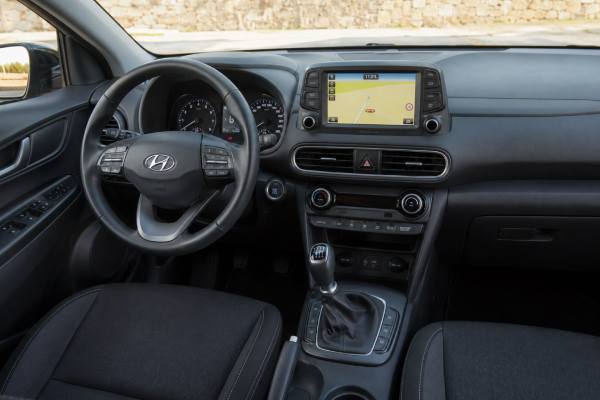
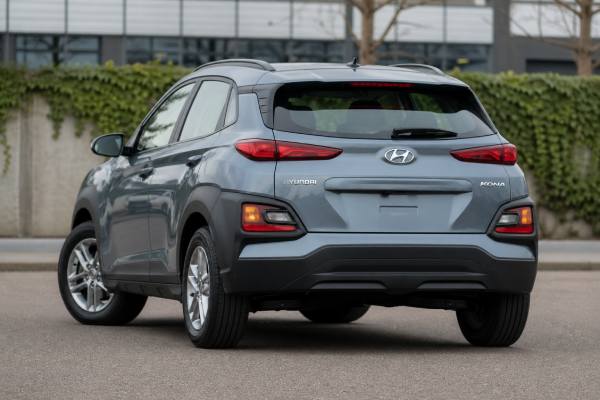
The first-generation Hyundai KONA arrived as one of the sharper small crossovers of its era, and the 1.0 T-GDi version is the range’s sensible petrol choice for drivers who want lower running costs without dropping into an underpowered entry engine. In OS-generation form, this 998 cc turbo three-cylinder pairs modest weight with a strong mid-range, a compact footprint, and a cabin that still feels modern enough for daily use. It is not the fastest KONA, and it was never meant to be. Its appeal is that it offers honest real-world usability, useful standard safety kit, tidy road manners, and a manual gearbox that suits the engine’s character well.
For used buyers, the story is mostly positive. The 1.0 T-GDi can be a durable unit when serviced on time, but it is less forgiving of neglected oil changes, poor spark plug maintenance, and repeated short-trip use. That makes history and condition more important than mileage alone.
Owner Snapshot
- Strong low-to-mid-range torque makes it easier to drive than many naturally aspirated small SUVs.
- Compact exterior size and light steering make it well suited to city use and tight parking.
- The chassis feels more settled than many rivals, especially on 16-inch or 17-inch wheels.
- Service history matters more than badge age, because missed oil changes can shorten turbo and timing-system life.
- Normal European service interval for engine oil and filter is every 15,000 km or 12 months, whichever comes first.
Guide contents
- Hyundai KONA OS 1.0 T-GDi overview
- Hyundai KONA OS specs and data
- Hyundai KONA OS trims safety and ADAS
- Reliability issues and service actions
- Maintenance and used buying advice
- Road manners and real-world performance
- KONA OS 1.0 T-GDi vs rivals
Hyundai KONA OS 1.0 T-GDi overview
In the OS-generation KONA range, the 1.0 T-GDi sits in the sweet spot for buyers who want the shape, seating position, and safety feel of a small SUV without the extra cost and complexity of the more powerful 1.6-litre turbo or later electrified variants. The engine is Hyundai’s Kappa 1.0 T-GDi, a direct-injection three-cylinder turbo unit that makes its torque early and gives the car a more flexible feel than the headline numbers suggest. Around town, that matters more than outright acceleration.
This version is front-wheel drive and manual only in most period markets. That already tells you what Hyundai intended: a lighter, simpler, more efficient KONA for mainstream private use. In practice, it works. The manual gearbox suits the engine well, the car feels neatly weighted at normal road speeds, and the suspension tune is more mature than some class rivals that chase “sporty” feel with overly firm damping.
The OS KONA also landed at a good time for Hyundai. Build quality had improved, the cabin design felt fresh, and the brand’s safety offer was becoming a real reason to buy, not just a brochure line. Even lower and middle trims often brought a useful mix of stability control, hill-start assist, tyre-pressure monitoring, cruise or speed-limiter functions, camera parking help, and ISOFIX child-seat mounting points. In better-equipped versions, blind-spot warning and rear cross-traffic alert made it feel closer to a class above.
The main ownership compromise is that the 1.0 T-GDi is an engine that rewards discipline. Like many small turbo direct-injection units, it wants clean oil, correct plugs, and proper warm-up habits. It also does not hide neglect well. A car with patchy servicing, frequent short-trip use, or a weak battery can feel rougher than it should and may show boost, idle, or misfire complaints long before the engine is fundamentally worn out.
As a used buy, then, this KONA is best judged as a condition-led small SUV. A good one feels tight, starts cleanly, pulls smoothly from low revs, and has straightforward running costs. A poor one often advertises itself with uneven idle, tired clutch action, overdue tyres or brakes, and thin paperwork. Find the former and the 1.0 T-GDi KONA remains a practical and likeable crossover with enough personality to avoid feeling anonymous.
Hyundai KONA OS specs and data
The table below focuses on the 2017–2020 OS-generation Hyundai KONA with the 1.0 T-GDi petrol engine and six-speed manual transmission. Values can vary slightly by market, wheel size, trim, and local type approval, so late-registered 2020 cars should always be checked by VIN and build sheet.
| Item | Specification |
|---|---|
| Code | Kappa 1.0 T-GDI |
| Engine layout and cylinders | Inline-3, DOHC, 12-valve, 4 valves per cylinder |
| Bore × stroke | 71.0 × 84.0 mm (2.79 × 3.30 in) |
| Displacement | 1.0 L (998 cc) |
| Induction | Turbocharged |
| Fuel system | Direct injection |
| Compression ratio | 10.0:1 |
| Max power | 120 hp class / 120 PS (88.3 kW) @ 6,000 rpm |
| Max torque | 172 Nm (126.9 lb-ft) @ 1,500–4,000 rpm |
| Timing system | No routine replacement interval published in owner literature; inspect on condition if noisy or out of correlation |
| Rated efficiency | 5.2 L/100 km (45.2 mpg US / 54.3 mpg UK) combined |
| Extra-urban rating | 4.7 L/100 km (50.0 mpg US / 60.1 mpg UK) |
| Urban rating | 6.0 L/100 km (39.2 mpg US / 47.1 mpg UK) |
| Real-world highway at 120 km/h | Usually about 6.5–7.2 L/100 km (36.2–32.7 mpg US / 43.5–39.2 mpg UK), depending on wind, tyres, and load |
| Item | Specification |
|---|---|
| Transmission | 6-speed manual |
| Drive type | FWD |
| Differential | Open front differential |
| Suspension front / rear | MacPherson strut / torsion beam |
| Steering | MDPS electric power steering |
| Brakes | Ventilated front discs / rear discs |
| Most common tyre size | 215/55 R17 on 7.0J × 17 wheels |
| Length / width / height | 4,165 / 1,800 / 1,550 mm (163.98 / 70.87 / 61.02 in) |
| Height with roof rack | 1,565 mm (61.61 in) |
| Wheelbase | 2,600 mm (102.36 in) |
| Kerb weight | About 1,350 kg (2,976 lb) |
| GVWR | 1,775 kg (3,913 lb) |
| Fuel tank | 50 L (13.21 US gal / 11.00 UK gal) |
| Cargo volume | 361 L / 1,143 L (12.75 / 40.36 ft³), VDA |
| 0–100 km/h | About 12.0 s |
| Top speed | 181 km/h (112 mph) |
| 100–0 km/h braking | About 35.0 m (114.8 ft), tyre and market dependent |
| Towing capacity | 1,200 kg (2,646 lb) braked / 600 kg (1,323 lb) unbraked |
| Payload | Approx. 425 kg (937 lb), depending on trim and equipment |
| Item | Specification |
|---|---|
| Engine oil | ACEA C2; 3.6 L (3.8 US qt) drain and refill; Europe preference SAE 0W-30 |
| Coolant | Ethylene-glycol phosphate-based coolant for aluminium radiator; 6.8 L (7.1 US qt); use distilled or deionized water when topping up |
| Manual transmission fluid | API GL-4, SAE 70W; about 1.6–1.7 L (1.7–1.8 US qt) |
| Brake and clutch fluid | FMVSS 116 DOT 3 or DOT 4; about 0.7–0.8 L (0.7–0.8 US qt) |
| A/C refrigerant | R-1234yf; 450 g (15.87 oz) ± 25 g |
| A/C compressor oil | PAG; 120 g (4.23 oz) ± 10 g |
| Wheel lug torque | 107–127 Nm (79–94 lb-ft) |
The key takeaway from the numbers is balance. The 1.0 T-GDi KONA is not a powerhouse, but its torque band is broad enough that it rarely feels weak in normal solo driving. It also avoids the excess mass and higher tyre costs of the larger-engine all-wheel-drive versions, which helps keep it appealing as a long-term daily driver.
Hyundai KONA OS trims safety and ADAS
Trim naming varied widely by market, so it is more useful to think of the OS KONA 1.0 T-GDi in three equipment layers: entry, mid-spec, and high-spec. Mechanically, the core 1.0 car is usually simple: front-wheel drive, six-speed manual, torsion-beam rear axle, and modest tyre widths. The big differences are equipment, wheel size, interior trim, and safety technology.
Entry and mid-level versions often covered the essentials well. Expect front, side, and curtain airbags, ABS, ESC, hill-start assist, downhill brake control, TPMS, ISOFIX outer rear mounts, and a speed limiter or cruise system depending on region. Rear cameras became common quickly, and smartphone-friendly infotainment helped the KONA age better than some rivals. Higher trims typically added larger alloy wheels, automatic climate control, keyless entry, upgraded screens, better seat trim, and more driver-assistance features.
The easiest visual identifiers are wheel size, lamp specification, infotainment screen size, and interior trim accents. Lower trims tend to have simpler cloth seats, smaller wheels, and plainer instrument displays. Higher trims may have contrasting interior color packs, larger centre screens, LED lighting elements, and more parking aids. On used examples, the VIN or original market brochure is still the safest way to confirm exact equipment.
Safety is one of the OS KONA’s strongest areas for its age. Euro NCAP awarded it a five-star result, with strong adult and child occupant scores. That is important because this was not just a paper-heavy result built on optional hardware alone. The structure tested well, and the cabin showed good core crash protection. The one nuance buyers should understand is that some active safety content depended on specification. Early KONA ratings noted that autonomous emergency braking performance was good, but some results were not counted in the main score because the system belonged to an optional safety pack rather than standard equipment on the tested baseline.
That means buyers should not assume every 1.0 T-GDi has the full SmartSense feature set. Depending on market and trim, you may see some or all of the following:
- Lane keeping or lane departure support
- Driver-set speed limiter
- Seatbelt reminders front and rear
- Blind-spot collision warning
- Rear cross-traffic collision warning
- High beam assist
- Autonomous emergency braking in later or better-specified cars
For owners and repairers, ADAS calibration matters after windscreen replacement, front bumper work, or rear radar disturbance. A used KONA with unexplained warning lights, poor lane-keeping behavior, or mirror-based blind-spot alerts that do not match traffic should be scanned properly rather than guessed at.
The smart buying move is to treat safety equipment as a trim-by-trim bonus, not a universal feature. The platform itself is solid, but the exact driver-assistance package must be confirmed on the individual car. That is especially true for late 2020 registrations, because some markets overlapped the original OS setup with updated equipment and electrified versions.
Reliability issues and service actions
The 1.0 T-GDi KONA is generally a sound used proposition, but it is not a carefree engine if maintenance has been stretched. The most useful way to judge reliability is by separating common wear-and-tear issues from the less common but more expensive problems that show up on neglected cars.
Common, usually low to medium cost
- Spark plug and ignition-coil related misfire, often felt under load in a higher gear
- Weak 12 V battery behavior causing rough start-stop performance or odd warning messages
- Front brake corrosion and rear disc lip build-up on lightly used cars
- Cabin rattles, trim noises, and occasional infotainment glitches
- Clutch wear on urban cars with a high bite point or heavy pedal
Occasional, medium cost
- Boost leaks from hoses, clamps, or pressure-side connections
- Sticky wastegate control or inconsistent turbo response
- Carbon build-up around the intake tract over long mileage and short-trip use
- Coolant seepage from hoses, joints, or thermostat-area components
- Noisy manual gearbox linkage feel rather than outright gearbox failure
Rare, but costly if ignored
- Timing-system noise after poor oil service history
- Turbocharger wear accelerated by low oil level or delayed oil changes
- Catalyst damage following prolonged misfire
- Overheating damage after unnoticed coolant loss
Typical symptom patterns matter. A tired example often starts with a slightly uneven idle, reduced willingness below 2,000 rpm, or a hesitation during brisk acceleration. Those symptoms can come from plugs, coils, fuel quality, air leaks, or software adaptation issues, so a proper scan is worth far more than parts swapping. On this engine, simple faults can feel worse than they are, but unresolved simple faults can also become expensive if the owner keeps driving through them.
The biggest long-term risk is oil neglect. Small turbo petrol engines run hot and work hard, and this one depends heavily on clean, correct-spec oil. Cars that followed the long interval on paper but spent their lives in short-trip city driving are the ones that deserve the closest inspection. In practice, the engines that live best are the ones serviced early, warmed properly, and kept topped up.
On the chassis side, the KONA is fairly robust. Bushings, drop links, and front-end wear are normal rather than excessive. Corrosion is usually manageable, but it is still worth checking the rear axle beam, front subframe edges, brake pipes, and the lower body seams on cars from wet or salted climates.
Public recall and service-action visibility is highly market-specific for this model and engine. There is no shortcut here: always run the VIN through Hyundai’s official recall checker and ask for dealer printouts showing campaign completion. That matters more than forum talk. Also ask whether infotainment, camera, and ADAS-related software has ever been updated, because many drivability and warning-light complaints are easier to solve when the car’s software baseline is known.
Maintenance and used buying advice
For long-term ownership, this KONA responds best to conservative maintenance rather than minimum maintenance. The factory schedule is workable, but buyers who plan to keep the car should think in terms of prevention, especially if the car sees cold starts, urban traffic, short trips, or frequent motorway use.
| Item | Practical interval | Notes |
|---|---|---|
| Engine oil and filter | 15,000 km or 12 months normal; 7,500 km or 6 months severe use | Use correct ACEA C2 oil and check level regularly |
| Engine air filter | Inspect every service; replace sooner in dust | Dirty filters hurt turbo response and fuel economy |
| Cabin air filter | Every 30,000 km or 24 months | More often in dusty or urban use |
| Spark plugs | 75,000 km or 60 months | Do not delay on a direct-injection turbo engine |
| Coolant | First replacement at 210,000 km or 10 years, then every 30,000 km or 24 months | Inspect level and leaks well before that point |
| Brake and clutch fluid | Every 24 months is sensible; owner literature shows periodic replacement in the main schedule | Especially important on cars used in wet climates |
| Manual transmission oil | Inspect on schedule; replace around 100,000–120,000 km if you want cleaner shift quality | Mandatory replacement after water ingress |
| Brakes | Inspect every service | Watch for inner-pad wear and disc corrosion |
| Tyre rotation and alignment | Rotation every 10,000–15,000 km; alignment when wear appears uneven | Helps preserve steering precision |
| Timing system | No fixed replacement interval published | Investigate chain rattle, start-up noise, or timing-correlation faults immediately |
| Auxiliary belt and hoses | Inspect from about 90,000 km onward | Age matters as much as mileage |
| 12 V battery | Test from year 4 onward | Many drivability complaints start here |
For used buyers, inspection discipline matters more than chasing the lowest odometer reading. A strong candidate should have a cold start with no obvious chain rattle, no misfire trace, no coolant smell, and smooth boost build from low revs. The clutch should engage cleanly and the shifter should feel mechanical, not vague or obstructive. On the road, look for straight tracking, clean braking, and no steering shimmy.
The best paperwork bundle includes:
- Stamped or invoiced annual servicing
- Evidence of correct oil specification
- Spark plug replacement history
- Recall and campaign proof
- Brake fluid and gearbox fluid history if mileage is higher
- ADAS or windscreen repair paperwork where relevant
The best versions to own are usually mid-spec cars on 16-inch or 17-inch wheels. They ride better, tyres cost less, and there is less cosmetic damage risk than on 18-inch setups. Lower-mileage city cars are not always the best bet if they were rarely fully warmed through. A cared-for motorway car with strong records can be the safer buy.
Long-term, the durability outlook is good rather than perfect. The body, cabin, and basic chassis age well. The engine can also age well, but only when maintenance is treated as a habit, not a suggestion.
Road manners and real-world performance
From the driver’s seat, the 1.0 T-GDi KONA feels lighter and more cohesive than some small crossovers that promise SUV toughness but drive like tall hatchbacks with too much weight. The seating position is upright, visibility is decent, and the steering is light at parking speeds without becoming overly vague once the pace rises.
The engine is the main character. It does not deliver big-end urgency, but it has a useful, broad torque band that makes the car feel alert in normal traffic. Around 1,500 to 4,000 rpm, the KONA is at its best. That means it copes well with urban gradients, roundabouts, and second-to-fourth gear work on country roads. There is a little turbo softness below the sweet spot, and you will need a downshift when loaded or overtaking uphill, but the engine is better matched to the car than many buyers expect from a 1.0-litre badge.
The six-speed manual is an important part of that impression. Ratios suit the engine reasonably well, and the car feels most relaxed when driven with clean, early shifts rather than chased to the red line. It is not a hot crossover, yet it is not slow in the way older small-capacity SUVs sometimes were. A 0–100 km/h time of around 12 seconds tells only part of the story. In daily use, mid-range flexibility matters more, and the KONA has enough of it.
Ride quality is trim-sensitive. On smaller wheels, it has a mature balance between bump absorption and body control. On 18-inch wheels, the car looks better but becomes sharper over broken surfaces. Highway stability is good for the class, though crosswinds and coarse asphalt remind you that this is still a light B-segment crossover. NVH is acceptable rather than class-leading. The three-cylinder note is audible under load, but it is not unpleasant, and cruising noise is more tyre and road related than engine related.
Real-world fuel use is one of the car’s strengths when driven properly. Expect about 6.5 to 7.5 L/100 km in heavy city work, about 6.5 to 7.2 L/100 km at a true 120 km/h cruise, and roughly 6.0 to 6.8 L/100 km in mixed use. Cold weather, roof load, and stop-start traffic can shift those numbers quickly. Towing is possible, but performance becomes noticeably more deliberate and fuel consumption can rise by roughly 25 to 40 percent depending on trailer shape and speed.
In simple terms, the 1.0 T-GDi KONA drives like a well-sorted small crossover with enough engine for real life, provided your expectations are aligned with efficiency and usability rather than pace.
KONA OS 1.0 T-GDi vs rivals
The KONA’s strongest rivals from the same general period are cars like the Nissan Juke 1.0 DIG-T, Renault Captur 1.0 TCe, SEAT Arona 1.0 TSI, and Kia Stonic 1.0 T-GDi. All aim at the same buyer, but they arrive there in different ways.
| Rival | Where the KONA is stronger | Where the rival can appeal more |
|---|---|---|
| Nissan Juke | More conventional cabin, often better rear-seat usability, calmer long-distance manners | More distinctive styling and, in some versions, a more playful feel |
| Renault Captur | Sharper steering response and usually stronger baseline safety feel | Better packaging, more flexible rear space, softer urban ride |
| SEAT Arona | Higher seating position, stronger safety image, often richer feature content | Lighter feel, crisp road manners, excellent Volkswagen-group switchgear logic |
| Kia Stonic | More substantial cabin and a more SUV-like stance | Often slightly simpler and cheaper to buy for similar engine output |
What makes the KONA stand out is not one headline number. It is the mix. The body size is easy to live with, the interior design has aged fairly well, and the chassis feels more complete than many rivals that were either too soft or too nervous. The engine also suits the car’s mission. It gives the KONA enough flexibility to feel grown-up without pushing buyers toward bigger tyres, higher fuel use, or all-wheel-drive complication.
Where the KONA gives ground is packaging. It is not the roomiest car in the class, and buyers who prioritise rear legroom or maximum cargo flexibility may prefer a Captur. It can also get firm on larger wheels, and the 1.0 engine is best viewed as adequate-plus rather than enthusiastic when the car is fully loaded.
As a used buy, though, the KONA often lands in a very attractive middle ground. It feels a bit more substantial than a Stonic, a bit less quirky than a Juke, and a bit less family-van-like than some Captur versions. For drivers who want a small crossover that still feels tidy, solid, and easy to recommend, the OS KONA 1.0 T-GDi is one of the more rounded choices in the segment.
References
- OWNER’S MANUAL 2019 (Owner’s Manual)
- KONA 2019 (Brochure)
- Kona 2018 (Brochure)
- Hyundai KONA 2017 (Safety Rating)
- Hyundai Recalls & Service Campaigns: Home 2026 (Recall Database)
Disclaimer
This article is for informational purposes only and is not a substitute for professional diagnosis, repair, or model-specific workshop guidance. Specifications, torque values, service intervals, fluids, equipment, towing figures, and repair procedures can vary by VIN, market, production date, and trim, so always verify details against official service documentation for the exact vehicle.
If this guide helped you, please consider sharing it on Facebook, X, or another social platform. That support helps us keep producing detailed, practical vehicle guides.