

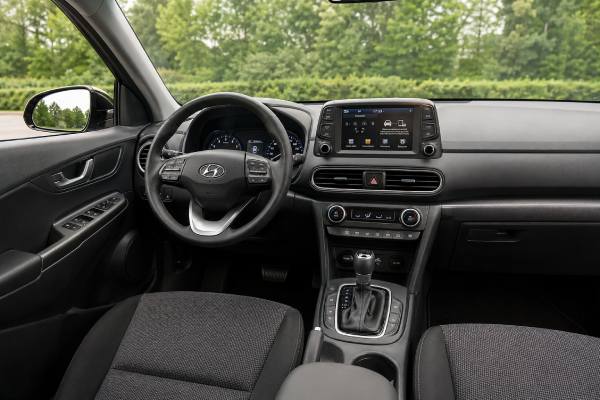
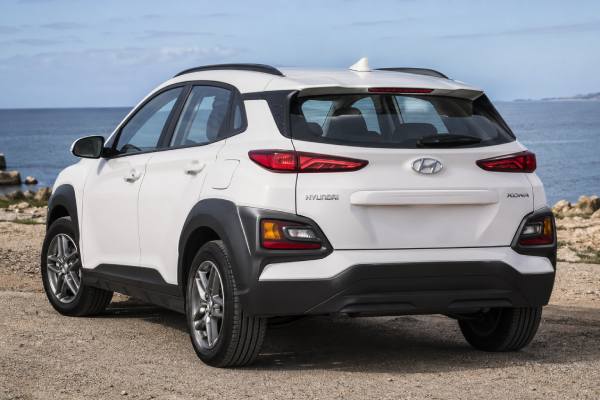
The 2018–2020 Hyundai KONA (OS) with the 147 hp 2.0 MPI engine is the practical version of Hyundai’s first small crossover. It does not aim to be the fastest KONA. Instead, it combines a naturally aspirated 2.0-liter four-cylinder with a conventional six-speed automatic, giving buyers a simpler mechanical package than the turbo and dual-clutch alternative. That matters in real ownership, because this version is usually easier to service, easier to drive smoothly in traffic, and less fussy in mixed urban use.
It also gets the core KONA strengths: tidy exterior size, useful cargo space for the class, available all-wheel drive, and a cabin layout that stays easy to live with. The biggest caution is not day-to-day drivability, but verification. On used examples, recall completion, oil-consumption history, and maintenance records matter more than trim badges. Buy a sorted one, and the 2.0 MPI KONA can be a sensible long-term compact SUV.
Owner Snapshot
- The 2.0 MPI engine and six-speed automatic are simpler than the turbo and dual-clutch setup.
- Cargo space is strong for the class, and AWD was available without moving to the turbo engine.
- Higher trims add useful active safety features and a better overall daily-driving package.
- The main ownership watchpoint is official engine recall history and any sign of abnormal oil use.
- Normal oil service is every 12,000 km or 12 months, but severe use cuts that to 6,000 km or 6 months.
Guide contents
- Hyundai KONA OS 2.0 MPI overview
- Hyundai KONA OS specs and data
- Hyundai KONA OS trims and safety
- Reliability, faults and service actions
- Maintenance and buyer advice
- Driving and real-world efficiency
- How it compares with rivals
Hyundai KONA OS 2.0 MPI overview
In the first-generation KONA range, the 2.0 MPI was the honest mainstream choice. It used Hyundai’s 1,999 cc naturally aspirated Nu-family four-cylinder, rated at 147 hp and 132 lb-ft, paired with a six-speed automatic instead of the seven-speed dual-clutch fitted to the 1.6 turbo. That immediately shapes the ownership experience. The 2.0 car feels calmer, less urgent, and less sporty, but also more straightforward in traffic, on hills, and in stop-start commuting.
That matters because the KONA’s mission was never only about performance. It was designed as a compact crossover with a relatively upright seating position, easy city footprint, and a more distinctive look than many rivals. In OS form it measured 4,165 mm long, 1,800 mm wide, and rode on a 2,600 mm wheelbase, so it stayed easy to park while still offering useful cabin and cargo packaging. Official luggage volume was 544 L seats up and 1,296 L with the rear seat folded, which is solid for this size class.
The 2.0 MPI also gave buyers a useful middle ground in some markets. You could have a lower-complexity gasoline engine with front-wheel drive for cost and economy, or add AWD without being forced into the turbocharged model. AWD versions were especially attractive in snowy regions because they also brought a different rear suspension layout, using a multi-link rear instead of the front-drive car’s torsion-beam arrangement.
The advantages are easy to understand. This version is usually cheaper to buy used than a similarly equipped turbo KONA. It tends to be smoother at low speeds, and the six-speed automatic is familiar to independent shops. Fuel economy is respectable rather than exceptional, and the chassis is tuned for predictable road use rather than sharp-edge handling.
Still, the 2.0 MPI KONA is not the perfect answer for every buyer. Rear-seat space is only average, and the naturally aspirated engine can feel merely adequate when the car is fully loaded or used for frequent highway passing. Trim also matters more than many buyers expect. Some lower trims miss key active safety features, and headlight performance varies sharply by specification. The used-market verdict is therefore simple: the 2.0 MPI is the sensible KONA, but condition, equipment level, and recall history matter far more than the engine badge alone.
Hyundai KONA OS specs and data
For 2018–2020, the 147 hp 2.0 MPI KONA was most commonly defined by a simple formula: naturally aspirated four-cylinder, conventional automatic, front-wheel drive as standard, and optional on-demand AWD in many markets. Exact trim naming and tyre packages varied by country, so the table below reflects the mainstream North American 2.0 MPI specification and factory service data for the same generation.
| Item | Specification |
|---|---|
| Code | Nu 2.0 MPI |
| Engine layout and cylinders | Inline-4, DOHC, 16 valves, 4 valves per cylinder |
| Bore × stroke | 81.0 × 97.0 mm (3.19 × 3.82 in) |
| Displacement | 2.0 L (1,999 cc) |
| Induction | Naturally aspirated |
| Fuel system | MPI |
| Compression ratio | 12.5:1 |
| Max power | 147 hp (110 kW) @ 6,200 rpm |
| Max torque | 179 Nm (132 lb-ft) @ 4,500 rpm |
| Transmission | 6-speed automatic |
| Drive type | FWD standard; on-demand AWD optional in many trims |
| Differential | Open differential with brake-based traction management |
| Front suspension | MacPherson strut |
| Rear suspension | Coupled torsion beam axle on FWD; multi-link on AWD |
| Steering | Motor-driven power steering, rack and pinion, 13.8:1 ratio |
| Turning circle | 10.6 m (34.8 ft) kerb-to-kerb |
| Brakes | Front ventilated discs, 280 mm (11.0 in) FWD or 305 mm (12.0 in) AWD; rear solid discs |
| Most common tyre sizes | 205/60 R16, 215/55 R17, 235/45 R18 |
| Item | Specification |
|---|---|
| Length / width / height | 4,165 / 1,800 / 1,550–1,565 mm (164.0 / 70.9 / 61.0–61.6 in) |
| Wheelbase | 2,600 mm (102.4 in) |
| Kerb weight | About 1,311–1,315 kg (2,890–2,899 lb) FWD; about 1,399–1,418 kg (3,085–3,126 lb) AWD |
| GVWR | 1,805 kg (3,979 lb) FWD; 1,900 kg (4,189 lb) AWD |
| Payload | Roughly 482–501 kg (1,063–1,104 lb), depending on trim and driveline |
| Fuel tank | 50 L (13.2 US gal / 11.0 UK gal) |
| Cargo volume | 544 L (19.2 ft³) seats up / 1,296 L (45.8 ft³) seats down, SAE method |
| Rated efficiency | FWD: 27/33/30 mpg US city/highway/combined, about 8.7/7.1/7.8 L/100 km; AWD: 26/30/28 mpg US, about 9.0/7.8/8.4 L/100 km |
| Real-world highway @ 120 km/h (75 mph) | About 7.1 L/100 km, 33 mpg US, 39.6 mpg UK in independent steady-speed testing for the base four-cylinder |
| 0–100 km/h (0–62 mph) | Typically around 10 seconds in FWD form; exact figures vary by market, load, tyres and test method |
| Top speed | Typically around 194 km/h (121 mph), where published |
| Towing capacity | Not a strong selling point for this version; many North American 2.0 MPI references do not emphasize a formal tow rating |
| Engine oil | API latest / ILSAC latest, SAE 5W-20; 4.0 L (4.2 US qt) |
| Coolant | Phosphate-based ethylene glycol for aluminum radiator; 6.5 L (6.9 US qt) |
| Automatic transmission fluid | ATF SP-IV; 6.7 L (7.1 US qt) |
| Transfer case oil | AWD only, API GL-5 SAE 75W/90; 0.38–0.42 L (0.40–0.44 US qt) |
| Rear differential oil | AWD only; 0.47–0.52 L (0.50–0.55 US qt) |
| A/C refrigerant | R-1234yf; 450 ±25 g (15.9 oz) |
| A/C compressor oil | PAG; 120 ±10 mL (4.1 fl oz) |
| Key torque spec | Wheel nuts: 107–127 Nm (79–94 lb-ft) |
Two practical notes matter here. First, this is not a high-output drivetrain, but it is a transparent one. There is no turbo surge, no dual-clutch personality, and no pretense that the car is faster than it really is. Second, AWD cars are meaningfully different underneath, not just in traction. The extra driveline weight and multi-link rear suspension change both ride and maintenance needs, so buyers should always confirm whether a used example is FWD or AWD before ordering parts or judging fuel economy.
Hyundai KONA OS trims and safety
Trim structure depends heavily on region, but the 2.0 MPI KONA usually sat in the volume part of the range. In Canada, the engine commonly appeared in Essential, Preferred, and Luxury trims, while the 1.6 turbo covered the sportier upper end. In the United States, roughly equivalent roles were handled by SE, SEL, and related mid-range grades. The important point for used buyers is that the 2.0 engine does not tell you enough about equipment. Two cars with the same engine can differ a great deal in safety technology, lighting, seat trim, and suspension layout.
Base 2.0 models were not stripped to the bone. They generally included six airbags, ABS with electronic brake-force distribution, stability control, traction control, hill-start assist, downhill brake control, a rearview camera, and smartphone-friendly infotainment. That already makes the KONA easy to recommend as a basic urban crossover.
Mid trims are where the value sweet spot usually appears. Depending on year and market, they added blind-spot monitoring, rear cross-traffic alert, heated steering wheel, proximity entry, upgraded wheels, and better day-to-day convenience features. Higher 2.0 AWD trims were especially appealing because they paired the simpler naturally aspirated engine with more complete safety hardware and the AWD-specific multi-link rear suspension. That combination often delivers the best balance in the used market.
Year-to-year changes were real but not dramatic. The 2018 model established the template. Many 2019 cars were essentially carryover examples with package and appearance changes. By 2020, some markets improved driver-assistance availability and moved features between trims, which is why VIN and equipment checks matter more than brochure assumptions.
Safety results need careful reading. The KONA’s crash structure performed well in IIHS testing, with Good scores in the major crashworthiness categories. For 2020, the model qualified for Top Safety Pick, but only when fitted with the better forward-collision-prevention setup and the right headlights. That caveat matters. Headlight performance varied by trim, and lower halogen-equipped versions did not score as well as the better LED projector setups on higher trims. Child-seat attachment points are present, but LATCH ease of use was not a standout strength.
ADAS availability also changes the ownership picture. Forward collision warning and automatic emergency braking, lane-keeping support, driver-attention monitoring, blind-spot monitoring, rear cross-traffic alert, and adaptive cruise control were not all standard across the full 2018–2020 2.0 MPI lineup. On a used car, check every camera-based and radar-based function, because windshield replacement, front-end repairs, and even ride-height changes can affect calibration. A clean dashboard with no warning lights is only the starting point; buyers should verify that the systems actually work as equipped.
Reliability, faults and service actions
The first thing to understand about the 2018–2020 KONA 2.0 MPI is that its reliability story is shaped more by one official service action than by a long list of random weaknesses. The headline issue is the factory campaign covering certain 2.0-liter Nu-engine vehicles produced through early September 2020 for the U.S. market. The defect description focused on piston oil rings that could fall out of specification, leading to abnormal cylinder-bore scuffing, accelerated oil consumption, possible engine damage, stalling, and in some cases a fire risk if oil reached a hot exhaust component. In real buyer terms, that means recall completion and dealer history are not optional checks.
Common symptoms on a problem car include a falling oil level between services, mechanical noise, rough running, reduced power, warning lamps, or a smell linked to oil leakage. The official dealer process centered on inspection and, when required, engine replacement. For used buyers, this is more important than forum folklore. A car with proof of the inspection path or engine replacement is usually a safer bet than one with vague seller claims.
Outside that major issue, the 2.0 MPI KONA is generally more straightforward than the 1.6 turbo and seven-speed dual-clutch version. The naturally aspirated engine and six-speed automatic remove some complexity, and that matters after 100,000 km. Still, simple does not mean fault-free.
Common to occasional age-related issues include:
- Rear brake wear or corrosion, especially in salty climates and on cars used for short trips.
- Weak 12 V battery behavior after long parking periods or repeated short urban driving.
- Suspension knocks from anti-roll-bar links, bushings, or top-mount wear on rough roads.
- Underbody corrosion on winter-driven cars, particularly around fasteners, subframe areas, and brake hardware.
- Infotainment or sensor glitches that are often electrical or calibration related rather than major hardware failures.
AWD models need extra attention underneath. The system is generally effective for road use, but it adds transfer-case and rear-differential service items that many owners ignore. If the car has seen snow, gravel, or deep standing water, those fluids and seals deserve closer inspection. Likewise, a poorly maintained AWD KONA can feel fine on a short dry-road test drive but still hide neglected driveline service.
On the electronics side, the most important software concern is not dramatic tuning failure, but correct calibration after repair. Any forward camera, lane system, radar sensor, or collision-warning fault should be taken seriously. Windshield replacement and front crash repair can leave ADAS systems misaligned even when the vehicle drives normally.
Before buying, ask for a full service file, recall proof, oil-consumption records if available, recent brake and tyre history, and evidence of fluid service on AWD cars. Also request a cold start. That is when timing noise, rough idle, warning lights, and smoke are easiest to catch. A healthy 2.0 MPI KONA should feel ordinary in the best way. Trouble cars usually reveal themselves through neglect, incomplete campaign history, or obvious shortcuts in maintenance.
Maintenance and buyer advice
The KONA 2.0 MPI rewards routine maintenance more than heroic repair spending. Follow the service schedule, shorten intervals when the car lives a hard life, and many of the expensive surprises become less likely. Hyundai’s own schedule separates normal and severe use, and a large share of small crossovers actually fall into the severe category because they do short trips, heavy traffic, hot-weather idling, winter salt exposure, or repeated stop-start driving.
| Item | Practical interval |
|---|---|
| Engine oil and filter | 12,000 km (7,500 mi) or 12 months normal; 6,000 km (3,700 mi) or 6 months severe use |
| Tyre rotation | Every 12,000 km (7,500 mi) |
| Cabin air filter | Every 24,000 km (14,900 mi) or 12 months |
| Engine air filter | Inspect regularly; often replaced around 48,000 km (29,800 mi), sooner in dust |
| Spark plugs | 156,000 km (96,900 mi) |
| Coolant | First change at 192,000 km (119,300 mi) or 10 years, then every 48,000 km (29,800 mi) or 24 months |
| Drive belts | Inspect at 96,000 km (59,700 mi) or 72 months, then every 24,000 km (14,900 mi) or 24 months |
| Automatic transmission fluid | No routine service listed for normal use; severe use interval is 96,000 km (59,700 mi) |
| Transfer case and rear differential | AWD severe use: 120,000 km (74,600 mi); also change after water intrusion |
| Brake inspection | At every service; brake fluid should be checked closely and renewed on time if moisture rises |
| 12 V battery | Test from about year 4 onward, especially before winter |
A few buyer-focused notes matter more than the schedule itself. First, there is no mileage-based timing belt replacement item in the factory schedule, so owners should focus on oil quality, correct interval discipline, and any startup rattle or timing-correlation fault rather than looking for a belt change that does not apply here. Second, the automatic transmission may be labeled as largely maintenance-free in normal use, but real-world owners who face heat, hills, stop-start traffic, or towing-like loads often benefit from a conservative drain-and-fill strategy before very high mileage.
For fluid decisions, stick close to factory specifications. This engine wants 5W-20 meeting the current API and ILSAC standards, with a 4.0 L fill. Coolant type matters because the system uses an aluminum radiator. AWD owners should not guess at gear oil specs or skip service after deep water exposure.
As a used buy, the best 2.0 MPI KONA is usually a mid or upper trim with documented maintenance and completed campaign work. A well-kept AWD car can be a very good all-weather daily, but only if its extra driveline has not been ignored. The cars to avoid are not necessarily high-mileage examples; they are poorly documented ones. Low odometer numbers do not help if the engine has lived on missed oil changes, the recall trail is unclear, or the underside already shows hard winter corrosion.
Long-term durability outlook is fairly positive when the engine campaign history is clean and maintenance is sensible. In the KONA range, the 2.0 MPI and six-speed automatic remain the safer simplicity play.
Driving and real-world efficiency
On the road, the 2.0 MPI KONA feels exactly like what it is: a small crossover tuned for ease rather than excitement. That is not a criticism. In city driving it is light on its feet, easy to place, and less tiring than larger SUVs. The seating position is upright enough to give confidence in traffic, and the short body makes parking simple. Steering effort is light, and while feedback is limited, the car responds cleanly enough for daily use.
The engine’s character is steady and predictable. Throttle response is linear, and the naturally aspirated four-cylinder does not have the dead spot or sudden rush that some small turbo engines show. The trade-off is that low-rpm shove is modest. Around town that is fine. On faster roads, especially with passengers or luggage, the KONA 2.0 needs a deliberate downshift and more revs to make a quick overtake. The six-speed automatic generally behaves well, though it can hunt a little on rolling grades and will not disguise the engine’s modest output.
Ride quality depends on wheel size and driveline. Lower-spec FWD cars on smaller wheels usually ride more calmly over broken pavement. AWD cars can feel more settled through uneven bends because of the multi-link rear suspension, though the extra mass is noticeable. On coarse highway surfaces, tyre and road noise are more obvious than in some larger rivals. Eighteen-inch wheel packages look better, but they do little to improve refinement.
Braking feel is straightforward. The pedal is easy to judge in traffic, and the chassis stays stable in normal emergency stops. In winter climates, though, rear brake condition deserves close attention because light-duty urban use can accelerate corrosion.
Real-world economy is respectable. Official figures land around 7.8 L/100 km combined for FWD and 8.4 L/100 km for AWD. In practice, gentle mixed driving often falls in the high-7s to mid-8s for FWD cars, while AWD and cold-weather use usually push the number upward. At a steady 120 km/h, the base four-cylinder has returned about 7.1 L/100 km in independent highway testing, which is a good result for a naturally aspirated crossover with conventional automatic gearing.
AWD is useful but not transformative. It helps in wet and snowy conditions and gives the KONA more secure launches and cleaner corner exits on slippery roads, but this is still a road-focused crossover, not an off-road tool. Put simply, the 2.0 MPI KONA drives like a smart commuter with sensible manners. Buyers who understand that usually end up satisfied.
How it compares with rivals
The 2018–2020 KONA 2.0 MPI sits in an interesting place among small crossovers because it does not dominate one single category. Instead, it balances several of them well. That balance is why it still makes sense as a used buy.
Against the Nissan Kicks, the KONA usually feels more substantial and more versatile. The Kicks can be very efficient and often offers good interior packaging for the money, but it lacks the KONA’s AWD option and does not feel as planted on faster roads. The Hyundai is the stronger winter-climate choice.
Against the Mazda CX-3, the KONA gives up some steering sharpness and some cabin polish, but it wins on practicality. The Mazda feels more like a lifted hatchback, while the Hyundai is the more useful all-rounder with better cargo flexibility and easier rear-seat access. A later CX-30 is a tougher rival on refinement, but it usually costs more.
Against the Honda HR-V of the same era, the comparison depends on priorities. The Honda offers smarter packaging and usually a roomier rear area, but the KONA feels newer in its interface and can be stronger on available safety features and infotainment content, depending on trim. In snowy regions, AWD-equipped KONA models are also easy to recommend.
Even inside the Hyundai-Kia family, the KONA has a distinct role. A Kia Soul can be roomier and easier to enter, but it lacks the same SUV stance and, in many markets of this period, the same AWD appeal. A Kia Seltos is more spacious, yet the KONA is tidier in city use and often easier to park.
The real comparison that matters, though, is inside the KONA lineup itself. If you want punchier performance, the 1.6 turbo delivers it. If you want the simpler ownership case, the 2.0 MPI is the one to choose. That is the core verdict. For buyers who value mechanical simplicity, honest fuel economy, and available AWD in a compact footprint, the 2018–2020 Hyundai KONA 2.0 MPI remains one of the more sensible used subcompact SUVs of its generation.
References
- 2020 Kona Specifications 2020 (Product Guide)
- OS CAN-E 8.qxp 2020 (Owner’s Manual)
- OS CAN-E 7.qxp 2020 (Owner’s Manual)
- 2020 Hyundai Kona 2020 (Safety Rating)
- Part 573 Safety Recall Report 21V-301 2021 (Recall Database)
Disclaimer
This article is for informational purposes only and is not a substitute for professional diagnosis, inspection, or repair. Specifications, torque values, service intervals, procedures, and equipment can vary by VIN, model year, market, drivetrain, and trim, so always verify the details against the correct official service documentation for the exact vehicle.
If this guide helped you, please consider sharing it on Facebook, X, or another platform to support our work.