
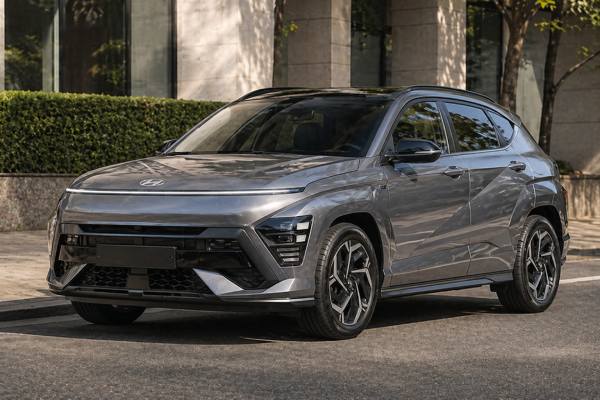
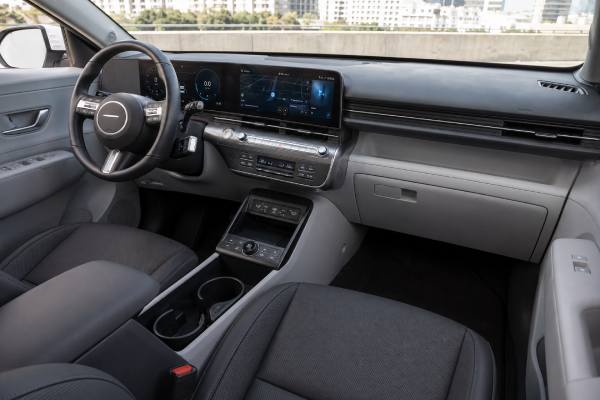
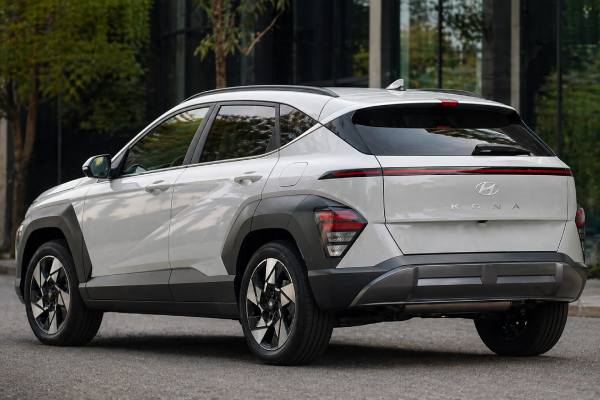
The second-generation Hyundai KONA (SX2) with the 1.0 T-GDi 48V mild-hybrid system is the efficiency-first version of Hyundai’s larger, more mature small SUV. It keeps the compact-crossover idea intact, but the SX2 generation moves the KONA up in space, technology, and day-to-day comfort. In this 120 hp 1.0-liter form, the focus is not outright pace. It is lower running costs, a lighter front end, and a simple mild-hybrid setup that improves stop-start smoothness and trims fuel use without turning the car into a full hybrid.
That matters for real owners. The 48V system adds less complexity than a full hybrid, while the SX2 body gives the KONA better rear space, a bigger boot, and a more modern cabin than the old model. The trade-off is straightforward: this is a small turbo engine working in a larger body, so trim, transmission choice, and service history matter more than the headline fuel figure alone.
What to Know
- The SX2 KONA is roomier and more refined than the older model, especially in rear-seat and cargo space.
- The 1.0 T-GDi 48V mild-hybrid setup improves urban efficiency without the cost or weight of a full hybrid.
- This version stays lighter and simpler than the full hybrid, which helps keep ownership straightforward.
- The main caution is that the small turbo engine feels adequate rather than quick when the car is fully loaded.
- A sensible oil-service target is every 10,000–12,000 km or 12 months, sooner in heavy city use.
Jump to sections
- Hyundai KONA SX2 1.0 48V overview
- Hyundai KONA SX2 specs and data
- Hyundai KONA SX2 trims and safety
- Reliability, issues and service actions
- Maintenance and buyer’s guide
- Driving and real-world economy
- How it compares with rivals
Hyundai KONA SX2 1.0 48V overview
The SX2-generation KONA is a much bigger step than its familiar name suggests. Hyundai did not simply update the old car. It stretched the wheelbase, widened the body, improved rear passenger space, and gave the cabin a more modern architecture. That change matters most on the 1.0 T-GDi 48V model, because this version is aimed at buyers who want the KONA shape and practicality without paying for the stronger 1.6 turbo or the costlier hybrid and electric versions.
The mild-hybrid system is central to the car’s character. Unlike a full hybrid, it cannot drive the car on electricity alone for meaningful distances. Instead, it uses a 48-volt architecture to support smoother stop-start operation, recover energy, and reduce the fuel penalty of urban driving. In practice, that makes the car feel slightly more polished rather than radically different. The gains show up most in traffic, where the system helps the engine restart more cleanly and reduces some of the waste that a small turbo petrol unit would otherwise produce.
The engine itself is Hyundai’s 1.0-liter three-cylinder turbocharged direct-injection unit, rated here at 120 hp and 200 Nm. That is enough for normal commuting, school runs, and mixed suburban or motorway work, but buyers should be realistic. The SX2 KONA is larger than the old OS model, and that extra maturity comes with extra size. This version is therefore adequate rather than brisk. It is best suited to drivers who value efficiency, compact exterior size, and a higher seating position more than fast overtakes or heavy-load performance.
One reason this trim makes sense is mechanical balance. It is front-wheel drive, lighter than the stronger 1.6 T-GDi versions, and simpler than the full hybrid. That makes it easier to recommend to buyers who want a modern crossover without taking on the packaging or long-term component complexity of a larger electrified system. In markets where Hyundai offered both conventional 1.0 petrol and 48V mild-hybrid versions, the mild-hybrid model was the smarter buy for efficiency-minded drivers.
The SX2 platform also improves daily use. Rear-seat knee room is better, the boot is far more competitive, and the cabin feels more like a class-above product than the previous generation. That helps offset the fact that the 1.0 engine is not especially exciting.
The final verdict on the 1.0 T-GDi 48V KONA is simple. It is not the enthusiast’s KONA and not the most powerful one. It is the version for buyers who want the newest design, modern safety features, and sensible fuel use in a compact SUV that still feels easy to live with.
Hyundai KONA SX2 specs and data
The 2023–2025 SX2 KONA range varies by market, but the 1.0 T-GDi 48V model follows a clear European pattern: a 120 hp three-cylinder turbo petrol engine, front-wheel drive, and a 48-volt mild-hybrid system paired primarily with a six-speed manual in the mild-hybrid form. The figures below focus on the mainstream European 2WD specification and current official data available for the SX2 generation.
| Item | Specification |
|---|---|
| Code | 1.0 T-GDi 48V |
| Engine layout and cylinders | Inline-3, DOHC, 12 valves, 4 valves per cylinder |
| Bore × stroke | 71.0 × 84.0 mm (2.80 × 3.31 in) |
| Displacement | 1.0 L (998 cc) |
| Motor | 48V belt-driven mild-hybrid starter-generator, front-mounted |
| System voltage | 48 V |
| Battery chemistry | Lithium-ion polymer |
| Battery capacity | About 0.44 kWh class |
| Induction | Turbocharged |
| Fuel system | Gasoline direct injection |
| Compression ratio | About 10.5:1 |
| Max power | 120 hp (88 kW) @ around 6,000 rpm |
| Max torque | 200 Nm (148 lb-ft) @ around 2,000–2,500 rpm |
| Timing drive | Chain |
| Transmission | 6-speed manual in most 48V European specifications |
| Drive type | FWD |
| Differential | Open differential with brake-based traction control |
| Suspension (front / rear) | MacPherson strut / coupled torsion beam axle |
| Steering | Motor-driven power steering |
| Turning circle | 10.6 m (34.8 ft) |
| Brakes | Front ventilated discs, rear solid discs |
| Most common tyre sizes | 215/60 R17 or 215/55 R18 |
| Item | Specification |
|---|---|
| Length / width / height | 4,350 / 1,825 / 1,585 mm (171.3 / 71.9 / 62.4 in) |
| Wheelbase | 2,660 mm (104.7 in) |
| Kerb weight | About 1,295–1,435 kg (2,855–3,164 lb), depending on trim and market |
| GVWR | About 1,860 kg (4,101 lb) |
| Payload | About 425–565 kg (937–1,246 lb), depending on version |
| Fuel tank | 47 L (12.4 US gal / 10.3 UK gal) |
| Cargo volume | 466 L (16.5 ft³) seats up / 1,300 L (45.9 ft³) seats folded, VDA method |
| Acceleration | 0–100 km/h is typically around 12 seconds; related official 0–62 mph figures for comparable 1.0-liter SX2 versions fall in the low-13-second range |
| Top speed | About 180 km/h (112 mph) class for the 120 hp 1.0 T-GDi family |
| Braking distance | No widely published official figure for this exact mild-hybrid specification |
| Towing capacity | About 1,210 kg (2,668 lb) braked / 600 kg (1,323 lb) unbraked in UK-type 1.0 petrol specifications; verify exact VIN and market for 48V mild-hybrid approval |
| Rated efficiency | WLTP combined generally about 5.4–5.9 L/100 km, depending on trim and wheels |
| Real-world highway @ 120 km/h (75 mph) | Usually around 6.4–7.0 L/100 km in calm conditions |
| Item | Specification |
|---|---|
| Engine oil | Use Hyundai-approved full-synthetic oil in the correct viscosity for climate and VIN; commonly 0W-20 or 5W-30 depending on market guidance |
| Coolant | Long-life coolant for aluminum components; confirm exact type by VIN |
| Transmission fluid | Manual gearbox fluid to Hyundai specification; verify exact fill and grade by VIN |
| Differential / transfer case | Not applicable to this FWD version as a separate service item |
| A/C refrigerant | Later-market SX2 documentation uses R-1234yf |
| Key torque spec | Wheel nuts should always be verified by official service literature for the exact trim and wheel |
| Euro NCAP | 4 stars in 2023 testing for the new-generation KONA line |
| IIHS | No IIHS-specific rating for this European 1.0 T-GDi 48V powertrain configuration |
| ADAS suite | AEB, lane support, intelligent speed assistance, driver monitoring, blind-spot and rear cross-traffic systems varied by trim |
The important practical point is that the SX2 KONA is substantially roomier than the old OS model while still keeping compact outer dimensions. For many buyers, that extra interior usability is more valuable than the mild-hybrid badge itself.
Hyundai KONA SX2 trims and safety
The SX2 KONA range is broader and more market-sensitive than the old car, so trim matters a great deal. In many European markets, the 1.0 T-GDi and 1.0 T-GDi 48V versions sit in the volume section of the lineup, often beneath the 1.6 T-GDi and the full hybrid in outright price, but still with a good spread of comfort and safety equipment. That means buyers should not assume that all 1.0-liter cars are basic or that all 48V cars are generously equipped. Hyundai has used different grade names and option bundles across regions, including comfort-oriented trims, N Line appearance trims, and upper-spec versions with larger screens and more advanced assistance systems.
Mechanically, the differences are not dramatic in the way they are on AWD or performance models. The 1.0 T-GDi 48V mild-hybrid remains front-wheel drive, and most markets pair it with the six-speed manual rather than turning it into a pseudo-sporty drivetrain. The more noticeable differences come from wheel size, lighting, cabin technology, and ADAS packaging. Seventeen-inch wheels usually suit the car best for comfort and economy, while 18-inch wheels improve appearance but add some road harshness and a small efficiency penalty.
The N Line trim deserves a specific mention because it changes the look of the car more than its core mechanical personality in this powertrain. On the 1.0 T-GDi 48V, N Line treatment brings the sharper bumpers, different trim details, and often larger wheels, but it does not turn the car into a warm crossover in the way a true N model would. Used buyers should therefore decide whether they want the style upgrade enough to accept the firmer ride and slightly less favorable economy.
The safety story is solid, though not perfect. Euro NCAP gave the new-generation KONA four stars in 2023 testing. The score reflects a generally strong equipment base, but also some areas where the car did not deliver the maximum outcome under the current test regime. The structure performed well overall, but Euro NCAP recorded weaknesses in certain chest and lower-body readings in its frontal testing, and the final result was also affected by parts of the active-safety performance. That does not make the SX2 KONA unsafe. It does mean buyers should read the four-star result as a modern, competitive score rather than assume it sits at the top of the class.
ADAS availability is one of the KONA’s stronger points. Depending on trim and market, it can offer forward collision-avoidance assist, lane keeping assist, lane following assist, intelligent speed limit assist, driver attention warning, high beam assist, blind-spot collision-avoidance assist, rear cross-traffic collision-avoidance assist, parking-distance warning, surround-view monitor, and remote parking functions on higher versions. Some EV-specific driver-assistance features go beyond what the basic petrol range offers, so buyers should check exact equipment carefully rather than rely on a broad model-family summary.
In daily ownership terms, the best trims are usually the mid-range cars that combine the 1.0 48V powertrain with sensible wheel sizes, strong standard safety coverage, and the larger dual-screen cabin layout. Those are the cars that make the SX2 KONA feel like a properly modern family crossover rather than simply a fashionable city SUV.
Reliability, issues and service actions
Because the SX2 KONA is still relatively new, its reliability picture is not yet as settled as that of the older OS generation. That means it is important to separate likely long-term patterns from early noise. So far, the 1.0 T-GDi 48V mild-hybrid version does not appear to be defined by one major public defect pattern in the way some earlier Hyundai models were. Instead, the ownership risks look more typical of a modern downsized turbo petrol crossover with a mild-hybrid support system.
The first area to watch is the 1.0-liter turbo engine itself. This is a small three-cylinder engine moving a larger body than the old KONA. That does not make it weak, but it does mean it works hard under load. Cars that spend their lives on short cold trips, repeated stop-start use, or constant high-throttle motorway running deserve closer inspection. Over time, that kind of use can accelerate wear in ignition components, turbo plumbing, and the usual direct-injection deposit areas. Symptoms to watch for include rough cold starts, uneven idle, hesitation under boost, or warning lights tied to misfire or mixture control.
The second area is the 48V system, though mild-hybrid hardware is usually much less intimidating in practice than buyers assume. The belt-driven starter-generator, DC-DC converter, and small lithium-ion battery are there to support the engine rather than power the car independently. Failures are not yet a dominant public theme on this model, but the system adds more sensors, more control logic, and more diagnostic complexity than a plain petrol car. If the vehicle shows frequent stop-start faults, charging warnings, or inconsistent restart behavior, it needs proper dealer-level diagnosis rather than guesswork.
Common to occasional age-related issues will likely include:
- 12 V battery weakness or inconsistent stop-start performance.
- Brake corrosion on lightly used cars, especially in wet or winter climates.
- Suspension knocks from links or bushes on rough roads.
- Infotainment glitches, pairing issues, or software bugs that are often corrected by updates.
- ADAS calibration issues after windshield replacement or minor front-end repair.
Because the SX2 KONA is rich in sensors and driver-assistance features, software and calibration matter more than many buyers expect. Lane support, camera systems, parking sensors, blind-spot warnings, and speed-limit recognition can all be affected by repairs, wheel alignment, or windshield changes. A used car may drive perfectly well and still have an assistance system that is not calibrated correctly.
There is also a broader ownership reality worth stating plainly: this is a modern compact crossover, not a stripped mechanical basic. Even the “simple” 1.0 48V version has turbocharging, direct injection, mild-hybrid hardware, and significant electronic integration. It is simpler than a full hybrid or EV, but it still needs correct diagnostic support.
For buyers, the best pre-purchase check is a combination of a cold start, a full warning-light scan, a long enough test drive to sample restart behavior and turbo response, and a close look at service history. Because this model is still young, documentation matters more than mileage. A low-mileage car with patchy maintenance and ignored software issues is less attractive than a higher-mileage one with clear Hyundai or specialist history.
Maintenance and buyer’s guide
The SX2 KONA 1.0 T-GDi 48V is not hard to own well, but it does reward conservative maintenance. Downsized turbo engines and mild-hybrid support systems can look low-effort on paper, yet in real life they benefit from timely oil changes, careful battery health checks, and attention to intake and ignition condition. The mild-hybrid hardware does not remove those needs; it simply helps the engine operate more efficiently.
A practical service plan should therefore be more cautious than the longest brochure intervals. Short urban trips, cold starts, hot climates, dust, and repeated stop-start use all count as severe service for this sort of car. Many owners will fall into that category without realizing it.
| Item | Practical interval |
|---|---|
| Engine oil and filter | Every 10,000–12,000 km or 12 months; shorten in heavy city or short-trip use |
| Tyre rotation and inspection | Every 10,000–12,000 km |
| Cabin air filter | Every 20,000–30,000 km or 12–24 months |
| Engine air filter | Inspect at each service; replace earlier in dusty conditions |
| Spark plugs | Typically around 45,000–60,000 km in real-world ownership planning |
| Timing chain | No fixed replacement interval; inspect if there is startup noise or timing-correlation faults |
| Brake fluid | Every 2 years is a sensible practice |
| Brakes | Inspect at every service, especially on lightly used cars prone to disc corrosion |
| Manual gearbox fluid | Follow official schedule, but inspect shift quality and leakage regularly |
| Coolant | Follow official long-life interval, then shorten after first replacement |
| 12 V battery | Test annually from year 3 or 4 onward |
| 48V mild-hybrid system check | Request at major services and before used purchase |
Fluid and torque details should always be VIN-verified, because Hyundai’s market-by-market documentation can differ in oil viscosity, service intervals, and even certain equipment-related fill data. That matters on a current-generation model with multiple powertrains and trims sharing the same body.
As a used buy, the SX2 1.0 48V should be judged by usage pattern as much as by odometer reading. A car that has done regular mixed-distance use with dealer servicing is usually a safer bet than one that has lived entirely in cold urban traffic with little follow-up beyond annual basics. Ask for complete service history, software update proof where available, tyre age and brand details, and confirmation that all safety-system work has been done correctly after any glass or body repair.
The inspection checklist should focus on the following:
- Clean cold start with no rough idle.
- Smooth stop-start and restart behavior.
- No boost hesitation or warning lights.
- Even tyre wear and a straight steering wheel.
- No unusual brake corrosion or lip on lightly used cars.
- Correct operation of cameras, lane support, parking sensors, and speed-limit recognition.
- No evidence of water ingress, accident shortcuts, or poor repairs.
The best trims to seek are usually middle or upper grades with the larger screens and fuller ADAS package, but not necessarily the heaviest wheel-and-style combinations. For many buyers, a well-kept 17-inch-wheel car is the smartest long-term choice.
Long-term durability should be good if the car is serviced properly, but this is not the engine for neglect. The 1.0 T-GDi 48V makes sense when treated like a modern turbocharged crossover, not like an old-school basic petrol runabout.
Driving and real-world economy
The SX2 KONA 1.0 T-GDi 48V drives like a modern small SUV that has been tuned for ease before excitement. That suits the car. The new generation is larger, more stable, and quieter than the old one, so even the modest 1.0-liter engine feels more refined than its size suggests when used in normal conditions.
Around town, the mild-hybrid setup contributes most of its benefit through polish rather than obvious electric character. The car moves away cleanly, stop-start events are less abrupt than on a plain petrol model, and traffic use feels smoother than the specifications alone would imply. The three-cylinder engine is not silent, but it is generally well isolated at low and moderate speeds. In urban conditions, the KONA feels exactly like the kind of crossover it is meant to be: easy, upright, and unthreatening.
The powertrain’s limitations appear mainly under load. With one or two occupants, the 1.0 T-GDi is fine. With four people, luggage, or a steep motorway grade, it feels much more like a small turbo engine in a larger body. The torque band helps, and the 200 Nm output prevents the car from feeling completely flat, but buyers who regularly travel fully loaded may prefer the 1.6 T-GDi or the full hybrid.
Ride quality is one of the SX2’s strengths, particularly on the more sensible wheel packages. Seventeen-inch wheels give the car a well-judged blend of body control and compliance. Eighteen-inch wheels look better and suit N Line styling, but they add a little firmness and more tyre noise on coarse surfaces. The steering is light, consistent, and easy to place in town, though not especially talkative. That is completely acceptable for this class and mission.
On faster roads, the SX2 feels more mature than the old KONA. Straight-line stability is better, the longer wheelbase helps, and the cabin remains calmer at normal motorway speeds. The mild-hybrid hardware does not transform the car at 120 km/h, but the overall platform improvement makes the new generation feel less busy and less nervous than the older model.
Real-world economy is where this powertrain makes its case. In mixed use, many drivers should see roughly 5.7–6.5 L/100 km without trying especially hard. Urban-heavy driving can still stay in a sensible range if trips are long enough for the system to work properly. Highway consumption at 120 km/h typically sits in the mid-6s to around 7.0 L/100 km depending on weather, wheel size, and load. Cold weather, short repeated trips, and heavy right-foot use can push those figures upward.
This is not a sporty powertrain, but it is an honest one. The KONA 1.0 48V does not pretend to be quick. Instead, it offers decent efficiency, easy drivability, and a more refined small-SUV experience than many buyers will expect from a three-cylinder mild-hybrid crossover. For the right owner, that is more than enough.
How it compares with rivals
The SX2 KONA 1.0 T-GDi 48V sits in a crowded part of the market, but it still has a clear identity. Its main strengths are packaging, modern cabin presentation, and a mild-hybrid setup that keeps fuel use reasonable without asking the buyer to move to a full hybrid or EV. That puts it in direct competition with small crossovers such as the Ford Puma, Volkswagen T-Cross, Renault Captur, Nissan Juke, and Hyundai’s own BAYON, depending on market.
Against the Ford Puma 1.0 mild hybrid, the Hyundai usually loses on outright driver appeal. The Ford is the more playful and better-balanced car dynamically, and its small turbo mild-hybrid engines often feel more alert in a lightweight package. The KONA counters with a more SUV-like stance, a roomier rear cabin, and a more modern-feeling digital interior in current specification. The Ford is the driver’s choice. The Hyundai is the more family-shaped choice.
Against the Volkswagen T-Cross, the KONA feels more distinctive and generally more modern in design, while the Volkswagen answers with a straightforward, rational cabin and a softer everyday personality. The KONA’s boot and rear space improvements are important here, because the previous KONA would have struggled more in this comparison. The SX2 makes a stronger case as an actual family crossover.
Against the Renault Captur, the Hyundai’s appeal depends on powertrain priorities. The Captur has a broader electrified lineup in some regions and can feel slightly more comfort-oriented, while the KONA tends to feel more solidly engineered and better integrated in its cabin technology. Buyers who want a small SUV that feels current and substantial often lean toward the Hyundai.
Against the Nissan Juke, the KONA is the more practical all-rounder. The Juke has style and a distinctive personality, but the Hyundai usually offers the better rear-seat and cargo proposition, and its interior is easier to live with. For buyers using the car as the main household vehicle, that matters more than styling theater.
The most interesting rival may actually be the Hyundai BAYON. The BAYON often gives similar mild-hybrid logic at a lower price, but the KONA feels like the more complete, more mature product. It has the stronger cabin atmosphere, the broader safety and technology ceiling, and the more substantial family-crossover feel.
That is the real verdict on the SX2 KONA 1.0 T-GDi 48V. It does not win by being fastest, cheapest, or most exciting. It wins by being balanced. For buyers who want a current-generation compact SUV with modern design, genuinely useful interior room, and reasonable petrol running costs, it is one of the more sensible choices in the class.
References
- Hyundai Kona Electric | Press information | September 2023 2023 (Press Information)
- Hyundai KONA | Technical, Specifications and Pricing | Model year 2025 | June 2024 2024 (Technical Specifications)
- Euro NCAP | Hyundai KONA 2023 (Safety Rating)
- Hyundai Owners manuals 2026 (Owner’s Manual)
- Hyundai KONA MY24 2024 (Price List)
Disclaimer
This article is for informational purposes only and is not a substitute for professional diagnosis, inspection, or repair. Specifications, torque values, service intervals, procedures, and equipment can vary by VIN, market, transmission, trim, and production date, so always verify the correct details against the official service documentation for the exact vehicle.
If this guide was useful, please consider sharing it on Facebook, X, or another platform to support our work.