

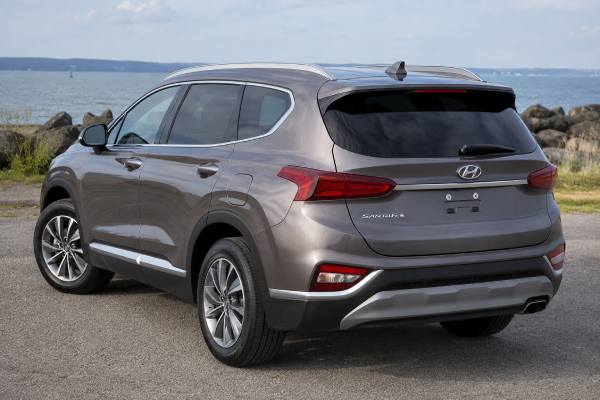
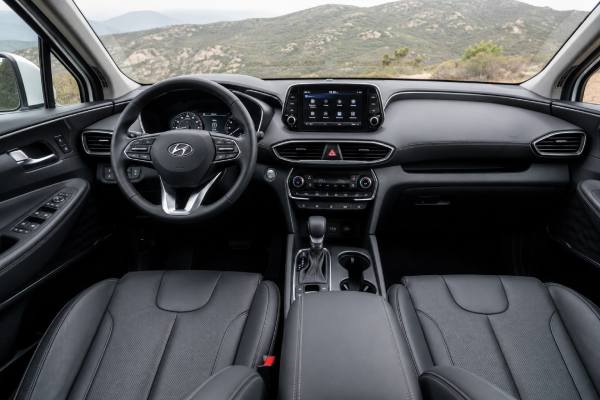
The 2019–2020 Hyundai Santa Fe HTRAC AWD with the 2.4-liter GDi engine is the fourth-generation TM two-row midsize SUV, not the longer three-row Santa Fe XL. In North American form, it pairs a naturally aspirated Theta II 2.4 GDi four-cylinder with an eight-speed automatic transmission and Hyundai’s HTRAC active all-wheel-drive system.
Its appeal is practical rather than sporty: generous passenger space, strong standard safety equipment, straightforward controls, and useful all-weather traction. The main ownership questions are less about headline power and more about maintenance history, engine-campaign status, AWD fluid care, and whether the naturally aspirated 2.4 has enough performance for the way the vehicle will be used.
Quick Overview
- Comfortable five-seat cabin, good cargo room, and a broad safety-equipment list even on lower trims.
- HTRAC AWD improves wet-weather and winter confidence but does not make the Santa Fe a serious off-road SUV.
- The 2.4 GDi is simple compared with the turbo engine, but some 2019 vehicles fall under Theta GDi engine service-campaign checks.
- Normal-service oil changes are commonly scheduled around 12,000 km or 12 months in some markets; severe use can shorten this to 6,000 km or 6 months.
- AWD transfer case and rear differential oils should be inspected regularly and changed if contaminated, submerged, or used in severe service.
Table of Contents
- Santa Fe TM Used AWD Context
- Santa Fe TM 2.4 GDi Specs
- Santa Fe TM Trims and Safety
- Reliability Issues and Service Actions
- Maintenance and Buying Checks
- Driving Feel and Performance
- How Santa Fe Compares
Santa Fe TM Used AWD Context
The covered vehicle is the Hyundai Santa Fe TM, model years 2019 and 2020, in five-door, five-seat SUV form with the 2.4-liter gasoline direct-injection four-cylinder, HTRAC AWD, and an eight-speed torque-converter automatic. In the U.S. and Canadian context, the engine was rated at 185 hp at 6,000 rpm and 178 lb-ft at 4,000 rpm. Some non-U.S. references list 188 PS, which is the same output expressed under a different horsepower convention.
This version sits below the 2.0-liter turbo in performance, but it is often the more sensible used buy for drivers who value predictable running costs over stronger acceleration. It avoids turbocharger hardware, has a calmer power delivery, and is usually found in a wider range of trims. The trade-off is that it must move a relatively large AWD SUV with modest torque, so it feels adequate rather than eager when fully loaded or climbing grades.
HTRAC is an on-demand AWD system. In normal driving, it can prioritize the front wheels for efficiency, then send torque rearward when traction, throttle input, steering angle, or stability-control logic calls for it. It also includes an AWD lock function that aims for a more fixed torque split at lower speeds. This is helpful on snow, gravel, muddy driveways, and wet inclines, but ground clearance, tire choice, and the lack of low-range gearing define its limits.
The Santa Fe TM also marked a useful step forward in safety equipment. Hyundai made a wide group of driver-assistance features available, and many were standard on 2019 models in the North American market. That matters on used examples because a lower trim can still be well equipped for family duty.
The best buyers for this version are people who want a comfortable, roomy, safe, naturally aspirated midsize SUV and who do not need strong towing capacity. The 2.4 AWD is rated lower for towing than the 2.0T, and its passing performance is noticeably more relaxed. A clean service record, completed recalls, and smooth cold-start behavior are more important than finding the highest trim badge.
Santa Fe TM 2.4 GDi Specs
The specifications below focus on the 2019–2020 Santa Fe TM 2.4 GDi HTRAC AWD in the North American configuration where official Hyundai data is available. Some dimensions and capacities are common across trims, while curb weight and tires vary by equipment.
| Item | Hyundai Santa Fe TM 2.4 GDi HTRAC AWD |
|---|---|
| Engine code / family | Theta II 2.4 GDi; commonly listed as G4KJ depending on market documentation |
| Layout | Front transverse inline-4 gasoline engine |
| Valvetrain | DOHC, 16 valves, 4 valves per cylinder |
| Bore × stroke | 88 × 97 mm (3.46 × 3.82 in) |
| Displacement | 2.4 L; 2,359 cc (143.96 cu in) |
| Induction | Naturally aspirated |
| Fuel system | Gasoline direct injection |
| Compression ratio | 11.3:1 |
| Maximum power | 185 hp (138 kW) at 6,000 rpm |
| Maximum torque | 241 Nm (178 lb-ft) at 4,000 rpm |
| Timing drive | Chain |
| Official fuel economy, AWD | 2019: 21/27/23 mpg US city/highway/combined; 2020: 21/27/24 mpg US |
| Metric equivalent | About 11.2 / 8.7 / 10.2 L/100 km for 2019 combined rating; about 9.8 L/100 km combined for 2020 |
| Real-world highway at 120 km/h | Typically about 8.5–10.0 L/100 km (24–28 mpg US), depending on tires, wind, load, temperature, and roof accessories |
| Item | Specification |
|---|---|
| Transmission | 8-speed automatic with SHIFTRONIC; A8MF1 listed for 2.4L models |
| Drive type | HTRAC AWD, active on-demand |
| Differentials | Open front/rear differentials with electronically controlled AWD coupling; no mechanical locker |
| Suspension | Front MacPherson strut; rear independent multi-link |
| Steering | Column-mounted motor-driven power steering; 13.8:1 ratio; 2.6 turns lock-to-lock |
| Brakes | Front 320 × 28 mm ventilated discs; rear 305 × 11 mm solid discs |
| Common tire sizes | 235/65 R17, 235/60 R18, or 235/55 R19 depending on trim and package |
| Ground clearance | 185 mm (7.3 in) |
| Length / width / height | 4,770 / 1,890 / 1,679 mm (187.8 / 74.4 / 66.1 in); about 1,704 mm (67.1 in) with roof rails |
| Wheelbase | 2,765 mm (108.9 in) |
| Turning circle | 11.4 m (37.5 ft), curb-to-curb |
| Curb weight, AWD 2.4 | About 1,694–1,790 kg (3,735–3,946 lb), trim dependent |
| GVWR, AWD 2.4 | 2,210 kg (4,872 lb) |
| Fuel tank | 71 L (18.8 US gal / 15.6 UK gal) |
| Cargo volume | SAE: 1,016 L (35.9 cu ft) behind second row; 2,019 L (71.3 cu ft) behind front seats |
| Item | Specification or guidance |
|---|---|
| 0–100 km/h | Not a headline figure for this trim; typical real-world tests place it roughly around the low-10-second range when lightly loaded |
| Top speed | Not emphasized in North American owner data; market references commonly place comparable 2.4 AWD models around 190–195 km/h |
| 100–0 km/h braking | Not officially published for this exact trim; condition of tires, pads, rotors, and load is decisive |
| Towing capacity | 907 kg (2,000 lb) braked; 748 kg (1,650 lb) unbraked in U.S. 2.4L data |
| Payload estimate | GVWR minus curb weight: roughly 420–516 kg (926–1,137 lb), depending on trim curb weight |
| Engine oil | 4.8 L (5.07 US qt) drain/refill; SAE 5W-20 preferred in some manuals, API/ILSAC latest specification |
| Coolant | 7.9 L (8.3 US qt) standard package; phosphate-based ethylene-glycol coolant mixed with water |
| Automatic transmission fluid | 6.5 L (6.86 US qt); Hyundai genuine ATF SP-IV or equivalent listed SP-IV fluids |
| Transfer case oil | 0.47–0.52 L (0.44–0.49 US qt); API GL-5 SAE 75W/85 hypoid gear oil |
| Rear differential oil | 0.58 L (0.61 US qt); API GL-5 SAE 75W/85 hypoid gear oil |
| A/C refrigerant | R-1234yf, 625 ± 25 g (22.05 ± 0.88 oz) |
| A/C compressor oil | PAG, 120 ± 10 mL (4.23 ± 0.35 fl oz) |
| Wheel lug nut torque | 107–127 Nm (79–94 lb-ft) |
Santa Fe TM Trims and Safety
For 2019, North American Santa Fe 2.4 trims commonly included SE, SEL, SEL Plus, Limited, and Ultimate. HTRAC AWD was optional across the 2.4 range. For 2020, Hyundai simplified the lineup around SE, SEL, and Limited, with package content doing more of the work that separate trims handled in 2019.
The easiest way to identify a 2.4 AWD is by the HTRAC badge, VIN/build information, engine label, and the absence of 2.0T badging. Trim tells include wheel size, lighting, seat material, infotainment screen size, and convenience features. SE and SEL models are more likely to have 17- or 18-inch wheels and cloth seating. Limited and Ultimate versions are more likely to have LED lighting, leather trim, premium audio, larger screens, and extra parking or surround-view assistance.
Mechanical differences are modest for the 2.4 AWD. The engine and transmission are fundamentally the same across trims, and the tow rating does not rise with luxury equipment. Wheel and tire packages do matter: 17-inch tires generally give the calmest ride and lower replacement cost, while 19-inch wheels sharpen response slightly but add impact harshness and tire expense.
Safety equipment is a major strength. In 2019 North American feature data, Forward Collision-Avoidance Assist with Pedestrian Detection, Smart Cruise Control with stop-and-go, Blind-Spot Collision Warning, Lane Keeping Assist, Rear Cross-Traffic Collision Warning, Safe Exit Assist, stability control, traction control, ABS, tire-pressure monitoring, advanced front airbags, front side airbags, curtain airbags, and LATCH child-seat anchors were broadly available and, in many cases, standard across the lineup. Parking Distance Warning, Rear Occupant Alert, surround-view monitoring, and premium lighting varied by trim or package.
IIHS rated the 2019 Santa Fe highly. The vehicle earned Good ratings in the listed crashworthiness categories, Superior ratings for vehicle-to-vehicle and daytime pedestrian front crash prevention, and a Top Safety Pick+ award when fitted with specific headlights. Headlight performance is important when shopping: LED projector headlights on higher trims were rated better than the halogen projector/reflector setup found on some lower trims.
Child-seat practicality is also good. The second row has two complete LATCH positions and a center tether anchor. The broad rear bench and wide-opening rear doors make child-seat installation easier than in many compact SUVs, although buyers should still test their specific child seats before purchase.
ADAS calibration matters after service. Windshield replacement, front-end collision repair, bumper removal, radar replacement, or suspension alignment work can affect camera and radar accuracy. A used Santa Fe with accident history should have proof that all affected sensors were calibrated after the repair.
Reliability Issues and Service Actions
The 2019–2020 Santa Fe 2.4 GDi is generally a sound used SUV when maintained properly, but it is not a “buy without checking” vehicle. The Theta II GDi family has a complicated service-campaign history across Hyundai and Kia products, and some 2019 Santa Fe TM vehicles with 2.4L engines were included in engine inspection or software-related campaign documentation tied to DTC P1326. The practical buyer’s approach is simple: verify by VIN, not by assumption.
| Prevalence | System | Symptoms | Likely action | Cost tier |
|---|---|---|---|---|
| Occasional | Theta II 2.4 GDi engine | Knock, check-engine light, limp mode, DTC P1326 | Dealer campaign check, bearing clearance test, ECU update, or engine replacement if applicable | High without coverage |
| Occasional | Oil consumption | Low dipstick level between services, smoke, fouled plugs | Consumption test, PCV inspection, leak check, documentation with dealer | Medium to high |
| Common with age | Direct injection intake deposits | Rough idle, hesitation, reduced efficiency | Diagnosis first; intake cleaning if confirmed | Medium |
| Occasional | 8-speed automatic | Harsh shifts, flare, delayed engagement | Software check, fluid condition check, adaptive reset where appropriate | Medium |
| Common in harsh climates | Brakes and underbody | Rotor corrosion, parking brake issues, seized hardware | Brake service, lubrication, rust inspection | Low to medium |
| Occasional | AWD transfer case/rear differential | Binding, whining, leaks, vibration | Fluid inspection, leak repair, driveline diagnosis | Medium |
The engine should start quietly from cold, idle smoothly, and pull without rattling under light load. A short startup tick is not the same as deep bearing knock, but any persistent metallic knock, flashing check-engine light, or limp-home behavior deserves immediate professional diagnosis. Check oil level before the test drive and again after a long drive if the seller allows it. A fresh oil change on a neglected car can hide consumption for a short time, so service records matter.
The 8-speed automatic is smoother than a dual-clutch transmission and suits the 2.4 engine well. It should not bang into Drive or Reverse, flare between gears, or hunt constantly on level roads. Some shift adaptation is normal after battery disconnection or service, but repeated harsh shifting points to the need for diagnosis rather than guesswork.
Known service actions and recalls vary by VIN and market. Important examples include the 2019 curtain airbag campaign affecting certain early-production Santa Fe TM vehicles, the Theta GDi P1326 service-campaign documentation for certain 2019 vehicles, the 2020–2021 windshield bonding recall in the U.S., and the trailer tow hitch harness recall for certain Santa Fe vehicles equipped with the genuine accessory tow harness. Completion should be confirmed through an official VIN check and dealer service records.
Corrosion deserves attention in snow-belt and coastal regions. Inspect the rear suspension arms, subframe areas, brake backing plates, lower door seams, rocker drains, exhaust hangers, and fasteners around the rear differential. The body is not unusually rust-prone for the class, but clogged drains, road salt, and infrequent underbody washing can make any used SUV expensive.
Maintenance and Buying Checks
A Santa Fe 2.4 AWD with complete maintenance history is far preferable to a higher-trim example with uncertain records. The engine uses direct injection, the AWD system has separate gear-oil service points, and severe use can shorten intervals considerably. Short trips, idling, dusty roads, towing, mountain driving, salted roads, and repeated low-speed city use all count as harder service than relaxed highway driving.
| Service item | Typical interval or guidance |
|---|---|
| Engine oil and filter | Normal service around 12,000 km / 12 months in some manuals; severe service around 6,000 km / 6 months |
| Tire rotation | About every 12,000 km, or at each oil service if wear is uneven |
| Cabin air filter | Inspect regularly; replace yearly or more often in dust, pollen, or heavy urban use |
| Engine air filter | Inspect at scheduled services; replace more often in dusty use |
| Spark plugs | Follow market-specific schedule; replace earlier if misfire, rough idle, or severe-use conditions apply |
| Coolant | Initial long-life interval may be up to 192,000 km / 10 years in some schedules; then about every 48,000 km / 24 months |
| Automatic transmission fluid | No routine normal-service replacement in some manuals; severe service can call for replacement around 96,000 km |
| Transfer case and rear differential oil | Inspect periodically; replace after water submersion or when contaminated, noisy, leaking, or used severely |
| Brake fluid | Inspect level and condition; many workshops replace about every 2–3 years even where schedules say inspect |
| Brake pads, rotors, calipers | Inspect at least annually; clean and lubricate hardware in salty climates |
| Drive belts, hoses, mounts | Inspect for cracking, oil contamination, swelling, or looseness at scheduled services |
| Alignment | Check after tire wear, curb impact, suspension work, or steering pull |
| 12 V battery | Test annually after 3 years; many last 3–5 years depending on climate and use |
For a pre-purchase inspection, start with the paperwork. Ask for oil-change records, recall completion proof, campaign history, transmission or AWD fluid records if available, and any dealer diagnostic printouts. A car with documented oil services and completed campaigns is worth more than one with vague assurances.
During the physical inspection, check for oil leaks at the valve cover, timing cover area, oil pan, and around the filter housing. Look for coolant staining, cracked hoses, noisy accessory drive components, and any sign of overheating. On the test drive, include a cold start, low-speed parking maneuvers, steady highway cruising, moderate acceleration, and a few gentle downshifts.
The AWD system should be quiet. Tight turns in a parking lot should not produce binding, groaning, or hopping. A slight tire scrub on rough pavement is normal, but pronounced driveline wind-up suggests mismatched tires, old gear oil, or AWD hardware issues. All four tires should be the same size, similar brand/model, and close in tread depth.
Best picks are well-maintained SEL or Limited 2.4 AWD examples with complete records, good tires, clean underbodies, and verified recall status. Lower trims are acceptable because core safety content is strong, but check headlight type and convenience features carefully. Avoid neglected examples with engine noise, low oil, multiple warning lights, accident history without calibration records, or mismatched tires on the AWD system.
Driving Feel and Performance
The 2.4 GDi HTRAC AWD Santa Fe drives like a comfort-biased family SUV. The ride is settled over most pavement, the body structure feels solid, and the cabin is quiet enough for long trips. It does not have the sharpness of a Mazda CX-5 or the punch of a turbocharged rival, but it has a calm, easygoing character that suits commuting, school runs, and highway travel.
Steering effort is light at parking speeds and stable on the highway. Feedback is modest, but the Santa Fe tracks confidently when alignment and tires are in good condition. The 11.4 m turning circle is reasonable for the size, though the body width is noticeable in tight urban parking. Braking feel is generally progressive, and the four-wheel disc setup is adequate, but old tires or rusty rear rotors can make a used example feel much worse than it should.
The 2.4 engine’s personality is smooth but not especially muscular. Around town, the eight-speed automatic helps keep the engine in its useful range. On faster roads, passing requires planning, especially with passengers, cargo, or a hill. The engine makes its best torque at 4,000 rpm, so it often needs a downshift for decisive acceleration. Drivers coming from older V6 SUVs may find it less effortless; drivers coming from compact crossovers will likely find it acceptable.
Real-world fuel economy varies more with use than the official numbers suggest. In city driving, expect roughly 10.5–12.5 L/100 km (19–22 mpg US / 23–26 mpg UK). On steady highways at 100–120 km/h, 8.5–10.0 L/100 km (24–28 mpg US / 29–34 mpg UK) is realistic for a healthy vehicle on normal tires. Mixed driving often lands around 9.5–11.0 L/100 km (21–25 mpg US / 25–30 mpg UK). Cold weather, winter tires, short trips, roof boxes, and remote-start idling can easily worsen those figures.
HTRAC adds confidence in rain and snow. The system reacts smoothly and rarely feels intrusive. AWD lock can help at low speeds when starting on slippery surfaces, but tires remain the deciding factor. A Santa Fe on worn all-seasons will not outperform a front-drive SUV on quality winter tires in snow.
Towing should be approached conservatively. The 2.4 AWD rating is suitable for a small utility trailer, light personal-watercraft trailer, or modest camping load, not heavy caravans. Expect fuel consumption to rise sharply under tow, and give the transmission, brakes, and cooling system a margin on long grades.
How Santa Fe Compares
Against rivals, the 2019–2020 Santa Fe 2.4 HTRAC AWD is strongest as a value, comfort, and safety choice. It is not the quickest, most rugged, or most fuel-efficient midsize SUV, but it delivers a well-rounded package for used buyers who want a spacious two-row vehicle without moving into a larger three-row model.
Compared with the Toyota RAV4 AWD, the Santa Fe feels larger, quieter, and more substantial inside. The RAV4 counters with better fuel economy, stronger resale value, and a broader hybrid lineup. Buyers who prioritize cargo width, rear-seat comfort, and highway refinement may prefer the Santa Fe; buyers focused on efficiency and long-term market reputation may lean Toyota.
Compared with the Honda CR-V AWD, the Santa Fe again offers a roomier midsize feel and more relaxed cabin atmosphere. The CR-V is more efficient and easier to maneuver, but some buyers prefer the Santa Fe’s conventional automatic over small turbo/CVT combinations in rival compact SUVs. The Honda is usually cheaper to fuel; the Hyundai can feel more upscale for similar used money.
Compared with the Mazda CX-5 AWD, the Hyundai is more spacious and family-oriented. The Mazda has sharper steering, a more premium driving position, and a more engaging chassis. The Santa Fe is better if rear-seat space, safety features, and comfort are priorities; the CX-5 is better if driving feel matters most.
Compared with the Kia Sorento of the same era, the Santa Fe is usually the better fit for people who do not need occasional third-row seating. The Sorento offers more seating flexibility in some trims, but the two-row Santa Fe provides a more focused cabin and cargo layout. Mechanically, the two brands share many engineering themes, so maintenance records and VIN-specific campaign status matter on both.
The 2.0T Santa Fe is the in-house alternative. It is quicker and better suited to towing, but it adds turbo complexity and can cost more to buy and maintain. The 2.4 HTRAC AWD is the calmer, simpler choice. Its main advantages are comfort, safety content, cargo usability, and all-weather traction. Its main weaknesses are modest acceleration, engine-family campaign concerns, and the need for careful AWD and oil-service history checks.
References
- 2019 Santa Fe Specifications 2019 (Manufacturer Specifications)
- 2020 Santa Fe Product Guide 2020 (Manufacturer Specifications)
- 2019 Hyundai Santa Fe 2019 (Safety Rating)
- TMa CAN-E 8.qxp 2019 (Owner’s Manual)
- HMA TSB 2020 (TSB)
Disclaimer
This article is for informational purposes only and is not a substitute for professional diagnosis, repair, or official service guidance. Specifications, torque values, intervals, procedures, recalls, and equipment can vary by VIN, market, production date, and trim. Always verify details against the official owner’s manual, service information, dealer records, and VIN-specific recall/campaign checks before buying, servicing, or repairing a vehicle.
If you found this useful, please consider sharing it on Facebook, X/Twitter, or another platform to support our work.