
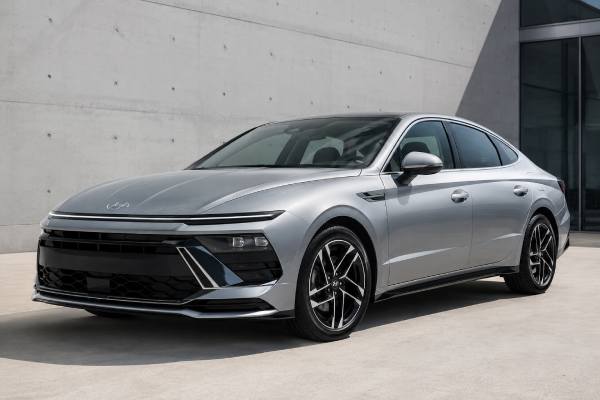
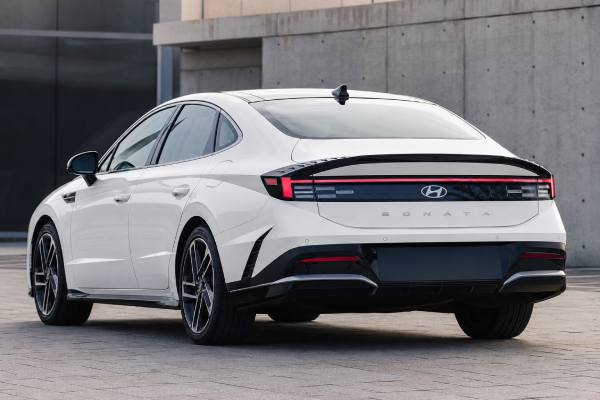
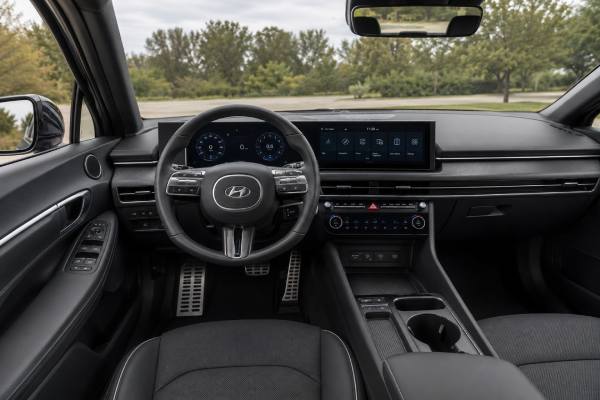
The facelifted Hyundai Sonata DN8 with the naturally aspirated Smartstream 2.5-liter gasoline engine is the sensible, non-turbo version of Hyundai’s midsize sedan. For 2024 and newer North American-market cars, it combines 191 hp, an 8-speed torque-converter automatic, front-wheel drive or available HTRAC all-wheel drive, and a heavily updated cabin with dual 12.3-inch screens on many trims.
This version is not the fastest Sonata, nor the most fuel-efficient one compared with the Hybrid, but it is the simplest gasoline choice in the lineup. Buyers usually consider it for commuting, family use, long highway trips, winter traction with AWD, and lower ownership complexity than the turbocharged N Line or hybrid models.
Final Verdict
The 2024–present Hyundai Sonata DN8 facelift with the Smartstream G2.5 is a strong choice for buyers who want a roomy, comfortable, well-equipped sedan without turbo or hybrid complexity. Its main appeal is the blend of cabin space, modern safety technology, smooth 8-speed automatic behavior, and available AWD on selected trims. It suits commuters, small families, and drivers who value warranty coverage and comfort over sport-sedan sharpness. The main tradeoff is average acceleration and only moderate fuel economy versus hybrid rivals. Buy one with documented maintenance, completed software campaigns, and clean body/ADAS repair history.
| Pros | Cons |
|---|---|
| Simple naturally aspirated 2.5L engine, no turbo hardware | Acceleration is adequate rather than genuinely quick |
| Available HTRAC AWD improves bad-weather confidence | AWD slightly reduces efficiency and adds driveline complexity |
| Smooth 8-speed automatic instead of a CVT | Transmission fluid service is still worth budgeting long-term |
| Spacious cabin with strong standard safety equipment | Rear-seat headroom can suffer with the sunroof |
| IIHS safety performance is strong for 2024–2026 models | Software recalls and service campaigns must be verified by VIN |
Table of Contents
- Hyundai Sonata DN8 Facelift Overview
- Smartstream G2.5 Specifications and Data
- Trims, Safety, and Driver Assistance
- Reliability, Common Issues, and Recalls
- Maintenance and Buyer’s Guide
- Driving, Performance, and Efficiency
- How the Sonata Compares to Rivals
Hyundai Sonata DN8 Facelift Overview
The 2024–present Sonata DN8 facelift is best understood as a major update to the eighth-generation Sonata rather than a clean-sheet redesign. The structure, basic sedan package, and general platform layout carry over, but the exterior styling, dashboard design, infotainment presentation, trim walk, and AWD availability changed meaningfully.
For the Smartstream G2.5 version, the formula is straightforward: a 2.5-liter inline-four using both gasoline direct injection and multi-point injection, paired with a conventional 8-speed automatic. In U.S.-market 2024 models, this engine was centered on the SEL trim, while later model years expanded or reshuffled the non-turbo 2.5L trim lineup. The turbocharged 2.5T N Line and 2.0L Hybrid are separate variants and should not be confused with this 191 hp version.
The 2024 facelift brought Hyundai’s wide “Seamless Horizon” front lighting signature, sharper front and rear fascias, and a much more modern interior. The gear selector moved to the steering column area on many versions, freeing space in the center console. The dashboard is dominated by a curved display layout, with a 12.3-inch infotainment screen and, on higher or package-equipped trims, a matching 12.3-inch digital instrument cluster.
The practical appeal is strong. The Sonata is classified as a large car by the EPA despite competing with midsize sedans such as the Toyota Camry, Honda Accord, Kia K5, and Nissan Altima. That shows in the front-seat space, wide cabin, and long wheelbase. The back seat is comfortable for adults, although the sloping roofline and optional panoramic sunroof can reduce headroom for taller passengers.
The most important mechanical update for this 2.5L version is available HTRAC all-wheel drive. Earlier DN8 Sonatas were front-wheel drive only in the U.S. The facelift made AWD available with the naturally aspirated 2.5L engine, giving the Sonata a direct answer to AWD versions of the Toyota Camry, Nissan Altima, Subaru Legacy, and Kia K5. It is not meant for off-road use, but it improves traction on wet, snowy, or uneven roads.
For used buyers, the 2.5L gasoline model is usually the safest middle ground in the lineup. It avoids the higher output, higher tire cost, and dual-clutch transmission of the N Line, while also avoiding hybrid-system inspection concerns. The tradeoff is that it does not deliver the Hybrid’s excellent fuel economy or the N Line’s punchy acceleration.
Smartstream G2.5 Specifications and Data
The Smartstream G2.5 Sonata is a front-engine, five-seat sedan with a naturally aspirated 2.5L four-cylinder, 8-speed automatic transmission, and FWD or available HTRAC AWD depending on trim and year. The key ownership facts are its regular-unleaded fuel requirement, 191 hp output, conventional automatic transmission, and relatively simple gasoline layout compared with turbo and hybrid Sonatas.
| Item | Specification |
|---|---|
| Engine family | Hyundai Smartstream G2.5 |
| Configuration | Inline-4, DOHC, 16 valves |
| Displacement | 2.5 L / 2,497 cc |
| Bore x stroke | 88.5 x 101.5 mm |
| Fuel system | GDI + MPI dual injection |
| Induction | Naturally aspirated |
| Compression ratio | 13.0:1 |
| Power | 191 hp at 6,100 rpm / 142.5 kW |
| Torque | 181 lb-ft at 4,000 rpm / 245 Nm |
| Recommended fuel | Regular unleaded gasoline |
| Item | Specification |
|---|---|
| Transmission | Smartstream 8-speed electronic automatic |
| Clutch type | Lock-up torque converter |
| Drive layout | FWD or HTRAC AWD, depending on trim/year |
| FWD final drive | 3.195:1 |
| Towing rating | Not recommended by Hyundai for this specification |
| Item | Specification |
|---|---|
| Body style | Four-door unibody sedan |
| Seating | Five passengers |
| Length | 4,910 mm / 193.3 in |
| Width | 1,859 mm / 73.2 in, mirrors excluded |
| Height | 1,445 mm / 56.9 in |
| Wheelbase | 2,840 mm / 111.8 in |
| Ground clearance | 135 mm / 5.3 in |
| Turning diameter | 10.9 m / 35.9 ft |
| Fuel tank | 60.2 L / 15.9 gal |
| Curb weight | About 1,499–1,572 kg / 3,305–3,466 lb |
| Item | Specification |
|---|---|
| Front suspension | MacPherson strut with stabilizer bar |
| Rear suspension | Multi-link with stabilizer bar |
| Steering | Motor-driven rack-and-pinion |
| Front brakes | 305 mm / 12.0 in ventilated discs |
| Rear brakes | 284 mm / 11.2 in solid discs |
| Common tire sizes | 215/55R17 or 235/45R18, depending on trim/package |
| Wheel nut torque | 107–127 Nm / 79–94 lb-ft |
| Item | Specification |
|---|---|
| SEL FWD EPA estimate | 25 city / 36 highway / 29 combined mpg US |
| SEL FWD metric equivalent | 9.4 / 6.5 / 8.1 L/100 km |
| SEL AWD EPA estimate | 25 city / 34 highway / 28 combined mpg US |
| SEL AWD metric equivalent | 9.4 / 6.9 / 8.4 L/100 km |
| Engine oil capacity | 5.9 qt / 5.6 L |
| Engine coolant capacity | 4.0 qt / 3.8 L |
Trims, Safety, and Driver Assistance
The 2.5L Sonata’s trim structure changed after the 2024 facelift, so buyers should identify the model year before comparing equipment. The same 191 hp engine appears across several non-turbo gasoline trims, but AWD, wheel size, screen layout, and driver-assistance features can vary.
Trim and equipment notes
For 2024, the 2.5L gasoline model was most closely associated with the SEL trim in the U.S. market. It could be configured with front-wheel drive or available HTRAC AWD. The SEL Convenience package added desirable equipment such as the wider digital display presentation, upgraded convenience features, and larger wheel/tire fitment.
For 2025, Hyundai reintroduced an SE trim and added or reshuffled SEL and SEL Convenience content. For 2026, the naming shifted again in some market materials, with SE and SEL Sport appearing for the non-turbo 2.5L version. The practical point is simple: do not assume two 191 hp Sonata listings have the same equipment just because both say “2.5L.”
Useful identifiers include:
- AWD cars are normally badged and listed as AWD or HTRAC in the window sticker, build sheet, or VIN decode.
- Convenience-equipped cars are easier to spot by the larger digital cluster, panoramic sunroof on many examples, wireless charging, and upgraded cabin features.
- Base or lower trims may have smaller wheels, simpler instrumentation, and fewer comfort upgrades.
- N Line cars are not this version; they use the 290 hp turbocharged 2.5T and a wet dual-clutch transmission.
Mechanically, the important distinction is FWD versus AWD. The AWD system adds winter traction and resale appeal in cold-weather states, but it also adds rear driveline components and slightly more maintenance exposure. Brakes and suspension are comfort-oriented on the 2.5L model; the larger-performance brake and tire package belongs to the N Line.
Safety ratings
The IIHS ratings are a major strength for the facelifted Sonata. The 2024 Sonata earned Top Safety Pick recognition, and the IIHS applies several key ratings across 2024–2026 models. The 2024 model received good results in the small-overlap front evaluations, good updated side performance, good headlights across trims, and good pedestrian front crash prevention.
The updated moderate-overlap result is less impressive for the 2023–2024 tested structure, mainly because newer IIHS criteria place more emphasis on rear-passenger protection. That does not make the Sonata unsafe, but it is a reminder that “good front-seat crash structure” and “best possible rear-occupant result under the newest protocol” are not the same thing.
For NHTSA ratings and recalls, check the exact year, body style, drivetrain, and VIN. Public safety listings can differ by drivetrain and model year, and recall status is VIN-specific.
Driver assistance and child-seat practicality
Standard and available safety technology is one of the Sonata’s strongest buying arguments. Typical 2024–present equipment includes forward collision-avoidance assist with pedestrian and cyclist detection, junction-turning support, lane keeping assist, lane following assist, blind-spot warning, rear cross-traffic collision-avoidance assist, driver attention warning, high beam assist, stability control, ABS, electronic brake-force distribution, brake assist, and individual tire-pressure monitoring.
Higher trims or packages may add features such as surround-view monitor, blind-spot view monitor, highway driving assist, parking collision-avoidance assist, and more advanced convenience functions. After windshield replacement, front-end collision repair, suspension alignment work, bumper repair, or radar/camera replacement, ADAS calibration should be treated as part of the repair—not an optional extra.
For families, the Sonata provides two complete rear LATCH positions and a center tether anchor. The rear bench is wide enough for many child-seat setups, but three-across installations require careful seat selection because the lower anchors are not provided for every rear seating position.
Reliability, Common Issues, and Recalls
The facelifted 2024–present 2.5L Sonata is still too new for a complete long-term reliability record, but its simpler non-turbo gasoline layout is a positive sign. The main ownership priorities are software campaign completion, clean maintenance history, oil-level monitoring, transmission service discipline, and careful inspection of electronics and ADAS repairs.
| Area | Prevalence | Cost severity | What to check |
|---|---|---|---|
| Software recalls/campaigns | Occasional | Low if completed | VIN campaign history and dealer update records |
| Direct-injection deposits | Occasional long-term | Medium | Rough idle, misfire codes, poor cold running |
| Oil consumption or leaks | Rare to occasional | Medium to high | Oil level, valve-cover area, underbody wetness |
| 8-speed automatic behavior | Occasional | Medium | Shift flare, harsh engagement, delayed reverse |
| AWD rear driveline | Rare early, inspect anyway | Medium | Rear diff noise, vibration, leaks, mismatched tires |
| ADAS sensors and cameras | Occasional after repair | Medium | Warning lights, calibration invoices, bumper repairs |
Engine-specific concerns
The Smartstream G2.5 uses both port and direct injection, which is helpful because port injection can reduce the intake-valve deposit risk compared with direct injection alone. Still, short-trip use, poor oil quality, long oil-change intervals, and heavy idling are not ideal. On a test drive, listen for cold-start rattle, uneven idle, ticking beyond normal injector noise, hesitation under light throttle, and misfire warning lights.
The engine uses a timing chain rather than a scheduled timing belt. That means there is no routine belt replacement interval, but the chain system is not maintenance-free in the sense of being ignored forever. Chain stretch, guide wear, tensioner faults, or timing-correlation codes should be investigated quickly. Good oil quality and reasonable oil-change intervals are the best prevention.
Cooling-system faults are not yet a defining pattern on the facelifted 2.5L, but any used Sonata should be checked for coolant level, dried residue around hose connections, radiator or condenser impact damage, and evidence of overheating. A car with front-end damage needs extra attention because the radar, cooling pack, shutters, bumper supports, and air-conditioning condenser live in the same vulnerable area.
Transmission, AWD, and chassis
The 8-speed torque-converter automatic is a good match for the naturally aspirated engine. It is generally smoother and more predictable in daily use than the N Line’s dual-clutch transmission. Long-term, the best approach is to service the fluid before shift quality deteriorates, especially if the car sees heavy traffic, hills, hot climates, or winter AWD use.
On AWD cars, tire matching matters. Running tires with different tread depths or mismatched brands can add stress to AWD components. Check for equal tire size, similar tread depth, no odd vibration under acceleration, and no binding sensation during tight parking-lot turns.
Suspension wear should be modest at low mileage, but used cars that have seen potholes can show alignment drift, wheel damage, tire cupping, or front-end clunks. The Sonata’s long wheelbase helps ride quality, but it also makes tire condition and alignment more noticeable at highway speed.
Recalls and software service actions
The key 2024 Sonata recall is Hyundai Recall 267 / NHTSA 24V583. Certain 2024 DN8 Sonatas built from October 18, 2023 to June 12, 2024 received incorrect rear brake-light software. Under heavy braking above 30 mph, the brake lights could flash instead of displaying a compliant steady braking signal. The remedy is an ESC/brake software update performed by a Hyundai dealer.
There are also cluster and display-related service campaigns affecting some 2024–2025 Sonata vehicles, including cases where the digital speedometer may display incorrectly or a related cluster function may be inoperative. Because these are software-driven issues, a clean dealer campaign history is important even if the car drives normally.
Before buying, request:
- A VIN recall check from Hyundai or NHTSA.
- Dealer service records showing completed software updates.
- Proof of regular oil services.
- Transmission and AWD service records when mileage is higher.
- Evidence of proper ADAS calibration after glass, bumper, or collision repair.
Maintenance and Buyer’s Guide
Maintenance for the 2.5L Sonata is not complicated, but it should be done consistently. The best ownership strategy is shorter oil intervals than the longest possible schedule, periodic fluid checks, tire rotations, brake inspections, and VIN-specific dealer campaign verification.
| Item | Practical interval | Why it matters |
|---|---|---|
| Engine oil and filter | Every 8,000 km / 5,000 mi or 6 months in severe use | Protects timing chain, cam phasers, and high-compression engine internals |
| Tire rotation | Every 8,000–12,000 km / 5,000–7,500 mi | Reduces uneven wear, especially on AWD cars |
| Engine air filter | Inspect yearly; replace around 24,000–48,000 km | Dusty use shortens service life |
| Cabin air filter | Yearly or as airflow drops | Improves HVAC airflow and odor control |
| Brake fluid | About every 2 years | Controls moisture and preserves ABS/ESC components |
| Brake pads and rotors | Inspect at every tire rotation | Prevents uneven wear and caliper sticking |
| Coolant | Follow VIN-specific manual interval | Protects aluminum engine and cooling components |
| Spark plugs | Follow official interval; inspect earlier for misfires | High-compression GDI engines need healthy ignition |
| Automatic transmission fluid | Consider around 96,000 km / 60,000 mi in severe use | Helps preserve shift quality and valve-body operation |
| AWD rear driveline fluids | Inspect for leaks; service by severe-use schedule | Important for HTRAC cars in snow or stop-go use |
| 12V battery | Test after 3 years; replace when weak | Low voltage can trigger electronic faults |
| ADAS calibration | After windshield, bumper, sensor, or alignment work | Required for reliable camera/radar operation |
Useful service reference points include 5.9 qt / 5.6 L engine-oil capacity, 4.0 qt / 3.8 L engine-coolant capacity, a 15.9-gallon / 60.2-liter fuel tank, and 79–94 lb-ft / 107–127 Nm wheel-nut torque. Fluid specifications, oil viscosity, and service procedures should be verified by VIN because market, production date, and service-document revisions can change the final requirement.
Buyer inspection checklist
A good used Sonata should start easily cold, idle smoothly, shift cleanly, track straight, and show no active warning lights. Because many 2024–present cars are still relatively new, body repair quality and software history may matter more than high-mileage mechanical wear.
Check these items before purchase:
- Confirm the exact trim, drivetrain, and factory equipment from the window sticker or build sheet.
- Verify AWD operation and inspect rear driveline seals on HTRAC cars.
- Look for uneven tire wear, wheel bends, curb damage, and mismatched tires.
- Scan for stored powertrain, ABS, steering, camera, and radar codes.
- Inspect under the engine for oil seepage, coolant residue, and damaged splash shields.
- Confirm all recalls, software campaigns, and cluster updates are completed.
- Test adaptive cruise, lane assistance, blind-spot alerts, parking sensors, cameras, and keyless features.
- Check the windshield for replacement markings and ask whether camera calibration was performed.
- Inspect bumper alignment and paint texture for hidden collision repair.
- Review oil-change history rather than relying only on dashboard maintenance reminders.
The best cars to seek are clean-title, single-owner examples with full Hyundai dealer or specialist service records, completed recall work, matching tires, and no unresolved electronics warnings. AWD is worth seeking in snow-belt regions, but FWD is simpler and slightly more efficient for warm climates. The SEL Convenience or equivalent package can be worthwhile if you want the more premium screen layout and comfort equipment, but avoid overpaying for cosmetics if the service history is weak.
Long-term durability outlook is cautiously positive. The 2.5L non-turbo powertrain is less stressed than the N Line engine, the transmission is conventional, and parts support should be strong. The biggest risks are neglect, poor collision repair, skipped software updates, and treating a modern ADAS-equipped sedan like an older low-tech commuter.
Driving, Performance, and Efficiency
The 2.5L Sonata drives like a comfortable midsize sedan, not a sport sedan. Its strengths are ride comfort, quiet cruising, stable highway manners, and predictable transmission behavior; its weak point is passing urgency when fully loaded or climbing grades.
Around town, throttle response is smooth and easy to meter. The engine does not have turbo lag because it is naturally aspirated, but it also does not have the low-rpm shove of the 2.5T N Line. The 8-speed automatic usually keeps the engine relaxed in normal driving and downshifts cleanly when more power is needed. In Sport mode, it holds gears longer and responds more quickly, but the basic character remains calm rather than aggressive.
The FWD version is the lighter and slightly more efficient choice. The AWD version adds traction security, especially when pulling away on wet roads or climbing snowy grades. It does not turn the Sonata into a performance AWD sedan, but it makes the car feel more settled in poor weather. Buyers in areas with real winters should still prioritize proper winter or all-weather tires over assuming AWD alone solves traction.
Ride quality is one of the better parts of the car. The long wheelbase helps the Sonata absorb broken pavement without feeling floaty. The 17-inch wheel package is usually the comfort sweet spot, while 18-inch tires sharpen the look and response at the cost of some impact softness. Highway noise is generally controlled, although coarse pavement and worn tires can make the cabin noticeably louder.
Performance is adequate for daily use. Independent instrumented testing of the AWD 2.5L version has shown roughly 7.9 seconds from 0–60 mph, which places it in the normal range for non-hybrid, non-turbo midsize sedans. Passing from 50–80 mph needs a downshift and some planning, especially with passengers aboard.
Real-world fuel economy depends strongly on speed, climate, and drivetrain. In mixed use, expect many FWD drivers to land around 27–31 mpg US / 7.6–8.7 L/100 km. AWD cars often run closer to 26–29 mpg US / 8.1–9.0 L/100 km. Steady highway use can produce low-to-mid 30s mpg US, while short winter trips, remote starts, idling, roof accessories, and underinflated tires can push consumption much higher.
Braking feel is consistent for normal driving, though this 2.5L model does not have the N Line’s larger hardware. The brake pedal is easy to modulate, and the electronic parking brake with auto hold is convenient in traffic. For buyers coming from older sedans, the steering will feel light but accurate; for buyers coming from sportier cars, feedback will feel muted.
How the Sonata Compares to Rivals
The 2.5L Sonata competes best as a value-rich, comfortable, high-tech sedan with available AWD. It is not the default choice for maximum resale value, maximum fuel economy, or enthusiast handling, but it makes a strong case for buyers who want features, space, warranty coverage, and a conventional automatic.
| Rival | Where the Sonata is stronger | Where the rival may be stronger |
|---|---|---|
| Toyota Camry | Modern cabin design, strong feature value, available AWD | Resale value and hybrid efficiency reputation |
| Honda Accord | Available AWD and more distinctive styling | Sharper steering feel and excellent hybrid option |
| Kia K5 | More sedan-like comfort focus and Hyundai-specific trim mix | Sportier styling and similar platform strengths |
| Nissan Altima | More premium-feeling interior presentation | Available AWD with strong highway comfort |
| Subaru Legacy | More modern screen layout and stronger visual presence | Standard AWD and all-weather brand appeal |
Against the Toyota Camry, the Sonata’s strongest argument is equipment value. A used or lightly used Sonata can offer large screens, heated seats, ADAS features, and AWD at an attractive price. The Camry counters with stronger resale strength and, in hybrid form, excellent fuel economy.
Against the Honda Accord, the Sonata feels more tech-forward and offers AWD, which the Accord does not. The Accord is usually the better driver’s car and has a very polished hybrid system. If you prioritize steering feel, chassis response, and long-term resale, the Accord is hard to beat. If you prioritize AWD availability and features for the money, the Sonata deserves a close look.
The Kia K5 is the Sonata’s closest mechanical relative in many respects. The K5 has a sportier image, and some shoppers prefer its styling. The Sonata facelift, however, feels more mature inside and may appeal more to buyers who want comfort rather than a sporty look.
The Nissan Altima and Subaru Legacy are the most obvious AWD alternatives. The Altima is comfortable and efficient on the highway, while the Legacy offers standard AWD and a practical, conservative personality. The Sonata is more visually dramatic than either and has a stronger modern-dashboard feel, but the Subaru remains the simpler choice for buyers who want AWD without sorting through trim availability.
The best reason to choose the Smartstream G2.5 Sonata is balance. It gives up some fuel economy to hybrids and some speed to turbo rivals, but it offers a roomy cabin, good safety credentials, available AWD, reasonable maintenance needs, and a less complicated ownership profile than many newer electrified or turbocharged alternatives.
References
- 2024 Sonata Specifications 2024 (Manufacturer Specifications) ([Hyundai News][1])
- 2025 Hyundai Sonata | Midsize Sedan 2025 (Manufacturer Specifications) ([Hyundai USA][2])
- 2026 Sonata Specs and Features 2026 (Manufacturer Specifications) ([Hyundai News][3])
- 2024 Hyundai Sonata 2024 (Safety Rating) ([IIHS Crash Testing][4])
- Part 573 Safety Recall Report 24V-583 2024 (Recall Database) ([NHTSA][5])
Disclaimer
This article is for informational purposes only and is not a substitute for professional diagnosis, inspection, repair, or official Hyundai service information. Specifications, torque values, service intervals, fluid requirements, software campaigns, safety equipment, and procedures can vary by VIN, market, production date, trim, drivetrain, and installed equipment. Always verify details against the official owner’s manual, service documentation, dealer records, and VIN-specific recall databases before buying, servicing, or repairing a vehicle.
If this guide helped you, please consider sharing it on Facebook, X/Twitter, or your preferred automotive community to support our work.