
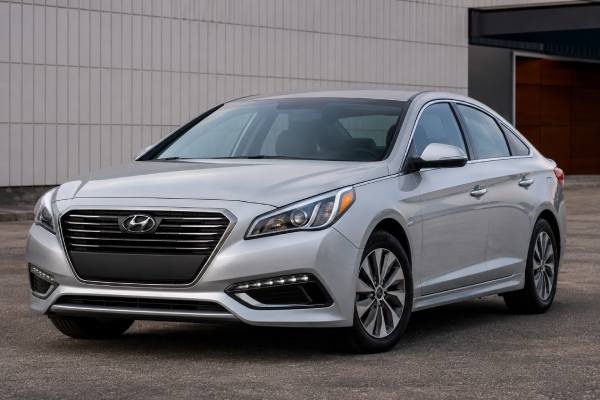
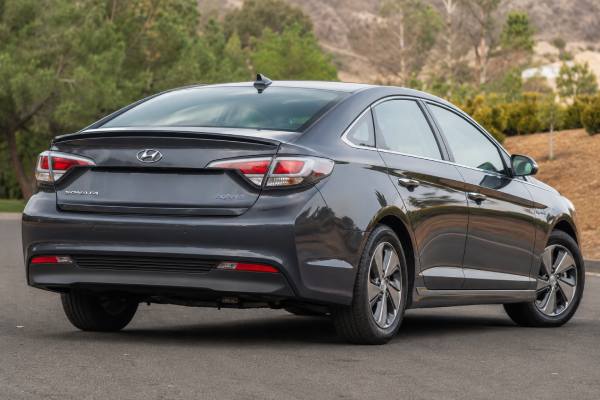
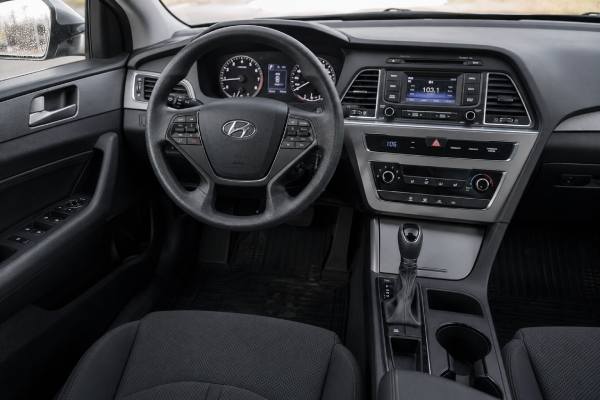
The 2016–2017 Hyundai SONATA Hybrid LF is a roomy midsize hybrid sedan built around a 2.0-liter Nu GDi gasoline engine, a front-drive electric motor, a lithium-ion polymer battery, and a conventional 6-speed automatic transmission. It is not the plug-in version, and that distinction matters: the standard Hybrid has no external charging port, a smaller battery, more trunk space than the plug-in, and a simpler daily ownership pattern.
For buyers, the main appeal is the combination of midsize-sedan comfort, strong highway economy, a useful 13.3 cu ft trunk, and a familiar driving feel. For owners, the important questions are maintenance discipline, recall completion, brake and hybrid-system condition, and whether the car has the right trim equipment for the price. This guide focuses on the 2016–2017 LF-generation SONATA Hybrid with the Nu 2.0 GDi HEV powertrain rated at 193 hp combined.
Quick Overview
- Spacious midsize cabin with 106.1 cu ft passenger volume and a flat trunk floor.
- 193 hp combined output gives stronger passing response than many economy-focused hybrids.
- 2017 SE ratings reached 39 city / 45 highway / 42 combined mpg US.
- Engine-bearing recall history makes VIN checks and KSDS software confirmation important.
- Oil capacity is 4.3 US qt, with normal oil service typically planned around 12,000 km / 12 months or sooner in severe use.
Table of Contents
- Hyundai Sonata LF Hybrid Snapshot
- Hyundai Sonata Hybrid Specs Data
- Hyundai Sonata Hybrid Trims Safety
- Reliability Issues and Recalls
- Maintenance and Used Buying Guide
- Driving Feel and Real Efficiency
- Sonata Hybrid Against Rivals
Hyundai Sonata LF Hybrid Snapshot
The LF SONATA Hybrid arrived as Hyundai’s more mature second-generation midsize hybrid sedan. Compared with the earlier YF-generation Sonata Hybrid, the LF version moved to a smaller and more efficient 2.0-liter Nu direct-injection engine, a stronger electric motor, and a revised lithium-ion polymer battery mounted under the trunk floor. That packaging change is important in daily use because it gave the standard Hybrid a flatter cargo area and, on upper trims, a split-folding rear seat.
The powertrain layout is a parallel hybrid system. The gasoline engine and electric motor both contribute to driving the front wheels through a 6-speed automatic transmission. This is different from the eCVT layout used by Toyota and Ford hybrids of the same period. The Hyundai feels more like a conventional automatic sedan: it shifts through fixed gears, has normal creep behavior, and gives a more familiar rise and fall in engine speed.
The combined output is 193 hp at 6,000 rpm. The gasoline engine alone makes 154 hp and 140 lb-ft, while the electric motor contributes 51 hp and 151 lb-ft across its lower operating range. In normal driving, the car relies on electric assist to cover low-speed launch, smooth out gear changes, and reduce the gasoline engine’s workload during gentle cruising. It can run briefly in EV operation under light load, but it is not designed as a meaningful electric-only car.
The chassis follows the standard LF Sonata formula: MacPherson strut front suspension, independent multi-link rear suspension, electric power steering, four-wheel disc brakes, and front-wheel drive. Hyundai also gave the Hybrid aerodynamic body details, low-rolling-resistance tires, hybrid-specific displays, and a tire mobility kit instead of a spare tire.
As a used car, the best fit is a driver who wants a comfortable commuter sedan with good highway economy and low-stress controls. It is less ideal for someone who wants sporty steering feel, high-speed handling sharpness, maximum trunk flexibility, or the simplest possible long-term drivetrain. Hybrid components are generally durable when maintained, but neglected engine oil changes, unresolved recalls, weak 12 V batteries, and brake corrosion from low-friction hybrid use can create expensive surprises.
The 2016 model year is slightly more complicated because some early production cars fall into important recall windows. The 2017 model benefits from equipment updates and, in SE form, stronger EPA fuel-economy ratings, but it still requires a complete recall and service-history check. Trim matters as well: the Limited adds desirable comfort and driver-assistance features, but it also has larger wheels, more electronics, and costlier equipment to inspect.
Hyundai Sonata Hybrid Specs Data
The following specifications apply to the U.S.-market 2016–2017 Hyundai SONATA Hybrid LF standard hybrid, not the Plug-in Hybrid. Some values vary by trim, model year, market, tire package, and VIN.
Powertrain and Efficiency
| Item | Specification |
|---|---|
| Engine code/family | Hyundai Nu 2.0 GDi HEV |
| Engine layout | Inline-4, aluminum block/head, DOHC |
| Valvetrain | 16 valves, 4 valves/cylinder, D-CVVT |
| Bore × stroke | 81.0 × 97.0 mm / 3.19 × 3.82 in |
| Displacement | 2.0 L / 1,999 cc |
| Induction | Naturally aspirated |
| Fuel system | Gasoline direct injection |
| Compression ratio | 13.5:1 |
| Gasoline-engine output | 154 hp / 115 kW @ 6,000 rpm |
| Gasoline-engine torque | 190 Nm / 140 lb-ft @ 5,000 rpm |
| Electric motor | Interior permanent-magnet synchronous motor |
| Motor layout | Single front traction motor integrated with hybrid driveline |
| Motor output | 51 hp / 38 kW @ 1,770–2,000 rpm |
| Motor torque | 205 Nm / 151 lb-ft @ 0–1,770 rpm |
| Battery | Lithium-ion polymer, 270 V max, about 1.62 kWh |
| Battery power output | 56 kW |
| Combined system output | 193 hp / 144 kW @ 6,000 rpm |
| Timing drive | Chain |
| 2016 EPA rating | 38 city / 41 highway / 40 combined mpg US |
| 2017 Hybrid SE rating | 39 city / 45 highway / 42 combined mpg US |
| 2017 Hybrid Limited rating | 38 city / 43 highway / 40 combined mpg US |
| Real highway at 120 km/h / 75 mph | Typically about 6.0–6.8 L/100 km / 35–39 mpg US, depending on tires, weather, load, and terrain |
Transmission and Chassis
| Item | Specification |
|---|---|
| Transmission | 6-speed electronic automatic with SHIFTRONIC |
| Torque converter | No traditional lock-up torque converter in the published hybrid specification |
| Drive type | Front-wheel drive |
| Final drive | 3.320:1 |
| Differential | Open front differential |
| Front suspension | MacPherson strut, HPD dampers, 23.0 mm stabilizer bar |
| Rear suspension | Independent multi-link, coil springs, HPD dampers, 17 mm stabilizer bar |
| Steering | Column-mounted motor-driven power steering, rack and pinion |
| Steering ratio | 14.3:1 |
| Turns lock-to-lock | 2.78 |
| Turning circle | 10.9 m / 35.6 ft curb-to-curb |
| Front brakes | Ventilated discs, 305 mm / 12.0 in |
| Rear brakes | Ventilated discs, 284–285 mm / 11.2 in |
| Common tire sizes | 205/65R16 on Hybrid; 215/55R17 on Hybrid Limited |
| Ground clearance | About 130–135 mm / 5.1–5.3 in, depending on tire and market data |
Dimensions, Weight and Capacities
| Item | Specification |
|---|---|
| Length | 4,854 mm / 191.1 in |
| Width | 1,864 mm / 73.4 in |
| Height | 1,471 mm / 57.9 in |
| Wheelbase | 2,804 mm / 110.4 in |
| Drag coefficient | 0.24 Cd |
| Passenger volume | 3,005 L / 106.1 cu ft |
| Trunk volume | 377 L / 13.3 cu ft, SAE-style trunk figure |
| Fuel tank | 60.0 L / 15.85 US gal / 13.2 UK gal |
| Curb weight, Hybrid | 1,586 kg / 3,497 lb |
| Curb weight, Hybrid Limited | 1,615 kg / 3,560 lb |
| GVWR | Verify by door-jamb label; varies by VIN and market |
| Towing capacity | Not factory-promoted for U.S. Sonata Hybrid use |
| Payload | Verify by tire-and-loading label on the driver door jamb |
Fluids and Service Capacities
| Item | Specification or practical note |
|---|---|
| Engine oil | 4.3 US qt / 4.1 L with filter; use the viscosity and API/ILSAC grade listed in the owner’s manual for climate and VIN |
| Coolant | Ethylene-glycol-based Hyundai-compatible coolant; use deionized or soft water mix if diluting |
| Engine coolant interval | First replacement around 192,000 km / 120 months, then every 48,000 km / 24 months in many Hyundai schedules |
| Transmission fluid | Hyundai/Kia SP-IV-family ATF specification; severe-use service is more important than “lifetime” assumptions |
| Brake fluid | DOT 3 or DOT 4 |
| A/C refrigerant | Check under-hood label by VIN; charge amount and oil specification are label-specific |
| Wheel lug nut torque | Common Hyundai passenger-car range: 88–107 Nm / 65–79 lb-ft |
| Engine oil drain plug torque | Common service value around 39 Nm / 29 lb-ft; replace washer and verify official service data |
Safety and Driver Assistance
| Item | Specification |
|---|---|
| Airbags | Dual front, front side-impact, side-curtain, and driver knee airbag |
| Stability systems | ESC, TCS, ABS, EBD, Brake Assist, VSM |
| Child-seat anchors | Rear LATCH lower anchors and tethers |
| IIHS crashworthiness | Good ratings in the main listed crashworthiness categories for applicable 2016–2019 Sonata builds |
| IIHS headlight rating | Poor for listed 2016–2017 headlight variations |
| Front crash prevention | Optional system rated Superior by IIHS when equipped |
| Blind-spot / rear cross-traffic | Standard on Limited, not on base Hybrid |
| Lane departure warning | Optional on Limited through Ultimate Package |
| Smart cruise control | Optional on Limited through Ultimate Package |
| AEB naming | Forward Collision Warning / available automatic braking features depend on package and market |
Hyundai Sonata Hybrid Trims Safety
The U.S. 2016–2017 SONATA Hybrid range was simple compared with the gasoline Sonata lineup. The main trims were Hybrid and Hybrid Limited, with the Limited offering most of the meaningful comfort and driver-assistance upgrades. The Plug-in Hybrid was a separate model and should not be mixed into price or specification comparisons.
The base Hybrid is the efficiency-focused version. It uses 16-inch alloy wheels with 205/65R16 tires, cloth seating, a rearview camera, dual-zone automatic climate control, proximity key with push-button start, a 7-inch touchscreen, Bluetooth, USB/aux input, HD Radio, Android Auto, Apple CarPlay on updated 2017 equipment, cruise control, and the hybrid information display. It is usually the best choice for buyers who want lower tire cost, better ride comfort, and fewer high-cost luxury features.
The Hybrid Limited adds 17-inch wheels with 215/55R17 tires, leather seating, heated and ventilated front seats, heated rear seats on some equipment sets, power front seats, driver memory, rear vents, upgraded interior trim, blind-spot detection with rear cross-traffic alert and lane-change assist, HID xenon headlights, and additional convenience features. It is the more desirable used-car trim, but it must be checked more carefully because optional driver-assistance and sunroof equipment add parts and calibration needs.
The key optional package on the Limited was the Ultimate Package. It bundled features such as lane departure warning, forward collision warning, smart cruise control with stop/start capability, automatic high-beam assist, rear parking sensors, electronic parking brake with automatic vehicle hold, panoramic sunroof, 8-inch navigation, Infinity premium audio, LED interior lighting, and related trim upgrades. When shopping, a Limited with the Ultimate Package is easy to identify by the larger navigation screen, smart cruise controls, panoramic roof, and additional driver-assistance indicators.
Mechanically, the trims are close. The engine, motor, hybrid battery, 6-speed automatic, final drive, suspension design, and front-wheel-drive layout are shared. The practical differences are mainly tire size, weight, lighting, comfort equipment, electronics, and ADAS availability. The smaller-wheel Hybrid can ride more softly and may return slightly better real-world efficiency. The Limited feels more upscale, but 17-inch tires, HID headlamp parts, electronic parking-brake equipment, panoramic roof hardware, and ADAS sensors are all inspection points.
Safety equipment is strong for the period, but it is not modern in the same way as a 2024–2026 midsize sedan. Stability control, traction control, anti-lock brakes, brake assist, rearview camera, multiple airbags, and LATCH anchors are standard. Blind-spot monitoring is trim-dependent. Forward collision warning, smart cruise control, lane departure warning, rear parking sensors, and automatic high-beam assist are package-dependent.
For crash-test context, IIHS results for the LF Sonata sedan were generally strong, with Good ratings in the listed crashworthiness tests for applicable builds, but headlight performance was rated Poor for the tested 2016–2017 headlight variations. The IIHS Top Safety Pick+ award applied only to vehicles with optional front crash prevention and built after the relevant production timing noted by IIHS. That build-date detail matters most for early 2016 cars; check the certification label on the driver door jamb.
ADAS-equipped cars need careful repair documentation. Windshield replacement, front-end collision work, bumper removal, steering/suspension repair, and wheel alignment can affect radar or camera calibration. If the car has smart cruise or forward-collision systems, confirm that no warning lights are present, the sensors are clean and undamaged, and any post-repair calibration was performed by a qualified shop.
Reliability Issues and Recalls
The LF SONATA Hybrid is not an inherently fragile car, but it is not a used hybrid to buy casually. Its reliability depends heavily on oil-change history, recall completion, 12 V battery health, brake condition, and whether previous owners treated warning lights seriously. The most important pre-purchase rule is simple: run the VIN through Hyundai and NHTSA recall tools, then ask for dealer proof that all campaigns and software updates are complete.
| Issue area | Prevalence | Cost/severity | Typical signs | Best response |
|---|---|---|---|---|
| Engine bearing recall exposure | VIN-dependent | High | Knock, oil-pressure light, MIL, reduced power | VIN check, KSDS confirmation, dealer inspection |
| Smart Junction Box turn-signal recall | VIN-dependent | Medium | Turn signal indicates wrong direction | Dealer software update |
| Panoramic sunroof recall on equipped cars | VIN-dependent | Medium | Sunroof binding, noise, poor repair record | Confirm campaign completion |
| Weak 12 V battery | Common with age | Low–medium | No-start, warning lights, odd hybrid errors | Test battery and charging support |
| Brake rotor corrosion | Common in wet/salty climates | Low–medium | Pulsation, scraping, uneven rotor surface | Inspect, service, replace if needed |
| Suspension wear | Occasional | Medium | Clunks, wandering, uneven tire wear | Inspect bushings, links, bearings |
| Direct-injection carbon deposits | Occasional with short trips | Medium | Rough idle, misfire, poor response | Diagnosis, intake cleaning if confirmed |
| Hybrid battery degradation | Usually gradual | High if out of warranty | Reduced assist, warning lights, poor economy | Scan SOH and trouble codes |
The most serious recall concern involves engine connecting-rod bearing wear on certain vehicles. In the affected population, bearing wear could lead to knocking, oil-pressure warnings, engine damage, stalling, oil leakage, and fire risk. Hyundai’s remedy involved inspection, possible engine replacement if bearing damage was found, and a Knock Sensor Detection System software update intended to detect abnormal vibration patterns. A used car should have paperwork showing the campaign was completed, not just a seller’s verbal assurance.
The Smart Junction Box recall is less financially severe but still safety-relevant. The fault could cause the turn signal to activate in the opposite direction from what the driver intended. The remedy was a software update to the SJB logic. During a test drive, confirm exterior signals match the stalk direction, but do not rely only on that; completion should be verified by VIN.
Hybrid-specific issues are usually electrical-support and age related rather than dramatic high-voltage battery failures. The 1.62 kWh lithium-ion polymer pack is small and works within a narrow state-of-charge window. Degradation tends to show as reduced assist, more frequent engine running, poorer economy, or stored hybrid-system codes. A scan with a Hyundai-capable diagnostic tool is more valuable than a short test drive because warning lights may not appear until certain conditions are met.
The 12 V battery deserves attention because hybrids are sensitive to low voltage. A weak auxiliary battery can trigger misleading warnings, keyless-entry issues, no-start complaints, and intermittent electronic faults. On a 2016–2017 car, assume the 12 V battery should be tested unless there is a recent receipt from a reputable brand.
The gasoline engine is direct-injected and uses a timing chain. There is no routine timing-belt replacement, but chain health still matters. Listen for cold-start rattles, check for timing-correlation codes, and look for poor oil-change history. Short trips, long oil intervals, low oil level, and cheap filters are not friendly to chain tensioners, cam phasers, or bearing life.
Brake wear can be unusual on hybrids. Regenerative braking reduces pad use, which helps longevity, but it can also let rotors rust or wear unevenly in humid or salted regions. During inspection, look through the wheels for rotor scoring and corrosion bands. During the test drive, brake gently and firmly from highway speed to feel for pulsation, noise, or inconsistent pedal blending between regenerative and friction braking.
Chassis issues are typical midsize-sedan items: front sway-bar links, control-arm bushings, wheel bearings, alignment wear, and rear suspension links. None is exotic, but a neglected car on worn tires can hide a lot of hybrid efficiency loss and steering instability.
Maintenance and Used Buying Guide
A good SONATA Hybrid LF is usually easy to live with, but it rewards preventive care. Treat the gasoline engine like a direct-injected, chain-driven engine that happens to be hybrid-assisted, not like a low-stress appliance that can tolerate skipped oil changes.
| Service item | Practical interval |
|---|---|
| Engine oil and filter | About 12,000 km / 12 months in normal use; shorten to 6,000–8,000 km / 6 months for severe use, short trips, heat, or heavy city driving |
| Engine air filter | Inspect yearly; replace around 24,000–48,000 km depending on dust |
| Cabin air filter | Replace about every 12,000–24,000 km or yearly in dusty/pollen-heavy areas |
| Spark plugs | Iridium plugs; plan around 96,000–160,000 km depending on market schedule and inspection |
| Fuel filter | Generally maintenance-free but inspect/replace if fuel-flow symptoms appear |
| Drive belt | First inspection around 96,000 km / 72 months, then every 24,000 km / 24 months |
| Coolant | First replacement around 192,000 km / 120 months, then every 48,000 km / 24 months |
| ATF | No routine normal-use service in some schedules; replace around 96,000 km under severe use or if history is unknown |
| Brake fluid | Test regularly; many owners replace every 2–3 years |
| Brake pads/rotors | Inspect at every tire rotation; check for corrosion and uneven rotor use |
| Tire rotation | About every 8,000–12,000 km / 5,000–7,500 miles |
| Alignment | Check with uneven wear, impact, steering pull, or after suspension work |
| 12 V battery | Test annually after 4 years; replacement often falls in the 4–6 year window |
| Hybrid battery health | Scan during purchase inspection and whenever hybrid warnings appear |
| A/C system | Inspect cooling performance yearly; correct refrigerant charge is important for defogging and cabin comfort |
For a buyer, the inspection should begin before the test drive. Ask for the VIN, run recall checks, and request service records. Look for regular oil services, coolant history if the car is high mileage, brake-fluid changes, tire records, and any dealer campaign paperwork. A car with fewer miles but no records can be riskier than a higher-mile car with disciplined maintenance.
During the walkaround, check panel gaps, headlamp condition, bumper alignment, and radar/camera areas on ADAS cars. Look closely at the panoramic sunroof if equipped: open and close it, listen for binding, inspect the seal, and check for water stains around the headliner. In the trunk, confirm the tire mobility kit is present and look for water intrusion around the spare-well area, even though the hybrid battery packaging changes the floor layout.
Under the hood, inspect for oil seepage, coolant staining, damaged wiring, non-factory repairs, and missing fasteners. The engine should start smoothly when it runs, transition cleanly between EV and gasoline operation, and not produce metallic knocking. The coolant should look clean, the oil level should be correct, and the serpentine belt should not show cracking or contamination.
The road test should include cold start, city crawling, steady 80–120 km/h cruising, several moderate brake applications, and a few full-throttle passing requests. Watch for harsh gear changes, delayed engagement, hybrid-system warnings, steering pull, brake pulsation, vibration, or poor cabin heat/air-conditioning performance. A capable scan tool should check engine, transmission, hybrid control, ABS, airbag, steering, and body modules.
The best version for low-cost ownership is often the base Hybrid with 16-inch wheels and complete records. The best version for comfort is a Limited with documented ADAS, sunroof, and recall history. Avoid cars with unresolved engine campaigns, unexplained warning lights, salvage or flood history, heavy oil consumption, mismatched cheap tires, or sellers who will not allow a proper scan.
Long-term durability is promising when the car is maintained and recall work is complete. The biggest financial risks are engine-related campaign issues, hybrid-system diagnostics outside warranty, neglected brakes, and electronic problems caused by weak 12 V voltage or poor collision repairs.
Driving Feel and Real Efficiency
The SONATA Hybrid LF drives like a comfort-biased midsize sedan first and a hybrid second. That is one of its strengths. The seating position is conventional, visibility is good, the controls are easy to understand, and the 6-speed automatic makes the car feel familiar to drivers who do not like the elastic engine sound of many eCVT hybrids.
Acceleration is adequate rather than sporty. Independent tests commonly put 0–60 mph in the low-8-second range, which is quick enough for merging and passing but not performance-sedan territory. The electric motor helps most at low speeds and during rolling acceleration, where its immediate torque fills in before the gasoline engine reaches its stronger rpm range. At higher speeds, the car relies more heavily on the 2.0-liter engine, so steep grades and full loads make it work harder.
The transmission is a major part of the car’s character. Instead of holding the engine at a steady rpm like many eCVT hybrids, it shifts through normal ratios. In relaxed driving, shifts are smooth and the gasoline-electric handoff is generally polished. In aggressive passing, there can be a short delay while the gearbox downshifts and the engine joins the electric assist. Drive Mode Select changes the response, but it does not turn the car into a sports sedan.
Ride quality is one of the better reasons to choose this car. The base Hybrid’s 16-inch tires provide useful sidewall, absorb rough pavement well, and support fuel economy. The Limited’s 17-inch package gives a slightly sharper look and response, but it can add tire noise and a firmer edge over broken pavement. Highway stability is good, and the long wheelbase helps the car feel settled on open roads.
Steering is light and predictable, with limited road feel. The car turns cleanly enough for normal driving but does not encourage aggressive cornering. Body control is safe and composed, and the multi-link rear suspension gives better rear-end behavior than a basic torsion-beam setup would. Tire choice makes a noticeable difference: cheap low-rolling-resistance tires can reduce grip, wet braking, and noise comfort.
Brake feel is typical of a well-sorted hybrid from this era: mostly natural, but not identical to a pure hydraulic system. Gentle braking uses regeneration first, then blends in friction braking. A properly maintained car should feel consistent, without grabbing, pulsing, scraping, or a sudden step in pedal response. If it does not, inspect rotors, pads, calipers, brake fluid, ABS codes, and hybrid brake-control data.
Real-world efficiency depends strongly on speed and temperature. In city driving, the hybrid system can save significant fuel if the battery is healthy and the driver is smooth. Mixed use commonly lands around 5.6–6.4 L/100 km, or roughly 37–42 mpg US. At 100 km/h / 62 mph, the car can do very well. At 120 km/h / 75 mph, expect more like 6.0–6.8 L/100 km, or 35–39 mpg US, because aerodynamic load rises quickly. Winter driving, short trips, snow tires, cabin heat, and low battery temperature can reduce economy by 10–25 percent.
The SONATA Hybrid is not a tow vehicle in the U.S. sense. It is better treated as a passenger sedan for commuting, family use, and highway travel. Loaded with passengers and luggage, it remains stable, but acceleration and fuel economy suffer. If you need regular towing, steep mountain use with cargo, or maximum cargo flexibility, a different vehicle class is a better match.
Sonata Hybrid Against Rivals
The 2016–2017 SONATA Hybrid competes most directly with the Toyota Camry Hybrid, Honda Accord Hybrid, Ford Fusion Hybrid, and Kia Optima Hybrid. Each has a different personality, and the Hyundai’s main advantage is its mix of space, highway manners, value, and familiar automatic-transmission feel.
| Rival | Strength versus Sonata Hybrid | Sonata Hybrid advantage |
|---|---|---|
| Toyota Camry Hybrid | Strong reliability reputation, simple ownership, strong resale | More conventional shifting feel, roomy cabin, often better used value |
| Honda Accord Hybrid | Stronger performance and excellent hybrid calibration | Usually cheaper used, comfortable ride, conventional 6-speed feel |
| Ford Fusion Hybrid | Refined ride, good steering, polished cabin | Larger-feeling rear seat/trunk balance, stronger combined output |
| Kia Optima Hybrid | Closely related platform and powertrain | Hyundai trim availability and dealer history may be easier to verify |
| Non-hybrid Sonata 2.4 | Lower purchase complexity, simpler diagnostics | Much better fuel economy, smoother low-speed operation |
Against the Camry Hybrid, the Hyundai usually wins on price and equipment for the money. The Camry counters with stronger resale and a more established hybrid reputation. Buyers who value lowest ownership risk may lean Toyota, while buyers who want more features at a lower transaction price may prefer the Sonata.
Against the Accord Hybrid, the Sonata feels calmer but less athletic. The Honda’s hybrid system is more responsive and often more efficient in mixed driving, but used Accord Hybrid prices can be higher. The Hyundai is a better fit for drivers who care more about comfort and value than sharp response.
The Ford Fusion Hybrid is one of the Hyundai’s closest comfort rivals. It has a quiet cabin and pleasant road manners, but rear-seat and trunk packaging can be less favorable. The Sonata’s 13.3 cu ft trunk and flat floor are useful advantages for families and commuters.
Compared with its Kia Optima Hybrid cousin, condition and records matter more than the badge. The two share broad engineering themes, but features, styling, dealer support, and service history should decide the purchase.
The final verdict is practical: buy the SONATA Hybrid LF if you find a clean, recall-complete car with strong records, no warning lights, good tires, healthy brakes, and verified hybrid-system data. Pass on examples with uncertain engine-campaign history, poor maintenance, collision-repair questions, or sellers who treat hybrid diagnostics as optional.
References
- 2017 HYUNDAI SONATA HYBRID SPECIFICATIONS 2017 (Manufacturer Specifications)
- 2017 HYUNDAI SONATA HYBRID FEATURES & OPTIONS 2017 (Manufacturer Features)
- 2016 Hyundai Sonata 2016 (Safety Rating) ([IIHS Crash Testing][1])
- Part 573 Safety Recall Report 20V-746 2020 (Recall Database)
- Part 573 Safety Recall Report 21V-749 2021 (Recall Database)
Disclaimer
This article is for informational purposes only and is not a substitute for professional diagnosis, repair, or official service information. Specifications, torque values, capacities, maintenance intervals, recalls, software updates, and procedures can vary by VIN, market, production date, and equipment. Always verify details against the official owner’s manual, service manual, under-hood labels, dealer records, and manufacturer VIN checks before servicing or buying a vehicle.
If this guide helped, please consider sharing it on Facebook, X/Twitter, or your preferred automotive community to support our work.