
The 2011–2012 Hyundai Sonata Hybrid YF was Hyundai’s first serious North American midsize hybrid sedan, combining a 2.4-liter Theta II gasoline engine, a front-mounted electric motor, a lithium-polymer battery pack, and a conventional 6-speed automatic transmission. Unlike many rivals that used an eCVT, this Sonata Hybrid feels more like a regular automatic sedan, which is part of its appeal and also part of what makes it important to inspect carefully as a used car.
For buyers, the main questions are straightforward: does the hybrid system still work smoothly, have the major recalls been completed, is the Theta II engine quiet and healthy, and does the car deliver enough real-world economy to justify choosing it over a conventional Sonata or a Toyota/Ford hybrid rival? This guide covers the specifications, dimensions, safety ratings, reliability concerns, maintenance needs, driving character, and buying checks for the 2011–2012 Hyundai Sonata Hybrid.
Owner Snapshot
- Roomy midsize cabin, strong highway comfort, and a large 65 L fuel tank make it a practical long-distance hybrid sedan.
- The hybrid system uses a 2.4L Atkinson-cycle engine, lithium-polymer battery, and 6-speed automatic instead of an eCVT.
- Safety results were strong for the era, with a 5-star NHTSA overall rating and IIHS Top Safety Pick status for the Sonata.
- The biggest ownership caveat is recall history: verify engine bearing, airbag control unit, seat-belt, and ABS module campaigns by VIN.
- Normal oil and filter service is every 7,500 miles or 12,000 km, or 12 months, with shorter intervals for severe use.
Table of Contents
- Sonata YF Hybrid Profile
- Sonata YF Hybrid Specs
- Sonata YF Equipment and Safety
- Reliability and Recall Priorities
- Maintenance and Buying Checks
- Driving Feel and Efficiency
- Rival Hybrid Sedan Comparison
Sonata YF Hybrid Profile
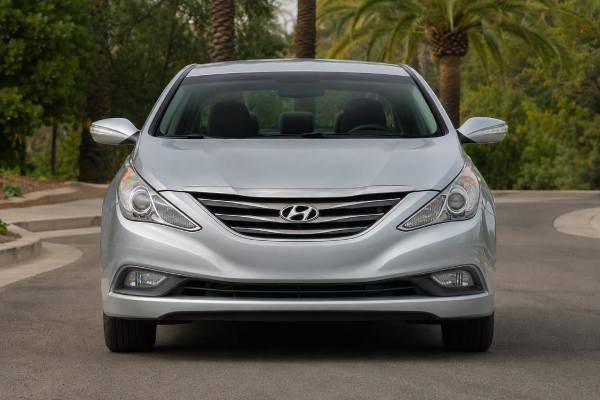
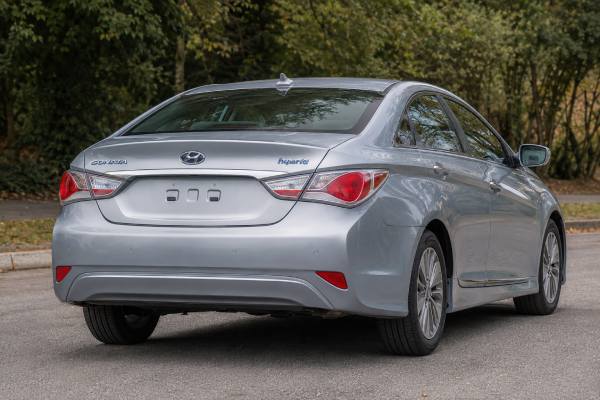
The Hyundai Sonata Hybrid YF arrived during a period when midsize hybrid sedans were becoming more useful, more affordable, and less experimental. The regular YF Sonata already stood out with bold styling, a spacious cabin, and good equipment value. The Hybrid version added a more aerodynamic front and rear treatment, unique badging, low-rolling-resistance tires, an electric motor, a lithium-polymer battery, and a hybrid control system designed to let the car move on electric power at low loads.
Its most unusual feature is the drivetrain layout. Toyota and Ford hybrids of the same era commonly used eCVT-style hybrid systems. Hyundai chose a full parallel hybrid arrangement with a 6-speed automatic transmission. The electric motor replaces the torque converter and sits between the gasoline engine and transmission. This gives the Sonata Hybrid a more conventional stepped-gear feel, especially during highway passing or moderate acceleration.
The gasoline side is a 2.4-liter Theta II Atkinson-cycle inline-4. It is naturally aspirated, uses multi-point fuel injection, and is tuned more for efficiency than for sharp throttle response. The electric motor fills in some low-speed torque, helps launch the car, supports electric-only operation in light-load conditions, and enables regenerative braking. A separate hybrid starter generator restarts the engine and helps manage charging.
The article title uses the widely circulated 209 hp combined output figure. In U.S. regulatory and fuel-economy listings, this model is often shown around 206 hp combined. That difference is best understood as a rating-convention difference rather than a meaningful hardware difference for typical 2011–2012 North American cars. When shopping, the actual condition of the engine, transmission, high-voltage battery, and hybrid electronics matters far more than the small published output variation.
The Sonata Hybrid’s strongest practical points are its roomy cabin, calm highway manners, relatively large fuel tank, and generous equipment for the money. It also avoided the “rubber band” acceleration feel some drivers dislike in eCVT hybrids. On the other hand, it is not as mechanically simple as a non-hybrid Sonata, and it carries several important recall and service-action items that must be checked before purchase.
A good example can still be a comfortable, efficient used sedan. A poor example with open recalls, engine bearing noise, hybrid warning lights, neglected fluids, or water intrusion near hybrid components can become expensive quickly. For this model, the best buying strategy is not to chase the cheapest car. It is to find one with complete recall records, quiet cold starts, smooth engine-electric transitions, clean cooling loops, healthy 12 V and high-voltage battery behavior, and no unresolved warning lights.
Sonata YF Hybrid Specs
The 2011–2012 Sonata Hybrid specifications below focus on the North American YF Hybrid sedan. Exact values can vary by market, trim, build date, wheel package, and service replacement parts, so VIN-specific service information remains the final authority.
Powertrain and efficiency
| Item | Hyundai Sonata Hybrid YF 2011–2012 |
|---|---|
| Engine family | Theta II 2.4 HEV Atkinson-cycle gasoline engine |
| Engine layout | Inline-4, DOHC, 16 valves, 4 valves per cylinder |
| Bore × stroke | 88.0 × 97.0 mm, 3.46 × 3.82 in |
| Displacement | 2.4 L, 2,359 cc |
| Induction | Naturally aspirated |
| Fuel system | Multi-point fuel injection |
| Compression ratio | Approximately 13.0:1 |
| Gasoline engine output | About 166 hp, 124 kW, at 6,000 rpm |
| Gasoline engine torque | About 209 Nm, 154 lb-ft, at 4,500 rpm |
| Electric motor | Permanent-magnet synchronous traction motor, front-mounted in the transaxle path |
| Electric motor output | 30 kW, about 40 hp |
| Electric motor torque | About 205 Nm, 151 lb-ft from low rpm |
| Hybrid starter generator | 8.5 kW unit for engine start and charging support |
| System voltage | 270 V high-voltage architecture |
| Battery | Lithium-polymer, LG Chem cells, about 1.4 kWh / 5.3 Ah |
| Battery layout | Behind rear seat and trunk bulkhead, cabin-air cooled |
| Combined output | Commonly quoted as 209 hp; U.S. listings often show about 206 hp |
| Timing drive | Timing chain |
| EPA fuel economy | 34 mpg city, 39 mpg highway, 36 mpg combined |
| Metric economy equivalent | 6.9 L/100 km city, 6.0 L/100 km highway, 6.5 L/100 km combined |
| UK mpg equivalent | 40.8 mpg city, 46.8 mpg highway, 43.2 mpg combined |
| Real-world 120 km/h highway | Typically about 6.8–8.0 L/100 km, or 29–35 mpg US, depending on temperature, tires, wind, and battery state |
Transmission, chassis, and dimensions
| Item | Specification |
|---|---|
| Transmission | A6MF2H 6-speed automatic hybrid transaxle |
| Drive type | Front-wheel drive |
| Differential | Open front differential |
| Front suspension | MacPherson strut |
| Rear suspension | Independent multi-link |
| Steering | Electrically assisted rack-and-pinion |
| Brakes | Four-wheel disc brakes with ABS, EBD, brake assist, stability control, and regenerative braking blend |
| Popular tire size | P205/65R16 94H on 16-inch alloy wheels |
| Optional tire package | 17-inch wheel package on higher equipment versions in some markets |
| Length | 4,820 mm, 189.8 in |
| Width | 1,835 mm, 72.2 in |
| Height | 1,465 mm, 57.7 in |
| Wheelbase | About 2,795 mm, 110.0 in |
| Ground clearance | About 130 mm, 5.1 in |
| Turning circle | About 10.9 m, 35.8 ft |
| Curb weight | Approximately 1,568–1,580 kg, 3,457–3,483 lb |
| GVWR | Approximately 2,080 kg, 4,586 lb |
| Approximate payload | About 500 kg, 1,100 lb, depending on trim and options |
| Fuel tank | 65 L, 17.2 US gal, 14.3 UK gal |
| Passenger volume | About 104 ft³ |
| Cargo volume | About 303–311 L, 10.7–11.0 ft³, SAE-style trunk measure |
| Seat-folding practicality | Limited by battery placement; not as flexible as non-hybrid sedans |
Performance and capability
| Item | Typical value |
|---|---|
| 0–100 km/h | About 9.0–9.5 seconds |
| 0–60 mph | About 8.8–9.2 seconds |
| Top speed | Approximately 185–190 km/h, 115–118 mph |
| 100–0 km/h braking | Roughly 40–43 m, 131–141 ft, depending on tire and brake condition |
| Towing capacity | Not normally rated or recommended in the U.S. market |
| Load behavior | Best used as a passenger sedan, not a tow vehicle or heavy-haul car |
Fluids, capacities, and service values
| System | Specification or capacity |
|---|---|
| Engine oil | API SM / ILSAC GF-4 or better; 5W-20 commonly recommended for economy, with 5W-30 or 10W-30 climate-dependent where permitted |
| Engine oil capacity | 4.5 L, 4.76 US qt, with filter |
| Automatic transaxle fluid | Hyundai/Kia ATF SP-IV or approved equivalent |
| Automatic transaxle capacity | 6.6 L, 6.97 US qt total system capacity |
| Engine coolant | Ethylene-glycol coolant suitable for aluminum engines |
| Engine coolant capacity | About 6.6–6.9 L, 6.97–7.29 US qt |
| Inverter coolant | Ethylene-glycol coolant suitable for hybrid cooling loop |
| Inverter coolant capacity | About 2.26 L, 2.39 US qt |
| Brake fluid | FMVSS 116 DOT 3 or DOT 4 |
| Brake fluid capacity | About 0.7–0.8 L, 0.7–0.8 US qt |
| A/C refrigerant | R-134a; verify exact charge on under-hood label |
| A/C compressor oil | Electric-compressor-compatible oil only; do not substitute ordinary PAG oil |
| Wheel lug nut torque | About 88–107 Nm, 65–79 lb-ft |
| Oil drain plug torque | Use VIN-specific service data; commonly around the mid-30s to low-40s Nm range for Hyundai aluminum oil pans |
Safety and assistance data
| Item | Result or availability |
|---|---|
| NHTSA overall rating | 5 stars for 2012 Sonata Hybrid listings |
| NHTSA frontal crash | 4 stars |
| NHTSA side crash | 5 stars |
| NHTSA rollover | 5 stars |
| IIHS award | 2012 Top Safety Pick for Sonata |
| IIHS moderate overlap front | Good |
| IIHS side | Good |
| IIHS roof strength | Good |
| IIHS head restraints and seats | Good |
| IIHS small overlap driver | Marginal in later testing context |
| Headlight rating | Not applicable to the original 2011–2012 award era; IIHS headlight ratings were introduced later |
| ADAS | No modern AEB, ACC, lane keeping, blind-spot monitoring, rear cross-traffic alert, or traffic-sign assist on these early cars |
| Core safety systems | ABS, EBD, brake assist, ESC, traction control, TPMS, front airbags, front side airbags, and side-curtain airbags |
Sonata YF Equipment and Safety
The 2011–2012 Sonata Hybrid was not sold as a bare-bones economy special. Even standard cars generally came with a useful equipment set because Hyundai positioned the hybrid as a higher-tech version of the Sonata line rather than a stripped efficiency model.
Trim names and package contents vary by market, but North American cars are commonly seen as a standard Hybrid grade and a higher-content package or Limited-style version. The mechanical layout is broadly the same across the range: front-wheel drive, the 2.4L hybrid system, 6-speed automatic, four-wheel disc brakes, and the same basic battery architecture. Differences are mostly wheels, interior materials, infotainment, convenience equipment, lighting details, and audio/navigation options.
Common equipment and trim identifiers
Typical standard or commonly fitted equipment includes dual-zone automatic climate control, Bluetooth, USB/aux input, keyless entry or smart-key availability, alloy wheels, stability control, traction control, and hybrid-specific instrumentation. Higher-content cars may add leather seating, heated front and rear seats depending on market, panoramic sunroof, navigation, rearview camera, premium audio, power seat adjustments, auto-dimming mirror, and 17-inch wheels.
Useful quick identifiers include:
- Hybrid or Blue Drive badging on the rear and exterior trim.
- Hybrid-specific grille and aerodynamic front/rear styling.
- Low-rolling-resistance tire fitment, usually on 16-inch wheels for economy-focused cars.
- Trunk and rear-seat packaging that differs from the regular Sonata because of the high-voltage battery.
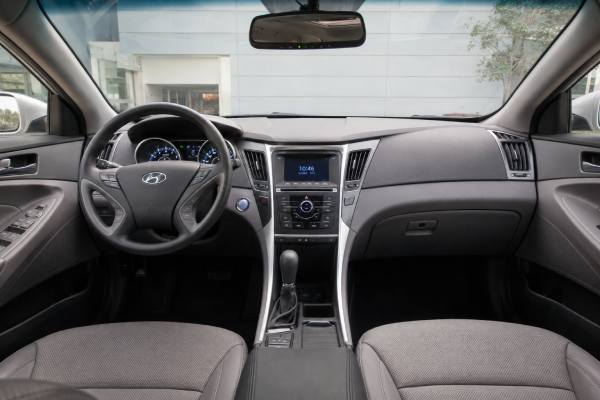
- Hybrid power-flow and economy screens in the instrument cluster or infotainment system.
- Build date label on the driver door jamb, which matters when checking recall applicability.
Wheel choice matters more than many buyers expect. The 16-inch setup usually gives the best ride comfort and fuel economy. The 17-inch package can look better and sharpen initial steering response slightly, but it may add tire noise, ride firmness, and replacement cost. There is no meaningful towing or performance advantage from the larger wheel package.
Year-to-year notes
The 2011 model year introduced the Sonata Hybrid in the YF generation. The 2012 model carried the same basic hardware with equipment refinements and broader availability of connected features in some trims. Published economy figures can appear inconsistent because early marketing, regulatory updates, and later database listings do not always use the same rating basis. For practical buying, focus on the official label for the specific car and the current regulatory listing for its VIN or model year.
Safety equipment and ratings
For its time, the Sonata Hybrid’s passive and structural safety package was competitive. It uses front airbags, front seat-mounted side airbags, side-curtain airbags, active front head restraints, anti-lock brakes, brake-force distribution, brake assist, electronic stability control, traction control, and tire-pressure monitoring. Rear child-seat provisions include LATCH/ISOFIX-style lower anchors and top-tether points, depending on market terminology.
The NHTSA 5-star overall result and IIHS Top Safety Pick status are strong points for a 2011–2012 midsize sedan. The important context is that modern crash testing has become harder since then. A 2012 Top Safety Pick does not mean the car has the same crash-avoidance technology, headlight performance, or small-overlap protection as a current midsize sedan. It means the Sonata performed well in the major tests used for its era.
Advanced driver-assistance technology is limited. Do not expect automatic emergency braking, adaptive cruise control, lane centering, lane keeping assist, blind-spot monitoring, rear cross-traffic alert, or traffic-sign recognition. Some cars may have a rearview camera when equipped with navigation, and some higher trims include telematics or emergency-assistance functions. These features are useful, but they are not substitutes for modern active safety systems.
After windshield, front-end, suspension, steering, or airbag repairs, calibration needs are far lighter than on a modern ADAS-heavy car. Still, any airbag or restraint-system warning light must be treated seriously. Because this model has had airbag control and seat-belt related recalls, the restraint system should be scanned with a capable diagnostic tool before purchase.
Reliability and Recall Priorities
Reliability on the 2011–2012 Sonata Hybrid is condition-dependent. The hybrid battery itself is not automatically the weak point; many cars have covered high mileage with the original pack. The larger concerns are recall completion, engine bearing risk, age-related hybrid electronics issues, transmission behavior, cooling system maintenance, and general neglect.
| Issue area | Prevalence | Severity/cost tier | Typical signs | Best response |
|---|---|---|---|---|
| Theta II connecting rod bearing wear | Occasional but serious | High | Knock, oil-pressure light, stall, metallic debris, engine warning | Verify recall/KSDS status, inspect engine, replace under campaign if eligible |
| Airbag control unit recall | VIN-dependent | High safety risk | Airbag light, open recall | Confirm dealer remedy and scan SRS system |
| Seat-belt anchor pretensioner recall | VIN-dependent | High safety risk | Recall history, previous repair record | Verify completed campaign and proper repair |
| ABS module fire-risk recall | VIN-dependent | High safety risk | Open recall, ABS/brake warning, electrical smell | Verify remedy; follow official park-outside guidance if open |
| Hybrid battery degradation | Occasional with age | Medium to high | Lower economy, reduced EV assist, fan noise, hybrid codes | Scan hybrid system and check battery health |
| 12 V battery weakness | Common with age | Low to medium | No-start, warning lights, odd electronics | Test and replace as needed |
| Transmission shift flare or harshness | Occasional | Medium to high | Delayed engagement, shudder, harsh shifts | Check fluid/service history, scan, update software if applicable |
| Rear brake corrosion | Common in light-duty hybrid use | Low to medium | Pulsation, scraping, rusty rotors | Service brakes and use periodic firm stops safely |
| Cooling-loop neglect | Occasional | Medium to high | Overheating, inverter warning, coolant stains | Inspect engine and inverter coolant systems |
The most important engine issue is the connecting rod bearing campaign affecting certain Sonata Hybrid vehicles. Symptoms can include a lower-engine knock, reduced power, oil-pressure warning, stalling, or engine damage. Hyundai’s remedy path has included inspection, engine replacement where needed, and software designed to detect bearing-related knock patterns. A quiet warm idle is not enough. A buyer should verify completion by VIN and look for dealer documentation.
The airbag control unit recall is also important because it affects occupant protection, not convenience. Some 2011–2012 Sonata Hybrid vehicles were recalled because electrical overstress could interfere with airbag and pretensioner deployment. The remedy involved installing an external wire filter kit. Any SRS warning light, stored restraint code, or unclear recall record should stop the purchase until resolved.
The ABS module fire-risk recall applies to certain Hyundai models including Sonata Hybrid vehicles from this period. The concern is an internal brake-fluid leak or electrical short in the ABS module that can create a fire risk even when parked. If a car has an open ABS recall, follow the official guidance, verify the remedy, and do not assume a recently passed roadworthiness inspection means the recall is complete.
Hybrid-specific checks should include the high-voltage battery, battery cooling path, inverter coolant, DC–DC converter, hybrid starter generator, contactors, and hybrid warning history. The battery is cabin-air cooled, so blocked vents, dirty ducts, trunk moisture, pet hair, and long-term heat exposure can shorten life. A weak 12 V battery can also create misleading hybrid and stability-control warnings, so always test it before assuming an expensive high-voltage fault.
The A6MF2H hybrid automatic should shift smoothly once warm. It may feel different from a normal torque-converter automatic because the electric motor is integrated into the driveline, but it should not bang into gear, flare badly, or shudder under light throttle. Harsh 2–3 or 3–4 shifts, delayed Drive engagement, or repeated hybrid transition clunks deserve deeper diagnosis. Software updates can help some drivability complaints, but worn internal components or neglected fluid can still be costly.
On the chassis side, check front control-arm bushings, ball joints, strut mounts, rear suspension links, wheel bearings, brake hoses, and underbody corrosion. In salt-belt climates, look closely at subframes, brake lines, fuel lines, rear suspension mounting areas, exhaust hangers, and body seams. Inspect the trunk for water intrusion because hybrid electronics and the battery area do not tolerate moisture well.
A pre-purchase inspection should include a full module scan, not just a generic engine-code reader. Ask for engine, transmission, hybrid control, battery management, ABS, steering, and SRS modules to be scanned. Request printed proof of recall completion, oil-change history, coolant service, ATF service if performed, and any hybrid battery or inverter repairs. A healthy car should start cleanly, enter READY mode without warnings, transition between EV and gasoline power smoothly, stop predictably, and maintain stable temperature in traffic and on the highway.
Maintenance and Buying Checks
The Sonata Hybrid rewards boring, consistent maintenance. The engine is chain-driven, so there is no timing belt interval, but oil quality and level still matter because timing-chain tensioners, bearings, and variable-valve-timing hardware depend on clean oil pressure. The hybrid system also adds separate cooling and electrical checks that are easy to ignore on a cheap used car.
Practical maintenance schedule
| Interval | Service item |
|---|---|
| Every month | Check engine oil level, engine coolant level, inverter coolant level, tire pressures, exterior lights, and fluid leaks |
| Every 7,500 miles / 12,000 km or 12 months | Replace engine oil and filter under normal service; rotate tires; inspect HSG belt, air filter, hoses, brakes, steering, suspension, and driveshaft boots |
| Every 3,750 miles / 6,000 km under severe use | Consider oil and filter service for frequent short trips, very cold starts, high heat, dusty use, heavy traffic, or repeated mountain driving |
| Every 15,000 miles / 24,000 km | Replace cabin air filter; inspect brake lines, pads, rotors, parking brake, A/C refrigerant level, exhaust, suspension fasteners, and steering joints |
| Every 30,000 miles / 48,000 km | Inspect or replace engine air filter depending on dust load; inspect hybrid battery cooling intake and ducts |
| Every 45,000–60,000 miles / 72,000–96,000 km | Consider ATF service if age, heat, city driving, or shift quality suggests it; use SP-IV fluid only |
| Around 60,000 miles / 96,000 km or 72 months | Replace coolant if due by official schedule; include both engine and inverter loops where applicable |
| Every 2–3 years | Replace brake fluid as practical preventive maintenance |
| Around 97,500–105,000 miles | Replace spark plugs if due by VIN-specific schedule and plug type |
| Annually after year four | Load-test the 12 V battery and inspect hybrid cooling airflow |
| As symptoms appear | Inspect timing chain, guides, and tensioner for rattle, correlation faults, or oil-pressure-related symptoms |
The brake system deserves special attention because hybrids use regenerative braking. Light brake use can leave the rear rotors rusty, especially in wet climates or on cars driven gently in town. A brief firm stop from moderate speed, done safely and legally, helps exercise the friction brakes, but it does not replace proper inspection. Brake fluid also ages even when pad wear is low.
Use the correct fluids. ATF SP-IV is not a casual substitute item, and the electric A/C compressor must use compatible oil. Ordinary compressor oil can damage a high-voltage electric compressor system. Engine and inverter coolant loops should be filled, bled, and inspected correctly because trapped air or wrong coolant can cause expensive faults.
Buyer inspection checklist
Before buying, check:
- VIN recall status through an official Hyundai dealer or the national recall database.
- Dealer proof for engine bearing, ABS module, airbag control unit, and seat-belt campaigns where applicable.
- Cold start noise, especially lower-engine knock or chain rattle.
- Smooth transition into READY mode with no hybrid, battery, ABS, ESC, or airbag warnings.
- Full diagnostic scan of engine, transmission, hybrid, BMS, ABS, SRS, and steering modules.
- Hybrid battery cooling intake, fan operation, trunk dryness, and signs of previous water leaks.
- ATF shift quality when cold and warm.
- Brake-pedal feel during the regen-to-friction transition.
- Engine and inverter coolant condition, level, and evidence of leaks.
- Underbody corrosion, especially subframes, brake lines, suspension arms, and fuel lines.
- Tire match, correct load/speed rating, and even wear.
- A/C performance, because hybrid battery temperature and cabin cooling can be linked in real use.
The best used examples are usually not the lowest-mileage cars with no records. They are the cars with documented oil changes, completed recalls, clean diagnostics, healthy cooling systems, matching tires, and no mystery warning lights. A higher-mileage car with proof of maintenance can be a better choice than a low-mileage car that sat for long periods with a weak 12 V battery and open campaigns.
Avoid cars with active SRS or hybrid warnings, unresolved engine knock, repeated overheating, evidence of flood damage, missing underbody shields, or a seller who says “it just needs a sensor” without a scan report. Hybrid-specific parts and diagnosis can be costly, so unknown faults should be priced as real repairs, not small inconveniences.
Long-term durability is acceptable when the car is maintained and recall-complete, but this is not the safest “buy blind” hybrid sedan of its era. A Toyota Camry Hybrid is usually the safer low-risk ownership bet. The Sonata Hybrid can be good value when bought carefully, especially for drivers who prefer conventional automatic shift feel and a spacious cabin.
Driving Feel and Efficiency
The Sonata Hybrid drives like a relaxed midsize sedan rather than a sporty hybrid. Its main strength is smooth, quiet commuting and steady highway travel. The body is stable at speed, the ride is generally comfortable on 16-inch tires, and the cabin has enough space for long trips. The steering is light and not especially communicative, but it suits the car’s comfort-first character.
The 6-speed automatic gives the powertrain a familiar stepped-gear feel. Under gentle throttle, the car can pull away on electric power, blend in the gasoline engine, and shift through the gears more like a normal automatic sedan. Under stronger acceleration, the system is adequate rather than quick. Passing power is acceptable once the engine and motor are working together, but this is not a performance sedan.
The hybrid transitions are usually smooth in a healthy car. A small change in sound or vibration when the engine starts is normal. A hard thump, repeated hesitation, warning light, or rough restart is not. Cold weather, old software, weak 12 V batteries, tired engine mounts, or transmission issues can make the transitions feel worse.
Brake feel is one of the more noticeable hybrid traits. The pedal blends regenerative braking with the friction brakes. In normal driving it is easy to get used to, but low-speed stops can feel less linear than in a non-hybrid Sonata. If the pedal pulses, grabs, sinks, or feels inconsistent, inspect the pads, rotors, calipers, brake fluid, ABS system, and hybrid brake-control codes.
Real-world economy depends heavily on route and condition. In mixed driving, a healthy car often lands around 6.3–7.1 L/100 km, or 33–37 mpg US. In favorable city and suburban use with warm weather, gentle acceleration, and a functioning battery, it can do better. On cold short trips, with winter tires, heavy HVAC use, or a weak hybrid battery, economy can fall noticeably.
At highway speeds, the gasoline engine does most of the work. At 100–110 km/h, economy can remain close to the EPA highway range. At 120 km/h or 75 mph, many drivers should expect something closer to 6.8–8.0 L/100 km, or 29–35 mpg US, especially with wind, hills, roof accessories, cold temperatures, or 17-inch tires. That is still reasonable for a large midsize sedan of the era, but it is not Prius-like.
Ride and tire choice matter. The 16-inch tires give the best balance of ride comfort, economy, and replacement cost. Larger wheels can make the car feel a little sharper on turn-in but may increase road noise and reduce efficiency. Good low-rolling-resistance tires help the hybrid system perform as intended, but they should still have strong wet braking performance.
Do not buy this car for towing. It is best treated as a passenger sedan with normal luggage and occupants. Under heavy load, watch engine temperature, inverter coolant behavior, brake condition, and tire pressures. The hybrid system can handle ordinary family use well, but repeated mountain driving with a neglected cooling system is not kind to an aging hybrid.
Rival Hybrid Sedan Comparison
The Sonata Hybrid’s closest rivals are the Toyota Camry Hybrid, Ford Fusion Hybrid, and Kia Optima Hybrid. Each takes a different approach to the same basic goal: midsize comfort with better fuel economy than a conventional gasoline sedan.
| Rival | Compared with Sonata Hybrid YF |
|---|---|
| Toyota Camry Hybrid | Usually the strongest reliability benchmark. The Camry’s eCVT system is very smooth and proven, with excellent long-term hybrid reputation. The Sonata often costs less used and feels more like a regular automatic, but it has more recall and inspection concerns. |
| Ford Fusion Hybrid | Efficient, refined, and smooth, with a mature eCVT-style hybrid system. The Fusion can feel more seamless in city driving, while the Sonata offers a roomier-feeling cabin and conventional shift character. |
| Kia Optima Hybrid | Mechanically closely related to the Sonata Hybrid, with sportier styling and similar strengths and weaknesses. Buy based on condition, recall completion, and service history rather than badge preference. |
| Toyota Prius or Prius v | More efficient and practical for economy-first buyers, but less sedan-like in ride, cabin feel, and highway character. The Sonata is better for buyers who want a larger conventional sedan experience. |
| Non-hybrid Sonata 2.4 | Simpler and often cheaper to repair, but less efficient in city driving. The hybrid adds complexity, battery checks, and special recalls, but can save fuel if driven regularly. |
The Sonata Hybrid makes the most sense for buyers who value cabin space, highway comfort, conventional automatic behavior, and low used prices. It is less ideal for buyers who want the simplest possible ownership experience or the most proven hybrid system. For those goals, a well-maintained Camry Hybrid usually has the edge.
Against the Ford Fusion Hybrid, the Hyundai feels a little more conventional and less “hybrid-like.” Some drivers prefer that. Others may find the Ford smoother in stop-and-go traffic. The Kia Optima Hybrid is effectively the style-focused sibling, so the same engine, hybrid, battery, and recall checks apply.
The final buying verdict is condition-first. A clean, recall-complete Sonata Hybrid with smooth shifts, no warning lights, healthy coolant loops, a quiet engine, and a documented service record can be a smart value. A neglected one with open campaigns, unclear engine history, ABS or SRS lights, water intrusion, or hybrid battery faults should be avoided unless priced far below market and inspected by a hybrid-capable technician.
References
- Hyundai 2012 Sonata Hybrid Owner’s Manual 2012 (Owner’s Manual)
- 2012 Hyundai Sonata Hybrid 2012 (Fuel Economy and Safety Rating)
- 2012 Hyundai Sonata 2012 (Safety Rating)
- 2011 SONATA HYBRID 2012 (Manufacturer Technical Publication)
- Check for Recalls: Vehicle, Car Seat, Tire, Equipment 2026 (Recall Database)
Disclaimer
This article is for informational purposes only and is not a substitute for professional diagnosis, repair advice, or VIN-specific service documentation. Specifications, torque values, maintenance intervals, recall eligibility, procedures, and fluid requirements can vary by market, VIN, build date, equipment, and service history. Always verify critical information against official Hyundai service data, owner documentation, recall records, and a qualified technician’s inspection.
If this guide helped you evaluate the 2011–2012 Hyundai Sonata Hybrid, please consider sharing it on Facebook, X/Twitter, or your preferred automotive community to support our work.