
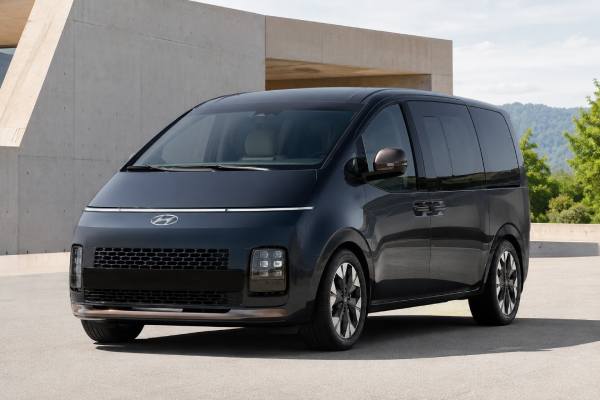
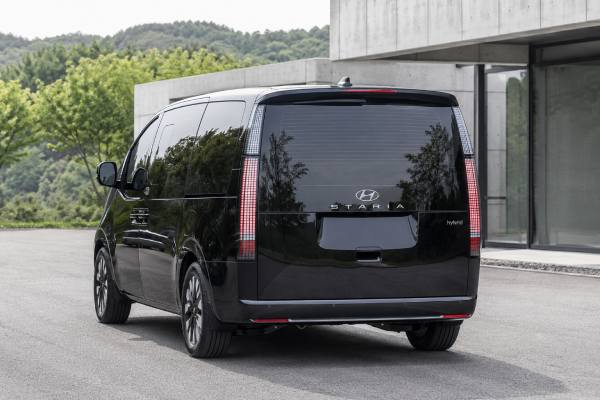
The Hyundai STARIA Electric brings battery-electric power to one of Hyundai’s largest and most unusual people movers. Based on the US4 STARIA platform, this 2026-onward electric version keeps the tall, lounge-like cabin and sliding-door practicality, but replaces combustion power with a front-mounted 160 kW electric motor, an 84 kWh lithium-ion battery, and an 800-volt charging system.
For families, airport shuttle operators, private-hire fleets, hotels, camper converters, and buyers who need real passenger space, the STARIA Electric is more interesting than a conventional electric SUV. Its key question is simple: can a large electric MPV deliver enough range, charging speed, comfort, and durability to work every day? The answer is mostly yes, but its size, final market specifications, and long-term EV service data matter a lot.
Final Verdict
The Hyundai STARIA Electric US4 is a strong choice for buyers who need a genuine seven- or nine-seat electric MPV rather than a three-row SUV with compromised rear space. Its biggest appeal is the mix of huge cabin flexibility, 800-volt fast charging, 2,000 kg braked towing capability, and smooth 218 hp electric drive. It suits family transport, shuttle work, leisure use, and light commercial passenger duty best. The main tradeoff is range at motorway speed, especially with a full load or cold weather. Buy only after confirming final homologated figures, charging behavior, battery warranty terms, and VIN-specific service documentation.
| Pros | Cons |
|---|---|
| True seven- or nine-seat MPV space with sliding-door access | Large body will be harder to park than electric SUVs |
| 800-volt system supports very short DC charging stops | Real motorway range will fall well below WLTP rating |
| 160 kW motor gives smooth, quiet passenger-friendly performance | Front-wheel drive may limit traction under heavy load |
| 84 kWh battery gives useful family and shuttle range | Usable battery capacity and final efficiency data need confirmation |
| Up to 2,000 kg braked towing is unusually practical | Towing will sharply reduce range and charging intervals |
| V2L, OTA updates, and Hyundai SmartSense add daily usability | Long-term reliability record is not established yet |
Table of Contents
- STARIA Electric US4 Deep Look
- STARIA Electric US4 Technical Data
- STARIA Electric US4 Trims and Safety
- Reliability, Issues and Service Actions
- Maintenance and Buying Advice
- Driving Range and Performance
- STARIA Electric Rivals Compared
STARIA Electric US4 Deep Look
The Hyundai STARIA Electric is the first fully electric version of the STARIA line. It is not a small van, a lifestyle crossover, or a lightly stretched SUV. It is a full-size MPV built around passenger space, a high roof, wide sliding doors, a large tailgate, and a cabin that feels closer to a shuttle or lounge than a normal family car.
That matters because the electric vehicle market has plenty of SUVs, but far fewer electric people movers with adult-friendly third-row space. A seven-seat SUV can work for occasional family use, but it often gives up boot room, aisle access, and headroom. The STARIA Electric approaches the job differently. It starts with a van-like body and then adds EV packaging, a flatter cabin floor, quiet drive, and fast charging.
The US4 platform already gave the combustion STARIA a distinctive layout: long wheelbase, short front overhang, tall glasshouse, and a cabin-first design. The electric version keeps that basic footprint. It measures more than 5.25 metres long and nearly 2 metres tall, so it is closer in daily feel to a large passenger van than to a family crossover. That size is not a disadvantage if you carry people, luggage, sports gear, mobility equipment, or hotel passengers. It becomes a compromise only in tight city parking, older garages, and narrow streets.
Power comes from a single front-mounted electric motor producing 160 kW, equal to 218 PS. Torque is 350 Nm. Those numbers do not make the STARIA Electric a performance EV, but they are well suited to its job. Electric torque arrives smoothly from low speed, which helps when moving away with passengers on board. There is no gear hunting, no diesel vibration, and no clutch or torque-converter delay. The result should be calm, easy progress rather than dramatic acceleration.
The 84 kWh lithium-ion battery is the heart of the vehicle. Hyundai gives an estimated WLTP range of up to 400 km, or about 249 miles, depending on market specification and final homologation. That figure is important, but it should not be read like a guaranteed motorway distance. A tall MPV has more frontal area than a low sedan or compact SUV. At 120 km/h, air resistance rises quickly, and a fully loaded STARIA Electric will use noticeably more energy than it does in urban driving.
The 800-volt electrical architecture is one of the STARIA Electric’s strongest technical features. Most electric vans and MPVs use 400-volt systems. Hyundai’s high-voltage setup allows quicker charging under the right conditions, with a claimed 10–80% DC fast-charge time of about 20 minutes. For a vehicle that may be used for long family trips, airport transfers, or shuttle routes, charging speed can matter as much as outright range. A large battery is useful; a large battery that can recover range quickly is much more useful.
The STARIA Electric also supports Vehicle-to-Load, with power available inside and outside the vehicle. This suits the vehicle’s character well. Families can power camping equipment or laptops. Shuttle and event users can run small devices. Trades or support crews can use it as a mobile power source, within the system’s limits.
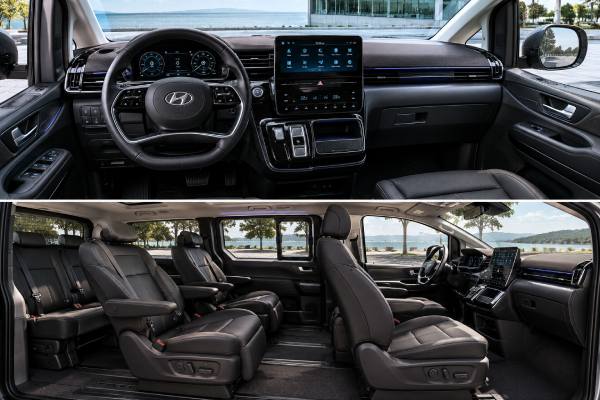
The model launches with two main passenger layouts in Hyundai’s European material: Luxury as a seven-seater and Wagon as a nine-seater. The Luxury version is aimed more at private and executive passenger use, while the Wagon makes more sense for larger families, hotels, shuttle fleets, and group transport. Cargo figures also differ, with the official material listing 431 litres for Luxury and 1,303 litres for Wagon.
The most important thing for early buyers is that the STARIA Electric is new. Final energy consumption, market equipment, service procedures, and some detailed specifications may differ by country. That is normal for a newly introduced vehicle, but it means buyers should check the exact market brochure, VIN data, warranty booklet, and dealer service information before ordering.
STARIA Electric US4 Technical Data
Powertrain and Battery
| Specification | Value |
|---|---|
| Model | Hyundai STARIA Electric |
| Platform code | US4 |
| Production period | 2026–present |
| Powertrain type | Battery electric vehicle |
| Motor count and location | One motor, front axle |
| Motor type | Synchronous electric motor |
| Drive type | Front-wheel drive |
| Maximum power | 218 PS / 160 kW |
| Maximum torque | 350 Nm / 258 lb-ft |
| Battery capacity | 84 kWh |
| Battery type | Lithium-ion |
| Battery location | Below the floor |
| Electrical architecture | 800 volts |
| Transmission | Single-speed automatic reduction drive |
| Maximum speed | 184 km/h / 114 mph |
Range, Charging and Energy
| Specification | Value |
|---|---|
| Official test standard | WLTP |
| Rated driving range | Up to 400 km / 249 mi |
| AC onboard charger | 11 kW |
| DC fast-charging time | 10–80% in approx. 20 minutes |
| Charging port location | Front-mounted |
| Vehicle-to-Load | Inside and outside |
| Charging system | 400 V and 800 V compatible charging technology |
Dimensions and Practicality
| Specification | Value |
|---|---|
| Body type | Five-door MPV |
| Seating layouts | 7-seat Luxury / 9-seat Wagon |
| Overall length | 5,255 mm / 206.9 in |
| Overall width | 1,995 mm / 78.5 in |
| Overall height | 1,990 mm / 78.3 in |
| Wheelbase | 3,275 mm / 128.9 in |
| Ground clearance | 186 mm / 7.3 in |
| Wheel size | 17-inch |
| Cargo volume | 431 L Luxury / 1,303 L Wagon |
| Rear door opening width / height | 1,400 mm / 1,220 mm |
| Side door opening width | 870 mm |
Towing and Load Use
| Specification | Value |
|---|---|
| Braked towing capacity | Up to 2,000 kg / 4,409 lb |
| Unbraked towing capacity | 750 kg / 1,653 lb |
| Intended use cases | Family, leisure, shuttle, commercial passenger transport |
Safety and Driver Assistance
| Specification | Value |
|---|---|
| ADAS suite | Hyundai SmartSense |
| Forward collision support | Forward Collision-Avoidance Assist |
| Lane support | Lane Keeping Assist and Lane Following Assist |
| Highway support | Highway Driving Assist |
| Cruise control | Smart Cruise Control |
| Speed assistance | Intelligent Speed Limit Assist |
| Blind spot support | Blind-Spot Collision-Avoidance Assist |
| Rear crossing support | Rear Cross-Traffic Collision-Avoidance Assist |
| Parking visibility | Surround View Monitor |
| Driver monitoring | Driver Attention Warning |
| Lighting assistance | Automatic high beam |
STARIA Electric US4 Trims and Safety
At launch, the STARIA Electric is presented around two main passenger configurations. The Luxury 7-seater is the more private-use and comfort-focused version. The Wagon 9-seater is the higher-capacity option for larger families, group movement, hotel transfer work, and shuttle use.
The difference is not only the number of seats. The Luxury version is designed around a more relaxed passenger experience, especially in the second row. It is the version to consider if comfort, seat features, and a more premium cabin feel are priorities. Hyundai’s launch information describes heated and ventilated front seats and heated and ventilated second-row seats as part of the Luxury configuration.
The Wagon version is more practical if the job is moving people efficiently. A nine-seat electric MPV is rare, and that alone gives the STARIA Electric a useful niche. It is the version that makes the most sense for operators who need to replace a diesel shuttle but cannot move down to a smaller electric van or SUV.
Both versions share the same broad electric hardware: 84 kWh battery, 160 kW front-drive motor, 800-volt electrical architecture, 11 kW AC charging, and fast DC charging capability. Hyundai’s early information does not describe separate battery sizes, dual-motor versions, or performance variants for this STARIA Electric line. That keeps the buying decision simpler: choose the seating layout and equipment level first, not the drivetrain.
Equipment and identifiers
The easiest identifiers are the seat layout, trim naming, wheel design, and cabin equipment. Luxury models should be identifiable by their seven-seat arrangement and higher-comfort second-row seating. Wagon models are identified by the nine-seat layout and higher passenger capacity.
The electric model has several exterior clues compared with combustion STARIA versions. It uses EV-specific front styling, including a cleaner closed front treatment. The charge port is mounted at the front. The design still keeps STARIA’s continuous horizontal lighting theme and large glass area, but the electric model looks smoother and less intake-heavy than petrol, diesel, LPG, or hybrid versions.
Inside, the electric STARIA uses Hyundai’s Connected Car Navigation Cockpit, known as ccNC, with over-the-air update capability. Dual 12.3-inch displays are part of the launch description. Wireless Apple CarPlay and Android Auto are also described in Hyundai’s European material, along with USB-C charging ports across all rows, including 100-watt outlets.
Safety ratings
The STARIA Electric did not have a dedicated Euro NCAP or IIHS crash rating published at launch. That is important because buyers should not automatically transfer a rating from a petrol or diesel STARIA to the electric version. Battery placement, mass, underbody structure, restraint calibration, and market equipment can affect a crash-test result.
The related combustion Hyundai STARIA has been rated by ANCAP in Australia and New Zealand, where the eight-seat petrol and diesel variants received a five-star rating under 2021 protocols. That result is encouraging for the underlying vehicle family, but it is not a model-specific STARIA Electric rating. Hybrid variants were listed separately as unrated by ANCAP, which reinforces the need to check the exact variant and rating body.
For European buyers, the key question is whether the electric STARIA receives its own Euro NCAP result and which test protocol applies. Euro NCAP protocols evolve, so a 2026 result would not be directly comparable with older five-star results from earlier test eras.
Safety systems and ADAS
Hyundai positions the STARIA Electric with a comprehensive SmartSense package. The available systems include forward collision assistance, lane support, highway assistance, smart cruise control, intelligent speed limit assistance, blind-spot support, rear cross-traffic assistance, surround-view monitoring, driver attention warning, and automatic high-beam control.
For a vehicle this large, parking and visibility aids matter as much as motorway assistance. Surround View Monitor, blind-spot assistance, rear cross-traffic support, and a clear reversing camera setup are worth prioritizing. Large MPVs have wide blind spots, long sides, and big rear quarters. Good camera calibration can prevent low-speed body damage and help drivers who are used to smaller cars.
For fleet use, ADAS calibration should be part of the service conversation. Windscreen replacement, bumper work, radar removal, suspension alignment, and accident repair can all require camera or radar calibration. A STARIA Electric used as a shuttle may see more kerb strikes, parking scuffs, and glass damage than a private car, so ADAS calibration records matter when buying used.
Child-seat practicality should be strong because of the wide cabin, sliding doors, and high roof. The buyer should still check the exact ISOFIX or LATCH positions for the market and trim. A family using several child seats should test the layout before ordering, because seat access and belt buckle reach can matter more than the published number of seats.
Reliability, Issues and Service Actions
The STARIA Electric is too new to have a mature long-term reliability record. That changes how it should be judged. Instead of looking for a list of common failures, buyers should separate three things: the known strengths of Hyundai’s modern EV hardware, the unknowns of this specific large MPV application, and the inspection points that matter on any high-voltage electric vehicle.
The basic EV hardware looks promising on paper. Hyundai has experience with 800-volt electric platforms, fast-charging battery systems, battery conditioning, over-the-air updates, regenerative braking, and high-output onboard electronics. The STARIA Electric applies that knowledge to a larger MPV body and a front-drive layout.
Still, the STARIA Electric is a heavy, tall, load-carrying vehicle. Its reliability story will depend on how well the battery cooling system, drive unit, front suspension, tyres, brakes, charge port, onboard charger, and 12 V system cope with fleet use, high passenger loads, repeated fast charging, and winter operation.
Battery health and degradation
The high-voltage battery is the most valuable component. Normal lithium-ion degradation is expected over time, but the pattern will depend on use. City shuttle work with moderate charge windows may be gentle. Repeated 10–80% DC fast charging, high-speed motorway work, hot-weather parking, towing, and full-load operation will stress the pack more.
For most owners, the best battery habits are simple:
- Use AC charging for routine daily charging when practical.
- Keep the normal daily charge limit below 100% unless the full range is needed.
- Avoid leaving the battery near 0% for long periods.
- Use preconditioning or planned charging in very cold weather.
- Keep battery cooling and underbody protection in good condition.
- Ask for a battery state-of-health report during annual service or before buying used.
A well-managed electric MPV should have a long battery life, but the STARIA Electric’s real degradation record will take years to establish. The useful early signs will come from high-mileage shuttle operators and taxi-style users, not low-mileage private owners.
Charging hardware and software
The charging system deserves close attention because it is central to this vehicle’s appeal. The charge port is front-mounted, which is convenient at many public chargers but also exposed to road spray, snow, insects, minor knocks, and repeated cable handling. The heated charge-port cover is a useful cold-weather feature, but buyers should still check that the door, latch, seals, lighting, and locking pin work correctly.
Possible symptoms to watch include failed charge-session starts, intermittent AC charging, slow DC charging, charge-port locking errors, warning messages, cable release problems, or unexpected charging taper. The root cause could be simple, such as a dirty connector or damaged seal, or more complex, such as a software calibration, temperature limitation, onboard charger fault, or high-voltage interlock issue.
Software updates will be important. Hyundai’s ccNC and OTA capability should help keep infotainment and some vehicle functions current. For charging behavior, BMS logic, thermal control, ADAS, and warning messages, the official remedy may be a dealer update or reflash rather than a hardware replacement. A used buyer should ask for proof that all campaigns and software updates have been completed.
Drive unit and front axle load
The STARIA Electric uses one motor driving the front wheels. That layout is efficient and simple, but it puts acceleration, steering, tyre wear, and much of the braking workload through the front axle. In a large MPV, especially one used with passengers and luggage, the front tyres and suspension will have a hard life.
Symptoms worth investigating include humming or whining from the drive unit, clicking on acceleration, vibration under load, torque steer, uneven tyre wear, front-end clunks, or steering pull. Likely causes can include tyre wear, wheel alignment, half-shafts, motor mounts, wheel bearings, suspension bushes, ball joints, or reduction-gear issues.
None of these should be assumed common on the STARIA Electric yet. They are simply the right inspection points for a large front-drive EV with instant torque.
Brakes, regen, and corrosion
Regenerative braking reduces friction-brake wear, but it does not eliminate brake maintenance. In fact, EV brakes can suffer from corrosion because the pads and discs are used less often. A heavy MPV also needs consistent brake performance when full of passengers, descending hills, or towing.
Look for rusty disc faces, grooved rotors, sticky calipers, uneven pad contact, brake vibration, scraping noises after wet parking, and a soft brake pedal. Regular brake inspections are more important than waiting for pad wear. Occasional firm braking in safe conditions can help keep the friction brakes clean, but any serious corrosion or uneven braking needs proper service.
Cooling, isolation, and underbody condition
The STARIA Electric’s battery and power electronics rely on controlled temperature. Cooling system leaks, blocked radiators, damaged underbody panels, crushed cooling lines, or poor repair work after an impact can create expensive problems.
High-voltage isolation faults are another key EV issue. Warning messages, reduced-power mode, charging refusal, or moisture-related faults can point to connector, wiring, battery pack, junction box, or charge-port problems. The repair approach should be diagnostic, not guesswork. High-voltage systems need trained technicians, correct tools, and proper isolation procedures.
Underbody inspection is especially important on an MPV. The battery pack sits low, and the vehicle may be used on ramps, ferry decks, rough campsites, kerbs, and shuttle stops. Check battery housing, covers, fasteners, jacking points, coolant lines, and exposed brackets for impacts or corrosion.
Recalls and service actions
Because the STARIA Electric is a new model, campaign history will develop over time. Early service actions on modern EVs often involve software, battery management logic, instrument cluster behavior, charging compatibility, infotainment stability, ADAS calibration, or electronic modules.
Owners should verify completion through the official Hyundai VIN check in their market and through dealer service records. A clean dashboard is not enough. A vehicle can have open campaigns without obvious symptoms.
A pre-purchase inspection should request:
- Full Hyundai dealer service history.
- Proof of recall and service campaign completion.
- Battery state-of-health report.
- Charging test on AC and DC.
- Evidence of any charge-port, onboard-charger, BMS, or coolant repairs.
- ADAS calibration records after windscreen, bumper, suspension, or accident work.
- Underbody photos or inspection report.
- Confirmation that the warranty booklet matches the vehicle’s market and use case.
Maintenance and Buying Advice
The STARIA Electric should need less routine maintenance than a diesel or petrol people mover, but it is not maintenance-free. The expensive systems are different. There is no engine oil, fuel filter, exhaust aftertreatment, timing belt, spark plugs, or diesel particulate filter. Instead, the owner needs to look after the high-voltage battery, cooling system, reduction drive, brake system, tyres, suspension, 12 V battery, charging hardware, and software status.
Hyundai’s general EV maintenance guidance for Europe allows for service intervals that may be yearly or every two years, depending on mileage and market maintenance plan. For the STARIA Electric, the VIN-specific maintenance schedule should be treated as the authority once the model is delivered in the buyer’s country.
A practical ownership schedule looks like this for decision-making:
- Every month: check tyre pressures, tyre condition, washer fluid, charging cable condition, charge-port cleanliness, exterior lights, and warning messages.
- Every 10,000–15,000 km or 6–12 months: rotate tyres if the market schedule allows it, inspect tyre wear, check alignment if wear is uneven, and inspect brakes for corrosion.
- Every 12 months: perform a general EV health check, including suspension, steering, underbody, battery housing, coolant leaks, brake condition, 12 V battery test, charging operation, and software status.
- Every 30,000 km or 2 years: replace the cabin air filter under Hyundai’s general EV guidance, or earlier in dusty, urban, or pollen-heavy use.
- Every 2 years: replace brake fluid if required by the market schedule and check brake system moisture content.
- Every 2–4 years: inspect coolant condition, concentration, and system integrity according to VIN-specific service information.
- At each service: check for campaigns, BMS updates, charging updates, ADAS updates, infotainment updates, and battery state-of-health data.
Tyres may become one of the largest routine costs. The STARIA Electric is large, front-wheel drive, and instantly torquey. Front tyres will work hard, especially in shuttle use, mountain areas, wet climates, or when drivers accelerate sharply from low speed. Correct load rating is essential. Do not replace the tyres with a cheaper set that lacks the correct load, speed, noise, and efficiency characteristics.
Wheel alignment also matters. A large MPV can quickly destroy tyres if the front toe is off or the rear axle alignment is outside tolerance. Alignment should be checked after pothole impacts, kerb strikes, suspension work, uneven tyre wear, or steering pull.
The 12 V battery is easy to overlook in EVs. It powers control units, locks, relays, and startup electronics. A weak 12 V battery can create strange warning messages, failed starts, charging issues, or false electrical faults. Fleet users should test it at every service and expect replacement before it causes downtime.
Buyer’s guide for new and used examples
For a new STARIA Electric, the buying strategy is mostly about specification. Choose the seven-seat Luxury if comfort, private family use, executive travel, and second-row passenger experience matter most. Choose the nine-seat Wagon if capacity, commercial passenger use, group transport, or maximum people-moving flexibility is the priority.
The 17-inch wheel package is sensible for this type of vehicle. It should help ride comfort, tyre cost, load capability, and efficiency. Larger wheels may look better if offered later, but they usually bring more road noise, shorter tyre life, higher replacement cost, and more impact harshness.
For a used STARIA Electric, the inspection should be more detailed than a normal used-car check. The battery and charging system are the core value of the vehicle. Ask for a battery state-of-health printout, recent charging history, and evidence that the vehicle can charge properly on both AC and DC. A short AC test only proves part of the system. A DC session is useful because it shows whether the car communicates correctly with a rapid charger, warms or manages the pack properly, and accepts power without unexpected faults.
Range should be judged by consumption and state of health, not just the dashboard guess-o-meter. A vehicle showing a low predicted range may simply have been driven fast in cold weather. A vehicle showing a high range may have been reset or driven gently. The better test is a controlled drive with energy consumption recorded over a known route.
Check the charge port carefully. Look for bent pins, moisture, cracks, a loose door, damaged seals, latch problems, and signs of forced cable removal. Public charging use can be rough on hardware.
Inspect the underside. The battery housing, underbody covers, coolant lines, brackets, jacking points, and fasteners should be straight, dry, and corrosion-free. Avoid any used example with unexplained high-voltage repairs, warning lights, water damage, or accident history near the battery structure unless inspected by a qualified EV specialist.
For shuttle or taxi-style vehicles, seat condition tells a story. Worn bolsters, broken USB ports, damaged sliding-door trims, tired suspension, uneven tyres, and scratched luggage areas can reveal hard commercial use even when the mileage looks reasonable.
The long-term durability outlook is cautiously positive. Hyundai’s EV battery warranty and experience with modern high-voltage systems are reassuring, and the STARIA Electric uses a relatively simple single-motor layout. The unknowns are real-world battery degradation under fleet use, charge-port durability, front suspension wear, reduction-drive noise, and the cost of model-specific body or interior parts.
Driving Range and Performance
The STARIA Electric should feel calm rather than sporty. That is the right character for a large MPV. The 160 kW motor gives enough power for confident daily driving, and the 350 Nm torque figure should make low-speed response easy with passengers on board. Electric torque is especially helpful in city traffic, hotel forecourts, car parks, school runs, and stop-start shuttle work.
Do not expect the punch of a dual-motor SUV. This is a front-drive, single-motor people mover. The front tyres have to manage steering and drive torque, so full-throttle launches in wet weather will be less convincing than in an all-wheel-drive EV. Hyundai’s calibration will likely prioritize smoothness and stability over aggressive response.
Ride quality should be one of the stronger points. The long wheelbase, high body, EV quietness, and 17-inch wheels are all helpful for passenger comfort. Hyundai says the suspension has been optimized for stability and ride quality under varying load conditions, and extra sound-absorbing material is used to improve refinement. That matters because a large, hollow-bodied MPV can otherwise amplify tyre roar and road boom.
At city speeds, the STARIA Electric should feel much more refined than a diesel shuttle. There is no idle vibration, no low-speed gearshift, and no combustion noise echoing through the cabin. Passengers in the rear rows should notice the difference most.
At motorway speed, wind and tyre noise will matter more. The STARIA’s tall body and large mirrors cannot cheat physics. It should still be quieter than a diesel STARIA, but it will not be as silent as a low electric sedan.
Real-world range expectations
The official target is up to 400 km WLTP. Real-world range will depend heavily on speed, temperature, load, tyres, HVAC use, and elevation. Since independent long-distance test data for the STARIA Electric was still limited at launch, the most realistic approach is to estimate from the official battery and range figures, while allowing for the vehicle’s large body.
In gentle urban and suburban use, a practical range of about 320–400 km is plausible if the weather is mild and the vehicle is not fully loaded all day. Low speeds suit EVs well, and regenerative braking helps recover some energy in traffic.
In mixed use, a range of about 280–350 km is a more realistic planning window. This is the scenario many families and private owners will see: school runs, city roads, some ring-road driving, and occasional motorway stretches.
At steady motorway speeds around 120 km/h, expect range to fall more sharply. A practical planning range of about 220–280 km is more realistic for long trips, especially with passengers, luggage, winter tyres, rain, headwinds, or cabin heating. Cold weather and repeated high-speed driving can push consumption higher.
Towing changes the picture completely. The STARIA Electric’s 2,000 kg braked towing rating is a major advantage, but towing an aerodynamic trailer, box trailer, or caravan can reduce range by 30–50% or more depending on speed and shape. For towing, route planning should be based on charger spacing, trailer-friendly charging bays, terrain, and battery temperature rather than the WLTP number.
Charging performance
Charging is one of the STARIA Electric’s headline strengths. The 800-volt system and claimed 10–80% DC fast-charge time of about 20 minutes are excellent for a vehicle this large. In practical terms, that means a family or shuttle operator may be able to add a useful amount of range during a food stop, driver break, or passenger turnaround.
The 11 kW AC onboard charger is also important. On a suitable three-phase wallbox, a full overnight charge should be realistic. On lower-power domestic charging, the large 84 kWh battery will take much longer, so home-charging setup matters. Buyers who cannot install a proper wallbox should think carefully about daily mileage.
Fast charging depends on conditions. The best results usually require a suitable high-power charger, a warm battery, low starting state of charge, and no charger-side limitations. Charging from 10–80% is much faster than charging from 80–100%, because the battery management system tapers power to protect the pack. For road trips, it is usually better to stop more often and leave around 70–80% than to wait for a full charge.
Battery conditioning will matter in cold climates. A cold battery cannot accept high DC power as easily as a warm one. If the navigation and battery management system support preconditioning when routing to a charger, owners should use it. Without preconditioning, the first winter fast charge of the day may be slower.
Braking and control
The braking feel in a large EV matters. Drivers need a predictable handoff between regenerative braking and friction braking, especially when the vehicle is full of passengers. Smooth brake blending prevents the nose-diving, grabby feel that can make passengers uncomfortable.
Regenerative braking should make the STARIA Electric easy to drive in urban traffic. The best setup for passenger comfort is usually moderate regen rather than the strongest setting. Strong one-pedal behavior can be efficient, but in a shuttle or family MPV it may feel too abrupt unless the driver is smooth.
Front-wheel drive will be predictable for most drivers. In snow, wet roads, steep driveways, and fully loaded starts, tyre quality will be the main factor. A good winter tyre or all-season tyre with the correct load rating will matter more than an aggressive drive mode.
STARIA Electric Rivals Compared
The STARIA Electric competes in a narrow but growing space. Its closest rivals are not only electric MPVs. Buyers may also compare it with three-row electric SUVs, electric vans, and combustion or hybrid people movers.
The Volkswagen ID. Buzz is the obvious lifestyle rival. It has strong design appeal, a more compact feel in some versions, and a dedicated EV image. The STARIA Electric counters with a larger MPV body, seven- or nine-seat positioning, strong towing capability, and very fast charging. Buyers who want style and easier urban packaging may prefer the Volkswagen. Buyers who need maximum cabin usefulness may lean toward the Hyundai.
The Mercedes-Benz EQV is more premium and can feel more executive, especially in chauffeur use. It has strong brand appeal and a luxury shuttle image. The Hyundai’s advantage is likely to be charging speed, value, equipment, and a more modern EV system depending on final market pricing. The Mercedes may still appeal to hotel and private-hire buyers who prioritize badge and cabin finish.
The Peugeot e-Traveller, Opel/Vauxhall Zafira Electric, Citroën ë-Spacetourer, and Toyota Proace Verso Electric serve similar practical roles, especially in Europe. These models are useful for fleets and families, but many versions have had shorter real-world range and slower charging than Hyundai’s claimed figures for the STARIA Electric. If Hyundai’s final range and charging performance hold up, the STARIA Electric will have a clear advantage for long-distance passenger work.
Three-row electric SUVs such as the Hyundai IONIQ 9, Kia EV9, Volvo EX90, and other large EVs may also be cross-shopped. They usually offer more SUV-like styling, available all-wheel drive, higher performance, and more premium positioning. The STARIA Electric offers easier entry, more vertical cabin space, sliding doors, and a more practical third row. For carrying adults in all rows, the MPV shape is hard to beat.
Against a diesel or hybrid STARIA, the electric version wins on refinement, local emissions, charging potential at home, urban running costs, and low-speed smoothness. The diesel or hybrid may still be better for buyers who tow long distances, lack charging access, cover unpredictable rural routes, or need maximum range with minimal planning.
The STARIA Electric’s biggest advantage is not one number. It is the combination of real MPV space, large-battery EV range, 800-volt charging, strong towing, and passenger-focused comfort. Its biggest risk is also clear: real-world motorway efficiency. Large electric vans and MPVs can be excellent in the right use case, but they reward buyers who understand charging, speed, temperature, and load.
For private families with home charging, the STARIA Electric could be a uniquely practical alternative to a large SUV. For fleets, the business case depends on daily route length, depot charging, driver training, downtime, warranty coverage, and charging infrastructure. For camper or leisure buyers, V2L and cabin space are attractive, but long trips require honest range planning.
The best buyer is someone who needs the MPV shape and can charge regularly. The wrong buyer is someone expecting diesel-like motorway range, five-minute refuels, compact-car parking, or sports-SUV acceleration. Used correctly, the STARIA Electric could become one of the more useful large EVs on sale.
References
- Hyundai STARIA Electric Debuts, Setting a New Standard for Spacious, Everyday Zero-Emission Mobility 2026 (Manufacturer Press Release)
- The new STARIA Electric | Highlights | Hyundai Motor Europe 2026 (Manufacturer Model Page)
- 5-Year Warranty | Hyundai Motor Europe 2026 (Warranty)
- Maintenance & Service | Hyundai Motor Europe 2026 (Maintenance)
- Hyundai Staria | Safety Rating & Report | ANCAP 2021 (Safety Rating)
Disclaimer
This article is for informational purposes only and is not a substitute for professional diagnosis, repair, inspection, or official service guidance. Specifications, torque values, maintenance intervals, software procedures, campaign status, charging behavior, towing approval, and service capacities can vary by VIN, market, build date, trim, and equipment. Always verify details against the official owner’s manual, warranty booklet, service documentation, and Hyundai dealer systems for the exact vehicle.
If you found this guide useful, please consider sharing it on Facebook, X/Twitter, or your preferred platform to support our work.