
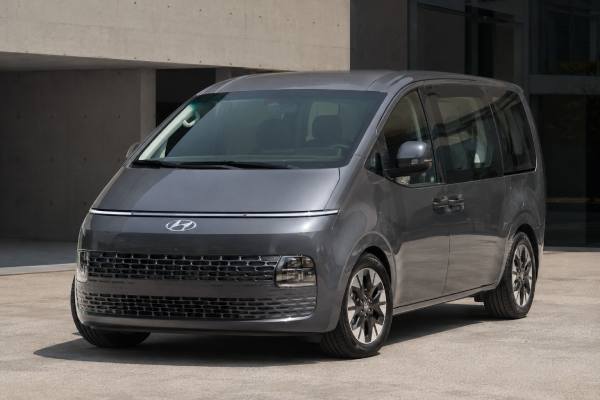
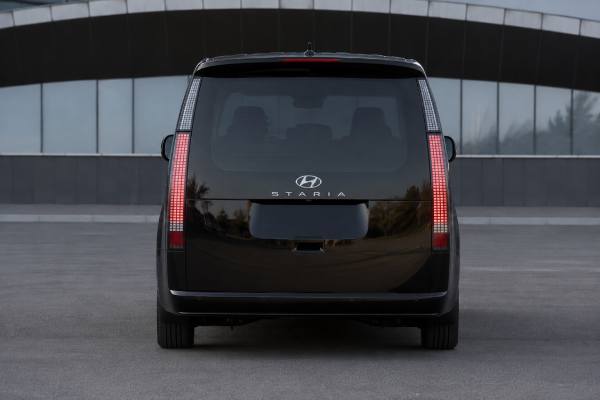
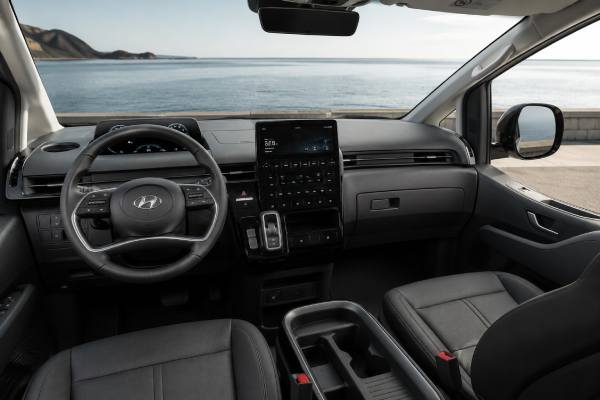
The Hyundai STARIA Van, known as the STARIA Load in some markets, replaced the older iLoad/H-1 with a much more modern body, stronger safety technology, and a front-wheel-drive layout. In 2.2 CRDi diesel form, it is aimed at trades, delivery work, shuttle use, and buyers who need real cargo volume without moving into a larger commercial van class.
This US4-generation diesel van is not just a box on wheels. It has a refined 8-speed automatic, a strong 430 Nm torque output, a high roof, wide side-door access, and one of the best active-safety packages in its segment for the 2021–2024 period. The main buying question is whether its size, diesel emissions equipment, and service needs fit the way it will be used.
Final Verdict
The 2021–2024 Hyundai STARIA Van 2.2 CRDi is a strong choice for operators who want a modern, safe, roomy diesel van with good low-speed torque and easy automatic driving. Its biggest appeal is the mix of cargo space, 2,500 kg braked towing capacity in many markets, and unusually strong driver-assistance coverage for a commercial van. It suits trades, couriers, mobile service businesses, and mixed family/work use in Crew Van form. The tradeoff is that the 2.2 diesel needs proper servicing, clean fuel, and enough longer driving to keep the DPF and EGR system healthy. Buy only with service proof, recall checks, and evidence of correct oil and filter maintenance.
| Pros | Cons |
|---|---|
| Strong 430 Nm diesel torque suits cargo and towing | Short-trip diesel use can stress DPF and EGR systems |
| Huge 4,935 L cargo area in two-seat van form | Large body needs care in tight urban parking spaces |
| 8-speed automatic is easier than old commercial manuals | Automatic fluid service matters for heavy fleet use |
| Excellent active-safety coverage for a commercial van | Child-seat use is limited in cargo-focused Staria-Load variants |
| Leaf-spring rear axle handles work loads confidently | Ride can feel firm when driven empty |
Table of Contents
- STARIA Van Diesel Overview
- Specifications and Technical Data
- Trims, Safety and Driver Assistance
- Reliability, Common Issues and Service Actions
- Maintenance and Buyer’s Guide
- Driving and Performance
- How the STARIA Van Compares to Rivals
STARIA Van Diesel Overview
The STARIA Van 2.2 CRDi is best understood as a modern mid-size commercial van with a people-mover level of safety equipment and a work-focused cargo body. It is not the cheapest or smallest van in its class, but it stands out for cabin comfort, strong diesel torque, and a very practical load area.
The US4-generation STARIA arrived for the 2021 model year with a distinctive one-box shape, a short bonnet, a very tall cabin, and a long wheelbase. In van form, the most important versions are the two-seat cargo van and the five-seat Crew Van. The standard cargo van prioritizes maximum load space, while the Crew Van sacrifices some cargo volume for a second row of seats.
The diesel engine is Hyundai’s R-series D4HB 2.2 CRDi four-cylinder. In this application it produces 130 kW, or 177 hp, and 430 Nm of torque. That torque arrives low in the rev range, which is exactly what a commercial van needs when pulling away with tools, parcels, equipment, or a trailer.
Compared with the older Hyundai iLoad, the STARIA is a major step forward. The old model was durable and simple, but it felt dated by the end of its life. The STARIA brings a more car-like dashboard, more active safety systems, better crash performance, and an 8-speed automatic gearbox instead of older driveline hardware.
The layout varies by market. STARIA passenger models may be front-wheel drive, all-wheel drive, petrol, diesel, hybrid, or premium passenger-focused, depending on country and year. This article focuses on the 2021–2024 STARIA Van / STARIA Load 2.2 CRDi diesel automatic, mainly the front-wheel-drive commercial variant. For buyers comparing listings, that distinction matters because cargo vans, Crew Vans, and eight-seat passenger STARIA models have different equipment, weight, seating, and safety applicability.
In daily use, the main appeal is simple: it carries a lot, drives easily, and gives the driver modern assistance systems that many older vans lack. The main limitation is also simple: it is still a large diesel commercial vehicle, so neglected maintenance, repeated short trips, poor fuel, and hard fleet use can turn a good van into an expensive one.
Specifications and Technical Data
The STARIA Van 2.2 CRDi uses a transverse front-mounted diesel engine, an 8-speed automatic transmission, and front-wheel drive. The engine’s useful torque band, large fuel tank, and commercial rear suspension are more important than outright acceleration. The key technical facts are best viewed by separating engine, driveline, dimensions, cargo, and service-reference data.
| Item | Hyundai STARIA Van 2.2 CRDi |
|---|---|
| Engine family | D4HB R-series 2.2 CRDi diesel |
| Displacement | 2.2 litres / 2,199 cc |
| Configuration | Inline-four, 16 valves, hydraulic lash adjusters |
| Induction | Turbocharged with electronic variable-geometry turbo |
| Fuel system | Common-rail direct injection |
| Maximum power | 130 kW / 177 hp at 3,800 rpm |
| Maximum torque | 430 Nm / 317 lb-ft from 1,500–2,500 rpm |
| Bore × stroke | 85.4 mm × 96.0 mm |
| Compression ratio | 16.0:1 |
| Fuel tank | 75 litres |
| Official combined consumption | 7.0 L/100 km / 33.6 mpg US / 40.4 mpg UK |
| Official CO₂ figure | 183 g/km in Australian ADR testing |
| Item | Specification |
|---|---|
| Transmission | 8-speed automatic with sequential manual mode |
| Drive type | Front-wheel drive on STARIA Load / Van diesel automatic |
| Steering | Column-mounted motor-driven power steering |
| Turning circle | 11.94 m between kerbs / walls |
| Front suspension | MacPherson struts |
| Rear suspension | Rigid rear axle with heavy-duty leaf springs |
| Front brakes | 325 mm ventilated discs |
| Rear brakes | 325 mm ventilated discs |
| Standard tyre size | 215/65 R17 108H on 17-inch wheels |
| Item | Van | Crew Van |
|---|---|---|
| Length | 5,253 mm | 5,253 mm |
| Width | 1,997 mm | 1,997 mm |
| Height | 2,000 mm | 2,000 mm |
| Wheelbase | 3,273 mm | 3,273 mm |
| Ground clearance | 186 mm | 186 mm |
| Cargo length | 2,607 mm | 1,435 mm on earlier published data |
| Cargo width | 1,640 mm | 1,640 mm |
| Cargo height | 1,436 mm | 1,436 mm |
| Cargo volume | 4,935 litres | 2,340 litres on earlier published data |
| Sliding-door opening width | 870 mm | 870 mm |
| Item | Van | Crew Van |
|---|---|---|
| Kerb weight range | 1,938–2,002 kg | 2,020–2,076 kg |
| Gross Vehicle Mass | 3,020 kg | 3,110 kg |
| Gross Combined Mass | 5,520 kg | 5,610 kg |
| Payload | 1,072 kg | 1,089 kg |
| Maximum cargo weight | 800 kg | 600 kg |
| Braked towing capacity | 2,500 kg | 2,500 kg |
| Unbraked towing capacity | 750 kg | 750 kg |
| Maximum towball download | 100 kg | 100 kg |
| Maximum roof load | 100 kg | 100 kg |
| Item | Useful reference value |
|---|---|
| Engine oil grade | 0W-30 low-SAPS oil meeting ACEA C2/C3 where specified |
| Engine oil capacity | About 6.5 litres with filter on published service data |
| Automatic transmission fluid | ATF SP-IV type on published service schedule |
| Brake fluid | DOT 4 |
| Wheel-nut torque | 11–13 kgf·m / 107–127 Nm / 79–94 lb-ft |
The official figures make the STARIA Van look unusually efficient for its size, but real-world results depend heavily on load, speed, traffic, roof racks, tyres, and driving pattern. A lightly loaded van on steady roads can approach the official combined figure. A delivery van doing cold starts, idling, and short city hops will use much more.
Trims, Safety and Driver Assistance
The STARIA Van’s trim structure is market-dependent, but the core commercial choices are simple: two-seat cargo van, five-seat Crew Van, liftback tailgate, twin swing rear doors, and in some markets a Premium Van grade. The best version depends less on badge status and more on rear-door layout, seating needs, and safety or convenience equipment.
Trims, body styles and identifiers
In Australia and New Zealand, the commercial model is commonly called STARIA Load. In other markets it may simply be presented as STARIA Van. The important identifiers are the US4 platform, the 2.2 CRDi diesel engine, the 8-speed automatic gearbox, and the commercial cargo body.
Common configurations include:
- Two-seat van with maximum cargo length and volume.
- Five-seat Crew Van with a rear bench and reduced cargo bay.
- Liftback rear door, useful for weather cover and rear visibility.
- Twin swing rear doors, useful where loading docks, forklifts, or tight rear access matter.
- Premium Van trim in some markets, usually adding comfort and visibility features.
Quick visual checks help when shopping used. A Crew Van has rear side glass and a second-row bench. Twin swing versions have vertical rear doors instead of a single top-hinged tailgate. Premium versions may have alloy wheels, upgraded driver displays, extra cameras, keyless entry, or extra convenience items, depending on market.
Safety ratings
For automatic diesel STARIA-Load variants, ANCAP awarded a five-star safety rating under the 2021 test regime. The adult occupant protection score was 85%, vulnerable road user protection was 65%, and safety assist was 74%. Child occupant protection was not assessed for the cargo van because child restraint installation in the second row is not recommended where top tether anchorages are not provided.
That distinction matters. The passenger STARIA people mover and the commercial STARIA-Load are related, but buyers should not assume every seating configuration has the same child-seat suitability. A cargo-focused Crew Van may be legally and practically different from an eight-seat family STARIA.
Driver-assistance systems
One of the STARIA Van’s strongest selling points is its safety equipment. Depending on market and trim, the diesel automatic commercial van can include:
- Autonomous emergency braking with car, pedestrian, and cyclist detection.
- Lane Keeping Assist and Lane Following Assist.
- Lane departure warning and emergency lane keeping.
- Blind-spot monitoring or collision warning.
- Rear cross-traffic alert or avoidance assist.
- Driver attention warning.
- Intelligent speed limit assistance.
- Adaptive cruise control with stop-and-go on many automatic versions.
- Parking sensors, reversing camera, and surround-view camera on higher trims.
The STARIA-Load also received a Platinum grading in ANCAP’s commercial van collision-avoidance comparison, with a 90% overall performance score. That does not make it autonomous or immune to driver error, but it is a meaningful advantage for fleets whose drivers spend long hours in traffic.
After a windscreen replacement, bumper repair, front radar removal, suspension work, or wheel alignment, ask whether the camera, radar, and steering-angle systems need calibration. Modern ADAS can still appear to work while being slightly out of alignment.
Reliability, Common Issues and Service Actions
The 2.2 CRDi STARIA Van is generally a solid modern diesel when maintained correctly, but it is not a low-maintenance appliance. Most expensive problems are linked to neglected servicing, short-trip diesel use, poor fuel quality, overheating, accident repairs, or fleet abuse rather than one universal design failure.
Common and occasional issue patterns
| Issue area | Prevalence | Cost tier | What to look for |
|---|---|---|---|
| DPF loading and EGR deposits | Common in short-trip vans | Medium to high | Warning lights, limp mode, frequent regeneration |
| Fuel filter or injector sensitivity | Occasional | Medium to high | Hard starting, rough idle, poor response |
| Timing-chain noise or tensioner wear | Occasional with poor oil history | High | Rattle at cold start or timing correlation faults |
| 8-speed automatic wear under hard use | Occasional | Medium to high | Harsh shifts, flare, shudder, delayed engagement |
| Brake and tyre wear | Common | Low to medium | Vibration, uneven tyres, rapid pad wear |
| Sliding door and rear door hardware | Occasional on work vans | Low to medium | Rattles, poor latching, roller wear, water leaks |
The diesel particulate filter is the first thing to consider when the van has lived on short urban routes. Diesel engines need heat and steady running to complete regeneration. A van that starts cold, drives three kilometres, idles, and stops all day may never give the DPF ideal conditions. The usual symptoms are a warning light, rising fuel consumption, cooling fans running after shutdown, rough running, or limp-home mode.
The EGR system can also collect soot over time. Mild deposits may show as hesitation, rough idle, or fault codes. Severe intake contamination can require cleaning or replacement parts. Preventive maintenance is not about deleting emissions equipment; it is about correct oil, clean fuel, occasional longer driving, and fixing root causes instead of repeatedly clearing codes.
Fuel quality matters because the common-rail injection system operates at high pressure. A clogged fuel filter, water contamination, or poor diesel can lead to hard starting, misfires, injector correction faults, or poor power. A used van with unexplained rough idle should be scanned before purchase, not bought on the promise that it only needs “a service.”
The D4HB engine uses timing chains rather than a routine timing belt. That removes a scheduled belt replacement, but it does not mean the timing system can be ignored. Rattling at startup, persistent chain noise, poor oil pressure history, or cam/crank correlation faults should be investigated quickly.
Driveline, chassis and body durability
The 8-speed automatic suits the engine well, especially in city driving and when loaded. It should shift smoothly when warm and should not slam from Park to Drive. Heavy towing, courier work, and stop-start fleet use make earlier ATF replacement sensible, even where a normal-use schedule appears relaxed.
The rear suspension is work-focused. Leaf springs are durable, but listen for knocking over bumps and inspect bushes, shackles, rear dampers, and load-area mounting points. Uneven rear tyre wear can point to hard loading, impact damage, or alignment issues.
Body checks are important because vans work hard. Inspect the lower sliding-door tracks, rear door seals, tailgate struts, cargo floor, tie-down points, step areas, roof-rack mounting points, and underbody edges. A clean cabin with a destroyed cargo bay usually means the van has earned its living.
Recalls, software and dealer actions
Recalls and service campaigns are market- and VIN-specific. There is no single global recall summary that safely covers every 2021–2024 STARIA Van diesel. Use the official Hyundai recall checker for the country where the vehicle was sold, then ask a dealer to confirm completed campaigns by VIN.
For a pre-purchase inspection, request:
- A Hyundai dealer recall and service-campaign printout.
- ECU, transmission, infotainment, and ADAS software update history.
- Proof of oil grade, oil filter, air filter, fuel filter, and brake fluid services.
- A diagnostic scan showing no stored emissions, transmission, or ADAS faults.
- Evidence that accident repairs included ADAS calibration where required.
Software updates can address driveability, warning messages, sensor logic, infotainment bugs, and calibration issues. A good van with outdated software is not necessarily a bad buy, but a seller who refuses a dealer history check is a warning sign.
Maintenance and Buyer’s Guide
The safest way to run a STARIA Van 2.2 CRDi is to service it by VIN, market, and duty cycle. Many privately used vans can follow the normal official schedule, while city delivery, towing, dusty roads, heavy idling, and high payload work justify shorter intervals.
| Interval | Maintenance focus |
|---|---|
| 1,000–1,500 km initial check | Initial inspection where offered; check fluids, tyres, leaks, and body hardware |
| Every 10,000–15,000 km or 6–12 months | Engine oil and filter; inspect brakes, tyres, suspension, lights, leaks, belts, hoses |
| Every service | Check DPF/EGR fault history, battery condition, tyre pressures, door operation, underbody |
| Every 12–24 months | Cabin filter, brake fluid by time, wipers, air-conditioning performance check |
| Every 24,000–48,000 km | Engine air filter and fuel filter depending on market schedule and operating conditions |
| Every 60,000–80,000 km in hard use | Consider automatic transmission fluid service, especially for towing or delivery work |
| Around 100,000–120,000 km | Coolant service, deeper suspension inspection, belts, hoses, mounts, door rollers |
| As symptoms require | Inspect timing chain, tensioner, guides, turbo hoses, injectors, and emissions components |
For engine oil, use the correct low-SAPS diesel oil. Low-SAPS means lower sulphated ash, phosphorus, and sulphur, which helps protect emissions equipment. Published service data for the STARIA R2.2 lists 0W-30 C2/C3 oil and an oil capacity around 6.5 litres. Do not substitute generic oil just because the engine “sounds like a normal diesel.”
Brake fluid should be treated as a time-based service item because it absorbs moisture. Pads and discs should be inspected more often on vans used in hilly areas, dense traffic, or towing. Tyres should be rotated regularly, and alignment should be checked if the steering wheel sits off-centre or the front tyres feather on the edges.
The timing chain has no simple scheduled replacement like a belt. Inspect it when symptoms appear: cold-start rattle, metallic chain noise, cam/crank fault codes, poor oil pressure history, or visible contamination from long oil intervals. Replacing a chain after symptoms appear is much cheaper than waiting for a timing fault to become engine damage.
Used buying checklist
Before buying, check the van in daylight, cold, and unloaded if possible. A warm engine can hide starting faults, timing-chain rattle, smoke, and rough idle.
Look for:
- Complete service history with dates, mileage, oil grade, and filter records.
- Smooth cold start without excessive rattling or smoke.
- No warning lights after a proper test drive.
- Clean coolant with no oil contamination or unexplained loss.
- Smooth automatic shifts from cold and warm.
- No driveline clunk when selecting Drive or Reverse.
- Even tyre wear and no steering pull.
- Straight cargo floor, undamaged tie-down points, and no hidden rust.
- Sliding doors and rear doors that latch cleanly.
- Working camera, sensors, cruise control, lane systems, and blind-spot alerts.
- Proof that recalls and service campaigns are complete.
A van with high kilometres is not automatically bad if it has been serviced on time and used on longer routes. A low-kilometre city van with repeated short trips, poor service records, and DPF warnings is a greater risk.
Best versions to seek
For maximum cargo work, the two-seat van with twin swing rear doors is the practical choice if loading access matters more than rear visibility. For mixed trade and passenger use, the Crew Van is more flexible, but inspect the second-row area carefully and understand the child-restraint limitations in cargo-focused variants.
Premium versions are attractive if they bring blind-spot view, surround camera, keyless entry, better trim, or more convenience equipment. Fleet buyers should prioritize safety systems, rear-door layout, and service records over cosmetic upgrades.
Driving and Performance
The STARIA Van 2.2 CRDi feels stronger than its 177 hp figure suggests because the torque arrives early and the automatic keeps the engine in its useful range. It is not quick in a performance sense, but it is relaxed, stable, and easy to drive for a large van.
Powertrain character
The 2.2 diesel pulls best from low and mid revs. Around town, throttle response is progressive rather than sharp, which helps when manoeuvring with cargo. There is some diesel clatter at idle, but the engine settles once moving. Turbo lag is present if you ask for a sudden burst from very low revs, but the 8-speed automatic usually masks it well.
The gearbox is one of the van’s strengths. It shifts smoothly in normal driving and avoids the heavy, old-fashioned feel that many older commercial vans had. On hills or with a load, it may hold lower gears longer, which is normal. Repeated hunting between gears, harsh engagement, or shudder under light throttle should be inspected.
Ride, handling and braking
The STARIA’s long wheelbase gives it good straight-line stability. It feels tall, but not nervous. Steering is light enough for city work and predictable at highway speeds, though it does not offer much road feel. The turning circle is good for the vehicle’s length, but the body is still more than 5.25 metres long, so tight car parks require planning.
Ride comfort depends on load. Empty, the rear leaf springs can feel firm over sharp bumps. With moderate cargo on board, the van settles and feels more composed. Noise levels are reasonable for a commercial vehicle, though road roar from the large cargo area is more obvious than in the passenger STARIA.
Braking performance feels reassuring when the system is in good condition. The van has large ventilated discs front and rear, but weight, cargo, and towing all increase heat. For vans used on mountain roads or with trailers, good tyres and fresh brake fluid are not optional details.
Efficiency in real use
Official combined fuel consumption is 7.0 L/100 km, but many owners should expect a broader real-world spread. Sensible mixed driving is often closer to 7.5–9.0 L/100 km. Dense urban delivery, idling, roof racks, high-speed motorway work, and heavy cargo can push use into the 9.5–11.5 L/100 km range.
In mpg terms, that means roughly:
- Efficient mixed use: about 26–31 mpg US / 31–37 mpg UK.
- Busy city or loaded use: about 20–25 mpg US / 24–30 mpg UK.
- Steady light-load cruising: potentially better than 31 mpg US / 37 mpg UK.
Towing can reduce economy sharply. A moderate trailer may increase consumption by 20–40%, and a tall or heavy trailer can do worse. The 430 Nm torque output helps, but the 100 kg towball limit and Gross Combined Mass must be respected.
How the STARIA Van Compares to Rivals
The STARIA Van’s strongest advantage against rivals is its blend of safety technology, cabin comfort, cargo space, and diesel torque. It is not the most compact van, not the most premium, and not the simplest mechanically, but it is one of the most rounded choices of its generation.
| Model | Main strength | Where the STARIA Van has an edge |
|---|---|---|
| Toyota HiAce 2.8 diesel | Durability reputation and strong fleet resale | More modern safety feel and smoother cabin design |
| Ford Transit Custom | Driver appeal and broad commercial choice | High standard safety and distinctive cargo/passenger packaging |
| Volkswagen Transporter T6.1 | Refined road manners and strong brand following | Often better value and generous standard safety equipment |
| Mercedes-Benz Vito | Premium badge, rear-drive options in some markets | Lower-cost ownership potential and simpler trim choice |
| Kia Carnival diesel | Passenger comfort and family use | Far more cargo-focused body and commercial payload ability |
Against the Toyota HiAce, the Hyundai feels newer and more car-like inside. The HiAce still has the stronger reputation among conservative fleet buyers, and that can matter for resale and parts familiarity. The STARIA fights back with comfort, driver-assistance systems, and a more modern driving position.
Against the Ford Transit Custom, the comparison depends on market and model year. The Ford can feel more agile and offers a wide range of commercial bodies. The Hyundai is simpler to understand as a used buy because the core diesel automatic van range is narrower, though trim and rear-door layout still need checking.
Against the Volkswagen Transporter, the STARIA is more unconventional visually but very practical. The VW has a long enthusiast and converter following, while the Hyundai usually appeals to buyers who want space, safety, warranty history, and value without paying a premium badge tax.
The Mercedes-Benz Vito feels more premium in some versions and offers different driveline layouts depending on market. It can also become expensive if neglected. A well-maintained STARIA Van may be the more sensible business choice when purchase price and equipment matter more than badge prestige.
The final decision should come down to use pattern. Choose the STARIA Van if you want a large, safe, automatic diesel van with excellent cargo space and a strong comfort-to-value balance. Choose a smaller rival if city parking is the main job. Choose a more traditional fleet van if your business already has parts, technicians, and racking systems built around that platform.
References
- STARIA Load Specifications. 2023 (Specification Sheet)
- Hyundai Staria-Load | Safety Rating & Report | ANCAP 2021 (Safety Rating)
- Hyundai Staria-Load | Safety Grading & Report | ANCAP 2022 (Safety Grading)
- PERIODIC MAINTENANCE SERVICE FOR STARIA R2.2 (US4) PRIME 2025 (Maintenance Schedule)
- Car Recalls | Owning | Hyundai Australia 2026 (Recall Database)
Disclaimer
This article is for informational purposes only and is not a substitute for professional diagnosis, repair, or inspection by a qualified technician. Specifications, torque values, service intervals, fluids, procedures, safety equipment, recalls, and software updates can vary by VIN, market, model year, body style, and installed equipment. Always verify maintenance and repair information against the official owner’s manual, service documentation, dealer records, and VIN-specific manufacturer data.
If this guide helped you, please consider sharing it on Facebook, X/Twitter, or your preferred social platform to support our work.