
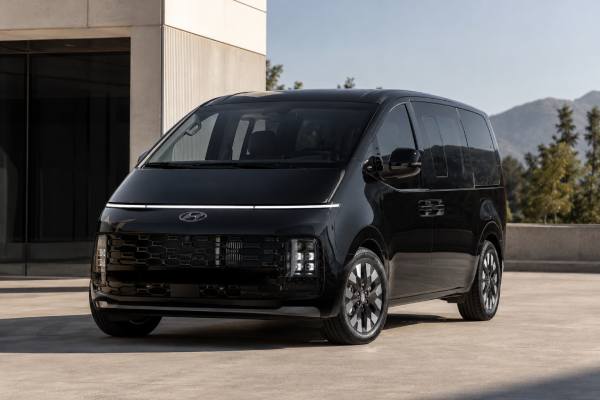
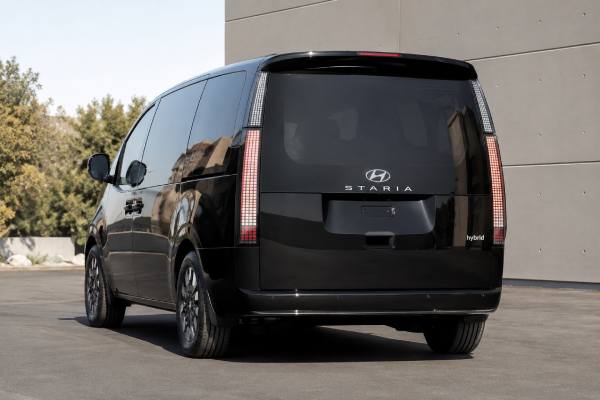
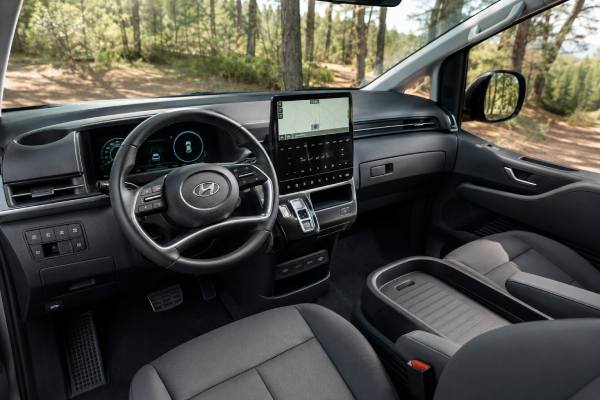
The Hyundai STARIA Hybrid Van brings Hyundai’s large, space-first US4 van into the hybrid era without asking owners to plug in or change daily habits. It keeps the STARIA’s tall cabin, sliding-door practicality, and people-or-cargo flexibility, but swaps the older diesel-centered image for a 1.6-litre turbocharged petrol hybrid system with a six-speed automatic transmission.
For families, shuttle operators, hotels, private-hire drivers, and small businesses, the appeal is clear: lower urban fuel use than a large petrol van, smoother stop-start driving, and a more refined powertrain than many traditional commercial vans. The important questions are whether the small turbo hybrid system is strong enough for a large body, how durable it should be in heavy use, and what buyers should check before committing to one.
Final Verdict
The 2025–present Hyundai STARIA Hybrid Van is a strong choice for buyers who need big-van space but spend enough time in city, suburban, school-run, airport-transfer, or delivery traffic to benefit from hybrid efficiency. Its best feature is the mix of real cabin/cargo flexibility with a smooth 225 PS hybrid drivetrain and familiar automatic gearbox. The tradeoff is that long-term Staria-specific hybrid reliability data is still limited, and heavy-load highway work can reduce the fuel-saving advantage. It is easiest to recommend when the service history is complete, software updates are current, and the hybrid battery, 12 V system, brakes, and sliding-door electronics all check out cleanly.
| Pros | Cons |
|---|---|
| Smooth 225 PS hybrid system suits urban van use | Less proven long-term than older diesel STARIA versions |
| Huge cabin with 3-seat, 6-seat, 7-seat, and 9-seat layouts | Large body still feels bulky in tight streets |
| No plug-in charging needed for hybrid efficiency gains | Highway economy advantage is smaller under heavy load |
| Six-speed automatic feels more familiar than many CVT hybrids | FWD layout limits traction when fully loaded on poor surfaces |
| Strong ADAS suite available across many market versions | Hybrid crash-test coverage may not match older petrol/diesel ratings |
Table of Contents
- STARIA Hybrid Van Overview
- STARIA Hybrid Specifications and Technical Data
- Trims, Safety, and Driver Assistance
- Reliability, Issues, and Service Actions
- Maintenance and Buying Guide
- Driving, Performance, and Efficiency
- How the STARIA Hybrid Compares to Rivals
STARIA Hybrid Van Overview
The STARIA Hybrid Van is best understood as a large multi-purpose van with a full hybrid petrol drivetrain, not as a small hybrid car stretched into van duty. It is still a tall, long, wide vehicle, but the hybrid system makes its best sense in the stop-start work that many passenger vans and commercial vans actually do.
The US4 STARIA platform was designed around a low floor, a long wheelbase, and a wide cabin. That gives it a very different character from older cab-forward vans. The driver sits in a more car-like position, the front overhang is longer, and the cabin has a broad dashboard with good forward visibility. It feels modern rather than utilitarian, which is one reason the STARIA works as both a work van and a premium people mover.
The 1.6 T-GDi HEV version uses Hyundai’s turbocharged Smartstream petrol engine, an electric motor, a compact lithium-ion polymer battery, and a six-speed automatic transmission. It is a full hybrid, so it can move briefly on electric power at low speeds, recover energy while braking, and shut the engine off when conditions allow. It is not a plug-in hybrid, so there is no charging cable, charge port, wallbox requirement, or EV-only range figure to manage.
That makes the ownership case simple. The hybrid system helps most when the van is frequently slowing, stopping, waiting, crawling, and accelerating again. Airport shuttle routes, school runs, hotel transfers, city deliveries, family errands, and taxi-style work are all natural use cases. Long motorway drives at steady speed still benefit from the efficient petrol engine and tall gearing, but the van’s size and frontal area mean it will not feel like a miracle economy machine.
The biggest strength is packaging. Depending on market and body style, the STARIA Hybrid family includes commercial van layouts, multi-row wagon versions, and premium passenger versions. The Van is the practical one: it can carry people, cargo, tools, samples, luggage, or a mixed-use workload with a cleaner and more refined powertrain than many older diesel vans.
The main limitation is maturity. The STARIA body itself is no longer new, but the hybrid version is newer. That means buyers do not yet have the same deep real-world record that exists for older diesel vans with high mileage. The powertrain is related to other Hyundai/Kia 1.6 turbo hybrid systems, which helps, but the STARIA is heavier and often worked harder. A full service record matters more here than it would on a simple non-turbo petrol van.
As a used or nearly new purchase, the best examples will be those that have not been abused as overloaded commercial vehicles, have not spent their lives on neglected short-hop duty, and have had every recall, software update, and scheduled service recorded. For new buyers, the STARIA Hybrid Van makes the most sense when the fuel savings and refinement of hybrid driving are more valuable than the maximum towing, AWD traction, or diesel torque feel offered by some rivals.
STARIA Hybrid Specifications and Technical Data
The STARIA Hybrid uses a front-mounted 1.6-litre turbocharged petrol engine with a hybrid motor and a compact high-voltage battery. The key technical points are the 225 PS combined output, 367 Nm system torque, six-speed automatic transmission, front-wheel drive layout, and non-plug-in hybrid design. Specifications vary by country, seating layout, cargo body, and trim, so the figures below focus on commonly published 2025–present Hyundai data for the 1.6 T-GDi HEV STARIA family.
| Item | Specification |
|---|---|
| Powertrain type | Full parallel hybrid, non-plug-in |
| Engine | Smartstream 1.6 T-GDi turbo petrol inline-four |
| Displacement | 1,598 cc |
| Engine technology | Turbocharged direct injection with CVVD valve control |
| Electric motor output | 54 kW |
| Hybrid battery | 1.49 kWh lithium-ion polymer |
| System output | 225 PS / 165 kW / 222 hp |
| System torque | 367 Nm / 271 lb-ft |
| System voltage | 270 V |
| Fuel tank | 65 litres / 17.2 US gal / 14.3 UK gal |
The 1.6-litre engine is small for a van of this size, but the electric motor fills in the low-speed response that would otherwise expose the engine’s displacement. In normal driving, the system feels less strained than the engine size suggests because the motor assists during launch, creeping traffic, and light acceleration.
| Item | Specification |
|---|---|
| Transmission | 6-speed automatic |
| Shift control | Shift-by-wire selector |
| Drive type | Front-wheel drive |
| Engine placement | Transverse front-mounted |
| Drive modes | Selectable modes depending on trim and market |
One useful detail is the conventional stepped automatic. Many hybrid vans and cars use an e-CVT or reduction-drive system. The STARIA Hybrid’s six-speed automatic gives more familiar engine-speed changes, especially under load or on hills. That may appeal to drivers moving from diesel automatics.
| Item | Specification |
|---|---|
| Platform code | US4 |
| Body style | Large 5-door van / MPV |
| Length | About 5,255 mm / 206.9 in |
| Width | About 1,995–1,997 mm / 78.5–78.6 in |
| Height | About 1,990 mm / 78.3 in |
| Wheelbase | About 3,275 mm / 128.9 in |
| Common tyres | 215/65 R17 or 235/55 R18 |
| Suspension | MacPherson strut front, multi-link rear |
| Brakes | Four-wheel disc brakes |
The dimensions explain both the appeal and the compromise. The STARIA is genuinely roomy, but it is also wider and longer than many everyday family SUVs. Buyers coming from a compact crossover need to think about driveway width, underground car parks, city loading bays, and school drop-off spaces.
| Layout or item | Published figure or practical note |
|---|---|
| European passenger layouts | 7-seat Premium or 9-seat Wagon |
| European Van layouts | 3-seat or 6-seat versions |
| 3-seat Van cargo bay | Approx. 2,500 × 1,640 × 1,436 mm |
| 6-seat Van cargo bay | Approx. 1,705 × 1,640 × 1,436 mm |
| 9-seat Wagon cargo volume | Up to 1,303 litres in published configuration |
| Maximum cargo load | Up to about 900 kg for the 3-seat van version |
| Braked towing accessory rating | Up to 1,500 kg with approved tow hitch |
| Towball vertical load | Up to 100 kg with approved equipment |
For buyers comparing passenger and commercial layouts, the second row is the key choice. A 3-seat van gives the best load bay. A 6-seat van is more flexible for crew transport but gives away meaningful cargo length. The 7-seat and 9-seat versions are more passenger-focused and usually better for families, shuttle work, VIP use, or hotel transfer duty.
| Service item | Useful value or specification |
|---|---|
| Engine oil, same-engine reference | 4.8 litres, SAE 0W-20, API SN PLUS/SP or ILSAC GF-7 |
| Automatic transmission fluid | Hyundai Genuine ATF SP-IV or approved equivalent |
| Brake fluid | DOT 4 |
| Coolant type | Ethylene-glycol coolant for aluminium radiator systems |
| Wheel nut torque | 11–13 kgf·m / 79–94 lb-ft / 107–127 Nm |
Use the service reference data as a planning aid, not as a substitute for the VIN-specific service manual. The STARIA has different engines, market calibrations, and service schedules, and imported or grey-market vehicles can differ from locally sold versions.
Trims, Safety, and Driver Assistance
The STARIA Hybrid range is broad, and the best trim depends on whether the vehicle will carry cargo, passengers, executives, children, or mixed loads. Safety equipment is generally strong, but crash-test coverage needs careful reading because some published STARIA ratings apply to petrol and diesel versions rather than the hybrid.
Trims, layouts, and quick identifiers
In Europe, Hyundai presents the STARIA Hybrid with 7-seat Premium and 9-seat Wagon passenger versions, plus 3-seat and 6-seat Van versions. Other markets may use names such as Tourer, Cargo, Lounge, Modern, Inspiration, or Premium, and Korea also offers additional high-capacity layouts.
The simplest way to identify the right version is to check three things:
- The seating layout: 3-seat Van, 6-seat crew van, 7-seat premium passenger, or 9-seat wagon.
- The powertrain badge and registration data: 1.6 T-GDi HEV, full hybrid, petrol/electric.
- The equipment level: screen size, wheel size, sliding-door power operation, seat trim, camera systems, and ADAS menu availability.
Commercial versions usually prioritize load length, durable trim, simpler upholstery, and easier cleaning. Passenger-focused versions add comfort equipment such as rear-seat convenience features, premium audio, extra cameras, powered sliding doors, power tailgate, heated and ventilated front seats, second-row comfort seats, or higher-grade trim materials depending on market.
Wheel and tyre packages matter more than they might on a smaller car. Seventeen-inch wheels with taller sidewalls are usually the better work-van choice because they ride more comfortably, resist pothole damage better, and cost less to replace. Eighteen-inch wheels look better and may come with higher trims, but they are less forgiving on rough urban roads.
Safety ratings
The STARIA has a strong safety story, but buyers must read the fine print. ANCAP awarded the Hyundai Staria a five-star rating for tested petrol and diesel eight-seat variants under its 2021 protocol, with scores of 85% adult occupant protection, 86% child occupant protection, 65% vulnerable road user protection, and 74% safety assist. ANCAP specifically notes that hybrid variants are unrated under that listing.
That does not mean the STARIA Hybrid is unsafe. It means the published rating should not be treated as a direct hybrid crash-test result unless the local safety body confirms applicability. The underlying structure, ADAS family, and safety philosophy are closely related, but trim, seat count, powertrain packaging, airbag specification, and test eligibility can change how a rating is applied.
Airbags, child seats, and structural safety
Depending on market, STARIA safety equipment can include front airbags, side airbags, curtain airbags, and additional protection such as a front centre airbag or driver’s knee airbag. Some catalogues list a seven-airbag system, while European press material may describe six airbags for certain configurations. The practical buying advice is simple: check the exact airbag count on the local specification sheet rather than assuming every STARIA Hybrid has the same setup.
For family and shuttle use, ISOFIX/LATCH-style child-seat provisions are a major advantage, but again they depend on seating layout. A 9-seat vehicle with bench seating does not behave like a 7-seat premium cabin with individual comfort seats. Before buying, physically test the child seats, booster seats, or passenger restraints that will be used every week.
ADAS and calibration issues
The STARIA Hybrid can be equipped with Hyundai Smart Sense features such as Forward Collision-Avoidance Assist, Blind-Spot Collision-Avoidance Assist, Lane Keeping Assist, Lane Following Assist, Driver Attention Warning, Safe Exit Assist, Smart Cruise Control, Highway Driving Assist, Rear Cross-Traffic Collision-Avoidance Assist, Surround View Monitor, and Blind-Spot View Monitor, depending on market and trim.
These systems are valuable in a vehicle this size. Blind-spot cameras and rear cross-traffic braking are especially useful because the STARIA is long, tall, and often driven with passengers or cargo blocking rear visibility. Lane and highway assists reduce fatigue on long shuttle routes.
The ownership catch is calibration. Windscreen replacement, front-end repairs, bumper removal, radar replacement, suspension changes, and wheel alignment work can all affect ADAS operation. After accident repairs or glass replacement, ask for proof that camera and radar calibrations were completed with the correct equipment.
Reliability, Issues, and Service Actions
The STARIA Hybrid is too new to have a deep high-mileage reliability record, so the fairest view is cautious optimism with strict maintenance expectations. The core 1.6 T-GDi hybrid family is familiar across Hyundai/Kia products, but the STARIA’s weight, load use, and commercial duty cycle make service discipline especially important.
| Issue area | Prevalence | Severity | What to watch for |
|---|---|---|---|
| Brake rotor corrosion | Occasional | Low to medium | Rusty discs, pulsing pedal, scraping after wet parking |
| 12 V battery weakness | Occasional | Low to medium | No-start messages, random warnings, low-voltage faults |
| Hybrid restart roughness | Rare to occasional | Medium | Shudder when petrol engine restarts in traffic |
| Turbo/DI carbon buildup | Long-term risk | Medium | Rough idle, hesitation, misfires at higher mileage |
| Sliding-door electronics | Occasional | Low to medium | Door hesitation, warning chimes, incomplete closing |
| HV battery or DC–DC fault | Rare | High | Hybrid warning, charging faults, reduced power mode |
Hybrid system checks
The STARIA Hybrid does not have an onboard charger or charge port because it is not a plug-in hybrid. That removes several PHEV failure points, but the high-voltage battery, inverter, DC–DC converter, contactors, hybrid motor, cooling loops, and battery management software still matter.
A healthy hybrid should move off smoothly, stop and restart the engine without drama, show normal energy-flow behavior, and have no hybrid-system warnings. During inspection, request a diagnostic scan that checks the hybrid control unit, battery management system, inverter, DC–DC converter, and ABS/regen braking modules. For a used import, also ask whether the dealer can read battery state-of-health data rather than only clearing fault codes.
Battery degradation should be modest if the vehicle is used normally, because this is a small full-hybrid battery managed within a narrow operating window. Heat, poor cooling, repeated heavy loading, long idle periods, and neglected software updates are bigger concerns than simple age alone.
Engine and transmission concerns
The 1.6 T-GDi engine is turbocharged and direct-injected. It needs correct oil, timely oil changes, clean air filtration, and proper warm-up/cool-down habits under heavy use. Short trips can dilute oil and increase moisture buildup. Hard motorway work with a full van can increase heat load. Both use cases argue for conservative servicing.
Possible symptoms and remedies include:
- Rough idle or misfire: check spark plugs, coils, injector operation, intake carbon, and software updates.
- Hesitation under boost: inspect intake hoses, boost control, fuel quality, and turbo-related sensors.
- Rattle on cold start: check timing-chain stretch, guides, tensioner condition, and timing-correlation faults.
- Harsh or confused shifts: check ATF condition, software version, mounts, and hybrid transition behavior.
- Coolant smell or low coolant: pressure-test the cooling system and inspect hoses, radiator, pump, and hybrid cooling circuits.
The six-speed automatic should shift cleanly, especially once warm. A slight change in engine note during hybrid transitions is normal; a bang, flare, or repeated shudder is not. Because the hybrid motor and engine work together, poor drivability can come from engine, transmission, hybrid control, or mount issues. Diagnosis should be system-wide, not guesswork.
Chassis, brakes, and body hardware
The STARIA’s size puts load on tyres, brakes, suspension bushings, sliding-door tracks, tailgate struts, and wheel bearings. Commercial users should expect wear items sooner than private family owners. Rear brake corrosion deserves special attention because regenerative braking means the friction brakes may be used less lightly, then asked to work hard when the van is loaded.
Check for:
- Uneven tyre wear from poor alignment or heavy kerb contact.
- Front suspension knocks over speed bumps.
- Rear suspension noise when loaded.
- Brake vibration after long storage or wet-weather parking.
- Sliding-door track wear, poor alignment, or noisy rollers.
- Water leaks around tailgate seals and side doors.
- Corrosion on underbody seams, brackets, subframes, and exposed fasteners in salty climates.
Recalls, TSBs, and software updates
At the time of writing, the STARIA Hybrid does not have the same long list of widely documented global service actions that older, higher-volume models often accumulate. That can change quickly. The best approach is to run the VIN through the official Hyundai recall checker in the country where the vehicle is registered and ask a Hyundai dealer for campaign completion history.
For imported vehicles, check both the original market and the registration market. A Korean-market STARIA, European-market STARIA, and locally distributed STARIA may not share the same campaign numbers. Software updates are particularly important on modern Hyundai hybrids because they can affect drivability, battery logic, infotainment behavior, ADAS operation, and connected services.
Before buying, request:
- Full dealer or specialist service history.
- Proof of completed recalls and field service actions.
- Diagnostic scan report with no active hybrid or ADAS faults.
- Battery state-of-health or hybrid battery check where available.
- Evidence of transmission and coolant services when mileage justifies them.
- Confirmation that any glass, bumper, or accident repairs included ADAS calibration.
Maintenance and Buying Guide
The STARIA Hybrid should be maintained like a hard-working turbocharged hybrid van, not like a low-stress petrol hatchback. Conservative service intervals are cheap insurance because the engine is small, turbocharged, frequently stopped and restarted, and asked to move a large vehicle.
| Interval | Service items |
|---|---|
| Every 10,000–15,000 km or 12 months | Engine oil and filter, inspection, tyre rotation, brake check |
| Every 15,000–30,000 km | Engine air filter inspection or replacement, cabin filter replacement |
| Every 24 months | Brake fluid test or replacement, brake corrosion inspection |
| Every 40,000–60,000 km | ATF inspection or replacement in heavy service, coolant and hose checks |
| Every 60,000–100,000 km | Spark plugs, drive belt, fuel system inspection, suspension inspection |
| At every service | 12 V battery test, hybrid fault scan, tyre wear, door operation |
| As mileage rises | Timing chain noise/correlation check, mounts, wheel bearings, bushings |
Some Hyundai markets use shorter schedules, especially where heat, dust, traffic, fuel quality, or commercial use are common. For a van doing taxi, delivery, shuttle, or short-hop urban work, treat it as severe service. That means shorter oil intervals, more frequent brake inspections, and earlier ATF attention than a lightly used private vehicle.
Fluids, capacities, and torque values
For the 1.6 T-GDi hybrid engine family, Hyundai owner-manual data for the Smartstream G1.6 T-GDi lists 4.8 litres of engine oil for drain-and-refill, with SAE 0W-20 meeting API SN PLUS/SP or ILSAC GF-7. The automatic transmission uses Hyundai-approved ATF SP-IV type fluid, and brake fluid is DOT 4. Wheel nuts should be tightened to 107–127 Nm.
The STARIA-specific hybrid service manual for the exact VIN remains the final authority. This matters because vans may be sold in different markets with different fluids, sump hardware, service packages, emissions equipment, or climate recommendations. Never assume an oil grade from a diesel STARIA applies to the 1.6 T-GDi HEV.
Buyer inspection checklist
A good STARIA Hybrid should feel smooth, quiet, and consistent. Walk away from cars with unexplained hybrid warnings, missing service records, heavy accident history, or signs of commercial neglect unless the price fully reflects the risk.
Check the following before purchase:
- Cold start: no prolonged rattle, misfire, warning lights, or smoke.
- Hybrid behavior: smooth EV creep, engine restart, and regenerative braking.
- Transmission: no flaring, banging, slipping, or repeated hunting.
- Cooling system: stable temperature, no coolant smell, no crusted leaks.
- Brakes: no severe pulsing, heavy rust lips, or seized calipers.
- Tyres: even wear across all four tyres and correct load rating.
- Suspension: no knocks, sagging, or uneven ride height when loaded.
- Doors: sliding doors and tailgate close cleanly every time.
- ADAS: no camera/radar warnings, and calibration proof after repairs.
- Interior: seat tracks, belts, ISOFIX points, and trim not abused.
- Underbody: inspect subframes, seams, brackets, exhaust, and jacking points.
- Paperwork: VIN-matched service, recalls, import documents, and warranty status.
Recommended versions to seek
For commercial users, the 3-seat Van is the most useful if maximum load length matters. Choose the 6-seat Van only when crew transport is genuinely needed; otherwise, the shorter cargo bay may frustrate daily work. For families and private-hire operators, the 7-seat and 9-seat versions are more comfortable and better equipped, but they cost more and may have more powered equipment to maintain.
The most sensible used buy is not necessarily the highest trim. It is the cleanest, best-documented example with the right seating layout. A lower-trim van on 17-inch wheels with complete records may be a better long-term tool than a heavily optioned example with damaged doors, worn tyres, and missing hybrid checks.
Long-term durability outlook
The long-term outlook is good if owners respect the duty cycle. The body is practical, the rear suspension is more sophisticated than many work vans, and the hybrid system should reduce brake wear in normal use. The risk is neglect: long oil intervals under severe service, cheap tyres, ignored brake corrosion, low 12 V voltage, and missed software updates.
For a high-mileage business vehicle, budget for tyres, brakes, door hardware, suspension wear, battery testing, and occasional diagnostic work. For a family vehicle, the main costs are more likely to be tyres, servicing, insurance, and repairing convenience equipment if children and passengers are hard on the cabin.
Driving, Performance, and Efficiency
The STARIA Hybrid drives more like a smooth large MPV than a traditional diesel van. Its best performance is in low-speed and medium-speed driving, where the electric motor helps the small turbo engine move the large body without constant revving.
Powertrain character
The 225 PS system output is enough for normal use, even with passengers aboard. The electric motor gives useful step-off response, and the petrol engine joins in without the gruffness of a diesel. Around town, the STARIA Hybrid can feel calmer than its size suggests because it does not need much throttle to creep, pull away, or slot into traffic.
The six-speed automatic is a major part of the character. Instead of holding a steady drone like some CVT hybrids, it changes ratios in a more familiar way. Under heavy throttle, you still hear the 1.6-litre engine working, but the sound is not the constant flare some drivers dislike in e-CVT systems.
There can be moments when the system is managing several things at once: turbo boost, gear selection, battery assist, engine restart, and regenerative braking. A well-calibrated example should make that feel natural. If it feels jerky, delayed, or confused, check software level, mounts, fluid condition, and fault codes.
Ride, handling, and noise
Ride comfort is one of the STARIA’s better traits. The long wheelbase helps it feel settled on open roads, while the multi-link rear suspension gives it a more composed rear end than many commercial vans. Seventeen-inch wheels are usually the comfort choice. Eighteen-inch wheels sharpen the look but can add impact harshness over broken surfaces.
Handling is safe and predictable rather than sporty. The STARIA is tall and wide, so it leans more than an SUV and needs smooth inputs. Steering is light enough for parking and urban routes, though not especially talkative. Crosswinds can be felt because of the body size, but the vehicle is designed with stability systems to help maintain composure.
Cabin noise depends heavily on trim, tyres, surface, load partition, and seating layout. Passenger versions feel more insulated. Bare commercial vans can echo more, especially when empty. The hybrid powertrain helps in traffic because the engine can switch off, but at motorway speeds tyre noise, wind noise, and cargo-area resonance become more important.
Real-world efficiency
Official Korean certification figures for the hybrid STARIA family are commonly around 12.5–13.1 km/l depending on body, wheel size, built-in camera equipment, and seating layout. That converts to roughly 7.6–8.0 L/100 km, or about 29–31 mpg US and 35–37 mpg UK. European-style published combined figures may sit in the same general band depending on trim and test cycle.
In real use, expect the best results in warm urban and suburban driving with moderate loads. The hybrid can recover braking energy, shut the engine off, and use electric assist repeatedly. On steady 100–120 km/h motorway runs, the large frontal area matters more, so economy may move closer to a conventional petrol van. In cold weather, with winter tyres, heating demand, short trips, or full passenger loads, consumption rises.
A practical expectation is:
- City and suburban use: often near the official range if driven smoothly.
- Mixed family or shuttle use: roughly high-7s to mid-8s L/100 km.
- Fast highway use: commonly higher, especially above 120 km/h.
- Loaded commercial work: depends strongly on payload, roof load, and route.
- Towing: expect a significant increase; the hybrid advantage narrows on hills.
Load and towing behavior
The STARIA Hybrid can tow when properly equipped, but it is not the first choice for buyers who tow heavy loads every week. The approved accessory tow hitch rating of up to 1,500 kg with inertia brakes is useful for small trailers, light business equipment, and leisure use. The 100 kg vertical load rating is also enough for many practical trailer setups.
For towing or heavy-load use, monitor cooling performance, tyre pressures, brake condition, and transmission behavior. The hybrid system helps launch smoothly, but sustained climbs with a full cabin and trailer will keep the petrol engine working hard. Drivers who regularly tow near the limit may still prefer a diesel or a larger-displacement alternative where available.
How the STARIA Hybrid Compares to Rivals
The STARIA Hybrid’s strongest rivals depend on market. In Europe, it naturally sits near the Volkswagen Multivan, Mercedes-Benz V-Class, Toyota Proace Verso, Stellantis-based passenger vans, and premium imports such as the Toyota Alphard or Vellfire in some regions. For commercial buyers, it may also be compared with mid-size vans, crew vans, and shuttle conversions.
| Rival | Where the STARIA Hybrid is stronger | Where the rival may be stronger |
|---|---|---|
| Volkswagen Multivan eHybrid | Bigger van feel, simpler non-plug-in use, strong cargo practicality | Plug-in EV driving, more car-like MQB-based dynamics |
| Mercedes-Benz V-Class | Better value, bolder design, strong standard practicality | Premium badge, rear-drive feel, luxury cabin options |
| Toyota Proace Verso | More distinctive cabin, hybrid petrol option, smoother urban use | Diesel and electric options, conversion ecosystem |
| Toyota Alphard/Vellfire | More cargo-van flexibility and lower-key work use | Luxury passenger comfort and executive image |
| Traditional diesel vans | Quieter traffic driving and lower urban fuel use | Highway range, towing feel, established fleet durability |
Against the Volkswagen Multivan eHybrid, the key difference is charging. The VW plug-in hybrid can be extremely efficient if it is charged regularly and driven within its electric range. The STARIA Hybrid is easier for drivers who cannot charge at home, run unpredictable routes, or share a vehicle among staff. It will not offer the same EV-only commuting potential, but it avoids plug-in complexity.
Against the Mercedes-Benz V-Class, the Hyundai is the value and practicality play. The V-Class feels more premium and has a stronger luxury-transport image, but it is usually much more expensive. The STARIA gives buyers a lot of space, modern safety tech, and distinctive styling without moving fully into luxury-van pricing.
Against Toyota Proace Verso and its related vans, the STARIA feels more futuristic and passenger-car-like inside, while the Toyota and Stellantis-based models benefit from a large European conversion and fleet ecosystem. The Proace Electric is compelling for fixed urban routes with depot charging. The STARIA Hybrid is better for drivers who want fuel flexibility and no charging planning.
Compared with traditional diesel vans, the STARIA Hybrid is smoother in traffic and cleaner in everyday feel. Diesel still makes sense for high-mileage motorway fleets, frequent towing, and routes where fuel economy at steady speed matters more than urban stop-start efficiency. The Hyundai’s advantage grows when refinement, passenger comfort, and low-speed smoothness are high priorities.
The best buyer match is someone who needs real van space but does not want a bare commercial-vehicle experience. The STARIA Hybrid Van works well as a family workhorse, shuttle vehicle, hotel transfer van, private-hire people mover, or mixed-use business vehicle. It is less ideal for buyers who need rugged AWD traction, maximum towing, or the lowest possible used-market running costs.
References
- The new STARIA Hybrid | Highlights | Hyundai Motor Europe 2026 (Manufacturer Model Page)
- New STARIA 2024 (Manufacturer Press Kit)
- STARIA 2026 (Manufacturer Catalog)
- Hyundai Staria | Safety Rating & Report | ANCAP 2021 (Safety Rating)
- PERIODIC MAINTENANCE SERVICE FOR Staria US4 2023 (Service Schedule)
Disclaimer
This article is for informational purposes only and is not a substitute for professional diagnosis, repair, inspection, or manufacturer service information. Specifications, torque values, fluid capacities, service intervals, safety equipment, towing ratings, and procedures can vary by VIN, market, production date, trim, and installed equipment. Always verify details against the official owner’s manual, service documentation, local Hyundai dealer data, and the exact vehicle being inspected or serviced.
If this guide helped you, please consider sharing it on Facebook, X/Twitter, or your preferred automotive community to support our work.