
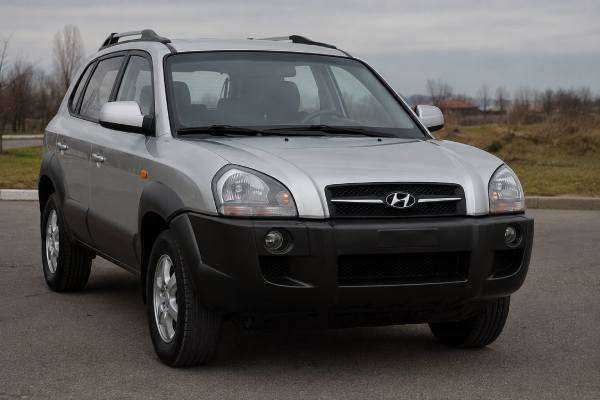
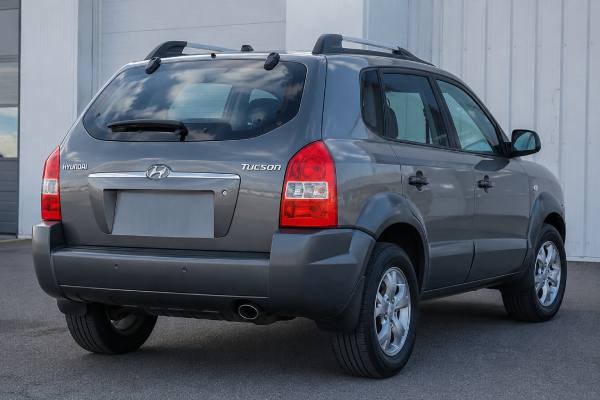
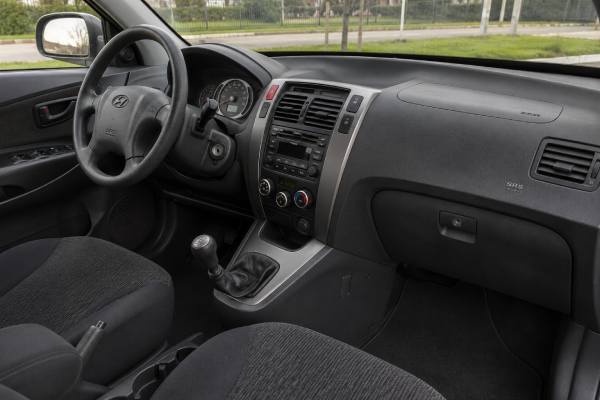
The Hyundai Tucson 4WD (JM) with the Beta II 2.0 petrol engine is a simple first-generation compact SUV built for drivers who want practical space, winter traction, and low purchase cost without the complexity of a modern turbocharged crossover. Sold in many markets from the mid-2000s, this 140 hp 2.0-litre version sits below the V6 and diesel models but offers easier servicing, widely available parts, and a durable mechanical layout when maintained properly.
Its main appeal is not speed or refinement. It is a straightforward, usable SUV with a tall cabin, a proper tailgate, a selectable 4WD lock function on many versions, and a naturally aspirated engine that most independent workshops understand. The key is buying one that has not been neglected, overheated, badly corroded, or allowed to run past its timing belt interval.
Final Verdict
The 2005–2009 Hyundai Tucson JM 2.0 4WD is a sensible used buy for drivers who need a compact, affordable petrol SUV with simple mechanicals, decent cabin practicality, and useful bad-weather traction. It suits rural roads, winter commuting, light-duty family use, and owners who prefer repairable hardware over modern electronic complexity. The tradeoff is modest performance, dated refinement, and fuel economy that can feel heavy for a 2.0-litre engine. Buy only with proof of timing belt service, clean coolant, healthy clutch or automatic operation, completed recalls, and a solid underside, because deferred maintenance can quickly erase the value advantage.
| Pros | Cons |
|---|---|
| Simple G4GC petrol engine is widely understood by workshops | Timing belt neglect can cause serious engine damage |
| 4WD system gives useful snow and loose-surface traction | Not a true off-roader and lacks low-range gearing |
| Boxy cabin gives good passenger and luggage space | Interior materials and noise control feel dated today |
| Parts availability is generally strong in many markets | Rust, suspension wear, and old rubber parts need careful inspection |
| Five-speed manual version is mechanically straightforward | Acceleration is modest, especially when loaded or climbing |
Table of Contents
- Tucson JM 2.0 4WD Overview
- Specifications and Technical Data
- Trims, Safety, and Driver Assistance
- Reliability, Common Issues, and Recalls
- Maintenance and Buyer’s Guide
- Driving, Performance, and Fuel Economy
- How the Tucson Compares to Rivals
Tucson JM 2.0 4WD Overview
The Tucson JM 2.0 4WD is best understood as a practical, budget-friendly compact SUV rather than a performance car or serious off-road vehicle. Its strengths are visibility, cabin usefulness, mechanical simplicity, and a drivetrain that can handle poor weather better than the front-wheel-drive model.
This first-generation Tucson shared much of its platform thinking with the Kia Sportage of the same era. The JM generation used a unibody construction, transverse engine layout, independent front suspension, and a rear suspension setup packaged to support the available all-wheel-drive system. In normal use, it drives like a tall family hatchback with extra ground clearance and a bigger boot opening.
The 2.0-litre Beta II petrol engine, commonly identified as G4GC, is a naturally aspirated four-cylinder with multi-point fuel injection and a timing belt. It is not especially powerful for a 4WD SUV, but it is relatively simple. There is no turbocharger, no direct injection, no diesel particulate filter, and no high-pressure common-rail diesel system to worry about.
In many markets, this 2.0 4WD version was paired with a five-speed manual gearbox. Some markets also received a four-speed automatic with the same engine and 4WD layout, but the manual is the version most closely associated with the 140 hp 2.0 4WD specification. The automatic is easier in traffic but makes the Tucson feel slower and usually uses more fuel.
The 4WD system is designed for extra traction on slippery surfaces, not rock crawling. It can help on snow, wet grass, gravel, and muddy tracks, especially with suitable tyres. It does not turn the Tucson into a ladder-frame off-roader. There is no low-range transfer case, and the clutch-based rear-drive engagement system should not be abused with mismatched tyres or long periods of heavy wheelspin.
For used buyers, the Tucson’s age now matters more than its brochure specification. A well-serviced example can still be a dependable low-cost SUV. A neglected one can need timing belt work, suspension parts, brake pipes, tyres, exhaust sections, clutch work, sensors, and corrosion repairs all at once. The purchase decision should be based on condition, service history, and underside inspection rather than mileage alone.
Specifications and Technical Data
The JM Tucson 2.0 4WD uses a front-mounted, transverse 2.0-litre petrol engine driving through a manual gearbox to an all-wheel-drive system. The key ownership facts are the timing belt engine, moderate power output, 58-litre fuel tank, practical cargo area, and simple hydraulic steering and braking hardware.
| Item | Specification |
|---|---|
| Engine family/code | Hyundai Beta II / G4GC |
| Fuel type | Petrol / gasoline |
| Layout | Inline-four, front transverse |
| Displacement | 1,975 cc / 2.0 litres |
| Valvetrain | DOHC, 16 valves |
| Induction | Naturally aspirated |
| Fuel system | Multi-point fuel injection |
| Bore × stroke | 82.0 × 93.5 mm |
| Compression ratio | 10.1:1 |
| Timing drive | Timing belt |
| Item | Specification |
|---|---|
| Maximum power | 140 hp / 103 kW at 6,000 rpm |
| Maximum torque | 186 Nm / 137 lb-ft at 4,500 rpm |
| Common gearbox | 5-speed manual |
| Drive type | 4WD / all-wheel drive |
| Official combined fuel use | 8.2 L/100 km / 28.7 mpg US / 34.4 mpg UK |
| Official urban fuel use | 10.6 L/100 km / 22.2 mpg US / 26.6 mpg UK |
| Official extra-urban fuel use | 6.8 L/100 km / 34.6 mpg US / 41.5 mpg UK |
| US EPA 2005 4WD manual rating | 21 mpg combined / 19 city / 24 highway |
| Item | Specification |
|---|---|
| Body style | 5-door compact SUV |
| Seats | 5 |
| Length | 4,325 mm / 170.3 in |
| Width | 1,795 mm / 70.7 in |
| Height | 1,680 mm / 66.1 in |
| Wheelbase | 2,630 mm / 103.5 in |
| Curb weight | About 1,554 kg / 3,426 lb |
| Gross vehicle weight | About 2,140 kg / 4,718 lb |
| Cargo volume | 644 litres / 22.7 cu ft |
| Fuel tank | 58 litres / 15.3 US gal |
| Item | Specification or practical note |
|---|---|
| Front suspension | MacPherson strut-type layout |
| Rear suspension | Independent rear layout with stabilizer bar |
| Steering | Rack-and-pinion with hydraulic assistance |
| Front brakes | Ventilated discs |
| Rear brakes | Discs |
| Common tyre size | 215/65 R16 |
| Common wheel size | 6.5J × 16 |
| Engine oil capacity | About 4.0 litres with filter |
| Coolant capacity | About 7.0 litres |
Trims, Safety, and Driver Assistance
Equipment varies heavily by market, but the 2.0 4WD was usually positioned as a practical lower-to-mid trim rather than the luxury version. The most important differences to check are gearbox, airbag count, stability control availability, wheel size, roof rails, heated seats, and whether the 4WD lock switch is fitted and working.
Trims and equipment identifiers
In North America, early Tucson trims included GL, GLS, and LX/Limited-type equipment levels depending on model year. In Europe and other markets, names such as GSi, CDX, Style, Comfort, GLS, and market-specific packages were used. A base 2.0 4WD may have steel or alloy wheels, manual air conditioning, cloth trim, and basic audio. Higher trims may add leather, heated seats, automatic climate control, fog lamps, roof rails, sunroof, upgraded audio, and larger wheels.
The easiest identifiers are the engine label, emissions sticker, VIN data, gearbox, tailgate badging, and the 4WD switch or drivetrain hardware. Do not rely only on badges because many older vehicles have had tailgates, emblems, or interior trim pieces replaced. A lift inspection is the best way to confirm the rear differential, prop shaft, and transfer hardware are present.
Mechanically, the 2.0 4WD is less powerful than the 2.7 V6 but usually cheaper to service. Compared with the diesel versions, it avoids turbo, injector, EGR, and diesel emissions concerns, but uses more fuel than the 2.0 CRDi on long motorway trips.
Crash-test ratings
For the 2005–2009 Tucson, IIHS rated the 2005 Tucson acceptable in the original moderate-overlap front test and acceptable in the original side test. The roof strength rating was poor under IIHS testing. These results reflect the standards and test versions of that period, not current small-overlap or modern crash-avoidance testing.
European-market first-generation Tucson models were widely reported with a four-star adult occupant result under the older Euro NCAP protocol, but exact results can depend on market equipment and test year. Buyers should avoid comparing those stars directly with modern Euro NCAP ratings, because the testing has become much stricter and now places far more weight on active safety systems.
Safety systems and driver assistance
The JM Tucson came from an era before common radar cruise control, lane keeping, automatic emergency braking, and blind-spot monitoring. Safety equipment is therefore mostly passive or basic active safety.
Typical equipment may include:
- Front airbags for driver and passenger.
- Front side airbags and curtain airbags on many versions.
- ABS braking.
- Electronic Stability Program on equipped models.
- Three-point seatbelts in all seating positions.
- Rear child-seat anchors, called LATCH in North America and ISOFIX in many other markets.
- Front seatbelt pretensioners and force limiters on many versions.
The most important buyer point is to confirm that the airbag warning light illuminates at key-on and then goes out, that ABS and ESP lights do not remain on, and that any crash repairs were done properly. On vehicles with ESP, a wheel alignment, steering angle sensor issue, yaw sensor fault, tyre mismatch, or incorrect sensor calibration can create warning lights or odd intervention.
Reliability, Common Issues, and Recalls
A good Tucson JM 2.0 4WD can be dependable, but age-related faults are now more important than original build quality. The big-ticket risks are timing belt neglect, corrosion, cooling-system problems, worn suspension, clutch or driveline abuse, and unresolved safety recalls.
| Issue | Prevalence | Severity | Typical clue |
|---|---|---|---|
| Overdue timing belt | Common on neglected cars | High | No invoice, belt noise, unknown history |
| Suspension bush and ball-joint wear | Common with age | Medium | Knocks, wandering, uneven tyre wear |
| Wheel bearings | Occasional | Medium | Humming that changes with road speed |
| Cooling system leaks | Occasional | Medium to high | Sweet smell, low coolant, overheating |
| Corrosion underneath | Market-dependent | Medium to high | Rusty subframes, brake pipes, sills, mounts |
| ABS/ESP warning lights | Occasional | Medium | Dash light, sensor codes, reluctant 4WD operation |
Engine and timing belt
The G4GC 2.0 petrol engine is generally durable when serviced, but the timing belt is the non-negotiable item. A belt that breaks or jumps can cause major valve-train damage. A sensible replacement job includes the belt, tensioner, idler pulleys, and usually the water pump while access is open.
Symptoms that deserve attention include rattling or slapping from the timing cover area, oil contamination around the belt area, coolant staining near the water pump, unstable idle, misfire, and check-engine codes for cam or crank correlation. If there is no clear timing belt invoice, treat it as overdue.
Oil leaks are usually from age-related gaskets or seals rather than a fundamental engine flaw. Look around the cam cover, front crank seal area, oil pan, and filter housing. Minor seepage is common on older cars, but oil dripping onto belts, mounts, or exhaust parts needs repair.
Cooling, ignition, and fuel delivery
Cooling-system condition matters because overheated aluminium-cylinder-head engines can become expensive. Check the radiator, hoses, thermostat housing, water pump, heater output, coolant colour, and electric fans. A Tucson that runs hot in traffic or loses coolant after a test drive should not be treated as a minor issue.
Ignition coils, spark plugs, oxygen sensors, crank sensors, and airflow-related faults can appear with age. Symptoms include rough idle, poor starting, hesitation, high fuel use, and check-engine lights. The 2.0 multi-point injection system is simpler than modern direct injection, so intake carbon build-up is less of a defining issue than on later GDI engines.
Driveline and 4WD system
The manual gearbox should shift cleanly without crunching into second or reverse. A high biting point, slip under load, judder when pulling away, or noise from the bellhousing points toward clutch wear or release-bearing problems. On 4WD cars, listen for whining, clunks, or binding from the rear differential, prop shaft, and transfer components.
Tyres are more important than many buyers realise. Mixed brands, uneven tread depths, or incorrect sizes can stress a clutch-type AWD system. For a used Tucson 4WD, all four tyres should be the same size and close in tread depth.
Recalls and service actions
Several safety campaigns affected first-generation Tucson vehicles, with exact coverage depending on VIN, market, and production date. Important examples include ESP hydraulic control unit reprogramming on certain early 2005 vehicles, parking brake lever assembly replacement on some 2005 vehicles, driver airbag module replacement on certain 2005–2007 vehicles, and stop lamp switch replacement on affected 2007–2009 Tucson vehicles.
The practical rule is simple: check the VIN through the official recall tool for the country where the vehicle is registered, then ask for dealer proof that recall work was completed. A dashboard with no warning lights is not proof that every recall has been done.
Maintenance and Buyer’s Guide
The Tucson 2.0 4WD rewards routine maintenance and punishes neglect. The best used examples have regular oil changes, documented timing belt replacement, clean fluids, matching tyres, and evidence that the underside has survived winter road salt.
| Interval | Service items |
|---|---|
| Every 10,000–15,000 km or yearly | Engine oil and filter; inspect brakes, tyres, lights, leaks, belts, hoses |
| Every 15,000–30,000 km | Engine air filter and cabin filter, sooner in dust or city use |
| Every 2 years | Brake fluid; inspect brake pipes, calipers, handbrake, coolant strength |
| Every 45,000–60,000 km | Manual gearbox oil and 4WD driveline fluid inspection or replacement |
| Every 60,000 miles or about 5 years | Timing belt kit; strongly consider water pump and auxiliary belts |
| Every 90,000–100,000 km | Spark plugs, coolant renewal if not already done, full driveline inspection |
| Every 3–5 years | 12 V battery test or replacement depending on health and climate |
Fluid choices should be verified against the market-specific owner’s manual or workshop data. As a practical reference, the 2.0 G4GC commonly takes about 4.0 litres of engine oil with filter. Suitable oil viscosity often includes 5W-30, 5W-40, or 10W-40 depending on climate and specification. Manual gearbox oil is typically a GL-4 type fluid, and the 4WD hardware has separate lubricant needs. Do not guess with driveline oils, because the wrong fluid can cause shifting problems or component wear.
Pre-purchase inspection checklist
Start with cold start behaviour. The engine should fire without excessive cranking, settle into a steady idle, and avoid blue smoke, heavy ticking, or coolant smell. During the test drive, use low-speed turns, hill starts, braking from speed, and rough surfaces to expose driveline, clutch, brake, and suspension faults.
Check these areas carefully:
- Timing belt invoice with date, mileage, and parts listed.
- Coolant level, coolant colour, radiator condition, and heater operation.
- Oil leaks around the cam cover, crank seals, sump, and gearbox.
- Clutch bite point, slip, judder, and release-bearing noise.
- Manual gearbox engagement, especially second gear and reverse.
- Rear differential, transfer case, prop shaft, and CV joints.
- Brake pipe corrosion, rear calipers, parking brake operation, and ABS lights.
- Front control arms, ball joints, anti-roll-bar links, struts, and rear bushes.
- Sills, wheel arches, subframes, rear suspension mounts, fuel tank area, and exhaust.
- Matching tyres with similar tread depth on all four corners.
- Working air conditioning, central locking, windows, sunroof drains, and instrument lights.
What to buy and what to avoid
The best choice is usually a clean, original, well-documented manual 2.0 4WD with a recent timing belt kit, fresh tyres, no warning lights, and a solid underside. Higher trims can be pleasant, but condition matters more than leather seats or a sunroof. A base car with maintenance records is usually a better purchase than a tired top-trim example.
Avoid vehicles with unknown timing belt history, overheating signs, mismatched tyres, non-functional 4WD, severe rust, clutch slip, persistent ABS/ESP lights, or a seller who dismisses warning lights as “just a sensor.” Also be cautious with cars that have been used for repeated towing, farm work, heavy off-road driving, or long periods parked outdoors on grass.
Long term, a maintained Tucson JM 2.0 4WD can stay useful because it is simple and parts supply remains reasonable. It is not a high-value classic and should not be restored at unlimited cost. The smartest approach is to buy the cleanest example you can find and maintain it preventively.
Driving, Performance, and Fuel Economy
The Tucson 2.0 4WD drives like an older compact SUV: honest, upright, and predictable, but not quick or especially refined. The 140 hp engine is adequate for normal use, though it needs revs when the vehicle is loaded or climbing hills.
Around town, the high seating position, compact length, and light hydraulic steering make it easy to place. Visibility is good by modern standards because the body is upright and the glass area is generous. The ride is generally comfortable on ordinary roads, although worn dampers, tired bushes, and cheap tyres can make old examples feel loose or noisy.
On the motorway, expect more engine and wind noise than in a modern Tucson, Sportage, RAV4, or CR-V. The five-speed manual keeps the engine busier at higher speeds than a modern six-speed or automatic. Straight-line stability is acceptable when the suspension and tyres are in good condition, but this is not a vehicle that encourages fast cornering.
The engine’s character is simple. Low-rpm torque is modest, so smooth progress depends on using the gearbox. It pulls cleanly when healthy but does its best work in the mid-range and upper half of the rev counter. There is no turbo lag because there is no turbo, but there is also no big low-rpm surge.
The 0–100 km/h time of about 11.3 seconds is enough for daily driving but slow by modern crossover standards. Passing on a two-lane road needs planning, especially with passengers, luggage, roof bars, or winter tyres. The brakes are adequate for normal use, but old discs, sticky calipers, rusty brake lines, or poor tyres can make braking feel worse than the design itself.
Real-world fuel economy depends heavily on tyres, journey length, temperature, and driving style. A healthy manual 2.0 4WD often returns roughly:
- City use: 10.5–12.5 L/100 km, or about 19–22 mpg US / 23–27 mpg UK.
- Mixed use: 8.5–10.0 L/100 km, or about 24–28 mpg US / 28–33 mpg UK.
- Steady highway use: 7.5–9.0 L/100 km, or about 26–31 mpg US / 31–38 mpg UK.
Cold weather, short trips, roof boxes, underinflated tyres, binding brakes, old oxygen sensors, and aggressive driving can make the numbers much worse. Compared with the diesel Tucson, the petrol 2.0 is thirstier on long-distance driving, but it avoids many diesel-ageing issues. Compared with the V6, it is slower but usually cheaper to tax, fuel, and service.
The 4WD system helps most when traction is limited. In snow, the right tyres matter more than the badge. A Tucson 4WD on poor all-season tyres will often perform worse than a front-wheel-drive vehicle on good winter tyres. For light trails, wet fields, and gravel roads, the system is useful, but avoid deep mud, big rocks, repeated clutch slipping, and water crossings.
How the Tucson Compares to Rivals
The Tucson JM 2.0 4WD competes with older compact SUVs such as the Toyota RAV4, Honda CR-V, Kia Sportage, Nissan X-Trail, Suzuki Grand Vitara, Subaru Forester, and Mitsubishi Outlander. Its strongest argument is value, not class-leading dynamics.
| Rival | Where it beats the Tucson | Where the Tucson can make more sense |
|---|---|---|
| Toyota RAV4 | Stronger reputation, better resale, often more refined | Tucson is usually cheaper to buy in similar condition |
| Honda CR-V | Roomier cabin feel and excellent petrol reliability | Tucson 4WD can be better value in lower price bands |
| Kia Sportage | Very similar platform and parts ecosystem | Choice comes down mostly to condition and equipment |
| Nissan X-Trail | More rugged image and square load area | Tucson petrol can be simpler than some diesel X-Trails |
| Suzuki Grand Vitara | More off-road credibility on some versions | Tucson feels more car-like for daily family use |
| Subaru Forester | Better road grip and flat-four AWD character | Tucson can be simpler and cheaper if rust-free |
Against a RAV4 or CR-V, the Tucson usually feels less polished. The Toyota and Honda often have stronger long-term reputations and better resale values. The Tucson fights back with a lower purchase price, decent equipment, and simpler ownership when bought carefully.
Against the Kia Sportage of the same era, the difference is mostly personal preference and condition. They are close relatives, so service history, rust, tyres, suspension condition, and engine health should decide the purchase.
Against the Suzuki Grand Vitara, the Hyundai feels more like a road-biased crossover. The Suzuki may suit drivers who need more rugged terrain ability, depending on version, while the Tucson is more natural as a family runabout with winter traction.
The best reason to choose the Tucson is finding a genuinely clean one at the right price. It is not worth overpaying just because it has 4WD or low mileage. A higher-mileage example with maintenance records can be a better buy than a low-mileage car with old tyres, no belt history, and rust underneath.
References
- Hyundai Tucson I 2.0 i 16V 4WD (140 Hp) | Technical specs, data, fuel consumption, Dimensions 2026 (Specifications)
- Gas Mileage of 2005 Hyundai Tucson 2026 (Fuel Economy)
- 2005 Hyundai Tucson 2026 (Safety Rating)
- MOTOR VEHICLE RECALL 2006 (Recall Notice)
- stop lamp switch replacement (recall 110) 2013 (TSB)
Disclaimer
This article is for informational purposes only and is not a substitute for professional diagnosis, repair, inspection, or official service information. Specifications, torque values, fluid requirements, maintenance intervals, recalls, and procedures can vary by VIN, market, production date, trim, gearbox, and equipment. Always verify critical information against the official owner’s manual, workshop manual, parts catalog, recall database, and qualified repair guidance for the exact vehicle.
If this guide helped you, please share it on Facebook, X/Twitter, or your preferred automotive community to support our work.