
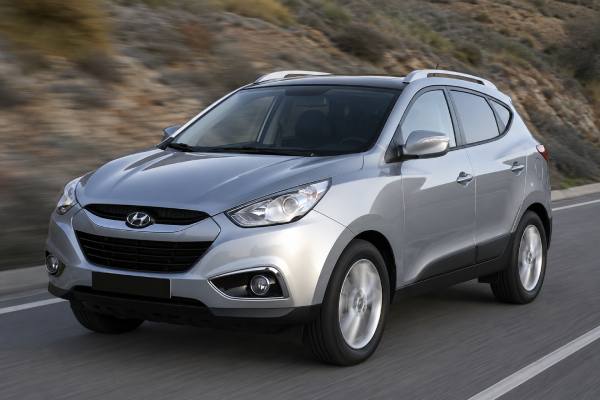
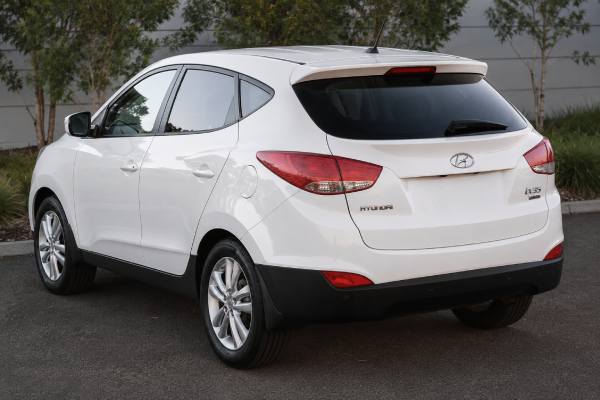
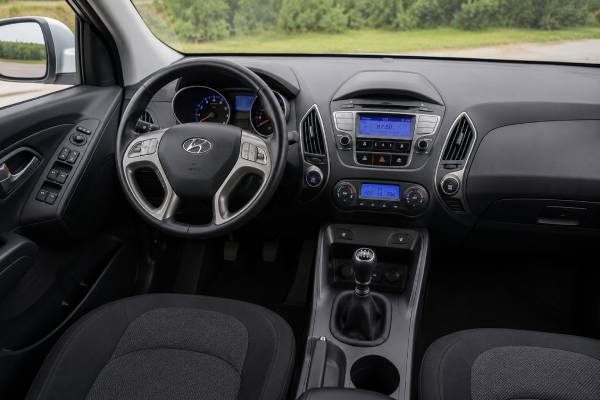
The 2010–2013 Hyundai Tucson AWD with the Theta II 2.4 MPI engine is a compact crossover from the LM generation, sold in many markets as the Tucson and in some regions as the ix35. It is a simple, naturally aspirated gasoline SUV with five seats, a conventional 6-speed automatic, and an on-demand AWD system aimed more at wet roads and winter use than serious off-roading. Its main appeal today is value: it offers useful space, easy driving, decent equipment, and widely available parts without the complexity of a turbo, dual-clutch transmission, or hybrid system.
Final Verdict
The 2010–2013 Hyundai Tucson AWD 2.4 MPI is a good used choice for buyers who want an affordable compact SUV with straightforward mechanics, useful winter traction, and enough power for daily driving. It suits small families, commuters in snowy climates, and owners who value simple maintenance over premium refinement. Its main tradeoff is that fuel economy, road noise, and interior polish are not as strong as the best rivals, and the Theta II 2.4 needs careful oil-leak, oil-level, and recall checks. Buy one only with documented service, a clean AWD system, and verified completion of applicable Hyundai safety campaigns.
| Pros | Cons |
|---|---|
| 176 hp 2.4 MPI feels stronger than the base 2.0 | AWD automatic economy is only mid-pack for the class |
| Conventional 6-speed automatic is easier to live with than a CVT | Old fluid can cause harsh shifts or delayed engagement |
| Compact size makes it easy to park and maneuver | Cargo room trails boxier rivals like the Honda CR-V |
| Good IIHS results in several older crash tests | Poor IIHS small-overlap result hurts modern safety appeal |
| Parts availability is generally strong and prices are reasonable | Theta II recall and oil-leak history require VIN checks |
Table of Contents
- 2010–2013 Tucson AWD overview
- Theta II 2.4 AWD specifications
- Trims, options and safety ratings
- Reliability, issues and recalls
- Maintenance and used buying guide
- Driving, performance and economy
- Tucson AWD vs rivals
2010–2013 Tucson AWD overview
The LM-generation Tucson AWD 2.4 is best understood as a road-biased compact SUV with useful all-weather grip, not a rugged 4×4. It gives buyers a stronger engine than the base 2.0, a higher seating position, and manageable dimensions that still work well in tight urban parking.
Hyundai moved the second-generation Tucson away from the boxier first-generation look and gave it a lower, sleeker crossover shape. The result was more modern and easier on fuel than many older compact SUVs, but less square inside than a Honda CR-V or Subaru Forester. The cabin is comfortable for four adults, acceptable for five on shorter trips, and practical enough for daily family use.
The 2.4 MPI version is the one to look for if you want the easiest Tucson LM to live with in mixed driving. The 2.0 is cheaper and a little lighter, but the 2.4 has noticeably better low-speed pull and highway passing power. In North America, this engine was common in GLS and Limited trims, paired mainly with the 6-speed automatic. AWD was optional on higher trims and gave the Tucson better winter traction without turning it into a towing or trail vehicle.
The “MPI” part matters. This engine uses multi-point fuel injection rather than gasoline direct injection. That generally means less concern about intake-valve carbon buildup than a direct-injected engine, and it keeps the mechanical package simple. The tradeoff is that it does not have the punch or economy of later turbocharged and hybrid crossovers.
For used buyers, the Tucson’s value depends heavily on condition. A well-maintained car with clean oil records, no engine recall gaps, smooth automatic shifts, quiet AWD hardware, and a rust-free underbody can be a sensible low-cost SUV. A neglected one with oil leaks, mismatched tires, old transmission fluid, and unresolved recalls can become expensive quickly.
Theta II 2.4 AWD specifications
The 2010–2013 Tucson AWD 2.4 uses a naturally aspirated inline-four engine, a hydraulic or electronically assisted road-car chassis depending on market specification, and a front-biased AWD system that sends torque rearward when slip is detected. The most important ownership facts are the timing chain engine, 6-speed automatic, compact dimensions, and official AWD fuel economy in the low-20s mpg range.
| Item | Hyundai Tucson AWD 2.4 MPI |
|---|---|
| Engine family | Theta II 2.4 MPI, commonly identified as G4KE |
| Layout | Inline-4, DOHC, 16 valves, dual CVVT |
| Displacement | 2.4 L / 2,359 cc |
| Fuel system | Multi-point fuel injection |
| Induction | Naturally aspirated |
| Power | 176 hp at 6,000 rpm |
| Torque | 228 Nm (168 lb-ft) at 4,000 rpm |
| Fuel | Regular unleaded gasoline |
| Timing drive | Timing chain |
| EPA fuel economy, AWD automatic | 11.8 city / 8.7 highway / 10.2 combined L/100 km (20 / 27 / 23 mpg US) |
Some PZEV-emissions versions were rated lower than the standard 176 hp tune, typically around 170 hp and 163 lb-ft. This article focuses on the 176 hp 2.4 MPI version named in the title, but buyers in California-emissions states should check the emissions label and VIN build data before ordering engine or emissions parts.
| Item | Specification or practical note |
|---|---|
| Transmission | 6-speed automatic with SHIFTRONIC manual shift mode |
| Drive type | Front-biased on-demand AWD |
| AWD hardware | Electronically controlled rear coupling with rear differential |
| AWD lock function | Available on many versions for low-speed slippery conditions |
| Front suspension | MacPherson struts |
| Rear suspension | Multi-link independent rear suspension |
| Brakes | Four-wheel disc brakes with ABS |
| Item | Value |
|---|---|
| Body style | 5-door compact SUV |
| Seating | 5 passengers |
| Length | About 4,400 mm (173.2 in) |
| Width | About 1,821 mm (71.7 in), mirrors excluded |
| Height | About 1,684 mm (66.3 in), trim dependent |
| Wheelbase | 2,639 mm (103.9 in) |
| Ground clearance | About 170 mm (6.7 in) |
| Curb weight, AWD GLS | About 1,534 kg (3,382 lb) |
| Cargo volume | 728 L (25.7 cu ft) seats up; about 1,580 L (55.8 cu ft) folded |
| Turning circle | About 10.6 m (34.7 ft) |
| Item | Common value |
|---|---|
| GLS tire size | 225/60R17 on 17 x 6.5 wheels |
| Limited tire size | 225/55R18 on 18 x 6.5 wheels |
| Typical tire pressure | 230 kPa (33 psi), confirm door placard |
| Wheel-nut torque | 88–107 Nm (65–79 lb-ft) |
| Fuel tank | 58 L (15.3 US gal) |
| Engine oil refill | About 4.6 L (4.86 US qt) for the 2.4 gasoline engine |
| Automatic transmission fluid | Hyundai SP-IV specification |
| Brake fluid | DOT 3 or DOT 4 |
| Rear differential oil | API GL-5, SAE 75W-90 hypoid gear oil |
Trims, options and safety ratings
The 2.4 AWD Tucson was most commonly seen in GLS and Limited form, with the Limited adding comfort and appearance equipment rather than major mechanical upgrades. Safety equipment was good for its age, but the model lacks the modern driver-assistance systems now expected in newer compact SUVs.
Trims and equipment
Trim names varied by market, but North American 2010–2013 examples usually divide into GL, GLS, and Limited. The base GL was more often associated with the smaller 2.0 engine and front-wheel drive, while GLS and Limited were the main homes for the 2.4 and AWD option.
The GLS is often the sweet spot. It commonly includes alloy wheels, heated front seats, Bluetooth, satellite radio capability, fog lamps, roof rails, cruise control, and cloth trim. The Limited adds leather seating, larger 18-inch wheels, automatic climate control, push-button start on some versions, premium audio or navigation availability, and exterior details such as mirror turn indicators.
Mechanical differences are modest. Both GLS AWD and Limited AWD use the same basic 2.4 MPI engine, 6-speed automatic, and on-demand AWD layout. Tire and wheel packages matter more than trim badges: the 17-inch GLS tires usually ride a little better and cost less to replace, while the 18-inch Limited wheels sharpen the look but can add tire noise and impact harshness.
Quick identifiers include the AWD badge at the rear, an AWD lock button in the cabin on many examples, 17-inch wheels on many GLS models, 18-inch wheels and leather on Limited models, and an underbody rear differential visible from behind the vehicle. For engine identification, check the emissions label, VIN data, and whether the vehicle is a standard ULEV or PZEV emissions version.
Safety ratings and systems
The Tucson LM performed well in several older IIHS tests: Good in moderate-overlap front, side, roof-strength, and head-restraint evaluations. Its major weakness is the driver-side small-overlap test, where the 2013 tested vehicle received a Poor overall rating. That result matters because small-overlap crashes are severe offset impacts that older vehicle structures often handled poorly.
NHTSA ratings from this period also make the Tucson look broadly competitive for an early-2010s compact SUV, but buyers should remember that rating methods changed over time. A 2013 rating should not be compared directly with the standards applied to a 2026 crossover.
Standard or widely available safety equipment includes:
- Dual front airbags
- Front seat-mounted side airbags
- Side-curtain airbags for front and rear outboard occupants
- Anti-lock braking system
- Electronic stability control
- Traction control
- Brake assist and electronic brake-force distribution
- Active front head restraints
- LATCH child-seat anchors
- Rear child door locks
Modern ADAS is the missing piece. Do not expect autonomous emergency braking, adaptive cruise control, blind-spot monitoring, lane keeping, or a 360-degree camera from these model years. A rearview camera and rear parking assist may appear on some trims or markets, but they should be treated as equipment to verify on the specific car, not as guaranteed features.
After windshield, bumper, suspension, or steering repairs, there are fewer ADAS calibration concerns than on a modern SUV because there are no radar and camera-based driver-assistance systems on most examples. Still, ABS, stability control, wheel-speed sensors, steering-angle calibration, and tire-size matching remain important for proper traction-control and AWD behavior.
Reliability, issues and recalls
The Tucson AWD 2.4 can be durable, but it is not a buy-blind vehicle. The largest inspection priorities are engine oil leaks or oil consumption, recall completion, transmission shift quality, AWD coupling condition, suspension wear, and corrosion.
Common and important issues
The best way to judge this Tucson is by severity, not just frequency.
| Issue | Prevalence | Severity | What to check |
|---|---|---|---|
| Oil pan or lower-engine oil leak | Common enough for recall attention | High if ignored | Wet oil pan seam, low oil level, burning-oil smell |
| Oil consumption or bearing noise | Occasional | High | Dipstick history, knock on cold start, metallic debris |
| Harsh automatic shifts | Occasional with age | Medium | Delayed Drive/Reverse, 2–3 flare, old ATF |
| AWD coupling or rear differential noise | Occasional | Medium to high | Binding in tight turns, groan, mismatched tires |
| Suspension and wheel-bearing wear | Common with mileage | Low to medium | Clunks, uneven tire wear, humming above 40 mph |
| Rust on underbody hardware and brake lines | Climate dependent | Medium | Rear subframe area, control arms, fuel/brake lines |
The major Hyundai recall to verify for 2011–2013 Tucson 2.4 models concerns an engine oil leak from the seal between the oil pan and engine block. If ignored, the leak can lead to engine damage, stalling, or increased fire risk. The affected recall population depends on production dates and VIN, so a clean-looking car still needs an official VIN recall check.
Symptoms that deserve caution include:
- Oil level below the dipstick safe range
- Fresh oil around the pan, timing cover, or lower block
- Ticking, knocking, or rattling that changes with engine speed
- Blue smoke after idling or on acceleration
- Check-engine light with misfire or catalyst-efficiency codes
- Delayed engagement when selecting Drive or Reverse
- AWD binding or shudder in parking-lot turns
- Uneven tire brands or tread depths on an AWD vehicle
The timing chain has no routine replacement interval like a timing belt, but it is not something to ignore forever. Listen for cold-start rattle, chain slap, cam/crank correlation fault codes, and rough running. In many cases, chain problems are made worse by low oil level, extended oil intervals, or poor oil quality.
Software, service actions and VIN checks
Because this vehicle is now old enough to have passed through several owners, paperwork matters. Ask for dealer records showing completed recalls and any engine-related inspections. Hyundai’s recall lookup and a dealer service history are more reliable than a seller’s memory.
ECU or TCU updates may exist for specific drivability complaints, shift behavior, emissions monitoring, or warning-light issues. A reflash is not a cure for a worn engine or failing transmission, but it can be the official first repair path for some symptoms. If the vehicle has a persistent check-engine light, do not accept “it just needs a sensor” without scan data and a readiness check.
Maintenance and used buying guide
A Tucson AWD 2.4 rewards boring, regular maintenance. The best examples have short oil-change intervals, matched tires, clean AWD fluids, no unresolved recall history, and proof that the owner treated it like an AWD vehicle rather than a disposable commuter.
| Interval | Service item |
|---|---|
| Monthly or before long trips | Check engine oil, coolant, brake fluid, tire pressures, lights, and leaks |
| 6,000–7,500 miles / 10,000–12,000 km | Change engine oil and filter; rotate tires |
| 12 months | Inspect brakes, suspension, exhaust, battery, belts, hoses, and wipers |
| 15,000 miles / 24,000 km | Inspect engine air filter, cabin filter, brake lines, CV boots, and fuel cap |
| 30,000 miles / 48,000 km | Replace cabin filter if dirty; inspect AWD driveline and brake fluid condition |
| 37,500–40,000 miles / 60,000 km | Inspect transfer case and rear differential oil on AWD models |
| 60,000 miles / 96,000 km | Inspect drive belt, valve-train noise, coolant hoses, and transmission operation |
| 60,000–75,000 miles / 96,000–120,000 km | Service automatic transmission fluid if history is unknown or use is severe |
| 90,000–105,000 miles / 145,000–169,000 km | Replace spark plugs on many North American schedules; verify by VIN |
| 5–7 years | Replace coolant and brake fluid if not already serviced by condition |
For oil, many manuals list API SM / ILSAC GF-4 or better for the gasoline engine, with viscosity chosen by climate. In everyday use, a quality 5W-20 or 5W-30 that matches the owner’s manual and local climate is typical. More important than arguing over viscosity is keeping the level full and changing it on time. These engines do not tolerate running low on oil.
For the 6-speed automatic, use SP-IV-spec fluid. Avoid universal fluids unless the product clearly states compatibility with the Hyundai SP-IV requirement. If shifts are already harsh, a fluid service may help, but it is not guaranteed to repair internal wear.
For the AWD system, tire matching is critical. All four tires should be the same size, similar brand/model, and close in tread depth. A single new tire paired with three worn tires can overwork the AWD coupling and rear driveline. Rotate tires regularly and investigate vibration quickly.
Used buying checklist
Before purchase, inspect the vehicle cold and drive it long enough to reach full operating temperature. A short two-minute test drive is not enough.
Prioritize these checks:
- VIN recall lookup through Hyundai or an official recall database
- Engine oil level before the seller starts the car
- Oil pan seam, timing cover, valve cover, and oil filter area
- Cold-start noise, idle smoothness, and exhaust smoke
- Smooth engagement into Drive and Reverse
- Shift quality under light throttle and firm acceleration
- AWD operation on a loose or wet surface, if safe
- Tight parking-lot turns for rear driveline binding
- Matching tires and even tread wear
- Rear suspension arms, subframe area, brake lines, and fuel lines for rust
- Air conditioning, heater blend doors, window switches, door locks, and radio
- Sunroof drains, if equipped
- Evidence of accident repairs around front structure and rear quarter panels
The best year or trim depends on the individual vehicle. A clean GLS AWD with complete service history is usually a smarter buy than a neglected Limited AWD with leather and navigation. The Limited is nicer to sit in, but its 18-inch tires cost more, and extra equipment adds more age-related failure points. For long-term durability, condition beats trim.
Driving, performance and economy
The Tucson AWD 2.4 feels adequately quick for daily use, especially compared with the base 2.0, but it is not sporty. Its strengths are easy controls, compact size, and predictable traction; its weaknesses are road noise, average ride compliance, and fuel economy that looks modest by modern standards.
The 2.4 MPI makes its best torque in the middle of the rev range. Around town, throttle response is clean and simple because there is no turbo lag. The engine can sound coarse when pushed hard, but it does not feel strained in normal traffic. Highway merging is acceptable with one or two passengers, though full loads and steep grades require the automatic to downshift.
The 6-speed automatic is generally smooth when healthy. It prefers early upshifts for economy, then kicks down when more throttle is requested. On a test drive, watch for flare between gears, a thump into Drive, or repeated hunting on gentle hills. Those symptoms can come from old fluid, software issues, mounts, sensors, or internal wear.
Ride quality depends heavily on wheel size and tire condition. GLS models on 17-inch wheels usually feel more settled over sharp bumps than Limited models on 18-inch wheels. Steering is light and easy in town. It does not offer much road feel, but the Tucson tracks straight when the suspension and tires are in good shape.
Cabin noise is one of the areas where the Tucson shows its age. Coarse pavement and worn tires can make the cabin louder than a Toyota RAV4 or Honda CR-V. Wind noise is usually acceptable unless roof bars, door seals, or accident repairs are involved.
Official AWD automatic fuel economy is 20 mpg city, 27 mpg highway, and 23 mpg combined in U.S. EPA figures. In metric terms, that is about 11.8 L/100 km city, 8.7 L/100 km highway, and 10.2 L/100 km combined. In UK mpg, the same figures are roughly 24 city, 32 highway, and 28 combined.
Real-world results vary widely:
- City driving: about 11–13.5 L/100 km (17–21 mpg US)
- Highway at 100–110 km/h: about 8.5–9.5 L/100 km (25–28 mpg US)
- Mixed driving: about 9.8–11.5 L/100 km (20–24 mpg US)
- Winter short trips: often 10–20 percent worse
Towing is possible where the vehicle is rated and equipped correctly, but this is not a heavy tow vehicle. A small utility trailer or light recreational load is more appropriate than a tall, heavy camper. When towing or carrying a full load, expect longer stopping distances, more downshifting, and a clear fuel-economy penalty.
Tucson AWD vs rivals
Against early-2010s compact SUV rivals, the Tucson AWD 2.4 is usually strongest on value, styling, equipment, and simple powertrain layout. It is usually weaker on cargo space, refinement, and ultimate crash-test performance by newer standards.
The Honda CR-V is the practical benchmark. It has a roomier cargo area, excellent visibility, and a stronger reputation for long-term resale. The Tucson counters with lower purchase prices and often better equipment for the money. A CR-V is the safer bet for maximum practicality; a well-kept Tucson is the better value buy.
The Toyota RAV4 is also more spacious and has a strong reliability image. Earlier V6 RAV4 models are much quicker, while four-cylinder versions are closer to the Tucson in daily use. The Toyota tends to cost more used, so the Hyundai can make sense if service records are better and the price gap is meaningful.
The Subaru Forester is the natural rival for snow-belt buyers. Its standard AWD system and boxy cabin are strong advantages. The Tucson’s conventional automatic may appeal to buyers who dislike Subaru CVTs from later years, and the Hyundai’s 2.4 MPI does not have Subaru’s same boxer-engine service layout. Rust and maintenance history matter heavily on both.
The Kia Sportage of the same era is mechanically related and often feels a little sportier or firmer, depending on trim. Buying between the two should come down to condition, service history, price, and equipment. The same attention to engine recalls, AWD condition, and corrosion applies.
The Mazda CX-5 arrived later and is better to drive, with sharper steering and more modern fuel economy. It also usually costs more. If driving feel and efficiency matter most, the Mazda is stronger. If budget and simpler used-market pricing matter more, the Tucson remains relevant.
The Chevrolet Equinox and GMC Terrain offer more rear-seat space and a softer ride, but their four-cylinder engines from this period have their own oil-consumption and timing-chain concerns. A carefully inspected Tucson can be the simpler used buy.
Overall, the Tucson AWD 2.4 is not the class leader in any single category, but it can be a smart secondhand SUV when priced below the Japanese rivals and maintained better than the average example. The right car is one with clean oil records, completed recalls, matching tires, smooth driveline behavior, and no serious rust.
References
- Gas Mileage of 2013 Hyundai Tucson 2013 (Fuel Economy)
- 2013 Hyundai Tucson 2013 (Safety Rating)
- Manuals & Warranties | Hyundai Resources | MyHyundai 2026 (Owner’s Manual)
- IMPORTANT SAFETY RECALL (INTERIM NOTICE) 2019 (Recall Notice)
- Hyundai – Recalls 2026 (Recall Database)
Disclaimer
This article is for informational purposes only and is not a substitute for professional diagnosis, repair, or inspection. Specifications, torque values, service intervals, fluids, procedures, recall eligibility, and equipment can vary by VIN, market, production date, and trim. Always verify critical details against the official owner’s manual, service documentation, parts catalog, and a qualified Hyundai technician before buying, repairing, or servicing the vehicle.
If this guide helped you, please share it on Facebook, X/Twitter, or your preferred automotive group to support our work.