
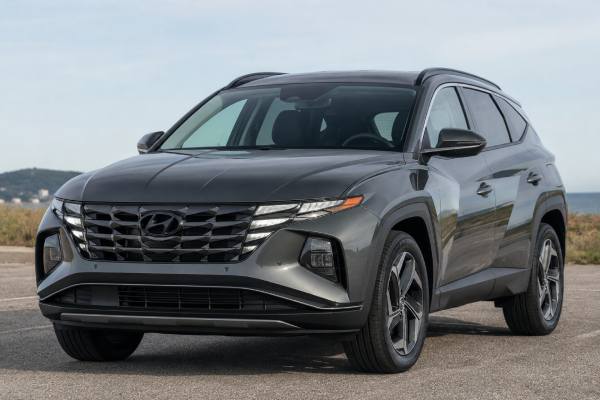
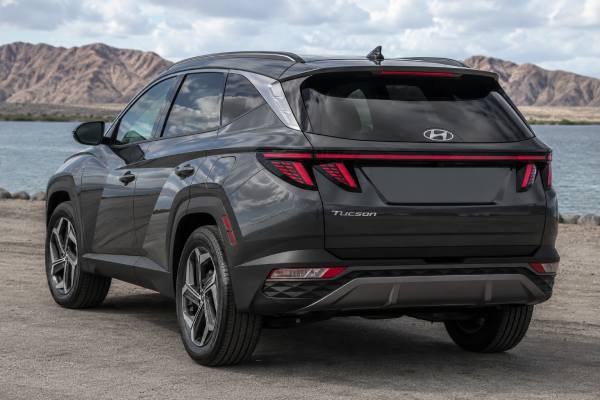
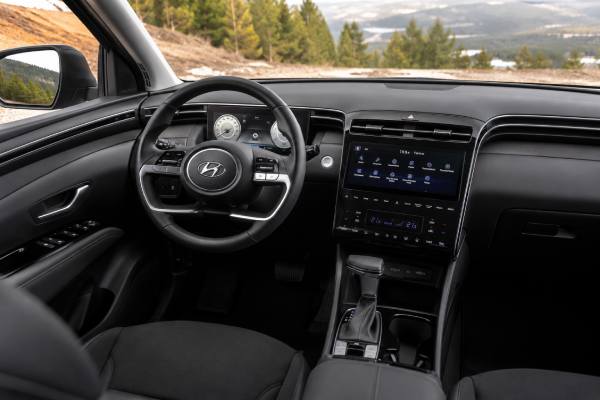
The 2022–2024 Hyundai Tucson HTRAC AWD with the naturally aspirated Smartstream 2.5 GDi/MPI engine is the mainstream gasoline version of the fourth-generation NX4 Tucson in North America. It is not the quickest Tucson, and it is not the most fuel-efficient, but it is the simplest version mechanically compared with the turbo hybrid and plug-in hybrid models.
For used buyers, that matters. This Tucson combines a roomy compact-SUV body, strong safety equipment, a conventional 8-speed automatic transmission, available all-wheel drive, and a non-turbo 2.5-liter engine with both direct and port fuel injection. The main questions are whether the engine is strong enough, how reliable the 2.5 AWD setup is, what maintenance matters, and whether the hybrid is worth paying more for.
Final Verdict
The 2022–2024 Hyundai Tucson HTRAC AWD 2.5 is a sensible used compact SUV for buyers who want space, comfort, safety tech, and a conventional gasoline drivetrain without hybrid-system complexity. Its strongest appeal is everyday usability: a quiet cabin, large cargo area, good rear-seat room, and predictable AWD traction. The tradeoff is performance and fuel economy; the 187 hp engine feels adequate rather than lively, and the hybrid is clearly quicker and thriftier. Buy one with documented oil changes, completed recalls, matched tires, and no trailer-wiring or AWD driveline neglect, and it can be a practical long-term family SUV.
| Pros | Cons |
|---|---|
| Roomy NX4 cabin with generous rear-seat and cargo space | 2.5 AWD acceleration is modest for highway passing |
| Conventional 8-speed automatic avoids dual-clutch complexity | Real-world fuel economy trails Tucson Hybrid and CR-V Hybrid |
| GDi/MPI fuel system helps reduce intake-valve carbon concerns | HTRAC AWD adds tires, transfer case, and rear differential upkeep |
| Strong standard driver-assistance package, especially for the class | Some safety ratings depend on build date and headlight version |
| Good used availability across SE, SEL, XRT, N Line, Limited | Optional tow-hitch wiring recall history needs VIN verification |
Table of Contents
- Tucson 2.5 HTRAC AWD Overview
- Tucson 2.5 AWD Specifications
- Trims, Safety, and Driver Assistance
- Reliability, Issues, and Service Actions
- Maintenance and Used Buying Guide
- Driving, Performance, and Fuel Economy
- Tucson 2.5 AWD vs Rivals
Tucson 2.5 HTRAC AWD Overview
The 2.5 HTRAC AWD Tucson is the simple, comfort-focused gasoline version of the NX4 Tucson. It suits drivers who value space, safety equipment, and low-stress daily use more than strong acceleration or maximum fuel savings.
This generation grew into one of the larger compact SUVs. The long 108.5-inch wheelbase gives it a roomy second row, and the cargo area is closer to the top of the class than the bottom. In daily family use, that matters more than the spec-sheet horsepower figure.
The Smartstream 2.5 is a 2,497 cc naturally aspirated inline-four. It uses Hyundai’s GDi/MPI setup, meaning it has direct injection and port injection. Direct injection helps power and efficiency, while port injection can help keep the intake tract cleaner than a direct-injection-only engine. It is paired with an 8-speed torque-converter automatic, not a CVT and not a dual-clutch gearbox.
HTRAC is Hyundai’s active on-demand AWD system. In normal driving it behaves like a front-biased AWD setup, then sends torque rearward when traction, throttle position, steering angle, or drive mode calls for it. It is useful in rain, snow, gravel roads, and steep driveways, but it is not an off-road 4×4 system with low range or locking differentials.
The 2.5 AWD model is best understood as the relaxed choice. The Tucson Hybrid is quicker and more efficient, and the Plug-in Hybrid can cover short trips on electricity. The gasoline 2.5 AWD answers a different need: fewer electrified components, a lower used price in many markets, and conventional service routines that most independent shops understand.
For 2022, the Tucson arrived as a fully redesigned model. The 2023 version kept the same basic mechanical formula, with fuel economy ratings slightly lower than early 2022 ratings. The 2024 model continued the same 2.5 AWD powertrain, while some safety-test details and equipment packaging evolved.
Tucson 2.5 AWD Specifications
The 2022–2024 Tucson 2.5 AWD uses a naturally aspirated gasoline engine, an 8-speed automatic transmission, and Hyundai’s HTRAC active AWD system. Its key strengths are cabin space, conventional driveline hardware, and useful towing capability for light trailers; its main technical limitation is the modest power-to-weight ratio.
| Item | Hyundai Tucson HTRAC AWD 2.5 |
|---|---|
| Engine family | Smartstream 2.5 GDi/MPI gasoline inline-four |
| Displacement | 2,497 cc (2.5 L) |
| Fuel system | Gasoline direct injection plus multi-point injection |
| Valvetrain | DOHC, 16 valves, continuously variable valve timing |
| Maximum power | 187 hp (140 kW) at 6,100 rpm |
| Maximum torque | 241 Nm (178 lb-ft) at 4,000 rpm |
| Bore x stroke | 85.5 x 101.5 mm |
| Compression ratio | 13.0:1 |
| Recommended fuel | Regular unleaded gasoline |
| EPA fuel economy, AWD | 2022: 24/29/26 mpg; 2023: 23/28/25 mpg; 2024: 23/29/25 mpg |
| Item | Specification |
|---|---|
| Transmission | 8-speed torque-converter automatic |
| Drive system | HTRAC active on-demand all-wheel drive |
| Drive modes | Center-console selectable modes, depending on trim |
| Front suspension | MacPherson struts with stabilizer bar |
| Rear suspension | Multi-link rear suspension with stabilizer bar |
| Steering | Column-mounted motor-driven power steering |
| Turning circle | 11.8 m (38.6 ft), curb to curb |
| Item | Value |
|---|---|
| Body style | 5-door compact SUV, 5 seats |
| Wheelbase | 2,756 mm (108.5 in) |
| Length | 4,630 mm (182.3 in) |
| Width | 1,865 mm (73.4 in) |
| Height, AWD with roof rails | 1,684 mm (66.3 in) |
| Ground clearance, AWD | 211 mm (8.3 in) |
| Passenger volume | 3,064 L (108.2 cu ft), without panoramic sunroof |
| Cargo volume | 1,096 L seats up; 2,118 L seats folded (38.7; 74.8 cu ft) |
| Fuel tank | 54.1 L (14.3 US gal) |
| Typical AWD curb weight | About 1,568–1,674 kg (3,457–3,690 lb), depending on year and trim |
| Towing capacity | 907 kg (2,000 lb) with trailer brakes; 748 kg (1,650 lb) without |
| Item | Useful value |
|---|---|
| Engine oil capacity | 5.6 L (about 5.9 US qt), including filter |
| Common oil viscosity | 0W-20 synthetic; confirm by owner’s manual and climate |
| Front brakes | 325 mm ventilated discs |
| Rear brakes | 300 mm solid discs |
| Common tire sizes | 235/65R17 or 235/55R19, depending on trim |
| Wheel-nut torque | 107–127 Nm (79–94 lb-ft) |
Trims, Safety, and Driver Assistance
The best-value Tucson 2.5 AWD trims are usually SEL and Limited, while XRT and N Line are mostly appearance-focused. Safety equipment is strong across the range, but headlight type, parking aids, cameras, and advanced cruise functions vary by trim and year.
In the U.S. market, the gasoline AWD lineup commonly included SE, SEL, XRT, N Line, and Limited. Availability shifted slightly by year, but the mechanical core stayed the same: 2.5 engine, 8-speed automatic, and optional or fitted HTRAC AWD.
SE is the basic trim, but it is not bare. It usually gives you the same engine, main safety systems, alloy wheels, and a practical cabin. SEL is the smarter used buy for many families because it adds comfort and convenience features without the full Limited price. XRT brings rugged-looking trim, dark exterior details, roof rails, and 19-inch wheels, but it does not turn the Tucson into a trail SUV. N Line adds sportier styling, trim-specific interior details, and a firmer visual attitude rather than a more powerful engine. Limited is the most complete version, with the richest interior equipment and the most advanced parking and camera technology.
Quick identifiers are straightforward. HTRAC models have AWD badging or equipment codes tied to AWD in the VIN/build sheet. XRT and N Line are easy to spot from exterior trim and wheels. Limited models usually stand out through the larger digital displays, premium interior features, upgraded cameras, and higher-grade lighting.
Safety is a major Tucson strength. IIHS testing for the NX4 generation shows strong crashworthiness results, with Top Safety Pick+ recognition for 2022 and 2024, though the 2024 award applies only to vehicles built after March 2024. This build-date note matters if you are shopping a 2024 example, because later vehicles received changes related to rear-seat occupant protection in the updated moderate-overlap test.
NHTSA ratings can vary by model year, drivetrain, and body configuration, so do not rely on one blanket statement for every Tucson. Check the exact year, trim, and drivetrain when safety ratings matter to your purchase decision.
Standard and available driver-assistance features may include:
- Forward Collision-Avoidance Assist with pedestrian, cyclist, and junction-turning detection
- Lane Keeping Assist and Lane Following Assist
- Blind-Spot Collision-Avoidance Assist
- Rear Cross-Traffic Collision-Avoidance Assist
- Driver Attention Warning
- Safe Exit Warning
- Intelligent Speed Limit Assist
- Rear Occupant Alert or ultrasonic rear occupant alert, depending on trim
- Highway Driving Assist and navigation-based cruise control on upper trims
- Surround-view camera and Blind-Spot View Monitor on Limited
After windshield replacement, front-end collision repair, suspension work, wheel alignment, or bumper removal, ADAS calibration may be needed. A used Tucson with warning lights, disabled lane functions, or a replaced windshield should be inspected carefully, because calibration problems can turn a good safety system into an annoying or unreliable one.
Reliability, Issues, and Service Actions
The 2.5 AWD Tucson is too new to judge like a 15-year-old vehicle, but its early reliability picture is best described as generally solid with inspection-sensitive details. The main used-buying risks are poor maintenance, mismatched tires on AWD models, unresolved recalls, electronic glitches, and vehicles used for towing without proper care.
The Smartstream 2.5 is not a turbocharged engine, which helps keep heat and boost-related stress down. It also uses both direct and port injection, which is helpful because port injection can reduce the intake-valve carbon buildup risk associated with direct-injection-only engines. That does not make it maintenance-free, but it is a positive design feature.
Common or occasional issues to watch:
| Symptom | Likely area | Practical remedy |
|---|---|---|
| Hesitation, rough idle, or poor cold start | Oil condition, plugs, fuel quality, software, sensors | Scan for codes, verify service history, update software if applicable |
| Harsh or delayed shifts | 8-speed automatic adaptation, fluid condition, calibration | Check for updates, road-test warm, inspect for leaks |
| Binding, vibration, or tire scrub on turns | Mismatched tires or AWD driveline stress | Match tire brand, model, size, and tread depth; inspect AWD hardware |
| Rear light or trailer-light faults | Optional tow-hitch wiring harness | Check recall status and inspect harness installation |
| Battery warnings or weak start after sitting | 12 V battery, parasitic draw, software modules | Load-test battery, check charging system, scan body modules |
| Clunks over bumps | Sway-bar links, bushings, strut mounts, loose trim | Inspect suspension and confirm torque on service-related fasteners |
The engine uses a timing chain, not a scheduled timing belt. That reduces routine replacement cost, but it does not mean the chain should be ignored forever. Cold-start rattle, cam/crank correlation codes, repeated oil neglect, or metal debris in oil are reasons to inspect timing components, guides, and tensioners.
Oil consumption should be checked during ownership, especially on any used example with incomplete service records. A healthy engine should not need frequent top-ups between oil changes. Low oil level is more damaging than a slightly early oil change, so buyers should inspect the dipstick, look for leaks, and review service receipts.
For AWD models, tires are part of the drivetrain. Different tread depths can make the AWD coupling work harder than intended. A Tucson HTRAC with four matching tires and regular rotations is a better bet than one with random replacement tires on one axle.
The most important service-action theme for 2022–2024 gasoline Tucson buyers is VIN verification. Certain 2022–2024 Tucsons with an optional OEM trailer wiring harness have been subject to recall activity related to water ingress, lighting faults, short-circuit risk, overheating, and possible fire risk. This does not mean every Tucson has the problem, and it especially does not mean every Tucson was sold with a tow harness. It does mean a buyer should check the VIN through Hyundai and NHTSA, then confirm completion in dealer records.
Ask for proof of:
- Completed recalls and service campaigns
- Oil and filter changes at sensible intervals
- AWD tire rotations and matching tires
- Transfer-case and rear differential inspections
- Any transmission, infotainment, ADAS, or engine-control software updates
- Trailer wiring repairs or recall completion if a hitch is fitted
Maintenance and Used Buying Guide
A Tucson 2.5 AWD is not difficult to maintain, but it rewards routine service and punishes neglect like any modern direct-injection SUV. The best ownership plan is simple: clean oil, matched tires, regular inspections, fresh brake fluid, and early attention to software or sensor faults.
Use the owner’s manual for the final schedule, because intervals vary by market, build date, and driving conditions. In real-world use, many vehicles fall into “severe service” because of short trips, stop-and-go traffic, winter operation, dusty roads, heat, idling, or towing.
| Interval | Recommended work |
|---|---|
| Every 8,000–12,000 km (5,000–7,500 mi) | Replace engine oil and filter; rotate tires; inspect brakes and fluid levels |
| Every 12 months | Inspect battery, tires, lights, wipers, suspension, leaks, and underbody |
| Every 24,000 km (15,000 mi) | Replace cabin air filter; inspect brake fluid, propeller shaft, hoses, and steering parts |
| Every 48,000 km (30,000 mi) | Replace engine air filter if dirty; inspect cooling system, fuel system, mounts, and exhaust |
| Every 60,000 km (37,500 mi), AWD | Inspect transfer case and rear differential oil; check driveshaft joints and seals |
| Every 96,000 km (60,000 mi) | Inspect drive belt, valve noise, transmission fluid condition, and AWD fluids more closely |
| By 169,000 km (105,000 mi) | Replace spark plugs on many U.S. 2.5 schedules; verify exact interval by VIN |
| 10 years or 193,000 km (120,000 mi) | First engine-coolant replacement is commonly due around this point, then more often after |
For oil, 0W-20 synthetic is the common recommendation for the 2.5 engine in this application, with a 5.6 L capacity including filter. In very hot or special-use markets, manuals may list additional viscosity choices, so match the manual, climate, and warranty requirements. Do not stretch oil intervals if the vehicle mainly does short trips or idles often.
Brake fluid should be tested for moisture and replaced on a time-based schedule, commonly around every two to three years depending on condition and market guidance. Brake pads and rotors often last well in ordinary use, but rust can affect vehicles in snow-belt regions, coastal climates, or low-mileage use.
The automatic transmission is generally smooth and conventional, but fluid is not magic. If you tow, drive in mountains, sit in heavy traffic, or plan to keep the SUV past 160,000 km (100,000 mi), discuss earlier ATF service with a Hyundai specialist. Use the correct Hyundai specification; universal fluid is not the place to save money.
Used inspection checklist:
- Start the engine cold and listen for rattle, misfire, or ticking that does not settle.
- Confirm smooth shifts from cold and warm, including low-speed downshifts.
- Drive tight circles in a parking lot and listen for AWD binding or clicking.
- Check all four tires for matching brand, size, speed rating, and tread depth.
- Inspect the rear differential, transfer case, oil pan, and transmission for seepage.
- Test every ADAS feature, camera, parking sensor, and infotainment function.
- Look under the cargo floor and rear bumper for tow-hitch wiring repairs.
- Check the driver door jamb for build date if a 2024 safety-rating distinction matters.
- Scan for stored codes, not just active dashboard warning lights.
The best versions to seek are SEL AWD for value and Limited AWD for equipment. XRT is attractive if you like the styling, but do not pay a large premium expecting real off-road hardware. N Line is worth considering for appearance and interior trim, not extra performance. Avoid any example with missing service records, accident repairs near ADAS sensors, mismatched tires, or unresolved recall status.
Long-term durability should be good if the car is maintained conservatively. The 2.5 AWD Tucson is not a high-performance machine, so drivetrain stress is usually moderate. The ownership outlook worsens mainly when oil changes are neglected, tires are mismatched, or electronic faults are ignored until they cascade into expensive diagnosis.
Driving, Performance, and Fuel Economy
The Tucson 2.5 AWD drives like a comfortable family SUV, not a sporty one. Its ride, quietness, space, and easy controls are stronger than its acceleration.
The 187 hp engine is smooth enough around town and works well for school runs, commuting, and steady highway cruising. It does not have the low-rpm surge of a turbo engine, so passing on a two-lane road or merging uphill may require a firm throttle input and a downshift. The 8-speed automatic is generally a good match because it keeps engine speed low when cruising and can drop gears without the rubber-band feel of some CVTs.
Independent testing has placed the AWD 2.5 Tucson in the high-8-second to low-9-second range for 0–60 mph. That is adequate, but not energetic. A loaded cabin, roof box, steep grade, or hot weather makes the modest output more noticeable.
Ride quality is one of the Tucson’s best traits. The suspension has a composed, slightly soft character, and the cabin is well isolated for the class. On 17-inch wheels it feels more relaxed over rough pavement. The 19-inch wheel packages look better and sharpen the response slightly, but they can transmit sharper impacts and cost more at tire-replacement time.
Steering is light and predictable rather than communicative. Braking feel is stable for normal use, with four-wheel disc brakes and good straight-line confidence. It is not a vehicle that invites hard driving, but it feels secure and easy to place in traffic.
HTRAC AWD improves launch traction and bad-weather confidence. In snow or heavy rain, good tires matter more than the AWD badge, but the system helps when starting on slick inclines or driving over uneven surfaces. It is front-biased in normal conditions, so it does not feel like a rear-drive SUV, and it should not be treated like a rock-crawling system.
Real-world fuel economy depends heavily on speed and conditions. Expect roughly:
- City driving: about 10.2–11.8 L/100 km (20–23 mpg US; 24–28 mpg UK)
- Mixed driving: about 9.0–10.2 L/100 km (23–26 mpg US; 28–31 mpg UK)
- Highway cruising: about 8.1–9.4 L/100 km (25–29 mpg US; 30–35 mpg UK)
Cold weather, winter tires, short trips, roof racks, and high-speed highway driving can pull those numbers down. The 2.5 AWD is not inefficient for a roomy gasoline SUV, but the Tucson Hybrid is the better pick if fuel cost is a top priority.
For light towing, the Tucson is capable within its rating, but it should be used realistically. A small utility trailer, light camping trailer, or bikes on a hitch rack are within its comfort zone. A tall trailer, repeated mountain towing, or a load near the maximum rating will expose the modest torque output and increase fuel consumption. If you tow, verify the hitch and wiring, observe tongue-weight guidance, and keep up with AWD and transmission inspections.
Tucson 2.5 AWD vs Rivals
The Tucson 2.5 AWD competes best on space, comfort, safety features, warranty value, and used-market pricing. It is less convincing if you prioritize acceleration, sporty handling, or top-tier fuel economy.
| Model | How it compares with Tucson 2.5 AWD |
|---|---|
| Toyota RAV4 AWD | Stronger resale and proven reputation; Tucson feels roomier and often better equipped. |
| Honda CR-V AWD | More polished powertrain feel; Tucson may offer more features for the money used. |
| Mazda CX-5 AWD | Better steering and premium feel; Tucson has more rear-seat and cargo practicality. |
| Nissan Rogue AWD | Often more fuel-efficient; Tucson uses a conventional automatic instead of a CVT. |
| Kia Sportage AWD | Mechanically related and similarly roomy; choice depends on styling, price, and warranty. |
| Subaru Forester | Better standard AWD image and visibility; Tucson has a quieter, more modern cabin. |
Against the Toyota RAV4, the Tucson usually feels more refined inside and may be easier to find with desirable comfort and safety features at a lower used price. The RAV4 counters with strong resale value and a long reputation for durability. If you plan to resell quickly, the Toyota may hold value better. If you plan to keep the SUV and want more cabin polish per dollar, the Tucson is compelling.
Against the Honda CR-V, the Tucson offers a sharper design and a long feature list, while the CR-V often feels more cohesive dynamically. Honda’s turbo engine has different maintenance concerns from Hyundai’s naturally aspirated 2.5, so the better choice depends on whether you prefer stronger low-end torque or simpler non-turbo hardware.
The Mazda CX-5 is the driver’s choice. It steers better, feels more premium from the front seats, and has a more settled personality on winding roads. The Tucson is more practical for families because its rear seat and cargo space are easier to use.
The Nissan Rogue appeals with strong fuel economy and a light, easy-driving character, but some buyers prefer Hyundai’s conventional 8-speed automatic over Nissan’s CVT. The Rogue is efficient; the Tucson feels more traditional.
The Kia Sportage is the closest rival because it shares much of the same platform and powertrain thinking. Here, the choice is mostly about styling, interior layout, dealer support, warranty transfer details, and used pricing. Inspect both with the same attention to recalls, tires, service history, and ADAS condition.
Overall, the Tucson 2.5 HTRAC AWD is not the class leader in one single metric. Its strength is balance. It is roomy, quiet, well-equipped, easy to drive, and mechanically straightforward compared with more complex electrified versions. For the right buyer, that mix is more useful than winning a 0–60 test.
References
- 2024 Tucson Product Guide 2024 (Manufacturer Specifications)
- Gas Mileage of 2024 Hyundai Tucson 2024 (Fuel Economy)
- 2024 Hyundai Tucson 2024 (Safety Rating)
- Part 573 Safety Recall Report 25V893 2025 (Recall Database)
- Vehicle Maintenance Schedule | Service Centers 2026 (Maintenance Schedule)
Disclaimer
This article is for informational purposes only and is not a substitute for professional diagnosis, repair, inspection, or official service guidance. Specifications, torque values, service intervals, recall applicability, and procedures can vary by VIN, market, trim, build date, and equipment. Always verify maintenance and repair information against the official owner’s manual, service documentation, tire placard, VIN recall lookup, and qualified Hyundai service resources.
If this guide helped you, please share it on Facebook, X/Twitter, or your favorite car community to support our work.