
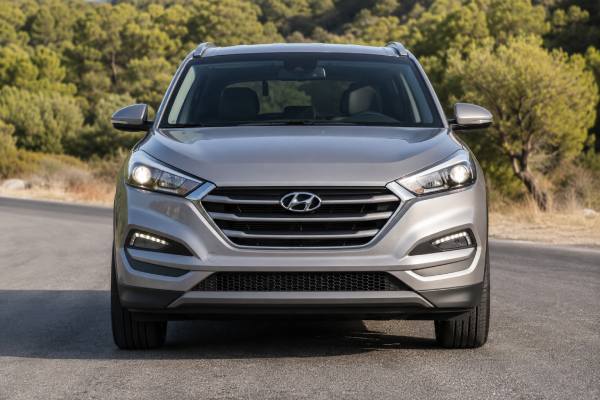
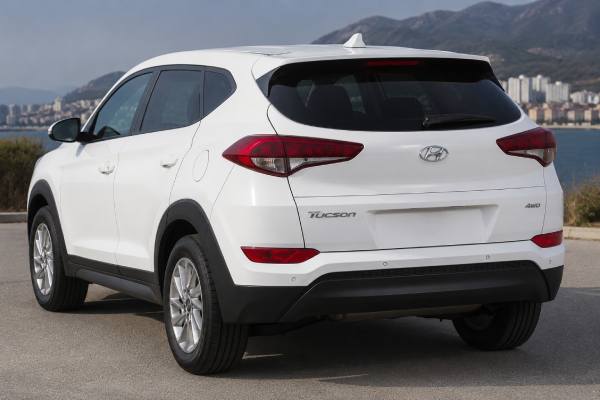
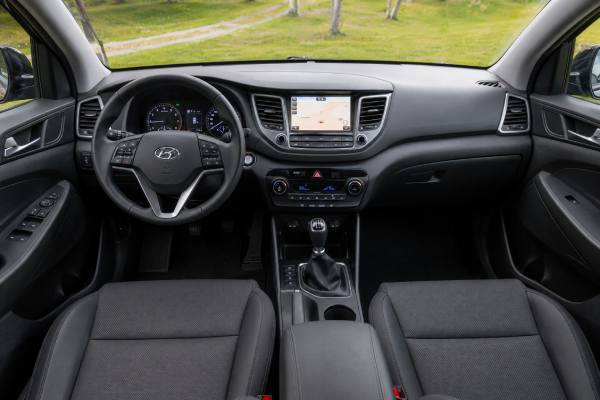
The 2015–2018 Hyundai Tucson TL with the R 2.0 CRDi 136 hp diesel and 4WD is one of the more sensible versions of Hyundai’s third-generation compact SUV. It is not the fastest Tucson diesel, but it combines a strong 373 Nm torque figure, useful towing ability, a conventional six-speed gearbox choice, and a roomy cabin in a package that is generally easier to live with than many downsized turbo petrol crossovers.
For used buyers, the important point is condition. A well-serviced 2.0 CRDi 4WD can be a durable family SUV, especially for motorway, rural, winter, and light towing use. A neglected one can become expensive because diesel emissions parts, clutches, flywheels, AWD hardware, and automatic transmission servicing are not cheap.
Final Verdict
The Hyundai Tucson TL 2.0 CRDi 136 hp 4WD is a good used buy for drivers who want a practical diesel SUV with strong mid-range torque, secure all-weather traction, and respectable towing ability without moving into larger SUV running costs. It suits motorway commuters, families in hilly or cold areas, and owners who tow modest trailers. Its main tradeoff is that it needs proper diesel use and maintenance: short-trip driving can stress the DPF and EGR system, while manual cars need careful clutch and dual-mass flywheel checks. Buy only with documented servicing, completed recalls, clean cold starts, and evidence of AWD and transmission care.
| Pros | Cons |
|---|---|
| 373 Nm diesel torque gives easy hill and towing performance | 136 hp feels steady rather than quick when fully loaded |
| 4WD system improves wet-road, snow, and gravel confidence | AWD adds weight, tyres, fluids, and inspection points |
| Six-speed automatic is smoother than Hyundai’s period DCT | Automatic version is slower and thirstier than the manual |
| Spacious cabin and useful boot suit family SUV duty | 19-inch wheels can hurt ride comfort and tyre costs |
| Strong safety kit on higher UK trims, including AEB | Best driver aids were trim-dependent before the facelift |
Table of Contents
- Tucson TL 2.0 CRDi 4WD Overview
- Tucson 2.0 CRDi Specifications
- Trims, Safety and Driver Assistance
- Reliability, Common Issues and Recalls
- Maintenance and Used Buying Guide
- Driving, Performance and Efficiency
- Tucson 2.0 CRDi vs Rivals
Tucson TL 2.0 CRDi 4WD Overview
The 136 hp 2.0 CRDi 4WD is best understood as the sensible torque-focused Tucson, not the sporty one. It gives the TL-generation Tucson useful diesel strength and all-weather traction, but it does not have the punch of the 185 hp 2.0 CRDi.
This version uses Hyundai’s R-family 2.0-litre common-rail diesel engine, commonly identified as D4HA in parts catalogues and service data. In UK and European pre-facelift form, it was sold with either a six-speed manual gearbox or a six-speed torque-converter automatic, both driving all four wheels.
The 4WD system is aimed at poor weather and loose surfaces rather than hard off-roading. In normal driving, the Tucson behaves mostly like a front-biased crossover. When traction drops, it can send torque rearward, and a lock mode can split torque more evenly at low speeds for snow, mud, wet grass, or steep gravel starts. It does not have a low-range transfer case.
The 2.0 CRDi 136 hp version makes sense if you want:
- Better low-rpm pull than the smaller 1.7 CRDi.
- More towing confidence than the lighter front-wheel-drive diesels.
- A conventional automatic instead of the 7-speed dual-clutch gearbox used on some smaller-engine Tucson models.
- A family SUV with a high driving position, good rear-seat space, and practical boot volume.
The main ownership warning is that this is still a modern Euro 6 diesel. It has a diesel particulate filter, exhaust-gas recirculation, sensors, and turbocharging hardware that need clean oil, quality fuel, regular longer drives, and prompt fault diagnosis. Buyers using the car only for school runs and short urban trips are often better served by a petrol or hybrid SUV.
Tucson 2.0 CRDi Specifications
The Tucson TL 2.0 CRDi 136 hp 4WD combines a four-cylinder turbo-diesel engine, six-speed manual or six-speed automatic transmission, and an on-demand all-wheel-drive system. The key differences are transmission performance and economy: the manual is quicker and more efficient, while the automatic is easier in traffic and better suited to drivers who value smoothness.
Powertrain and efficiency
| Item | Hyundai Tucson TL 2.0 CRDi 136 hp 4WD |
|---|---|
| Engine family | Hyundai R 2.0 CRDi, commonly D4HA |
| Fuel type | Diesel |
| Layout | Inline-4, DOHC, 16 valves |
| Displacement | 1,995 cc |
| Bore × stroke | 84.0 × 90.0 mm |
| Compression ratio | 16.0:1 |
| Induction | Turbocharged diesel |
| Fuel system | Common-rail direct injection |
| Maximum power | 100 kW / 136 PS at 2,750–4,000 rpm |
| Maximum torque | 373 Nm / 275 lb-ft at 1,800–2,500 rpm |
| Timing drive | Timing chain |
| Emissions standard | Euro 6 in UK pre-facelift data |
Transmission and driveline
| Item | Specification |
|---|---|
| Manual transmission | 6-speed manual |
| Automatic transmission | 6-speed torque-converter automatic |
| Drive type | On-demand 4WD / AWD |
| 4WD behaviour | Front-biased, rear torque added when traction drops |
| Low-speed lock mode | Can hold a near 50:50 split for poor surfaces |
| Off-road gearing | No low range |
Dimensions, chassis and capacities
| Item | Value |
|---|---|
| Body style | 5-door compact SUV |
| Seats | 5 |
| Length | 4,475 mm |
| Width | 1,850 mm |
| Height | 1,650 mm on most 2.0 CRDi 4WD trims |
| Wheelbase | 2,670 mm |
| Turning circle | 10.6 m |
| Ground clearance | 172 mm on 4WD models |
| Suspension | MacPherson strut front, multi-link rear |
| Boot capacity | About 488–1,478 litres on many 2.0 CRDi 4WD UK trims |
| Fuel tank | 62 litres |
Weights, towing and capability
| Item | Manual 4WD | Automatic 4WD |
|---|---|---|
| Kerb weight | About 1,587 kg | About 1,615 kg |
| Gross vehicle weight | 2,250 kg | 2,250 kg |
| Braked towing limit | 2,200 kg | 1,900 kg |
| Unbraked towing limit | 750 kg | 750 kg |
| Noseweight | 100 kg | 100 kg |
| Roof load | 100 kg | 100 kg |
| Approach angle | 17.2 degrees | 17.2 degrees |
| Departure angle | 23.9 degrees | 23.9 degrees |
Performance and official economy
| Item | Manual 4WD | Automatic 4WD |
|---|---|---|
| 0–62 mph / 0–100 km/h | 10.9 seconds | 12.0 seconds |
| Top speed | 114 mph / 183 km/h | 114 mph / 183 km/h |
| Official urban economy | 6.0 L/100 km / 47.1 mpg UK | 7.0 L/100 km / 40.4 mpg UK |
| Official extra-urban economy | 4.8 L/100 km / 58.9 mpg UK | 5.3 L/100 km / 53.3 mpg UK |
| Official combined economy | 5.2 L/100 km / 54.3 mpg UK | 6.0 L/100 km / 47.1 mpg UK |
| CO2 emissions | 139 g/km | 156 g/km |
Trims, Safety and Driver Assistance
In the UK-style trim structure, the 2.0 CRDi 136 hp 4WD was not the basic Tucson. It usually appears from SE Nav upward, where equipment becomes much more useful for family and long-distance ownership.
Trim positioning and identifiers
The main UK grades were S, SE, SE Nav, Premium, and Premium SE. The 2.0 CRDi 136 hp 4WD sat in the better-equipped part of the range, with manual and automatic versions depending on trim and model year.
Quick identifiers include:
- 2.0 CRDi badge or twin exhaust finisher: UK brochures identify the rear skid plate and twin exhaust finisher as 2.0 CRDi features.
- SE Nav: 8-inch touchscreen navigation, reversing camera, TomTom LIVE services, and speed limit information.
- Premium: usually adds 19-inch wheels on this engine, leather seat trim, front parking sensors, AEB, Blind Spot Detection, and Rear Cross Traffic Alert.
- Premium SE: adds items such as keyless entry/start, panoramic glass sunroof, LED headlights with auto levelling and washer, ventilated front seats, and Smart Park Assist on automatic versions.
Mechanical differences are mostly drivetrain and wheel related. The 136 hp 4WD manual has the strongest braked towing rating in the official UK data. The automatic is easier to drive but has a lower braked tow limit and higher fuel use. Premium and Premium SE cars often have 245/45 R19 tyres, which sharpen the look but can add road noise, increase tyre cost, and make pothole damage more likely.
Safety ratings
The Tucson TL achieved a five-star Euro NCAP rating in 2015. The test car was a left-hand-drive 1.7 diesel 4×2, but the rating was presented for the wider Tucson range, including petrol and diesel variants. Category scores were strong for the period: adult occupant protection was 86%, child occupant protection 85%, pedestrian protection 71%, and safety assist 71%.
The important used-car point is that Euro NCAP ratings are tied to the test year. A five-star score from 2015 is not directly comparable with a five-star score under newer, stricter protocols. For a 2015–2018 family SUV, however, the Tucson’s structure, airbags, active bonnet system, and available driver assistance make it competitive.
Safety systems and ADAS
Standard or widely fitted safety equipment, depending on trim and market, included:
- Six airbags: front, front side, and curtain airbags.
- ABS with electronic brake-force distribution.
- Electronic Stability Programme and Vehicle Stability Management.
- Hill-start Assist Control and Downhill Brake Control.
- Trailer Stability Assist.
- Tyre Pressure Monitoring System with individual tyre display.
- Rear ISOFIX points on the outer rear seats.
- Active bonnet system for pedestrian protection.
Driver assistance was strongly trim-dependent. Lane Departure Warning with Lane Keep Assist appeared from SE in the UK trim ladder. AEB, Blind Spot Detection, and Rear Cross Traffic Alert were higher-trim features, commonly associated with Premium and Premium SE. That means two Tucson 2.0 CRDi 4WD cars can feel very different in safety technology even if they share the same engine.
After windscreen replacement, front-end crash repair, suspension work, or wheel alignment, check that lane and camera-based systems operate correctly. Any ADAS warning lights, calibration faults, or inconsistent lane warnings should be diagnosed before purchase, not treated as a minor annoyance.
Reliability, Common Issues and Recalls
The 2.0 CRDi 136 hp 4WD has a generally solid reputation when serviced properly, but it is not immune to modern diesel and AWD costs. The most expensive risks are diesel emissions faults, clutch and dual-mass flywheel wear on manuals, neglected transmission or AWD fluids, and unresolved recall work.
| Issue | Prevalence | Cost risk | Typical signs |
|---|---|---|---|
| DPF loading from short trips | Common in urban use | Medium to high | Warning light, fan running, limp mode, poor economy |
| EGR, boost, or NOx sensor faults | Occasional | Medium | Engine light, hesitation, low power, smoke |
| Manual clutch and dual-mass flywheel wear | Occasional | Medium to high | Judder, slip, rattling at idle, heavy pedal |
| Automatic fluid neglect | Condition-dependent | Medium to high | Harsh shifts, delayed engagement, shudder |
| AWD coupling, rear diff, or propshaft noise | Occasional | Medium | Binding, vibration, clunking, rear-end whine |
| Suspension links, bushes, wheel bearings | Common with age | Low to medium | Knocks, tyre wear, humming at speed |
| Brake corrosion and sticking calipers | Common in wet climates | Low to medium | Dragging, uneven pad wear, vibration |
Symptoms, causes and remedies
A Tucson that repeatedly enters limp mode should be scanned with a capable diagnostic tool before parts are replaced. Low boost codes can come from split intercooler hoses, sticky turbo control, EGR restriction, or sensor errors. DPF-related codes can reflect blocked regeneration, failed temperature or pressure sensors, or too much ash from high mileage.
Manual cars need special attention. A dual-mass flywheel smooths diesel vibration, but it wears with heavy towing, city driving, riding the clutch, and repeated low-rpm labouring. Listen for rattling at idle that changes when the clutch pedal is pressed. On a test drive, use a higher gear at low revs and apply torque gently; clutch slip or vibration is a warning sign.
The six-speed automatic is usually smoother and more relaxing than Hyundai’s period dual-clutch units, but “sealed for life” thinking is not ideal on an older SUV. Harsh engagement, flares, delayed drive, or shudder under light throttle should make you budget for fluid service and diagnosis.
For the AWD system, check for four matching tyres with similar tread depths. Mismatched tyres can stress couplings and differentials. On a tight slow turn, there should be no heavy binding, banging, or driveline wind-up on normal dry pavement.
Recalls and service actions
Important UK recall themes for this generation include the secondary bonnet catch and the ABS/ESC control unit. The bonnet recall involved replacing the secondary catch and updating the cluster software so the bonnet warning worked correctly. The ABS/ESC recall involved reworking the control unit wiring with amended fuses and, depending on specification, updating control unit software.
There were also market-specific safety, emissions, fuel, braking, and electrical campaigns across the broader Tucson TL range. The correct approach is simple: check the VIN with Hyundai or the official recall database in the country where the vehicle is registered, then ask the seller for dealer proof that all actions were completed.
Pre-purchase records to request:
- Full service history with oil grade and mileage intervals.
- Recall and service campaign printout by VIN.
- Evidence of fuel filter, brake fluid, coolant, and transmission work.
- Invoices for clutch, flywheel, DPF, EGR, sensors, or turbo repairs.
- Diagnostic scan with no stored engine, ABS, AWD, or ADAS faults.
- Proof of matching tyre size, brand, and tread condition.
Maintenance and Used Buying Guide
A conservative maintenance schedule is the best protection for this Tucson. Follow the service book for the exact VIN and market, but treat short trips, towing, dusty roads, cold climates, and heavy city driving as severe use.
| Item | Practical interval | Owner note |
|---|---|---|
| Engine oil and filter | 10,000–15,000 km or 6–12 months | Use low-SAPS diesel oil matching the service book |
| Engine air filter | Inspect yearly, replace about 20,000–40,000 km | Shorten interval on dusty roads |
| Cabin filter | Yearly or about 20,000–30,000 km | Replace sooner for weak airflow or odour |
| Diesel fuel filter | About 20,000–40,000 km, fuel-quality dependent | Use genuine-quality parts to protect injectors |
| Brake fluid | Every 2 years | DOT 4 fluid is commonly specified |
| Coolant | About 100,000 km initially, then shorter thereafter | Use correct premix coolant type for the VIN |
| Serpentine belt and hoses | Inspect yearly, replace when cracked or noisy | Also inspect tensioner and pulleys |
| Timing chain | No routine belt-style replacement | Inspect for rattle, stretch, tensioner, and correlation faults |
| Automatic transmission fluid | Consider 60,000–80,000 km in severe use | Use Hyundai/Kia SP-IV specification where required |
| Manual gearbox and AWD oils | Inspect regularly, refresh about 60,000–100,000 km | Include transfer, rear differential, and coupling checks |
| Tyre rotation and alignment | 10,000–15,000 km | Keep all four tyres closely matched on 4WD cars |
| 12 V battery | Test yearly after 4 years | Weak batteries cause odd electronic faults |
Fluids, capacities and torque references
| Item | Useful value or specification |
|---|---|
| Engine oil quantity | About 7.6–8.0 litres for a service fill; verify by dipstick |
| Engine oil viscosity | 5W-30 or 5W-40 depending climate and market |
| Diesel oil quality | Low-SAPS ACEA C3-type oil commonly used for DPF cars |
| Automatic transmission fluid | Hyundai/Kia SP-IV specification for six-speed automatic |
| Brake fluid | DOT 4 |
| Wheel nut torque | 88–107 Nm |
| Fuel tank | 62 litres |
Used buyer inspection checklist
Start with the cold engine. It should start cleanly, idle evenly, and settle without heavy chain rattle, injector knock, blue smoke, or diesel fumes in the cabin. A brief diesel clatter is normal; persistent metallic noise is not.
During the test drive, check:
- Strong pull from about 1,700 rpm without flat spots.
- No engine warning lights after hard acceleration.
- Smooth automatic shifts or a light, clean manual clutch action.
- No steering vibration or rear driveline rumble at motorway speed.
- No binding from the AWD system on slow manoeuvres.
- Straight braking without pedal pulsing or steering shake.
- Lane assist, parking sensors, camera, TPMS, and infotainment function.
- Air conditioning performance and no damp smell from the cabin.
Underneath, inspect the subframes, suspension arms, brake pipes, fuel lines, rear differential area, exhaust, undertrays, and jacking points. UK and northern-European cars can suffer from surface corrosion, especially when used on salted roads. A little surface rust is normal; flaky structural corrosion, wet diff seals, oil leaks, or damaged underbody panels deserve negotiation or rejection.
The best examples are often SE Nav, Premium, or Premium SE cars with documented maintenance and sensible wheels. Premium SE equipment is attractive, but the panoramic roof, 19-inch tyres, power seats, parking systems, and higher ADAS content create more items to inspect. For long-term ownership, a clean SE Nav or Premium on well-kept 17-inch wheels can be the sweet spot.
Driving, Performance and Efficiency
On the road, the 2.0 CRDi 136 hp Tucson feels relaxed and torquey, not sporty. It is at its best cruising, climbing hills, carrying family loads, and dealing with poor weather.
Powertrain character
The engine’s best work happens in the mid-range. With 373 Nm available low in the rev range, the Tucson does not need high revs to make progress. There is some diesel lag below the boost zone, but once moving it pulls cleanly enough for overtaking and motorway merging.
The manual gearbox gives better performance and economy, but it also exposes clutch and flywheel wear. The automatic is slower on paper but suits the vehicle’s character. It shifts smoothly when healthy, avoids the low-speed hesitation that can affect some dual-clutch setups, and is easier when towing or driving in traffic.
Ride, handling and noise
The Tucson TL has a comfortable, planted feel. It is stable at motorway speeds and feels secure in rain, especially on good tyres. Steering is light rather than talkative, and the body leans if pushed hard, but it behaves predictably.
Ride quality depends heavily on wheel size. Cars on 17-inch wheels are usually more forgiving. Cars on 19-inch wheels look better and can feel a little sharper, but they transmit more sharp-edge bumps and road noise. Braking feel is generally confidence-inspiring for normal use, but any vibration under braking usually points to warped discs, pad deposits, corroded rear brakes, or worn suspension parts.
Real-world fuel economy
Expect real-world economy to sit below the official figures, especially on older tyres, with roof bars, in winter, or with urban use.
| Use case | Manual 4WD | Automatic 4WD |
|---|---|---|
| City and short trips | 7.5–9.0 L/100 km / 31–38 mpg UK | 8.0–10.0 L/100 km / 28–35 mpg UK |
| Mixed driving | 6.2–7.2 L/100 km / 39–46 mpg UK | 7.0–8.2 L/100 km / 34–40 mpg UK |
| Steady highway | 5.5–6.3 L/100 km / 45–51 mpg UK | 6.2–7.0 L/100 km / 40–46 mpg UK |
| Cold weather penalty | Often 10–20% worse | Often 10–20% worse |
Towing or roof cargo can push consumption much higher. With a medium trailer or caravan, expect a clear fuel penalty and more frequent gear changes on hills. The Tucson’s 4WD traction helps on campsites and ramps, but it is not a substitute for correct trailer weight, noseweight, tyres, and brake condition.
Tucson 2.0 CRDi vs Rivals
The Tucson 2.0 CRDi 4WD is strongest against rivals when value, equipment, warranty history, and torque matter more than badge prestige. It is not the sharpest SUV in the class, but it is one of the more rounded diesel family choices when bought carefully.
| Rival | How it compares | Best choice if |
|---|---|---|
| Kia Sportage QL 2.0 CRDi AWD | Very close mechanically, similar strengths and inspection needs | You find a cleaner car or prefer Kia styling |
| Volkswagen Tiguan 2.0 TDI 4Motion | More premium cabin feel, often costlier DSG and emissions repairs | You want sharper refinement and accept higher bills |
| Nissan Qashqai dCi | Lighter and cheaper to run, but less towing and load strength | You mostly drive solo or in town |
| Mazda CX-5 2.2 diesel AWD | Better steering and driver appeal, but diesel condition is critical | You prioritise handling and inspect service history carefully |
| Toyota RAV4 diesel or hybrid | Hybrid is better for urban use; diesel availability varies by market | You want lower-risk city use or Toyota resale strength |
| Honda CR-V diesel AWD | Roomier and efficient, but usually less modern-feeling inside | You need extra cabin space over style |
Compared with the Kia Sportage, the Tucson is mostly a matter of condition, price, and preference. Compared with the Tiguan, the Hyundai feels less premium but can be cheaper to buy and maintain. Compared with the Qashqai, it is stronger and roomier, but heavier and less economical. Compared with the Mazda CX-5, it is less engaging but often easier to recommend to buyers who simply want a comfortable diesel family SUV.
The best rival may actually be another Tucson. A lower-mileage 1.7 CRDi 2WD can be cheaper and more efficient for non-towing motorway use. The 185 hp 2.0 CRDi 4WD is more satisfying if performance matters. The 136 hp 2.0 CRDi 4WD sits between them: enough torque to feel useful, less expensive than the higher-output diesel, and still practical enough for real SUV duties.
References
- All–New Tucson 2016 (Brochure)
- PMSS – Update Nov 2024- Website .xlsx 2024 (Maintenance Schedule)
- HYUNDAI TUCSON 2016 – Check if a vehicle, part or accessory has been recalled – GOV.UK 2021 (Recall Database)
- HYUNDAI TUCSON 2018 – Check if a vehicle, part or accessory has been recalled – GOV.UK 2021 (Recall Database)
- Hyundai Tucson – Euro NCAP Results 2015 2015 (Safety Rating)
Disclaimer
This article is for informational purposes only and is not a substitute for professional diagnosis, repair, or inspection. Specifications, torque values, service intervals, fluids, software actions, and repair procedures can vary by VIN, market, production date, trim, and equipment. Always verify against the official owner’s manual, service schedule, workshop information, recall database, and Hyundai dealer records for the exact vehicle.
Please share this guide on Facebook, X/Twitter, or your preferred platform if it helped you compare, maintain, or buy a used Tucson.