
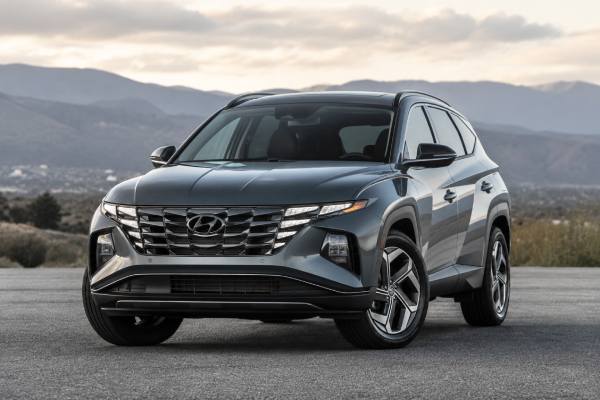
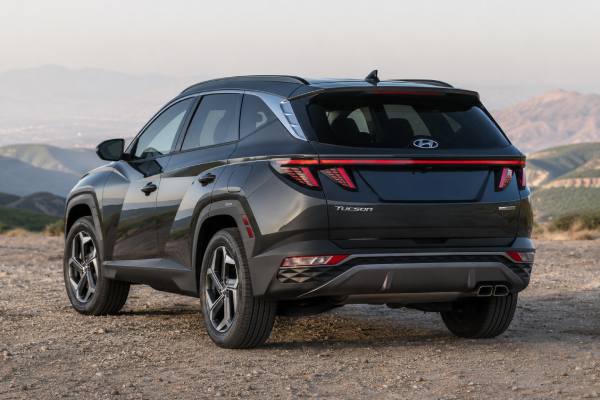
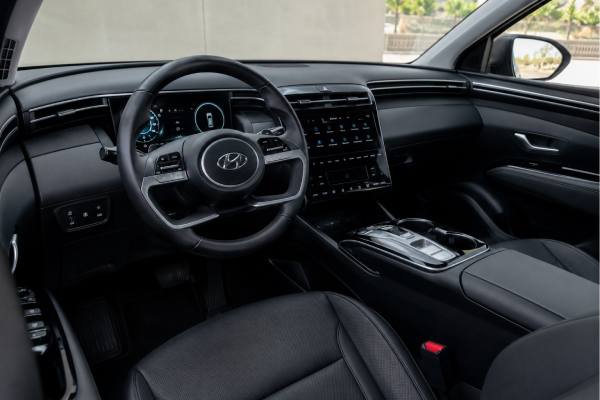
The Hyundai Tucson NX4 with the Smartstream 1.6 CRDi diesel is the sensible, lower-output diesel version of Hyundai’s fourth-generation family SUV. In 115 hp form, it uses front-wheel drive and a 6-speed manual gearbox, so it is aimed less at performance and more at relaxed everyday use, long-distance economy, and lower running costs.
This version matters because it sits in a useful middle ground: larger and more comfortable than many compact crossovers, but less complex than the 48V mild-hybrid diesel, hybrid, plug-in hybrid, or AWD versions. For buyers looking at a used 2021–2024 Tucson diesel, the main questions are simple: is it powerful enough, is it reliable, what should be checked before buying, and how expensive is it likely to be to maintain?
Final Verdict
The Hyundai Tucson FWD NX4 1.6 CRDi 115 is a good choice for buyers who want a roomy, efficient diesel SUV without AWD, automatic-transmission complexity, or hybrid hardware. Its strongest appeal is its mix of cabin space, comfort, strong safety credentials, and useful low-rpm torque. It suits commuters, families, and long-distance drivers better than short-trip city users. The main tradeoff is performance: 115 hp is adequate, not lively, especially with passengers or a trailer. Buy one only with clear service history, completed recalls, healthy DPF/SCR emissions systems, and evidence that it has not spent its life doing short cold journeys.
| Pros | Cons |
|---|---|
| Efficient 1.6 CRDi suits long motorway use | 115 hp feels modest when heavily loaded |
| FWD manual layout keeps drivetrain complexity low | Manual clutch wear depends heavily on driver use |
| Spacious NX4 cabin and practical boot | Large wheels can make the ride firmer |
| Five-star Euro NCAP rating applies to CRDi 4×2 | ADAS equipment varies sharply by trim and market |
| Strong diesel torque at low revs | DPF/SCR systems dislike repeated short trips |
Table of Contents
- Tucson NX4 1.6 CRDi overview
- Specifications and technical data
- Trims, safety and driver assistance
- Reliability, common issues and service actions
- Maintenance and buyer’s guide
- Driving, performance and real-world economy
- How the Tucson diesel compares to rivals
Tucson NX4 1.6 CRDi overview
The 1.6 CRDi 115 is the least complicated diesel version of the fourth-generation Hyundai Tucson in many European markets. It pairs the Smartstream D 1.6 diesel engine with front-wheel drive and a 6-speed manual transmission.
The NX4 Tucson arrived with a much bolder design than the previous TL-generation model. It also moved closer to larger family SUVs in cabin technology, safety equipment, and interior space. The 1.6 CRDi 115 version keeps that same body and cabin package but avoids the higher cost and added complexity of AWD, 48V mild-hybrid assistance, DCT automatic transmission, or plug-in hybrid charging hardware.
This engine is best understood as a torque-focused economy diesel. The headline power figure is modest, but the useful 280 Nm of torque arrives low in the rev range. That makes the car easy to drive at normal speeds, especially on open roads, where it can sit in higher gears and deliver good fuel economy.
It is not the version to buy for quick acceleration, enthusiastic driving, or frequent heavy towing. Hyundai offered more powerful Tucson variants for those jobs, including the 136 PS 48V CRDi, petrol turbo, hybrid, and plug-in hybrid models. The 115 PS CRDi is the quieter choice for buyers who value economy, practicality, and simpler mechanical specification.
In used-market terms, the appeal is clear. A well-maintained Tucson 1.6 CRDi FWD manual can be a practical family car with low fuel use and broad parts availability. The risk is also clear: modern Euro 6d diesels need the right usage pattern. Repeated short trips, ignored DPF warnings, cheap oil, and poor AdBlue handling can turn a low-cost diesel into an expensive one.
Specifications and technical data
This Tucson uses a front-mounted 1.6-litre four-cylinder common-rail diesel engine, driving the front wheels through a 6-speed manual gearbox. The key technical story is not outright power, but the combination of low-rpm torque, Euro 6d emissions equipment, practical SUV dimensions, and relatively low drivetrain complexity.
| Item | Hyundai Tucson NX4 1.6 CRDi 115 FWD |
|---|---|
| Engine family | Smartstream D 1.6 CRDi, D4FE |
| Fuel type | Diesel, Euro 6d emissions equipment |
| Layout | Front transverse inline-four, DOHC, 16 valves |
| Displacement | 1,598 cc |
| Bore × stroke | 77.0 × 85.8 mm |
| Compression ratio | 15.9:1 |
| Fuel system | Common-rail diesel injection |
| Induction | Turbocharged, intercooled |
| Maximum power | 115 PS / 85 kW at 4,000 rpm |
| Maximum torque | 280 Nm at 1,500–2,750 rpm |
| WLTP combined fuel use | About 5.2–5.6 L/100 km |
| WLTP CO₂ | About 136.5–145.8 g/km |
| Item | Specification |
|---|---|
| Transmission | 6-speed manual |
| Drive type | Front-wheel drive |
| Front suspension | MacPherson strut |
| Rear suspension | Multi-link independent suspension |
| Front brakes | Ventilated discs, about 291 mm |
| Rear brakes | Discs, about 302 mm |
| Common tyres | 215/65 R17, 235/55 R18, 235/50 R19 |
| Turning circle | About 10.92 m |
| Item | Value |
|---|---|
| Body style | 5-door SUV, 5 seats |
| Length | 4,500 mm |
| Width | 1,865 mm excluding mirrors |
| Height | About 1,650 mm |
| Wheelbase | 2,680 mm |
| Ground clearance | About 170 mm |
| Kerb weight | About 1,477–1,628 kg, depending on trim |
| Fuel tank | About 54 litres |
| Boot space | About 598 litres seats up, 1,777 litres seats folded |
| Braked towing capacity | Up to 1,650 kg where approved |
| Unbraked towing capacity | Up to 750 kg |
| Item | Value or practical note |
|---|---|
| 0–100 km/h | About 12.1 seconds |
| Top speed | About 175 km/h |
| Engine oil capacity | About 4.4 litres |
| Engine oil type | Low-SAPS oil, commonly 0W-20 ACEA C5 or 0W-30 ACEA C2 by market |
| Coolant capacity | About 7.2 litres |
| Brake fluid | DOT 4 specification |
| Wheel nut torque | 11–13 kgf·m, about 79–94 lb-ft |
Trims, safety and driver assistance
The Tucson NX4 diesel was sold with different trim names depending on country, but the mechanical package stayed simple: 1.6 CRDi, FWD, and manual gearbox. The most important differences between trims are wheels, lighting, infotainment, seating, parking aids, and driver assistance.
Trims and option patterns
Across Europe, trim names may include versions such as Comfort, Trend, Style, Premium, N Line, Ultimate, Executive, or market-specific equivalents. Equipment varies by country, so the badge on the tailgate is less useful than the actual specification fitted to the car.
Typical lower and mid-grade cars may have cloth seats, smaller alloy wheels, manual seat adjustment, an 8-inch or 10.25-inch infotainment setup depending on market, rear parking sensors, reversing camera, dual-zone climate control, and standard lane and forward-collision systems. Higher trims may add LED lighting, larger wheels, heated seats, heated steering wheel, digital instruments, upgraded navigation, front sensors, blind-spot systems, surround-view cameras, leather or part-leather trim, powered tailgate, and more advanced cruise or highway assistance functions.
Quick identifiers for this exact version include:
- A 1.6 CRDi or diesel listing on registration documents.
- 85 kW power output on the certificate of conformity or vehicle data.
- FWD layout, with no HTRAC AWD badge.
- A 6-speed manual gear lever rather than DCT or automatic controls.
- Diesel filler and, on SCR-equipped cars, a separate AdBlue/urea filler.
- Engine family D4FE on parts, service, or diagnostic data.
The wheel package matters more than many buyers expect. The Tucson looks sharper on 18- or 19-inch wheels, but the 17-inch setup usually gives the best ride comfort, lower tyre cost, and better resistance to pothole damage. For a diesel family SUV, that is often the smarter used buy.
Safety rating
The NX4 Tucson achieved a five-star Euro NCAP rating in 2021. The rating was based on a tested hybrid model, but Euro NCAP lists the result as applying to the 1.6 CRDi 4×2 version as well.
The score breakdown was strong for family use: adult occupant protection at 86%, child occupant protection at 87%, vulnerable road user protection at 66%, and safety assist at 70%. The result reflects a solid body structure, centre airbag fitment, good side-impact performance, and useful active safety systems.
For child seats, the important practical point is that the outer rear seats are the primary ISOFIX/i-Size positions. The rear bench is broad enough for normal family use, but three child seats across will depend heavily on seat width and buckle access.
Driver assistance and calibration
Most NX4 Tucson versions include core Hyundai SmartSense functions such as Forward Collision-Avoidance Assist, Lane Keeping Assist, Lane Following Assist, Driver Attention Warning, High Beam Assist, speed-limit assistance, stability control, ABS, tyre-pressure monitoring, and multiple airbags.
Higher trims may add blind-spot assistance, rear cross-traffic avoidance, surround-view monitoring, navigation-based cruise features, and Highway Driving Assist. On manual diesel cars, adaptive cruise and stop-go behavior may not match automatic or hybrid models, so check the exact equipment before assuming a feature is present.
ADAS calibration matters after repairs. A windscreen replacement, front bumper repair, wheel-alignment correction, radar work, or suspension repair can require camera or radar calibration. A used Tucson with warning lights disabled, aftermarket glass, poor bumper repairs, or uneven tyre sizes should be inspected carefully.
Reliability, common issues and service actions
A well-serviced 1.6 CRDi Tucson should be a durable car, but it is a modern diesel, not an old simple mechanical diesel. The main risks are emissions-system neglect, poor usage pattern, missed recalls, and wear from city driving rather than fundamental engine weakness.
Common and occasional issues
The most common ownership concern is DPF and SCR health. The diesel particulate filter needs enough exhaust temperature to regenerate. Repeated short cold journeys can cause soot loading, warning messages, forced regeneration attempts, oil dilution, and eventually limp mode. SCR/AdBlue systems can also create warnings if the tank is run low, poor-quality fluid is used, the injector crystallizes, or a sensor fails.
Typical symptoms include “check exhaust system” messages, frequent cooling-fan operation after shutdown, high idle during regeneration, reduced power, poor fuel economy, AdBlue countdown warnings, or engine-management lights. The remedy should start with proper diagnostics, not blind parts replacement. A technician should check soot mass, differential pressure, temperature sensors, NOx readings, AdBlue dosing, boost leaks, EGR operation, thermostat behavior, and service history before condemning the DPF.
EGR and intake deposits are occasional rather than guaranteed. They are more likely on cars that idle often, run at low load, or do many short trips. Symptoms can include rough running, hesitation, smoke, poor response, or EGR-related fault codes. Cleaning or replacing the affected valve, pipework, or sensors may be needed, but the root cause must also be addressed.
The timing drive is chain-based rather than a routine timing-belt replacement item. That does not mean it can be ignored forever. Listen for cold-start rattle, check for timing-correlation fault codes, and use correct oil at sensible intervals. Chain stretch, guide wear, or tensioner problems are much less likely on a young, serviced vehicle than on one with long oil intervals and poor oil quality.
Manual gearbox and clutch reliability depends heavily on use. The 6-speed manual is generally straightforward, but city traffic, towing, hill starts, and resting a foot on the clutch can shorten clutch and dual-mass flywheel life. Warning signs include judder, slipping under load, heavy pedal feel, rattling at idle, or vibration when taking up drive.
Suspension wear is usually normal SUV wear rather than a major design flaw. Check drop links, control-arm bushes, rear suspension bushes, wheel bearings, tyre wear, and alignment. Uneven tyre wear on the rear can point to alignment issues or impact damage. Larger wheels make these problems easier to feel and more expensive to correct.
Recalls and service campaigns
For 2021–2024 used cars, recall completion should be treated as part of the buying inspection. Known European recall topics for the NX4 Tucson include side curtain airbag installation checks on some 2021–2023 vehicles and rear electric window anti-trap function on some 2022–2023 vehicles. Later recall listings in some markets also include brake-booster vacuum pump concerns on certain 2022–2023 vehicles.
The exact recall status depends on VIN, country, build date, and equipment. Do not rely only on an advert saying “no recalls.” Ask for dealer proof, check the official Hyundai recall portal where available, and confirm with a Hyundai dealer using the VIN. Recall work is normally free, but an ignored recall can still affect safety and resale value.
Pre-purchase checks to request
Before buying, ask for:
- Full service history with correct low-SAPS oil.
- Proof of recall and campaign completion.
- Diagnostic scan of engine, emissions, ABS, SRS, ADAS, and infotainment modules.
- DPF soot and ash data, regeneration history, and differential-pressure readings.
- AdBlue/SCR status and warning history.
- Evidence of clutch condition on a road test.
- Tyre brand, tread depth, and even wear across all four tyres.
- Inspection of underside, subframes, brake pipes, suspension arms, and exhaust mounts.
- Confirmation that all keys, manuals, locking wheel nut, and service records are present.
A clean diesel Tucson should start easily, idle smoothly, pull from low revs without smoke, show no exhaust warnings, and drive straight under braking. Walk away from cars with unexplained limp mode, deleted emissions equipment, missing service records, mismatched tyres, airbag warning lights, or sellers who resist a diagnostic check.
Maintenance and buyer’s guide
The best maintenance plan for this Tucson is conservative rather than minimal. Modern diesel hardware lasts longer when oil, filters, brake fluid, coolant, tyres, and emissions systems are looked after before problems become expensive.
| Interval | Work to do |
|---|---|
| Every 10,000–15,000 km or 12 months | Engine oil and filter, inspection, tyre pressures, lights, leaks, brake check |
| Every 15,000 km or 12 months | Rotate tyres if wear pattern allows, inspect alignment and suspension |
| Every 20,000–30,000 km | Cabin filter, engine air filter check or replacement in dusty use |
| Every 30,000 km | Fuel filter inspection or replacement where market schedule requires it |
| Every 2 years | Brake fluid replacement, brake caliper and parking brake inspection |
| Every 60,000–80,000 km | Coolant condition check, auxiliary belt inspection, hose inspection |
| Every 80,000–120,000 km | Manual gearbox oil change as preventive maintenance |
| Every 3–5 years | 12 V battery test and likely replacement depending on use |
| At each service | Check DPF/SCR status, AdBlue condition, fault codes, and software updates |
Use the oil specification listed for the exact VIN. Low-SAPS oil is important because the DPF and catalytic emissions systems are sensitive to ash-forming additives. A cheap oil change can become expensive if it shortens DPF life.
The fuel filter matters more on a common-rail diesel than on an old low-pressure diesel. Water or contamination can damage expensive injectors and high-pressure components. If the service record is unclear, replacing the fuel filter soon after purchase is sensible.
The coolant should be correct Hyundai-compatible long-life coolant, not a random universal mix. Cooling-system health affects emissions, heater performance, DPF regeneration, and long-term engine durability.
Brake servicing is also important because family SUVs often do short urban trips where brakes corrode faster than they wear out. Rear discs can show scoring or rust lips, especially if the car sits outside or is driven gently. Brake fluid should not be ignored because moisture lowers boiling point and can damage hydraulic components.
Used buying priorities
The best used example is not necessarily the lowest-mileage car. A 70,000 km Tucson that has done motorway journeys and regular servicing may be healthier than a 30,000 km car used only for school runs and short commutes.
Prioritize:
- Clear service history over cosmetic extras.
- 17- or 18-inch wheels if comfort and tyre cost matter.
- Mid-to-high trim if you want LED lights, heated seats, and better parking aids.
- A documented Hyundai dealer history if recall and software proof matters.
- Cars with clean diagnostic reports and no emissions tampering.
Be cautious with:
- Short-trip cars showing DPF or AdBlue warnings.
- Modified or remapped diesels.
- Cars with missing undertrays or damaged exhaust heat shields.
- Cars that have had cheap accident repairs around the bumper or windscreen.
- High-mileage examples with clutch judder, flywheel rattle, or poor gear selection.
- Any vehicle where the seller says “it just needs a sensor” but has no diagnostic report.
Long-term durability outlook
The Tucson 1.6 CRDi FWD manual has a good long-term outlook if it is used as a diesel should be used. Regular longer drives, correct oil, clean diesel, timely filters, and attention to DPF/SCR warnings should keep the main systems healthy.
The car is less ideal for owners who drive only a few kilometres at a time, leave AdBlue until the warning countdown, or want to avoid specialist diesel diagnostics. For that use, a Tucson hybrid or petrol may be a safer long-term choice.
Driving, performance and real-world economy
The Tucson 1.6 CRDi 115 drives like an economy-focused family SUV. It is calm, comfortable, and easy to place, but it is not quick.
At low speeds, the diesel’s 280 Nm torque helps the car move away without needing many revs. The manual gearbox suits drivers who prefer control and lower repair complexity, but the shift quality is more practical than sporty. The engine works best between about 1,500 and 3,000 rpm. Push beyond that and it becomes noisier without gaining much extra urgency.
Performance is adequate for normal use. The official 0–100 km/h time of around 12.1 seconds tells the story accurately. It is fine for commuting, steady motorway driving, and family trips, but overtaking needs planning when loaded. On faster roads, downshifting is often required for hills or short passing gaps.
Ride comfort is one of the Tucson’s stronger qualities. The long wheelbase, SUV seating position, and multi-link rear suspension make it feel stable and mature. It is not as sharp as a smaller hatchback or a lower crossover, but it feels secure and predictable. Steering is light at parking speeds and steady on the motorway.
Noise levels are generally well controlled for the class. The diesel is audible when cold or under load, but it settles down once cruising. Tyre noise depends heavily on wheel size and tyre choice. A 17-inch car on good touring tyres usually feels calmer than a 19-inch car on worn or budget tyres.
Real-world fuel economy depends strongly on journey type:
- City use: about 6.0–7.2 L/100 km is realistic, worse in short winter trips.
- Mixed driving: about 5.2–6.3 L/100 km is a sensible expectation.
- Steady main-road use: about 4.8–5.6 L/100 km is achievable.
- Fast motorway use: about 5.8–6.5 L/100 km is more realistic at higher speeds.
Cold weather, roof boxes, short trips, heavy loads, and 19-inch wheels can all increase consumption. Towing can raise fuel use sharply, especially above 90 km/h or on hills. Although the braked towing rating is useful, the 115 hp version is better with lighter trailers than with heavy caravans near the limit.
The FWD layout is fine for most road use. It saves weight and avoids AWD service costs, but it cannot match HTRAC AWD traction on snow, mud, wet grass, or steep loose surfaces. Tyres matter more than drivetrain for many owners: good all-season or winter tyres will help a FWD Tucson more than worn summer tyres on an AWD SUV.
How the Tucson diesel compares to rivals
The Tucson 1.6 CRDi 115 competes with practical diesel and hybrid family SUVs rather than performance SUVs. Its strongest rivals include the Kia Sportage 1.6 CRDi, Peugeot 3008 1.5 BlueHDi, Volkswagen Tiguan 2.0 TDI, Skoda Karoq diesel, Nissan Qashqai alternatives, and hybrid SUVs such as the Toyota RAV4 or Tucson Hybrid.
Compared with the Kia Sportage 1.6 CRDi, the Tucson feels closely related mechanically and philosophically. The Kia may offer different styling, trim packaging, and warranty terms depending on market, but the diesel ownership priorities are similar: service history, DPF health, tyre wear, and recall completion.
Compared with the Peugeot 3008 1.5 BlueHDi, the Tucson feels more conventional inside and generally roomier in the rear. The Peugeot can be very economical and has a stylish cabin, but some buyers prefer Hyundai’s simpler controls and broader SUV feel. The Peugeot’s diesel is stronger on paper in many versions, so it may feel livelier than the 115 hp Tucson.
Compared with a Volkswagen Tiguan 2.0 TDI, the Tucson is usually better value on the used market and may offer more equipment for the money. The Tiguan often feels more polished at motorway speeds and can be stronger for towing, especially in higher-output diesel form. The Tucson counters with generous equipment, a long warranty in many markets, and lower purchase prices.
Compared with the Skoda Karoq diesel, the Tucson offers a more dramatic design and a larger SUV feel. The Karoq may be easier to park and more efficient in some specifications. The Tucson is the better choice if rear-seat space, visual presence, and comfort are priorities.
Compared with hybrids, the choice depends on use. If most driving is short, urban, and low-speed, a hybrid Tucson, Toyota RAV4 Hybrid, or similar petrol-electric SUV may be easier to live with. If most driving is longer motorway work, the 1.6 CRDi still makes sense because diesel efficiency is strongest at steady speeds.
The best reason to choose this Tucson is not that it wins every category. It is that it combines space, comfort, safety, economy, and manageable complexity in a useful way. Buy it for long-distance family use, not for excitement. Maintain it properly, keep the emissions system healthy, and it can be one of the more sensible used diesel SUVs from the early 2020s.
References
- All-new TUCSON 2020 (Brochure/Specifications)
- Hyundai Owners Manuals 2026 (Owner’s Manual)
- Euro NCAP | Hyundai TUCSON 2021 (Safety Rating)
- Home | Hyundai Recalls & Service Campaigns 2026 (Recall Database)
- Recalls by manufacturer (2024) 2024 (Recall Database)
Disclaimer
This article is for informational purposes only and is not a substitute for professional diagnosis, repair, or inspection. Specifications, torque values, service intervals, fluids, procedures, equipment, towing limits, safety systems, and recall coverage can vary by VIN, market, model year, and trim. Always verify important details against the official owner’s manual, service documentation, registration papers, and a Hyundai dealer or qualified technician.
If this guide helped you, please consider sharing it on Facebook, X/Twitter, or your preferred social platform to support our work.