
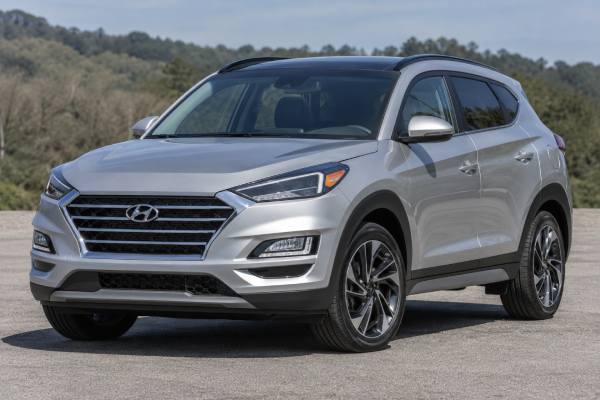
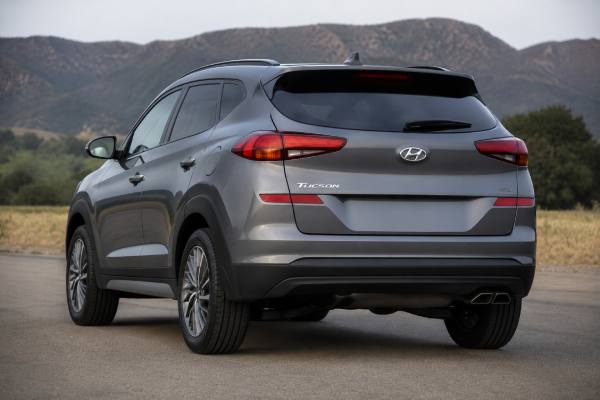
The facelifted Hyundai Tucson TL with the 2.4-liter Theta II GDi engine is the more useful gasoline AWD version of Hyundai’s third-generation compact SUV in North America. It sits above the 2.0-liter models, uses a conventional 6-speed automatic transmission, and offers a practical balance of cabin space, comfort, safety equipment, and all-weather traction without moving into larger-SUV running costs.
For used buyers, the main question is not whether the Tucson is practical. It is. The real question is whether the 2.4 GDi engine, AWD system, service history, recalls, and trim equipment make a specific example worth buying.
Final Verdict
The 2019–2021 Hyundai Tucson AWD 2.4 GDi is a solid used compact SUV for buyers who value comfort, simple controls, good safety equipment, and a conventional automatic more than sporty performance or class-leading fuel economy. Its strongest appeal is everyday usability: easy size, useful cargo space, available HTRAC AWD, and strong equipment on SEL, Sport, Limited, and Ultimate trims. The main ownership tradeoff is the Theta II GDi engine’s sensitivity to oil level, service history, and certain engine-related service actions. Buy one only with verified recall completion, clean maintenance records, and no signs of oil consumption, bearing noise, or neglected AWD fluids.
| Pros | Cons |
|---|---|
| 181 hp 2.4 GDi suits highway use better than the base 2.0 | Theta II engine history makes service records especially important |
| 6-speed automatic is smoother than many small-SUV dual-clutch setups | Fuel economy trails newer turbo, hybrid, and CVT rivals |
| HTRAC AWD improves wet, snow, and gravel-road confidence | AWD adds tire-matching and fluid-service sensitivity |
| Sport, Limited, and Ultimate trims get better LED lighting | Lower trims use weaker halogen headlights in safety testing |
| Cabin space and cargo volume are practical for family use | Acceleration is adequate, not quick, under full passenger load |
Table of Contents
- Tucson AWD TL Detailed Overview
- Tucson 2.4 GDi Specifications
- Trims, Safety and Driver Assistance
- Reliability, Common Issues and Service Actions
- Maintenance and Used Buying Guide
- Driving, Performance and Efficiency
- How the Tucson Compares to Rivals
Tucson AWD TL Detailed Overview
The 2019–2021 Tucson TL facelift is a compact five-seat SUV that favors comfort, value, and predictable controls over aggressive performance. The AWD 2.4 GDi version is the one to focus on if you want the stronger gasoline engine and better traction without stepping up to a Santa Fe.
This Tucson belongs to the TL generation sold before the larger NX4 Tucson arrived for 2022. The facelift brought revised styling, a reshuffled engine lineup, more standard driver assistance, and a move away from the earlier 1.6-liter turbo dual-clutch combination. In the U.S. lineup, the 2.4-liter GDi engine became standard on SEL and higher trims, while the 2.0-liter engine remained on lower versions.
The 2.4 is a naturally aspirated direct-injected four-cylinder from Hyundai’s Theta engine family. It produces 181 hp and 175 lb-ft of torque, which is enough for normal commuting, highway merging, and family use. It is not a punchy turbo engine, and it does not deliver the hybrid-like economy of newer compact SUVs. Its advantage is a more traditional driving feel: linear throttle response, a torque-converter automatic, and no turbocharger or dual-clutch transmission behavior to manage.
The AWD system is Hyundai’s active on-demand HTRAC layout on later TL documentation. It normally sends power primarily to the front wheels, then shifts torque rearward when traction or stability demand it. A lock mode can help at low speeds on snow, muddy driveways, loose gravel, or steep slippery surfaces. It is not an off-road 4×4 system, but it makes the Tucson more useful in winter climates than a front-drive version.
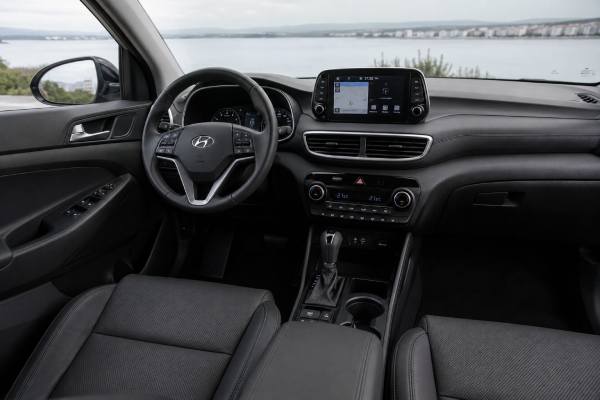
Inside, the Tucson feels straightforward rather than flashy. The seating position is easy to access, rear-seat space is adult-usable, and the cargo area is square enough for strollers, luggage, or weekly errands. The controls are simpler than many newer SUVs, which is a plus for buyers who dislike touchscreen-heavy interiors. Apple CarPlay and Android Auto were available across the 2021 range, and higher trims added features such as leather seating, Infinity audio, navigation, a panoramic sunroof, smart cruise control, wireless charging, and surround-view camera equipment.
The best ownership experience comes from a well-maintained SEL, Sport, Limited, or Ultimate AWD with complete records. The 2.4 GDi engine rewards frequent oil changes, regular oil-level checks, and quick attention to warning lights. Skip cars with vague service history, unresolved recalls, engine knock, smoke, low oil, repeated check-engine lights, or mismatched tires on the AWD system.
Tucson 2.4 GDi Specifications
The AWD 2.4 GDi Tucson uses a front-mounted gasoline inline-four, a 6-speed automatic transmission, and an active on-demand AWD system. The important technical points are simple: it is a naturally aspirated GDI engine, it uses a timing chain, and it is paired with a conventional automatic rather than a CVT or dual-clutch gearbox.
| Item | Hyundai Tucson AWD 2.4 GDi TL facelift |
|---|---|
| Model years covered | 2019, 2020, 2021 facelift TL |
| Engine family | Theta II 2.4 GDi inline-four |
| Displacement | 2.4 L / 2,359 cc |
| Bore x stroke | 88 x 97 mm |
| Compression ratio | 11.3:1 |
| Valvetrain | DOHC, 16 valves, dual CVVT |
| Fuel system | Gasoline direct injection |
| Maximum power | 181 hp at 6,000 rpm / about 135 kW |
| Maximum torque | 175 lb-ft at 4,000 rpm / about 237 Nm |
| Recommended fuel | Regular unleaded gasoline |
| Timing drive | Timing chain |
| EPA fuel economy, AWD 2.4 | 21 city / 26 highway / 23 combined mpg US; about 11.2 / 9.0 / 10.2 L/100 km |
| Item | Specification or note |
|---|---|
| Transmission | 6-speed automatic with torque converter |
| Transmission family | A6MF2 for the 2.4-liter engine |
| Manual shift mode | SHIFTRONIC manual gate |
| Drive type | HTRAC active on-demand AWD |
| Final drive, 2.4 AWD | 3.195 |
| Drive modes | Console-mounted drive mode selector |
| AWD assistance | AWD lock indicator, hill-start assist, downhill brake control on AWD models |
| Item | Specification |
|---|---|
| Body style | Compact unibody SUV, 5 seats |
| Wheelbase | 105.1 in / about 2,670 mm |
| Overall length | 176.2–176.4 in / about 4,475–4,481 mm |
| Overall width | 72.8 in / about 1,849 mm |
| Overall height | 64.8–65.0 in / about 1,646–1,651 mm |
| Ground clearance | 6.4 in / about 163 mm |
| Turning diameter | 34.9 ft / about 10.6 m |
| Curb weight, AWD | About 3,455–3,732 lb / 1,567–1,693 kg, depending on trim |
| Fuel tank | 16.4 US gal / about 62 L |
| Cargo volume | 31.0 cu ft seats up; 61.9 cu ft seats folded |
| Trailer rating | Use the VIN-specific owner’s manual; many U.S. references list 1,500–2,000 lb depending on rating method |
| Item | Specification or practical note |
|---|---|
| Front suspension | MacPherson struts with coil springs |
| Rear suspension | Multi-link with gas-pressurized dampers |
| Steering | Column-mounted motor-driven power steering |
| Front brakes | 305 x 25 mm ventilated discs |
| Rear brakes | 302 x 10 mm solid discs |
| Common tire sizes | 225/60R17, 225/55R18, 245/45R19 |
| Engine oil | 5W-20 or 5W-30, typically about 5.1 qt / 4.8 L with filter |
| Wheel-nut torque | Common Hyundai range is 79–94 lb-ft / 107–127 Nm; verify by manual |
Trims, Safety and Driver Assistance
For this powertrain, the most relevant trims are SEL and above because the 2.4-liter engine was used on the better-equipped versions. The best value usually comes from SEL or Sport, while Limited and Ultimate are worth seeking if lighting, leather, camera equipment, or driver assistance matter.
Trim and equipment overview
The 2021 U.S. lineup included SE, Value, SEL, Sport, Limited, and Ultimate. The lower SE and Value trims used the 2.0-liter engine, while SEL and higher trims used the 2.4-liter engine. AWD was optional across the lineup, so always confirm the car is actually AWD by checking for the AWD lock control, rear differential hardware, window sticker, VIN build data, or underbody driveline.
Useful trim identifiers include:
- SEL: 2.4-liter engine, 18-inch wheels, dual-zone automatic climate control, second-row USB, and stronger equipment than Value.
- Sport: 19-inch wheels, LED headlights and taillights, sportier exterior details, and Infinity audio.
- Limited: leather seating, chrome exterior details, heated steering wheel, wireless charging, surround-view monitor on later equipment sets, and premium cabin trim.
- Ultimate: panoramic sunroof, navigation with 8-inch screen, ventilated front seats, heated rear seats, smart cruise control with stop-and-go, high beam assist, and FCA with pedestrian detection.
For used buyers, Sport and Limited trims are attractive because they bring LED projector headlights without requiring the full Ultimate price. That matters because headlight performance differed sharply by trim in IIHS testing.
Safety ratings and crash-test context
The Tucson TL performed well in many crashworthiness categories, especially the original IIHS tests where small overlap, moderate overlap, side, roof strength, and head restraints generally rated well. The important nuance is that newer, tougher IIHS updated tests exposed weaker rear-passenger protection in the updated moderate overlap test and a marginal result in the updated side test for this generation.
That does not make the Tucson unsafe, but it does mean the older TL should not be judged as if it were a newer-generation SUV tested under later standards. For family buyers, the best examples are those with full active-safety equipment, good tires, properly functioning seat belts, and no collision history.
Driver assistance and active safety
The facelifted Tucson gained strong safety equipment for its age. Driver Attention Warning and Lane Keeping Assist were fitted broadly, while Forward Collision-Avoidance Assist was common across most trims. Ultimate added the more advanced pedestrian-detection version. Blind-Spot Collision Warning and Rear Cross-Traffic Collision Warning were fitted from Value upward on 2021 models, making them common on 2.4-liter trims.
Core safety equipment includes:
- Advanced front airbags, front side-impact airbags, and side-curtain airbags with rollover sensors.
- ABS, electronic brake-force distribution, traction control, electronic stability control, and brake assist.
- Tire-pressure monitoring with individual tire display.
- LATCH child-seat anchors in the rear outboard positions plus a center tether anchor.
- Rearview camera with dynamic guidelines.
- Available surround-view monitor on upper trims.
After windshield replacement, front-end collision repair, suspension alignment work, or bumper repair, confirm that camera and radar-based systems have been checked or calibrated as required. A Tucson with warning lights disabled or ignored can look fine on a test drive but still have non-functioning driver assistance.
Reliability, Common Issues and Service Actions
The Tucson TL 2.4 can be durable, but it is not a “buy any example blindly” vehicle. Engine history, oil-change frequency, recall completion, and AWD maintenance matter more than mileage alone.
| Issue | Prevalence | Severity | Typical signs | Best response |
|---|---|---|---|---|
| Rod bearing wear / P1326-related engine concern | Known on certain Theta II vehicles | High | Knock, limp mode, check-engine light, no-start | Dealer inspection, software campaign check, warranty review |
| Oil consumption | Occasional, age and use dependent | Medium to high | Low dipstick, blue smoke, fouled plugs, topping up often | Documented oil-consumption test and approved repair path |
| GDI carbon buildup | Occasional | Medium | Rough idle, hesitation, reduced economy | Diagnosis, induction cleaning, good oil and fuel habits |
| ABS/HECU fire-risk recall | Recall population | High safety concern | ABS light, burning smell, smoke, open recall | Verify recall completion by VIN before purchase |
| AWD tire mismatch or driveline fluid neglect | Occasional | Medium | Binding, vibration, rear-end noise | Match tires, inspect coupler, service gear oils |
| Suspension and wheel-bearing wear | Normal age-related | Low to medium | Clunks, humming, uneven tire wear | Replace worn bearings, links, bushings, align |
Engine-specific concerns
The Theta II 2.4 GDi needs clean oil and correct oil level. It is a direct-injected engine, so fuel does not wash the intake valves the way port injection does. Over time, especially with short trips and extended oil intervals, deposits and oil-control issues can become more likely.
The most serious concern is connecting-rod bearing wear on affected Theta II vehicles. Symptoms can include a metallic knock, flashing check-engine light, diagnostic code P1326, reduced-power mode, or a no-crank/no-start condition. Certain 2018–2019 Tucson TL 2.4 GDi vehicles appear in Hyundai engine service and warranty-extension documentation, so a 2019 model deserves a careful VIN check and dealer-record review.
Oil consumption is a separate but related buying concern. A seller saying “it just needs a quart sometimes” should be treated seriously. Check the dipstick cold, look for smoke after idling, inspect service invoices, and ask whether the vehicle has ever had a formal oil-consumption test.
ABS recall and service campaign checks
Certain Tucson TL vehicles were affected by an ABS/HECU-related recall because internal corrosion or electrical shorting could raise the risk of an engine-compartment fire. The repair involved Hyundai dealer action, including fuse-kit installation and software updates where applicable.
Do not rely on a seller’s verbal claim that “all recalls are done.” Use the VIN, ask for dealer printouts, and check Hyundai’s recall system. Open recalls should be completed before purchase or priced into the decision only if a dealer confirms the remedy is available.
Transmission, AWD and chassis durability
The 6-speed automatic is generally smoother than many dual-clutch transmissions and is well suited to daily use. Age-related harsh shifting, delayed engagement, or flare between gears can come from old fluid, adaptation issues, mounts, or internal wear. A clean test drive should include gentle takeoff, stop-and-go traffic, moderate throttle, and highway kickdown.
The AWD system depends on matched tires. Large tread-depth differences can stress the driveline. Check that all four tires are the same brand, size, model, and similar tread depth. Listen for rear-end whine, clunks, or binding in tight low-speed turns.
Rust is not usually the Tucson’s defining issue, but salt-belt cars deserve an underbody inspection. Check subframes, suspension arms, brake lines, exhaust hangers, fuel-tank straps, rear differential mounts, and the lower edges of doors and tailgate.
Maintenance and Used Buying Guide
A Tucson 2.4 AWD with strong records is far more attractive than a lower-mileage example with unknown oil history. Treat maintenance as part of the purchase price, not something to think about later.
| Interval | Service items |
|---|---|
| Every 5,000–7,500 miles / 6–12 months | Engine oil and filter, tire rotation, fluid checks, brake inspection |
| Every 15,000 miles / 12 months | Cabin filter, engine air-filter inspection, brake and suspension inspection |
| Every 30,000 miles | Brake fluid, engine air filter, fuel-system inspection, AWD leak check |
| Every 60,000 miles | Serpentine belt inspection, coolant check, transmission and AWD fluid assessment |
| Every 60,000–75,000 miles in severe use | Automatic transmission drain-and-fill, transfer case and rear differential service |
| About 100,000–105,000 miles | Spark plugs, coolant service if due, full ignition and drivability inspection |
| As symptoms require | Timing-chain inspection for rattle, correlation faults, guide or tensioner wear |
Use the shorter end of the oil interval if the vehicle sees short trips, cold starts, heavy traffic, dusty roads, mountain driving, high heat, or frequent idling. These conditions are common for compact SUVs, so many owners are better served by a 5,000-mile rhythm than by stretching every interval.
| Item | Practical specification |
|---|---|
| Engine oil | 5W-20 or 5W-30 gasoline-engine oil meeting the required API grade |
| Engine oil capacity | About 5.1 US qt / 4.8 L with filter; confirm after refill on dipstick |
| Automatic transmission fluid | Hyundai-approved SP-IV type fluid for A6MF-series automatic |
| Coolant | Phosphate-based ethylene-glycol coolant suitable for aluminum engines |
| Brake fluid | DOT 3 or DOT 4 as specified on reservoir/manual |
| Oil drain plug torque | Commonly about 29 lb-ft / 39 Nm with a new washer |
| Wheel nuts | 79–94 lb-ft / 107–127 Nm typical range; verify by manual |
Pre-purchase inspection checklist
Before buying, ask for maintenance records first and inspect the vehicle second. A tidy interior does not prove the engine was serviced correctly.
Check these points carefully:
- Cold start: listen for timing-chain rattle, bearing knock, piston slap, or exhaust leaks.
- Oil level: inspect the dipstick before the engine is warmed up or topped off by the seller.
- Warning lights: confirm the check-engine, ABS, airbag, AWD, and traction lights illuminate at startup and go out normally.
- Recall status: verify ABS/HECU recall completion and any engine-related campaigns by VIN.
- Engine behavior: test for hesitation, misfire, smoke, rough idle, or reduced-power mode.
- Transmission: look for delayed engagement, flare, harsh shifts, shudder, or clunks.
- AWD: check for matched tires, rear differential leaks, vibration, and binding in tight turns.
- Brakes: inspect rotor corrosion, caliper slide function, and brake-fluid age.
- Suspension: listen for front strut, sway-bar link, control-arm, and rear bushing noise.
- Body: inspect underbody corrosion, repaired crash damage, water leaks, and tailgate alignment.
- Electronics: test cameras, blind-spot warning, lane assist, infotainment, USB ports, sunroof, and power seat functions.
The safest used buy is a late 2020 or 2021 SEL, Sport, Limited, or Ultimate AWD with dealer recall proof and consistent oil changes. A 2019 can also be a good buy, but be extra strict about engine campaign records and oil-consumption evidence. Avoid any example with a fresh oil change but no service history, mismatched tires, unexplained engine noise, or a seller who resists a VIN-based recall check.
Driving, Performance and Efficiency
The Tucson AWD 2.4 drives like a comfort-biased compact SUV, not a sporty crossover. It is easy to place, stable at highway speeds, and smooth enough for daily family use.
The 2.4-liter engine has reasonable power, but its torque peak arrives at 4,000 rpm. Around town, it feels calm rather than eager. When merging onto a highway or climbing grades with passengers, the transmission needs to downshift and the engine needs revs. That is normal for this powertrain, but buyers coming from a turbocharged Mazda CX-5, Honda CR-V 1.5T, or newer Tucson Hybrid may find it less urgent.
Independent testing generally places 0–60 mph performance in the high-8-second to low-9-second range, depending on trim, tires, test method, and conditions. That is adequate for the class but not quick. Passing power from 50–70 mph is acceptable if the transmission is allowed to kick down.
The 6-speed automatic is one of the better parts of the driving experience. It is not the fastest transmission, but it usually shifts smoothly and avoids the low-speed hesitation some drivers dislike in dual-clutch setups. In city traffic it feels predictable, and on the highway it settles down without much fuss.
Ride comfort is good on 17- and 18-inch wheels. The 19-inch Sport wheels sharpen the look but can make sharp bumps more noticeable and tires more expensive. Steering is light and easy in parking lots, with enough stability at speed, but it does not provide much enthusiast feedback. Braking feel is progressive when the pads, rotors, and fluid are in good condition.
Real-world fuel economy depends heavily on trip length and temperature. Expect roughly:
- City driving: about 18–21 mpg US / 13.1–11.2 L/100 km.
- Highway driving: about 24–28 mpg US / 9.8–8.4 L/100 km.
- Mixed use: about 21–24 mpg US / 11.2–9.8 L/100 km.
Cold weather, winter tires, roof racks, short trips, remote start, and heavy traffic can easily reduce economy by 10–20 percent. Long highway drives at moderate speed are where the Tucson does best.
The AWD system improves confidence rather than performance. On rain, snow, gravel, or steep driveways, it helps the vehicle pull away with less wheelspin. It is not designed for deep mud, rock crawling, or repeated high-load off-road use. Use good tires, keep tread depth even, and service the AWD driveline if the car has seen towing, snowbelt use, or high mileage.
For towing, keep expectations modest. The Tucson can handle a small utility trailer, light camping load, or bike trailer when equipped and loaded correctly, but it is not a regular tow vehicle. Pay close attention to tongue weight, brake condition, transmission temperature, tire pressure, and local rating requirements.
How the Tucson Compares to Rivals
The Tucson 2.4 AWD is strongest as a value, comfort, and equipment choice. It is less convincing if your priorities are maximum fuel economy, sporty handling, or the strongest long-term engine reputation.
| Rival | Where the Tucson is stronger | Where the rival is stronger |
|---|---|---|
| Honda CR-V | Often better value and simpler cabin controls | More cargo space and stronger fuel economy |
| Toyota RAV4 | Usually cheaper used for similar equipment | Stronger resale value and hybrid availability |
| Mazda CX-5 | More practical pricing and softer daily ride | Sharper handling and more premium cabin feel |
| Subaru Forester | Conventional automatic feel, not a CVT | Standard AWD and better outward visibility |
| Kia Sportage | Very similar platform, often depends on condition | Some buyers prefer Kia styling and trim mix |
Against the Honda CR-V, the Tucson feels smaller and less efficient, but it can be a better value if you find a clean upper trim. The CR-V has a roomier cargo area and better fuel economy, while the Tucson counters with a conventional automatic and often lower used prices.
Against the Toyota RAV4, the Tucson is usually cheaper and more comfort-oriented. The RAV4 has stronger resale value, more efficient hybrid options, and a broader reputation for long-term durability. If you plan to keep the vehicle for many years with minimal risk, the RAV4 has the edge. If budget and equipment are priorities, the Tucson can make more sense.
The Mazda CX-5 is the driver’s choice. It has more polished steering, a more upscale cabin feel, and available turbo performance in some years. The Tucson is easiergoing, often roomier-feeling in daily use, and typically less expensive to buy with comparable mileage.
The Subaru Forester offers standard AWD and excellent visibility, making it a strong snowbelt rival. Its CVT feel is not for everyone, and some buyers will prefer the Tucson’s 6-speed automatic. The Subaru is better for outdoorsy use; the Hyundai is better for buyers who want a conventional, quiet commuter SUV.
A smart Tucson purchase depends less on beating every rival on paper and more on the exact car in front of you. A clean 2021 Tucson Limited AWD with complete records can be a better buy than a neglected RAV4 or CR-V. A noisy, oil-consuming Tucson with open recalls is not a bargain at any price.
References
- 2019 Tucson Specifications 2019 (Manufacturer Specifications)
- 2021 Tucson Specifications 2021 (Manufacturer Specifications)
- 2021 Tucson Features 2021 (Manufacturer Features)
- 2021 Hyundai Tucson 2021 (Safety Rating)
- Part 573 Safety Recall Report 20V-543 2020 (Recall Database)
Disclaimer
This article is for informational purposes only and is not a substitute for professional diagnosis, repair advice, or an official workshop manual. Specifications, torque values, maintenance intervals, fluids, towing limits, software updates, recalls, and repair procedures can vary by VIN, market, production date, trim, and equipment. Always verify critical information against the official owner’s manual, service documentation, VIN-specific dealer records, and applicable recall databases before buying, servicing, towing with, or repairing a vehicle.
If this guide helped you, please consider sharing it on Facebook, X/Twitter, or your favorite automotive community to support our work.