

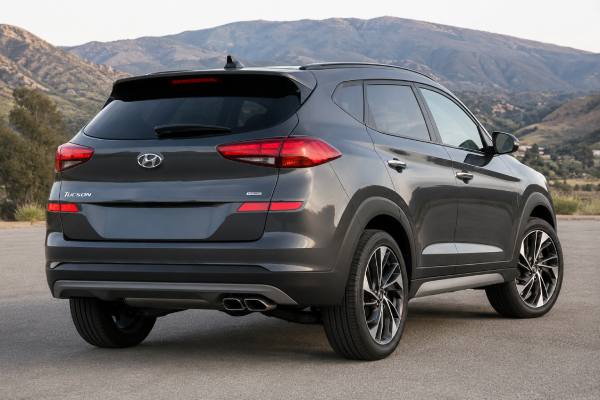
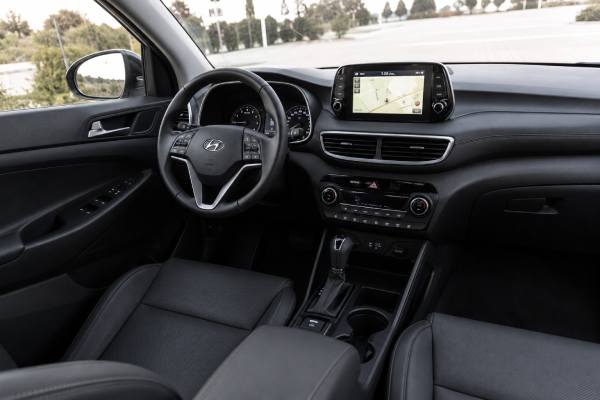
The facelifted Hyundai Tucson TL with the 1.6 CRDi 48V diesel and HTRAC all-wheel drive sits in a useful middle ground. It is more economical than the older 2.0 CRDi AWD, more flexible than the entry diesel, and still practical enough for family use, winter roads, long motorway trips, and light towing. The 48V mild-hybrid system does not make it an electric SUV, but it can smooth stop-start operation and reduce fuel use in the right conditions.
For used buyers, the key question is not whether this Tucson is exciting. It is whether the diesel, dual-clutch transmission, AWD system, emissions hardware, and mild-hybrid equipment have been maintained properly. A good one can be a comfortable, capable and affordable SUV. A neglected one can become expensive because diesel emissions systems and AWD driveline parts do not tolerate poor servicing.
Final Verdict
The 2019–2020 Hyundai Tucson TL 1.6 CRDi 48V HTRAC AWD is a sensible used SUV for drivers who want diesel range, secure wet-weather traction, good cabin space, and lower fuel use than the older 2.0 CRDi AWD. It suits motorway commuters, rural owners, and families who need winter confidence but do not need strong performance. The main tradeoff is complexity: the 48V system, DCT, AWD hardware, AdBlue/SCR and DPF all need proper checks. Buy only with clear service history, completed recalls, clean transmission behavior, and evidence that the car has not lived only on short urban trips.
| Pros | Cons |
|---|---|
| Strong 320 Nm diesel torque suits everyday SUV driving | Not quick; AWD DCT versions feel steady rather than lively |
| HTRAC AWD improves traction on wet, snow, and gravel roads | Rear differential, transfer case, and tyres add ownership cost |
| 48V mild hybrid helps stop-start smoothness and efficiency | Battery and 48V components need specialist diagnostic checks |
| Spacious cabin and useful boot for family duties | Tyre repair kit often replaces a spare on 48V variants |
| Good safety equipment on facelift trims, often with AEB and LKA | ADAS sensor calibration matters after windscreen or front-end repair |
| Diesel range is excellent for long-distance drivers | Short-trip use can cause DPF and EGR-related problems |
Table of Contents
- Tucson 1.6 CRDi 48V AWD Overview
- Specifications and Technical Data
- Trims, Safety and Driver Assistance
- Reliability, Common Issues and Service Actions
- Maintenance and Used Buying Guide
- Driving, Performance and Real-World Economy
- How the Tucson Compares to Rivals
Tucson 1.6 CRDi 48V AWD Overview
The 1.6 CRDi 48V HTRAC AWD is one of the more interesting late-TL Tucson versions because it combines a smaller diesel engine with extra traction and mild-hybrid assistance. It is best understood as an efficient all-weather family SUV, not as a performance or off-road model.
The TL-generation Tucson was sold from the mid-2010s, with a facelift arriving for the 2019 model year in many European markets. The facelift brought updated styling, revised infotainment, improved safety equipment, and newer powertrains. The 1.6 CRDi replaced earlier smaller diesel choices and, in 136 hp form, offered a useful 320 Nm of torque. The 48V mild-hybrid system helped the diesel engine during start-up, coasting and acceleration phases, but it could not drive the vehicle on electric power alone.
HTRAC is Hyundai’s all-wheel-drive branding. In this Tucson, it refers to an on-demand AWD system that normally behaves like a front-biased crossover but can send torque to the rear wheels when grip, throttle position, steering angle, or stability-control logic calls for it. It is valuable in rain, snow, muddy lanes, steep driveways and unsealed roads, but it is not a low-range 4×4 system.
The appeal is practical. You get a roomy five-seat body, a large boot, sensible controls, a high driving position, and strong motorway economy. The diesel’s torque makes the Tucson easy to drive when loaded, and the AWD system adds reassurance in poor weather. The 48V system can make the stop-start process less abrupt than a conventional diesel setup.
The tradeoff is added complexity. Compared with a front-wheel-drive petrol Tucson, this model has more systems to maintain: diesel particulate filter, EGR system, SCR/AdBlue hardware, dual-clutch transmission on many examples, transfer case, rear differential, AWD coupling, 12V battery, and 48V mild-hybrid battery. That does not make it a bad used purchase. It simply means the condition of the exact car matters more than the badge.
For most buyers, the best examples are those used for regular longer journeys, serviced on time, driven on matching tyres, and kept away from repeated short cold trips. Cars with incomplete history, warning lights, DCT shudder, uneven tyre wear, AdBlue faults, or evidence of poor accident repair should be approached carefully.
Specifications and Technical Data
This version uses Hyundai’s Smartstream 1.6 CRDi four-cylinder diesel with 48V mild-hybrid assistance and, where fitted, HTRAC on-demand all-wheel drive. Depending on market and trim, the 136 hp 1.6 CRDi 48V could be paired with a 6-speed manual or a 7-speed dual-clutch transmission, with AWD availability varying by country. The tables below focus on the 2019–2020 facelift TL 1.6 CRDi 48V 136 hp AWD specification where applicable, with market-sensitive figures noted clearly.
| Item | Specification |
|---|---|
| Engine family | Smartstream D1.6 CRDi diesel |
| Engine code | D4FE on many European parts listings |
| Layout | Inline-four, DOHC, 16 valves |
| Displacement | 1,598 cc / 1.6 litres |
| Bore x stroke | 77.0 x 85.8 mm |
| Compression ratio | 15.9:1 |
| Induction | Turbocharged diesel |
| Fuel system | Common-rail direct injection |
| Maximum power | 136 PS / 100 kW / about 134 hp at 4,000 rpm |
| Maximum torque | 320 Nm / 236 lb-ft at 2,000–2,250 rpm |
| 48V system | Mild-hybrid starter-generator assistance; not EV-capable |
| Emissions equipment | DPF, SCR/AdBlue on Euro 6d-Temp versions |
| AdBlue tank | About 14 litres on listed 1.6 CRDi 48V variants |
| Fuel tank | 62 litres / 16.4 US gal |
| Item | Specification |
|---|---|
| Manual transmission | 6-speed manual on selected 136 hp AWD markets |
| Automatic transmission | 7-speed dual-clutch transmission on many 136 hp models |
| Drive type | HTRAC all-wheel drive, market-dependent availability |
| AWD layout | Front-biased on-demand system with rear axle engagement |
| Driver controls | Drive modes and AWD lock function on many versions |
| Rear differential oil | API GL-5 SAE 75W-90 hypoid gear oil |
| Transfer case oil | SAE 75W-90 gear oil specification on AWD service data |
| Item | Specification |
|---|---|
| Body style | Five-door compact SUV |
| Seats | 5 |
| Length | 4,475 mm / 176.2 in |
| Width | 1,850 mm / 72.8 in excluding mirrors |
| Height | About 1,645–1,650 mm depending trim and roof equipment |
| Wheelbase | 2,670 mm / 105.1 in |
| Turning circle | 10.6 m |
| Front suspension | MacPherson struts with coil springs |
| Rear suspension | Multi-link independent rear suspension |
| Boot volume | About 459–513 litres seats up, depending 48V/spare-wheel layout |
| Maximum cargo volume | About 1,449–1,503 litres with rear seats folded |
| Common wheels | 17-, 18- and 19-inch alloys depending trim |
| Common tyres | 225/60 R17 or 245/45 R19 on many trims |
| Item | Specification |
|---|---|
| 0–100 km/h / 0–62 mph | Typically around 12.0 seconds for AWD DCT versions |
| Top speed | About 180 km/h / 112 mph |
| Braked towing capacity | Up to 1,600 kg on comparable 1.6 CRDi 48V DCT data |
| Unbraked towing capacity | 750 kg |
| Maximum nose weight | 100 kg on listed Tucson TL data |
| Roof load | 100 kg maximum listed roof weight |
| Official combined economy | Market and wheel dependent; usually mid-5 to low-6 L/100 km range |
| Item | Specification or practical note |
|---|---|
| Diesel engine oil | Use ACEA C2 or C3 low-SAPS oil for DPF-equipped cars |
| Diesel oil capacity | Check VIN-specific data; related Tucson diesel manuals list 7.6 litres |
| Brake fluid | DOT 3 or DOT 4; do not mix grades casually |
| Coolant | Phosphate-based ethylene glycol coolant for aluminium radiators |
| Rear differential oil | 0.53–0.63 litres on AWD service reference data |
| Wheel-nut torque | Usually 107–127 Nm on Hyundai SUVs of this period; verify by manual |
| Timing drive | Chain-driven; inspect for stretch, noise, tensioner or correlation faults |
Trims, Safety and Driver Assistance
Equipment varies heavily by country, but facelift TL Tucsons generally became better equipped for safety and infotainment than earlier cars. When buying used, trim matters less than whether the exact vehicle has the driver-assistance systems, wheels, transmission, and service history you want.
In the UK, late TL trims included names such as S Connect, SE Nav, Premium, Premium SE and N Line. Other European markets used names such as Select, Trend, Style, Premium, Prime, Advantage, Executive, Luxury or local equivalents. The 1.6 CRDi 48V 136 hp AWD was more common in continental European markets than in some UK lists, where the 2.0 CRDi 48V automatic carried the main 4WD role.
The quickest way to identify the higher-spec facelift cars is by the front-end styling, LED lighting signatures, larger infotainment screen, supervision cluster on some trims, 18- or 19-inch wheels, leather or leather-effect seat facings, keyless entry, and added driver-assistance buttons. N Line cars are visually obvious from the sportier bumpers, grille, badging, dark headliner, suede/leather-style seat trim and 19-inch wheels.
Trim and option priorities
For the 1.6 CRDi 48V HTRAC AWD, the most useful options are not necessarily the flashiest ones. Prioritize the following:
- 17- or 18-inch wheels if ride comfort and tyre cost matter more than appearance.
- 19-inch wheels only if you accept firmer ride and higher tyre prices.
- Heated seats and heated steering wheel for cold climates.
- Reversing camera and parking sensors, because rear visibility is not perfect.
- Blind-spot monitoring and rear cross-traffic alert if available.
- Adaptive cruise control on DCT-equipped cars, where fitted.
- Full-size service documentation for the DCT and AWD driveline.
The panoramic roof is attractive but should be checked carefully. Listen for rattles, check drainage, inspect the headliner for water marks, and make sure it opens and closes smoothly. Electric tailgates, parking sensors and cameras are convenient but should all be tested because repairs can be irritating even when not catastrophic.
Safety ratings
The TL-generation Hyundai Tucson received a five-star Euro NCAP rating in 2015. The scores commonly listed for that test are 86% adult occupant protection, 85% child occupant protection, 71% pedestrian protection and 71% safety assist. The facelift retained the same core platform but added broader availability of active safety equipment in many markets.
That distinction matters. A 2019–2020 Tucson may share the same basic crash-test generation, but equipment fitted to your exact trim determines how much active protection you actually get. A well-equipped facelift car with autonomous emergency braking, lane keep assist, blind-spot detection and rear cross-traffic alert is a more complete safety package than a basic earlier car.
Safety systems and ADAS
Standard or widely available safety equipment on facelift TL models included front airbags, front side airbags, curtain airbags, ABS, electronic stability control, vehicle stability management, brake assist, hill-start assist, downhill brake control, tyre-pressure monitoring, seatbelt reminders, ISOFIX points on the outer rear seats, and emergency stop signal.
Many late cars also offered or included:
- Autonomous emergency braking.
- Lane keep assist.
- Speed limit information.
- Blind-spot detection.
- Rear cross-traffic alert.
- High beam assist.
- Adaptive cruise control on DCT versions.
- Surround-view monitor on higher trims.
ADAS calibration is an important used-car check. If the windscreen has been replaced, the front bumper repaired, the radar disturbed, or the suspension alignment changed, the forward camera and radar systems may need calibration. Warning lights are not the only clue. A car that drifts within the lane, gives false warnings, or fails to detect vehicles consistently should be scanned and inspected.
Reliability, Common Issues and Service Actions
A well-maintained Tucson 1.6 CRDi 48V AWD can be durable, but it is not a “neglect-proof” SUV. The most important risks are emissions-system clogging, DCT wear symptoms, AWD fluid neglect, 48V electrical faults, and recall completion.
The 1.6 CRDi itself is generally known as a smoother, cleaner and more efficient replacement for older diesel units. It is not highly stressed in 136 hp form, and 320 Nm gives it enough low-speed strength. Most serious ownership problems come from the systems around the engine rather than from the basic block: DPF regeneration, EGR deposits, SCR/AdBlue faults, sensors, dual-clutch wear, and battery or electrical issues.
Common and occasional issues
| Issue | Prevalence | Severity | Typical signs | Best response |
|---|---|---|---|---|
| DPF soot loading | Common in short-trip cars | Medium to high | DPF light, poor economy, fan running often | Diagnose soot load, fix root cause, avoid forced regens without checks |
| EGR and intake deposits | Occasional | Medium | Hesitation, rough running, fault codes | Inspect EGR, intake, sensors and software level |
| AdBlue/SCR faults | Occasional | Medium to high | No-start countdown, emissions warning, crystallisation | Check tank, injector, pump, lines and NOx sensors |
| 7-speed DCT shudder | Occasional | Medium | Judder when pulling away, hesitation, hot traffic smell | Scan TCU, inspect clutch adaptation, avoid abused examples |
| AWD coupling or tyre mismatch strain | Occasional | Medium to high | Binding, vibration, rumbling, uneven tyre wear | Use matched tyres and service driveline fluids |
| 12V battery weakness | Common with age | Low to medium | Stop-start disabled, warning messages, slow cranking | Test battery and charging system before replacing modules |
| 48V system faults | Rare to occasional | Medium | Mild-hybrid warnings, stop-start issues, stored codes | Use Hyundai-capable diagnostics and check battery health |
Diesel emissions hardware
The DPF needs heat and steady running to burn soot. A Tucson that regularly does 20–40 minute drives at road speed will usually cope better than one used only for school runs and cold urban trips. Warning lights, repeated regens, rising oil level, soot smell, limp mode, or unusually high fuel consumption need proper diagnosis.
Do not treat every DPF fault as “the filter is bad.” Causes can include failed temperature sensors, pressure sensors, glow-plug issues, EGR faults, boost leaks, thermostat problems, injector issues, or driving pattern. Cleaning or replacing a DPF without fixing the cause can waste money.
SCR/AdBlue faults can also be expensive. Check that the AdBlue system accepts fluid, no countdown messages are present, and the car has not been run with poor-quality or contaminated fluid. Crystallised AdBlue around the filler, injector or lines is a warning sign.
DCT and AWD driveline
The 7-speed DCT should pull away smoothly, shift cleanly, and avoid excessive flare or hesitation. A slight pause at low speed can be normal for a dual-clutch gearbox, but heavy judder, harsh engagement, slipping, burning smell, or warning messages are not normal. Test the car when cold, in traffic, on an incline, and during gentle parking manoeuvres.
The HTRAC AWD system depends on healthy tyres and driveline fluids. Do not run mixed brands, uneven tread depths or mismatched sizes. Even small rolling-circumference differences can increase load on AWD components. Listen for rumbling from wheel bearings, clunks from mounts, whining from the rear differential, and binding on tight low-speed turns.
Service actions and recalls
A major recall concern for TL Tucson models in several markets involved the ABS/ESC hydraulic control module, where internal malfunction or moisture-related issues could increase fire risk. Remedies have included ABS fuse-kit installation and, where required, ABS/ESC software updates. Used buyers should verify completion by VIN through an official Hyundai dealer or official recall lookup for the vehicle’s market.
Do not rely on the seller saying “there are no recalls.” Ask for printed dealer history or check the VIN yourself. Also ask whether engine, transmission, emissions, infotainment and ADAS software updates have been applied. Diesel driveability complaints are sometimes improved by calibration updates, and ADAS faults can require proper recalibration rather than parts swapping.
Pre-purchase checks to request
Before buying, ask for:
- Full service invoices, not just stamps.
- Proof of oil changes using low-SAPS diesel oil.
- Recall and campaign completion by VIN.
- DCT diagnostic scan and adaptation data if symptoms are present.
- DPF soot load, ash estimate and last regeneration data.
- AdBlue/SCR fault-code history.
- 12V battery test and 48V mild-hybrid scan.
- Transfer case and rear differential fluid service evidence.
- Tyres of the same size, brand, model and similar tread depth.
- ADAS calibration proof after windscreen or accident repair.
Maintenance and Used Buying Guide
Maintenance should be based on the official schedule for the exact VIN and market, but a used 1.6 CRDi 48V AWD benefits from a more conservative approach than the bare minimum. This is especially true if the car is used in cities, cold climates, towing, hilly areas, or dusty conditions.
For a diesel AWD Tucson, the cheapest ownership strategy is prevention. Oil, filters, fluid changes, battery checks and software updates cost less than a DPF, DCT, turbo, rear differential, or SCR repair.
Practical maintenance schedule
| Item | Practical interval | Why it matters |
|---|---|---|
| Engine oil and filter | 10,000–15,000 km or 12 months | Protects turbo, chain, DPF-compatible emissions hardware |
| Engine air filter | 20,000–40,000 km, sooner in dust | Prevents intake restriction and turbo contamination |
| Cabin filter | 12 months | Maintains airflow and demisting performance |
| Fuel filter | About 30,000–40,000 km or sooner if symptoms appear | Protects high-pressure diesel injection system |
| Brake fluid | Every 2 years | Moisture reduces boiling point and corrodes components |
| Coolant | Follow VIN schedule; inspect yearly | Protects aluminium engine and cooling system |
| DCT inspection | At every service; scan if symptoms appear | Early shudder or adaptation issues can be caught |
| Transfer case oil | 60,000–100,000 km in used AWD service | Reduces wear in AWD power transfer components |
| Rear differential oil | 60,000–100,000 km in used AWD service | Protects final drive under load and winter use |
| Tyre rotation and alignment | 10,000–15,000 km | Important for AWD coupling and tyre life |
| 12V battery test | Yearly after year four | Weak batteries trigger misleading electrical faults |
| 48V system scan | At purchase and when warning messages appear | Checks mild-hybrid battery and starter-generator operation |
The timing chain does not have a normal replacement interval like a belt. Instead, it should be monitored for start-up rattle, timing-correlation fault codes, chain stretch, guide wear and tensioner problems. If symptoms appear, do not ignore them. Chain-related repairs are much cheaper before severe timing errors occur.
Brake pads and discs should be inspected closely, especially on cars that spend long periods parked or in wet climates. Mild-hybrid regen is limited compared with a full hybrid or EV, but rear brake corrosion can still be an issue on lightly used SUVs.
Inspection checklist
On a cold start, the engine should start cleanly without long cranking, heavy smoke, metallic rattle, or rough idle. A brief diesel sound is normal; persistent knocking, strong fuel smell, white smoke or warning lights are not.
During the test drive, check:
- Smooth pull-away from rest.
- No DCT judder when creeping.
- No hesitation under moderate acceleration.
- Stable temperature gauge.
- No DPF, AdBlue, engine, ABS, ESC or AWD warning lights.
- No steering pull or vibration.
- No binding on tight turns.
- No clunks over bumps.
- Clean braking with no pedal pulsation.
- Working cruise control, lane assist, cameras and parking sensors.
Under the car, inspect for oil leaks, coolant staining, damaged undertrays, corrosion around suspension mounts, exhaust leaks, damaged DPF sensors or wiring, and signs of off-road abuse. The Tucson is capable on slippery roads, but it is not designed for harsh off-roading. Bent underbody brackets or heavily scraped protection panels suggest harder use than the average family SUV.
Best versions to seek
The best buy is usually a mid-to-high trim with sensible wheels, full service history, matching premium tyres, clean diagnostics, and no unresolved recall or emissions warnings. For comfort, 17- or 18-inch wheels are preferable. For appearance, 19-inch N Line or Premium wheels look sharper but ride more firmly and cost more to replace.
Avoid cars with missing service records, cheap mismatched tyres, repeated DPF warnings, AdBlue countdown messages, harsh DCT behaviour, crash-repair evidence, or sellers who resist diagnostic checks. These are not minor details on a modern diesel AWD mild hybrid.
Long-term durability is good when the car is used as intended: regular longer drives, correct oil, clean filters, proper tyres, and scheduled inspections. It is less ideal for drivers who do only short local trips, because the diesel emissions system will never be as happy as it is on longer runs.
Driving, Performance and Real-World Economy
The 1.6 CRDi 48V AWD Tucson drives like a calm, torque-led family SUV. It is easy to live with, secure in bad weather, and relaxed at motorway speeds, but it is not fast or especially sporty.
The engine’s strongest point is low-to-mid-range pulling power. With 320 Nm available over a narrow but useful rev band, the Tucson moves off confidently and does not need high revs in normal driving. It is happier being driven on torque than being revved hard. Above mid-range, acceleration becomes modest, which is normal for a small diesel in a relatively heavy AWD SUV.
The 48V mild-hybrid system helps mostly in the background. It can make restart events smoother, support the engine briefly, and improve efficiency during deceleration and coasting strategies. It does not give the silent low-speed driving of a full hybrid, and buyers should not expect EV-like behaviour.
With the 7-speed DCT, shifts are usually quick and unobtrusive once moving. The gearbox can feel less natural than a torque-converter automatic when creeping in traffic, reversing uphill, or making repeated parking manoeuvres. A gentle right foot helps. If a test car shudders badly or hesitates unpredictably, assume it needs investigation rather than dismissing it as normal DCT behaviour.
Ride, handling and noise
Ride comfort depends strongly on wheel size. Cars on 17-inch wheels feel more forgiving over potholes and broken city roads. Cars on 19-inch wheels look better but transmit more impact harshness. The suspension is generally composed, with good motorway stability and predictable body control, but this Tucson is tuned more for security than sharp handling.
Steering is light and easy in town. It gains some weight at speed but does not provide much feedback. That is acceptable for the vehicle’s purpose. Braking feel is consistent when the system is healthy, and the car remains stable during normal emergency stops.
Cabin noise is reasonable for the class. The diesel is noticeable when cold and under load, but it settles down on the motorway. Wind and tyre noise rise with speed, especially on wider 19-inch tyres or cheaper replacement tyres.
Traction and AWD behaviour
HTRAC AWD is the main reason to choose this version over a front-drive 1.6 CRDi. On wet roads, snow, gravel or steep driveways, the system gives the Tucson a more planted feel. It can send torque rearward when the front wheels need help, and many cars have an AWD lock mode for low-speed poor-grip situations.
Tyres make a bigger difference than many owners expect. A front-drive Tucson on excellent winter tyres may outperform an AWD Tucson on worn budget summer tyres in snow. For best results, use good-quality tyres in a matched set and keep the alignment correct.
Fuel economy in real use
In mixed European driving, expect roughly 5.8–6.8 L/100 km, or about 35–41 mpg US and 42–49 mpg UK, depending on tyres, traffic, temperature and driving style. Careful motorway driving at 100–110 km/h can improve that. Fast motorway use, roof boxes, winter tyres, short trips and regeneration cycles push it higher.
City economy varies widely. A warm engine in flowing suburban traffic can be reasonable, but repeated cold starts will hurt fuel use and emissions-system health. In winter, consumption often rises because the diesel takes longer to warm up, electrical loads increase, and regeneration conditions are less favourable.
Towing or carrying a full load will noticeably increase consumption. A moderate trailer can add 20–40% depending on weight, speed, hills and weather. The engine has enough torque for sensible towing, but the DCT and cooling system should be treated gently on long climbs. Avoid repeated clutch-heavy manoeuvring with a trailer on steep gradients.
How the Tucson Compares to Rivals
The Tucson 1.6 CRDi 48V HTRAC AWD competes best as a value-focused, practical diesel SUV with strong equipment and good traction. It is less polished than some premium-feeling rivals, but it can be a stronger used buy when condition, warranty history and price are right.
Against the Kia Sportage 1.6 CRDi AWD, the comparison is very close. The Sportage shares much of the engineering philosophy and often similar powertrains. The Kia may appeal more on styling or interior layout depending on year and trim, while the Tucson can offer a calmer dashboard and strong equipment value. Buy whichever has the better history and condition.
Against the Volkswagen Tiguan 2.0 TDI 4Motion, the Hyundai is usually cheaper to buy and often better equipped for the money. The Tiguan feels more solid and has a more premium cabin, but repair costs and DSG/AWD maintenance can also be higher. The Tucson’s 1.6 diesel is less powerful than many Tiguan diesels, so drivers who tow often may prefer the VW or the older Tucson 2.0 CRDi.
Against the Nissan Qashqai diesel AWD, the Tucson feels roomier and more substantial. The Qashqai can be cheaper to run in front-drive form, but AWD diesel Qashqais are less common in some markets. The Tucson has the stronger family-SUV feel, while the Nissan is easier to place in tight urban streets.
Against the Mazda CX-5 diesel AWD, the Mazda is more engaging to drive and has a higher-quality interior feel. However, Mazda diesels have their own known emissions and oil-dilution sensitivities, so service history is just as important. The Tucson is less dynamic but often simpler to recommend for buyers who want equipment, space and value.
Against petrol and hybrid SUVs, the Tucson diesel makes sense only if your use pattern fits it. If you drive mostly short city journeys, a petrol hybrid or smaller petrol SUV is usually the better choice. If you do regular motorway trips, rural roads, winter driving, and occasional towing, the diesel AWD Tucson remains very relevant.
The final buying logic is simple: choose this Tucson if you need diesel range and AWD traction, and you are willing to maintain a modern diesel correctly. Skip it if you want low-speed electric running, mostly urban use, strong acceleration, or the simplest possible ownership experience.
References
- Hyundai Tucson press kit – December 2019 2019 (Technical Data) ([Hyundai News][1])
- Hyundai Tucson – Euro NCAP Results 2015 2015 (Safety Rating) ([Euro NCAP Newsroom][2])
- Service & Safety Campaigns | Hyundai New Zealand 2026 (Recall Database) ([Hyundai New Zealand][3])
- HMA TSB 2020 (Recall/TSB) ([NHTSA Static][4])
- untitled 2019 (Owner’s Manual) ([Jimdo][5])
Disclaimer
This article is for informational purposes only and is not a substitute for professional diagnosis, repair, inspection, or official Hyundai service information. Specifications, torque values, service intervals, fluids, repair procedures, software updates, recall applicability and equipment can vary by VIN, market, production date and trim. Always verify against the official owner’s manual, service documentation, dealer records and VIN-specific recall information before buying, servicing or repairing the vehicle.
If this guide helped you, please share it on Facebook, X/Twitter, or your preferred social platform to support our work.