
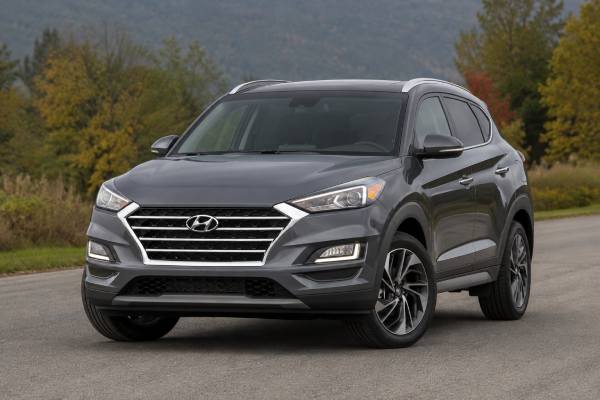
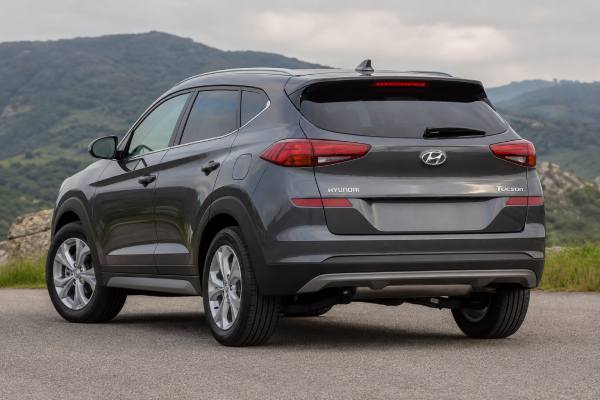
The facelifted 2019–2021 Hyundai Tucson FWD with the Nu 2.0 GDi engine is the simpler, lower-output gasoline version of the TL-generation Tucson sold in North America. It pairs a naturally aspirated 2.0-liter direct-injection four-cylinder with a conventional 6-speed automatic transmission and front-wheel drive. For used buyers, its appeal is not speed or towing strength. It is an easy-to-drive compact SUV with good cabin space, familiar servicing, strong safety equipment for its age, and usually more approachable pricing than a Honda CR-V or Toyota RAV4.
Final Verdict
The 2019–2021 Hyundai Tucson FWD 2.0 GDi is a solid used compact SUV for drivers who want simple daily transport, a comfortable cabin, useful cargo space, and a conventional automatic rather than a CVT or dual-clutch gearbox. It suits commuters, small families, and urban drivers better than heavy-load, mountain, or towing use. The main tradeoff is performance: the 161 hp Nu engine is adequate but not lively, especially with passengers aboard. A good buy depends on confirmed recall completion, clean oil-change history, no excessive oil consumption, and proof that the engine-related software and warranty-extension items have been addressed.
| Pros | Cons |
|---|---|
| Conventional 6-speed automatic feels predictable in daily use | 161 hp engine feels modest with passengers or hills |
| Roomy rear seat and 31.0 cu ft cargo area | Fuel economy trails newer hybrid and turbo rivals |
| SE and Value trims often price well used | 2.0 GDi needs careful oil-level monitoring |
| Good crash-test record under original IIHS tests | Headlight performance varies sharply by trim |
| Parts and service familiarity are strong in North America | ABS/HECU recall completion is a must-check item |
Table of Contents
- Tucson TL 2.0 GDi Overview
- Specifications and Technical Data
- Trims, Safety and Driver Assistance
- Reliability, Common Issues and Service Actions
- Maintenance and Buyer’s Guide
- Driving, Performance and Efficiency
- How the Tucson Compares to Rivals
Tucson TL 2.0 GDi Overview
The 2019–2021 Tucson 2.0 GDi FWD is best understood as the sensible entry version of Hyundai’s facelifted TL compact SUV. It gives you the same basic body, seating layout, safety structure, and cargo practicality as more expensive trims, but with the smaller gasoline engine and front-wheel drive.
For 2019, Hyundai updated the Tucson’s exterior styling, interior details, infotainment, and driver-assistance availability. The 1.6 turbo and 7-speed dual-clutch setup from earlier TL models disappeared in the U.S. market, leaving the 2.0 GDi on lower trims and a 2.4 GDi on higher trims. That change made the lineup less sporty but easier to understand for used buyers.
The 2.0-liter Nu engine produces 161 hp and 150 lb-ft of torque. It is a naturally aspirated engine, so there is no turbocharger, no intercooler, and no high-boost plumbing to worry about. It uses gasoline direct injection, which improves combustion control but also makes oil quality, short-trip use, and intake-valve cleanliness more important than on older port-injected engines.
The FWD layout is the lightest and most efficient Tucson configuration. It also avoids the extra weight and service needs of the HTRAC AWD system. For drivers in mild climates, or those who use winter tires when needed, the FWD model is usually the better value. Buyers in snowy or rural areas may prefer AWD, but that is outside the exact version covered here.
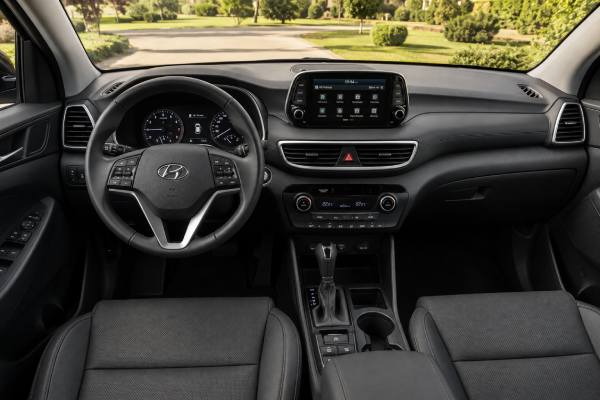
In practical terms, this Tucson is a compact SUV that feels closer to a comfortable hatchback than a rugged utility vehicle. It has a tall driving position, wide-opening doors, simple controls, and a cargo hold large enough for family errands or road-trip luggage. It is not the largest vehicle in its class, but the cabin is well packaged.
The biggest reason to choose this exact version is cost control. It is usually cheaper to buy than a RAV4 or CR-V of the same age, cheaper than a loaded Tucson 2.4, and simpler than a turbocharged rival. The biggest reason to hesitate is the engine’s long-term reputation. Many examples run well when serviced properly, but the Nu 2.0 GDi family has known oil-consumption and bearing-related coverage history. A pre-purchase inspection should never be skipped.
Specifications and Technical Data
This Tucson uses a front-wheel-drive unibody layout with a transverse 2.0-liter inline-four and a 6-speed torque-converter automatic. The key technical points are the naturally aspirated GDI engine, the conventional automatic transmission, the independent rear suspension, and the compact SUV dimensions that make it easy to park while still useful inside.
| Item | Hyundai Tucson FWD 2.0 GDi |
|---|---|
| Model years covered | 2019, 2020, 2021 facelift TL generation |
| Engine family | Hyundai Nu 2.0 GDi |
| Engine layout | 2.0L DOHC 16-valve inline-four |
| Displacement | 1,999 cc |
| Bore x stroke | 81 x 97 mm |
| Compression ratio | 11.5:1 |
| Fuel system | Gasoline direct injection |
| Maximum power | 161 hp at 6,200 rpm |
| Maximum torque | 150 lb-ft at 4,700 rpm |
| Recommended fuel | Regular unleaded gasoline |
| Timing drive | Timing chain, inspected by symptoms or fault codes |
| Item | Specification |
|---|---|
| Transmission | 6-speed automatic with torque converter |
| Transmission family | A6MF1 used with the 2.0L engine |
| Manual shift function | SHIFTRONIC manual shift mode |
| Drive type | Front-wheel drive |
| Final drive ratio | 3.510 for 2.0L FWD |
| Steering | Column-mounted motor-driven power steering |
| Turning circle | 34.9 ft curb-to-curb |
| Item | Value |
|---|---|
| Body style | 5-door compact SUV, 5 seats |
| Wheelbase | 105.1 in (2,670 mm) |
| Overall length | 176.4 in (4,481 mm) for 2020–2021 |
| Overall width | 72.8 in (1,849 mm) |
| Overall height | 64.8 in without roof rails, 65.0 in with roof rails |
| Ground clearance | 6.4 in (163 mm) |
| Fuel tank | 16.4 US gal (62.1 L) |
| Cargo volume | 31.0 cu ft seats up, 61.9 cu ft seats folded |
| Passenger volume | 102.2 cu ft without panoramic sunroof |
| Typical FWD curb weight | About 3,309–3,338 lb on 2020–2021 SE/Value 2.0 trims |
| Item | Specification |
|---|---|
| Front suspension | MacPherson struts with coil springs |
| Rear suspension | Multi-link independent rear suspension |
| Front brakes | 305 x 25 mm ventilated discs |
| Rear brakes | 302 x 10 mm solid discs |
| Common tire size, SE/Value | 225/60R17 |
| Other factory tire sizes | 225/55R18 or 245/45R19, depending on trim |
| Roof rail load rating | 220 lb where equipped |
| Trailer rating in product specs | 1,500 lb with trailer brakes, 1,000 lb without |
| Item | Useful reference |
|---|---|
| Engine oil viscosity | 5W-20 preferred; 5W-30 commonly allowed by climate |
| Engine oil capacity | About 4.2 US qt with filter |
| Oil drain plug torque | About 29 lb-ft; replace sealing washer |
| Automatic transmission fluid | Hyundai/Kia SP-IV compatible ATF |
| Wheel nut torque | Typically 79–94 lb-ft; verify by wheel and market |
Trims, Safety and Driver Assistance
For this 2.0 GDi FWD version, the most relevant trims are SE and Value in the U.S. market. Higher trims generally moved to the 2.4-liter engine, so buyers should confirm the engine by VIN, emissions label, window sticker, or under-hood information before assuming a Tucson has the 2.0.
Trims and option identifiers
The 2019 lineup included SE, Value, SEL, Sport, Night, Limited, and Ultimate trims, but the 2.0-liter engine was concentrated at the lower end. For 2020–2021, Hyundai simplified the powertrain split: SE and Value used the Nu 2.0 GDi, while SEL and above typically used the 2.4 GDi.
Quick ways to identify a 2.0 GDi FWD example include:
- Trim badge or listing showing SE or Value for 2020–2021.
- 2.0L engine information on the under-hood emissions label.
- VIN/build sheet confirming the 2.0L engine code.
- Absence of HTRAC AWD badging on the rear liftgate.
- 17-inch wheel package on many SE and Value examples.
Equipment varies by year and trim, but the Value trim is usually the sweet spot because it adds useful comfort and convenience features without moving to the larger engine. Depending on year, features may include blind-spot monitoring, heated front seats, proximity key, push-button start, and upgraded convenience content.
Infotainment is one of this generation’s strengths. The facelifted TL Tucson commonly has a simple touchscreen interface, Apple CarPlay and Android Auto availability, physical climate controls, and clear dashboard ergonomics. Navigation and premium audio are more associated with upper trims, which are less likely to match this exact 2.0 FWD powertrain.
Safety ratings
The Tucson TL performed well in many original IIHS crashworthiness tests, with Good ratings in several key categories that apply across 2016–2021 models. For 2021, IIHS listed the Tucson as a Top Safety Pick when equipped with the required front crash prevention and specific headlights. This distinction matters because not every headlight package performs the same.
There is a nuance with newer IIHS testing. The 2021 Tucson page also includes updated moderate-overlap and side tests that were tougher than the original tests. In those updated tests, the vehicle did not score as strongly, especially for rear-occupant-related measures. That does not erase its original-era safety performance, but it does mean buyers should not compare its ratings directly with newer compact SUVs tested under later standards.
NHTSA ratings for this generation were generally strong, with five-star overall ratings widely associated with the 2019–2021 Tucson in U.S. market information. As usual with compact SUVs, rollover resistance is typically lower than frontal or side crash scores because of the taller body.
Driver assistance and child-seat features
Standard and available safety features improved after the facelift. Common systems include stability control, traction control, anti-lock brakes, electronic brake-force distribution, brake assist, hill-start assist, multiple airbags, rearview camera, and LATCH child-seat anchors.
Forward Collision-Avoidance Assist and Lane Keeping Assist became important selling points in the facelifted years. Blind-spot detection and rear cross-traffic alert are commonly found on Value and higher trims, depending on year and package. Smart Cruise Control is not fitted to many 2.0 FWD examples, and it also affects recall applicability in some cases, so do not assume every Tucson has the same ADAS hardware.
After windshield replacement, front-end collision repair, suspension alignment work, or bumper repair, camera and radar-based systems may need calibration. A cheap windshield or poor repair can cause warning lights, lane-keeping problems, or inconsistent forward-collision operation. On a used example, check that no ADAS lights remain on after startup and that the system menus work normally.
Reliability, Common Issues and Service Actions
A well-maintained Tucson 2.0 GDi can be a dependable daily SUV, but the engine and ABS-related service history are central to the buying decision. The safest approach is to treat recall completion, oil-level behavior, and engine-noise checks as mandatory rather than optional.
| Issue | Prevalence | Severity | Typical signs |
|---|---|---|---|
| Open ABS/HECU recall | Must check | High | Recall record open, ABS warning, service campaign incomplete |
| Oil consumption | Occasional | Medium to high | Low dipstick, blue smoke, fouled plugs, catalytic-converter stress |
| Engine bearing-related concern | VIN-dependent | High | Knock, P1326, limp mode, no-start after warning |
| GDI intake deposits | Occasional | Medium | Rough idle, hesitation, poor cold start, misfires |
| Transmission harshness from old fluid | Occasional | Medium | Delayed engagement, harsh 2–3 shift, flare when warm |
| Suspension and brake wear | Common with age | Low to medium | Clunks, vibration, uneven tire wear, pulsing brakes |
Engine concerns
The Nu 2.0 GDi is not a high-performance engine, but it is sensitive to neglected oil service. Direct injection can leave more carbon on the intake valves because fuel does not wash over them as it would in a port-injected engine. Short trips, low-quality oil, long oil intervals, and frequent idling can make deposits and oil dilution more likely.
Symptoms to take seriously include:
- Oil level dropping between services.
- Rattle or knock on cold start or under load.
- Check-engine light with misfire or knock-related codes.
- P1326 knock-sensor-related limp mode.
- Rough idle that improves after warm-up.
- Blue exhaust smoke after extended idling or startup.
Hyundai issued engine-related software and warranty-extension programs for certain vehicles, including 2016–2021 Tucson TL vehicles with the Nu 2.0 GDi. The important buyer point is simple: run the VIN through Hyundai’s recall and campaign tools and ask a Hyundai dealer whether the Knock Sensor Detection System update and any applicable warranty extension apply to that specific vehicle.
ABS/HECU recall
The headline safety recall for this generation involves the Anti-lock Brake System Hydraulic Electronic Control Unit, often shortened to HECU. On affected vehicles, the module could develop an internal electrical short and increase the risk of an engine-compartment fire. Hyundai’s dealer material instructed owners of affected vehicles to park outside and away from structures until the repair was completed.
For 2019–2021 Tucson buyers, this is not a minor paperwork item. Ask for proof that the recall remedy was completed. The remedy included fuse-kit work and, for affected 2019–2021 vehicles, an ESC software update in many cases. A seller saying “there are no lights on” is not enough.
Transmission, chassis and electronics
The A6MF1 6-speed automatic is generally preferable to the older Tucson’s discontinued dual-clutch arrangement for smooth daily use. It should engage Drive and Reverse without a heavy delay, shift cleanly once warm, and downshift without a bang. If the fluid is old, harshness can appear gradually. Hyundai often treats the ATF as a long-life item in normal use, but severe-duty driving and long-term ownership justify more attention.
Suspension wear is typical compact-SUV fare. Listen for front-end clunks from links, strut mounts, or control-arm bushings. Check rear suspension arms and bushings for corrosion or play, especially in road-salt regions. Brake rotors can corrode on lightly used vehicles, and rear brakes may wear unevenly if slide pins are neglected.
Electronics are usually straightforward, but inspect the infotainment screen, backup camera, steering-wheel buttons, USB ports, keyless entry, blind-spot indicators, and power windows. On cars with driver-assistance warnings, do not assume a calibration issue is cheap until scanned properly.
Maintenance and Buyer’s Guide
The Tucson 2.0 GDi rewards shorter, consistent maintenance intervals more than it rewards stretching service to the limit. For a used buyer, a complete oil-change record is more valuable than cosmetic extras.
| Interval | Service items |
|---|---|
| Every 5,000–7,500 miles or 6–12 months | Engine oil and filter, tire rotation, fluid levels, brake inspection |
| Monthly or every fuel stop on high-mileage cars | Check engine oil level on dipstick |
| Every 15,000 miles | Cabin filter, engine air filter inspection, brake and suspension check |
| Every 30,000 miles | Replace engine air filter if dirty, inspect belts, hoses, coolant, fuel system |
| Every 45,000–60,000 miles | Consider ATF service under severe use; inspect mounts and driveline seals |
| Every 60,000 miles | Valve-clearance inspection where specified; check timing-chain noise and correlation codes |
| Every 60,000–100,000 miles | Spark plugs depending on service schedule, condition, and misfire history |
| Every 2–3 years | Brake fluid replacement as preventive maintenance |
| At 5–7 years | Test 12 V battery, inspect starter and charging performance |
| At coolant interval or age limit | Coolant service using Hyundai-compatible coolant |
The timing chain is not a routine belt-style replacement item, but it should not be ignored. A chain that rattles, sets cam/crank correlation faults, or shows tensioner/guide wear needs diagnosis. Continuing to drive with timing faults can turn a manageable repair into major engine damage.
The fuel filter is generally part of the in-tank fuel pump module rather than a normal service item. Replace it only when diagnosis points to fuel-pressure problems or the module is being serviced.
Pre-purchase inspection checklist
Before buying a 2019–2021 Tucson 2.0 GDi FWD, check the following:
- VIN recall status through Hyundai and NHTSA tools.
- Dealer confirmation of ABS/HECU recall completion.
- Dealer confirmation of applicable engine software and warranty-extension status.
- Oil-change records, ideally at 5,000–7,500-mile intervals.
- Dipstick level and oil condition before the seller starts the engine.
- Cold-start noise after the vehicle has sat overnight.
- Scan for stored and pending engine, transmission, ABS, and ADAS codes.
- Smooth transmission engagement from Park to Drive and Reverse.
- Evidence of coolant leaks, oil seepage, or previous engine replacement.
- Even tire wear, straight tracking, and no steering pull.
- Rust at subframes, rear suspension arms, brake lines, exhaust hangers, and pinch welds.
- Working backup camera, blind-spot indicators, lane-assist warnings, and infotainment.
A high-mileage example is not automatically bad. A clean 120,000-mile Tucson with records, completed campaigns, stable oil level, and smooth shifting may be a better buy than a 70,000-mile example with missing history and fresh warning-light resets.
Recommended versions
For this exact powertrain, the 2020–2021 Value FWD is often the best balance. It keeps the 2.0 engine and FWD layout but usually adds the comfort and safety features most buyers want. A 2019 SE or Value can also be a good value, but compare fuel-economy labels and equipment carefully because trim packaging changed.
Avoid cars with unresolved recall status, heavy oil consumption, engine knock, unexplained P1326 history, poor cold starts, mismatched tires, or accident repairs around the windshield and front bumper that may affect ADAS calibration.
Driving, Performance and Efficiency
The Tucson 2.0 GDi FWD is calm, comfortable, and easy to place in traffic, but it is not quick. Its best driving environment is city and suburban use with moderate highway speeds, not aggressive passing or repeated mountain climbs.
The 2.0-liter engine has a smooth enough character at light throttle. Around town, the 6-speed automatic helps by giving a clean initial step-off and avoiding the rubber-band feel some CVTs have. At low speeds, it feels normal and predictable. The issue appears when you ask for quick acceleration. The engine needs revs to make power, and the transmission often has to downshift one or two gears for passing.
With only 150 lb-ft of torque arriving high in the rev range, loaded highway driving requires patience. The Tucson can cruise comfortably at 65–75 mph, but merging onto a short ramp or climbing a grade with four people aboard makes the engine work. This is where the 2.4-liter Tucson, turbocharged rivals, and newer hybrids feel stronger.
Ride quality is one of the better parts of the package. The independent rear suspension helps the Tucson feel settled over uneven pavement, and the body does not feel overly stiff or truck-like. The SE and Value trims on 17-inch wheels usually ride better than trims on 19-inch wheels because the taller tire sidewall absorbs broken pavement more effectively.
Steering is light and easy, with enough accuracy for normal driving. It is not as engaging as a Mazda CX-5, but it is easy to live with. Body roll is present but well controlled for a compact SUV. Braking feel is predictable, though older examples depend heavily on pad, rotor, and tire condition.
Real-world fuel economy depends on tires, terrain, speed, and climate. For 2020–2021, the 2.0 FWD is officially rated around 23 mpg city, 28 mpg highway, and 25 mpg combined. In metric terms, that is about 10.2 L/100 km city, 8.4 L/100 km highway, and 9.4 L/100 km combined. The 2019 SE/Value rating was stronger on the highway at 23/30/26 mpg, while other 2019 trims aligned more closely with 22/28/25 mpg.
In everyday use, expect roughly:
- City driving: 10–12 L/100 km, or about 20–24 mpg US.
- Mixed driving: 9–10 L/100 km, or about 24–26 mpg US.
- Steady highway driving: 7.8–9.0 L/100 km, or about 26–30 mpg US.
Cold weather, short trips, remote starts, roof racks, underinflated tires, and heavy cargo can all push economy down. The FWD model is the more efficient choice over AWD, but this is still an older naturally aspirated compact SUV, not a modern hybrid.
Towing should be treated as light-duty only. The Tucson can handle a small utility trailer or light recreational load within rating, but it does not have the torque reserve, cooling confidence, or braking margin of a larger SUV. For frequent towing, choose a stronger vehicle.
How the Tucson Compares to Rivals
The Tucson 2.0 GDi FWD competes best on value, comfort, warranty history, and ease of use. It does not beat the class leaders for power, cargo volume, or fuel economy, but it can make sense when priced correctly and maintained well.
| Rival | How it compares to Tucson 2.0 GDi FWD |
|---|---|
| Honda CR-V | Roomier and more efficient, but usually more expensive used |
| Toyota RAV4 | Stronger resale and reliability image, often higher purchase price |
| Mazda CX-5 | Better steering and interior feel, less cargo-focused than CR-V |
| Subaru Forester | Standard AWD and airy cabin, but CVT feel differs from Tucson’s automatic |
| Kia Sportage | Closely related platform, similar strengths and similar inspection needs |
| Nissan Rogue | Comfortable and efficient, but CVT history needs careful checking |
Against a CR-V, the Tucson feels less spacious and less efficient, but it may save enough money to justify the compromise. Against a RAV4, the Hyundai usually offers more equipment for the price, though Toyota’s resale strength remains a major factor. Against a Mazda CX-5, the Tucson is less sharp to drive but easiergoing and often cheaper.
The closest rival is the Kia Sportage from the same era. It shares much of the underlying engineering, so condition, service history, and price matter more than badge preference. If choosing between the two, buy the cleaner vehicle with the better records.
The Tucson makes the most sense for buyers who value a straightforward ownership experience and do not need class-leading performance. It is less compelling for drivers who regularly carry heavy loads, tow, climb steep grades, or want the best fuel economy. In that case, a stronger engine, newer hybrid, or larger SUV is a better fit.
References
- 2021 Tucson Specifications 2020 (Manufacturer Specifications)
- Gas Mileage of 2021 Hyundai Tucson 2021 (Fuel Economy)
- 2021 Hyundai Tucson 2021 (Safety Rating)
- Part 573 Safety Recall Report 20V-543 2020 (Recall Database)
- ENGINE WARRANTY EXTENSION (TXXM) 2022 (TSB)
Disclaimer
This article is for informational purposes only and is not a substitute for professional diagnosis, repair, or inspection. Specifications, torque values, maintenance intervals, recall applicability, warranty coverage, software updates, and service procedures can vary by VIN, market, production date, trim, and equipment. Always verify details against the official owner’s manual, Hyundai service information, dealer records, and the vehicle’s VIN-specific recall and campaign history.
If this guide helped you, please consider sharing it on Facebook, X/Twitter, or your preferred automotive community to support our work.