

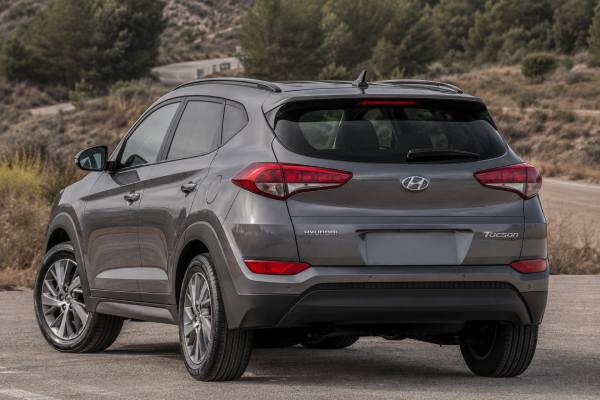
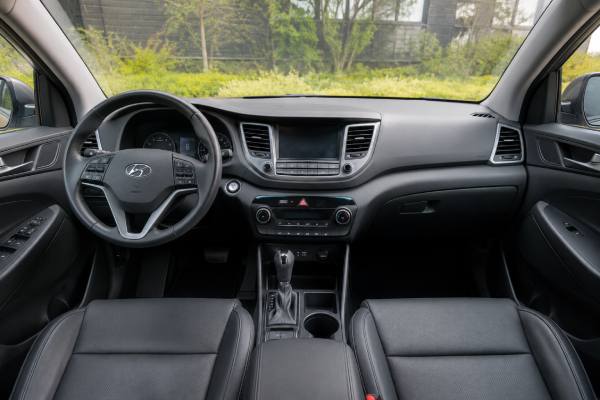
The facelifted 2014–2015 Hyundai Tucson FWD with the 2.4-liter Theta II GDI engine sits in a practical part of the compact SUV market: small enough to park easily, useful enough for daily family duty, and stronger than the base 2.0-liter version. It is not the roomiest or most fuel-efficient SUV of its era, but it offers a straightforward layout, a smooth 6-speed automatic, good equipment for the money, and a more responsive engine than many budget-focused compact crossovers.
For used buyers, the main question is not whether the Tucson is pleasant to live with. It usually is. The question is whether the specific vehicle has been maintained well, has completed the important recall work, and shows no signs of oil consumption, engine bearing noise, neglected transmission fluid, or corrosion. A clean, documented example can still make sense as an affordable gasoline compact SUV.
Final Verdict
The 2014–2015 Hyundai Tucson FWD 2.4 GDI is a good choice for buyers who want a compact SUV with decent power, simple front-wheel-drive running costs, and useful equipment without paying CR-V or RAV4 prices. Its strongest appeal is value: the 182 hp engine feels noticeably stronger than the base 2.0, and the cabin is easy to use. The tradeoff is that the Theta II GDI engine needs careful maintenance and a thorough pre-purchase inspection. Buy one only with proof of oil changes, completed ABS recall work, no engine knock or oil-burning history, and a clean underbody.
| Pros | Cons |
|---|---|
| 182 hp 2.4 GDI gives better response than the base 2.0 | Theta II GDI engines need careful oil-level and noise checks |
| FWD layout keeps weight, fuel use, and driveline maintenance lower | No AWD traction advantage for snowbelt or rural winter use |
| Compact size and tight turning circle make city use easy | Cargo space trails roomier rivals like CR-V and RAV4 |
| SE and Limited trims offer strong equipment for used prices | Advanced driver assistance is mostly absent by modern standards |
| 6-speed automatic is familiar and generally smooth when serviced | Old fluid can cause harsh shifts, flare, or delayed engagement |
Table of Contents
- Detailed overview of the Tucson 2.4 FWD
- Specifications and technical data
- Trims, options, safety, and driver assistance
- Reliability, common issues, and service actions
- Maintenance and buyer’s guide
- Driving and performance
- How the Tucson 2.4 FWD compares to rivals
Detailed overview of the Tucson 2.4 FWD
The 2014–2015 Hyundai Tucson FWD 2.4 GDI is best understood as the stronger, better-equipped gasoline version of the facelifted LM-generation Tucson. It suits drivers who want a compact SUV for commuting, errands, small-family use, and light weekend duty, not heavy towing or off-road work.
This facelift brought more than a few styling updates. Hyundai replaced the older port-injected engines with direct-injected GDI units, upgraded the suspension tuning, added more standard technology, and improved the cabin equipment on higher trims. The 2.4-liter Theta II engine was used in SE and Limited models in the U.S. market, while the lower GLS trim generally used the 2.0-liter Nu GDI engine.
The 2.4 GDI is a naturally aspirated inline-four, so there is no turbocharger to maintain and no diesel emissions system to worry about. It produces 182 hp and 177 lb-ft of torque, sent through a 6-speed automatic transmission. In FWD form, the Tucson is lighter and mechanically simpler than the AWD version. That matters on the used market because there is no rear differential, transfer coupling, driveshaft, or AWD clutch system to service.
The body is a five-door compact SUV with seating for five. Its size is closer to the smaller end of the segment by modern standards. That makes it easy to park and maneuver, but it also means rear cargo space is not as generous as in a Honda CR-V, Toyota RAV4, or Subaru Forester from the same period. The Tucson feels more like a tall hatchback than a large family SUV.
The facelift also gave the LM Tucson a more polished feel. Hyundai fitted Sachs amplitude-selective dampers, which help the suspension react differently to small road ripples and larger body motions. The result is a firmer, more controlled ride than many older compact SUVs, though Limited models with larger wheels can feel busy over broken pavement.
From a buying perspective, the 2.4 FWD version has a clear personality. It is more enjoyable than the base 2.0, cheaper to run than the AWD model, and often better equipped than similarly priced rivals. The caution is the engine family. The Theta II GDI has a known history of oil consumption, bearing-wear concerns, and warranty/service-action complexity across several Hyundai and Kia applications. Not every Tucson 2.4 will have trouble, but every used one deserves careful screening.
A good example should start cleanly when cold, idle evenly, pull without hesitation, shift smoothly, and show no smoke, warning lights, or metallic knocking. It should also have documented oil changes, completed recall work, and no signs of serious rust underneath. When those boxes are checked, the 2014–2015 Tucson 2.4 FWD remains a sensible used compact SUV with useful power and manageable ownership costs.
Specifications and technical data
The 2014–2015 Tucson 2.4 FWD uses a transverse-mounted 2.4-liter Theta II GDI gasoline engine, a 6-speed automatic transmission, and front-wheel drive. The key technical point is that this version combines the stronger engine with the simpler FWD driveline, so it avoids the extra weight and service needs of AWD while keeping useful everyday performance. Dimensions and equipment can vary slightly by trim and market, but the core mechanical package is consistent.
| Item | Specification |
|---|---|
| Engine family | Theta II 2.4 GDI gasoline inline-four |
| Common engine code | G4KJ-family 2.4 GDI |
| Displacement | 2.4 L, 2,359 cc |
| Induction and fuel system | Naturally aspirated, gasoline direct injection |
| Valvetrain | DOHC, 16 valves, dual continuously variable valve timing |
| Maximum power | 182 hp, 136 kW |
| Maximum torque | 177 lb-ft, 240 Nm |
| Timing drive | Timing chain |
| Fuel type | Regular unleaded gasoline |
| EPA fuel economy | 21 city / 28 highway / 23 combined mpg US |
| Metric fuel economy | 11.2 city / 8.4 highway / 10.2 combined L/100 km |
| Fuel tank | 58 L, 15.3 US gal |
| Item | Specification |
|---|---|
| Transmission | 6-speed automatic with SHIFTRONIC manual mode |
| Drive type | Front-wheel drive |
| Front suspension | MacPherson strut with stabilizer bar |
| Rear suspension | Multi-link independent rear suspension |
| Dampers | Sachs amplitude-selective dampers on facelift models |
| Brakes | Four-wheel disc brakes with ABS, EBD, and Brake Assist |
| Turning circle | 10.6 m, 34.7 ft |
| Item | Specification |
|---|---|
| Body style | Five-door compact SUV |
| Seating | Five seats |
| Length | About 4,400 mm, 173 in |
| Width | About 1,820 mm, 71.7 in |
| Height | About 1,655 mm, 65.2 in |
| Wheelbase | 2,640 mm, 103.9 in |
| Curb weight | About 1,495 kg, 3,294 lb for 2.4 FWD SE |
| Passenger volume | About 2,886 L, 101.9 cu ft |
| Cargo volume | About 728 L, 25.7 cu ft behind rear seats |
| Maximum cargo volume | About 1,580 L, 55.8 cu ft with rear seats folded |
| Common tire sizes | 225/60R17 or 225/55R18 |
| Recommended tire pressure | 230 kPa, 33 psi when cold |
| Item | Specification or useful note |
|---|---|
| 0–60 mph performance | Typically in the high-8 to mid-9-second range |
| Towing capacity | Up to 907 kg, 2,000 lb when properly equipped |
| Engine oil capacity | About 4.6 L, 4.86 US qt with filter |
| Engine oil type | API SM / ILSAC GF-4 or later; viscosity by climate and manual |
| Automatic transmission fluid | Hyundai ATF SP-IV specification |
| Automatic transmission capacity | About 7.1 L, 7.5 US qt total system capacity |
| Coolant | Ethylene-glycol coolant suitable for aluminum engines |
| Wheel-nut torque | 88–108 Nm, 65–79 lb-ft |
These figures place the Tucson 2.4 FWD in the middle of its class for power, but slightly behind the most efficient rivals for fuel economy and cargo space. Its main technical strength is the balance of usable torque, compact size, and mechanical simplicity. Its main technical concern is the maintenance sensitivity of the GDI engine and the importance of clean fluids as the vehicle ages.
Trims, options, safety, and driver assistance
For the 2014–2015 facelift, the 2.4-liter engine was mainly tied to SE and Limited trims in the U.S. market. That makes the 2.4 FWD easier to identify than many used SUVs: if it is a GLS, it is usually the 2.0; if it is an SE or Limited, it is commonly the 2.4.
Trim structure and equipment
The GLS was the entry trim and generally focused on price. It used the 2.0-liter Nu GDI engine, not the 182 hp Theta II 2.4 covered here. It still brought useful basics such as Bluetooth, steering-wheel audio controls, cruise control, air conditioning, stability control, and a 6-speed automatic, but it is not the target version for this article.
The SE is the value sweet spot for many used buyers. It normally adds the 2.4 GDI engine, 17-inch alloy wheels, roof rails, heated front seats, upgraded exterior trim, fog lights, automatic headlights, a rearview camera with a 4.3-inch touchscreen, and more comfort features. For shoppers who care more about the engine than leather or navigation, the SE FWD is often the most sensible version.
The Limited adds a more premium cabin and more appearance equipment. Depending on year and package, it can include leather seating surfaces, dual-zone automatic climate control, upgraded audio, navigation, Blue Link telematics, larger alloy wheels, LED lighting details, and a panoramic sunroof. A Limited can feel much nicer than an SE, but it also brings more used-car items to test, especially the sunroof, infotainment screen, backup camera, climate control, and power seat functions.
Quick identifiers include SE or Limited badging, 17- or 18-inch alloy wheels, a GDI engine cover, and the absence of AWD hardware underneath on FWD models. A true FWD Tucson will not have a rear driveshaft, rear differential, AWD lock switch, or AWD badging. Always verify the engine and drivetrain by VIN, build label, and underbody inspection rather than relying only on exterior badges.
Year-to-year changes
The 2014 model year was the main facelift year. It introduced the GDI engines, revised suspension tuning, updated lighting, new wheels, added technology, and improved interior convenience features. The 2015 model carried the same basic mechanical package forward, with some equipment reshuffling and package changes rather than a major mechanical redesign.
For used buyers, condition matters more than choosing 2014 versus 2015. A well-maintained 2014 SE with complete records is usually a better buy than a neglected 2015 Limited with open recalls, oil consumption, warning lights, or rust.
Safety ratings and structure
The LM-generation Tucson earned good results in several older crash-test categories, including moderate-overlap front, side, roof-strength, and head-restraint testing. The weak point is the small-overlap front test, where this generation performed poorly by later standards. This matters because the small-overlap test represents a narrow front-corner impact, which became a major differentiator among compact SUVs during this era.
Standard safety equipment includes front airbags, front-seat side airbags, roof-mounted side-curtain airbags, active front head restraints, anti-lock brakes, electronic brake-force distribution, Brake Assist, electronic stability control, traction control, and child-seat anchors. The Tucson also uses a steel unibody with crumple zones and side-impact door beams.
Child-seat practicality is adequate but not class-leading. The rear bench is useful for two child seats, and the outboard LATCH/ISOFIX anchor positions are the easiest to use. Three-across child-seat fit is possible only with narrow seats and careful testing, because the Tucson is not one of the widest compact SUVs of its generation.
Driver assistance and technology
Modern ADAS expectations should be adjusted for this vehicle. The 2014–2015 Tucson does not offer the advanced driver-assistance suite that later compact SUVs commonly provide. Automatic emergency braking, adaptive cruise control, lane-keeping assistance, blind-spot monitoring, and rear cross-traffic alert are not core features of this generation in the way they are on newer vehicles.
The practical safety technology is more basic: stability control, traction control, ABS, Brake Assist, a rearview camera on many 2.4 trims, and Blue Link emergency/connected services on some Limited models. After body repairs or rear hatch work, confirm that the backup camera works clearly and that the displayed image is not distorted or intermittent. There are no complex radar or windshield-camera calibration concerns like on newer AEB-equipped SUVs, but basic sensor, camera, and lighting checks still matter.
Reliability, common issues, and service actions
The 2014–2015 Tucson 2.4 FWD can be reliable, but it is not a buy-blind used SUV. The key risk is the Theta II GDI engine family, followed by age-related suspension, transmission-fluid, corrosion, and electronic issues.
| System | Prevalence | Typical symptoms | Likely cause | Usual remedy |
|---|---|---|---|---|
| 2.4 GDI engine oil use | Occasional to common with age | Low oil between services, smoke, fouled plugs | Ring wear, deposits, PCV issues, neglected oil service | Consumption test, PCV service, engine repair if severe |
| Engine bearing noise | Occasional but high severity | Metallic knock, warning light, reduced power | Rod-bearing wear or oil-starvation damage | Stop driving, dealer diagnosis, engine repair or replacement |
| GDI intake deposits | Occasional after higher mileage | Rough idle, hesitation, cold misfire | Carbon buildup on intake valves | Intake cleaning, plug and ignition checks |
| 6-speed automatic shift quality | Occasional | Harsh shifts, flare, delayed engagement | Old ATF, adaptation issue, solenoid or valve-body wear | Correct SP-IV fluid service, scan, update, repair if needed |
| Suspension and steering wear | Common with age | Clunks, wandering, uneven tire wear | Struts, bushings, links, ball joints, alignment | Replace worn parts and align |
| ABS module recall issue | Recall-specific | ABS light, burning smell, smoke, fire risk | Internal ABS module electrical short | Recall inspection and revised fuse/module service |
Engine reliability and warning signs
The Theta II 2.4 GDI is the part of this Tucson that deserves the most attention. It can run well past 150,000 miles when oil changes are frequent and the engine has not been allowed to run low, but neglected examples are risky.
Listen to the engine when cold and fully warm. A brief light tick from direct injection is normal, but deep metallic knocking is not. A sharp rod knock, low-oil-pressure warning, flashing check-engine light, or sudden limp mode should be treated seriously. Do not assume a noisy Theta II will “just need oil.” Serious bearing wear can turn into engine failure.
Oil consumption is another key check. Some engines use little oil between services; others may consume enough to become dangerous if the owner does not check the dipstick. During inspection, look for a low oil level, oil-change stickers with long intervals, blue smoke after idling, oily deposits around the tailpipe, misfire codes, and spark plugs that show heavy oil fouling.
GDI carbon buildup is less dramatic but still important. Because direct injection sprays fuel directly into the combustion chamber, gasoline does not continuously wash the back of the intake valves. Over time, deposits can cause rough starts, uneven idle, hesitation, or misfire codes. A proper intake-valve cleaning can restore drivability when deposits are confirmed.
Transmission and driveline issues
The FWD 6-speed automatic is usually smooth, but it benefits from clean fluid. Hyundai’s official schedules often treat automatic transmission service differently depending on normal or severe use, but many used Tucsons live in severe conditions: short trips, heat, hills, traffic, and stop-start city driving. A fluid exchange with the correct Hyundai SP-IV specification is wise if the history is unknown and the transmission is currently shifting normally.
During a test drive, check for delayed engagement when shifting from Park to Drive or Reverse, harsh 2–3 or 3–4 shifts, flare under light throttle, shudder at steady speeds, and aggressive downshift clunks. A software update or adaptation reset may help minor shift complaints, but slipping, burnt-smelling fluid, or stored transmission codes can point to more expensive repairs.
Because this is the FWD model, there is no AWD coupling or rear differential to inspect. That lowers running cost. Still, check front CV boots, axle seals, wheel bearings, engine mounts, and lower control-arm bushings. Clicking during tight turns often points to a CV joint. A growl that rises with road speed often points to a wheel bearing.
Cooling, fuel, and electrical items
By 2026, all 2014–2015 Tucsons are old enough for age-related cooling system work. Inspect the radiator, thermostat, water pump, coolant hoses, heater hoses, and overflow tank. Overheating is especially risky on an aluminum GDI engine, so any history of coolant loss or temperature spikes should lower the vehicle’s value.
Fuel-system issues are less common than oil and bearing concerns, but direct-injection components are expensive when they fail. Long cranking, fuel smell, lean codes, misfires, or fuel-pressure codes can point to a high-pressure fuel pump, injector, sensor, or wiring issue. Do not diagnose these by guesswork; scan data is important.
Electrical complaints are usually moderate-cost rather than catastrophic. Backup cameras, door-lock actuators, window switches, infotainment screens, Bluetooth modules, and steering-wheel controls can fail with age. On Limited models, test the panoramic sunroof, power seat, dual-zone climate control, navigation, audio system, and Blue Link-related functions where still supported.
Corrosion and body checks
Rust risk depends heavily on climate. In salt-belt regions, inspect the rear subframe area, suspension mounting points, rocker panels, lower door seams, liftgate edge, brake lines, fuel lines, exhaust hangers, and the floor near the rear suspension. Surface corrosion is common on older vehicles; structural corrosion around mounting points is a reason to walk away.
Also check for water leaks. Sunroof drains, hatch seals, roof-rail mounting points, and windshield replacement quality can all cause damp carpets or musty smells. Water inside the cabin can damage wiring, airbag connectors, seat tracks, and infotainment components.
Recalls, service campaigns, and warranty checks
The major safety recall for this exact period is the ABS module fire-risk recall affecting 2014–2015 Tucson vehicles. The concern is an internal electrical short in the ABS module that can create an engine-compartment fire risk, even while parked. The remedy involves dealer inspection and replacement of the relevant fuse and, where necessary, related ABS module service. A seller should be able to show completion through dealer records or an official VIN recall lookup.
Engine-related warranty extensions and service campaigns can vary by VIN, engine, production date, market, and service history. Some 2014–2015 Tucson 2.4L vehicles may qualify for Hyundai engine extended-warranty coverage or software-related campaigns, but eligibility should never be assumed from the model year alone. Check the VIN with a Hyundai dealer before purchase and ask whether any knock-sensor, engine-monitoring, or warranty-extension documentation applies.
The best pre-purchase paperwork includes:
- Oil-change records showing frequent service with the correct oil.
- Recall completion proof, especially the ABS module recall.
- Any Hyundai dealer campaign or warranty-extension printout by VIN.
- Transmission-fluid service records, especially above 60,000 miles.
- Receipts for coolant, spark plugs, tires, brakes, suspension, and battery.
- A clean title and no signs of flood, fire, or major structural repair.
Maintenance and buyer’s guide
A Tucson 2.4 FWD lasts best when maintained more carefully than the minimum schedule suggests. The two most important habits are frequent oil service and regular oil-level checks between services.
| Item | Practical interval | What to use or check |
|---|---|---|
| Engine oil and filter | Every 5,000–7,500 miles, sooner in severe use | Correct API/ILSAC oil; check level monthly |
| Tire rotation | Every 7,500 miles or 12 months | Rotate, inspect wear, set 33 psi cold |
| Brake inspection | Every 7,500–15,000 miles | Pads, rotors, calipers, hoses, parking brake |
| Engine air filter | Inspect yearly; replace 15,000–30,000 miles | Shorten interval in dusty areas |
| Cabin air filter | Every 12–24 months | Replace sooner if airflow or odor is poor |
| Brake fluid | Every 2–3 years | DOT 3 or DOT 4 as specified |
| Automatic transmission fluid | About 60,000 miles in severe use | Hyundai SP-IV specification only |
| Spark plugs | Around 100,000–105,000 miles | Replace sooner for misfires or oil fouling |
| Coolant | By age or 60,000–100,000 miles on used cars | Correct ethylene-glycol coolant for aluminum engines |
| Drive belt and hoses | Inspect yearly after 60,000 miles | Replace for cracks, swelling, noise, or leaks |
| Timing chain system | No routine replacement interval | Inspect for rattle, stretch, guide wear, correlation codes |
| 12 V battery | Test yearly after 3 years | Most last about 4–6 years |
Oil service matters most
The Theta II GDI engine is not the place to stretch oil intervals. Short trips, cold starts, hot climates, traffic, and long idling all make the oil work harder. A 5,000-mile interval is a sensible target for owners who want to keep the vehicle long-term, especially if the car has unknown early history.
Check the dipstick at least once a month and before long highway trips. This is not just old-fashioned advice. A direct-injected engine that consumes oil can run dangerously low before the next scheduled service, and low oil is one of the fastest ways to turn a manageable issue into an engine replacement.
Use the viscosity shown in the official owner’s manual for your climate and market. Many manuals list 5W-20 or 5W-30 depending on temperature and specification. The exact label matters less than using quality oil that meets the required API/ILSAC standard and changing it on time.
Transmission, brakes, tires, and suspension
If the Tucson has more than 60,000 miles and no proof of transmission-fluid service, inspect the fluid condition and shift behavior. A simple drain-and-fill or fluid exchange with the correct SP-IV fluid can help preserve shift quality, but avoid aggressive flushing on a transmission that is already slipping or full of debris unless a specialist recommends it.
Brake service is straightforward. Check pads, rotors, caliper slide pins, brake hoses, and fluid condition. A pulsation under braking usually means rotor runout or pad deposits. A soft pedal may point to old fluid, air, hose expansion, or caliper problems.
Tires affect this vehicle more than many owners expect. Cheap or mismatched tires can make the Tucson noisier, less stable, and more prone to poor wet braking. Because the FWD model puts power, steering, and most braking load through the front tires, rotation and alignment are important. Uneven front tire wear often points to worn control-arm bushings, weak struts, or neglected alignment.
What to inspect before buying
A careful inspection should start before the engine is warm. Ask the seller not to start the vehicle before you arrive. A cold start reveals timing-chain rattle, piston slap, bearing noise, misfire, smoke, weak battery behavior, and fuel-pressure problems more clearly than a fully warmed engine.
During inspection and test drive, focus on:
- Engine oil level, oil color, oil leaks, and service records.
- Cold-start noise, warm idle smoothness, and acceleration under load.
- Check-engine, ABS, airbag, traction-control, and oil-pressure warning lights.
- Recall status by VIN, especially the ABS module fire-risk recall.
- Smooth transmission engagement from Park to Drive and Reverse.
- Shift quality during light throttle, kickdown, and hill climbing.
- Coolant level, radiator condition, hose age, and any overheating history.
- Front CV joints, wheel bearings, struts, ball joints, sway links, and mounts.
- Brake pulsation, caliper drag, parking-brake operation, and fluid age.
- Underbody rust around suspension mounts, brake lines, rocker panels, and subframes.
- Backup camera, touchscreen, Bluetooth, climate control, door locks, windows, and lights.
- Sunroof operation and water leaks on Limited models.
A compression test, borescope inspection, scan-tool report, and oil-consumption history are worthwhile for higher-mileage vehicles. On a Theta II GDI engine, a clean scan and a quiet engine are not enough by themselves; maintenance history still matters.
Best versions to seek and avoid
For most buyers, an SE FWD 2.4 is the strongest value. It has the better engine, useful comfort features, simpler equipment than the Limited, and lower tire and sunroof-related risk. A Limited can be a good buy if all electronics work and the sunroof drains are clean, but it should not command a large premium unless the condition is clearly better.
Avoid vehicles with engine knock, unexplained low oil, blue smoke, open ABS recall work, heavy rust, overheating history, slipping transmission, flood signs, or missing maintenance records. Also be cautious with very cheap examples sold immediately after a warning light appears. A low purchase price can disappear quickly if the engine or ABS system needs major work.
The long-term durability outlook is fair to good when the engine is healthy and maintained, but poor when maintenance history is weak. This is a vehicle where the specific example matters more than the badge, trim, or model year.
Driving and performance
The Tucson 2.4 FWD feels stronger than the base version, but it is still a practical compact SUV rather than a sporty crossover. Its best driving qualities are easy maneuverability, predictable handling, and enough power for normal traffic.
Engine and transmission feel
The 2.4 GDI engine gives the Tucson a useful step up in response compared with the 2.0-liter model. It pulls more confidently from low and midrange speeds, and it does not need to work as hard when merging onto highways or climbing grades with passengers aboard. The engine is not especially refined under hard acceleration, but it is acceptable for the class and era.
The 6-speed automatic is tuned for smoothness, not speed. Around town, it shifts cleanly when the fluid is fresh and the adaptive logic is working correctly. On hills or during quick passing, it may need a firm downshift because the engine makes its best torque higher in the rev range than a turbocharged rival. SHIFTRONIC manual mode can help hold a gear on descents or during moderate towing.
Active ECO, where equipped, softens throttle response and encourages earlier upshifts. It can save fuel in relaxed commuting, but many drivers prefer leaving it off in hilly areas or heavy traffic because the Tucson feels more alert without it.
Ride, steering, and braking
The facelift suspension gives the Tucson a controlled, slightly firm ride. It does not float over bumps, and body roll is kept in check for a compact SUV. The tradeoff is that rough urban pavement can feel busy, especially on 18-inch wheels. SE models on 17-inch tires usually strike the better balance between comfort, tire cost, and impact harshness.
Steering is light and easy at parking speeds, with enough accuracy for daily driving. It does not have the natural feedback of a Mazda CX-5, but it is predictable. The short wheelbase and tight turning circle make the Tucson easy to use in tight streets, apartment parking lots, and crowded shopping centers.
Braking performance is adequate when the system is in good condition. On used examples, pedal feel depends heavily on rotor condition, pad quality, brake-fluid age, and caliper maintenance. A long pedal, vibration, or pull under braking should be treated as a repair item, not as a normal trait.
Real-world fuel economy
The official EPA rating for the 2.4 FWD automatic is 21 mpg city, 28 mpg highway, and 23 mpg combined. In metric terms, that is about 11.2 L/100 km city, 8.4 L/100 km highway, and 10.2 L/100 km combined. Converted to UK gallons, it is roughly 25 mpg city, 34 mpg highway, and 28 mpg combined.
Real-world numbers depend strongly on speed, tires, temperature, and trip length. A healthy Tucson 2.4 FWD often returns about 22–25 mpg US in mixed driving. Gentle highway use can reach the high 20s, while short winter trips and heavy city traffic can fall into the high teens. Cold weather, roof racks, underinflated tires, aggressive driving, and old spark plugs all make a noticeable difference.
Load and towing
The 2.4 FWD Tucson is rated to tow up to 2,000 lb when properly equipped, but it is not a towing-focused SUV. It can handle a small utility trailer, light camping trailer, or occasional home-improvement load, provided the trailer is within the rated limit and loaded correctly. Trailer brakes may be required by local law depending on weight.
For towing, keep expectations modest. The FWD layout can struggle for traction on wet boat ramps or loose surfaces, and the transmission will work harder on grades. Use fresh coolant, good tires, healthy brakes, and conservative speeds. Fuel economy can drop sharply with a boxy trailer or heavy load.
How the Tucson 2.4 FWD compares to rivals
The Tucson 2.4 FWD makes the most sense when priced below the strongest Japanese rivals and when condition is better than average. It is not the class leader in space, safety technology, or fuel economy, but it can be a strong value buy.
| Rival | Where the rival is stronger | Where the Tucson 2.4 FWD competes well |
|---|---|---|
| Honda CR-V | Cabin space, cargo room, resale value, reliability reputation | Lower used prices and strong equipment for the money |
| Toyota RAV4 | Practicality, long-term reputation, cargo flexibility | Often cheaper with a stronger feature list |
| Mazda CX-5 | Handling, steering feel, fuel economy | Softer daily character and good 2.4-liter response |
| Ford Escape | Turbo performance and sharper road feel on some trims | Simpler naturally aspirated engine layout than EcoBoost models |
| Subaru Forester | Standard AWD, visibility, all-weather confidence | Lower FWD running costs in mild climates |
| Kia Sportage | Similar platform with sportier styling | Very similar strengths; choose by condition and service history |
Against the Honda CR-V, the Tucson feels smaller and less cargo-friendly. The CR-V is the safer default choice for buyers who need maximum rear-seat and luggage space, or who prioritize resale value. The Tucson fights back with lower transaction prices and more equipment at a given budget.
Against the Toyota RAV4, the story is similar. The RAV4 is usually the more practical long-term family tool, with a strong reputation and a larger cargo hold. The Tucson is attractive when a clean SE or Limited costs meaningfully less and has better features for the price.
The Mazda CX-5 is the driver’s pick in this class. It handles better, steers better, and often uses less fuel. The Tucson is less engaging but more relaxed, and some buyers will prefer its simpler cabin layout and softer personality.
The Ford Escape can feel quicker, especially with the 2.0 EcoBoost, but turbocharged Escapes bring their own repair risks. The Tucson’s naturally aspirated 2.4 is mechanically simpler in layout, though the Theta II inspection concerns mean it is not automatically lower risk.
The Subaru Forester is better for snowbelt buyers who genuinely need AWD. Its visibility and practicality are major strengths. A Tucson FWD makes more sense in mild climates, urban areas, or for buyers who want lower tire and driveline maintenance costs.
The closest rival is the Kia Sportage, which shares much of the underlying engineering. Between the Tucson and Sportage, buy the better-maintained vehicle. Service history, recall completion, rust condition, engine behavior, and price matter more than the badge.
References
- REFRESHED 2014 HYUNDAI TUCSON UPS FUN AND VALUE QUOTIENTS 2013 (Manufacturer Publication)
- Gas Mileage of 2015 Hyundai Tucson 2015 (Fuel Economy Data)
- 2014 Hyundai Tucson 2014 (Safety Rating)
- Part 573 Safety Recall Report 22V-056 2022 (Recall Database)
- Manuals & Warranties | Hyundai Resources | MyHyundai 2026 (Owner’s Manual Portal)
Disclaimer
This article is for informational purposes only and is not a substitute for professional diagnosis, repair, or inspection. Specifications, torque values, maintenance intervals, fluids, recalls, warranty coverage, and procedures can vary by VIN, market, production date, trim, equipment, and service history. Always verify details against the official owner’s manual, service documentation, dealer records, and a qualified technician before buying, repairing, or servicing the vehicle.
If this guide helped you, consider sharing it on Facebook, X/Twitter, or your favorite automotive forum to support our work.