
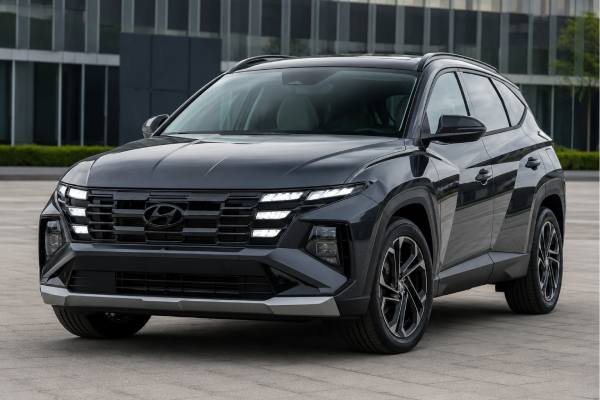
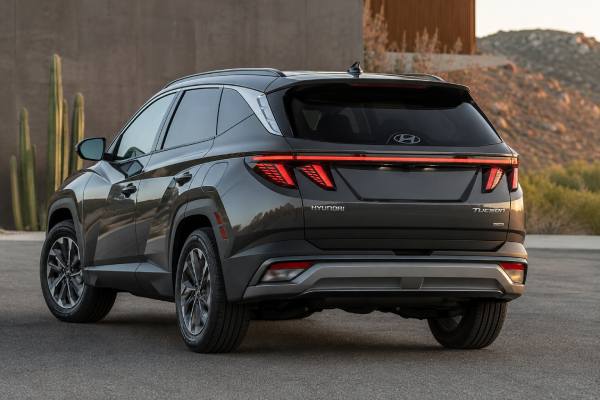
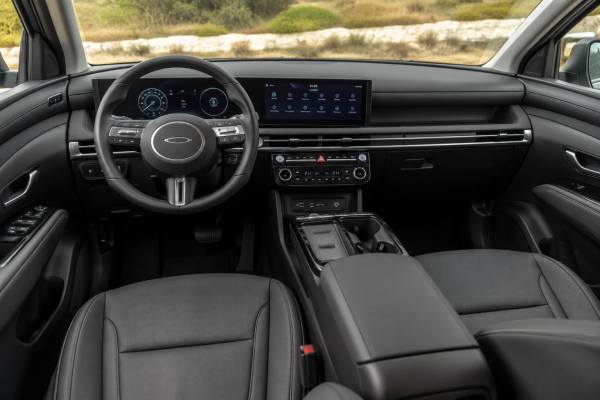
The facelifted Hyundai Tucson FWD with the Smartstream 2.5 GDi/MPI engine is the straightforward gasoline version of Hyundai’s fourth-generation NX4 compact SUV. For 2025 and newer models, it keeps the familiar 187 hp naturally aspirated 2.5-liter four-cylinder, front-wheel drive, and an 8-speed automatic transmission, while gaining the updated cabin layout, safety equipment, and technology introduced with the facelift.
This version is aimed at buyers who want space, comfort, good warranty coverage, and predictable running costs without moving into hybrid or plug-in hybrid complexity. It is not the quickest Tucson, and it is not the most fuel-efficient one, but it is one of the simplest to own.
Final Verdict
The 2025–present Hyundai Tucson FWD 2.5 is a sensible compact SUV for families, commuters, and buyers who value cabin space, safety tech, and a conventional gasoline drivetrain over maximum performance. Its strongest appeal is the roomy, refined body paired with a simple 8-speed automatic and regular-unleaded fuel use. The main tradeoff is performance: the 187 hp engine is adequate, not lively, and the hybrid is stronger and more efficient. The best recommendation depends on maintenance discipline and recall status—buy one with complete service records, verified VIN recall completion, and oil changes done on time.
| Pros | Cons |
|---|---|
| Roomy compact SUV cabin with generous rear-seat space | Acceleration is only adequate with the 187 hp engine |
| Conventional 8-speed automatic avoids dual-clutch behavior | Hybrid Tucson is quicker and more efficient in mixed driving |
| Regular unleaded fuel and simple FWD layout help ownership costs | Direct-injection system still rewards strict oil and fuel maintenance |
| Strong standard safety and driver-assistance feature set | Some advanced parking and camera features stay trim-dependent |
| Large cargo area for the class with flat-folding rear seats | Towing ability is modest and requires careful loading |
Table of Contents
- Facelift Tucson FWD Overview
- Smartstream 2.5 FWD Specifications
- Trims, Safety and Driver Assistance
- Reliability, Issues and Service Actions
- Maintenance and Buyer’s Guide
- Driving, Performance and Real-World Economy
- How the Tucson Compares to Rivals
Facelift Tucson FWD Overview
The 2025–present Tucson FWD 2.5 is the practical, lower-complexity version of the facelifted NX4 Tucson. It suits drivers who want a spacious everyday SUV, do not need all-wheel drive, and prefer a normal automatic transmission over a hybrid system.
The facelift did not reinvent the vehicle’s basic platform. The key changes are in the cabin, infotainment interface, exterior detailing, safety equipment mix, and trim packaging. The gas FWD model keeps the long-wheelbase North American Tucson body, a naturally aspirated inline-four engine, and a torque-converter automatic.
For many buyers, that is the appeal. The 2.5-liter engine is not sporty, but it is easy to understand, easy to service compared with a plug-in hybrid, and well matched to normal suburban and highway use. It uses both gasoline direct injection and multi-point injection, a useful design because port injection can help reduce some of the intake-valve deposit concerns associated with direct-injection-only engines.
The Tucson’s cabin is one of its main strengths. Rear-seat legroom is generous for the class, the cargo area is large, and the driving position is comfortable. It feels more like a small family crossover than a lifted hatchback. The FWD version also avoids the added weight and driveline service points of AWD, although buyers in snowy or rural areas may still prefer HTRAC AWD.
The main reason to pause is the powertrain’s character. The 187 hp engine works fine, but it needs revs for quick merging or passing. Drivers coming from a turbocharged SUV may find it relaxed. Buyers who frequently carry passengers, climb grades, or want better fuel economy should test the Tucson Hybrid before deciding.
Smartstream 2.5 FWD Specifications
The Tucson FWD 2.5 uses Hyundai’s Smartstream gasoline four-cylinder with GDi/MPI fuel delivery, an 8-speed torque-converter automatic, and front-wheel drive. The important ownership points are regular-unleaded fuel, a timing chain rather than a scheduled timing belt, and a roomy unibody SUV package.
| Item | Hyundai Tucson FWD 2.5 |
|---|---|
| Engine family | Smartstream G2.5 GDi/MPI |
| Configuration | 2.5-liter DOHC 16-valve inline-four |
| Displacement | 2,497 cc |
| Fuel system | Gasoline direct injection plus multi-point injection |
| Induction | Naturally aspirated |
| Power | 187 hp at 6,100 rpm |
| Torque | 178 lb-ft at 4,000 rpm |
| Bore × stroke | 85.5 × 101.5 mm |
| Compression ratio | 13.0:1 |
| Recommended fuel | Regular unleaded gasoline |
| EPA fuel economy | 25 city / 33 highway / 28 combined mpg US |
| Metric fuel economy | 9.4 city / 7.1 highway / 8.4 combined L/100 km |
| Item | Specification |
|---|---|
| Transmission | 8-speed automatic, torque converter |
| Drive type | Front-wheel drive |
| Final drive ratio | 3.648 |
| Drive modes | Center-console selectable modes |
| Idle Stop & Go | Standard on gas 2.5 models |
| Item | Measurement |
|---|---|
| Body style | 5-door compact SUV, unibody |
| Seats | 5 |
| Wheelbase | 2,756 mm (108.5 in) |
| Length | 4,641 mm (182.7 in) |
| Width | 1,864 mm (73.4 in) |
| Height, FWD | 1,666 mm (65.6 in) |
| Ground clearance, FWD | 180 mm (7.1 in) |
| Turning diameter | 11.8 m (38.6 ft) |
| Fuel tank | 54 L (14.3 US gal) |
| Cargo volume, seats up | 38.7 cu ft SAE |
| Cargo volume, seats folded | 74.8 cu ft SAE |
| Maximum trailer weight | 2,000 lb braked / 1,650 lb unbraked |
| Item | Specification or note |
|---|---|
| Front suspension | MacPherson strut with coil springs |
| Rear suspension | Multi-link with coil springs |
| Front brakes | Ventilated discs, 325 × 30 mm |
| Rear brakes | Solid discs, 300 × 10 mm |
| Common tire sizes | 235/65R17, 235/60R18, 235/55R19 |
| Engine oil | SAE 0W-20, API SN PLUS/SP or ILSAC GF-6 |
| Engine oil capacity | About 5.6–5.8 L depending on market document and service method |
| Brake fluid | DOT 4 / DOT 4 LV specification |
| Coolant | Ethylene-glycol coolant suitable for aluminum engines |
The oil-capacity range is worth noting. Hyundai publications for different markets and formats may list slightly different values, so the safe approach is to fill by the official procedure, run the engine, wait as directed, and verify level rather than relying only on a single number.
Trims, Safety and Driver Assistance
The gas FWD Tucson is mostly separated by equipment, not major mechanical differences. SE, SEL, XRT, and Limited-style trims share the same 2.5-liter engine and 8-speed automatic, so the buying decision mainly comes down to wheels, cabin equipment, cameras, driver-assist features, and comfort options.
Trim and equipment highlights
SE is the value trim. It gives the Tucson its main structure, engine, safety basics, and infotainment screen without many luxury extras. It is the best choice for buyers who want the roomiest new SUV for the money and do not care about leather-like trim, bigger wheels, or premium audio.
SEL is the common middle ground. It usually adds convenience features such as heated front seats, upgraded cabin trim, proximity key functions, roof rails, and more comfort equipment depending on package. For most private buyers, SEL is the easiest trim to recommend because it keeps price and equipment balanced.
XRT is the appearance-and-utility trim. It brings a more rugged look, darker exterior trim, larger wheels, and outdoor-themed details. On the FWD version, it should not be mistaken for an off-road package. Ground clearance and the basic FWD drivetrain still define what it can do.
Limited is the technology and comfort trim. It is the one to look at if you want features such as a surround-view camera, Blind-Spot View Monitor, premium audio, ventilated front seats, leather seating surfaces, and more advanced parking assistance.
Quick identifiers include wheel size, seat material, camera views, the digital cluster, and exterior trim. A base SE is easy to spot by its simpler wheels and cloth cabin. XRT has darker rugged-style trim. Limited models have the richer cabin, more camera functions, and the highest level of convenience features.
Safety ratings
The 2025 Tucson performed well in major IIHS crashworthiness categories and earned strong overall recognition, but the details matter. Crashworthiness scores are strong, while whiplash prevention and some crash-avoidance sub-scores are less impressive than the headline award suggests. This is a good example of why buyers should look beyond a single safety badge.
For family use, the Tucson’s strengths are its body structure, standard active safety equipment, rear-seat space, and standard LATCH/ISOFIX-style child-seat provisions. The second row is wide enough for practical child-seat use, though three-across child seats will still depend heavily on seat design.
Driver-assistance systems
Standard or widely available driver-assistance features include forward collision avoidance with pedestrian and cyclist detection, lane keeping, lane following, blind-spot warning, rear cross-traffic collision avoidance, driver attention warning, safe exit warning, and smart cruise control on many trims.
Higher trims add the features that make daily parking and highway driving easier: surround-view camera, Blind-Spot View Monitor, parking collision avoidance in reverse, front/rear/side parking distance warning, navigation-based smart cruise control, and Highway Driving Assist.
After windshield replacement, front-end repair, bumper work, suspension alignment changes, or collision repair, the camera and radar systems may need inspection or calibration. A Tucson that shows warning lights for FCA, LKA, blind-spot monitoring, or parking sensors should not be dismissed as “just a sensor.” It may need software diagnosis, a blocked sensor cleaned, a wheel alignment corrected, or proper calibration after body repair.
Reliability, Issues and Service Actions
The facelifted gas FWD Tucson is too new for a complete long-term reliability record, but its main systems are familiar from earlier NX4 models. The best outlook is for examples with clean recall status, regular oil service, no collision-related ADAS problems, and no evidence of neglected software updates.
| Concern | Prevalence | Cost risk | What to check |
|---|---|---|---|
| Open recalls or incomplete service actions | Occasional | Medium to high | Run the VIN through Hyundai and official recall databases |
| Infotainment or digital-cluster glitches | Occasional | Low to medium | Confirm updates, test screens, cameras, and phone pairing |
| Oil consumption or low oil level from neglect | Occasional | Medium to high | Check oil level history, leaks, smoke, and service intervals |
| Direct-injection deposits or rough running | Low to occasional | Medium | Look for misfires, poor idle, fuel quality issues, short-trip use |
| Brake rotor corrosion in damp climates | Common by environment | Low to medium | Inspect pad thickness, rotor faces, and parking brake operation |
| ADAS sensor or calibration faults | Occasional | Medium | Check warning lights and evidence of windshield or bumper repair |
Engine and drivetrain concerns
The Smartstream 2.5 uses a timing chain, so there is no routine timing-belt replacement. That does not mean the timing system should be ignored. On a used Tucson, listen for cold-start chain rattle, check for cam/crank correlation fault codes, and treat persistent timing noise as a diagnostic issue rather than normal aging.
The engine’s GDi/MPI fuel system helps reduce some deposit concerns, but short trips, poor fuel quality, long oil intervals, and heavy idling are still hard on any modern gasoline engine. Symptoms such as rough idle, repeated misfires, fuel smell in the oil, or hesitation deserve proper scan-tool diagnosis.
The 8-speed automatic should shift smoothly once warm. A slight downshift delay during gentle rolling acceleration can be normal, but harsh engagement, flares, repeated hunting, or clunks should be checked before purchase. Confirm that transmission-related software updates have been applied if the vehicle has shift complaints.
Recalls and service actions
Recall coverage is VIN-specific, and it can change over time. A buyer should not rely only on model year. The most practical approach is to check the VIN through Hyundai’s owner portal, the dealer service system, and the official safety recall database.
Important recall themes for 2025–present Tucson models include:
- A console wiring routing concern on certain 2025 vehicles that could allow the transmission to shift out of Park without pressing the brake pedal. The remedy involves rerouting the console extension wiring.
- A limited engine connecting-rod bolt recall affecting a small number of 2025–2026 Tucson vehicles with 2.5-liter engines. Symptoms may include knocking, oil-pressure warnings, hesitation, oil leaks, or loss of power.
- A side-curtain airbag installation recall affecting certain Hyundai vehicles, including some Tucson units. The remedy is dealer inspection and correct reinstallation.
- Trailer-wiring harness concerns on vehicles equipped with certain OEM towing wiring. This matters most for Tucsons with a dealer or port-installed tow harness.
These recalls do not mean every Tucson is affected. They do mean that a clean VIN report is essential. For a nearly new vehicle, ask for a printed dealer history showing recall completion, software updates, warranty repairs, and any replaced modules.
Pre-purchase checks to request
Before buying, request:
- Full service history with oil-change dates and mileage.
- Recall completion proof by VIN.
- Any warranty repair invoices, especially for engine, transmission, infotainment, or ADAS systems.
- A scan for stored and pending diagnostic trouble codes.
- Evidence that windshield or front bumper repairs were followed by proper ADAS calibration.
- A cold start, hot restart, and extended test drive.
For a low-mileage 2025 or 2026 vehicle, lack of service history is still a problem. Time-based oil changes matter, especially for short-trip use.
Maintenance and Buyer’s Guide
A Tucson FWD 2.5 should be inexpensive to maintain by compact SUV standards if serviced on time. The most important habits are regular 0W-20 oil changes, brake-fluid service, tire rotations, software updates, and early attention to leaks or warning lights.
| Interval | Service items |
|---|---|
| Every month / before long trips | Check engine oil level, coolant level, tires, lights, washer fluid, and visible leaks |
| 5,000–8,000 miles / 6–12 months | Change engine oil and filter; rotate tires; inspect brakes and suspension |
| 15,000–20,000 miles | Replace cabin air filter; inspect engine air filter and brake components |
| 30,000 miles / 2–3 years | Replace engine air filter if dirty; inspect brake fluid, belts, hoses, fuel system |
| 40,000–60,000 miles | Inspect automatic transmission fluid condition; service earlier under severe use |
| 60,000 miles | Inspect serpentine belt, tensioner, suspension bushings, wheel bearings, and alignment |
| 100,000 miles | Replace spark plugs if due; inspect timing chain noise and cooling system condition |
| 120,000 miles / 10 years | Replace coolant if following long-life coolant timing, then shorten later intervals |
Most owners should treat the “severe” schedule as realistic if the vehicle sees short trips, hot weather, freezing starts, dust, long idling, mountain driving, ride-share use, or frequent heavy traffic. A 5,000-mile oil interval is cheap insurance for long-term ownership, even if the normal schedule allows longer.
Fluids and service notes
Use SAE 0W-20 oil meeting the correct API or ILSAC specification. Do not add aftermarket oil additives. Keep receipts, especially during the warranty period. If the vehicle consumes oil, document the level, mileage, and top-up amount before visiting the dealer.
The automatic transmission fluid is not a casual driveway check item on many modern Hyundais. Under normal use, it may not require frequent service, but severe use changes the picture. If you plan to keep the SUV beyond 100,000 miles, discuss a preventive ATF service with a Hyundai dealer or a specialist using the exact specified fluid.
Brake fluid should be tested for moisture and replaced when due. In wet climates, brake fluid ages faster. Brake pads and rotors should be inspected at every tire rotation, especially if the vehicle sits outside or is used mostly for short urban trips.
The Tucson 2.5 uses a timing chain. Inspect for symptoms, not a fixed replacement mileage. Rattle at start-up, rough running, oil-pressure issues, or timing-related fault codes call for diagnosis of the chain, guides, tensioner, and oil supply.
Buyer’s guide
The best used buy is usually a well-documented SEL FWD. It has enough comfort equipment for daily use without the highest trim’s extra electronics. Limited is attractive if you want cameras and ventilated seats, but inspect every camera, sensor, display, and driver-assist function. XRT is worth buying for style, not for serious off-road ability.
Avoid examples with missing maintenance records, repeated battery complaints, dashboard warning lights, water intrusion, poor body repair, mismatched tires, or incomplete recall work. Also be cautious with vehicles that have aftermarket trailer wiring, poorly installed accessories, or evidence of flood exposure.
On a test drive, check for:
- Smooth cold start with no knocking.
- Stable idle with no misfire feel.
- Clean shifts from Park, Reverse, and Drive.
- Straight tracking on the highway.
- No steering vibration under braking.
- Working rear camera, parking sensors, and blind-spot alerts.
- No moisture inside lamps or cabin carpets.
- Even tire wear across all four tires.
Long-term durability should be good if the Tucson is maintained carefully. The FWD 2.5 avoids the extra rear driveline parts of AWD and the battery/electronics layer of the hybrid, but it still needs modern-car discipline: correct fluids, software updates, clean sensors, and prompt diagnosis when warning lights appear.
Driving, Performance and Real-World Economy
The Tucson FWD 2.5 drives like a comfort-focused compact SUV, not a sporty one. It is stable, quiet enough for long trips, and easy to place in traffic, but the engine needs revs when the vehicle is loaded or when quick passing is required.
The steering is light and predictable. It does not give much road feel, but that is normal for the class. Around town, the Tucson feels calm and easy. On the highway, the long wheelbase gives it a planted character, and the suspension does a good job filtering broken pavement.
The ride depends partly on wheel size. Seventeen- and 18-inch wheel packages tend to feel more settled over sharp bumps. Larger 19-inch tires sharpen appearance and response slightly but can add impact harshness and replacement cost. Buyers who care most about comfort should test-drive the exact wheel package they plan to buy.
Powertrain character
The 2.5-liter engine makes its torque higher in the rev range than a turbocharged rival. Around town, the transmission keeps it smooth and quiet. When merging, climbing grades, or passing at highway speed, the automatic downshifts and the engine becomes more audible.
The 8-speed automatic is a better match for most drivers than a sporty dual-clutch would be. It creeps smoothly in parking lots, handles stop-and-go traffic well, and does not have the low-speed clutch feel some dual-clutch SUVs can show. Kickdown response is acceptable, though not urgent.
Drive modes alter throttle and transmission behavior, but they do not change the engine’s basic output. Sport mode can make the Tucson feel more alert, while Normal is the most natural for daily driving.
Real-world fuel economy
The official FWD rating is 25 mpg city, 33 mpg highway, and 28 mpg combined. In practical terms, expect many drivers to see the high-20s in mixed use. Highway cruising can reach the low-30s if speeds are moderate and the vehicle is not heavily loaded.
City economy depends heavily on trip length. Short trips, winter warm-up, heavy air-conditioning use, hills, and repeated idling can push real consumption below the official city figure. A Tucson Hybrid is much better for dense urban use because it can recover energy and use electric assist where the gas 2.5 is least efficient.
For towing, stay realistic. The Tucson can handle a small trailer within its rating, but it is not a heavy-duty tow vehicle. Use trailer brakes where required, keep tongue weight sensible, watch payload, and expect fuel economy to drop sharply with a boxy or heavy trailer.
How the Tucson Compares to Rivals
The Tucson FWD 2.5 compares best as a space-and-value compact SUV rather than a performance leader. Against rivals such as the Toyota RAV4, Honda CR-V, Mazda CX-5, Nissan Rogue, Kia Sportage, and Subaru Forester, its biggest strengths are cabin space, technology value, and comfort.
The Toyota RAV4 is the conservative benchmark. It has a strong reputation, broad resale appeal, and very efficient hybrid versions. The Tucson feels more modern inside and often offers more equipment for the money, but the RAV4 has the stronger long-term resale image.
The Honda CR-V is polished and practical. It has excellent packaging, a refined cabin, and strong hybrid options. The Tucson counters with bold styling, strong feature content, and a conventional automatic on the gas model, while the CR-V’s gas turbo engine may feel stronger in everyday torque.
The Kia Sportage is the Tucson’s closest mechanical relative. It shares much of the platform logic and powertrain family, so the choice often comes down to styling, dealer support, trim pricing, and interior preference. The Sportage has a more adventurous look, while the Tucson feels cleaner and more technical.
The Mazda CX-5 is more engaging to drive and has a richer-feeling cabin in many trims. It is smaller inside, especially in cargo and rear-seat space. Choose the Mazda if steering feel matters; choose the Tucson if family space and tech features matter more.
The Nissan Rogue offers strong fuel economy from its small turbo engine and a comfortable cabin, but some buyers may prefer the Tucson’s conventional naturally aspirated engine and 8-speed automatic. The Rogue feels lighter and more efficient; the Tucson feels roomier and more substantial.
The Subaru Forester brings standard AWD and excellent visibility. For buyers in snowy areas, that is a major advantage. The Tucson FWD makes more sense where AWD is not needed and where lower purchase price, fuel economy, and simpler driveline maintenance matter more.
The key decision is not only Tucson versus rival. It is gas Tucson versus Tucson Hybrid. The gas FWD 2.5 is the right pick for lower purchase price, simpler ownership, and mostly highway or suburban driving. The hybrid is the better pick for city use, stronger acceleration, and lower fuel bills.
References
- 2026 Tucson Specs and Features 2025 (Manufacturer Specifications)
- Gas Mileage of 2025 Hyundai Tucson 2025 (Fuel Economy)
- 2025 Hyundai Tucson 2025 (Safety Rating)
- Recommended lubricants and capacities | 2025 Hyundai Tucson 2025 (Owner’s Manual)
- Vehicle Detail Search – 2025 HYUNDAI TUCSON SUV FWD | NHTSA 2025 (Recall Database)
Disclaimer
This article is for informational purposes only and is not a substitute for professional diagnosis, inspection, or repair. Specifications, torque values, service intervals, fluids, procedures, software updates, and recall applicability can vary by VIN, market, production date, trim, and equipment. Always verify details against the official owner’s manual, service information, dealer records, and VIN-specific recall data before buying, servicing, or repairing a vehicle.
If this guide helped you, please share it on Facebook, X/Twitter, or your favorite car community to support our work.