
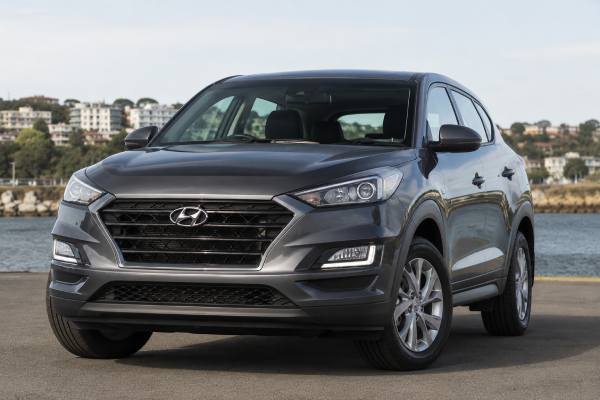
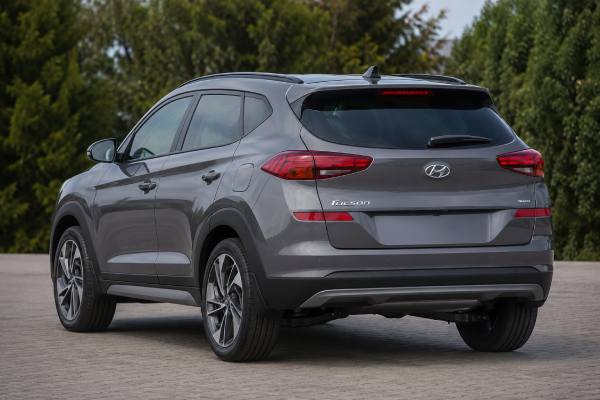
The facelifted Hyundai Tucson TL with the 1.6 GDi petrol engine is the simple, naturally aspirated version of Hyundai’s compact SUV. It is not the fastest Tucson, and it is not the most economical on paper, but it is one of the less complicated versions to own because it avoids a turbocharger, dual-clutch transmission, diesel emissions hardware, and all-wheel-drive driveline parts.
For buyers looking at a 2018–2020 Tucson 1.6 GDi FWD, the main question is whether the modest 132 hp engine is enough for daily use. For calm drivers, families, and private owners who value space, comfort, safety equipment, and predictable maintenance over strong acceleration, it can make sense. The tradeoff is performance: this engine needs revs, patience, and realistic expectations when the car is loaded or driven on fast roads.
Final Verdict
The 2018–2020 Hyundai Tucson TL facelift with the 132 hp Gamma 1.6 GDi is a sensible used SUV for buyers who want space, safety equipment, and simple petrol ownership rather than speed. Its best appeal is mechanical simplicity: front-wheel drive, a manual gearbox, no turbo, and no diesel particulate filter. It suits family use, commuting, and moderate annual mileage, but it feels underpowered when fully loaded or driven on hills. Buy one only with clear service history, confirmed recall completion, clean cold-start behaviour, and no signs of clutch abuse, oil neglect, or direct-injection intake carbon issues.
| Pros | Cons |
|---|---|
| Simple naturally aspirated petrol engine with no turbocharger | 132 hp feels modest in a family-sized SUV |
| Spacious cabin and 513-litre boot suit family use | Real-world economy is only average for the performance |
| Manual FWD layout avoids AWD and DCT repair risks | Clutch wear matters on city-driven or towing-used cars |
| Good standard safety kit on facelift UK/EU trims | ADAS features need calibration after windscreen or front-end repairs |
| Strong used-market value compared with more premium rivals | Direct injection can suffer intake carbon build-up over time |
Table of Contents
- Tucson 1.6 GDi overview
- Specifications and technical data
- Trims, options, safety and ADAS
- Reliability, common issues and service actions
- Maintenance and buyer’s guide
- Driving, performance and efficiency
- How the Tucson 1.6 GDi compares
Tucson 1.6 GDi overview
The Tucson 1.6 GDi is the entry-level petrol version of the facelifted third-generation Tucson, known by the TL or TLe platform code. It is best understood as a roomy, comfortable, low-stress SUV rather than a sporty or high-performance one.
The facelift, introduced for the 2018 model year in many European markets, brought revised styling, updated infotainment, improved driver assistance availability, and Euro 6d-Temp-compliant powertrains. In the 1.6 GDi version, the formula stayed deliberately simple: a 1.6-litre direct-injection petrol engine, six-speed manual gearbox, and front-wheel drive.
This matters on the used market. Many compact SUVs from the same period use small turbo petrol engines, dual-clutch automatics, diesel emissions systems, or more complex AWD layouts. Those can be efficient and pleasant, but they add more components that age, require specialist diagnosis, or become expensive when neglected. The Tucson 1.6 GDi avoids much of that complexity.
The engine is part of Hyundai-Kia’s Gamma petrol family. In this Tucson tune, it produces 132 PS, or about 97 kW, with peak torque of 161 Nm. Those figures are enough for normal commuting, school runs, and steady motorway travel, but the engine does not have the easy low-rev pull of the 1.6 T-GDi turbo petrol or the 1.6 CRDi diesel. It rewards smooth driving and regular gear changes.
As a used buy, the 1.6 GDi makes the most sense for drivers who do not tow often, do not regularly carry heavy loads, and are not expecting quick overtaking performance. The appeal is the body: you get a proper compact SUV cabin, high seating position, generous boot, good visibility, and useful safety equipment. The compromise is that the powertrain feels like it belongs to a lighter car.
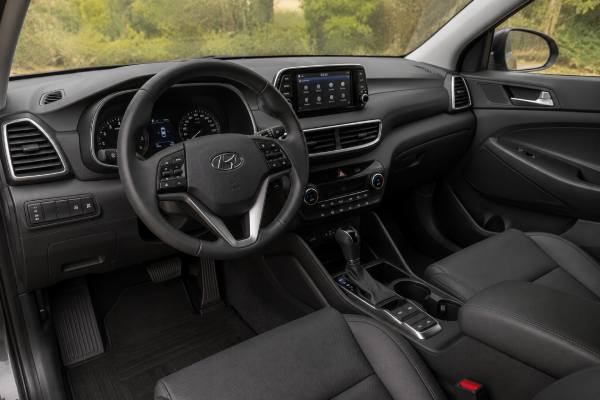
The facelifted Tucson’s cabin is practical rather than luxurious. Materials are generally durable, controls are easy to understand, and the driving position suits a wide range of people. Rear-seat space is a strong point, and the 60/40 split rear bench makes the load area useful for family trips. Compared with smaller crossovers, the Tucson feels more substantial; compared with larger SUVs, it is easier to park and maintain.
For long-term ownership, condition is more important than mileage alone. A 1.6 GDi with annual oil changes, clean coolant, healthy brakes, and proof of recall work is usually a better bet than a lower-mileage car with patchy history. Direct-injection petrol engines do not wash fuel over the intake valves, so intake deposits become more likely with age, short trips, and poor servicing. That does not make the engine bad, but it does make regular maintenance important.
Specifications and technical data
The 1.6 GDi Tucson uses a naturally aspirated four-cylinder petrol engine paired with a six-speed manual gearbox and front-wheel drive. Its technical character is simple: moderate power, no turbocharger, no hybrid system, no AWD transfer hardware, and a chassis tuned for comfort and stability. The most important numbers are the 132 PS output, 161 Nm torque figure, 11.5-second 0–62 mph time, 513-litre boot, and 62-litre fuel tank.
| Item | Hyundai Tucson 1.6 GDi FWD facelift |
|---|---|
| Model years covered | Facelift TL/TLe, mainly 2018–2020 |
| Engine family | Gamma 1.6 GDi petrol |
| Engine layout | Inline 4-cylinder, DOHC, 16 valves |
| Displacement | 1,591 cc |
| Induction | Naturally aspirated |
| Fuel system | Gasoline direct injection |
| Bore × stroke | 77.0 × 85.44 mm |
| Compression ratio | 11.0:1 |
| Maximum power | 132 PS / 97.1 kW at 6,300 rpm |
| Maximum torque | 161 Nm / 118.7 lb-ft at 4,850 rpm |
| Timing drive | Timing chain |
| Emissions standard | Euro 6d-Temp on UK facelift data |
| Item | Specification |
|---|---|
| Transmission | 6-speed manual |
| Drive type | Front-wheel drive |
| Front suspension | MacPherson strut with coil spring |
| Rear suspension | Multi-link |
| Steering | Motor-assisted rack-and-pinion |
| Turning circle | 10.6 m |
| Front brakes | Ventilated discs, floating calipers |
| Rear brakes | Solid discs, floating calipers |
| Item | Value |
|---|---|
| Body style | 5-door compact SUV |
| Seats | 5 |
| Length | 4,475 mm |
| Width excluding mirrors | 1,850 mm |
| Width including mirrors | 2,065 mm |
| Height | About 1,645–1,650 mm, depending on wheel package |
| Wheelbase | 2,670 mm |
| Boot capacity, seats up | 513 litres |
| Boot capacity, seats folded | 1,503 litres |
| Fuel tank | 62 litres |
| Kerb weight | 1,414–1,573 kg |
| Gross vehicle weight | 2,030 kg |
| Roof load | 100 kg |
| Item | Value |
|---|---|
| 0–62 mph | 11.5 seconds |
| Top speed | 113 mph / 182 km/h |
| Braked towing limit | 1,400 kg |
| Unbraked towing limit | 650 kg |
| Nose weight | 100 kg |
| Gross train weight | 3,430 kg |
| Typical trim wheel | Tyre size | WLTP combined economy | CO₂ |
|---|---|---|---|
| 16-inch alloy | 215/70 R16 | 8.0 L/100 km / 35.3 mpg UK / 29.4 mpg US | 162 g/km |
| 17-inch alloy | 225/60 R17 | 8.1 L/100 km / 34.9 mpg UK / 29.1 mpg US | 162 g/km |
| 18-inch alloy | 225/55 R18 | 8.1 L/100 km / 34.9 mpg UK / 29.1 mpg US | 162 g/km |
The 1.6 GDi’s specification shows why it is easy to own but not especially brisk. The engine makes its torque high in the rev range, so it does not surge forward from low rpm like a turbocharged petrol engine. The manual gearbox is therefore central to how the car drives; a good one should shift cleanly, with a progressive clutch and no crunching into second or reverse.
Quick service-reference values should be confirmed against the VIN and market service book. As a practical guide, many 1.6 GDi examples use about 3.6 litres for an oil-and-filter service fill, commonly with a 5W-30 oil meeting the correct Hyundai/Kia petrol specification for the market. Brake fluid is normally DOT 3 or DOT 4, coolant is long-life ethylene-glycol type, and the manual gearbox typically uses a Hyundai/Kia MTF-grade oil rather than ordinary gear oil. Wheel-nut torque is commonly in the 107–127 Nm range on Hyundai passenger vehicles, but the official service data for the exact wheel and hub should always take priority.
Trims, options, safety and ADAS
In the UK-style facelift range, the 1.6 GDi was generally offered on mainstream trims rather than the highest-output or sportiest versions. That is good for used buyers because most cars have useful equipment without the cost or complexity of the more powerful drivetrains.
Typical UK facelift trims included S Connect, SE Nav, Premium, Premium SE, and N Line, but the 1.6 GDi manual 2WD was concentrated around S Connect, SE Nav, and Premium. Higher trims and N Line models were more commonly linked to turbo petrol, diesel, mild-hybrid, automatic, or sport-suspension configurations.
S Connect gives the basic Tucson shape and space with 16-inch wheels, touchscreen media, smartphone integration, air conditioning, alloy wheels, electric folding mirrors, and the main safety systems. SE Nav is often the sweet spot because it adds 17-inch wheels and integrated navigation while keeping running costs reasonable. Premium adds 18-inch wheels, richer cabin trim, heated front seats, rear heated outer seats on some markets, extra convenience equipment, and more driver-assistance features depending on year and country.
Quick identifiers are useful when viewing cars:
- S Connect cars usually have 16-inch wheels and simpler cloth upholstery.
- SE Nav cars normally show factory navigation and 17-inch wheels.
- Premium cars commonly have 18-inch wheels, heated seats, upgraded cabin trim, and more convenience equipment.
- The 1.6 GDi does not normally have the twin exhaust finishers used on some other Tucson versions.
- N Line styling is not a reliable indicator of this engine because the 1.6 GDi was not the natural N Line powertrain in the UK facelift range.
Mechanically, the trim differences are modest for the 1.6 GDi. The engine, manual gearbox, and front-wheel-drive layout remain the same. Wheel size changes the ride, tyre cost, steering feel, and official efficiency slightly. The 16-inch version rides most softly and uses cheaper tyres. The 17-inch setup is a good compromise. The 18-inch package looks sharper but can feel firmer on broken roads.
The Tucson TL received a five-star Euro NCAP result when tested in 2015, with strong adult and child occupant scores for its era. Treat this as a historical rating, not a modern 2026 safety comparison, because Euro NCAP protocols become stricter over time and older ratings eventually lose direct comparability with new cars.
The facelift 1.6 GDi’s safety equipment is a strong point. Typical systems include front airbags, front side airbags, curtain airbags, ABS, electronic brake-force distribution, electronic stability control, vehicle stability management, trailer stability assist, tyre-pressure monitoring, front and rear seatbelt reminders, and ISOFIX points on the outer rear seats.
Driver assistance availability is better on facelift cars than on many earlier compact SUVs. Autonomous emergency braking and lane keep assist were fitted across the UK facelift range in the data used for this guide. Speed-limit information, rear cross-traffic alert, blind-spot-related equipment, and other convenience-based assistance features depend on trim and market. Adaptive cruise with stop-and-go was linked to automatic and DCT models, so do not expect it on a manual 1.6 GDi.
ADAS calibration matters. If the windscreen has been replaced, the front camera area has been disturbed, the car has had front-end accident repair, or the suspension geometry has been changed, the lane and emergency-braking systems may need correct calibration. On a test drive, check that warning lights go out normally and that lane-support or AEB-related warnings are not displayed.
Reliability, common issues and service actions
The Tucson 1.6 GDi is usually more reliable when it has been serviced on time and driven sympathetically. Its main risks are not exotic failures; they are age-related wear, direct-injection deposits, missed oil changes, clutch abuse, brake corrosion, suspension wear, and unresolved recall work.
| Issue | Prevalence | Severity | Typical signs | Best response |
|---|---|---|---|---|
| Intake valve carbon build-up | Occasional | Medium | Rough idle, hesitation, reduced pull | Diagnosis, intake inspection, walnut cleaning if needed |
| Clutch wear | Occasional | Medium | High bite point, slip, judder | Replace clutch kit; inspect flywheel |
| Brake corrosion | Common with short trips | Low to medium | Scored discs, pulsing, scraping | Clean, service, or replace discs and pads |
| Suspension links and bushes | Occasional | Low to medium | Knocks over bumps, uneven tyre wear | Inspect links, bushes, ball joints, alignment |
| ABS/ESC recall-related faults | VIN-dependent | High | Recall notice, ABS warning, fire-risk campaign | Official VIN check and dealer confirmation |
| 12 V battery ageing | Common after 4–6 years | Low | Slow crank, warning messages, stop-start issues | Battery test and replacement if weak |
The Gamma 1.6 GDi’s key ownership point is direct injection. In a port-injected engine, fuel spray helps clean the intake valves. In a GDi engine, fuel is injected directly into the combustion chamber, so oil vapour from the crankcase ventilation system can leave deposits on the backs of the intake valves over many miles. Short trips, low-quality oil, and gentle low-load driving can make symptoms appear earlier.
Symptoms of carbon build-up include an uneven idle, slight misfire when cold, hesitation at low speed, or a duller response than expected. The first step is proper diagnosis: scan for misfire, fuel-trim, oxygen-sensor, and timing-correlation data before assuming carbon is the cause. If deposits are confirmed, cleaning the intake ports is more effective than pouring additives into the fuel tank.
Timing chain problems are not a routine weakness on a well-serviced 1.6 GDi, but the chain is not magic. Old oil, low oil level, poor filters, and very high mileage can accelerate chain, guide, or tensioner wear. Warning signs include a persistent cold-start rattle, cam/crank correlation fault codes, rough running, or timing-related engine-management lights. There is no normal scheduled timing-belt-style replacement interval because this engine uses a chain, but high-mileage cars should be listened to carefully.
Oil consumption should be checked before purchase. Let the engine idle after a cold start, watch for blue smoke, and look for leaks around the cam cover, timing cover area, oil filter housing area, and sump. A small amount of oil use between services can occur on many older petrol engines, but heavy consumption, smoke, or a seller who cannot say what oil was used are warning signs.
The manual gearbox is generally robust. It should shift cleanly and quietly, with no bearing whine, no jumping out of gear, and no crunch when selecting second gear. Clutch wear depends heavily on driver style. A Tucson used mostly in steep urban streets, towing, or stop-start traffic may need a clutch earlier than a motorway-driven car. During a test drive, accelerate in a high gear from low revs and watch for rising rpm without matching road speed.
The chassis is durable but still needs normal checks. Listen for front anti-roll-bar link knocks, rear suspension bush wear, creaks from tired bushes, humming wheel bearings, and brake vibration. The Tucson is heavy enough to wear tyres and brakes if alignment is poor. Uneven rear tyre wear can point to suspension geometry, bush wear, or previous impact damage.
Corrosion is not usually the headline issue, but do not ignore it. Check the underside, rear subframe area, suspension arms, brake pipes, exhaust hangers, tailgate edges, door bottoms, and jacking points. Cars from coastal regions or salted winter roads need closer inspection. Hyundai’s anti-perforation cover does not mean every bracket, fastener, pipe, and suspension component will remain clean forever.
Electrical and software issues are usually manageable. Navigation maps, infotainment stability, reversing camera clarity, parking sensors, TPMS sensors, and ADAS warnings should all be checked during viewing. If warning lights are present, do not accept “it only needs clearing” without a proper diagnostic report.
Recalls and service actions are VIN-specific. In several markets, Tucson TL vehicles were included in safety campaigns relating to the ABS/ESC or HECU control unit, where an internal malfunction could create an electrical short and increase fire risk. Some European Tucson TLe cars were also listed in recall data for ABS module concerns, and other campaigns can vary by country, production date, and equipment. Always check the VIN with Hyundai or the official national recall database, then ask for dealer paperwork showing the remedy was completed.
Maintenance and buyer’s guide
The best maintenance strategy for the Tucson 1.6 GDi is simple: use correct oil, shorten intervals for city use, keep the cooling and brake systems fresh, and do not ignore small running faults. This engine is not unusually demanding, but it dislikes neglected oil and long-term short-trip operation.
| Item | Practical interval | What to do |
|---|---|---|
| Engine oil and filter | 15,000 km / 12 months, sooner for short trips | Use correct Hyundai/Kia petrol specification oil |
| Engine air filter | Inspect yearly; replace around 30,000–45,000 km | Replace earlier in dusty conditions |
| Cabin filter | 12 months | Replace for airflow and demisting performance |
| Spark plugs | Plan around 75,000 km unless VIN schedule differs | Use correct heat range and torque |
| Fuel filter | Market-dependent; often around 60,000 km if serviceable | Confirm whether external or in-tank by VIN |
| Coolant | Typically 8 years / 120,000 km, then shorter intervals | Use correct long-life coolant and bleed properly |
| Brake fluid | Every 2 years | Flush system, check calipers and hoses |
| Manual gearbox oil | Inspect at 60,000 km; consider 90,000–120,000 km change | Use correct Hyundai/Kia MTF specification |
| Timing chain | No routine belt-style interval | Inspect if noisy, high mileage, or fault codes appear |
| Serpentine belt and hoses | Inspect yearly; replace if cracked or noisy | Check tensioner, pulleys, coolant hoses |
| Tyres and alignment | Rotate 10,000–15,000 km where suitable | Check uneven wear and suspension geometry |
| 12 V battery | Test yearly after year four | Replace if weak, especially before winter |
For oil, do not shop by viscosity alone. A 5W-30 label is not enough; the oil must meet the correct Hyundai/Kia specification for the engine, market, emissions equipment, and temperature range. Many European 1.6 GDi cars use low-friction 5W-30-type oils, but some markets list different grades. If the service book, under-bonnet label, and dealer data disagree, use the VIN-based Hyundai service source.
Spark plugs deserve care because direct-injection engines are sensitive to ignition quality. Wrong plugs, cheap coils, or over-tightened plugs can create misfires and catalyst damage. If the engine has misfire codes, replace parts only after checking coil condition, plug gaps, oil leaks into plug wells, injector behaviour, and compression if needed.
The brake system needs more attention than many owners expect. A family SUV used for school runs can corrode rear discs before it wears them out. Every service should include pad thickness, disc condition, caliper slider movement, brake hose condition, and parking brake operation. Brake fluid every two years is cheap insurance against internal corrosion and poor pedal feel.
The cooling system should hold temperature steadily. During inspection, look for pink or greenish residue around hose joints, the radiator, thermostat area, water pump region, and expansion tank. A car that loses coolant, overheats in traffic, or has an oily film in the coolant tank needs diagnosis before purchase.
Because this is a FWD manual, there is no rear differential, transfer case, or AWD coupling to service. That reduces cost compared with AWD Tucson versions. The drivetrain checks are therefore simple: clutch operation, driveshaft boots, gearbox oil leaks, wheel bearings, and any vibration under load.
Before buying, use this checklist:
- Confirm VIN, engine, trim, and model year match the advert.
- Check full service history, including oil grade and yearly dates.
- Confirm recall and service campaign completion with Hyundai.
- Start the engine from cold and listen for chain rattle or misfire.
- Scan all control modules, not just the engine ECU.
- Test clutch bite, gear selection, reverse engagement, and hill starts.
- Check for brake vibration, suspension knocks, and steering pull.
- Inspect tyres for mismatched brands or uneven wear.
- Look under the car for corrosion, leaks, damaged trays, and poor repairs.
- Test AEB, lane assist warnings, parking sensors, camera, TPMS, and infotainment.
- Verify both keys, manuals, locking wheel nut key, and service invoices.
The best years and trims depend on budget. A late SE Nav is often the practical choice because it has the right balance of equipment, tyre cost, and simplicity. Premium is attractive if you want heated seats and a richer cabin, but check tyre prices and condition. Avoid any car with unresolved recall history, missing oil services, clutch slip, engine warning lights, or rough cold running.
Long-term durability is generally positive if the car is maintained properly. The body and cabin age well, parts availability is good, and the simple drivetrain helps keep repair exposure sensible. The main reason to walk away is not the engine’s design; it is poor ownership history.
Driving, performance and efficiency
The Tucson 1.6 GDi drives like a comfortable compact SUV with a modest engine. It is relaxed at normal speeds, stable on the motorway, and easy to use in town, but it needs revs and gear changes when you ask for quick acceleration.
At low speed, the Tucson feels easy rather than lively. The clutch should be light, the steering is assisted enough for parking, and visibility is good for an SUV of this size. The engine is smooth when healthy, but it does not deliver strong torque below 2,000 rpm. If you let the revs fall too low, it can feel flat.
On country roads, the chassis is more capable than the engine. The multi-link rear suspension helps the Tucson feel composed, and the steering is predictable, although not especially communicative. Body roll is present, as expected in a family SUV, but the car feels secure rather than loose. Tyres make a noticeable difference: 16-inch wheels ride best, 17-inch wheels are a good middle ground, and 18-inch wheels feel firmer over sharp bumps.
Motorway refinement is acceptable. Wind and tyre noise are present but not excessive for the class. The 1.6 GDi can cruise steadily at 110–130 km/h, but overtaking often needs a downshift. Loaded with passengers and luggage, the engine’s limited torque becomes more obvious. Drivers used to turbo petrol or diesel SUVs may find it underpowered.
Braking feel is generally confidence-inspiring if the system is maintained. A soft pedal, vibration, or scraping noise usually points to worn pads, warped or corroded discs, old fluid, or sticking calipers. Stability control is not intrusive in normal driving, and the front-wheel-drive layout gives predictable behaviour in wet weather if good tyres are fitted.
Official performance is 11.5 seconds from 0–62 mph and a 113 mph top speed. Those numbers are honest for the engine size and vehicle weight. The more important real-world measure is 80–120 km/h passing response, where the Tucson needs planning. Use third or fourth gear rather than expecting the car to pull strongly in sixth.
Real-world fuel economy depends heavily on use. The official WLTP combined figure is around 8.0–8.1 L/100 km, depending on wheel package. In mixed driving, many owners should expect roughly 7.5–9.0 L/100 km, or about 31–26 mpg US and 38–31 mpg UK. On steady highways, 6.8–8.0 L/100 km is realistic with moderate speeds. In heavy city traffic, winter use, or short trips, 8.5–10.5 L/100 km is more realistic.
Cold weather can add roughly 0.5–1.2 L/100 km because the engine takes longer to warm, the heater and electrical loads increase, and tyres and fluids create more drag. Short trips are the worst use case because the engine may spend much of its time running rich during warm-up.
Towing is possible within the rated limits, but this is not the Tucson engine to choose for regular caravan work. The 1,400 kg braked towing rating is useful for light trailers, but the clutch, brakes, and cooling system should be in excellent condition. On hills or with a high-sided trailer, performance and fuel economy suffer quickly. For frequent towing, the diesel, turbo petrol, or a later hybrid Tucson is a better fit.
How the Tucson 1.6 GDi compares
Against rivals, the Tucson 1.6 GDi wins on space, simplicity, equipment, and value, but it loses on acceleration and sometimes on fuel economy. It is a better choice for cautious used buyers than for drivers who want a sharp or powerful SUV.
| Rival | How it compares | Best reason to choose it |
|---|---|---|
| Kia Sportage 1.6 GDi | Very similar platform and engine character | Alternative styling, warranty history, and pricing |
| Nissan Qashqai petrol | Usually lighter and easier in town | Smaller feel and broad used availability |
| Mazda CX-5 2.0 petrol | Sharper to drive with a stronger engine feel | Driving enjoyment and cabin finish |
| Volkswagen Tiguan petrol | More premium feel, often more complex | Refinement, image, and stronger turbo performance |
| Peugeot 3008 petrol | More modern cabin and punchier turbo engines | Interior design and efficiency |
| Toyota RAV4 Hybrid | More efficient and stronger, usually pricier | Hybrid economy and long-term reputation |
The closest rival is the Kia Sportage QL 1.6 GDi because it shares much of the same engineering. The decision between them is often about price, condition, service history, interior preference, and local dealer support. If both are equal, buy the better-maintained car, not the badge you prefer.
Compared with a Nissan Qashqai, the Tucson feels roomier and more substantial, but the Qashqai can feel easier in tight city use. The Qashqai’s smaller turbo petrol engines may feel more responsive at low rpm, but they also bring turbo-related considerations. The Tucson’s advantage is its simpler naturally aspirated engine and larger SUV feel.
The Mazda CX-5 is better for enthusiastic drivers. Its steering, seating position, and naturally aspirated petrol engines feel more polished. However, the Mazda may cost more like-for-like, and its larger petrol engines can also be thirsty if driven hard. The Tucson fights back with value, equipment, and a less sporty but comfortable character.
The Volkswagen Tiguan feels more premium and often has stronger turbocharged performance. It is also more likely to come with DSG automatics, more complex equipment, and higher repair costs as it ages. A good Tiguan is a better all-rounder, but a clean Tucson 1.6 GDi can be the lower-stress purchase.
The Peugeot 3008 has a more distinctive interior and efficient turbo petrol engines. It feels more modern inside, but the small turbo powertrains and electronic-heavy cabin place more emphasis on correct maintenance and diagnosis. The Tucson is plainer but easier to understand.
A Toyota RAV4 Hybrid is stronger and more efficient, especially in city use, but it sits in a different price band. If fuel economy and long-term hybrid reliability are the top priorities, the Toyota is hard to ignore. If purchase price, a manual gearbox, and straightforward petrol maintenance matter more, the Tucson remains attractive.
The final buying advice is simple: choose the Tucson 1.6 GDi for comfort, space, safety equipment, and mechanical simplicity. Do not choose it for speed, towing power, or outstanding fuel economy. A well-maintained example is a practical used family SUV; a neglected one is just a slow SUV with deferred maintenance waiting for the next owner.
References
- Hyundai Tucson press kit – December 2019 2019 (Manufacturer technical data) ([Hyundai News][1])
- Hyundai Owners manuals | Hyundai Motor UK 2026 (Owner’s Manual portal) ([Hyundai][2])
- Hyundai Tucson – Euro NCAP Results 2015 2015 (Safety Rating) ([Euro NCAP Newsroom][3])
- Part 573 Safety Recall Report 20V-543 2020 (Recall Database) ([NHTSA Static][4])
- Safety Gate: the EU rapid alert system for dangerous non-food products 2021 (Recall Database) ([European Commission][5])
Disclaimer
This article is for informational purposes only and is not a substitute for professional diagnosis, repair, or inspection. Specifications, torque values, service intervals, fluids, recall coverage, and procedures can vary by VIN, market, trim, production date, and equipment. Always verify critical information against the official owner’s manual, service documentation, dealer records, and VIN-based Hyundai data before buying, servicing, or repairing a vehicle.
If this guide helped you, please consider sharing it on Facebook, X/Twitter, or your preferred social platform to support our work.