
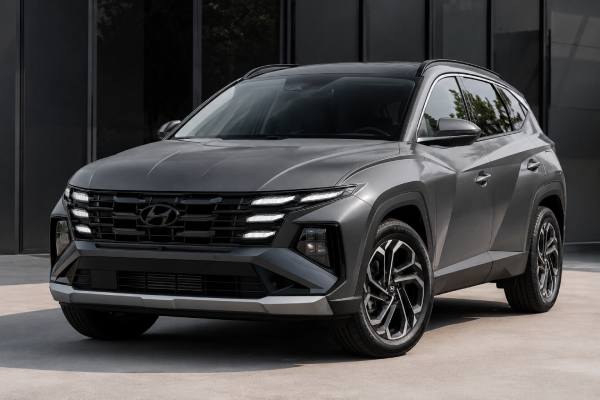
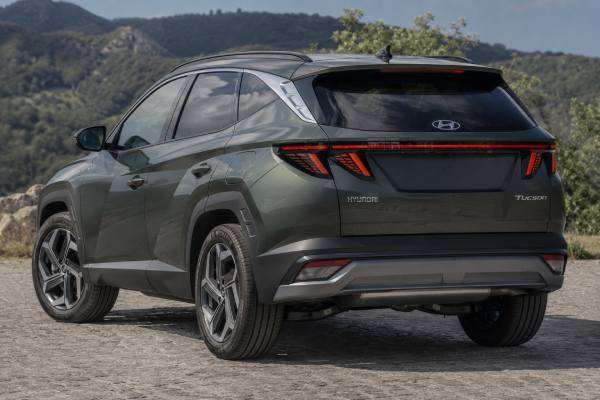
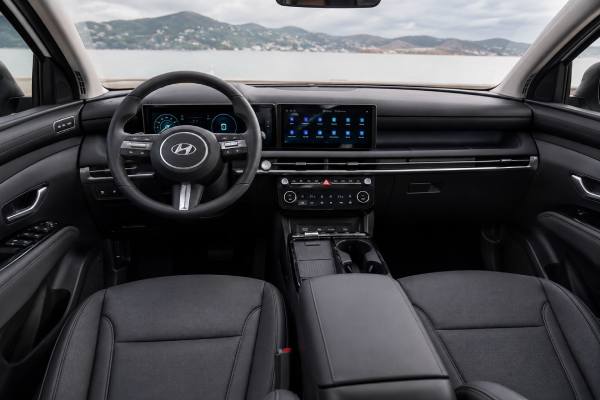
The facelifted Hyundai Tucson Plug-in Hybrid FWD is the efficiency-focused version of the NX4 Tucson for drivers who want an SUV that can do short daily trips on electricity but still behave like a normal petrol car on longer journeys. It combines Hyundai’s Smartstream 1.6 T-GDi turbo petrol engine, a front-mounted electric motor, a 13.8 kWh lithium-ion polymer battery, and a 6-speed automatic gearbox.
This version matters because it sits in a useful middle ground. It is more powerful than the standard petrol and hybrid Tucson, cheaper and lighter than many AWD PHEV setups, and easier to live with than a full EV if home charging is available but long-trip charging access is uncertain. Its value depends heavily on how often it is plugged in, how clean the service history is, and whether the buyer checks the hybrid and charging systems before purchase.
Final Verdict
The 2024-on Hyundai Tucson FWD 1.6 T-GDi Plug-in Hybrid is a strong choice for families, company-car users, and commuters who can charge at home or work and want a roomy SUV with quiet electric running in town. Its biggest appeal is the blend of useful performance, low official CO2, good cabin space, and familiar Hyundai ownership support. The main tradeoff is that efficiency falls sharply if it is driven like a regular petrol SUV without charging. Buy only with proof of correct servicing, completed software or recall work, and a healthy high-voltage battery and charging system.
| Pros | Cons |
|---|---|
| Strong combined output for a practical family SUV | Real economy depends heavily on regular charging |
| 6-speed automatic feels more natural than many e-CVT rivals | Heavier than petrol and full-hybrid Tucson versions |
| Useful EV range for school runs and commuting | No DC fast charging for rapid PHEV top-ups |
| Roomy cabin and generous boot for a plug-in SUV | Boot space varies with trim and wheel package |
| Strong safety kit and Euro NCAP five-star background | ADAS repairs may need camera or radar calibration |
Table of Contents
- Tucson PHEV FWD Overview
- Specifications and Technical Data
- Trims, Options and Safety Tech
- Reliability, Issues and Service Actions
- Maintenance and Buyer’s Guide
- Driving, Performance and Efficiency
- How Tucson PHEV Compares to Rivals
Tucson PHEV FWD Overview
The facelifted Tucson Plug-in Hybrid FWD is best understood as a practical compact SUV with a strong electric-assist petrol drivetrain, not as a small battery EV. It works best when most weekday driving fits within its electric range and the petrol engine is mainly used for longer trips.
The NX4 Tucson was already one of Hyundai’s more distinctive SUVs, and the 2024 facelift refined the package rather than reinventing it. The exterior kept the sharp surfacing and hidden daytime running light theme, while the interior moved closer to Hyundai’s newer cabin layout with a cleaner dashboard, larger digital displays, more physical controls than some rivals, and improved infotainment support.
For this article, the focus is the front-wheel-drive plug-in hybrid version with the Smartstream 1.6 T-GDi engine and 252 PS-class combined output. In some market documents it may be listed as 252 PS or 253 PS depending on rounding and trim data. The important point is that this is the lower-drivetrain-loss 2WD PHEV, not the heavier AWD version.
The drivetrain layout is conventional for Hyundai and Kia plug-in hybrids of this size. The turbocharged four-cylinder petrol engine and electric motor both drive through a 6-speed automatic transmission. That gives the Tucson a more familiar stepped-gear feel than many Toyota-style hybrid systems, while still allowing electric-only operation at low and moderate speeds when the battery has enough charge.
The PHEV version suits a very specific owner. It is ideal for a driver who covers 20–45 miles on many days, has access to a home wallbox or workplace charger, and wants one car for both local electric use and holiday motorway trips. It is less compelling for owners who cannot charge regularly, because the extra battery weight remains even when the car is driven mostly as a petrol hybrid.
The FWD model also makes sense for buyers who do not need snow-country traction, steep rural access, or frequent towing on wet grass. It saves weight and mechanical complexity compared with AWD, and that can help efficiency. The tradeoff is that all system torque goes through the front tyres, so tyre quality matters more than it does in gentler petrol Tucson models.
As a used or nearly new purchase, the key questions are simple: has it been charged and maintained correctly, does the charging equipment work without interruption, are all software and recall actions complete, and does the car drive smoothly in EV, hybrid, and petrol modes? A good example feels refined and easy. A neglected one can hide expensive faults in electronics, cooling, braking, or charging hardware.
Specifications and Technical Data
The Tucson FWD PHEV uses a 1.6-litre turbocharged petrol engine, a traction motor, a lithium-ion polymer battery, and a 6-speed automatic transmission. The most important ownership facts are the 13.8 kWh battery, the 7.2 kW AC charging capability, the 42-litre fuel tank, and the extra weight compared with petrol and full-hybrid models.
| Item | Hyundai Tucson FWD Plug-in Hybrid |
|---|---|
| Engine family | Smartstream 1.6 T-GDi petrol |
| Engine layout | Inline 4-cylinder, DOHC, 16 valves |
| Displacement | 1,598 cc |
| Induction | Turbocharged direct injection petrol |
| Bore × stroke | 75.6 × 89.0 mm |
| Compression ratio | 10.5:1 |
| Combined output | 252 PS class, model and market dependent rounding |
| Combined torque | 304 Nm |
| Electric motor | Permanent magnet synchronous motor |
| Battery | 13.8 kWh lithium-ion polymer |
| Fuel | Unleaded petrol, regular grade where approved |
| Item | Data |
|---|---|
| Transmission | 6-speed automatic |
| Drive type | Front-wheel drive |
| EV driving | Front motor drives through the transmission |
| Onboard AC charger | 7.2 kW |
| Typical full AC charge | About 2 hours on a suitable wallbox |
| DC fast charging | Not fitted |
| Official EV range | Up to about 71 km, depending on market and trim |
| CO2 figure | About 29 g/km WLTP for many UK 2WD versions |
| Item | Data |
|---|---|
| Body style | 5-door compact SUV |
| Seats | 5 |
| Length | 4,510–4,520 mm |
| Width | 1,865 mm excluding mirrors |
| Height | About 1,650–1,653 mm |
| Wheelbase | 2,680 mm |
| Turning circle | 11.0 m |
| Kerb weight | Up to about 1,876 kg, trim dependent |
| Gross vehicle weight | 2,350 kg for UK 2WD PHEV data |
| Fuel tank | 42 litres |
| Boot capacity | About 558–616 litres seats up |
| Maximum luggage volume | About 1,737–1,795 litres seats folded |
| Item | Data |
|---|---|
| Front suspension | MacPherson strut with coil springs |
| Rear suspension | Multi-link |
| Common tyres | 215/65 R17, 235/55 R18, or 235/50 R19 |
| Brakes | Four-wheel disc brakes with regenerative blending |
| 0–62 mph | About 8.2 seconds for 2WD PHEV |
| Top speed | 116 mph, about 187 km/h |
| Braked towing | 1,210 kg |
| Unbraked towing | 750 kg |
| Maximum roof load | 100 kg |
| Item | Typical reference data |
|---|---|
| Engine oil | 0W-20 full synthetic, API SN PLUS/SP or ILSAC GF-6 |
| Oil fill | About 4.8 litres drain and refill |
| Automatic transmission fluid | Hyundai SP4-M1 type specification |
| Brake fluid | DOT-4 LV / ISO 4925 Class 6 type |
| Coolant type | Phosphate-based ethylene glycol for aluminium systems |
| Wheel nut torque | 107–127 Nm |
Trims, Options and Safety Tech
The most important trim differences are wheels, lighting, seating, camera systems, audio, and higher-level parking assistance. The core FWD PHEV drivetrain is broadly the same, so buyers should choose trim based on comfort, visibility, driver assistance, and wheel size rather than expecting a major mechanical upgrade.
In the UK-style facelift range, common grades include Advance, Premium, N Line, N Line S, and Ultimate. Market names vary, but the pattern is similar: the entry PHEV has the same basic hybrid hardware, while upper trims add larger wheels, upgraded lights, more cameras, heated or ventilated seats, premium audio, and extra convenience tech.
Advance versions are usually the sensible value pick. They tend to have smaller wheels, a comfortable ride, navigation, digital displays, key safety systems, and enough equipment for most families. Premium adds more comfort and audio features. N Line and N Line S bring sportier styling, interior trim, and often larger wheels. Ultimate is the high-equipment choice, with the best seating, visibility, camera, and convenience specification.
Wheel size matters more than many buyers expect. The 17-inch setup gives the most forgiving ride and replacement tyres are usually cheaper. The 18-inch package is a good compromise. The 19-inch wheels look better and sharpen response slightly, but they can add road noise, reduce ride comfort on broken roads, and make kerb damage more likely.
Quick identifiers include the Plug-in Hybrid badge, charging flap, model trim badges, digital display layout, wheel design, N Line body styling, Matrix LED headlights on higher grades, and equipment such as a panoramic roof or surround-view camera. A VIN or build sheet remains the best way to confirm exact trim, battery warranty terms, software campaigns, and option packs.
The Tucson has a strong safety background. Euro NCAP gave the NX4 Tucson a five-star rating, and the 2024 facelift review carried the rating forward under the relevant review process. The rating applies across a range of Tucson versions, but buyers should still check the exact market and equipment because test protocols, assistance systems, and trim availability can change.
Standard and common safety equipment includes multiple airbags, a front-centre airbag, ABS, stability control, traction control, tyre-pressure monitoring, hill-start assistance, trailer stability assistance, ISOFIX points on the outer rear seats, lane keeping support, lane following support, intelligent speed limit assistance, forward collision avoidance for vehicles, pedestrians and cyclists, and eCall in many European markets.
Higher trims may add or expand Highway Drive Assist, surround-view monitoring, blind-spot view monitoring, parking collision avoidance, side parking sensors, remote smart parking, and upgraded headlights. These systems are useful, but they also make body repairs more sensitive. After a windscreen replacement, front-end repair, suspension alignment, bumper removal, radar disturbance, or camera replacement, insist on correct ADAS calibration and paperwork.
Reliability, Issues and Service Actions
The facelifted 2024-on Tucson PHEV is still relatively young, so long-term high-mileage data is limited. The safest view is that the core Hyundai/Kia 1.6 turbo hybrid layout is known, but the exact facelift electronics, software, and market-specific equipment should be checked carefully on every car.
| Area | Prevalence | Cost risk | What to check |
|---|---|---|---|
| Charging port and cable lock | Occasional | Medium | Confirm clean connection, locking, and full charge cycle |
| 12 V battery condition | Occasional | Low to medium | Test after overnight parking and after software updates |
| Brake corrosion | Common in low-use PHEVs | Low to medium | Inspect rear discs, pad sweep, and parking brake operation |
| GDI carbon buildup | Possible with short-trip use | Medium | Look for rough idle, misfires, and poor cold running |
| Hybrid cooling loops | Rare but important | High | Check coolant level, correct fluid, leaks, and warning messages |
| ADAS or infotainment software | Occasional | Low to medium | Check dealer updates, camera errors, and connectivity faults |
The high-voltage battery is not usually the first concern on a young Tucson PHEV. These packs are liquid-cooled and have a buffer to protect usable capacity. Still, battery health matters because replacement is expensive. A buyer should ask for a diagnostic report showing no high-voltage fault codes, balanced cell behaviour, no charging errors, and no repeated temperature warnings.
Charging faults are more likely to appear as nuisance problems before they become total failures. Symptoms include interrupted charging, a connector that will not unlock, a charge door issue, reduced charge rate, warning messages, or a car that charges on one wallbox but not another. The root cause may be the cable, home charger, charge-port actuator, onboard charger, software, or 12 V supply. Do not buy a PHEV without seeing it charge.
The 12 V system deserves attention because electrified vehicles can behave strangely when the small battery is weak. Random warnings, failed keyless entry, charging communication problems, or infotainment glitches may all start with low 12 V voltage. A proper load test is cheap and should be part of any inspection, especially if the car has sat unused.
The petrol engine is the Smartstream 1.6 T-GDi, a turbocharged direct-injection unit. Short cold trips, poor oil discipline, and long periods where the engine rarely reaches full temperature are not ideal. Watch for rattles on cold start, uneven idle, misfire codes, oil leaks, coolant smell, turbo noise, and hesitation under load. Timing is by chain, so there is no scheduled belt replacement, but chain stretch, guide wear, tensioner noise, and timing-correlation faults should be investigated promptly.
Because this is a plug-in hybrid, brake wear is not always straightforward. Regenerative braking means the friction brakes may be used lightly in town, which can allow surface rust and uneven rear disc wear. A healthy car should still brake smoothly, stop straight, and show clean swept areas on the discs. Cars that live outdoors near the sea or on salted winter roads need closer brake and underbody inspection.
The 6-speed automatic is generally a better long-term bet than a dry dual-clutch transmission for this type of SUV. It should shift cleanly, blend engine restarts smoothly, and move between EV and hybrid operation without harsh engagement. Any flare, thump, shudder, delayed drive engagement, or repeated hybrid-system warning should be diagnosed before purchase.
Software matters on modern Hyundai models. Infotainment, Bluelink, ADAS, hybrid control, battery management, and charging behaviour can all be affected by updates. Ask for dealer records showing completed campaigns, not just verbal assurance. Recalls and field service actions are VIN-specific and can differ by market, production date, and equipment. Use the official Hyundai VIN checker or the relevant national recall database before buying, then confirm completion on the service invoice.
Maintenance and Buyer’s Guide
The Tucson PHEV needs normal petrol-engine maintenance plus hybrid-specific checks for the high-voltage system, cooling circuits, charging hardware, and regenerative braking. The best ownership strategy is simple: service it on time, use the correct fluids, keep the battery charged regularly, and do not ignore small warning messages.
| Interval | Key work |
|---|---|
| Every 8,000–10,000 km or 6 months | Oil and filter where required, tyre rotation, brake inspection, fluid checks |
| Every 12 months | Cabin filter, 12 V battery test, underbody and corrosion check |
| Every 16,000–20,000 km | Air filter inspection or replacement depending on dust and use |
| Every 24 months | Brake fluid check or replacement according to market schedule |
| Every 48,000 km or 24 months | Hybrid starter-generator belt replacement where specified |
| Every 56,000 km or 36 months | PHEV inverter coolant replacement where specified |
| Every 80,000 km | Spark plug replacement on schedules that specify this interval |
| Every 96,000 km | Automatic transmission fluid replacement where specified |
| Long term | Engine coolant, hoses, timing chain condition, charging hardware, battery health |
Oil is especially important because the turbo petrol engine may start and stop frequently, sometimes after long periods of EV driving. Use the exact viscosity and specification required for the market. Many manuals list 0W-20 full synthetic oil for the 1.6 T-GDi hybrid/PHEV application, but the VIN and local service literature should always decide.
The fuel system also needs sensible use. A PHEV that runs on electricity most of the time can keep the same petrol in the tank for months. Use good-quality unleaded, avoid very old fuel, and run the engine regularly enough to bring it to proper temperature. If the owner does almost every journey in EV mode, using some fuel and refilling periodically is healthier than leaving a nearly full tank untouched for a long time.
The high-voltage battery does not need the owner to perform special maintenance, but it does need the correct cooling system care. Never substitute generic coolant where a specific inverter or battery coolant is required. Any coolant loss, sweet smell, warning light, or evidence of leakage around hybrid cooling components should be treated as urgent.
Tyres should be rotated and aligned regularly. The FWD PHEV is heavy and torquey, so cheap front tyres can spin, wear quickly, and make the steering feel less settled. Use matching quality tyres across the axle, keep pressures correct, and check inner shoulder wear on 19-inch wheel cars.
Before buying, inspect the car in this order:
- Confirm the VIN, trim, drivetrain, battery warranty and recall status.
- Check service invoices for oil, filters, brake fluid, coolant, ATF and hybrid-specific work.
- Start the car cold and listen for chain rattle, misfires or rough idle.
- Drive in EV mode, hybrid mode and under full-throttle petrol assist.
- Plug it into a charger and confirm charge start, charge rate and connector locking.
- Scan all modules, not just the engine ECU.
- Inspect underbody panels, rear brakes, tyres, suspension bushes and accident repairs.
- Check ADAS operation and confirm calibration after any glass or body repair.
Good years and trims are less about the badge and more about care. A lower-trim Advance or Premium with smaller wheels, full dealer history, clean diagnostics, and regular charging is usually a better buy than a high-spec car with missing hybrid records. N Line and Ultimate trims are desirable for equipment, but their larger wheels, more electronics, panoramic roof, and advanced cameras add more things to inspect.
Avoid cars with unexplained charging faults, persistent warning lights, incomplete recall work, mismatched tyres, accident damage near sensors, coolant loss, poor brake condition, or a seller who cannot demonstrate charging. Also be careful with very low-mileage cars that have sat unused for months; inactivity can be hard on tyres, brakes, 12 V batteries, and charge-port mechanisms.
Long-term durability should be good if the car is serviced properly, charged sensibly, and not used as a neglected short-trip petrol car. The parts most likely to create expensive ownership surprises are not normal service items but electronic modules, charging components, hybrid cooling parts, ADAS sensors, and damage from deferred maintenance.
Driving, Performance and Efficiency
The Tucson PHEV FWD feels strongest at everyday speeds, where electric torque fills the gaps before the turbo engine does serious work. It is not a performance SUV, but it is quick enough for family use and smoother than many buyers expect.
In EV mode, the Tucson is quiet and easy around town. Step-off response is clean, parking speeds are smooth, and the 6-speed automatic does not draw much attention. When the petrol engine starts, the transition is generally well managed, although a cold engine can be heard more clearly during the first few minutes. If the cabin heater, heavy acceleration, low battery temperature, or low state of charge demands engine support, the car may switch to hybrid mode even when the driver wants EV operation.
The front-wheel-drive layout gives the car a lighter, more efficient feel than an AWD PHEV, but traction depends heavily on tyres and weather. In the dry, it puts its power down well enough. In the wet, full throttle from low speed can make the front tyres work hard. A good set of all-season or premium summer tyres is more valuable than another optional trim feature.
Ride comfort depends on wheel size. The 17-inch cars are the most forgiving and suit rough urban roads. The 18-inch setup is the sweet spot for many drivers. The 19-inch wheels give sharper looks and slightly crisper steering response, but they can make potholes and expansion joints more noticeable.
Steering is light and accurate rather than sporty. The Tucson feels stable on motorways, predictable through bends, and easy to place in town. The battery weight sits low, which helps composure, but the car is still a heavy family SUV. It prefers smooth inputs, not aggressive cornering.
Braking feel is one of the better parts of the package when the system is healthy. Regeneration handles much of the light slowing, then the friction brakes take over for stronger stops. A pulsing, grinding, grabby or uneven pedal feel usually means the brakes need inspection, especially on cars that do mostly short EV trips.
Real-world efficiency varies more than in a normal hybrid. In mild weather, a careful driver can often cover about 45–60 km of mixed local driving on electricity, with city use usually doing better than high-speed routes. In winter, with heater use and cold battery temperatures, expect a noticeable drop, often into the 35–45 km range depending on conditions.
Once the battery is depleted, the Tucson behaves like a heavy petrol hybrid. Expect roughly 5.8–7.2 L/100 km in mixed charge-sustaining use, about 39–49 mpg UK or 33–41 mpg US. Fast motorway running, roof boxes, winter tyres, short cold petrol use, and towing can push consumption higher. Owners who plug in daily may see very low fuel use. Owners who rarely charge may wonder why they bought the PHEV rather than the lighter full hybrid.
Charging is simple. A 7.2 kW wallbox can refill the battery in about two hours when conditions and supply allow. A 10–80% AC top-up is shorter, but most PHEV owners think in full overnight or workplace charging rather than rapid charging stops. There is no DC fast charging, so the Tucson PHEV is not designed for public rapid-charge road-trip planning.
For towing, the 1,210 kg braked rating is useful for light trailers rather than heavy caravans. The instant electric torque helps moving off, but the front-drive layout, battery weight, brake condition, and cooling system health all matter. Keep loads modest, respect nose-weight limits, and expect a significant fuel economy penalty.
How Tucson PHEV Compares to Rivals
The Tucson PHEV FWD is strongest on equipment, cabin space, warranty support in many markets, and easy day-to-day usability. Its main weakness against newer PHEV rivals is electric range, because several competitors now offer larger batteries and longer official EV distances.
| Rival | Where the Tucson is stronger | Where the rival may be stronger |
|---|---|---|
| Kia Sportage PHEV | Similar hardware with Hyundai cabin and trim differences | Kia warranty and styling may appeal more to some buyers |
| Toyota RAV4 Plug-in Hybrid | Usually better value and easier urban sizing | More power, stronger efficiency reputation, AWD focus |
| Ford Kuga PHEV | More SUV-like cabin and stronger interior tech feel | Often efficient and popular as a company-car PHEV |
| Volkswagen Tiguan eHybrid | Hyundai value and straightforward equipment structure | Newer long-range PHEV battery technology |
| Peugeot 3008 Plug-in Hybrid | More conventional controls and rear-seat practicality | Sharper design character and premium-feeling cabin style |
Against the Kia Sportage PHEV, the Tucson is the closest match because the two share much of their engineering philosophy. The decision comes down to price, trim, warranty terms, dealer support, ride preference, and styling. The Sportage may be easier to find in some markets, while the Tucson often feels slightly more restrained inside.
Against the Toyota RAV4 Plug-in Hybrid, the Tucson usually wins on purchase price, infotainment familiarity, and compact-SUV manageability. The Toyota counters with stronger performance, a long-established hybrid reputation, and standard AWD-i in many markets. Buyers who tow more often or value long-term hybrid resale may lean Toyota, while value-focused family buyers may prefer Hyundai.
Against the Ford Kuga PHEV, the Tucson feels more substantial and SUV-like. The Kuga can be very efficient and is common in company-car fleets, but the Tucson’s interior presentation, safety equipment, and cargo practicality may suit families better. As always, the better used buy is the one with cleaner maintenance records and fewer unresolved electrical issues.
Against the Volkswagen Tiguan eHybrid, the Hyundai’s challenge is range. The latest Tiguan plug-in hybrid technology offers a much larger battery and longer EV driving distance, which matters for company-car tax and drivers with longer daily commutes. The Tucson remains attractive if pricing, warranty, equipment, and Hyundai dealer support are stronger in the buyer’s area.
Overall, the Tucson PHEV FWD is not the most advanced plug-in hybrid SUV by electric range, but it is a well-rounded choice. It makes the most sense when bought for the right use pattern: regular charging, family transport, moderate running costs, and a preference for a conventional automatic SUV feel over a more complex or more expensive rival.
References
- Hyundai TUCSON | Technical, Specifications and Pricing | Model year 2025 | May 2024 2024 (Technical Specifications) ([Hyundai News][1])
- Euro NCAP | Hyundai TUCSON 2021/2024 (Safety Rating) ([Euro NCAP][2])
- 9. Maintenance 2025 (Owner’s Manual)
- 10. Vehicle information, reporting safety defects 2025 (Owner’s Manual)
- Vehicle Detail Search – 2025 HYUNDAI TUCSON SUV FWD | NHTSA 2025 (Recall Database) ([NHTSA][3])
Disclaimer
This article is for informational purposes only and is not a substitute for professional diagnosis, repair, or official Hyundai service information. Specifications, torque values, service intervals, fluids, procedures, safety equipment, warranties, and recall applicability can vary by VIN, market, trim, software level, and equipment. Always verify details against the official owner’s manual, service documentation, dealer records, and the correct VIN-based recall check before buying, servicing, towing, or repairing the vehicle.
If this guide helped you, please consider sharing it on Facebook, X/Twitter, or another platform to support our work.