
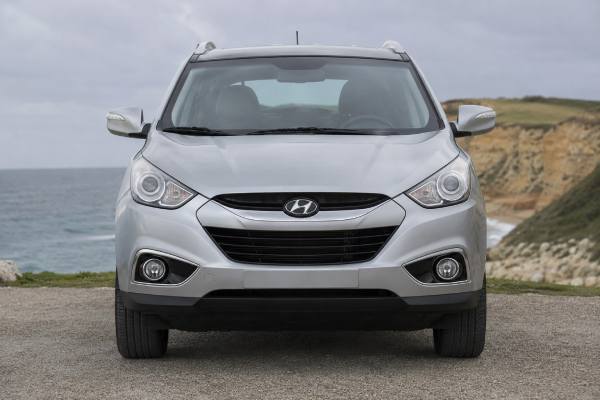
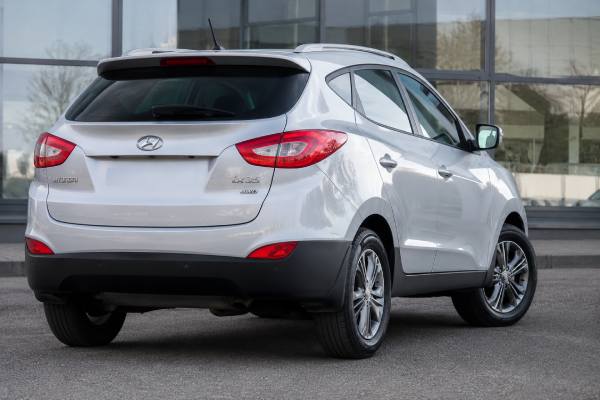
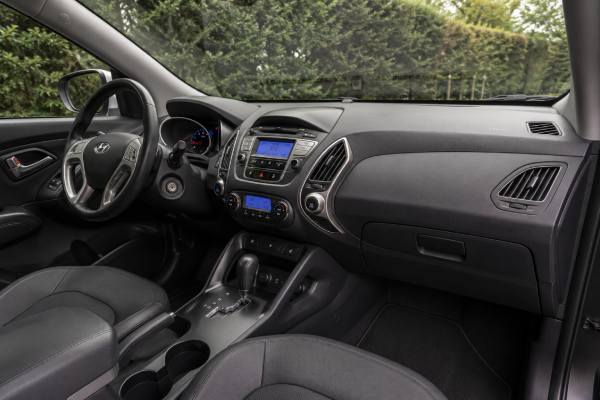
The 2011–2013 Hyundai Tucson FWD with the Theta II 2.0 MPI engine is the simpler, entry-level version of Hyundai’s second-generation compact SUV, known internally as LM. In North America it was mainly sold as the GL, while related LM/ix35 models in other markets used different engines, trims, and equipment. This version matters because it combines a naturally aspirated, port-injected 2.0-liter gasoline engine with front-wheel drive, practical cargo space, and relatively low running costs.
It is not the fastest or most refined compact SUV of its period, but it is one of the easier ones to understand as a used buy. The key is condition. A well-maintained Tucson 2.0 FWD can be a useful commuter or small-family SUV, while neglected examples can suffer from oil leaks, worn suspension parts, brake corrosion, electrical issues, and overdue recall work.
Final Verdict
The 2011–2013 Hyundai Tucson FWD 2.0 MPI is a sensible used compact SUV for buyers who want simple mechanicals, decent cabin space, and lower purchase costs than many Japanese rivals. Its strongest appeal is the port-injected Theta II engine paired with front-wheel drive, which keeps servicing straightforward and avoids AWD complexity. It suits commuters, students, small families, and light-duty urban use better than towing, mountain driving, or performance-minded ownership. The main tradeoff is modest power and age-related maintenance sensitivity. Buy one only with clean oil-change history, no active recalls, no oil leaks, and a smooth-shifting transmission.
| Pros | Cons |
|---|---|
| Port-injected 2.0 MPI avoids direct-injection carbon buildup | Acceleration is adequate rather than strong, especially when loaded |
| FWD layout reduces weight, cost, and AWD service needs | Less winter traction than AWD rivals on poor tires |
| Useful cargo space in a compact, easy-park body | Ride can feel firm over sharp urban bumps |
| Simple trim structure makes used examples easy to compare | Base GL lacks some comfort and tech features |
| Good parts availability through Hyundai and Kia shared hardware | Recall completion and oil-leak checks are essential |
Table of Contents
- Tucson LM 2.0 MPI Overview
- Specifications and Technical Data
- Trims, Safety and Driver Assistance
- Reliability, Common Issues and Service Actions
- Maintenance and Buyer’s Guide
- Driving, Performance and Efficiency
- How the Tucson 2.0 MPI Compares to Rivals
Tucson LM 2.0 MPI Overview
The Tucson LM 2.0 MPI FWD is the straightforward version of Hyundai’s second-generation compact crossover. It gives you five seats, a practical hatchback-style cargo area, and a conventional gasoline drivetrain without turbocharging, direct injection, hybrid hardware, or AWD service demands.
Hyundai added the 2.0-liter GL model for the 2011 model year as a lower-cost front-wheel-drive Tucson. The engine is part of the Theta II family and uses multi-point fuel injection, dual continuously variable valve timing, and a timing chain. In plain language, it is a regular four-cylinder that makes its power high in the rev range and rewards normal maintenance more than aggressive driving.
The LM Tucson sits between a tall hatchback and a traditional SUV. It has better visibility and cargo access than a sedan, but it is still compact enough for city parking. Compared with older body-on-frame SUVs, it feels lighter, easier to drive, and more car-like. Compared with newer compact SUVs, it lacks modern driver-assistance systems, large infotainment screens, and the low-speed torque of turbocharged engines.
For used buyers, the 2.0 FWD model has three main advantages. First, it is mechanically simpler than AWD models. Second, the 2.0 MPI engine avoids the intake-valve carbon buildup concerns associated with many gasoline direct-injection engines. Third, the GL trim usually costs less than better-equipped 2.4-liter GLS and Limited versions.
The downside is that the base 2.0 does not feel lively when the cabin is full or when climbing long grades. It also came from an era when small SUVs were improving quickly, so crash-test interpretation and feature expectations need context. It was competitive when new, but a modern buyer should judge it as an affordable used vehicle, not as a substitute for a current Tucson.
The best examples are boring in the right way: clean fluids, quiet cold starts, no warning lights, no harsh transmission shifts, no oil leaks, even tire wear, and dealer proof that recalls and campaigns were handled.
Specifications and Technical Data
This Tucson uses a transverse 2.0-liter inline-four engine driving the front wheels through either a five-speed manual or six-speed automatic transmission. The most important technical points are the simple FWD layout, port fuel injection, timing chain, modest output, and useful cargo space. Specification details can vary by market and exact trim, so the tables below focus on the 2011–2013 North American-style Tucson GL FWD 2.0 MPI and closely related LM versions.
| Item | Specification |
|---|---|
| Engine family | Theta II 2.0 MPI gasoline inline-four |
| Displacement | 2.0 L, about 1,998 cc (122 cu in) |
| Fuel system | Multi-point fuel injection |
| Valvetrain | DOHC, 16 valves, dual CVVT |
| Induction | Naturally aspirated |
| Maximum power | 165 hp (123 kW) at 6,200 rpm |
| Maximum torque | 146 lb-ft (198 Nm) at 4,600 rpm |
| Timing drive | Timing chain |
| Fuel type | Regular unleaded gasoline |
| EPA economy, automatic | About 9.0–9.4 L/100 km combined (25–26 mpg US) |
| EPA economy, manual | About 10.2–10.7 L/100 km combined (22–23 mpg US) |
| Item | Specification |
|---|---|
| Drive type | Front-wheel drive |
| Manual transmission | Five-speed manual, standard on many GL models |
| Automatic transmission | Six-speed automatic with SHIFTRONIC manual mode |
| AWD hardware | Not fitted to this FWD 2.0 GL version |
| Differential | Open front differential with traction control support |
| Item | Specification |
|---|---|
| Body style | Five-door compact SUV / crossover |
| Seating | Five passengers |
| Length | 4,400 mm (173.2 in) |
| Width | 1,821 mm (71.7 in), without mirrors |
| Height | About 1,656–1,684 mm (65.2–66.3 in), depending on roof rails |
| Wheelbase | 2,639 mm (103.9 in) |
| Ground clearance | 170 mm (6.7 in) |
| Turning circle | 10.6 m (34.7 ft) |
| Curb weight | About 1,442 kg (3,179 lb) for a base FWD manual |
| Fuel tank | 54.9 L (14.5 US gal) |
| Cargo volume | 728 L seats up; 1,580 L max (25.7 / 55.8 cu ft) |
| Item | Specification |
|---|---|
| Front suspension | MacPherson struts with stabilizer bar |
| Rear suspension | Independent multi-link with stabilizer bar |
| Steering | Motor-driven power rack-and-pinion |
| Front brakes | Ventilated discs, about 280 mm (11.0 in) |
| Rear brakes | Solid discs, about 262 mm (10.3 in) |
| Common tire size | P225/60R17 |
| Common wheel size | 17 x 6.5 in steel or alloy |
| Maximum trailer weight | 907 kg (2,000 lb), where properly equipped |
| Engine oil service fill | About 4.1 L (4.3 US qt) with filter |
| Oil viscosity | SAE 5W-20 preferred; 5W-30 acceptable in many climates |
| Oil drain plug torque | About 39 Nm (29 lb-ft), with new washer |
| Wheel-nut torque | About 88–107 Nm (65–79 lb-ft) |
Trims, Safety and Driver Assistance
The 2.0 MPI FWD version is usually the base Tucson GL, so equipment is simpler than on GLS and Limited models. That is not necessarily bad for a used buyer, because fewer premium features can mean fewer age-related repairs.
Trims and options
For 2011–2013 North American models, the Tucson lineup generally included GL, GLS, and Limited trims. The 2.0-liter engine is tied most closely to the GL. GLS and Limited models commonly used the larger 2.4-liter engine and offered more comfort equipment.
Typical GL identifiers include:
- 2.0L badging or build information showing the 2.0 MPI engine.
- Front-wheel drive only.
- Five-speed manual as standard on many examples, with a six-speed automatic optional.
- Cloth seats, simpler audio, and fewer luxury features than GLS or Limited.
- 17-inch wheels, often steel wheels with covers on lower-spec vehicles.
GLS and Limited versions add more equipment, but they are not the exact 2.0 FWD version covered here. Depending on year and market, higher trims may include Bluetooth, steering-wheel audio controls, roof rails, heated mirrors, privacy glass, upgraded seats, navigation, panoramic roof, leather upholstery, and larger wheels.
The quick buying rule is simple: do not shop only by badge. Check the VIN, engine label, window sticker if available, and service records. Many used listings mix up GL, GLS, Limited, 2.0, 2.4, FWD, and AWD details.
Safety ratings
The Tucson LM performed well in several traditional crash tests for its era, but it did poorly in the later IIHS small-overlap driver-side test. That matters because the small-overlap test was tougher and exposed structural weaknesses in many older vehicles.
For the 2011 Tucson, IIHS listed it as a Top Safety Pick and rated it Good in moderate-overlap front, side, roof strength, and head-restraint tests. The later small-overlap driver-side result was Poor, and that rating applies across the 2010–2015 Tucson generation.
In practical terms, the Tucson LM has decent basic crash protection for a compact SUV of its time, but it is not on the same safety level as newer compact SUVs designed around tougher crash tests and more advanced driver aids.
Safety systems and child-seat provisions
Standard safety equipment generally includes front airbags, front seat-mounted side airbags, side curtain airbags, ABS, electronic brake-force distribution, brake assist, electronic stability control, traction control, tire-pressure monitoring, active front head restraints, and rear child-seat anchors.
Driver-assistance technology is limited by modern standards. The 2011–2013 Tucson LM does not have the current suite of features such as automatic emergency braking, adaptive cruise control, lane-keeping assist, blind-spot monitoring, or rear cross-traffic alert in the way newer Tucsons do. Some examples may have a rearview camera when equipped with navigation, but it should not be assumed.
After windshield, steering, suspension, or front-end collision work, check that the steering tracks straight, the ABS and ESC warning lights prove out normally, and the wheel-speed sensors are not damaged. This generation is not packed with camera-based ADAS, but its ABS, ESC, steering, and airbag systems still need correct diagnosis after repairs.
Reliability, Common Issues and Service Actions
A well-kept Tucson 2.0 MPI is usually durable enough for everyday use, but the oldest examples are now deep into age-related maintenance. The big risks are not exotic technology; they are neglected oil changes, leaks, suspension wear, brake corrosion, weak batteries, poor previous repairs, and incomplete recalls.
Common and occasional issues
| Issue | Prevalence | Severity | What to look for |
|---|---|---|---|
| Front suspension links, bushings, strut mounts | Common with age | Low to medium | Clunks, wandering, uneven tire wear |
| Brake rotor corrosion and caliper sticking | Common in wet or salted climates | Low to medium | Pulsation, drag, hot wheel, poor parking brake hold |
| Valve-cover or oil-pan seepage | Occasional | Low to medium | Burning smell, wet lower engine, oil drops |
| Oil consumption from poor maintenance | Occasional | Medium to high | Low dipstick level, blue smoke, timing-chain noise |
| Automatic shift harshness | Occasional | Medium | Delayed engagement, flare, harsh 2–3 or 3–4 shifts |
| Electrical switches and sensors | Occasional | Low to medium | Warning lights, no brake lamps, no-crank complaints |
The Theta II 2.0 MPI uses a timing chain, not a timing belt. There is no normal scheduled belt replacement, but the chain system still depends on clean oil. A rattling cold start, cam/crank correlation codes, or persistent upper-engine noise deserves proper diagnosis. Do not treat a noisy chain as “normal old-car sound.”
Because this is multi-point injection, intake valve carbon buildup is not a defining weakness the way it can be on some direct-injected engines. That helps long-term drivability. Still, throttle-body deposits, old spark plugs, weak coils, vacuum leaks, and dirty filters can cause rough idle, hesitation, and poor fuel economy.
The six-speed automatic is generally pleasant when serviced and not overheated. On a test drive, it should engage Drive and Reverse promptly, shift without flares, and downshift cleanly. Fluid that smells burned, harsh engagement after a cold start, or repeated shift shocks should lower the price or end the inspection.
Recalls and service actions
Several safety recalls and campaigns can affect 2011–2013 Tucson LM vehicles, though exact applicability depends on VIN, production date, market, engine, and equipment.
Important items to verify include:
- Stop lamp switch recall campaign: can affect brake lights, cruise control cancellation, shifter interlock behavior, and ESC-related logic.
- Driver airbag mounting recall: affected 2011–2014 Tucson vehicles can require inspection and tightening of the driver airbag assembly fasteners.
- 2011 transmission fluid cooler hose recall: certain early 2011 vehicles may have a cooler hose defect that can leak transmission fluid.
- ABS / HECU fire-risk recall: certain 2010–2013 Tucson vehicles were included in a later hydraulic electronic control unit-related fire-risk campaign requiring dealer remedy.
- Oil pan / oil pressure switch campaign: certain 2011–2013 Tucson vehicles, especially 2.4-liter versions, were subject to oil-leak-related recall work. Do not assume every 2.0 GL is included; verify by VIN.
The right approach is not to rely on a seller’s memory. Ask for dealer records and run the VIN through Hyundai’s official recall system or an authorized dealer. Completed recall work should show dates, campaign numbers, and repair descriptions.
Symptoms and likely remedies
A Tucson that smells of hot oil after a highway run may have valve-cover seepage, oil pan seepage, or spilled oil from a sloppy service. Clean the area, confirm the source, and repair the seal rather than guessing.
A clunk over small bumps is often a sway-bar link, strut mount, control-arm bushing, or loose brake hardware. These are not usually catastrophic repairs, but they affect tire wear and steering feel.
A brake pedal pulse normally points to rotor thickness variation or corrosion. A dragging feel can be a sticking caliper or parking-brake hardware. In salted regions, inspect lines, hoses, calipers, backing plates, and bleeders before buying.
A battery or charging complaint may be a weak 12 V battery, tired alternator, bad ground, or parasitic draw. Older Tucsons can behave strangely when battery voltage is poor, so start diagnosis with a proper battery and charging-system test.
Maintenance and Buyer’s Guide
This Tucson rewards preventive maintenance more than reactive ownership. The best plan is to treat it like an older compact SUV that needs fluids, rubber parts, brakes, and suspension checks on time.
| Interval | Maintenance work |
|---|---|
| Every 6 months or 6,000–8,000 miles | Change engine oil and filter; inspect tires, brakes, lights, belts, hoses, and leaks |
| Every 7,500 miles | Rotate tires, check alignment wear patterns, inspect suspension and steering boots |
| Every 15,000 miles | Replace cabin air filter; inspect brake fluid, fuel lines, parking brake, and exhaust |
| Every 30,000 miles | Replace engine air filter; inspect cooling system, drive belt, mounts, and throttle body |
| Every 30,000–45,000 miles | Replace brake fluid, especially in humid or salted climates |
| Every 60,000 miles | Inspect valve clearance, accessory belt, transmission condition, and engine mounts |
| Every 60,000–75,000 miles | Service automatic transmission fluid under severe use or uncertain history |
| Around 100,000–105,000 miles | Replace spark plugs; inspect coils, PCV valve, coolant hoses, and chain noise |
| At coolant due date | Replace coolant, then repeat at the later interval specified by service data |
| Every 4–6 years | Test or replace the 12 V battery before voltage-related faults appear |
For fluids, use the exact specification for the transmission and market. The six-speed automatic commonly requires Hyundai/Kia SP-IV-type fluid, and the five-speed manual typically uses a GL-4 manual transaxle oil of the correct viscosity. Do not let a quick-lube shop substitute generic fluid without confirming compatibility.
The timing chain does not have a mileage-based replacement interval, but it should not be ignored. Inspect for startup rattle, stored timing-correlation codes, poor idle, and signs of neglected oil service. If chain guides, tensioner, or chain stretch are out of spec, repair the system rather than masking the noise with thicker oil.
Pre-purchase inspection checklist
Before buying, check the following:
- Cold start: listen for chain rattle, piston slap-like noise, exhaust leaks, and rough idle.
- Oil condition: look for correct level, clean service records, and no sludge under the oil cap.
- Leak check: inspect valve cover, timing cover area, oil pan, transmission case, coolant hoses, and radiator.
- Transmission: confirm smooth engagement, no flare, no harsh kickdown, and no fluid leaks.
- Steering and suspension: check clunks, tire feathering, loose ball joints, torn boots, and worn struts.
- Brakes: inspect rotor corrosion, caliper movement, parking brake operation, and brake-line condition.
- Electronics: test every window, lock, light, mirror, warning light, audio function, HVAC mode, and key fob.
- Safety recalls: require written proof or dealer confirmation, not a verbal promise.
- Tires: matching quality tires matter more on a FWD Tucson than many buyers expect.
The best used example is usually a clean GL automatic with documented oil changes and no warning lights. A manual can be appealing, but check clutch bite point, synchro feel, and gearbox noise carefully. Avoid any Tucson with hidden accident damage, repeated overheating, milky oil, severe rust, or transmission symptoms unless it is priced as a repair project.
Long-term durability is fair to good when maintenance is current. The Tucson LM is not a forever-proof vehicle, but it can be economical if bought cheaply and inspected honestly.
Driving, Performance and Efficiency
The Tucson 2.0 MPI FWD drives like a light compact SUV with modest torque and predictable controls. It is easy to place in traffic, easy to park, and comfortable enough for daily use, but it does not feel powerful when compared with newer turbocharged crossovers.
The engine’s 146 lb-ft of torque arrives at 4,600 rpm, so low-rpm pull is only moderate. Around town, the automatic helps by choosing lower gears quickly enough for normal driving. The manual gives more driver control, but its taller gearing and lower EPA rating mean it is not automatically the better choice for everyone.
At highway speeds, the 2.0 can cruise steadily, but passing usually requires a downshift and some revs. Full-throttle acceleration brings more noise than thrust. The official 0–100 km/h range is roughly in the low-to-mid 10-second area, depending on transmission and test method, which is normal for an entry compact SUV of its time.
Ride quality is mostly firm but controlled. The Tucson feels more tied-down than some older soft SUVs, though sharp potholes and broken pavement can make the cabin busy. Steering effort is light enough for parking and reasonably stable on the highway, but road feel is limited. Braking feel is straightforward when the rotors, pads, and calipers are in good condition.
Noise levels are acceptable for a budget compact SUV, but not plush. Tire noise increases on coarse pavement, and the four-cylinder becomes audible when climbing hills or merging. Worn engine mounts, cheap tires, cupped tread, or tired wheel bearings can make these cars sound much older than they are.
Real-world fuel economy depends heavily on transmission, tire choice, speed, and trip length. A healthy automatic 2.0 FWD can usually return about 9.0–10.5 L/100 km mixed (22–26 mpg US / 26–31 mpg UK). City use often lands around 10.2–13.1 L/100 km (18–23 mpg US / 22–28 mpg UK), while steady highway driving can reach roughly 7.6–8.7 L/100 km (27–31 mpg US / 32–37 mpg UK). Winter, roof bars, old spark plugs, dragging brakes, and underinflated tires can push those figures noticeably worse.
The Tucson can tow light trailers where rated, but it is not a strong tow vehicle. Keep loads conservative, use trailer brakes where appropriate, service the transmission, and watch engine temperature on long grades. For frequent towing, a larger-engine compact SUV or a midsize SUV is a better fit.
How the Tucson 2.0 MPI Compares to Rivals
The Tucson 2.0 FWD competes best as a value buy, not as the roomiest, strongest, or most refined SUV in the class. It makes the most sense when it is cheaper than an equivalent Honda CR-V or Toyota RAV4 and has better service records than a flashier high-mileage rival.
Against the Honda CR-V, the Tucson usually costs less and can feel more stylish inside and out. The CR-V has a stronger reputation, more cargo practicality, and excellent resale value. A clean CR-V is often the safer long-term bet, but a well-maintained Tucson at the right price can be better value.
Against the Toyota RAV4, the Tucson feels more compact and less utilitarian. The RAV4 often has a stronger reliability image and more cargo flexibility. The Hyundai counters with lower used prices and a simpler base FWD package.
Against the Nissan Rogue, the Tucson’s conventional automatic is a major advantage for buyers who dislike CVT risk. The Rogue may offer a softer ride and good fuel economy, but transmission condition is a major used-car inspection point. A smooth Tucson automatic is often the more reassuring choice.
Against the Ford Escape, the Tucson feels more modern than the older boxy Escape but less rugged. The Escape offers a more upright cabin and available stronger engines, while the Tucson is easier to live with as a city crossover.
Against the Subaru Forester, the Tucson gives up standard AWD and all-weather confidence. The Forester is the better choice for snowbelt buyers who need traction, ground clearance, and visibility. The Tucson is cheaper to maintain if FWD is enough.
Against its Kia Sportage sibling, the choice often comes down to condition and price. They share engineering, but styling, trim mix, and previous-owner care vary. Buy the cleaner one, not the badge you prefer.
The Tucson 2.0 MPI FWD is at its best when judged with realistic expectations: compact SUV practicality, easy service, tolerable economy, and low purchase cost. It is not exciting, but a clean one can be a practical used vehicle that does ordinary work without drama.
References
- HYUNDAI EXPANDS TUCSON LINEUP WITH NEW GL MODEL FOR 2011 2010 (Manufacturer Release)
- 2011 Hyundai Tucson 2011 (Safety Rating)
- Vehicle Detail Search – 2011 HYUNDAI TUCSON SUV FWD | NHTSA 2026 (Recall Database)
- Part 573 Safety Recall Report 23V-651 2023 (Recall Report)
- Hyundai Owners manuals | Hyundai Motor UK 2026 (Owner’s Manual Library)
Disclaimer
This article is for informational purposes only and is not a substitute for professional diagnosis, repair, or inspection. Specifications, torque values, fluid requirements, service intervals, recall applicability, and repair procedures can vary by VIN, market, production date, equipment, and previous service history. Always verify final data against official Hyundai service documentation, the owner’s manual, and an authorized dealer or qualified technician before buying, servicing, or repairing the vehicle.
If this guide helped you, please share it on Facebook, X/Twitter, or your preferred platform to support our work.