
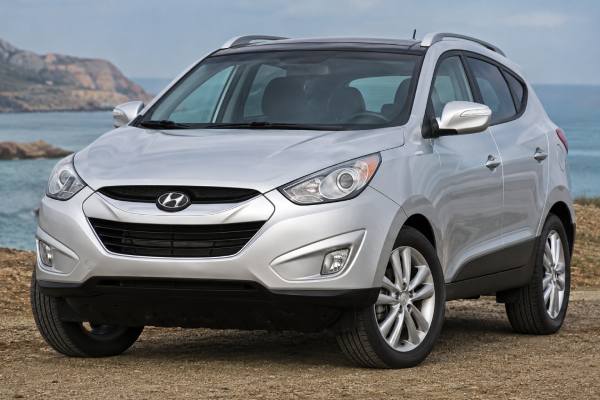
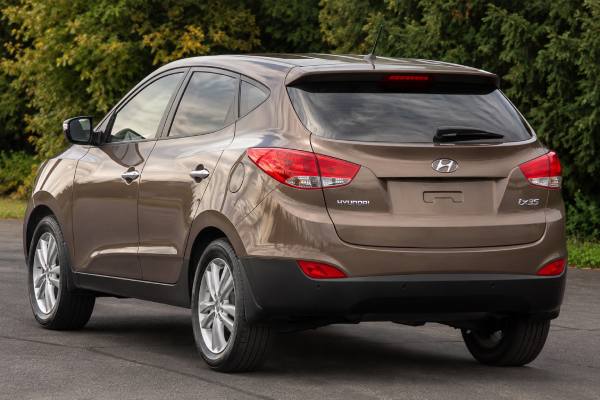
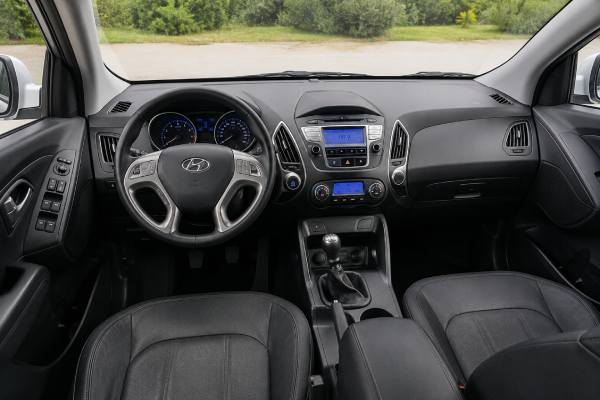
The 2010–2013 Hyundai Tucson FWD with the Theta II 2.4 MPI engine is a compact petrol SUV from the LM generation, sold in many markets as a practical five-seat crossover with front-wheel drive, a naturally aspirated 2.4-liter four-cylinder engine, and either a six-speed automatic or, on some lower trims, a manual gearbox. It is simple by modern SUV standards: no turbocharger, no hybrid battery, no dual-clutch transmission, and no complex all-wheel-drive hardware on the FWD version.
Its appeal is easy to understand. It offers useful cabin space, a light body, decent fuel economy for its age, widely available parts, and enough power for daily driving. The main buyer question is not whether the Tucson is practical; it is whether the Theta II 2.4 MPI engine and aging Hyundai hardware have been maintained well enough to make a used example a sensible purchase.
Final Verdict
The 2010–2013 Hyundai Tucson FWD 2.4 MPI is a good used-SUV choice for buyers who want a simple, roomy, easy-driving compact crossover without turbo or AWD complexity. Its strongest appeal is the balance of cabin space, regular-fuel running costs, and adequate 176 hp performance. It suits commuting, family use, and light weekend duty better than towing, heavy off-road use, or hard high-mileage neglect. The main ownership tradeoff is engine-risk sensitivity: oil leaks, oil consumption, and recall history matter. Buy only with clean service records, verified recall completion, no knocking, no oil-pressure warnings, and evidence of regular oil changes.
| Pros | Cons |
|---|---|
| 176 hp 2.4 MPI feels adequate for everyday FWD driving | Theta II engines need careful oil-level and recall-history checks |
| Six-speed automatic is smoother than many older four-speed rivals | Old ATF can cause harsher shifts and delayed engagement |
| Useful cargo space with a compact, easy-park footprint | Rear visibility and cabin finish are only average today |
| Standard ESC, ABS, traction control, and six airbags | Poor IIHS small-overlap result by newer crash-test standards |
| FWD layout avoids AWD coupler and rear-differential servicing | Not ideal for serious snow, mud, towing, or steep trails |
Table of Contents
- 2010–2013 Tucson 2.4 FWD Overview
- Tucson 2.4 MPI Specs and Technical Data
- Trims, Safety Ratings, and Driver Assistance
- Reliability, Common Issues, and Recalls
- Maintenance Schedule and Buying Guide
- Driving, Performance, and Real-World Economy
- How the Tucson 2.4 FWD Compares
2010–2013 Tucson 2.4 FWD Overview
The LM-generation Tucson 2.4 FWD is best understood as a light, urban-focused compact SUV rather than a rugged utility vehicle. It has enough engine for normal driving, a useful interior, and lower mechanical complexity than AWD versions.
For North American-style 2.4-liter models, the engine is the Hyundai Theta II G4KE family: a 2.4-liter, naturally aspirated, multi-point-injection four-cylinder. MPI means the fuel injectors spray into the intake ports, not directly into the combustion chamber. That makes this version less prone to direct-injection carbon buildup than later GDI engines, although it does not remove the need for strict oil maintenance.
The 2.4 FWD version sits in a practical middle ground. It is stronger than the smaller 2.0-liter versions sold in some years and markets, but it is not a performance SUV. It works well for school runs, commuting, highway use, and family errands. The FWD setup also saves weight and removes the rear coupling, prop shaft, and differential service needs found on AWD models.
The Tucson’s size is still convenient today. It is shorter than many current compact SUVs, yet has a high seating position, a fold-flat rear seat, and a cargo area large enough for daily family use. Cabin materials are not premium, but the controls are simple and visibility is reasonable once the driver gets used to the sloping rear shape.
The main used-car concern is condition. A well-maintained 2.4 MPI Tucson can be an honest, affordable runabout. A neglected one with oil leaks, low oil history, rattling on start-up, unresolved recalls, or poor transmission service can become expensive quickly.
Tucson 2.4 MPI Specs and Technical Data
This Tucson uses a front-mounted transverse 2.4-liter petrol engine driving the front wheels. Most 2.4 FWD examples use Hyundai’s six-speed automatic with SHIFTRONIC manual control, while some GLS-style models in certain markets were also available with a manual gearbox.
| Item | Hyundai Tucson FWD 2.4 MPI |
|---|---|
| Engine family | Theta II G4KE petrol inline-four |
| Displacement | 2.4 L, 2359 cc |
| Fuel system | Multi-point fuel injection |
| Induction | Naturally aspirated |
| Valvetrain | DOHC, 16 valves, dual CVVT |
| Power | 176 hp at 6000 rpm |
| Torque | 228 Nm at 4000 rpm (168 lb-ft) |
| Bore × stroke | 88.0 × 97.0 mm |
| Compression ratio | 10.5:1 |
| Timing drive | Timing chain |
| Fuel | Regular unleaded petrol |
| Item | Specification |
|---|---|
| Drive type | Front-wheel drive |
| Automatic transmission | 6-speed automatic with SHIFTRONIC |
| Manual transmission | 6-speed manual on some 2.4 FWD versions |
| Front suspension | MacPherson strut with anti-roll bar |
| Rear suspension | Independent multi-link with stabilizer bar |
| Steering | Rack-and-pinion electric power steering |
| Front brakes | Ventilated discs |
| Rear brakes | Solid discs |
| Common tire sizes | 225/60R17 or 225/55R18 |
| Item | Value |
|---|---|
| Body style | 5-door compact SUV |
| Seating | 5 seats |
| Length | About 4400 mm (173.2 in) |
| Width | About 1820 mm (71.7 in) |
| Height | About 1655–1685 mm (65.2–66.3 in) |
| Wheelbase | 2639 mm (103.9 in) |
| Ground clearance | About 170 mm (6.7 in) |
| Turning circle | About 10.6 m (34.7 ft) |
| Curb weight | About 1450–1510 kg (3200–3330 lb) |
| Fuel tank | 55 L (14.5 US gal) |
| Cargo volume | 728–1580 L (25.7–55.8 cu ft) |
| Typical US tow rating | 680 kg (1500 lb) |
| Item | Useful value |
|---|---|
| Engine oil capacity | About 4.6 L (4.9 US qt) |
| Engine oil grade | 5W-20 or 5W-30, matched to climate and manual |
| Coolant capacity | About 6.7–6.8 L (7.1 US qt) |
| Automatic transmission fluid | Hyundai/Kia SP-IV specification |
| Brake fluid | DOT 3 or DOT 4 |
| Cold tire pressure | 230 kPa (33 psi) |
| Wheel-nut torque | 88–107 Nm (65–79 lb-ft) |
Trims, Safety Ratings, and Driver Assistance
The 2.4 FWD Tucson was usually sold in mainstream trims such as GLS and Limited, with equipment varying by market and model year. Mechanically, the main differences are transmission, wheel size, interior equipment, and convenience features rather than major engine changes.
Trims and equipment
Lower trims normally have cloth seats, 17-inch wheels, keyless entry, air conditioning, power accessories, satellite-capable audio in some markets, and split-folding rear seats. Higher trims add features such as leather upholstery, heated front seats, fog lights, roof rails, larger alloy wheels, automatic climate features, upgraded audio, and sometimes a panoramic sunroof.
Quick identifiers are simple. A Limited usually has more exterior brightwork, alloy wheels, leather trim, fog lamps, steering-wheel controls, and more convenience equipment. A GLS is plainer and more likely to have cloth trim and smaller wheels. The VIN, build sticker, original window sticker, and Hyundai dealer build data are the safest ways to confirm trim and factory options.
The six-speed automatic is the version most used buyers will find. It suits the Tucson better than the manual for urban driving, but the manual is simpler and can be cheaper to maintain if the clutch is healthy.
Safety ratings
For its era, the Tucson had a strong basic safety package. It was rated Good by IIHS in the original moderate-overlap front test, side test, roof-strength test, and head-restraint/seat evaluation. The important modern caveat is the driver-side small-overlap front test: the 2010–2015 Tucson structure received a Poor rating in that newer, tougher crash mode.
That does not make the vehicle unsafe for its age, but it matters when comparing it with newer compact SUVs. A later SUV with stronger small-overlap performance, automatic emergency braking, and lane-support systems will provide more crash protection and crash avoidance.
Safety systems and ADAS
Standard safety equipment generally includes six airbags, front-seat side airbags, full-length side-curtain airbags, ABS, electronic brake-force distribution, brake assist, traction control, electronic stability control, active front head restraints, rear child locks, and LATCH/ISOFIX child-seat anchors.
Modern ADAS is mostly absent. Do not expect factory automatic emergency braking, adaptive cruise control, blind-spot monitoring, lane keeping, or rear cross-traffic alert on these years. A rearview camera may be included with navigation or higher equipment packages, but availability varies. After windshield, steering, suspension, or body repairs, there are no complex camera/radar calibrations like on newer SUVs, which helps keep repair costs down.
Reliability, Common Issues, and Recalls
The 2.4 MPI Tucson can last well when serviced, but it is not a buy-blind vehicle. The engine, oil-pan seal area, cooling system, transmission behavior, suspension wear, and recall completion should all be checked before purchase.
| Issue | Prevalence | Severity | Symptoms and remedy |
|---|---|---|---|
| Oil pan or lower-engine oil leak | Common enough to check closely | Medium to high | Oil smell, wet underbody, low level; reseal or replace affected parts |
| Oil consumption or low-oil operation | Occasional | High | Low dipstick, smoke, knock; compression/leakdown and engine diagnosis |
| Timing-chain noise or correlation faults | Occasional at higher mileage | Medium to high | Cold rattle, check-engine light; inspect chain, guides, tensioner |
| Automatic shift flare or harsh engagement | Occasional | Medium | Delayed Drive/Reverse, rough shifts; service ATF and diagnose solenoids |
| Front suspension and steering wear | Common with age | Low to medium | Clunks, wandering, uneven tires; inspect links, bushings, ball joints |
| Wheel bearings | Occasional | Medium | Speed-related humming; replace affected hub or bearing assembly |
| ABS or brake warning faults | VIN-dependent recall concern | High | ABS light, odor, smoke; verify recall repair immediately |
Engine reliability
The Theta II 2.4 MPI is less complicated than later turbo or direct-injection engines, but it still depends heavily on clean oil and correct oil level. The biggest warning signs are knocking from the lower engine, oil-pressure warnings, heavy oil consumption, fresh sealant repairs with no paperwork, and a seller who cannot show regular oil changes.
Because the engine uses a timing chain, there is no scheduled timing-belt replacement. That does not mean the chain is lifetime in a neglected engine. Rattling on cold start, cam/crank correlation fault codes, rough running, or metal in the oil should prompt inspection of the chain, guides, and tensioner.
The multi-point injection system keeps intake-valve carbon less of a headline issue than on GDI engines. Misfires are more often related to plugs, coils, intake leaks, dirty throttle body, fuel delivery, or neglected maintenance.
Driveline, chassis, and corrosion
The FWD Tucson avoids AWD coupler and rear-differential issues, which is a useful ownership advantage. The six-speed automatic usually works smoothly when maintained. Walk away from one that bangs into gear, flares between shifts, shudders under light throttle, or has burnt-smelling fluid unless the price allows for proper diagnosis.
Chassis wear is normal at this age. Listen for front-end clunks over small bumps, check the rear suspension for tired bushings, inspect the struts and shocks for leakage, and look for uneven tire wear that suggests alignment or suspension problems.
Corrosion depends strongly on climate. In salt-belt areas, inspect subframes, lower control arms, brake lines, fuel lines, rear suspension mounts, rocker seams, tailgate edges, door bottoms, and the lower radiator support. Surface rust is expected on many older SUVs; structural rust is a reason to keep shopping.
Recalls and service actions
Important recall topics include the 2011–2013 2.4-liter engine oil-pan leak recall, which addressed leakage at the seal between the oil pan and engine block that could lead to engine damage, stall risk, and in limited cases fire. The 2023 ABS module recall covered 2010–2013 Tucson vehicles because an internal brake-fluid leak in the ABS module could cause an electrical short and engine-compartment fire risk.
Other VIN-dependent recalls may include stop-lamp switch replacement and passenger-occupant detection or airbag-related actions on some vehicles. The exact answer depends on the individual VIN, production date, market, and whether previous owners completed the work. Before buying, ask for a Hyundai dealer printout showing open and completed recalls, not just a generic online listing.
Maintenance Schedule and Buying Guide
A Tucson 2.4 FWD is at its best when maintained a little more carefully than the bare minimum. The engine is old enough now that oil level, cooling-system health, and fluid age matter more than brochure mileage.
| Interval | Service items |
|---|---|
| Every fuel stop or monthly | Check engine oil level, coolant level, tire pressure, lights, and visible leaks |
| 8000–10,000 km or 6 months | Change engine oil and filter in mixed or severe use |
| 12,000–15,000 km or 12 months | Inspect air filter, cabin filter, brakes, battery, belts, hoses, suspension, and steering |
| 24,000–30,000 km | Rotate tires, inspect alignment wear, clean brake hardware, inspect CV boots |
| 45,000 km or 36 months | Replace spark plugs where specified; inspect fuel tank air filter and fuel system |
| 50,000–60,000 km | Change automatic transmission fluid in severe service or unknown history |
| Every 2 years | Replace brake fluid; inspect calipers, hoses, lines, and parking brake |
| Every 4–5 years | Replace coolant; inspect radiator, thermostat, water pump, and hoses |
| 120,000 km and beyond | Inspect timing chain noise, engine mounts, wheel bearings, struts, bushings, and leaks |
Use SP-IV automatic transmission fluid, not a generic fluid that only claims broad compatibility. Use DOT 3 or DOT 4 brake fluid from a sealed container. For engine oil, 5W-20 is common in economy-focused guidance, while 5W-30 is often preferred by owners and technicians in hotter climates or higher-mileage engines when allowed by the manual.
Pre-purchase inspection checklist
Start the engine cold. Listen for chain rattle, piston slap, or lower-end knocking. Check the dipstick before and after the test drive. Oil that is extremely low, thick, glittery, or freshly changed with no service record deserves caution.
During the test drive, the automatic should engage Drive and Reverse promptly, shift cleanly, and kick down without flare. The engine should pull smoothly to higher rpm without misfire or hesitation. Watch for overheating, weak air conditioning, brake vibration, ABS warning lights, steering pull, and suspension noise.
Inspect these areas carefully:
- Oil pan seam, valve-cover area, timing-cover area, and underside for leaks.
- Coolant reservoir, radiator, water pump area, and heater performance.
- Front control arms, ball joints, tie rods, sway-bar links, and struts.
- Rear multi-link bushings, shocks, and spring seats.
- Brake lines, ABS module area, calipers, and parking brake function.
- Rocker panels, subframes, lower doors, tailgate lip, and wheel arches.
- Interior electronics, windows, locks, radio, Bluetooth, navigation, and camera if fitted.
Best versions to buy
A 2012–2013 2.4 FWD automatic with complete service records, verified recall completion, clean underbody, and smooth transmission behavior is usually the easiest recommendation. A cheaper 2010 or 2011 can still be worthwhile, but only if it passes the same checks and has no unresolved oil or airbag concerns.
The Limited trim is nicer to live with, especially if it has heated seats, leather, upgraded audio, and the desired wheel package. The GLS can be the smarter buy if it has been maintained better and uses cheaper tires. Condition beats trim on this model.
Avoid examples with engine knocking, repeated low-oil history, warning lights, overheating evidence, rebuilt-title accident history, heavy rust, or unclear recall status. A low price rarely offsets a bad Theta II engine or neglected transmission.
Driving, Performance, and Real-World Economy
The Tucson 2.4 FWD drives like a compact crossover from the early 2010s: light, easy to place, and comfortable enough, but not especially refined by current standards. Its strongest road manners are urban maneuverability, straightforward controls, and stable highway behavior.
The 176 hp engine gives adequate rather than exciting performance. Around town, throttle response is direct because there is no turbo lag, and the six-speed automatic keeps the engine in its usable torque range. At highway speeds, passing requires a firm kickdown, and the engine becomes more audible above mid-range rpm.
The ride is generally firm but acceptable. On 17-inch tires, it is more compliant and cheaper to run. On 18-inch wheels, steering response can feel sharper, but road impacts and tire noise are more noticeable. Steering is light and easy in town, with limited feedback on winding roads. The rear multi-link suspension helps the Tucson feel more settled than simpler torsion-beam designs, but worn bushings and tired dampers can make older examples feel loose.
Braking feel is straightforward when the system is healthy. Pulsation usually points to rotor runout, uneven pad deposits, or neglected brake hardware. In snowy climates, inspect rear brakes closely because light rear loading and winter salt can accelerate corrosion.
Fuel economy
Official figures vary by model year, transmission, market, and test cycle. Early 2010 FWD automatic figures were often quoted around 23 mpg city and 31 mpg highway in the US cycle, while 2013 EPA listings for the 2.4 FWD automatic show 21 mpg city, 30 mpg highway, and 25 mpg combined.
Real-world use usually looks like this:
- City driving: about 10.5–12.5 L/100 km, or 19–22 mpg US.
- Highway at 100–120 km/h: about 7.5–8.7 L/100 km, or 27–31 mpg US.
- Mixed use: about 8.8–10.0 L/100 km, or 23–27 mpg US.
Short trips, winter tires, roof racks, old oxygen sensors, dragging brakes, poor alignment, and underinflated tires can push consumption noticeably higher. A healthy Tucson should not feel thirsty for a 2.4-liter compact SUV, but it will not match modern hybrids or small turbo crossovers.
Load and towing
The 2.4 FWD Tucson can handle passengers, luggage, bikes, and light utility use. It is not the best choice for regular towing. The typical US tow rating of 1500 lb is modest, and the FWD layout means traction and cooling margins are limited compared with larger SUVs. For occasional light trailers, keep loads conservative, service the transmission, use correct tire pressures, and avoid long steep grades in hot weather.
How the Tucson 2.4 FWD Compares
Against same-era compact SUVs, the Tucson 2.4 FWD is a value-focused choice. It is usually cheaper than a Toyota RAV4 or Honda CR-V, often better equipped for the money, and more pleasant than many older four-speed automatic rivals.
Compared with the Honda CR-V, the Tucson feels a little less airy inside and has a weaker long-term reputation, but it can be less expensive to buy. The CR-V generally wins for resale value, cargo practicality, and durability confidence. The Tucson counters with good equipment, compact dimensions, and a smoother six-speed automatic feel.
Compared with the Toyota RAV4, the Hyundai is usually more affordable and has a tidier cabin layout. The RAV4 has stronger brand durability and, in V6 form, far more performance. A four-cylinder RAV4 is a safer used buy for many cautious shoppers, but clean Tucsons can represent better value.
Compared with the Nissan Rogue, the Tucson’s conventional six-speed automatic is a major advantage for buyers wary of older CVTs. The Rogue may feel softer and roomier in some use, but transmission risk often pushes shoppers toward the Hyundai.
Compared with the Subaru Forester, the Tucson FWD is simpler and usually cheaper to maintain, but the Forester offers standard AWD traction and better poor-weather confidence. Buyers who live in snowy rural areas may prefer the Subaru. Buyers who mostly drive on paved roads in mild climates may prefer the Hyundai’s simpler FWD layout.
The best reason to buy this Tucson is not because it is the most durable or most modern compact SUV of its era. It is because a clean, recalled, well-serviced 2.4 FWD example can deliver useful space, simple operation, reasonable running costs, and enough performance for daily life at a lower used price than the class leaders.
References
- ALL-NEW TUCSON DELIVERS BETTER FUEL ECONOMY AND MORE POWER 2009 (Manufacturer Specifications)
- Gas Mileage of 2013 Hyundai Tucson 2013 (EPA Fuel Economy)
- 2013 Hyundai Tucson 2013 (Safety Rating)
- Part 573 Safety Recall Report 19V-063 2019 (Recall Database)
- Part 573 Safety Recall Report 23V-651 2023 (Recall Database)
Disclaimer
This article is for informational purposes only and is not a substitute for professional diagnosis, repair, or inspection. Specifications, torque values, service intervals, fluids, procedures, equipment, recalls, and ratings can vary by VIN, market, production date, trim, and installed options. Always verify critical information against the official owner’s manual, service documentation, recall database, and a qualified technician.
If this guide helped you, please consider sharing it on Facebook, X/Twitter, or your preferred automotive group to support our work.