
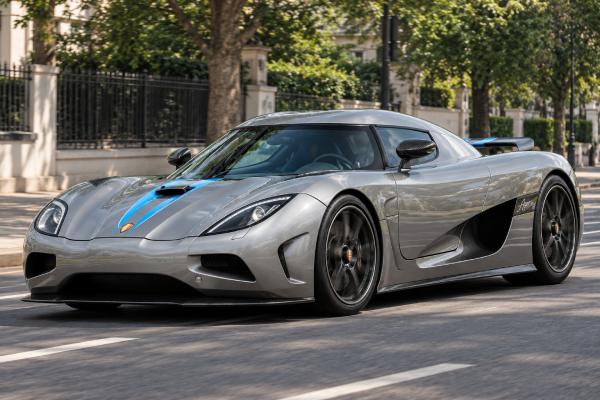
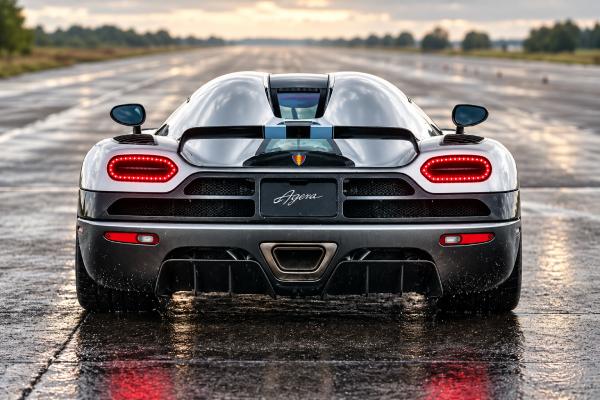
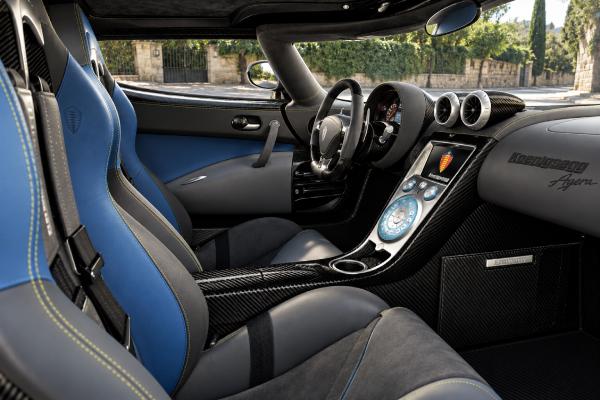
The 2010 Koenigsegg Agera was the point at which the small Swedish manufacturer stopped refining the CCX formula and began defining the modern megacar. Its 5.0-liter twin-turbo V8 produced 960 hp, yet the more important story was how Koenigsegg integrated that output into a compact, unusually light car with a carbon-fiber monocoque, a seven-speed paddle-shift transmission, active aerodynamics, and a removable roof that could be stored on board. The Agera was brutally fast, but it was not conceived as a single-purpose top-speed device. It offered real luggage space, adjustable ride height, climate control, and road-car visibility while retaining a level of mechanical intensity that few contemporary rivals matched. Today, the original Agera is exceptionally rare and often overshadowed by later R, S, RS, and Final variants. That makes exact identification, documentation, condition, and factory support especially important. This guide focuses only on the 960 hp 2010 specification and explains what made it technically significant, how it behaves, what ownership demands, and how to assess one before purchase.
Table of Contents
- Why the 2010 Agera Matters
- Agera Specifications and Technical Data
- Engine, Transmission, and Power Delivery
- Chassis, Aerodynamics, and Road Behavior
- Maintenance and Long-Term Care
- Buying and Inspection Guide
- Ownership Verdict
Why the 2010 Agera Matters
The original Agera matters because it introduced the core engineering package that later produced the Agera R, One:1, Agera RS, and Agera Final. It was not merely a cosmetic update to the CCX; it marked Koenigsegg’s transition to twin turbochargers, a new in-house transmission concept, more advanced electronics, and a cabin that felt more deliberately integrated.
Koenigsegg unveiled the Agera at the Geneva Motor Show in March 2010. Its name means “to take action” in Swedish, and the car did exactly that for the company. The outgoing CCX and CCXR had already established Koenigsegg as a serious high-performance manufacturer, but the Agera moved the engineering philosophy forward in several visible and less visible ways.
The first major change was the engine’s induction system. Earlier Koenigsegg road cars had relied heavily on supercharging. The Agera adopted twin turbochargers, but Koenigsegg did not accept the usual tradeoff of more peak power in exchange for sluggish response. It redesigned the exhaust layout and placed the pre-catalyst behind the wastegate rather than in the highest-flow path after the turbine. The aim was to reduce exhaust back pressure, limit heat retained around the exhaust ports, and preserve response while allowing greater power density.
The second shift was integration. The seven-speed transmission, electronic differential, stability-control strategy, adjustable suspension, solid-state electrical system, and adaptive rear wing were conceived as parts of one vehicle rather than isolated technologies. That matters because 960 hp in a rear-wheel-drive car is only useful when the chassis, tire, damping, and electronic systems can make the output manageable.
The Agera also retained the traits that made a Koenigsegg recognizable. It had dihedral synchro-helix doors, a detachable hardtop that could be stored in the front luggage compartment, a carbon monocoque, and a mid-mounted V8. The interior introduced “ghost” lighting, in which symbols appeared through tiny laser-etched holes in aluminum panels. This gave the cockpit a cleaner visual appearance than the switch-heavy cabins common in low-volume exotics of the period.
Its rarity is central to the ownership story. Koenigsegg states that 30 examples were produced across the Agera, Agera R, and Agera S family, while auction documentation for an original Agera has described only seven standard Agera examples. Exact counts can depend on how prototypes, factory conversions, and later specification changes are classified, so a buyer should rely on the chassis-specific factory record rather than a generalized production figure.
Agera Specifications and Technical Data
The 2010 Agera is a gasoline-powered, rear-wheel-drive ICE hypercar built around a carbon-fiber monocoque and a mid-mounted 5.0-liter twin-turbo V8. The defining numbers are 960 hp, 1,100 Nm of peak torque, a 1,330 kg dry weight, and a 1,435 kg curb weight measured with fluids and 50% fuel.
| Specification | Value |
|---|---|
| Engine | Koenigsegg aluminum 5.0-liter V8 |
| Layout | Mid-mounted, longitudinal, 90-degree V8 |
| Valvetrain | Double overhead camshafts, 4 valves per cylinder |
| Displacement | 5.0 L |
| Bore × stroke | 91.7 × 95.25 mm |
| Compression ratio | 9.0:1 |
| Induction | Twin turbochargers, 1.3 bar boost |
| Fuel system | Sequential multipoint fuel injection |
| Lubrication | Dry sump |
| Engine weight | 197 kg (434 lb) |
| Fuel capacity | 80 L (21.1 US gal) |
| Specification | Value | Condition |
|---|---|---|
| Maximum power | 960 hp (706 kW) | At 7,100 rpm |
| Maximum torque | 1,100 Nm (811 lb-ft) | At 4,000 rpm |
| Broad torque output | More than 1,000 Nm (738 lb-ft) | 2,700–6,170 rpm |
| Redline | 7,500 rpm | Manufacturer specification |
| 0–100 km/h | 3.0 seconds | Manufacturer claim |
| 0–200 km/h | 8.0 seconds | Manufacturer claim |
| 0–200–0 km/h | 13.5 seconds | Manufacturer claim |
| 100–0 km/h braking | 30.5 m (100 ft) | Manufacturer claim |
| Lateral acceleration | 1.5 g | Manufacturer claim |
| Specification | Value |
|---|---|
| Transmission | Koenigsegg-developed 7-speed paddle-shift transmission |
| Clutch arrangement | Dual-clutch functionality with a single input shaft |
| Drive type | Rear-wheel drive |
| Differential | Electronically controlled differential |
| Stability control | Koenigsegg Electronic Stability Control with selectable modes |
| Steering | Electro-hydraulic rack and pinion |
| Steering ratio | 2.7 turns lock-to-lock |
| Turning circle | 11 m (36.1 ft) |
| Specification | Value |
|---|---|
| Structure | Carbon-fiber and aluminum-honeycomb monocoque |
| Monocoque weight | 70 kg (154 lb), including integrated fuel tanks |
| Torsional rigidity | 65,000 Nm per degree |
| Front suspension | Pushrod-operated double wishbones with adjustable gas-hydraulic dampers |
| Rear suspension | Pushrod-operated double wishbones with adjustable gas-hydraulic dampers |
| Ride height | Electronically adjustable |
| Front brakes | 392 × 36 mm ventilated carbon-ceramic discs, 6-piston calipers |
| Rear brakes | 380 × 34 mm ventilated carbon-ceramic discs, 4-piston calipers |
| Drag coefficient | Cd 0.33–0.37, depending on rear-wing position |
| Frontal area | 1.873 m² |
| Downforce | 300 kg (661 lb) at 250 km/h (155 mph) |
| Position | Wheel | Tire |
|---|---|---|
| Front | 19 × 9.5-inch forged VGR aluminum, center-lock | 265/35 R19 Michelin Supersport |
| Rear | 20 × 12.5-inch forged VGR aluminum, center-lock | 345/30 R20 Michelin Supersport |
| All four | Direction-specific vortex-generating design | Tire-pressure monitoring fitted |
| Speed capability | Manufacturer-developed application | Rated for more than 420 km/h |
| Specification | Value |
|---|---|
| Body | 2-door, 2-seat coupe with removable hardtop |
| Length | 4,293 mm (169.0 in) |
| Width | 1,996 mm (78.6 in) |
| Height | 1,120 mm (44.1 in) |
| Wheelbase | 2,662 mm (104.8 in) |
| Ground clearance | 100 mm (3.9 in) front and rear |
| Dry weight | 1,330 kg (2,932 lb) |
| Curb weight | 1,435 kg (3,164 lb), fluids plus 50% fuel |
| Maximum laden weight | 1,650 kg (3,638 lb) |
| Weight distribution | 44% front, 56% rear |
| Front luggage volume | 120 L (4.2 cu ft) |
The published combined consumption of 14.7 L/100 km is about 16.0 mpg US, while the highway figure of 12.5 L/100 km is about 18.8 mpg US. Those values are best treated as homologation-era reference points, not a promise of real-world economy. Short trips, boost use, traffic, fuel quality, and warm-up time can move consumption substantially.
Engine, Transmission, and Power Delivery
The Agera’s engine is impressive not simply because it makes 960 hp, but because it does so from a compact 197 kg package with broad torque and relatively conventional road-car drivability. More than 1,000 Nm is available across most of the useful rev range, so the car does not need to be held near redline to feel explosive.
The aluminum V8 uses dry-sump lubrication, which stores oil in a separate reservoir instead of a deep pan beneath the crankshaft. This helps maintain oil supply during sustained acceleration, braking, and cornering while allowing the engine to sit lower in the chassis. A low engine improves the center of gravity and leaves more freedom for underbody airflow and rear suspension packaging.
Koenigsegg’s exhaust solution is central to the car’s character. Conventional high-output turbo layouts can suffer from back pressure once catalysts, mufflers, and emissions hardware are added. Excess back pressure raises exhaust temperature and makes the engine more prone to knock. By changing the position of the pre-catalyst relative to the wastegate flow, Koenigsegg reduced restriction in the main turbine path. The result was a powertrain that could produce very high boost-era output without feeling like an oversized engine saddled with a slow turbo response.
That does not mean the Agera behaves like a naturally aspirated car. Period driving reports describe a distinct increase in force as the turbochargers build pressure. The important point is that the response is progressive enough to be judged and controlled, rather than arriving as an unpredictable on-off surge.
The transmission is equally unusual. Koenigsegg describes it as a seven-speed dual-clutch unit with one input shaft, a wet clutch, and paddle operation. It is not a conventional mass-production dual-clutch gearbox with two complete gear trains and alternating input shafts. The design was created to keep weight and rotating mass low while still delivering fast shifts and automated clutch control.
For a driver, the practical lesson is simple: do not expect the low-speed polish of a modern luxury-car DCT. The Agera’s gearbox is part of the mechanical experience. Shift quality depends on throttle position, speed, temperature, and mode. A healthy car should feel decisive rather than confused, but an inspection drive must allow enough time to assess cold operation, warm operation, reverse engagement, low-speed maneuvering, and full-load upshifts.
Rear-wheel drive is another defining feature. Later hypercars often use all-wheel drive or electrification to deploy power. The Agera relies on wide rear tires, an electronic differential, stability control, suspension geometry, and driver judgment. That creates a more transparent relationship between throttle input and available grip, but it also raises the consequences of poor tires, cold pavement, standing water, or abrupt throttle application.
Chassis, Aerodynamics, and Road Behavior
The Agera’s chassis is engineered to provide a stable platform before the electronic systems intervene. Its extremely stiff carbon monocoque, low mass, double-wishbone suspension, and substantial aerodynamic load allow the steering and dampers to work with less structural flex than in a conventional road car.
A monocoque stiffness figure of 65,000 Nm per degree is remarkable even by current standards. High torsional rigidity helps keep suspension alignment consistent when the car is heavily loaded in a corner. It also matters with the roof panel removed, because the structure does not rely on a fixed steel roof to prevent twisting.
The removable hardtop is more than a novelty. It changes the Agera from a closed coupe into an open car without requiring a heavy folding mechanism. The roof can be stored in the front luggage area, although doing so uses much of the available cargo space. Owners should practice the removal and storage process with factory guidance because carbon panels and their seals are expensive to damage.
The Vortex Generating Rims are a particularly clever detail. Each forged aluminum wheel is shaped to act as a small turbine, pulling air through the wheel area to improve brake cooling and contribute to airflow management. Because front and rear offsets differ and the turbine blades must rotate in the correct direction, each wheel position has its own design. This makes wheel identification important during restoration or replacement; a visually similar wheel fitted to the wrong corner can defeat the intended airflow.
Aerodynamic behavior is adjustable rather than fixed. Koenigsegg published a drag-coefficient range of 0.33 to 0.37 depending on the rear wing, together with 300 kg of downforce at 250 km/h. The flat floor and rear Venturi tunnels help accelerate air beneath the car and reduce pressure under the body. Unlike a decorative wing, this system works with the entire underbody.
On the road, the Agera combines lightness with an unusually wide footprint. At nearly two meters across, it demands attention in narrow lanes and parking structures. The front and rear hydraulic lift system helps with ramps and speed bumps, but it does not eliminate the risk of splitter or underbody damage. The 100 mm static ground clearance is low, and the wheelbase is long enough that crests and transitions can still be problematic.
The steering is electro-hydraulic rather than fully electric. That typically preserves more natural load and surface feedback, though the car can feel light around center at low speed. At higher speed, the rigid chassis and aerodynamic stability make the responses more settled. The suspension is firm, but period reports noted that it absorbed rough surfaces better than its extreme appearance suggested.
The carbon-ceramic brakes are powerful and reduce unsprung mass, yet their condition must be judged carefully. Surface appearance alone is not enough. Disc wear, heat history, chipping, pad condition, caliper seals, brake-fluid age, and recorded track use should be examined by a specialist familiar with Koenigsegg systems.
Maintenance and Long-Term Care
An Agera should be maintained by Koenigsegg or a factory-authorized specialist with access to the correct diagnostic tools, software, parts channels, and chassis records. A generic exotic-car workshop may be capable of basic inspection, but the car’s low production volume and proprietary systems make incomplete diagnosis an expensive risk.
There is no responsible universal public service schedule for every Agera because intervals, fluids, procedures, and updates can vary by VIN, market, use, and later factory changes. Owners should follow the chassis-specific manual and current factory guidance. The most useful ownership plan is therefore built around condition, documentation, and preventive attention.
Key areas include:
- Engine oil and warm-up discipline. Dry-sump systems have specific level-check procedures. Oil should not be judged by a casual cold dipstick reading. The engine must be serviced with the approved oil specification and checked exactly as instructed.
- Fuel quality. The 960 hp Agera is a gasoline version, and detonation margin matters in a high-boost engine. Use the required octane rating, avoid stale fuel, and do not assume that every regional premium grade is equivalent.
- Cooling and charge-air systems. Inspect hoses, clamps, heat shielding, radiators, intercooler plumbing, and any evidence of coolant residue or pressure loss. High-output turbo engines are sensitive to reduced cooling efficiency.
- Transmission and electronic differential. Record shift behavior cold and hot. Software faults, clutch adaptation issues, fluid condition, and mechanical wear can produce similar symptoms, so diagnosis should not be based on feel alone.
- Hydraulic lift system. Check operation at both ends, leakage, pump behavior, warning messages, and whether the car settles unevenly after parking.
- Battery and electrical health. The Agera uses a lightweight lithium iron phosphate battery and a solid-state electrical architecture. Correct charging equipment and storage procedures are important; low voltage can create misleading fault messages.
- Tires. Age, heat cycles, storage conditions, position, specification, and speed rating matter more than tread depth alone. No buyer should plan serious high-speed use on old tires, even when they appear unused.
- Carbon structure and body. Inspect lift points, floor edges, splitter mounts, wheel arches, door mechanisms, roof interfaces, and underside panels. Carbon damage may be subtle and should be assessed by someone who understands the original layup and repair criteria.
A car that is driven periodically may be healthier than one that has remained static for years. Seals, pumps, actuators, tires, fluids, and hydraulic components all benefit from controlled exercise. However, “regularly used” is not automatically better if the car has been driven hard without documented maintenance. Mileage should be interpreted together with service invoices, data logs where available, and the owner’s operating habits.
Budgeting should be based on the specific chassis, not internet averages. A recent RM Sotheby’s listing for a 2011 Agera documented an official-dealer service costing nearly €16,000, but one invoice cannot define the normal annual cost for every car. Age-related work, transport to a specialist, tires, carbon repair, hydraulic components, or driveline diagnosis can change the total dramatically.
Buying and Inspection Guide
The best Agera is the car with the clearest identity, complete factory history, correct specification, and no unresolved technical questions. Color, mileage, and cosmetic presentation matter, but provenance and condition should rank above them.
Begin with identity. Confirm the VIN, original build specification, engine configuration, body finish, wheel type, interior, market certification, and any later factory work directly with Koenigsegg. Some cars have been repainted, retrimmed, upgraded, or converted during their lives. Such changes are not automatically negative, but they must be documented and accurately represented.
Next, review the paper trail. A strong file should include purchase and registration records, service invoices, campaign or update records, transport documents, tire invoices, repair photographs, paintwork records, and evidence of factory or authorized-dealer involvement. Gaps are especially important on a car whose replacement parts and specialist labor are difficult to obtain.
A pre-purchase inspection should cover at least these points:
- Cold start: Watch oil-pressure behavior, idle stability, smoke, warning lights, unusual valvetrain noise, and battery voltage before the engine is warmed.
- Diagnostic scan: Read active, stored, and historical faults with equipment that can communicate fully with the car. A cleared dashboard is not the same as a clean diagnostic history.
- Boost and fuel delivery: Check for pressure leaks, abnormal trims, weak pumps, injector issues, and evidence of non-factory tuning.
- Gearbox operation: Test every gear, reverse, low-speed clutch control, part-throttle changes, full-load shifts where safe, and hot restart behavior.
- Chassis geometry: Measure alignment and inspect uprights, wishbones, dampers, bushings, subframes, wheel bearings, and signs of curb or track impact.
- Carbon inspection: Examine the monocoque and bonded structures, not only painted exterior panels. Any repair should have traceable engineering approval.
- Brakes and wheels: Verify disc condition, correct wheel position, center-lock hardware, tire age, tire type, and evidence of improper lifting or impact.
- Roof, doors, and seals: Operate both doors repeatedly, inspect roof fit, check water seals, and confirm the roof storage arrangement and protective equipment are present.
- Hydraulics and accessories: Test lift systems, climate control, windows, infotainment, lighting, displays, seat adjustment, and warning functions.
- Road test: Evaluate steering straight-ahead stability, brake balance, damping, vibration, drivetrain lash, cooling, and fault behavior over a complete heat cycle.
Mileage deserves context. A very low reading may appeal to collectors, yet long inactivity can create its own recommissioning needs. A higher-mileage car with continuous authorized care may be the more usable example. The correct choice depends on whether the owner intends to preserve, tour, display, or drive the car regularly.
Insurance, transport, storage, and registration should be arranged before purchase. The Agera’s width, low ride height, center-lock wheels, unusual doors, and carbon structure require experienced handlers. An enclosed transporter needs appropriate ramp angles and secure tie-down methods. Storage should maintain stable temperature and humidity, provide the correct battery support, and leave enough side clearance for the door mechanism.
Finally, consider future support. Ask how the car will reach a qualified service center, what parts are already due, whether software updates are current, and which work is planned over the next two years. A bargain purchase price can be erased quickly by deferred maintenance or a single unresolved driveline problem.
Ownership Verdict
The 2010 Agera is best understood as the foundation of Koenigsegg’s modern era, not as a lesser version of the later cars. It offers 960 hp, low mass, rear-wheel drive, a removable roof, and a level of mechanical directness that became harder to preserve as hypercars adopted heavier hybrid systems and all-wheel drive.
Its strengths are clear: dramatic acceleration, an exceptionally stiff carbon structure, inventive aerodynamics, a compact in-house V8, rare design details, and genuine usability for such an extreme machine. The Agera can carry luggage, clear obstacles with its lift system, and cruise with climate control, yet it still feels like a low-volume engineering project built around driver involvement.
The tradeoffs are equally real. It is wide, expensive to support, highly sensitive to tire condition and fuel quality, and dependent on specialist knowledge. Its gearbox and controls demand familiarization. Its rarity means that a buyer cannot rely on broad market averages or assume that another comparable example will appear quickly.
For a collector, the original Agera has historical importance because it introduced the architecture from which Koenigsegg’s most celebrated record cars developed. For a driver, it provides a purer and less filtered experience than many later hypercars. The right purchase is therefore not simply the lowest-mileage car or the brightest specification. It is the chassis whose history, condition, originality, updates, and service support are understood in detail.
References
- Agera – Technical Specifications (Technical Specifications)
- Agera (Model Overview)
- The Legacy of Ultimate Performance (Company History)
- Hypercar of the Year: Koenigsegg Agera 2010 (Road Test)
- Koenigsegg Agera 2010 (Road Test)
- 2011 Koenigsegg Agera 2025 (Auction and Service Documentation)
Disclaimer
This article is for informational purposes and is not a substitute for professional diagnosis, maintenance, or repair. Specifications, torque values, service intervals, fluids, software, and procedures can vary by VIN, market, equipment, and factory updates. Verify every service decision against the vehicle’s official documentation and current guidance from Koenigsegg or an authorized service center.
Please share this article on Facebook, X/Twitter, or another platform if it helped you understand the original Agera and you would like to support our work.