


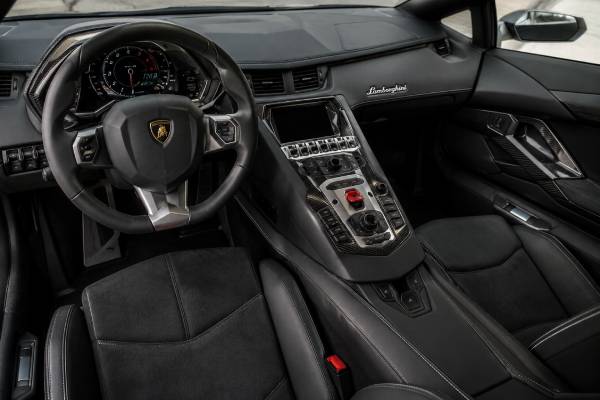
The Lamborghini Aventador LP 700-4 is the first Aventador and the car that reset Lamborghini’s V12 flagship line after the Murciélago. Built around the LB834 platform and the new L539 6.5-liter naturally aspirated V12, it brought 700 hp, all-wheel drive, a carbon-fiber monocoque, pushrod suspension, and a single-clutch ISR gearbox into a sharp, low, unmistakably Lamborghini shape. Sold from the 2011 launch period through the pre-facelift LP 700-4 era ending before the Aventador S takeover, it remains one of the most important modern Lamborghini models because it combines analog drama with modern carbon-structure engineering. Buyers care about mileage, specification, service history, clutch wear, carbon-ceramic brake condition, original paint, and recall completion. Enthusiasts care because the LP 700-4 is loud, mechanical, dramatic, and still close to the raw edge that later supercars often softened.
Table of Contents
- Why the First Aventador Still Matters
- L539 V12 Specs and Chassis Data
- LP 700-4 Versions, Options, and Identification
- Carbon Structure, Design, and Signature Details
- How the Aventador LP 700-4 Drives
- Maintenance, Reliability, and Ownership Risk
- Market Values and Buying Checks
Why the First Aventador Still Matters
The Aventador LP 700-4 matters because it was not a mild update of the Murciélago. It was a clean-sheet V12 Lamborghini that introduced a new engine family, a carbon-fiber central structure, new electronic drive modes, and a far more modern production approach for Sant’Agata’s flagship.
Lamborghini revealed the Aventador LP 700-4 in 2011 as the replacement for the Murciélago, which had carried the brand’s V12 line through the 2000s. The name followed Lamborghini tradition: Aventador was a fighting bull, and the badge described the mechanical layout. “LP” stands for longitudinale posteriore, meaning the engine is mounted longitudinally behind the cabin. “700” refers to output in metric horsepower, and “4” means all-wheel drive.
The LP 700-4 sat at the top of Lamborghini’s range, above the Gallardo, and represented the company’s clearest statement of what a modern V12 supercar should be: carbon structure, extreme design, naturally aspirated power, all-weather traction, and a cabin that mixed fighter-jet theater with luxury-car equipment. It also arrived at an important moment. Ferrari was moving toward the hybrid LaFerrari era, McLaren had just returned to road cars with the MP4-12C, and Porsche had shown how dual-clutch gearboxes and electronic control systems could make high-performance cars easier to exploit. Lamborghini answered differently. The Aventador kept the big naturally aspirated V12 as the emotional center and used technology to intensify the drama rather than hide it.
The LP 700-4 was also the start of the Aventador family that later produced the Roadster, 50th Anniversario, Pirelli Edition, Superveloce, S, SVJ, and Ultimae. That makes the original coupe especially important. It is the first chapter of Lamborghini’s last non-hybrid V12 flagship generation before the Revuelto.
For collectors, the early LP 700-4 has three kinds of appeal:
- It is the first version of a major Lamborghini V12 model line.
- It uses the first production form of the L539 naturally aspirated V12.
- It has the rawest Aventador driving character before later steering, suspension, aero, and power upgrades.
The car’s reputation today is more nuanced than simple poster-car status. It is not rare in the way a limited-production hypercar is rare, but good, low-mile, original examples are already being separated from modified, neglected, or heavily used cars. The Aventador’s wide production footprint also helps owners because specialist knowledge, parts support, and diagnostic familiarity are better than with many small-run exotics.
The LP 700-4’s significance rests on contrast. It is modern enough to have carbon-ceramic brakes, stability control, lift systems, a TFT instrument display, and serious crash engineering. Yet it still feels physical and theatrical in a way that later turbocharged, hybrid, and dual-clutch supercars often do not. That balance is why the original Aventador remains relevant to buyers, owners, and enthusiasts.
L539 V12 Specs and Chassis Data
The LP 700-4’s core specification is simple and spectacular: a 6,498 cc naturally aspirated V12, 700 hp, all-wheel drive, carbon-fiber central structure, and a claimed 0–100 km/h time of 2.9 seconds. The details matter because condition, service needs, tire choice, and inspection costs all flow from this engineering package.
| Category | Specification |
|---|---|
| Model | Lamborghini Aventador LP 700-4 Coupe |
| Platform code | LB834 |
| Engine code | L539 |
| Engine layout | Longitudinal mid-mounted 60-degree V12 |
| Displacement | 6,498 cc |
| Induction | Naturally aspirated |
| Maximum power | 700 CV / 515 kW at 8,250 rpm |
| Maximum torque | 690 Nm at 5,500 rpm |
| Transmission | 7-speed ISR automated single-clutch gearbox |
| Drivetrain | All-wheel drive with rear-biased character |
| 0–100 km/h | 2.9 seconds |
| Top speed | 350 km/h / 217 mph |
| Dry weight | 1,575 kg |
The L539 engine was a major break from the long-running Bizzarrini-derived Lamborghini V12 lineage. It kept the qualities buyers expected from a flagship Lamborghini—big displacement, high revs, hard-edged sound, and instant throttle response—but it was a new-generation unit designed for the Aventador’s emissions, packaging, output, and cooling needs.
Its character is defined by revs and response rather than forced-induction torque. Peak torque arrives at 5,500 rpm, and the engine keeps building toward its 8,250 rpm power peak. That matters on the road. The car is fast at low revs, but the real character arrives when the intake sound hardens, the exhaust gets sharper, and the engine starts to feel less like a luxury exotic motor and more like a race-bred centerpiece.
| Area | LP 700-4 detail |
|---|---|
| Central structure | Carbon-fiber monocoque with aluminum front and rear frames |
| Suspension | Pushrod front and rear suspension with horizontal dampers |
| Steering | Hydraulic power steering with selectable assistance behavior |
| Front brakes | Carbon-ceramic discs, 400 mm, 6-piston calipers |
| Rear brakes | Carbon-ceramic discs, 380 mm, 4-piston calipers |
| Front tires | 255/35 ZR19 |
| Rear tires | 335/30 ZR20 |
| Length | 4,780 mm |
| Width | 2,030 mm excluding mirrors |
| Height | 1,136 mm |
| Wheelbase | 2,700 mm |
| Fuel capacity | 90 liters |
The transmission is one of the car’s most discussed parts. Lamborghini chose a seven-speed ISR gearbox rather than a dual-clutch unit. ISR stands for Independent Shifting Rods, and the system uses a single clutch with electrohydraulic shift actuation. It can shift very quickly, but it does not have the smooth, layered feel of a modern dual-clutch gearbox. In manual mode, full-throttle upshifts are a major part of the Aventador experience. In traffic, the same hardware can feel abrupt, especially if the driver treats it like a conventional automatic.
The carbon-ceramic brakes are standard and powerful, but they are also a major inspection item. Disc condition, pad life, heat checking, surface damage, and replacement cost should be reviewed by a Lamborghini specialist before purchase. The same applies to tires. Old, hardened tires can make an Aventador feel nervous, noisy, and less secure than its chassis really is.
LP 700-4 Versions, Options, and Identification
The original LP 700-4 family includes the coupe, the Roadster, and several special-edition or anniversary-linked versions built before the Aventador S era. For buyers, the key is to confirm the exact model, factory specification, market equipment, original options, and whether later modifications have changed the car’s value profile.
The coupe is the purest expression of the early Aventador. It has the fixed roof, scissor doors, exposed V12 drama, and the cleanest version of the original design. The Roadster added removable carbon-fiber roof panels and a more open soundtrack, but this article focuses on the coupe-era LP 700-4 as identified by the 2011–2016 pre-facelift 700 hp specification.
Important related LP 700-4-era versions include:
- Aventador LP 700-4 Coupe: the standard fixed-roof model and the foundation of the Aventador line.
- Aventador LP 700-4 Roadster: open-top version with removable roof panels and similar powertrain specification.
- Aventador LP 720-4 50th Anniversario: 50th-anniversary version with increased output, special aero, and more limited production.
- Aventador LP 700-4 Pirelli Edition: special edition celebrating the Lamborghini and Pirelli partnership, with distinctive two-tone paint themes.
- Aventador LP 750-4 Superveloce: a lighter, more powerful, track-focused version that sits outside the standard LP 700-4 buying brief but strongly affects Aventador market comparisons.
- Miura Homage: a limited 2016 special edition inspired by Miura colors and trim themes.
Factory options matter because they can change desirability, usability, and resale strength. Common high-value features include transparent engine cover, front axle lift, parking sensors and rear camera, upgraded wheels, carbon interior packages, Q-Citura stitching, branding package, contrast stitching, multifunction steering wheel, premium audio, heated or electric seats, and Ad Personam paint or trim.
The most useful ownership options are not always the most dramatic ones. Front axle lift is valuable because the Aventador’s nose is low and expensive to repair. Parking sensors and a rear camera matter because rear visibility is limited. A transparent engine cover adds visual drama and can help a listing stand out, but it should be checked for heat-related cosmetic aging or poor repair.
How to identify a good LP 700-4 specification
A strong car should have a specification that matches its intended use. A collector-grade example is usually low-mileage, original paint, unmodified exhaust, no accident history, complete books, factory options, Lamborghini service records, and a desirable color combination. A driver-grade example can still be a smart buy if it has excellent maintenance, recent tires, clean clutch data, no structural damage, and no questionable tuning.
Useful identifiers include:
- VIN and market paperwork matching the model year and destination market.
- Engine and transmission records consistent with the L539 LP 700-4 specification.
- Factory option printout or dealer build record.
- Original paint readings and panel-gap consistency.
- Correct wheels, brakes, glass, lights, and interior trim.
- Service invoices from authorized Lamborghini dealers or recognized specialists.
- Recall completion records, especially for U.S.-market cars.
Modifications need careful judgment. Exhaust systems are common because owners want more sound, but some aftermarket systems can create heat, emissions, warranty, or inspection concerns. Lowering kits, non-factory wheels, wraps, exposed-carbon additions, and ECU tuning can reduce value unless the original parts are included and the work is reversible.
Carbon Structure, Design, and Signature Details
The Aventador’s most important engineering feature is its carbon-fiber monocoque, because it shapes the car’s weight, stiffness, crash structure, packaging, and long-term repair risk. Its most important design feature is that Lamborghini made the technology visible through a body that looks extreme because the cooling, stance, and proportions demand it.
The monocoque was a major step for Lamborghini production. Rather than using a traditional aluminum or steel central tub, the Aventador placed the cabin inside a carbon-fiber structure with aluminum frames attached front and rear. This gave the car high stiffness while keeping dry weight low for a V12 all-wheel-drive flagship.
For owners, that technology is both a strength and a responsibility. A carbon monocoque does not rust like a steel shell, but damage assessment is more specialized. Accident repairs, incorrect lifting, improper bonding, damaged mounting points, and hidden structural repairs must be taken seriously. A clean cosmetic appearance is not enough. Any car with an accident history needs specialist inspection, documentation, and proof of proper repair.
The exterior design came from Lamborghini’s Centro Stile and followed the brand’s wedge-shaped V12 tradition. The relationship to Countach, Diablo, and Murciélago is clear, but the Aventador is sharper and more technical. The nose is short and low, the cabin is pushed forward, the engine cover dominates the rear half, and the side intakes look functional because they are functional. Cooling a 6.5-liter V12 in a tightly packaged mid-engine car requires large intake paths, heat management, and airflow control.
Signature design and engineering elements include:
- Scissor doors, a V12 Lamborghini hallmark since the Countach.
- A low, wide body with strong diagonal lines and hexagonal themes.
- Large side air intakes feeding engine and cooling needs.
- A movable rear spoiler that changes position based on speed and conditions.
- Carbon-fiber engine cover and structural elements.
- Center-exit exhaust outlets that make the rear view instantly recognizable.
- TFT digital instrument display and aviation-style start button cover.
- Drive modes that alter throttle, gearbox, steering, suspension, and stability settings.
Inside, the LP 700-4 feels more modern than a Murciélago but still more dramatic than a normal luxury car. The start button under a red flip cover is theater, but the driving position is serious. Visibility forward is better than the shape suggests, side and rear visibility are limited, and the wide body demands attention in city use. The cabin can be trimmed from relatively restrained black leather to bright Ad Personam combinations, and condition varies sharply depending on mileage, heat exposure, and owner care.
The sound is central to the car’s identity. The L539 does not need turbochargers, artificial enhancement, or hybrid fill to feel alive. At low speed it has mechanical presence; at high revs it turns sharp, metallic, and urgent. The intake and exhaust character also make originality important. An aftermarket exhaust may sound exciting, but buyers should check heat shielding, catalyst status, emissions legality, check-engine lights, and whether the original system comes with the car.
How the Aventador LP 700-4 Drives
The LP 700-4 drives like a large, dramatic, naturally aspirated V12 supercar, not like a small mid-engine sports car. It is brutally fast, stable, loud, and physical, with a gearbox that rewards committed driving more than casual traffic use.
The engine dominates the experience. Throttle response is immediate, and the car feels serious even before the revs rise. Below midrange, the V12 is flexible enough for normal roads, but it never feels lazy or muted. Above 5,000 rpm, the car becomes much more intense. The sound hardens, the rate of acceleration grows, and the last part of the tachometer is where the Aventador earns its reputation.
The ISR transmission is the second defining feature. In Strada mode, it tries to keep the car manageable, but low-speed shifts can still feel deliberate. In Sport or Corsa, especially with manual paddle control, it becomes part of the show. A hard upshift can feel like a physical event. Some drivers love that because it makes the car memorable. Others prefer the smooth speed of a dual-clutch gearbox. Buyers should drive the car long enough to understand the difference before assuming the transmission is faulty or outdated.
The all-wheel-drive system gives the Aventador strong traction, especially during hard launches and fast exits. It does not make the car small. The LP 700-4 is wide, powerful, and sensitive to tire condition. On cold or aged tires, it can feel less settled. On fresh, correct tires at proper temperature, it has huge grip and strong high-speed confidence.
Steering is hydraulic, which gives the LP 700-4 an old-school advantage over many later electrically assisted supercars. It is not delicate in the way a lightweight sports car is delicate, but it has real weight and a direct connection to the front tires. The car responds best to smooth, decisive inputs. It can cover ground very quickly, but the driver must respect its width, value, and limited margin on narrow roads.
Ride quality is firm but not primitive. The pushrod suspension gives the car a purposeful feel, and the body structure feels exceptionally rigid. Rough city roads, steep driveways, and broken surfaces are less enjoyable. The front lift system, if fitted, is not a luxury; it is a practical protection feature.
The brakes are extremely strong when in good condition. Carbon-ceramic brakes can feel slightly different from iron discs at low temperature, but once warm they provide serious stopping power and resistance to fade. For road use, most owners will never approach their thermal capacity. For track use, inspection before and after hard sessions is essential because replacement costs are high.
Best use cases
The Aventador LP 700-4 is best enjoyed in settings where the car has space. Fast highways, open mountain roads, early-morning drives, and carefully managed track events suit it better than dense urban use. It can be driven in town, but the width, clutch behavior, heat, visibility, attention, and parking risk make city driving more stressful than glamorous.
For many owners, the ideal pattern is occasional but regular use. Cars that sit for long periods can develop battery, tire, seal, hydraulic, and electronic issues. Cars that are driven hard without correct warm-up and maintenance can consume clutches, brakes, tires, and suspension components. The best examples are used enough to stay healthy and serviced enough to prove it.
Maintenance, Reliability, and Ownership Risk
The Aventador LP 700-4 is not fragile when maintained correctly, but it is an exotic V12 with expensive wear items, specialized diagnostics, and low tolerance for neglected service. The biggest risks are not ordinary reliability complaints; they are deferred maintenance, accident history, clutch wear, brake cost, old tires, electronic faults, and poor modifications.
The L539 engine itself has a strong reputation when serviced properly. It needs correct oil, proper warm-up, clean cooling systems, healthy sensors, and attention to leaks or warning lights. A naturally aspirated V12 also places heavy demands on ignition, fuel delivery, cooling, and exhaust systems. Any misfire, rough idle, overheating pattern, or emissions fault should be diagnosed before purchase, not explained away.
The ISR gearbox and clutch are major inspection points. Clutch wear depends heavily on driving style. Reversing uphill, crawling in traffic, repeated launch-control use, and careless low-speed maneuvering can shorten clutch life. A pre-purchase inspection should include diagnostic clutch wear data, shift-adaptation checks, road-test behavior, hydraulic function, and service history.
Carbon-ceramic brakes need more than a glance through the wheels. A specialist should assess disc surface condition, pad thickness, damage, wear readings where available, and whether the car has seen heavy track use. Replacement costs can be significant enough to change the value of the car.
Common ownership checks include:
- Clutch wear percentage and shift quality.
- Front lift operation and hydraulic condition.
- Shock absorber behavior, suspension leaks, and warning lights.
- Tire brand, date codes, tread condition, and matching specification.
- Battery age, charging health, and tender use.
- Carbon-ceramic brake disc and pad condition.
- Cooling system performance and evidence of leaks.
- Exhaust heat shielding and catalyst status.
- Door, window, infotainment, camera, sensor, and instrument-cluster operation.
- Recall and software update completion.
- Paintwork, underside, front splitter, rear diffuser, and wheel damage.
Age-related issues matter because even low-mileage Aventadors are now older exotic cars. Rubber parts, tires, seals, batteries, dampers, fluids, and electronics can age without high mileage. A 3,000-mile car that has sat poorly may need more immediate spending than a 15,000-mile car with yearly service and correct storage.
Recalls and service campaigns should be checked by VIN. U.S.-market Aventadors were affected by notable recalls, including an EVAP-related fire-risk campaign and an engine-stall software recall covering certain model years and Aventador-derived variants. A completed recall is normally not a reason to avoid a car. An open recall, missing proof, or warning lights after attempted repair needs investigation.
Specialist inspection is not optional
A normal used-car inspection is not enough. The inspection should be done by a Lamborghini dealer or independent specialist with Aventador diagnostic access and carbon-structure knowledge. The goal is not only to find faults; it is to price risk correctly.
A serious inspection should include:
- VIN, title, ownership, service, and recall verification.
- Diagnostic scan of all major control modules.
- Clutch wear and gearbox adaptation review.
- Lift system, suspension, steering, and brake inspection.
- Paint-depth readings and body-panel alignment review.
- Underside check for splitter, diffuser, tray, and jacking damage.
- Tire age, wheel condition, and alignment clues.
- Road test from cold start through full operating temperature.
- Confirmation that factory tools, books, keys, charger, and accessories are present.
Originality should be judged against intended use. A collector car should stay close to factory condition. A driver car may tolerate reversible exhaust or wheel changes, but the original parts should come with it. Irreversible tuning, crash repairs without documentation, incomplete service records, and suspiciously cheap cars usually cost more later.
Market Values and Buying Checks
The LP 700-4 market sits between used exotic depreciation and modern collectible strength. As of mid-2026, ordinary higher-mileage cars tend to trade far below rare Aventador special editions, while low-mileage, highly optioned, original coupes in strong colors can command a meaningful premium.
Market position depends heavily on region. In the U.S., auction results for standard LP 700-4 coupes have often clustered below dealer asking prices, while retail listings for low-mileage late pre-facelift cars can sit much higher. In Europe and the U.K., mileage, taxes, market registration, VAT status, and import history can create large price differences. Roadsters, Pirelli Editions, Miura Homage cars, and Superveloce models do not belong in the same pricing bucket as a standard coupe.
A practical mid-2026 buying view is:
| Factor | Effect on value |
|---|---|
| Low mileage with annual service | Strong positive, especially with original condition |
| Desirable factory color | Positive, especially Arancio, Verde, Giallo, Bianco, Nero, and rare Ad Personam shades |
| Front lift and camera | Positive for usability and resale |
| Transparent engine cover | Positive for visual appeal |
| Complete Lamborghini service history | Major positive |
| Open recalls or missing records | Negative until resolved |
| Heavy modifications | Usually negative unless reversible and documented |
| High clutch wear | Direct cost deduction |
| Carbon brake wear or damage | Major cost deduction |
| Accident or structural repair history | Serious negative unless expertly repaired and priced correctly |
The best cars to seek are original, well-documented examples with consistent annual servicing, clean diagnostics, fresh correct tires, healthy clutch data, no warning lights, and no signs of poor paint or body repair. A slightly higher price for a properly inspected car often costs less than buying the cheapest example and correcting deferred maintenance.
Avoid cars with vague service stories, missing invoices, unexplained clutch or gearbox behavior, cheap aftermarket exhaust work, dashboard warnings, old tires, damaged carbon-ceramic brakes, suspicious paint readings, or incomplete import paperwork. Also be cautious with cars advertised mainly by wrap color, loud exhaust, or social-media presence. Those details may hide harder questions about heat exposure, accident history, and maintenance.
For long-term collectability, the LP 700-4 has a strong case but not an automatic one. It is the first Aventador, the first production use of the L539 V12, and a major carbon-structure milestone for Lamborghini. It is also part of the last pure naturally aspirated V12 Lamborghini flagship generation before hybridization. Those facts support collector interest. But because production was not extremely limited, condition and specification will decide which cars separate from the pack.
A buyer should decide early whether they want a collector car or a driver. A collector should pay for originality, low mileage, rare factory specification, and documentation. A driver should pay for health, usability, and transparent maintenance. The wrong approach is buying a worn driver at collector money or buying a pristine low-mile car and then using it in a way that erodes the premium.
The most sensible purchase process is:
- Choose the exact version and market you want.
- Compare real sold prices, not only dealer asking prices.
- Request the build sheet, service history, recall status, and diagnostic data.
- Inspect the car with an Aventador specialist before negotiating final price.
- Price clutch, tires, brakes, fluids, battery, and cosmetic repairs into the deal.
- Keep original parts if the car has reversible modifications.
- Maintain it on schedule, drive it regularly, and document everything.
A good Aventador LP 700-4 is still one of the most dramatic modern supercars a buyer can own. A bad one is expensive, awkward, and hard to retail. The difference is rarely the badge. It is usually the documentation, inspection quality, service discipline, and honesty of the car’s history.
References
- Automobili Lamborghini Lamborghini Aventador LP 700-4 2011 (Press Release)
- Pre-Owned Lamborghini Aventador Coupé | Lamborghini.com 2026 (Certified Pre-Owned Model Page)
- Lamborghini: carbon fiber development in 12 steps 2021 (Manufacturer Technical Background)
- Part 573 Safety Recall Report 17V-073 2017 (Recall Database)
- Part 573 Safety Recall Report 18V-391 2018 (Recall Database)
Disclaimer
This article is for informational purposes only and is not a substitute for professional diagnosis, repair, valuation, or pre-purchase inspection. Specifications, torque values, service intervals, software versions, recall status, parts, and procedures can vary by VIN, model year, market, equipment, and prior repair history. Always verify details against official Lamborghini service documentation and have any Aventador inspected by a qualified Lamborghini dealer or specialist.
If this guide helped you, please share it on Facebook, X/Twitter, or your preferred automotive community to support our work.