

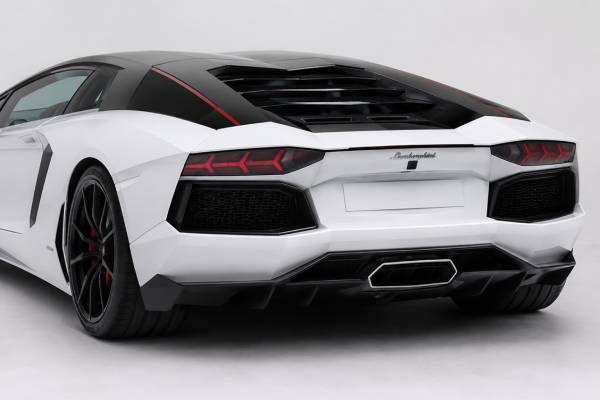
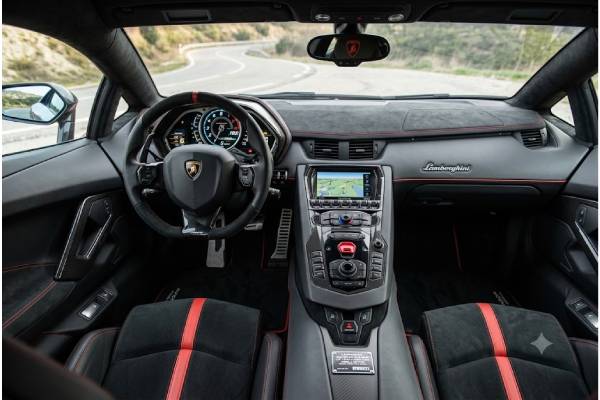
The Lamborghini Aventador LP 700-4 Pirelli Edition is a special-series version of the original Aventador, built around the LB834 platform and Lamborghini’s L539 6.5-liter naturally aspirated V12. It kept the same core hardware as the standard LP 700-4: carbon-fiber monocoque, 7-speed ISR automated manual gearbox, pushrod suspension, carbon-ceramic brakes, and permanent all-wheel drive. Its distinction was not extra power, but factory identity. Created to celebrate Lamborghini’s long partnership with Pirelli, it added a two-tone exterior treatment, red Pirelli-inspired striping, unique interior details, Pirelli branding, and a special-series plaque. For collectors, the appeal is simple: it is a late original-generation Aventador with limited-series presentation, before the Aventador S brought rear-wheel steering and a revised design. For buyers, the right car depends on originality, service history, recall status, clutch condition, brake condition, and proof that the Pirelli-specific equipment is factory-correct.
Table of Contents
- Why the LP 700-4 Pirelli Edition Matters
- L539 V12 Specs and Chassis Data
- Pirelli Edition Production and Options
- Centro Stile Design and Engineering Details
- Road Feel, Sound, and Performance
- Aventador Maintenance, Recalls, and Ownership Risks
- Market Values and Buyer Checks
Why the LP 700-4 Pirelli Edition Matters
The Pirelli Edition matters because it packages the original Aventador formula in a factory-recognized special series. It is not the lightest, rarest, or most powerful Aventador, but it sits in a desirable place: late enough to benefit from early-production improvements, yet still part of the first LP 700-4 generation.
The Aventador replaced the Murciélago and marked a major shift for Lamborghini’s V12 flagship line. Earlier V12 Lamborghinis used steel or mixed-material structures. The Aventador moved the flagship into the carbon-fiber monocoque era and introduced a new V12 family, the L539, rather than stretching the old Bizzarrini-descended engine line again. That made the LP 700-4 more than a new shape. It was a technical reset for Lamborghini’s top car.
The model name explains the recipe. “LP” means the engine is mounted longitudinally behind the occupants. “700” refers to the 700 metric horsepower output, equal to 515 kW. “4” identifies all-wheel drive. In many U.S. contexts, the same car is listed at about 691 horsepower because of the difference between metric horsepower and mechanical horsepower, but the factory model identity remains LP 700-4.
The Pirelli Edition arrived after the Aventador had already become familiar as Lamborghini’s main V12 supercar. Instead of changing the engine or chassis, Lamborghini used the car to celebrate its long tire relationship with Pirelli. That makes it more of a commemorative specification than a performance package. It is closest in spirit to a factory design edition: same powertrain, same chassis, special colors, special trim, and a specific story.
For collectors, that distinction matters. A Pirelli Edition should not be valued like a modified standard Aventador with a stripe kit. The value is tied to factory specification, original paint treatment, interior plaque, Pirelli branding, correct documentation, and condition. Cars that have been wrapped, repainted, heavily modified, or stripped of their original details lose the main reason this edition exists.
The Pirelli Edition also represents the final stretch of the original Aventador before the Aventador S arrived with updated styling, 740 CV, four-wheel steering, and revised dynamics. Some buyers prefer the later S or SVJ for drivability and pace. Others prefer the rawer early LP 700-4 because it feels more dramatic, less filtered, and closer to the launch version that defined the Aventador name.
L539 V12 Specs and Chassis Data
The Pirelli Edition uses the standard Aventador LP 700-4 mechanical package. Its 6,498 cc L539 V12, ISR gearbox, all-wheel-drive system, carbon monocoque, and pushrod suspension are the important technical facts to verify before judging condition or value.
| Category | Specification |
|---|---|
| Model | Lamborghini Aventador LP 700-4 Pirelli Edition |
| Platform / internal code | LB834 Aventador platform |
| Production period covered | 2015–2016 model years |
| Body styles | Coupé and Roadster |
| Engine code | L539 |
| Engine type | 60-degree naturally aspirated V12, multi-point injection |
| Displacement | 6,498 cc / 6.5 liters |
| Bore x stroke | 95.0 mm x 76.4 mm |
| Maximum output | 700 metric hp / 515 kW at 8,250 rpm |
| Maximum torque | 690 Nm / 509 lb-ft at 5,500 rpm |
| Lubrication | Dry sump |
| Transmission | 7-speed ISR automated manual |
| Clutch | Dry double-plate clutch |
| Drivetrain | Permanent all-wheel drive with Haldex generation IV coupling |
| Chassis | Carbon-fiber monocoque with aluminum front and rear frames |
| Suspension | Front and rear pushrod suspension with horizontal dampers |
| Brakes | Carbon-ceramic discs, 400 mm front and 380 mm rear |
| Wheels | 19 x 9J front, 20 x 12J rear |
| Tires | 255/35 ZR19 front, 335/30 ZR20 rear |
| Wheelbase | 2,700 mm |
| Length | 4,780 mm |
| Width | 2,030 mm excluding mirrors |
| Height | 1,136 mm |
| Dry weight | 1,575 kg for the coupé specification |
| Weight distribution | 43 percent front / 57 percent rear |
| 0–100 km/h | 2.9 seconds |
| Top speed | 350 km/h / 217 mph |
| Fuel tank | 90 liters |
The L539 engine is one of the most important reasons the original Aventador remains collectible. It is not turbocharged, hybrid-assisted, or designed around electric fill-in torque. Its character comes from displacement, revs, throttle response, and the sound of a large V12 working through a short-stroke layout.
The ISR gearbox is equally central to the car’s character. It is a robotized single-clutch automated manual, not a dual-clutch transmission. That means it can feel abrupt, especially in Sport and Corsa, but it is lighter and more compact than a dual-clutch unit. Buyers should understand this before assuming a firm shift is a fault. A healthy ISR can still feel dramatic; a worn clutch or poorly calibrated actuator will feel rough, delayed, or inconsistent.
The chassis also needs context. The Aventador’s carbon tub is not just a marketing feature. It is the main load-bearing structure, with aluminum frames attached at the front and rear. This gives the car its stiffness and crash structure, but it also makes accident repair far more serious than on a conventional aluminum or steel-bodied car. Any sign of monocoque damage should trigger a specialist inspection, not a casual body-shop opinion.
Pirelli Edition Production and Options
The Pirelli Edition was offered as both a Coupé and a Roadster, with the special-series identity built around design and trim rather than mechanical changes. Lamborghini publicly described it as a special series, but buyers should verify any claimed production number with factory documentation rather than relying on listing text.
The core Pirelli Edition identifiers are specific and easy to misunderstand. A standard Aventador with aftermarket red striping is not the same thing. The correct car should have factory equipment and documentation that ties the VIN to the Pirelli Edition specification.
Key Pirelli Edition features include:
- A two-tone exterior color scheme using matte and gloss contrasts.
- A thin red line running across the roof area, engine hood, mirrors, and external air-intake profiles.
- Pirelli logos placed at the beginning of the roof-line graphics and on the tires.
- Interior red detailing that repeats the exterior theme.
- Lamborghini and Pirelli logos on the seats.
- A “Pirelli serie speciale” interior plate.
- Coupé and Roadster availability.
- The same LP 700-4 V12, ISR gearbox, all-wheel drive, carbon monocoque, and pushrod suspension as the standard car.
How the Coupé and Roadster differ
The Coupé is the purer structural and visual expression of the Aventador shape. Its fixed roof preserves the strongest visual line from windshield to engine cover, and it is usually the cleaner choice for collectors who prioritize design integrity and lower complexity.
The Roadster adds open-air drama and removable roof panels. It is more theatrical and often commands strong interest because a naturally aspirated V12 behind the cockpit is central to the experience. It also adds inspection points: roof-panel condition, seals, storage hardware, wind noise, and any signs of water entry or careless panel handling.
Options and specification details that affect desirability
Aventador buyers often care about factory options almost as much as mileage. On a Pirelli Edition, the special-series package is the main attraction, but the supporting specification still matters.
Desirable factory equipment may include:
- Front lift system.
- Transparent engine cover.
- Carbon-fiber exterior or engine-bay details.
- Reversing camera and parking sensors.
- Higher-grade audio.
- Contrasting brake calipers.
- Forged wheel designs.
- Full Alcantara or two-tone interior treatments.
- Complete books, tools, battery tender, roof-panel bags for Roadsters, and original accessories.
Do not assume every desirable feature is standard on every market car. Lamborghini specifications vary by country, order sheet, and customer configuration. The safest approach is to compare the car, VIN, build sheet, window sticker where available, dealer records, and physical equipment.
Centro Stile Design and Engineering Details
The Pirelli Edition is visually special because it uses the Aventador’s wedge-shaped body as a canvas for a factory graphic theme. The engineering underneath is unchanged, but the design details turn a standard LP 700-4 into a recognizably commemorative model.
The Aventador shape is built around extreme proportions: low roofline, wide stance, sharp surfacing, scissor doors, short front overhang, and a large rear volume needed to house the V12, cooling system, exhaust, gearbox, and rear drivetrain. The car looks dramatic because the packaging is dramatic. The engine sits behind the occupants, the radiators and air channels need large openings, and the rear bodywork has to manage heat and airflow.
The Pirelli Edition adds a red line that follows several of those functional paths. It runs over key visual surfaces rather than sitting as a random decal. This matters because factory graphic editions often age badly when the graphic feels like an afterthought. On the Pirelli Edition, the red line works with the roof, mirror, engine-cover, and intake shapes.
The exterior treatment also uses contrast between matte and gloss finishes. That creates a more complex inspection challenge. Matte paint and matte clearcoat can be difficult to repair invisibly. Gloss black roof sections, red striping, and painted body panels must be checked in different lighting. A car that looks good under showroom lights may reveal blend marks, repainted sections, sanding defects, or mismatched finishes in daylight.
The cabin continues the Pirelli theme without turning the interior into a simple color package. The red striping and stitching link the cabin to the exterior. The seat logos and special-series plaque are important because they help separate a factory Pirelli Edition from a visually altered Aventador.
The engineering features remain pure LP 700-4. The carbon-fiber monocoque is the backbone. Aluminum front and rear frames carry crash structures and mechanical loads. The pushrod suspension places spring and damper units inboard, which reduces unsprung mass and gives the Aventador a motorsport-like layout. The movable rear spoiler and active side air inlets respond to cooling and aerodynamic needs.
The sound is another design feature, even though it is mechanical. The short-stroke V12, dry-sump layout, high engine speed, and rear exhaust placement create the sharp, hard-edged Aventador voice. Factory exhaust condition matters. Aftermarket exhausts can make the car louder, but they can also create heat issues, drone, warning lights, emissions problems, and reduced collector appeal.
Road Feel, Sound, and Performance
The Aventador LP 700-4 Pirelli Edition feels fast, wide, loud, and physical. It is not a soft grand tourer, and it is not as polished as later dual-clutch supercars, but that rawness is a major part of its appeal.
Acceleration is immediate once the V12 is in its stride. Below the dramatic upper rev range, the 6.5-liter displacement gives the car real torque, so it does not need turbo boost or hybrid assistance to feel urgent. Above midrange, the engine becomes sharper and more intense, pulling toward its 8,250 rpm power peak with a sound that defines the car more than any trim package does.
The ISR gearbox shapes the whole experience. In Strada, it can be used gently, but it still does not behave like a torque-converter automatic or a modern dual-clutch transmission. In Sport and Corsa, shifts are more aggressive and more theatrical. Some drivers love the punch. Others find it crude. Buyers coming from newer Ferraris, McLarens, or Porsche PDK cars should drive an Aventador before buying one.
The steering is heavy enough to feel serious but not old-fashioned. Front-end placement requires respect because the car is wide and the front axle sits far ahead of the driver’s hips. On open roads, the Aventador feels planted and stable. On tight city streets, it feels large, low, and expensive to place near curbs or ramps.
The all-wheel-drive system gives the car traction that rear-drive rivals cannot match in poor conditions, but it does not make the Aventador small or forgiving. Tire age and temperature matter. Old Pirelli P Zero tires can make the car feel nervous, loud, or traction-limited even when tread depth looks fine. A collector-grade car on aged original tires may need new tires before serious driving.
Ride quality depends heavily on road surface, tire condition, and suspension health. The Aventador can cover distance, but it is always a supercar first. The cabin is low, visibility is limited, the nose needs careful management, and the rear quarters are hard to judge. A front lift system is a practical advantage, not just a convenience option.
On track, the car is capable but demanding. It has huge speed, strong carbon-ceramic brakes, and stable traction, yet it is heavy compared with track-focused specials. Brake temperature, tire temperature, and gearbox behavior need attention. The Pirelli Edition is also not the Aventador variant most buyers would choose for repeated circuit use. Its value is better protected by careful road use, occasional spirited driving, and complete maintenance.
Aventador Maintenance, Recalls, and Ownership Risks
The biggest ownership risk is not that the Aventador is fragile; it is that every neglected item is expensive. A clean Pirelli Edition should be judged by service history, diagnostic data, clutch wear, brake condition, tire age, recall completion, and evidence of careful use.
Known ownership concerns
The ISR gearbox and clutch deserve close attention. A pre-purchase inspection should check clutch wear readings, shift quality, actuator behavior, hydraulic operation, and calibration history. Hard launches, stop-start traffic, reversing uphill, and poor low-speed technique can shorten clutch life. A low-mileage car can still have significant clutch wear if it was used badly.
Carbon-ceramic brakes are another major cost area. The discs should be inspected for chips, edge damage, heat cracking, and wear by weight or factory-approved measurement method. The pads may look acceptable at a glance while the discs are expensive to replace. Brake squeal alone is not always a fault, but vibration, pulsing, damage, or uneven wear needs specialist attention.
The front lift system should operate smoothly and hold pressure. Hydraulic leaks, lazy movement, or warning messages are not minor on a car this low. The same applies to suspension joints, damper condition, tire wear patterns, and alignment. A car with uneven wear or a crooked steering wheel may have simple alignment needs, but it may also have accident history.
Cooling and heat management matter because the V12 produces serious heat. Check radiators, fans, air inlets, hoses, coolant condition, and heat shielding. Cars with aftermarket exhausts need extra inspection around the rear bumper, taillights, grilles, wiring, and surrounding trim.
Electrical health is also important. Low battery voltage can create warning lights and confusing control-module faults. A battery tender, proper storage, and regular use help. Infotainment faults, parking camera issues, lift-system messages, suspension warnings, and random dashboard alerts should be diagnosed rather than dismissed.
Recall and campaign checks
Aventadors from this period were included in a U.S. safety recall related to the EVAP system, fuel overfilling, purge valves, fuel vapor handling, and fire risk under specific conditions. The recall population included 2012–2017 Aventador models and specifically covered limited editions including the Pirelli Edition. A buyer should verify completion by VIN with an authorized Lamborghini dealer or official recall database.
This is especially important if the car has an aftermarket exhaust. The recall documentation highlighted greater risk when fuel vapor issues combine with heat and non-approved exhaust behavior. From a buyer’s point of view, an original exhaust and documented recall completion are more reassuring than a loud modified system with uncertain history.
Service documentation to request
A proper Pirelli Edition file should include:
- Stamped service book or official dealer service printout.
- VIN-linked build specification.
- Recall and campaign completion record.
- Clutch wear report from diagnostic equipment.
- Brake inspection record.
- Tire dates and replacement invoices.
- Battery replacement and tender history.
- Paint protection film documentation, if fitted.
- Any paintwork, wheel repair, or body repair invoices.
- Roadster roof documentation and accessories, if applicable.
- Original manuals, keys, tools, and special-series materials.
Cars without records are not automatically bad, but they need pricing to reflect the risk. On a special-series Aventador, missing paperwork can cost more than a routine mechanical repair because it weakens the car’s provenance.
Market Values and Buyer Checks
The Pirelli Edition sits above ordinary LP 700-4 examples when condition, mileage, and documentation are equal. It usually does not command the same tier as SV, SVJ, or certain ultra-limited one-off-derived Aventadors, but factory special-series identity makes it more collectible than a standard car with similar miles.
Current asking prices for Pirelli Edition cars often sit in the high-$300,000 to low-$400,000 range in the U.S., with European listings commonly around the mid-€300,000 to low-€400,000 range depending on mileage, body style, color, and taxes. Asking prices are not the same as sale prices. The final value depends heavily on originality, service file quality, color combination, market location, and whether the car is a Coupé or Roadster.
| Value factor | Why it matters |
|---|---|
| Factory Pirelli specification | The special-series identity is the main reason to pay a premium. |
| Original paint and graphics | Matte/gloss two-tone finishes and red striping are difficult to recreate perfectly. |
| Interior plaque and logos | These separate a real Pirelli Edition from a modified standard Aventador. |
| Service history | Dealer and specialist records reduce uncertainty on an expensive car. |
| Clutch data | The ISR clutch is a major cost driver and affects drivability. |
| Brake condition | Carbon-ceramic replacement costs can change the economics of a deal. |
| Recall completion | Open safety recalls weaken buyer confidence and must be resolved. |
| Accident history | Carbon-monocoque damage is a serious value and safety concern. |
| Mileage | Low mileage helps, but condition and maintenance still matter more than odometer alone. |
| Modifications | Aftermarket exhausts, wraps, ECU tuning, or non-factory trim can reduce collector appeal. |
Buyer inspection checklist
Before buying, confirm the car is what the seller claims it is. The inspection should be done by a Lamborghini dealer or a specialist that knows Aventadors, not a general exotic-car shop.
A serious buyer should check:
- Confirm the VIN against a factory build sheet or dealer record.
- Verify the Pirelli Edition package, interior plaque, logos, striping, and color treatment.
- Check for open recalls and completed campaigns.
- Read clutch wear and gearbox data with proper diagnostic equipment.
- Inspect carbon-ceramic discs and pads correctly.
- Check tire date codes, tire type, and wheel condition.
- Inspect the front lift system for leaks and proper operation.
- Look for paintwork, panel mismatch, overspray, and matte-finish repair issues.
- Inspect the carbon tub and aluminum front/rear structures for accident evidence.
- Review service invoices, not just stamped books.
- Check all electronics, cameras, infotainment, lift, windows, lights, and HVAC.
- Test drive from cold and warm to assess gearbox behavior, idle quality, cooling, and warning lights.
Cars to seek and avoid
Seek a car with original Pirelli Edition presentation, factory documentation, low-to-moderate mileage, annual servicing, clean diagnostic data, fresh tires, strong brake measurements, completed recalls, and no questionable modifications. A well-kept Roadster can be especially desirable for buyers who want the full V12 sound experience, while a Coupé may appeal more to collectors who prefer the fixed-roof shape.
Avoid cars with missing Pirelli-specific parts, unexplained paintwork, open recalls, no clutch report, old tires, damaged carbon-ceramic discs, aftermarket exhaust heat damage, warning lights, weak battery history, or unclear accident records. Also be careful with cars that have been stored as display pieces but not serviced properly. Low mileage does not protect rubber parts, fluids, batteries, seals, tires, or hydraulic systems.
Long-term collectability looks solid because the Pirelli Edition combines three useful collector traits: a naturally aspirated V12, a factory special-series identity, and a recognizable link to Lamborghini history. It is not the most extreme Aventador, but it is one of the more distinctive original LP 700-4 specifications. The best examples will be the cars that remain original, documented, carefully maintained, and visually correct.
References
- Lamborghini Aventador Pirelli Edition – Pictures, Videos 2015 (Official Model Archive)
- The Aventador LP700-4 Pirelli Edition is coming 2015 (Press Release)
- Microsoft Word – LAMBORGHINI AVENTADOR LP 700-4 – ENG.doc 2011 (Press Release / Technical Data)
- Part 573 Safety Recall Report 17V-073 2017 (Recall Database)
- Lamborghini Aventador LP700-4 (2012 to 2016) 2026 (Market Data)
Disclaimer
This article is for informational purposes only and is not a substitute for professional diagnosis, repair, appraisal, or inspection. Specifications, torque values, service intervals, campaign status, parts, and procedures can vary by VIN, market, model year, body style, and equipment. Always verify details against official Lamborghini service documentation and have any purchase inspected by a qualified Lamborghini specialist.
If this guide helped, please share it on Facebook, X/Twitter, or your preferred automotive community to support our work.