

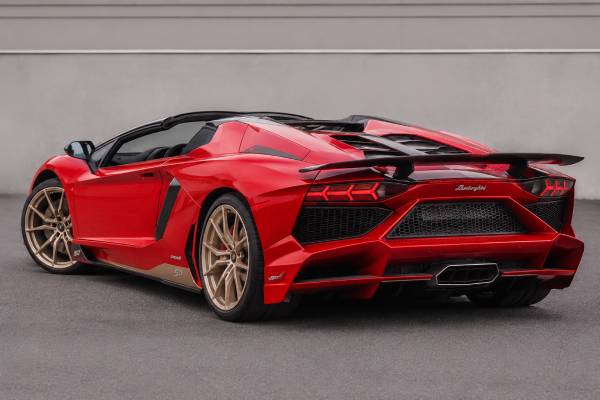
The Lamborghini Aventador LP 720-4 50° Anniversario Roadster is the open-top anniversary edition of Lamborghini’s early Aventador flagship. It celebrates the brand’s 50th year with a numbered limited run, sharper aero, unique trim, and a recalibrated 6.5-liter L539 naturally aspirated V12 rated at 720 metric horsepower. Based on the LB835 Aventador Roadster, it keeps the carbon-fiber monocoque, seven-speed ISR automated manual gearbox, Haldex-based all-wheel drive, pushrod suspension, and carbon-ceramic brakes that made the first-generation Aventador a major step beyond the Murciélago. Buyers still care because it combines three collector traits in one car: a naturally aspirated V12, open-air drama, and a real numbered anniversary identity. It is rarer than a standard LP 700-4 Roadster, less track-focused than an SV, and more historically specific than most Aventador special trims.
Table of Contents
- Why the 50° Anniversario Roadster Matters
- L539 V12, Chassis, and Key Specifications
- Production, Identification, and Factory Options
- Anniversary Design, Aero, and Open-Roof Engineering
- Road and Track Driving Character
- Maintenance, Known Issues, and Specialist Care
- Values, Inspection, and Buying Strategy
Why the 50° Anniversario Roadster Matters
The 50° Anniversario Roadster matters because it marks Lamborghini’s 50th anniversary with a numbered, open-top version of the first clean-sheet V12 Lamborghini of the modern era. It is not just a paint-and-badge edition; it adds a higher-output calibration, distinct bodywork, special interior trim, and a production story tied directly to the company’s 1963 founding.
The Aventador itself replaced the Murciélago and moved Lamborghini’s V12 flagship into a new engineering phase. The Murciélago still carried a long historical thread back to the older Lamborghini V12 family. The Aventador introduced the L539 engine, a carbon-fiber monocoque, pushrod suspension, a new ISR gearbox, and a much sharper design language under Filippo Perini’s design direction.
The LP 720-4 50° Anniversario arrived in 2013 during Lamborghini’s 50th anniversary celebrations. The coupe was shown first, while the Roadster gave collectors the same anniversary treatment with the removable-roof body. The name explains the basic formula:
- LP means longitudinal posteriore, or longitudinal rear-mid engine.
- 720 refers to 720 CV, the metric horsepower rating.
- 4 means all-wheel drive.
- 50° Anniversario marks the 50th anniversary edition.
- Roadster identifies the LB835 open-top body style.
The car sits in a useful middle ground for collectors. It is rarer and more visually distinct than a standard LP 700-4 Roadster, but it is less extreme than the later SV, SVJ, and Ultimae cars. That gives it a special appeal: it feels like the original Aventador idea at its most celebratory, before the later models added rear-wheel steering, more complex aero systems, and sharper track focus.
It is also one of the more important Aventadors for people who value factory originality. A standard LP 700-4 can be desirable in the right color and condition, but an Anniversario Roadster needs its numbered identity, correct trim, original parts, service history, recall record, and factory specification to hold full collector value. The more complete the paper trail, the more convincing the car becomes.
L539 V12, Chassis, and Key Specifications
The LP 720-4 50° Anniversario Roadster uses Lamborghini’s 6,498 cc L539 V12 with a factory calibration increase over the standard LP 700-4. The result is 720 CV, about 530 kW, and roughly 710 bhp, delivered through a single-clutch ISR gearbox and all-wheel drive.
| Category | Specification |
|---|---|
| Model | Lamborghini Aventador LP 720-4 50° Anniversario Roadster |
| Body / internal code | Two-seat Roadster / LB835 |
| Engine | L539 60-degree naturally aspirated V12 |
| Displacement | 6,498 cc / 6.5 liters |
| Bore x stroke | 95.0 mm x 76.4 mm |
| Fuel system | Multi-point fuel injection |
| Lubrication | Dry sump |
| Power | 720 CV at 8,250 rpm |
| Torque | 690 Nm / 509 lb-ft at 5,500 rpm |
| Transmission | 7-speed ISR automated manual |
| Drivetrain | All-wheel drive with Haldex-type front coupling and rear limited-slip differential |
| Chassis | Carbon-fiber monocoque with aluminum front and rear subframes |
| Suspension | Pushrod suspension with horizontally mounted spring and damper units |
| Brakes | Carbon-ceramic discs, approximately 400 mm front and 380 mm rear |
| Standard tire sizing basis | 255/35 ZR19 front and 335/30 ZR20 rear on early LP 700-4 Roadster specification |
| Official performance claim | 0–100 km/h in about 2.9 seconds; top speed about 350 km/h / 217 mph |
| Fuel capacity | 90 liters / 23.8 US gallons |
The L539 is central to the car’s value. It is not turbocharged, not hybrid-assisted, and not tuned for low-rpm smoothness above all else. It is a high-revving V12 that makes the Aventador feel mechanical, loud, and eventful. The anniversary output increase came from engine calibration rather than major hardware redesign, so the driving character stays close to the standard early Aventador, just with slightly more urgency at the top end.
The carbon monocoque also separates the Aventador from earlier V12 Lamborghinis. Instead of a traditional tubular or steel structure, the central passenger cell is carbon fiber, with aluminum subframes carrying crash structures, suspension, and drivetrain loads. That makes accident inspection especially important, because structural carbon repair is not the same as replacing a bolt-on panel.
The ISR gearbox is another defining feature. It is not a dual-clutch transmission. It is a robotized single-clutch manual designed for speed, compactness, and drama. In Strada it can feel abrupt at parking-lot speeds. In Sport and Corsa it becomes more aggressive and theatrical. Buyers expecting modern dual-clutch smoothness often misunderstand the car; enthusiasts who want a hard-edged V12 experience often value the ISR’s character.
Production, Identification, and Factory Options
The Anniversario Roadster is collectible because it was a limited, numbered anniversary model rather than a normal-series trim. Lamborghini built 100 Roadsters and 100 Coupes for the LP 720-4 50° Anniversario family, so correct identification is a major buying issue.
| Item | What to check | Why it matters |
|---|---|---|
| Numbered Anniversario identity | Confirm the edition number, plaque, and factory records | Separates a real Anniversario from a modified LP 700-4 Roadster |
| Body style | Verify LB835 Roadster identity by VIN and documentation | Roadster production is its own collector group |
| Power rating | Confirm LP 720-4 specification, not LP 700-4 | The 720 CV calibration is part of the edition |
| Exterior details | Check the anniversary bumpers, splitter, rear meshwork, diffuser, and matte-black areas | Replacement or modified bodywork can reduce authenticity |
| Interior trim | Look for correct leather, Q-Citura stitching, plaque, and color combination | Interior originality strongly affects collector confidence |
| Service and recall record | Review dealer history, specialist invoices, and VIN recall status | Deferred maintenance can erase any savings at purchase |
Giallo Maggio is the signature color most closely associated with the 50° Anniversario. The name means “May Yellow,” a reference to Lamborghini’s founding month. It has a vivid, sparkling finish and gives the car the strongest visual link to the anniversary launch specification. That said, not every Anniversario Roadster is yellow. Ad Personam personalization allowed special paints and interior combinations, and some cars were ordered in black, white, grey, orange, or other colors.
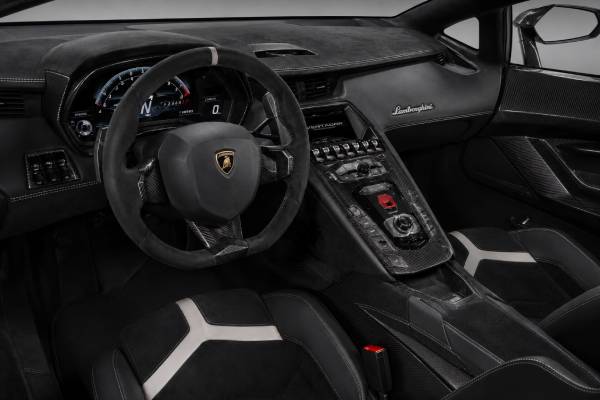
The interior is a major part of the edition. The Anniversario treatment included fine semi-aniline leather, special color pairings such as Nero Ade with Terra Emilia or yellow accents, and Q-Citura diamond-pattern stitching. A car that has lost these details through retrimming, replacement seats, aftermarket carbon, or heavy customization needs extra scrutiny.
Market-specific equipment can also differ. Some cars have front-axle lift, Sensonum audio, reversing camera, transparent engine cover details, special wheels, contrast stitching, carbon interior pieces, or other factory options. These options can improve usability and appeal, but the larger value issue is whether they are factory-installed, documented, and consistent with the original order.
Because these cars are now often advertised across borders, do not rely only on seller language. Ask for the original window sticker or order sheet, warranty and service booklet, dealer delivery documents, invoice copies, recall completion record, and clear photos of the plaques, VIN tags, roof panels, tool kit, charger, books, keys, and accessories.
Anniversary Design, Aero, and Open-Roof Engineering
The Anniversario Roadster looks more aggressive because its front and rear bodywork were changed for aero, cooling, and anniversary identity. The wider front openings, extended splitter, small side flaps, rear diffuser, and expanded meshwork are functional details, not just decoration.
The standard Aventador already had a dramatic wedge shape, scissor doors, deep side intakes, and a low cabin. The Anniversario adds sharper contrast. Matte-black lower areas visually pull the car closer to the ground, while the revised front end gives the nose more bite. The rear meshwork makes the engine bay look more exposed and also helps evacuate heat from the V12 compartment.
The Roadster roof is central to the experience. Instead of a folding soft top, the Aventador Roadster uses two removable carbon-fiber roof panels that can be stored in the front luggage area. This keeps the roof system light and simple, but it also means the owner must handle, store, and protect the panels. Damaged roof edges, worn seals, scratched panels, and missing storage bags matter more than they would on a normal convertible.
The open-roof structure required reinforcement compared with the coupe. The Aventador’s carbon monocoque gives the Roadster a strong central structure, but the open body still has a different noise, vibration, and airflow character. It feels more exposed, more theatrical, and more engine-led. The V12 sits just behind the cabin, so roof-off driving turns induction sound, mechanical resonance, and exhaust noise into a much bigger part of the car’s personality.
Cooling is also important. A mid-mounted V12 creates major heat behind the cabin, especially in traffic or hot climates. The Anniversario rear bodywork, larger openings, and mesh details help, but they do not remove the need for correct cooling system maintenance, clean radiators, intact undertrays, and factory-quality heat shielding.
Inside, the cockpit is more fighter-jet than grand tourer. The start button sits under a red flip cover, the digital instruments put the tachometer front and center, and the paddles are fixed to the steering column. The ergonomics are not perfect for every driver, but the layout makes the car feel special before it moves.
Road and Track Driving Character
The Anniversario Roadster feels fast, loud, physical, and slightly raw by modern supercar standards. Its appeal comes from the combination of a naturally aspirated V12, single-clutch shifts, all-wheel-drive traction, and open-air exposure.
At low speed, it can feel wide and tense. Visibility to the front is better than the shape suggests, but rear visibility is limited, the nose is vulnerable, and the car’s width requires care in city streets, parking garages, and older roads. A front-axle lift system is a very useful option, especially for steep driveways and speed bumps.
The engine defines the car. It pulls hard from mid-range, but the real character arrives as revs build. The throttle response is immediate compared with turbocharged supercars, and the final rush toward the upper rev range gives the car its drama. The sound is hard-edged and metallic, especially with the roof removed. Modified exhausts can make it louder, but they can also hurt value, increase heat risk, trigger faults, and create inspection concerns.
The ISR gearbox is the part most likely to divide drivers. In automatic mode, especially in traffic, it can feel clumsy. In manual mode, with deliberate throttle use, it makes more sense. Sport and Corsa modes deliver harder shifts that suit fast road driving or track use, but they are not smooth in the dual-clutch sense. A buyer should test the car long enough to know whether they enjoy that behavior.
Steering is direct and confidence-building once the car is moving. The early Aventador does not have the later Aventador S rear-wheel steering, so it feels large in tight corners. On faster roads, that same stability becomes part of its appeal. It does not dart around like a smaller Huracán; it covers ground with big-V12 confidence.
Braking performance is strong, but carbon-ceramic brakes need heat and condition awareness. On a road drive they may feel firm and slightly numb until worked. On track they are powerful, but repeated heavy use can be expensive. The same applies to tires. Old tires can make the car feel nervous, and cold tires can reduce traction sharply.
As a track car, the Anniversario Roadster is capable but not the most rational Aventador choice. It is valuable, rare, open-topped, and expensive to consume. For occasional high-speed events it is thrilling. For frequent circuit use, an SV, SVJ, or a less collectible car may make more sense.
Maintenance, Known Issues, and Specialist Care
A good Anniversario Roadster can be dependable for an exotic V12 Lamborghini, but only when serviced correctly and used with mechanical sympathy. The major risks are not ordinary “used car” problems; they are clutch wear, brake cost, low-voltage faults, heat damage, accident repair quality, and missing edition-specific parts.
Mechanical areas that need close attention
The ISR clutch is one of the first inspection points. A specialist should read clutch wear data, check adaptation values, confirm smooth engagement, and inspect for rough takeoff, delayed gear engagement, or warning lights. Crawling in traffic, reversing uphill, and using the throttle to hold the car on inclines can shorten clutch life.
The V12 itself is strong when maintained, but it is expensive to neglect. Dry-sump oil level must be checked correctly, oil changes should follow official guidance, and any oil leaks, misfires, coolant odors, or heat-related warning lights deserve attention. Coil packs, spark plugs, belts, tensioners, sensors, and cooling-system parts are not cheap when labor access is difficult.
Carbon-ceramic brakes need more than a quick glance. Inspect rotor condition, chips, cracks, pad thickness, caliper condition, brake fluid age, and evidence of track overheating. Replacement costs can be severe enough to change the economics of a purchase.
Suspension and lift systems also matter. Listen for knocking over sharp bumps, check dampers and pushrod hardware, and inspect the front lift for slow operation or leaks. Underbody scrapes are common on Aventadors, but heavy damage to the splitter, floor panels, radiator ducts, or mounting points is a warning sign.
Electrical, software, and recall checks
Low battery voltage can create misleading faults across the Aventador’s control modules. A healthy battery, correct charger use, and clean fault-code history are important. Check the instrument cluster, infotainment, parking sensors, backup camera, TPMS, lift system controls, door switches, roof-related alerts, and HVAC performance.
Two Aventador recall areas are especially relevant to early cars. One concerns the EVAP system and fuel vapor risk under certain conditions, including overfilled fuel tanks and specific driving situations. Another concerns possible engine stalling at low rpm during certain automatic downshift conditions, addressed with updated engine software. A buyer should verify recall completion by VIN, not by model-year assumption.
Aftermarket exhausts deserve caution. Many Aventadors have them, and some sound spectacular, but they can increase heat, affect emissions compliance, complicate recall work, and reduce originality. For a numbered Anniversario Roadster, a factory exhaust included with the sale helps protect future value even if an aftermarket system is fitted.
Body, roof, and originality risks
The carbon monocoque makes accident history a major issue. A clean title is not enough. A proper inspection should check paint depth, panel alignment, front and rear subframe areas, suspension pickup points, undertrays, door fit, scissor-door hinge behavior, and carbon structure documentation if any repair has been done.
The roof panels should fit cleanly, latch securely, and store correctly. Wind noise, water leaks, missing storage bags, chipped panel edges, and damaged seals should be priced into the deal. Edition-specific trim, badges, interior stitching, and exterior aero parts are much harder to source than normal wear parts.
Values, Inspection, and Buying Strategy
The Anniversario Roadster sits above the standard LP 700-4 Roadster in collectability, but below the most expensive late Aventador halo cars such as SVJ Roadster and Ultimae Roadster. Public market data is thin because only 100 Roadsters were built, so mileage, specification, documentation, and seller quality can move the price sharply.
Recent public data has shown low-mile examples trading in the low-to-mid $400,000 range, while dealer asking prices and exceptional specifications can sit higher. Treat any price guide as a starting point, not a final answer. A black, modified, higher-mile car and a Giallo Maggio, one-owner, fully documented, low-mile car are not the same asset.
The strongest examples usually have:
- Original numbered Anniversario identity clearly documented
- Factory paint and interior specification confirmed by records
- Low but believable mileage with regular servicing
- Complete books, keys, charger, roof bags, tools, and accessories
- Completed recalls and clean diagnostic scan
- Original exhaust, wheels, trim, and aero parts
- No accident history or high-quality documentation for any repair
- Recent tires, fluids, brake inspection, and clutch data
- A known Lamborghini dealer or specialist service history
Cars to approach carefully include examples with missing plaques, unclear edition identity, heavy aftermarket carbon kits, undocumented tunes, accident damage, incomplete service history, old tires, worn carbon ceramics, roof fit issues, or sellers who cannot provide proper records.
A pre-purchase inspection should be done by a Lamborghini dealer or a specialist who knows early Aventadors. A generic exotic inspection is not enough. The inspection should include a diagnostic scan, clutch data, lift system test, roof test, underbody inspection on a lift, paint-depth readings, brake measurements, tire age check, recall verification, and a road test from cold.
The long-term collectability case is strong but selective. The car has the right ingredients: naturally aspirated V12, open roof, numbered anniversary production, carbon chassis, and a direct link to Lamborghini’s 50th anniversary. The risk is that the Aventador market is crowded with many special versions. The Anniversario Roadster’s value depends on buyers continuing to prize early-Aventador purity and documented rarity. The best cars should remain desirable; neglected or heavily modified examples will likely lag behind.
References
- Lamborghini Aventador LP 720-4 50° Anniversario 2013 (Model History and Specifications)
- Lamborghini Aventador LP720-4 50th Anniversary Roadster Market – CLASSIC.COM 2026 (Market Data)
- Part 573 Safety Recall Report 17V-073 2017 (Recall Database)
- Part 573 Safety Recall Report 18V-391 2018 (Recall Database)
- Recall Campaign 2026 (Manufacturer Recall Lookup)
Disclaimer
This article is for informational purposes only and is not a substitute for professional diagnosis, repair, inspection, or valuation. Specifications, torque values, service intervals, recall applicability, software versions, and procedures can vary by VIN, market, equipment, and later factory updates. Always verify details against the official service documentation, factory records, and a qualified Lamborghini specialist before buying, servicing, modifying, or repairing the vehicle.
Please share this article on Facebook, X/Twitter, or your preferred platform if it helped you research the Lamborghini Aventador LP 720-4 50° Anniversario Roadster and want to support our work.