
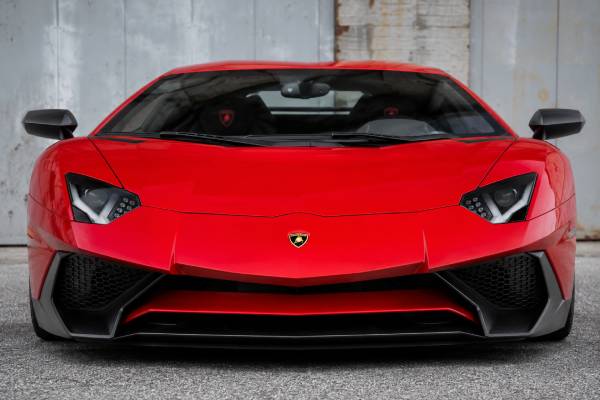
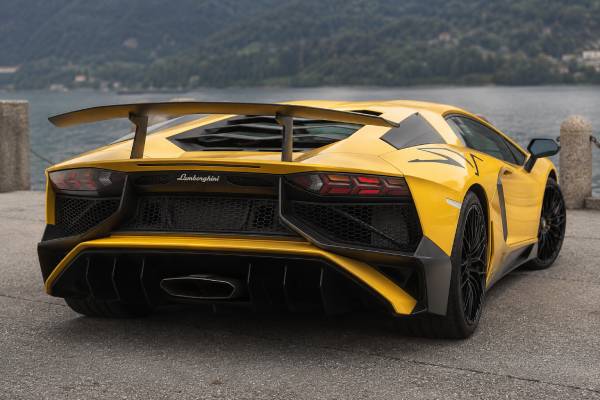
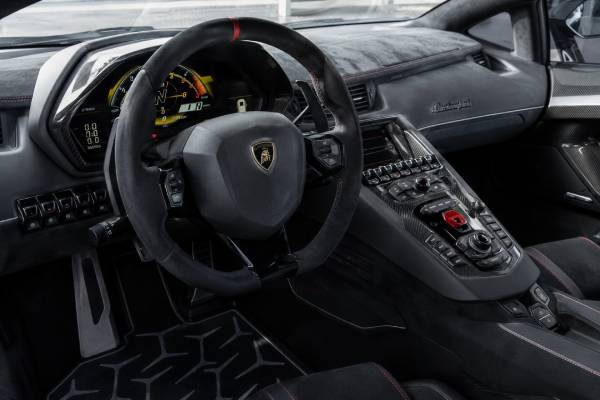
The Lamborghini Aventador LP 750-4 Superveloce is the sharper, lighter, louder, and more collectible version of the original Aventador. Built around Lamborghini’s L539 naturally aspirated 6.5-liter V12, it raised output to 750 PS, cut weight, added more aggressive aerodynamics, and turned the Aventador from a dramatic flagship into a more focused road-and-track supercar. The coupe arrived in 2015, followed by the Roadster, with production limited to 600 coupes and 500 roadsters.
The SV matters because it sits at a sweet point in modern Lamborghini history. It has the carbon-fiber monocoque and electronic systems expected of a modern V12 Lamborghini, but it predates the rear-wheel steering, active aero, and heavier refinement of later Aventador versions. For buyers and collectors, that makes originality, service history, clutch condition, carbon-ceramic brake wear, factory specification, and provenance especially important.
Table of Contents
- Why the Aventador SV Still Matters
- L539 V12, Chassis, and Core Specs
- Coupe, Roadster, Production, and Options
- Carbon Aero and Superveloce Details
- How the LP 750-4 SV Drives
- Ownership, Maintenance, and Known Risks
- Market Values and Buyer Checks
Why the Aventador SV Still Matters
The Aventador SV is important because it distilled the first-generation Aventador into a lighter, more aggressive, limited-production V12 flagship. It kept the basic Aventador formula—carbon tub, mid-mounted V12, all-wheel drive, scissor doors, and single-clutch ISR gearbox—but removed some comfort weight and added more motorsport-style intent.
Lamborghini launched the Aventador LP 700-4 as the Murciélago replacement and as a major technical step for the brand. The Aventador’s carbon-fiber monocoque made it stiffer and more modern than the steel-tube-framed Lamborghinis that came before it. The L539 V12 was also significant because it was a clean-sheet Lamborghini V12, not an evolution of the old Bizzarrini-derived engine lineage.
The Superveloce version arrived when buyers still expected Lamborghini’s flagship to be outrageous, naturally aspirated, and physically dramatic. Instead of using turbocharging or hybrid assistance, Lamborghini made the SV faster through higher engine output, lower mass, sharper calibration, bigger aero devices, and a more stripped-back cabin.
“LP 750-4” explains the layout. “LP” refers to longitudinale posteriore, meaning a longitudinal rear-mid-mounted engine. “750” refers to the metric horsepower rating, and “4” means all-wheel drive. “Superveloce” means “super fast,” but in Lamborghini history it means more than raw speed. The SV badge has been used for more intense versions of models such as the Miura, Diablo, Murciélago, and Aventador.
The Aventador SV also occupies an interesting place between the original LP 700-4 and the later Aventador SVJ. The SVJ is faster and more technically advanced, with ALA active aerodynamics and rear-wheel steering, but the SV is simpler in character. It has fixed aero, a rawer single-clutch shift feel, and a more direct connection to the early Aventador platform.
For collectors, that position matters. The SV is not the last Aventador, nor the most extreme Aventador by lap-time logic, but it is one of the clearest expressions of the naturally aspirated V12 Lamborghini before hybridization changed the segment. It is rare enough to be collectible, modern enough to use, and theatrical enough to feel special even beside newer hypercars.
Its reputation today rests on five things:
- A naturally aspirated 6.5-liter V12 that revs to very high engine speeds.
- Limited production compared with regular Aventador models.
- A more focused setup without losing the flagship Lamborghini drama.
- A fixed-wing, carbon-heavy design that visually separates it from standard cars.
- Strong long-term appeal among buyers who want a non-hybrid V12 Lamborghini with modern usability.
The SV is also a car where condition and originality matter more than headline mileage alone. Many cars were bought as collectibles, but some were tracked, wrapped, tuned, or cosmetically altered. A low-mile example with poor service records is less attractive than a well-documented car maintained by a respected Lamborghini specialist or dealer.
L539 V12, Chassis, and Core Specs
The Aventador SV’s main technical story is its L539 V12, carbon-fiber structure, all-wheel-drive system, and weight reduction. The car is fast because every major system supports the same goal: more response, more aero stability, less mass, and stronger braking.
Key specifications
| Item | Specification |
|---|---|
| Model | Lamborghini Aventador LP 750-4 Superveloce |
| Internal model reference | LB834 |
| Production era | 2015–2017 |
| Engine code | L539 |
| Engine type | 60-degree naturally aspirated V12 |
| Displacement | 6,498 cc |
| Bore x stroke | 95.0 mm x 76.4 mm |
| Fuel system | Multi-point fuel injection |
| Maximum power | 750 PS / 552 kW |
| Maximum torque | 690 Nm / 509 lb-ft |
| Transmission | 7-speed ISR automated manual |
| Drivetrain | All-wheel drive |
| Structure | Carbon-fiber monocoque with aluminum front and rear frames |
| Suspension | Pushrod suspension with magnetorheological damping |
| Steering | Lamborghini Dynamic Steering |
| Brakes | Carbon-ceramic discs |
| Front tires | 255/30 ZR20 |
| Rear tires | 355/25 ZR21 |
| Wheelbase | 2,700 mm |
| Width | 2,030 mm, excluding mirrors |
| Height | 1,136 mm |
| Fuel capacity | 90 liters |
Performance figures
| Figure | Coupe | Roadster |
|---|---|---|
| 0–100 km/h | 2.8 seconds | 2.9 seconds |
| Top speed | Over 350 km/h / 217 mph | Over 350 km/h / 217 mph |
| Dry weight | 1,525 kg | About 1,575 kg |
| Power-to-weight | About 2.03 kg per PS | Slightly higher due to roof structure weight |
The L539 V12 is the centerpiece. It is not a turbocharged engine that hides effort behind boost. It builds power through displacement, revs, throttle area, and intake and exhaust tuning. Peak torque arrives high enough to reward revs, but the engine is large enough to pull hard from lower speeds. That mix gives the SV its special character: it is brutally fast, yet still feels mechanical and progressive.
The ISR gearbox is a key part of the car’s personality. It is a single-clutch automated manual, not a dual-clutch transmission. In gentle driving it can feel abrupt compared with modern dual-clutch cars, but in Sport or Corsa it delivers the hard, physical shift event many owners associate with the Aventador. For buyers, this matters because clutch wear, calibration, software condition, and how the car has been driven all affect ownership risk.
The chassis is built around a carbon-fiber monocoque. Aluminum subframes carry crash structures, suspension mounts, and powertrain hardware. This layout gives the Aventador a very stiff core and helps explain why even the open-top Roadster retains serious structural strength, though the coupe remains the purer lightweight version.
The brakes are carbon-ceramic, which suit the car’s speed and weight. They offer strong fade resistance and long life when used correctly, but replacement costs are high. Buyers should not treat shiny carbon rotors as automatically healthy. Thickness, surface condition, heat marks, pad life, and service records need proper inspection.
Coupe, Roadster, Production, and Options
The Aventador SV was built in limited numbers, and the difference between coupe and Roadster has a real effect on value, driving feel, and collectability. The coupe is the cleaner track-focused version; the Roadster adds open-air V12 drama and lower production volume.
Lamborghini limited the Aventador SV coupe to 600 examples. The Roadster followed with a 500-unit production run and used a removable two-piece carbon-fiber hardtop. Both versions share the same basic V12, ISR gearbox, all-wheel-drive layout, carbon tub, pushrod suspension, and Superveloce design package.
The coupe generally appeals to buyers who want the most focused SV. It is lighter, visually pure, and closer to the car Lamborghini presented as the extreme Aventador of its moment. The Roadster appeals to buyers who want rarity and the full open-air sound of the L539 V12. On the market, Roadsters often command a premium because of lower production and the emotional appeal of a roof-off V12 flagship.
Version differences that matter
| Area | SV Coupe | SV Roadster |
|---|---|---|
| Production | 600 units | 500 units |
| Body style | Fixed-roof coupe | Open-top roadster with removable two-piece carbon roof |
| Character | Sharper, lighter, more focused | More theatrical, rarer, slightly heavier |
| Buyer appeal | Track-focused collectors and purists | Collectors wanting rarity and open-air V12 sound |
| Inspection focus | Aero, carbon panels, splitter, wing, track-use signs | Roof panels, seals, storage bags, wind noise, water sealing |
Factory options and Ad Personam personalization are important because many SVs were highly specified. Lamborghini buyers could choose special paint, contrast stitching, carbon-fiber exterior pieces, wheel finishes, brake caliper colors, interior materials, branding details, audio upgrades, and other personalization items.
Desirable specifications vary by market, but several themes usually help value:
- Original matte or special-order paint with documentation.
- Visible carbon-fiber exterior details in excellent condition.
- Carbon-fiber bucket seats in clean, original trim.
- Sensonum audio on cars bought for road use.
- Front axle lift, because the front splitter is vulnerable.
- Transparent engine cover or carbon engine-bay details, where fitted.
- Complete books, tools, battery tender, roof bags for Roadsters, and factory accessories.
- Lamborghini service records from new.
Color matters more on an Aventador SV than on many ordinary cars. Loud colors suit the model’s visual character, but rare factory colors can outperform common resale-safe shades if the documentation proves originality. Matte paint can be desirable, but it also raises inspection risk because repairs are harder to blend invisibly.
The most valuable cars tend to have low mileage, original paint, no accident history, strong servicing, high factory specification, and a clear ownership trail. Modified exhausts, aftermarket wheels, ECU tuning, missing stock parts, non-factory carbon additions, and poor paint protection film installation can reduce confidence unless fully reversible and documented.
Authentication should include the VIN, build records, factory options, paint code, service invoices, recall completion, and visual confirmation that the car has not been converted cosmetically to resemble another variant. A Lamborghini dealer or specialist can help confirm whether the car’s specification matches factory records.
Carbon Aero and Superveloce Details
The SV looks extreme because its design changes serve cooling, downforce, weight reduction, and visual separation from the LP 700-4. The large rear wing, deeper front splitter, aggressive diffuser, carbon details, and stripped-back cabin are not just decoration; they define the Superveloce identity.
The Aventador shape was already dramatic, with sharp surfacing, scissor doors, huge side intakes, a low roofline, and a cab-forward stance. The SV made that design more purposeful. The front fascia manages airflow more aggressively, the side treatment emphasizes cooling and width, and the rear is dominated by the wing, diffuser, high-mounted exhaust outlets, and exposed mechanical heat.
Carbon fiber appears throughout the car. The core structure is a carbon monocoque, while many exterior and interior details use carbon-fiber-reinforced plastic or visible carbon trim. Lamborghini also used lighter cabin materials and less sound insulation to cut mass and sharpen the experience.
The fixed rear wing is one of the car’s defining features. Unlike later active-aero Lamborghinis, the SV relies on fixed aerodynamic hardware. That makes it less complex than the SVJ, but it also means body alignment and carbon condition are easier to judge visually. Buyers should check the wing mounts, clear coat, weave condition, stone damage, and evidence of removal or repainting.
Cooling is another major part of the design. The Aventador SV has to manage the heat of a large mid-mounted V12, transmission, all-wheel-drive hardware, brakes, and exhaust system. The side intakes, rear venting, and engine cover area all contribute to heat evacuation. Heat is part of normal Aventador life, but excessive heat damage, brittle plastics, cooked wiring, or discolored trim can reveal neglect or repeated hard use without proper cooldown.
The cabin is more purposeful than luxurious. Alcantara, carbon trim, lightweight seat options, contrast stitching, and SV graphics create a race-inspired feel. It is not minimalist in the way a track special from a smaller brand might be, because it still has Lamborghini theater, digital instruments, climate control, and road equipment. But compared with a regular Aventador, it feels more serious and less padded.
The doors are part of the experience but also part of the inspection. Scissor doors are iconic Lamborghini features, yet hinges, struts, seals, alignment, and paint edges should be checked carefully. A hard life, poor repair, or improper adjustment can show up as uneven gaps, wind noise, water leaks, or rubbing marks.
The exhaust layout gives the SV much of its identity. The V12 sound is high-pitched, metallic, and urgent, especially near the top of the rev range. Aftermarket exhausts are common, but they can create warranty, emissions, heat, drone, and resale concerns. For a collectible SV, the safest setup is usually the original exhaust or a fully reversible upgrade with all factory parts retained.
How the LP 750-4 SV Drives
The Aventador SV feels fast, physical, loud, wide, and dramatic rather than polished and effortless. It is not the smoothest modern supercar, but that is exactly why many enthusiasts prefer it to newer, quieter, more filtered machines.
The first thing drivers notice is the engine. The L539 V12 has immediate throttle response compared with turbocharged engines, and it becomes more intense as revs rise. At low speed it feels large and muscular. At high rpm it feels angry and expensive, with the intake and exhaust building into the type of sound that has become rare in modern emissions-controlled performance cars.
Acceleration is violent when the car is driven properly. The all-wheel-drive system helps put power down, and launch control can produce repeatable starts when conditions are right. Tire age, surface temperature, road condition, and alignment all matter. An SV on old or cold tires will not feel like the factory numbers suggest.
The ISR gearbox shapes the whole experience. In automatic mode around town, it can feel clumsy because it is fundamentally an automated manual. Manual shifting with the paddles suits the car better. In Corsa, shifts are fast and forceful, with a mechanical punch that a dual-clutch car would smooth away. Some drivers love that. Others may find it tiring in traffic.
Steering is quick, and Lamborghini Dynamic Steering changes the steering ratio according to speed and mode. The SV does not have the rear-wheel steering later used on the Aventador S and SVJ, so it feels more like an early Aventador: stable, wide, and serious. It rewards decisive inputs but never feels small. On narrow roads, the car’s width and limited rear visibility require respect.
The suspension is firm but not crude for a car of this type. Magnetorheological dampers help the SV manage body control without becoming completely unusable on public roads. Still, broken pavement, steep driveways, and urban speed humps demand care. A working front lift system is more than a convenience; it protects expensive carbon and painted surfaces.
Braking performance is very strong when the carbon-ceramic system is warm and healthy. Pedal feel can be different from iron brakes, especially when cold, but the system suits repeated high-speed stops better than a conventional steel setup. Track use should be followed by careful inspection because carbon rotors and pads can look acceptable to an untrained eye while still being near expensive replacement thresholds.
On track, the SV is more stable than delicate. It has huge power, high-speed confidence, serious braking, and strong traction, but it is still a heavy, wide V12 supercar. It demands space and smooth inputs. The car is thrilling on a circuit, yet track use increases wear on tires, brakes, clutch, fluids, suspension joints, underbody panels, and aero pieces.
On the road, the SV is at its best on open routes where the engine can breathe and the chassis can settle. It is usable in town, but not relaxing. Heat, noise, attention, visibility, ride height, and gearbox behavior all remind the driver that this is a limited-production V12 Lamborghini, not a grand tourer in a sharp suit.
Ownership, Maintenance, and Known Risks
The Aventador SV can be reliable when maintained correctly, but ownership risk is high because every major system is exotic, expensive, and sensitive to neglect. The right car is one with records, careful use, recall completion, healthy consumables, and inspection by someone who knows Aventadors.
Annual servicing is the minimum mindset even for low-mile cars. Mileage alone does not protect fluids, seals, tires, batteries, hydraulic systems, or electronic modules. Cars that sit for long periods can develop flat-spotted tires, weak batteries, sticky actuators, aged fluids, and warning lights.
The ISR gearbox and clutch deserve special attention. Clutch life varies widely because use pattern matters more than odometer reading. Stop-start traffic, repeated reversing on inclines, aggressive launches, and poor low-speed technique can shorten clutch life. A proper diagnostic scan can report clutch wear data and fault history, which is far more useful than guessing from mileage.
Carbon-ceramic brakes are another major cost area. They can last a long time on road-driven cars, but track use changes the equation. Inspection should include rotor condition, pad thickness, surface damage, heat checking, caliper condition, and brake-fluid history. Replacement can be a major five-figure event depending on market and parts pricing.
Tires should be judged by age as well as tread depth. The SV uses very wide, high-performance tires, and old rubber can make the car feel nervous, noisy, and far less capable. A collector car on original or very old tires may be visually appealing for mileage claims, but it is not ready for hard driving.
The front lift system, dampers, and suspension hardware should be checked for leaks, faults, knocks, and calibration issues. The car is low, wide, and often driven into steep entrances or transport ramps. Scrapes under the front bumper and splitter are common; cracks, broken mounts, or poor carbon repairs are more serious.
Electrical health matters. Aventadors rely on many control modules, and weak batteries can create confusing fault messages. A car that has lived on a proper battery tender is preferable to one repeatedly jump-started or left discharged. Infotainment glitches, warning lights, lift errors, suspension faults, and transmission warnings should be diagnosed before purchase, not dismissed as “normal Lamborghini behavior.”
Known recall and campaign areas should be verified by VIN. Important Aventador-related issues include wheel-centering bolt concerns on certain 2015–2016 SV coupe and Roadster vehicles, engine software updates for stalling risk on some Aventadors, and evaporative fuel-system recalls affecting certain Aventador years. Completion should be confirmed through dealer records, not assumed.
Pre-purchase inspection priorities
| Area | What to check | Why it matters |
|---|---|---|
| Clutch and ISR gearbox | Diagnostic wear reading, shift quality, fault history | Replacement and calibration are expensive |
| Carbon-ceramic brakes | Rotor condition, pad life, heat damage, service history | Track use can create major hidden cost |
| Carbon bodywork | Splitter, diffuser, wing, clear coat, repair evidence | Carbon repairs affect value and originality |
| Paint and film | Factory paint, respray signs, poor PPF edges, matte finish repairs | Original finish strongly affects collectability |
| Suspension and lift | Leaks, warning lights, lift speed, damper condition | Low ride height makes damage common |
| Cooling and heat areas | Fans, hoses, wiring, exhaust heat shielding, engine-bay trim | Mid-engine V12 heat exposes neglect |
| Documentation | Books, invoices, options, recalls, ownership trail | Paperwork separates collector cars from risky cars |
Restoration is not the right word for most SVs yet, but corrective work can still become very costly. Returning a modified SV to factory condition may require original exhaust parts, factory wheels, correct trim, stock software, original carbon pieces, and paint correction. The rarer the color or option, the more important it is to preserve original parts.
Market Values and Buyer Checks
The Aventador SV is a collectible modern Lamborghini, not just a used supercar, so the best purchase is the most original, documented, and mechanically healthy example you can justify. A cheap SV with stories can quickly become more expensive than a premium car with clean history.
As of the 2026 market, public sales and listings place many SV coupes broadly in the low-to-mid $400,000 range for normal examples, with stronger cars asking or selling higher depending on mileage, color, options, and condition. Roadsters usually sit above coupes because of lower production and open-top demand, with many quality examples trading or asking in the mid-$500,000s or higher. Exceptional ultra-low-mile, rare-color, or highly specified cars can sit well above ordinary benchmarks.
Value is driven by more than mileage. The strongest cars usually have:
- Original paint or fully documented factory paintwork.
- No accident history or structural repair.
- Complete Lamborghini service history.
- Verified recall and campaign completion.
- Low but believable mileage.
- Strong factory specification.
- Original wheels, exhaust, aero, interior trim, and manuals.
- Clean diagnostic report.
- No unresolved warning lights.
- Sensible ownership history and proper storage.
Cars to approach carefully include examples with missing service records, repeated auction appearances, vague “recent service” claims, accident damage, non-factory paint without explanation, heavy track use, aftermarket tuning, removed catalytic converters, poor carbon repairs, roof issues on Roadsters, or mismatched interior and exterior specification.
A proper buying process should be methodical:
- Confirm the VIN, model, body style, market, and original factory specification.
- Review service invoices from new, not just stamps or verbal claims.
- Check open recalls and confirm completed campaigns through a Lamborghini dealer.
- Commission a Lamborghini-specialist inspection with diagnostic scan and clutch data.
- Inspect paint, carbon fiber, underside, splitter, diffuser, wing, and wheel condition.
- Verify tire date codes, brake life, battery health, suspension lift operation, and road-test behavior.
- Confirm all original parts, accessories, keys, books, tools, battery tender, and Roadster roof equipment are present.
For collectors, originality should usually beat novelty. A loud aftermarket exhaust may sound exciting, but a complete original exhaust stored with the car protects future value. A wrap may protect paint, but it can also hide damage or poor paintwork. A low odometer reading may look attractive, but it should be supported by service dates, tire dates, inspection condition, and diagnostic history.
The Roadster needs extra checking. Roof panels should fit correctly, seals should be healthy, storage bags should be present, and there should be no signs of water entry. Wind noise, uneven panel gaps, scratched roof edges, and missing roof accessories can become negotiation points.
The coupe needs extra attention around its aero pieces. Front splitters, lower bumper edges, side skirts, rear diffuser fins, wing mounts, and underbody panels often show how the car was used. Minor underside scraping is common. Cracked carbon, broken mounts, uneven gaps, or evidence of a hard curb strike is more serious.
Long-term collectability looks strong because the SV combines low production, V12 character, naturally aspirated response, aggressive design, and an important place in the Aventador line. It is not the rarest modern Lamborghini, and it is not immune to market cycles, but it has the ingredients collectors usually want: a special badge, a memorable engine, limited numbers, visual drama, and a clear identity within the model range.
The best ownership strategy is simple: buy the right car, keep it original, service it on time, document everything, use correct parts, and avoid irreversible modifications. An Aventador SV can be enjoyed, but the market rewards cars that have been enjoyed carefully.
References
- Lamborghini Aventador SuperVeloce Coupé – Pictures, Videos 2015 (Manufacturer Technical Specifications)
- Lamborghini Aventador SuperVeloce Roadster – Pictures, Videos 2015 (Manufacturer Technical Specifications)
- Lamborghini Aventador: 10 innovations in 10 years 2021 (Manufacturer Publication)
- Customer notification 2018 (Recall Database)
- Lamborghini Aventador LP750-4 SV Market – CLASSIC.COM 2026 (Market Data)
Disclaimer
This article is for informational purposes only and is not a substitute for professional diagnosis, repair, valuation, or inspection. Specifications, torque values, service intervals, software updates, recall applicability, and repair procedures can vary by VIN, market, model year, equipment, and service history. Always verify details against official Lamborghini service documentation and consult a qualified Lamborghini dealer or specialist before buying, servicing, or repairing an Aventador SV.
If you found this guide useful, please consider sharing it on Facebook, X/Twitter, or your preferred enthusiast community to support our work.