


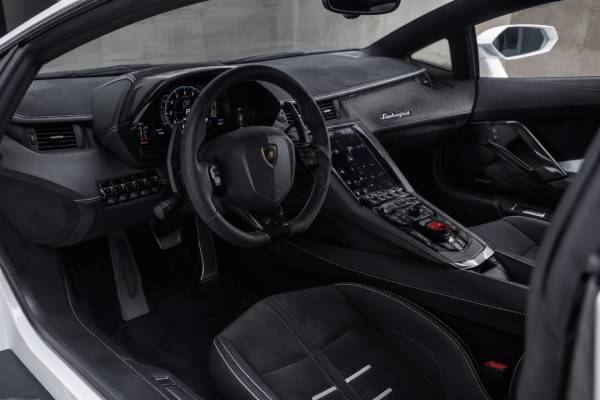
The Lamborghini Aventador S Japan Limited Edition is best understood as a rare Japan-market special-edition expression of the Aventador S, using the same LB834 carbon-monocoque coupé base and L539 6.5-liter naturally aspirated V12 as the standard LP 740-4 S. For the 2021 model year, it sat near the end of the Aventador era, after the original LP 700-4 and before the final LP 780-4 Ultimae closed the line. Its importance is not a different engine tune or a separate chassis specification; it is the combination of late-production Aventador S hardware, Ad Personam-level visual treatment, Japanese cultural context, and very limited visibility in the market. Buyers care about originality, documentation, mileage, and paint/interior provenance. Enthusiasts care because it keeps the naturally aspirated V12, single-clutch ISR gearbox, all-wheel drive, carbon structure, rear-wheel steering, and dramatic Lamborghini character in one of the Aventador’s most collectible regional forms.
Table of Contents
- Where the Japan Edition Fits
- L539 V12, Chassis, and Key Specs
- Production, Options, and Authenticity
- Yamamoto Design and Aventador Engineering
- Road Character, Performance, and Usability
- Maintenance, Reliability, and Ownership Risks
- Market Value and Buyer Checklist
Where the Japan Edition Fits
The Japan Limited Edition fits into the Aventador story as a late, collector-focused Aventador S rather than a new mechanical variant. Its value comes from the standard S model’s major dynamic upgrades plus Japan-specific presentation, limited-edition identity, and the cultural pull of Lamborghini’s Tokyo presence.
The Aventador itself replaced the Murciélago as Lamborghini’s V12 flagship and brought a major technical reset. The LB834 coupé used a carbon-fiber monocoque instead of a traditional tubular frame, a new L539 V12 instead of the older Bizzarrini-derived V12 family, and a seven-speed ISR automated manual gearbox designed for compact packaging and very fast shift action. It was loud, wide, low, theatrical, and deliberately less polished than some rivals.
The Aventador S, introduced as the major mid-cycle evolution, made the car more complete. Lamborghini added rear-wheel steering, revised the active suspension, recalibrated the all-wheel-drive system, improved aerodynamics, and raised the V12 output to 740 CV. The “S” name also connected the car to earlier Lamborghini S models such as the Miura S and Countach S, where the letter signaled a sharper, more developed version of an existing icon.
For the Japan Limited Edition context, the key point is that the car kept the Aventador S mechanical package. That means buyers should not expect SVJ-level ALA active aerodynamics, Ultimae power, or a lightweight track specification. They should expect an Aventador S with rare visual identity and strong provenance potential.
Japan matters in Lamborghini history because the brand has long had a passionate collector base there. Japanese customers have often supported bold colors, special-order interiors, low-mileage preservation, and carefully documented ownership. The Tokyo Ad Personam setting also gave Lamborghini a place to connect cars, fashion, design, and private-client customization.
The 2021 timing adds another layer. By then, the Aventador platform was near the end of its life. The Ultimae would become the final Aventador, while the Revuelto would later move Lamborghini’s V12 flagship into plug-in hybrid territory. That makes any late naturally aspirated Aventador S special edition more interesting to collectors who prefer the pre-hybrid character: a large-displacement V12, no turbochargers, no electric assist, a raw single-clutch gearbox, and a cabin shaped around drama rather than quiet luxury.
The car’s long-term significance depends on three things: how many genuine examples exist, how well each car is documented, and whether the special-edition finish remains original. A standard Aventador S can be judged mostly on mileage, options, service history, and condition. A Japan Limited Edition needs a deeper paper trail because special-edition identity is central to its value.
L539 V12, Chassis, and Key Specs
The important technical takeaway is simple: the Japan Limited Edition uses the Aventador S LP 740-4 formula, with a naturally aspirated 6,498 cc V12, all-wheel drive, rear-wheel steering, carbon-ceramic brakes, and a carbon monocoque. The edition changes the car’s presentation, not the basic performance hardware.
| Area | Specification |
|---|---|
| Model base | Aventador S LP 740-4 coupé |
| Internal model code | LB834 coupé |
| Engine code | L539 |
| Engine layout | Mid-mounted naturally aspirated 60-degree V12 |
| Displacement | 6,498 cc |
| Maximum output | 740 CV / 544 kW at 8,400 rpm |
| Maximum torque | 690 Nm at 5,500 rpm |
| Transmission | 7-speed ISR automated single-clutch manual |
| Drivetrain | Electronically controlled all-wheel drive |
| 0–100 km/h | 2.9 seconds |
| Top speed | 350 km/h |
| Structure | Carbon-fiber monocoque with aluminum front and rear frames |
| Suspension | Pushrod suspension with magnetorheological dampers |
| Steering systems | Lamborghini Dynamic Steering and Lamborghini Rear-Wheel Steering |
| Brakes | Carbon-ceramic discs, 400 mm front and 380 mm rear |
| Dry weight | About 1,575 kg for Aventador S coupé specification |
The L539 engine is the core reason the car remains desirable. It is a high-revving, naturally aspirated V12 with a sharp upper range and a hard-edged exhaust note. Unlike turbocharged engines, it builds power in a more linear way, and the final third of the tachometer is where the car feels most alive. The 740 CV figure is metric horsepower; in some markets it is described as about 730 mechanical horsepower, but “740 hp” is commonly used in model naming and enthusiast searches.
The ISR gearbox is one of the Aventador’s most debated features. It is not a modern dual-clutch transmission. It uses independent shifting rods to move quickly for a single-clutch system, but the shifts are more physical and more noticeable than a dual-clutch change. In Strada mode it can feel abrupt at low speed. In Sport or Corsa, especially under load, it becomes part of the car’s theater.
The chassis is more advanced than the car’s dramatic shape suggests. The carbon monocoque gives the passenger cell high stiffness and low weight, while aluminum subframes carry suspension and crash structures. The pushrod suspension layout keeps spring and damper components inboard, which helps packaging and keeps the visual drama of the exposed rear mechanical area.
Rear-wheel steering is the biggest Aventador S dynamic change compared with the earlier LP 700-4. At low speed, the rear wheels can steer opposite the fronts to make the car feel shorter and easier to place. At higher speed, they steer in the same direction to improve stability. On a car this wide and powerful, that system matters in real use. It helps in tight streets, parking approaches, mountain-road direction changes, and high-speed lane transitions.
The braking hardware is also serious. Carbon-ceramic brakes reduce fade resistance problems during fast driving and help manage repeated stops from very high speed. Their condition is a major buying concern because discs and pads are expensive, and visual appearance alone does not always reveal remaining life.
Production, Options, and Authenticity
The Japan Limited Edition should be verified as a special-edition Aventador S through factory or dealer documentation, not just through appearance. Because Ad Personam customization can create similar-looking cars, authenticity is the difference between a collectible edition and a modified standard Aventador S.
Lamborghini has used several approaches for special cars: numbered limited series, market-specific editions, one-off Ad Personam commissions, and design collaborations. The Japan Limited Edition/Yamamoto-linked Aventador S sits closest to the special-edition and design-collaboration world. It was connected with Lamborghini’s Tokyo lounge and the brand’s personalization culture, not with a new homologation package.
That makes documentation especially important. A buyer should ask for:
- Original sales invoice or dealer delivery paperwork.
- Factory build sheet or Ad Personam specification record.
- Certificate or letter confirming special-edition status where available.
- Paint, wrap, livery, and interior trim documentation.
- Photographs from delivery or early ownership.
- Service records from authorized Lamborghini dealers or recognized specialists.
- Import/export papers if the car has left Japan.
- Any event, lounge, or launch material tied to the car.
A normal Aventador S can be repainted, wrapped, retrimmed, or fitted with carbon parts. That does not make it a Japan Limited Edition. For a collectible example, the important question is whether the special finish and interior details were factory-authorized, dealer-delivered, or added later by an owner.
How it differs from other Aventador versions
The Aventador range can be confusing because several models share the same basic V12 and body architecture. The Japan Limited Edition is easiest to understand by comparing it with nearby versions.
| Version | Main identity | Collector relevance |
|---|---|---|
| LP 700-4 | Original Aventador with 700 CV and no rear-wheel steering | Early production status and original design purity |
| Aventador S LP 740-4 | Revised 740 CV model with rear-wheel steering and improved dynamics | Best balance of original drama and later drivability |
| Japan Limited Edition | Aventador S base with Japan-focused special-edition presentation | Rarity, provenance, design link, and late-production V12 status |
| SVJ | Track-focused 770 CV model with ALA active aero | Performance flagship and Nürburgring-era halo car |
| Ultimae | Final Aventador with 780 CV and limited production | Last-of-line naturally aspirated Aventador |
Factory options also affect value. Carbon exterior trim, special wheels, contrast stitching, carbon interior trim, upgraded audio, telemetry-related features, transparent engine cover, front lift, and branding packages can all matter. On a Japan Limited Edition, however, options must be judged as part of the original theme. A rare option helps most when it fits the car’s original identity.
Market equipment can also vary. Japanese-market cars may have navigation, lighting, compliance labels, service records, and registration history that differ from European or North American cars. If the car has been exported, confirm local compliance before purchase. A car that is legal in Japan may still need paperwork, lighting checks, emissions documentation, or import-age eligibility in another country.
Yamamoto Design and Aventador Engineering
The special-edition appeal comes from the contrast between Aventador engineering and Japanese design culture. The Aventador S is already visually extreme, so the best special versions do not hide the wedge shape; they use color, texture, and interior treatment to make the form more specific.
The Aventador’s design language is built around sharp surfaces, short overhangs, large cooling openings, scissor doors, a low roof, and a long rear section covering the V12. The S update sharpened that formula with a more aggressive front splitter, revised rear diffuser, central triple-exit exhaust outlet, and active rear wing behavior tied into the car’s dynamic systems.
The Japan Limited Edition/Yamamoto-style approach adds another layer over that shape. Black and red contrasts, bold graphics, and patterned cabin elements turn the car into a rolling design object. That is very different from a simple special paint order. It gives the Aventador a fashion-world link, which can help collector interest if the link is well documented.
Why the Aventador shape still works
The Aventador looks dramatic because the engineering layout demands drama. The V12 sits behind the cabin. Large side intakes feed air to the engine bay and cooling systems. The low nose helps front aero balance. The wide rear track and large rear tires signal where the power goes. The scissor doors are not needed for lap time, but they remain one of Lamborghini’s strongest brand signatures.
The S’s aerodynamic changes were not just decoration. The front and rear revisions helped downforce and cooling, while the rear wing could adjust to conditions. This matters because the Aventador S is heavy, powerful, and capable of very high speed. At 300 km/h and above, stability is not a styling topic; it is a safety and confidence topic.
Interior character
The Aventador S cabin is low, angular, and more cockpit-like than luxurious. The start button sits under a red flip cover, the digital display changes with drive modes, and the seating position is more reclined than in a normal grand tourer. Visibility is acceptable forward but restricted over the shoulder and rear. The car feels wide before it feels fast.
Special-edition interior details should be inspected carefully. Look at seat bolsters, stitching, embroidery, carbon trim, dashboard panels, door inserts, headliner, and any special plaques or signatures. Damage to a normal leather panel is expensive. Damage to a unique special-edition panel can be much harder to restore correctly.
Road Character, Performance, and Usability
The Aventador S Japan Limited Edition drives like an Aventador S: brutally fast, loud, wide, and more agile than the original LP 700-4, but still raw by modern supercar standards. The rear-wheel steering and active suspension make it easier to use, while the V12 and ISR gearbox keep it theatrical.
Acceleration is not just about the 2.9-second 0–100 km/h number. The way the car accelerates is the point. Below the upper rev range, the V12 already feels strong, but it becomes much more intense as the revs climb. The engine does not deliver a quiet, flat torque wave like a turbocharged unit. It asks the driver to chase revs, and the reward is sound, vibration, and a hard mechanical rush.
The gearbox shapes the whole experience. In automatic mode around town, it can feel clumsy, especially in traffic or on inclines. In manual mode with the paddles, it feels more honest. Lift slightly during low-speed shifts and the car becomes smoother. Keep the throttle pinned in a performance setting and the shift hits hard, which is exactly why many owners love it.
Steering is quicker and more complex than in the early Aventador because of Lamborghini Dynamic Steering and rear-wheel steering. At low speed the car is less intimidating than its width suggests, though it is never small. At higher speed the rear axle helps the car settle, giving more confidence in sweeping corners and fast road transitions.
Ride quality depends heavily on mode, tire condition, road surface, and wheel/tire setup. Strada mode is usable for city driving, but the car is still low, stiff, and wide. Front lift is important for ramps, garage entries, and uneven urban roads. Corsa mode tightens the car and suits smoother roads or track use, but it can feel too harsh on broken pavement.
Braking performance is very strong when the system is warm and healthy. Carbon-ceramic brakes can feel different from steel brakes at low temperature, and pedal feel may surprise drivers used to ordinary performance cars. On track, brake condition, fluid age, and tire temperature matter far more than the published stopping figures.
The car’s daily usability is limited but not impossible. The front luggage space is small, the doors need room above and beside the car, the cabin gets attention everywhere, and parking requires patience. Still, compared with older V12 Lamborghinis, the Aventador S is far easier to start, cool, steer, and manage in normal traffic. Owners who use their cars regularly often report fewer nuisance issues than owners who let them sit.
Maintenance, Reliability, and Ownership Risks
The Aventador S can be dependable when serviced correctly, but it is not a low-risk car to own casually. The biggest costs come from deferred maintenance, carbon-ceramic brake wear, clutch wear, tire age, battery weakness, suspension/lift issues, accident damage, and special-edition trim repairs.
The L539 V12 itself is generally robust for an exotic engine when maintained properly. It does not have turbochargers, hybrid battery packs, or complex plug-in hardware. But it produces major heat, uses expensive fluids and parts, and sits in a tightly packaged engine bay. Small leaks, tired hoses, weak batteries, and ignored warning lights can become expensive quickly.
The ISR gearbox needs careful inspection. It is strong enough for the car’s output, but clutch wear depends heavily on driving style. Stop-start traffic, reversing uphill, repeated low-speed maneuvering, and aggressive launches can shorten clutch life. A pre-purchase inspection should include a diagnostic clutch-wear readout, not just a short road test.
Tires are another major issue. Low mileage does not mean healthy tires. Many collector cars sit for long periods, and aged tires can harden, crack, flat-spot, or lose wet grip. On a 350 km/h supercar, old tires are a serious safety risk. Check date codes, tread depth, sidewall condition, and whether the tires match the correct Aventador S specification.
Carbon-ceramic brakes require expert evaluation. A car may show clean-looking discs but still have expensive wear or heat history. Ask a Lamborghini dealer or specialist to measure disc condition using the correct procedure. Also inspect calipers, pads, brake fluid history, and any signs of track use.
Common ownership checks include:
- Battery health and maintainer use.
- Front lift operation and hydraulic condition.
- Suspension warning lights or damper faults.
- Gearbox calibration and clutch wear data.
- Engine oil leaks, coolant leaks, and heat-related hose aging.
- Exhaust valve operation and catalyst condition.
- Air-conditioning performance.
- Door strut strength and scissor-door alignment.
- Wheel damage from curbs or tire machines.
- Underbody scrape damage from ramps.
- Carbon exterior trim cracks, lifting, or discoloration.
- Infotainment, cameras, sensors, and digital display operation.
Special-edition parts raise the risk. A standard bumper, wheel, leather panel, or trim piece may be expensive but obtainable. A unique livery, design-collaboration interior pattern, plaque, or one-off trim detail may require custom restoration. Repainting or rewrapping can hurt value if it breaks the link to the original specification.
Recall checks should always be VIN-based. Some Aventador-related recalls applied to specific variants such as the SVJ rather than every Aventador S. Do not assume a campaign applies or does not apply by model name alone. Use the Lamborghini recall system, dealer records, and local safety databases to confirm the exact car’s open campaigns.
For service planning, annual maintenance is the normal mindset even when mileage is low. Fluids age, batteries weaken, tires harden, seals dry, and software updates can be missed. A car with 2,000 km and no recent service can be a worse purchase than a 10,000 km car with consistent dealer history.
Market Value and Buyer Checklist
The Japan Limited Edition should trade on provenance more than mileage alone. A well-documented, original, low-mileage car with confirmed special-edition identity deserves a stronger position than a visually similar Aventador S with unclear paperwork.
The broader Aventador market has several layers. Early LP 700-4 cars usually sit below later special models unless they have exceptional specification or mileage. Aventador S cars are valued for improved drivability and the 740 CV engine. SVJ and Ultimae cars often command stronger premiums because of performance halo status and clearly defined limited-production narratives. A Japan Limited Edition sits in a narrower collector lane: less track-focused than an SVJ, less final than an Ultimae, but potentially rarer in design identity and market appearance.
Do not buy one as a normal used supercar. Buy it like a collectible object that also happens to be a 350 km/h machine. The paperwork, originality, and condition must support the story.
| Priority | What to verify | Why it matters |
|---|---|---|
| Identity | VIN, model code, build sheet, special-edition documents | Confirms it is not a standard Aventador S made to look special |
| Original finish | Factory paint, livery, wrap, trim, plaques, interior materials | Special-edition value depends on originality |
| Service history | Dealer records, annual services, fluids, campaigns | Late or missing service can create large hidden costs |
| Diagnostics | Clutch wear, fault codes, battery data, suspension/lift faults | Electronic records reveal more than a visual inspection |
| Brakes and tires | Carbon-ceramic wear, pad life, tire age, wheel damage | Consumables are expensive and safety-critical |
| Body structure | Carbon tub, subframes, underbody, repair evidence | Crash repairs can severely affect value and safety |
| Ownership chain | Japan delivery, export papers, title history, mileage trail | Clean provenance supports resale confidence |
A strong example should have a clean VIN history, matching special-edition specification, complete books and records, factory or dealer confirmation, no unexplained paintwork, no damaged carbon, fresh tires, healthy brakes, and diagnostic data showing reasonable clutch life. A weak example may still look spectacular but have missing paperwork, an aftermarket wrap, uncertain mileage, incomplete service records, old tires, or expensive deferred maintenance.
Color and specification matter differently here than on a normal Aventador S. On a standard car, buyers may prefer popular colors such as Arancio, Verde, Nero, Grigio, or Bianco depending on taste. On the Japan Limited Edition, the original design theme matters more than broad color popularity. Restoring it to a more conventional look may make it easier to sell to some buyers, but it can damage the special-edition reason to own it.
The best purchase strategy is patient and document-led:
- Confirm the exact identity before discussing price seriously.
- Request the full factory and dealer paper trail.
- Inspect the car with a Lamborghini dealer or marque specialist.
- Require diagnostic reports, brake measurements, and clutch data.
- Compare it with both Aventador S values and special-edition Lamborghini values.
- Budget for immediate servicing, tires, battery, and minor recommissioning.
- Avoid cars where the story depends only on a seller description.
Long-term collectability should be solid if the car is genuine and preserved. The Aventador is the last non-hybrid Lamborghini V12 flagship generation, and the S is one of the best road versions because it keeps the raw powertrain while improving control. The Japan Limited Edition adds a regional and design story that could matter more over time, especially if few verified examples reach the public market.
References
- Lamborghini Aventador S | Lamborghini.com 2026 (Manufacturer Specifications)
- The Yamamoto Aventador S at Lamborghini Lounge Tokyo 2020 (Manufacturer News)
- Recall Campaign | Lamborghini.com 2026 (Recall Database)
- Part 573 Safety Recall Report 21V-107 2021 (Recall Database)
Disclaimer
This article is for informational purposes only and is not a substitute for professional diagnosis, inspection, repair, or valuation. Specifications, torque values, service intervals, recall status, and repair procedures can vary by VIN, market, equipment, and software level. Owners and buyers should verify all details against official Lamborghini service documentation, dealer records, and a qualified Lamborghini specialist inspection.
If you found this guide useful, please share it on Facebook, X/Twitter, or your favorite car community to support our work.