

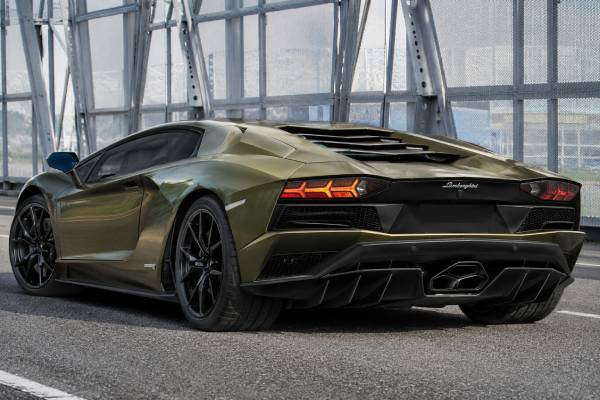
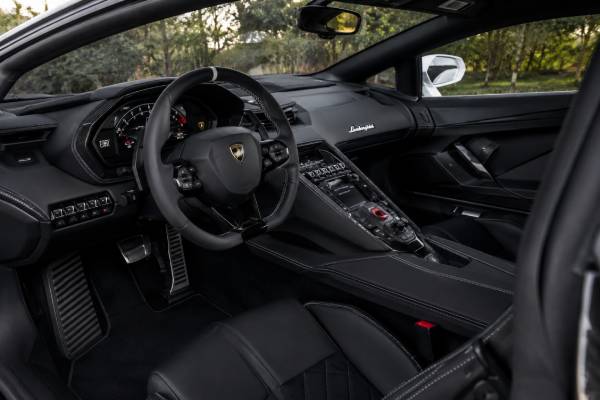
The Lamborghini Aventador S Taiwan Edition is a rare, Taiwan-market special version of the Aventador S LP 740-4, built around the LB834 Aventador platform and Lamborghini’s naturally aspirated L539 6.5-liter V12. Introduced in 2020 and reported as a five-car Taiwan-specific commemorative edition, it keeps the core Aventador S mechanical package: 740 hp, all-wheel drive, rear-wheel steering, magneto-rheological pushrod suspension, carbon-ceramic brakes, and the seven-speed ISR single-clutch automated manual gearbox. What makes it different is not a hotter engine tune, but the combination of Ad Personam personalization, exterior carbon details, special badging, Taiwan-market significance, and extreme scarcity. For collectors, it sits in an interesting space: rarer than a normal Aventador S, more usable than an SVJ, and tied to the final era of Lamborghini’s non-hybrid flagship V12.
Table of Contents
- Why the Taiwan Edition Matters
- L539 V12 Specs and Chassis Data
- Five-Car Build, Options, and Identification
- Carbon Details, Aero, and Cabin Character
- What It Feels Like to Drive
- Maintenance Risks for a Rare Aventador
- Market Value, Inspection, and Buying Advice
Why the Taiwan Edition Matters
The Taiwan Edition matters because it turns the already special Aventador S into a tiny-market collector piece. It is best understood as a limited personalization and market-tribute model, not as a separate performance derivative like the SV, SVJ, or Ultimae.
The Aventador line began as Lamborghini’s replacement for the Murciélago and carried the brand’s flagship V12 identity through the 2010s. Internally known as LB834, the Aventador was built around a carbon-fiber monocoque, a mid-mounted V12, all-wheel drive, scissor doors, and styling that pushed Lamborghini’s wedge-shaped design language into a sharper, more technical era.
The Aventador S arrived as the important mid-cycle evolution of the original LP 700-4. It added more power, more aerodynamic balance, revised styling, a new electronics control strategy, and most importantly, four-wheel steering. That made it the first Lamborghini production car to combine Lamborghini Dynamic Steering at the front with Lamborghini Rear-wheel Steering at the back. In plain terms, the car could feel shorter and more agile at lower speeds, then more stable at higher speeds.
The Taiwan Edition came after the Aventador S had already established itself as the more polished version of the standard Aventador. It kept the naturally aspirated L539 V12, which is central to the car’s appeal. Modern Lamborghini flagships have moved into hybrid power, so any late Aventador with a pure non-hybrid V12 now carries extra collector interest.
The Taiwan Edition’s significance comes from four main areas:
- Rarity: reported as a five-car special edition for Taiwan.
- Market identity: created to recognize Lamborghini’s presence and enthusiast base in Taiwan.
- Ad Personam character: each car could be configured with highly specific colors, materials, and trim choices.
- End-of-era appeal: it belongs to the last generation of non-hybrid Lamborghini V12 flagships.
It is not the most powerful Aventador. It is not the lightest. It is not the most track-focused. Its value story is different. A normal Aventador S can be judged mainly by mileage, condition, color, options, and maintenance. A Taiwan Edition also needs provenance: proof that the car is one of the limited Taiwan-market examples, factory-supported documentation, correct special trim, and a build record that connects the specification to the edition.
For enthusiasts, the attraction is simple. It gives the full Aventador S experience with an added layer of local-market storytelling. For buyers and collectors, the key question is whether the edition-specific details are original, documented, and preserved. Without that paperwork, it becomes much harder to justify a premium over a well-optioned Aventador S.
L539 V12 Specs and Chassis Data
The Taiwan Edition uses the standard Aventador S LP 740-4 mechanical package. That means a naturally aspirated 6,498 cc V12, 740 hp, 690 Nm of torque, all-wheel drive, rear-wheel steering, and a 2.9-second 0–100 km/h claim for the coupe.
| Item | Specification |
|---|---|
| Model | Lamborghini Aventador S Taiwan Edition |
| Platform / type code | LB834 Aventador |
| Production year covered | 2020 |
| Engine code / family | L539 V12 |
| Displacement | 6,498 cc |
| Layout | Mid-engine, all-wheel drive |
| Induction | Naturally aspirated |
| Maximum power | 740 hp / 740 CV at 8,400 rpm |
| Maximum torque | 690 Nm at 5,500 rpm |
| Transmission | 7-speed ISR single-clutch automated manual |
| 0–100 km/h | 2.9 seconds |
| Top speed | 350 km/h |
| Chassis | Carbon-fiber monocoque with aluminum front and rear frames |
| Suspension | Pushrod suspension with magneto-rheological dampers |
| Steering systems | Lamborghini Dynamic Steering and Lamborghini Rear-wheel Steering |
| Brakes | Carbon-ceramic discs with fixed calipers |
| Drive modes | Strada, Sport, Corsa, Ego |
The L539 V12 is the heart of the car. Unlike a turbocharged engine, it does not rely on boost pressure to create drama. It builds power through displacement, revs, throttle response, and a hard-edged intake and exhaust note. Peak power arrives high in the rev range, so the engine rewards drivers who let it climb rather than short-shifting it like a big-torque grand tourer.
The gearbox is a major part of the Aventador character. The seven-speed ISR transmission is not a dual-clutch unit. It is a robotized single-clutch automated manual designed to shift quickly and save weight. Lamborghini’s goal was not seamless luxury-car smoothness. The shift action is part of the theater. In Strada, it can feel firm but manageable. In Sport and Corsa, the shifts become much more physical, especially under full throttle.
The chassis also matters as much as the engine. The carbon-fiber monocoque gives the Aventador S a rigid central structure, while the aluminum subframes carry crash structures, suspension points, and drivetrain hardware. This layout helps keep the cabin safety cell strong while allowing repairable front and rear structural modules.
Dimensions and road presence
| Item | Figure or equipment |
|---|---|
| Length | 4,797 mm |
| Width | 2,030 mm, excluding mirrors |
| Height | 1,136 mm |
| Wheelbase | 2,700 mm |
| Typical dry weight reference | About 1,575 kg for the Aventador S coupe |
| Front tires | 255/30 ZR20 or market/equipment equivalent |
| Rear tires | 355/25 ZR21 or market/equipment equivalent |
The important takeaway is that this is a wide, low, serious supercar. The rear-wheel steering helps it feel less clumsy than the dimensions suggest, but parking garages, tight ramps, steep driveways, and city traffic still require care. The front lift system, if fitted and working properly, is not a convenience gimmick. It is part of making the car usable.
Five-Car Build, Options, and Identification
The Taiwan Edition’s value depends heavily on proof. A buyer should treat the special-edition claim as unproven until the VIN, factory or distributor documentation, plaques, Ad Personam build record, and edition-specific equipment all line up.
The reported production run is just five cars. That makes the Taiwan Edition much rarer than the normal Aventador S, but it also makes public data thin. Unlike global limited editions with large press campaigns and worldwide allocation lists, a market-specific edition often leaves a smaller paper trail. That is why documentation becomes more important than casual listing descriptions.
Edition-specific details to verify
The Taiwan Edition was presented with distinctive visual and personalization details rather than a unique engine tune. Reported features included a carbon-fiber exterior aerodynamic package, a special “63” motif referencing Lamborghini’s 1963 founding year, a limited-edition plaque, and Ad Personam color and cabin choices.
Key identification items include:
- special Taiwan Edition documentation from the dealer, distributor, or factory record;
- VIN-linked build sheet or Ad Personam configuration;
- limited-edition plaque near the A-pillar area or cabin trim, depending on the car;
- edition-correct “63” markings on the front and doors;
- carbon-fiber front splitter, side skirts, rear diffuser, aero details, mirrors, engine-bay trim, and related visible parts;
- Razze-style matte black forged center-lock wheels with detail finishes where fitted;
- original paint and interior configuration matching the build record.
The safest approach is to verify the car through an authorized Lamborghini dealer or a recognized specialist with access to Lamborghini build data. Photographs alone are not enough. Any Aventador S can be modified with carbon parts, aftermarket decals, or special wheels. A genuine Taiwan Edition needs a paper trail.
Ad Personam and why it matters
Lamborghini’s Ad Personam program allows deep personalization of paint, interior materials, stitching, trim, contrast colors, and special finishes. For a car like this, Ad Personam is part of the appeal, not just an option list. A bold paint color or unusual interior may be exactly what makes one example more desirable.
However, personalization can cut both ways. A highly individual specification may be perfect for one buyer and difficult for another. In collector terms, the best specification is not always the quietest or most conservative. It is the one that is original, coherent, documented, and well preserved.
Important option and originality checks include:
- factory paint name and paint-to-sample confirmation where relevant;
- leather, Alcantara, stitching, piping, and seat embroidery details;
- carbon-fiber package codes and whether parts are factory-installed;
- wheel specification, finish, and center-lock hardware condition;
- Sensonum audio, lift system, parking cameras, telemetry, or other equipment;
- whether protective film has preserved paint or caused edge discoloration;
- whether any carbon parts have been replaced after scraping or impact.
Because only five cars were reportedly produced, buyers should avoid thinking only in normal used-car terms. The question is not simply “Is this a nice Aventador S?” The better question is: “Is this the right Taiwan Edition, with the right proof, in the right condition, with the right long-term preservation story?”
Carbon Details, Aero, and Cabin Character
The Taiwan Edition is visually defined by carbon-fiber details, special graphics, and Ad Personam execution. The car’s engineering base is Aventador S, but its collector personality comes from how those parts are presented.
The standard Aventador S already changed the original Aventador’s look with a sharper front end, revised aero, side details, and a new rear diffuser treatment. It also introduced the three-outlet central exhaust design that became one of the S model’s clear visual signatures. The Taiwan Edition builds on that with more visible carbon and market-specific trim.
Carbon fiber serves two roles here. Some pieces are functional or semi-functional aero parts, guiding airflow, controlling lift, or improving cooling. Other pieces are visual and tactile markers of a high-spec Lamborghini. On this car, both roles matter. A cracked front splitter or scratched side skirt is not just cosmetic damage; it can affect value because replacement parts may be expensive, difficult to match, and important to the edition’s originality.
Aero and cooling details
The Aventador S shape is not just theatrical. The low nose, large intakes, rear cooling surfaces, diffuser, and engine cover all support a mid-engined V12 that generates huge heat and needs stable high-speed airflow.
Important design and engineering features include:
- a pointed, aggressive front profile shaped around airflow and visual drama;
- wide side intakes feeding the mid-mounted V12’s cooling and breathing needs;
- a rear diffuser and central exhaust layout that make the S easy to distinguish from earlier Aventador versions;
- carbon-fiber exterior add-ons on the Taiwan Edition that increase visual contrast and collector identity;
- engine-bay carbon trim and a visible V12 presentation that turn the engine compartment into part of the design.
The transparent engine cover, carbon engine-bay details, T-shaped engine cover elements, and X-brace-style visual structure are part of the car’s showpiece quality. With an Aventador, the engine is not hidden hardware. It is part of the car’s architecture and theater.
Interior feel
The cabin is low, angular, and more fighter-jet than lounge. The start button cover, digital display, tall center tunnel, and wide sills all reinforce that this is a dramatic car first and a practical car second.
The Aventador S improved the user experience with a configurable TFT display, EGO mode, and a more modern control strategy than the early Aventador. Still, the interior is not as effortless as newer supercars. Visibility is limited, the car is wide, storage is modest, and the driving position depends heavily on seat type and driver size.
On a Taiwan Edition, the interior should be judged for originality and condition. Bright contrast leather, special stitching, and personalized trim can look spectacular when new, but they can also show wear quickly. A collector-grade car should have clean bolsters, unworn steering-wheel surfaces, intact carbon trim, original floor mats, working displays, and no signs of sticky controls or poor interior repairs.
What It Feels Like to Drive
The Aventador S Taiwan Edition feels like a full-strength V12 Lamborghini first and a limited edition second. The defining traits are instant throttle response, a hard-charging top end, heavy drama from the ISR gearbox, and surprising agility from rear-wheel steering.
At low speeds, the Aventador S is more manageable than its size suggests. The rear-wheel steering turns the rear wheels opposite the fronts at lower speeds, which helps the car rotate into tighter corners and makes city maneuvering less awkward. It does not make the car small, but it reduces the sense that you are dragging a long, wide supercar through every turn.
The engine dominates the experience. The L539 V12 has the kind of response that turbocharged engines often cannot match. Small throttle inputs change the sound and attitude immediately. As the revs rise, the engine becomes sharper, louder, and more urgent. The car is fast from low rpm, but it feels most special when the tachometer is climbing and the engine is allowed to work.
The ISR gearbox divides opinion, and that is part of the Aventador story. Drivers used to modern dual-clutch transmissions may find it abrupt. Drivers who understand it as a robotized manual often appreciate the mechanical violence. Under load, the shift can feel like an event. In Corsa, at full throttle, the car does not hide the gear change. It makes the shift part of the performance.
Road and track character
On a fast road, the Aventador S is more balanced than the early LP 700-4. The steering systems, active dampers, tire development, and LDVA control strategy make the car feel more coordinated. It still requires respect. This is a 740 hp, wide-bodied, mid-engined V12 car, and road conditions, tire temperature, and driver judgment matter.
Strada mode is best for town, rougher roads, and normal driving. Sport adds more aggression and a more playful torque split. Corsa is the most focused and works best when the surface is smooth and the driver is committed. EGO mode is useful because it lets the driver mix settings rather than accepting a fixed personality.
The carbon-ceramic brakes are powerful, but condition matters. On the road, they may need some temperature before they feel ideal. On track, they can handle serious use when healthy, but repeated hard sessions can turn brakes, tires, and fluids into major cost items. A Taiwan Edition with collector value should not be treated as a disposable track toy unless the owner accepts the effect on condition and long-term value.
Usability is mixed in the way most Aventadors are mixed. The car can cruise, it can cover distance, and the V12 is more flexible than its exotic image suggests. But the cabin is loud, the ride is firm, the car is extremely wide, and the front overhang demands care. The reward is that even a short drive feels memorable.
Maintenance Risks for a Rare Aventador
A Taiwan Edition should be maintained like a high-value collector Aventador, not merely like a used exotic. The biggest risks are missed specialist service, worn ISR clutch components, damaged carbon parts, tired tires, weak batteries, brake wear, lift-system faults, and undocumented repairs.
The L539 V12 is a serious engine, but neglect is expensive. A car that has been stored badly, started rarely, or serviced only by mileage rather than time can still need major work. Low mileage is not automatically good if fluids are old, rubber parts have aged, tires are date-expired, and the battery has been repeatedly discharged.
Mechanical and electronic inspection areas
Before purchase, the car should be inspected by a Lamborghini dealer or an independent specialist who knows Aventadors. A generic exotic-car inspection is not enough.
Focus on these areas:
- ISR clutch wear: request clutch wear data and check shift quality in all drive modes.
- Gearbox behavior: hesitation, harsh engagement at parking speed, warning lights, or inconsistent shifts need diagnosis.
- Carbon-ceramic brakes: inspect disc thickness, surface condition, edge damage, pad life, and caliper condition.
- Tires: check age, specification, matching brand/model, uneven wear, and evidence of track heat cycles.
- Front lift system: confirm it raises, lowers, and holds pressure correctly.
- Suspension: inspect magneto-rheological dampers, pushrod hardware, bushings, arms, and alignment history.
- Cooling system: check radiators, hoses, fans, coolant leaks, and debris trapped in front openings.
- Electrical system: verify battery health, charging behavior, modules, displays, parking sensors, cameras, and warning history.
- Carbon exterior parts: inspect underside scraping, cracks, repairs, delamination, and paint-protection-film edges.
- Engine-bay trim: check carbon covers, braces, heat effects, fasteners, and originality.
The car’s width and low ride height make underside damage common on poorly used examples. Front splitters, side skirts, diffuser fins, and lower carbon pieces should be inspected on a lift. Repairs can be hard to see from standing height.
Service history and storage
A strong car should have annual service records, correct fluids, brake-fluid changes, recalls and service campaigns checked by VIN, battery maintenance, and invoices from qualified Lamborghini workshops. The best records are not vague stamps. They show dates, mileage, work performed, parts used, and any advisory items.
Storage matters. A Taiwan Edition that has spent most of its life in climate-controlled storage on a battery tender, with regular servicing and careful exercise, is very different from one that sat unused in humid conditions. Taiwan’s climate makes humidity, rubber aging, corrosion on exposed fasteners, and interior mildew worth checking carefully, especially if the car has not lived in controlled storage.
Originality is also a maintenance issue. Replacing a damaged part with a non-factory carbon component may solve a visual problem but hurt collector value. Upgraded exhausts, aftermarket wheels, lowering kits, ECU tuning, and non-original wrap work should be treated with caution. Some owners like reversible upgrades, but a five-car edition is strongest when kept close to factory specification.
Market Value, Inspection, and Buying Advice
The Taiwan Edition should trade above a comparable standard Aventador S only when its identity, condition, and documentation are beyond doubt. Without proof, the premium is risky.
As of mid-2026, normal Aventador S asking prices in Europe commonly sit across a wide band, with higher-mileage coupes often below the strongest low-mileage or heavily optioned cars, and roadsters generally priced higher than many coupes. Current public listings show many Aventador S examples from the low-to-mid €300,000 range into the €400,000-plus range depending on year, mileage, body style, color, options, and condition. A verified Taiwan Edition can reasonably ask more, but the exact premium is difficult to pin down because so few cars exist and public transactions are rare.
The market position is unusual. It is not an SVJ, so it does not have the same Nürburgring-linked track reputation or 770 hp output. It is not an Ultimae, so it is not the final numbered run of the Aventador line. Its appeal is more specialist: a five-car Taiwan-market edition, based on the more usable Aventador S, with V12 purity and strong visual specification.
What drives value
| Factor | Why it matters |
|---|---|
| Edition proof | The premium depends on verified Taiwan Edition identity, not seller claims. |
| Original specification | Factory paint, interior, carbon parts, wheels, and plaque support collector value. |
| Condition | Paint, carbon, cabin trim, brakes, tires, and underside condition are major value drivers. |
| Mileage | Low mileage helps, but only if service and storage history are strong. |
| Service history | Complete Lamborghini specialist records reduce ownership risk. |
| Color and Ad Personam choices | Bold, documented factory specifications can make one car more memorable. |
| Market location | Taiwan-market provenance may matter most to regional collectors. |
Buyer inspection checklist
Use a structured inspection before negotiating:
- Confirm the VIN and build identity through Lamborghini or the original distributor.
- Request the Ad Personam specification, original purchase documents, books, keys, and accessories.
- Verify the special plaque, “63” graphics, carbon package, wheels, and interior trim against period photos or build records.
- Scan all control modules and check for stored or cleared fault codes.
- Measure clutch wear and confirm ISR gearbox behavior during cold and warm driving.
- Inspect carbon-ceramic brakes, tires, suspension, lift system, and underside carbon on a workshop lift.
- Check paint depth, paint-protection-film condition, accident history, and carbon repair quality.
- Confirm recalls, service campaigns, and market-specific compliance by VIN.
- Review import, registration, tax, and emissions rules if the car is being moved to another country.
- Price the car against both standard Aventador S examples and other documented limited Aventador editions.
The best example to seek is a documented, original, low-to-moderate-mileage car with complete Lamborghini service history, clean carbon, no accident story, factory Ad Personam records, and all edition-specific details intact. The example to avoid is one with vague “Taiwan Edition” claims, missing plaque proof, aftermarket carbon, incomplete history, heavy underside scraping, old tires, gearbox warnings, or unexplained paintwork.
Long term, the Taiwan Edition has a credible collector case because it combines scarcity with the final non-hybrid Aventador generation. Its weakness is low public awareness outside Taiwan. That means value may depend on finding the right buyer who understands the edition. For an enthusiast-owner, that can be an advantage: it offers the full Aventador S experience with a story few other cars can match. For an investor, it means documentation is everything.
References
- Lamborghini Aventador S | Lamborghini.com 2026 (Manufacturer Technical Page)
- Lamborghini Aventador: 10 innovations in 10 years 2021 (Manufacturer Technical Article)
- Recall Campaign | Lamborghini.com 2026 (Recall Database)
- 限量5輛的台灣專屬紀念版,Lamborghini Aventador S Taiwan Edition震撼登臺 – CarStuff 人車事 2020 (Launch Coverage)
- Find Lamborghini Aventador s for sale – AutoScout24 2026 (Market Listings)
Disclaimer
This article is for informational purposes only and is not a substitute for professional diagnosis, repair, valuation, or pre-purchase inspection. Specifications, torque values, service intervals, procedures, recall status, and equipment can vary by VIN, market, model year, and factory configuration. Always verify details against official Lamborghini service documentation, VIN-specific dealer records, and a qualified Lamborghini specialist.
If you found this guide useful, please consider sharing it on Facebook, X/Twitter, or your favorite car community to support our work.