
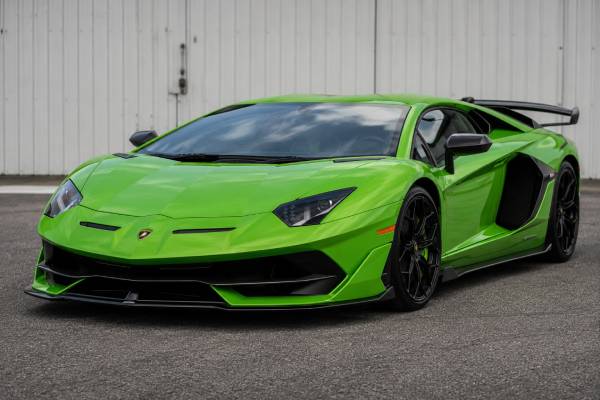
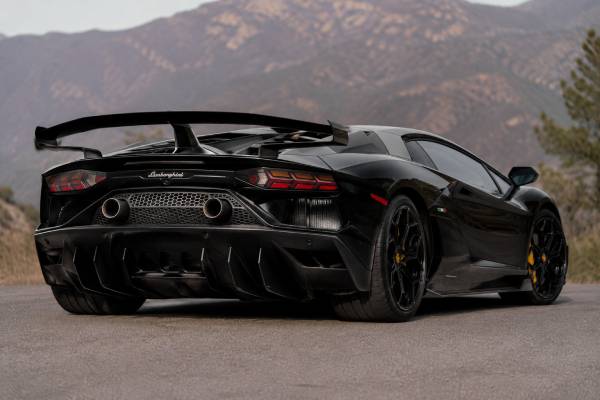
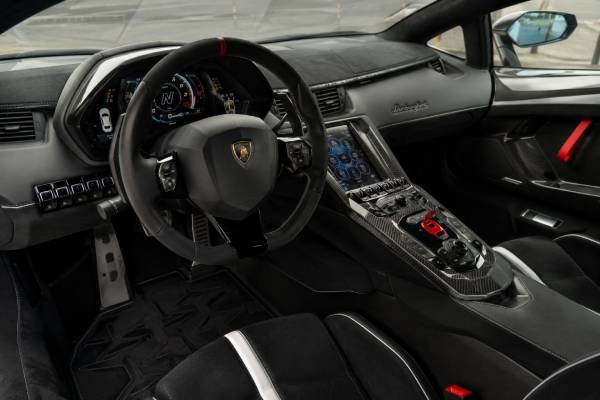
The Lamborghini Aventador SVJ is the most aggressive road-going Aventador built before the final Ultimae and the hybrid Revuelto era. Introduced in 2018, the SVJ took the Aventador’s carbon-fiber monocoque, naturally aspirated L539 6.5-liter V12, all-wheel drive, and single-clutch ISR gearbox, then added sharper aero, lighter detailing, rear-wheel steering, and Lamborghini’s ALA 2.0 active aerodynamic system. Its name matters: SV means SuperVeloce, and Jota links it to Lamborghini’s track-focused tradition. For buyers and collectors, the SVJ is important because it sits near the end of Lamborghini’s pure non-hybrid V12 line. For enthusiasts, it is memorable because it combines old-school sound and drama with serious active chassis technology. It is not simply a louder Aventador; it is the version built to turn the flagship V12 into a sharper, more record-focused machine.
Table of Contents
- The SVJ’s Place in Aventador History
- L539 V12, Chassis, and Core Specs
- Coupe, Roadster, SVJ 63, and Options
- ALA 2.0 Design and Engineering Details
- How the SVJ Feels on Road and Track
- Maintenance, Reliability, and Specialist Costs
- Market Values and Buyer Checklist
The SVJ’s Place in Aventador History
The Aventador SVJ is the most track-focused regular-production Aventador and one of the last Lamborghini V12 flagships without hybrid assistance. Its importance comes from the mix of old Lamborghini theater and modern active systems: a huge naturally aspirated V12, scissor doors, carbon structure, active aero, rear-wheel steering, and a Nürburgring record story.
The Aventador itself replaced the Murciélago and brought Lamborghini into a new carbon-monocoque era. Earlier V12 Lamborghinis used steel spaceframes or tubular structures, but the Aventador centered the car around a carbon-fiber passenger cell with aluminum front and rear subframes. That gave Lamborghini a stiffer foundation for a new generation of flagship supercars.
The SVJ arrived after the original Aventador LP 700-4, the Aventador S, and the lighter Aventador SV. It was not just a power upgrade. Lamborghini revised the aerodynamics, recalibrated the chassis electronics, added the second-generation ALA active aero system, sharpened the suspension setup, and used a more powerful version of the L539 V12. The result was a car that kept the Aventador’s wild character but gave it a more serious track focus.
The “Jota” part of the name is not casual decoration. Lamborghini has used the Jota idea for cars with a stronger competition link, most famously the Miura Jota story and later SVJ-badged specials. In the Aventador, SVJ signals the most extreme road-car version of the line before Lamborghini moved toward the closing LP 780-4 Ultimae and then the electrified Revuelto.
The SVJ also matters because of timing. It arrived when naturally aspirated V12 cars were already becoming rarer, emissions rules were tightening, and most high-end performance brands were moving toward turbocharging, hybrid systems, or both. The SVJ is therefore collectible for more than raw speed. It represents a very specific ending point: a large-displacement, naturally aspirated, mid-engine V12 Lamborghini with no electric boost and no turbochargers.
Its modern reputation is built on four pillars:
- the 770 CV L539 V12 and its high-rpm sound
- the ALA 2.0 active aerodynamic system
- limited production compared with regular Aventador models
- its status as a late, extreme, non-hybrid V12 Lamborghini
Collectors tend to value the SVJ for rarity, originality, color, mileage, factory documentation, and special-edition status. Enthusiasts value it for the way it blends violent mechanical character with enough electronic control to make the Aventador platform far sharper than early LP 700-4 cars.
L539 V12, Chassis, and Core Specs
The SVJ uses the same basic L539 6.5-liter V12 family as other Aventadors, but in one of its most powerful naturally aspirated forms. Lamborghini rated it at 770 CV, or 566 kW, at 8,500 rpm; in U.S. horsepower terms it is commonly described as about 759 hp, while many buyers and listings simply call it a 770 hp SVJ.
| Item | Lamborghini Aventador SVJ specification |
|---|---|
| Engine code | L539 |
| Engine layout | 60-degree naturally aspirated V12 |
| Displacement | 6,498 cc |
| Maximum output | 770 CV / 566 kW at 8,500 rpm |
| Maximum torque | 720 Nm / 531 lb-ft at 6,750 rpm |
| Induction | Natural aspiration with variable intake tuning |
| Transmission | 7-speed ISR single-clutch automated manual |
| Drivetrain | Electronically managed all-wheel drive |
| Drive modes | Strada, Sport, Corsa, and Ego |
The engine is the heart of the car’s appeal. It does not make its best work low in the rev range like a modern turbo engine. It builds force and sound as the revs rise, then becomes increasingly intense near the top end. The torque peak arrives high, and the power peak is higher still. That gives the SVJ its character: it rewards revs, throttle commitment, and space.
The ISR gearbox is also central to the experience. It is not a dual-clutch transmission. It is a single-clutch automated manual designed to be compact and light. At low speeds it can feel abrupt, especially compared with modern dual-clutch supercars. Under hard acceleration in Corsa mode, that same sharpness becomes part of the drama.
| Item | Specification |
|---|---|
| Body structure | Carbon-fiber monocoque with aluminum subframes |
| Suspension | Pushrod suspension with magnetorheological dampers |
| Steering systems | Lamborghini Dynamic Steering and rear-wheel steering |
| Brakes | Carbon-ceramic discs with fixed calipers |
| Front tires | 255/30 ZR20 performance tires |
| Rear tires | 355/25 ZR21 performance tires |
| Wheelbase | 2,700 mm |
| Length | 4,943 mm |
| Width | 2,098 mm, excluding mirrors |
| Height | 1,136 mm |
| Dry weight, coupe | About 1,525 kg |
| Fuel tank | About 85 liters / 22.5 U.S. gallons |
| 0–100 km/h, coupe | 2.8 seconds |
| 0–100 km/h, roadster | 2.9 seconds |
| Top speed | More than 350 km/h / 217 mph |
The SVJ’s technical package is more than a list of impressive figures. The carbon monocoque gives the cabin structure its stiffness. The huge rear tires help traction when the V12 is fully loaded. Rear-wheel steering helps the long, wide car rotate at lower speeds and settle at higher speeds. The active dampers and drive modes then adjust the car’s responses depending on use.
For buyers, the main specification point is simple: the SVJ is a complex, high-load, active-system car. Its value depends not only on mileage and paint but also on whether the gearbox, suspension, aero, brakes, tires, electronics, and service records all support the way the car has been used.
Coupe, Roadster, SVJ 63, and Options
The most important SVJ variants are the coupe, the Roadster, and the SVJ 63 editions. The coupe is the sharper and more record-linked body style, while the Roadster adds open-air drama and lower production volume.
Lamborghini built the Aventador SVJ coupe in a limited run of 900 units. The SVJ Roadster followed with an 800-unit production run. Both use the same basic engine, transmission, all-wheel-drive layout, and active aerodynamic philosophy, but the Roadster has a removable roof and slightly different structural and weight considerations.
The SVJ 63 is the version collectors watch most closely. It commemorates Lamborghini’s founding year, 1963, and was produced in very small numbers. The SVJ 63 coupe and SVJ 63 Roadster use special visual configurations, heavier use of exposed carbon-fiber themes, numbered identity, and more exclusive factory treatment. They are not valuable only because they are faster; they are valuable because they are more limited, easier to identify, and more directly tied to Lamborghini’s anniversary storytelling.
| Variant | What makes it different | Buyer relevance |
|---|---|---|
| SVJ Coupe | Fixed-roof, most focused form of the SVJ | Best choice for track-focused collectors and Nürburgring-record association |
| SVJ Roadster | Removable roof with similar power and active aero concept | More open-air drama and lower production volume than the coupe |
| SVJ 63 Coupe | Limited 63-unit special edition with exclusive trim themes | Strongest coupe collectability when original and fully documented |
| SVJ 63 Roadster | Open-top 63-unit special edition | Often among the most desirable SVJ configurations |
Factory options matter heavily because two SVJs can feel very different in the market even if the mechanical specification is similar. Common value-adding or desirability-shaping features include:
- Ad Personam paint, especially rare colors or tasteful historical Lamborghini shades
- exposed carbon-fiber exterior packages
- forged wheel designs and desirable wheel finishes
- carbon-fiber engine-bay trim and exterior aero trim
- carbon-ceramic brake caliper color choices
- Alcantara-heavy interiors, contrast stitching, and special seat trim
- Lamborghini Sensonum audio, lift system, parking aids, and camera equipment
- telemetry or track-oriented equipment where fitted
- full paint-protection film with records showing careful installation
Documentation is more important than most casual buyers expect. A strong SVJ file should include the original window sticker or build sheet, service invoices, warranty or extended-warranty details, recall-completion records, battery-maintainer history, tire replacement dates, and any paint-protection or detailing documentation.
Identification should go beyond badges. Check the VIN, model description, factory build data, plaque details, options, exterior carbon parts, interior stitching, and service records. For SVJ 63 cars, the numbered identity and factory configuration should match the documentation. For high-value examples, a Lamborghini dealer or marque specialist should verify the car rather than relying only on seller descriptions.
ALA 2.0 Design and Engineering Details
The SVJ’s defining engineering feature is ALA 2.0, Lamborghini’s active aerodynamic system. It is the reason the SVJ looks more aggressive than the Aventador S and the reason it could generate track-focused downforce without carrying permanent high drag in every situation.
ALA stands for Aerodinamica Lamborghini Attiva. In the SVJ, the system uses electronically controlled flaps and air channels to change airflow through the front splitter and rear wing area. When low drag is useful, the system can open pathways to reduce resistance. When grip is more important, it can close or redirect airflow to increase aerodynamic load.
The clever part is aero vectoring. In cornering, the system can influence load across the car to help stability and turn-in. This does not replace tire grip, suspension tuning, or driver skill, but it adds another layer to how the car behaves at speed. The SVJ’s fixed rear wing, high-mounted exhaust outlets, aggressive diffuser, redesigned front end, and larger intakes all serve this same purpose: move air with intent, not just visual drama.
The exterior design is easy to dismiss as theatrical, but most of its loud details have a purpose. The bigger side skirts help manage airflow along the body. The front end feeds cooling and aero channels. The rear wing and center fin help manage high-speed stability. The lighter, higher exhaust layout saves weight and clears space for the diffuser and rear aero work. The rear of the car is especially important because a mid-engine V12 produces huge heat and needs careful extraction.
Inside, the SVJ keeps the Aventador’s fighter-jet theme: low seating, a wide console, a covered start button, angular switchgear, and a view forward over sharply creased fenders. Carbon fiber is not hidden. It appears in the monocoque structure, trim, seats, center tunnel, doors, and console areas depending on specification. Alcantara suits the SVJ better than glossy luxury leather because it matches the car’s track-focused purpose.
The engineering also shows Lamborghini’s compromise between emotion and measurable speed. A dual-clutch gearbox would be smoother, but the ISR unit is lighter and more dramatic. Turbocharging would make torque easier, but the naturally aspirated V12 gives the SVJ its sound, throttle response, and collector importance. A smaller body would be easier on tight roads, but the Aventador’s width and stance are part of its presence.
Sound is one of the car’s special features. The high-mounted exhaust, large V12, and high-rpm power peak make the SVJ feel mechanical and exposed in a way newer electrified supercars do not. At idle it has a deep, uneven edge; at high revs it becomes hard and metallic. For many buyers, that sound is not a side benefit. It is one of the main reasons to own the car.
How the SVJ Feels on Road and Track
The SVJ feels faster, sharper, and more physical than a regular Aventador, but it is still a large V12 Lamborghini rather than a small, delicate track car. Its best moments come when the road opens up, the tires are warm, and the driver can use the engine’s top half.
At low speed, the SVJ is dramatic but not effortless. The car is wide, the seating position is low, rear visibility is limited, and the gearbox can feel clumsy in traffic. The front lift system is important for real-world use because the nose and front aero are vulnerable to steep driveways, ramps, and speed humps. In town, the car attracts attention constantly, and that can make ordinary driving feel like a public event.
On a fast road, the SVJ comes alive. The V12 is crisp, loud, and eager to rev. Throttle response is immediate because there are no turbos waiting to spool and no hybrid torque fill smoothing the delivery. The engine pulls hard in the midrange, but the real reward is near the top, where the car feels increasingly urgent.
The gearbox is part of the personality. In Strada, it tries to behave politely but still cannot match a modern dual-clutch for smoothness. In Sport and Corsa, the shifts become quicker and more forceful. Under full load, the single-clutch shift shock can feel violent, but that is exactly what many SVJ owners want. It makes the car feel mechanical, not clinical.
The steering is much more agile than early Aventadors because the SVJ combines front dynamic steering with rear-wheel steering. At low and medium speeds, the rear axle helps the car rotate, reducing the sense that the driver is trying to place a very wide wedge through a narrow corner. At high speed, the rear steering helps stability. The result is still not a small-car feel, but it is far more responsive than the Aventador’s size suggests.
The brakes are extremely powerful, but condition matters. Carbon-ceramic brakes need heat and correct pad condition to feel their best. A car used only for slow display mileage may not always have better brakes than a properly exercised car. On track, brake temperatures, pad life, rotor condition, and tire heat become serious inspection points.
The SVJ is tire-sensitive. Cold tires reduce confidence, old tires can ruin the car’s feel, and mismatched or incorrect tires weaken the whole chassis setup. The car was developed around serious Pirelli performance rubber, and it needs the correct sizes, load ratings, and age condition.
The Roadster brings more noise and theater, especially with the roof panels removed. It is slightly less pure as a track tool, but it gives a more intense sensory experience at road speeds. For many owners, that tradeoff is worth it. The coupe is the sharper collector’s choice; the Roadster is the stronger emotional choice for open-air V12 driving.
Maintenance, Reliability, and Specialist Costs
The SVJ can be dependable when maintained correctly, but it is not a low-risk used supercar. Its engine is generally respected, yet the car’s age, heat, electronics, active systems, tires, brakes, clutch, and repair costs make specialist inspection essential.
The L539 V12 is not fragile in normal exotic-car terms, but it must be serviced on time and kept healthy with correct fluids, proper warm-up, and battery support. Cars that sit unused can develop problems that low mileage hides. Dry-looking engine bays, clean fluid history, stable temperatures, and complete annual service records matter more than a tiny odometer reading.
The ISR transmission and clutch deserve careful attention. The gearbox should shift cleanly in all modes, without warning messages, excessive slip, or harsh behavior beyond the normal single-clutch character. Clutch wear depends heavily on driving style. Repeated low-speed maneuvering, heavy traffic, steep ramps, and aggressive launch use can shorten clutch life. A proper inspection should include diagnostic clutch data, not just a road test.
Carbon-ceramic brakes can last a long time on gently driven cars, but they are very expensive when damaged. Inspect the rotors for chips, cracks, edge wear, heat marks, and unusual surface condition. Check pad thickness and confirm whether the car has seen track use. Track use is not automatically bad, but hidden track use without maintenance records is a serious risk.
Important SVJ inspection areas include:
- clutch wear readings and gearbox adaptation data
- suspension lift operation and hydraulic leaks
- magnetorheological damper condition
- brake rotor, pad, and caliper condition
- tire brand, size, date code, and wear pattern
- front splitter, underbody, diffuser, and exposed carbon damage
- cooling-system leaks or signs of overheating
- battery health and charging history
- warning lights, module faults, and infotainment issues
- paintwork, paint-protection film quality, and accident repairs
Recalls and service campaigns must be checked by VIN. A known U.S. recall affected certain 2018–2021 Aventador SVJ Coupes for rear engine-hood hinge screws that could lose torque and allow the hood to open or detach under high-speed conditions. The remedy involved replacing the screws with thread-locker-equipped parts. A separate VIN-specific 2021 SVJ Roadster recall involved heat-exchanger oil-line fasteners that could leak oil if not properly tightened. Buyers should not assume either issue has been completed without dealer confirmation.
Age-related issues are now becoming more relevant. Even low-mile SVJs can need tires, batteries, fluids, rubber parts, and software attention. Cars stored in collections may look perfect but still need recommissioning. Cars used hard may be mechanically healthy but show underbody wear, brake use, and tire wear. The best car is not always the lowest-mile car; it is the car with the clearest history and the most consistent care.
Ownership costs vary widely, but buyers should think in exotic-car terms. Routine annual servicing can cost several thousand dollars depending on market and scope. Tires, brake work, clutch work, suspension components, carbon-fiber repairs, and dealer diagnostics can quickly move costs into five figures. An extended warranty, where available and transferable, can add real value.
Market Values and Buyer Checklist
The Aventador SVJ sits in a strong collector position because it combines limited production, a naturally aspirated V12, extreme styling, and end-of-era timing. As of the mid-2020s, normal SVJ coupes commonly sit in the high-six-figure to low-seven-figure range, while Roadsters, SVJ 63 cars, rare colors, and ultra-low-mile examples can move meaningfully higher.
The market is not flat. Mileage, color, specification, country, taxes, title history, and seller quality can change the price dramatically. Some headline auction results are outliers and should not be used as the only guide. A delivery-mile SVJ 63 in a rare factory configuration is a different asset from a higher-mile standard coupe with repaint, aftermarket parts, missing records, or heavy track use.
The strongest examples usually have:
- original paint or clearly documented cosmetic work
- complete factory build documentation
- full Lamborghini dealer or recognized specialist service history
- desirable Ad Personam color and interior combination
- factory carbon options rather than aftermarket add-ons
- completed recalls and software updates
- correct tires with recent date codes
- clean underbody, splitter, diffuser, and wheel condition
- no stories around title, accidents, theft, flood, or export history
- original parts retained if any reversible upgrades were fitted
Avoid cars with vague service history, unexplained warning lights, cheap tire replacements, damaged carbon aero, suspiciously fresh paint, missing SVJ 63 documentation, or seller resistance to a pre-purchase inspection. A bargain SVJ can become expensive very quickly if it needs brakes, tires, clutch work, carbon repair, and electrical diagnosis at the same time.
| Inspection area | What to verify | Why it matters |
|---|---|---|
| VIN and build data | Confirm model, market, options, and special-edition status | Protects against misdescribed cars and missing provenance |
| Service records | Annual maintenance, fluids, recall work, warranty records | Shows whether the car was cared for or merely stored |
| Clutch and gearbox | Diagnostic wear data and shift behavior | ISR repairs and clutch work are major cost drivers |
| Carbon exterior | Splitter, diffuser, side skirts, rear wing, underbody | Carbon damage can be costly and affects value |
| Brakes and tires | Rotor condition, pad depth, tire age, correct sizing | Consumables are expensive and central to driving quality |
| Paint and body | Paint depth, film quality, accident repairs, panel fit | Originality is a major collector value factor |
| Electronics | Fault scan, lift system, cameras, infotainment, modules | Low-mile cars can still suffer battery and module problems |
For long-term collectability, the SVJ has many strengths: limited numbers, clear identity, dramatic design, active-aero engineering, strong brand recognition, and a naturally aspirated V12. The biggest risks are not desirability but condition and price discipline. Paying a premium for the right car can make sense. Paying a premium for a poorly documented car rarely does.
The best buyer strategy is to choose the specification first, then condition, then mileage. A well-kept, fully documented SVJ in a great factory color with the right options is likely to remain easier to sell than a lower-mile car with stories. For collectors, originality and paperwork are everything. For drivers, mechanical health and correct consumables matter most. The ideal SVJ has both.
References
- Lamborghini Aventador SVJ | Lamborghini.com 2018 (Manufacturer Specifications)
- Lamborghini Aventador SVJ Roadster | Lamborghini.com 2019 (Manufacturer Specifications)
- Aventador No. 10,000: a new production record 2020 (Manufacturer Production History)
- Part 573 Safety Recall Report 21V-107 2021 (Recall Database)
- Lamborghini Aventador LP770-4 SVJ Market – CLASSIC.COM 2026 (Market Data)
Disclaimer
This article is for informational purposes only and is not a substitute for professional diagnosis, repair, appraisal, or pre-purchase inspection. Specifications, torque values, service intervals, recall applicability, and repair procedures can vary by VIN, market, production date, and equipment. Always verify details against official Lamborghini service documentation and a qualified Lamborghini dealer or marque specialist.
If this guide helped you, please consider sharing it on Facebook, X/Twitter, or your favorite car community to support our work.