
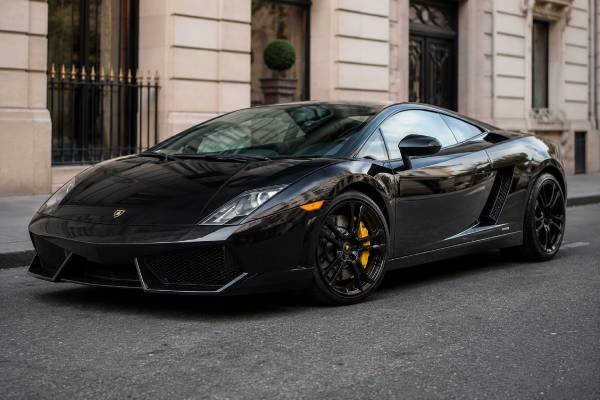

The Lamborghini Gallardo LP 550-2 Bicolore is the rear-wheel-drive, two-tone special-series Gallardo built around Lamborghini’s 5.2-liter naturally aspirated V10. It sits in an important part of the Gallardo story: after the all-wheel-drive LP 560-4 update and after the limited Valentino Balboni proved that a rear-drive Gallardo could feel sharper, lighter, and more playful. For the U.S. market, the Bicolore used the LP 550-2 layout, while some other markets received a related LP 560-4 Bicolore. That difference matters for collectors, because the LP 550-2 Bicolore combines the later 5.2-liter direct-injection V10 with rear-wheel drive, a standard E-gear automated manual, special exterior colors, a black upper body treatment, and a more driver-focused personality than the regular all-wheel-drive Gallardo. Today it attracts buyers who want a usable modern Lamborghini with real V10 character, visible rarity, and clearer long-term collector appeal than a standard high-mileage Gallardo coupe.
Table of Contents
- Why the Bicolore Matters
- CEH V10 Specifications and Performance Data
- Production, Colors, and Factory Options
- RWD Engineering and Design Details
- Driving Feel and Performance
- Maintenance, Reliability, and Repair Risk
- Market Value and Buying Checklist
Why the Bicolore Matters
The LP 550-2 Bicolore matters because it gives the Gallardo a more focused, rear-drive personality without moving into the higher-cost Superleggera or Balboni tier. It is not simply a paint package; for the U.S. market, it joined the special Bicolore look with the more involving LP 550-2 drivetrain layout.
The Gallardo itself was one of Lamborghini’s most important modern cars. It arrived for the 2004 model year as the brand’s smaller V10 model beneath the V12 flagship line, first alongside the Murciélago and later the Aventador. It was also a product of the Audi-owned era, which gave Lamborghini stronger engineering discipline, better build quality, more predictable electronics, and a broader dealer-service structure than earlier Lamborghinis had enjoyed.
The L140 project name reaches back to Lamborghini’s long-running idea for a smaller model below the flagship cars. When the production Gallardo finally arrived, it became the car that turned Lamborghini from a low-volume exotic maker into a more stable supercar brand. Over ten years, the Gallardo line reached 14,022 total units, making it Lamborghini’s best-selling model of its era and a foundation for the Huracán that followed.
The LP 550-2 Bicolore belongs to the later Gallardo family. By then, Lamborghini had moved from the early 5.0-liter V10 to the 5.2-liter direct-injection V10 used in the LP-generation cars. The all-wheel-drive LP 560-4 had already sharpened the Gallardo with more power, revised bodywork, and updated engineering. The LP 550-2 took a different path: it gave up the front driveline, reduced complexity, and placed more emphasis on steering feel, throttle control, and corner-exit balance.
Its closest spiritual relative is the Gallardo LP 550-2 Valentino Balboni, the limited rear-drive special named for Lamborghini’s long-serving test driver. The Balboni was more exclusive and could be found with a gated manual gearbox, but the Bicolore gave buyers a second route into the rear-drive Gallardo formula. It used a two-tone design theme rather than the Balboni’s center stripe and numbered identity.
For buyers, the Bicolore’s appeal is simple:
- It is a later Gallardo with the stronger 5.2-liter V10.
- It uses rear-wheel drive, making it more unusual than the common all-wheel-drive cars.
- It has factory-recognizable visual features that help separate it from a normal LP 550-2.
- It is modern enough to use regularly but old enough to feel analog beside newer dual-clutch, turbocharged, or hybrid supercars.
Collectors care about it because it sits at the crossing point between old-school Lamborghini drama and modern usability. It still has hydraulic steering, a naturally aspirated V10, compact dimensions, and the single-clutch E-gear transmission that defines many late-2000s and early-2010s Italian exotics. It is not as raw as a Superleggera and not as rare as a Balboni, but it is more distinctive than a standard Gallardo coupe and more characterful than many newer performance cars.
CEH V10 Specifications and Performance Data
The core specification is a mid-mounted 5.2-liter V10, engine code CEH, driving the rear wheels through Lamborghini’s six-speed E-gear automated manual. The Bicolore’s numbers are strong even now: 550 hp at 8,000 rpm, about 397–398 lb-ft of torque at 6,500 rpm, 0–100 km/h in about 3.9 seconds, and a top speed around 320 km/h.
Different sources state output as 550 PS, 550 hp, or about 542–543 hp depending on whether the figure is expressed in metric horsepower or SAE-style U.S. terms. For practical buying and identification, the LP 550-2 designation is the key: “LP” means the engine is mounted longitudinally behind the cabin, “550” identifies the power class, and “2” confirms rear-wheel drive.
| Category | Specification |
|---|---|
| Model | Lamborghini Gallardo LP 550-2 Bicolore |
| Platform / project | L140 Gallardo |
| Covered model years | 2011–2012 |
| Body style | 2-door coupe |
| Engine code | CEH |
| Engine type | 5.2-liter naturally aspirated V10 |
| Displacement | 5,204 cc |
| Fuel system | Direct injection |
| Valvetrain | DOHC, 40 valves, variable valve timing |
| Power | 550 hp at 8,000 rpm |
| Torque | 397–398 lb-ft at 6,500 rpm |
| Transmission | 6-speed E-gear automated manual |
| Drivetrain | Rear-wheel drive |
| Differential | Rear limited-slip differential |
| Seating | 2 seats |
| Curb weight | About 3,042 lb |
| Fuel capacity | 23.8 gal |
The CEH V10 is part of the later Gallardo engine family, not the earlier 5.0-liter unit. The larger 5.2-liter engine brought direct injection, stronger mid-range response, and a sharper high-rpm character. It is closely related in layout to the V10 used in the contemporary Audi R8 5.2, though Lamborghini’s calibration, exhaust tuning, gearing, and throttle behavior give the Gallardo a more aggressive feel.
The E-gear transmission is important to understand before buying. It is not a torque-converter automatic and not a modern dual-clutch gearbox. It is a single-clutch automated manual that uses electro-hydraulic actuation to operate the clutch and shift gears. At full throttle it can feel dramatic and mechanical. At parking speeds or in heavy traffic it can feel jerky, and clutch wear depends heavily on driving style, setup, software condition, and previous use.
| Item | Data |
|---|---|
| 0–100 km/h | About 3.9 seconds |
| Top speed | About 320 km/h / 199 mph |
| Length | About 171.1 in |
| Width | About 74.8 in without mirrors |
| Height | About 45.9 in |
| Wheelbase | About 100.8 in |
| Front suspension | Independent double wishbone |
| Rear suspension | Independent double wishbone |
| Steering | Hydraulic power steering |
| Brakes | Ventilated discs with ABS |
| Typical rear tire size | 295/30 ZR19 |
Fuel economy is not the reason to buy one, but it matters for range and ownership planning. The E-gear Bicolore is commonly listed around 13 mpg city, 20 mpg highway, and 16 mpg combined in U.S. data. Real-world use varies widely because cold starts, short trips, city traffic, aggressive driving, and old tires all change the experience. The car also requires premium unleaded fuel.
Production, Colors, and Factory Options
The most important identification point is that the Bicolore pairs a black upper-body treatment with selected lower-body colors. A genuine Bicolore should not be judged only by badges or wrap-style two-tone paint; buyers should verify the VIN, build data, original window sticker, service records, and factory specification.
The Bicolore name means “two-color,” and that is the car’s visual signature. The roof, pillars, engine cover area, and rear spoiler treatment use Nero Noctis black, while the lower body was offered in vivid Gallardo colors. Commonly cited Bicolore colors include:
- Giallo Midas yellow
- Arancio Borealis orange
- Grigio Telesto gray
- Bianco Monocerus white
- Blu Caelum blue
The U.S.-market LP 550-2 Bicolore is especially interesting because the wider Bicolore idea was not identical worldwide. In some regions, the Bicolore was tied to the LP 560-4 all-wheel-drive model. In the United States, the special edition was associated with the rear-drive LP 550-2. That market split creates confusion in listings, so buyers should read carefully. A seller calling any two-tone Gallardo a “Bicolore” does not automatically make it the correct factory variant.
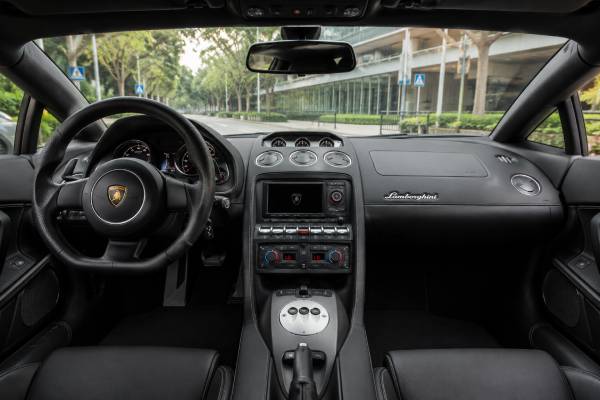
The Bicolore interior generally followed the special-edition theme with a dark cabin, contrast stitching, and the typical late Gallardo mix of leather, Alcantara, metal trim, and Audi-era switchgear. Many cars were ordered with additional comfort, audio, exterior, or personalization options, so no two used examples should be assumed identical.
Useful factory and dealer-level options to check include:
- Front axle lift, valuable for steep driveways and urban use.
- Transparent engine bonnet, desirable because it displays the V10.
- Rearview camera, helpful because rear visibility is limited.
- Navigation and multimedia equipment, though dated by modern standards.
- Heated and power-adjustable seats, useful for touring.
- Carbon interior trim, carbon engine-bay trim, and special stitching.
- Branding package, colored brake calipers, and wheel finish choices.
Production numbers for the LP 550-2 Bicolore are not as clearly published as those for the 250-unit Valentino Balboni or some later numbered editions. That means condition, documented factory specification, mileage, and originality carry more weight than a claimed production total. A buyer should be cautious with phrases such as “one of very few” unless the seller provides factory documentation or a credible registry record.
Authentication should start with the VIN and paperwork. A proper file should include original sales documentation, option list or window sticker, stamped service history, invoices from Lamborghini dealers or respected specialists, recall completion records, and mileage continuity. For a collector-grade car, matching the original color combination matters. A repainted roof, wrapped pillars, aftermarket wheels, or non-factory interior retrim can still make a good driver, but it should not be priced like a highly original Bicolore.
RWD Engineering and Design Details
The Bicolore’s character comes from the combination of rear-wheel drive, special chassis tuning, and the visual contrast of its black upper body. Lamborghini did more than remove front-drive hardware; the LP 550-2 setup required changes to suspension tuning, stability control, tires, and aerodynamic balance.
Most Gallardos were all-wheel drive. That system gave the car huge traction and made it easier to deploy power in poor conditions, but it also added weight and made the car feel more front-led than a traditional rear-drive exotic. The LP 550-2 shifts the personality toward the rear axle. Steering feels more natural because the front wheels are not also transmitting drive torque. Throttle inputs matter more in corners. The rear limited-slip differential becomes a central part of how the car exits bends.
Lamborghini calibrated a specific two-wheel-drive ESP system for the LP 550-2. That matters because a mid-engine, high-power, short-wheelbase exotic needs a safety net that does not feel clumsy. In normal use, the system helps keep the car stable. In more aggressive driving, it allows the rear-drive personality to show without making the car feel crude or unfinished.
The body design is late Gallardo: sharp, compact, and low, but cleaner than the more aggressive Superleggera and Super Trofeo Stradale versions. The standard doors open conventionally, not upward like the V12 Lamborghinis. That may disappoint poster-car traditionalists, but it makes daily use easier. The car’s stance comes from its short height, broad width, side intakes, high rear haunches, and exposed mid-engine proportions.
The Bicolore paint treatment changes how the shape reads. The black roof and upper surfaces visually lower the car, while the bright lower-body colors emphasize the wedge profile. On light colors such as Bianco Monocerus, the contrast is crisp and modern. On orange or yellow, it feels louder and more traditionally Lamborghini. On gray or blue, it can look more subtle but still special.
Inside, the Gallardo reflects its Audi-era development. The positive side is that many controls are easier to use than in older Lamborghinis. The downside is that some switchgear feels less exotic than the price and badge suggest. The driving position is low, the windshield is steep, and the cabin is snug rather than luxurious. The view forward is better than expected; the view rearward needs care, especially when parking.
The sound is one of the car’s defining features. The 5.2-liter V10 has a harder-edged note than the earlier 5.0-liter Gallardo engine, with a cleaner, sharper climb at high rpm. Intake noise, exhaust bark, and gearshift drama make the E-gear car feel theatrical in a way newer dual-clutch cars often smooth out. A stock exhaust is usually best for collector value. Aftermarket systems can sound spectacular, but they should be reversible and emissions-compliant.
Driving Feel and Performance
The LP 550-2 Bicolore feels more alive than an all-wheel-drive Gallardo at normal road speeds because the front axle is free to steer and the rear axle carries the drama. It is still fast by modern standards, but its real value is feel: throttle response, V10 sound, hydraulic steering, and the deliberate rhythm of the E-gear transmission.
Acceleration is immediate once the V10 is in its power band. Below the upper rev range, it is tractable enough for normal roads, but the engine comes alive as it climbs. Peak power arrives at 8,000 rpm, so the car rewards drivers who let it rev rather than short-shift it like a turbocharged modern performance car. The torque peak at 6,500 rpm also tells the story: this engine is built to sing, not just surge.
The E-gear gearbox has a split personality. In city traffic it can feel abrupt, especially if the driver creeps forward like in a normal automatic. It is happier when driven like a manual without a clutch pedal: commit to the throttle, avoid unnecessary creeping, and give the system clean inputs. On a fast road, the shifts become part of the theater. They are not as seamless as a dual-clutch gearbox, but they feel mechanical and eventful.
Steering is one of the LP 550-2’s strengths. The hydraulic rack gives more texture than many newer electric systems, and the absence of front drive helps the nose feel cleaner. The car turns in quickly, but it is not featherweight. There is still a planted, wide-track feel that reminds you this is a mid-engine supercar with serious grip.
The rear-drive balance is friendlier than the spec sheet might suggest, but it deserves respect. Old tires, cold tires, poor alignment, or aggressive throttle over bumps can make the car edgy. A good LP 550-2 on fresh premium tires feels adjustable and communicative. A neglected one can feel nervous, tramline over rough pavement, or break traction sooner than expected.
Ride quality is firm but not punishing on good roads. The short height and low front overhang are bigger usability concerns than suspension harshness. A front lift system is valuable for driveways, parking ramps, and speed humps. Without it, the lower front area needs careful inspection for scrapes, repairs, and poor repaint work.
Braking performance is strong when the system is healthy. Pedal feel should be firm and consistent, not pulsing, long, or vague. Many cars have lived gentle lives, but age still affects brake hoses, fluid, caliper seals, parking brake components, and tires. Track use is not automatically bad, but it should be reflected in maintenance records and brake condition.
On highways, the Bicolore is more usable than older Lamborghinis. Cabin noise is present but bearable, the engine settles at cruise, and the car is compact enough to place confidently. In town, visibility, low clearance, heat, clutch behavior, and attention from other drivers are the main issues. On a mountain road, it makes the most sense: high-rev V10, rear-drive balance, compact size, and enough modern stability support to keep the experience exciting without feeling primitive.
Maintenance, Reliability, and Repair Risk
The Gallardo is one of the more usable older Lamborghinis, but maintenance is still exotic-car maintenance. A cheap Bicolore with weak records, old tires, high clutch wear, sticky switches, warning lights, accident history, or deferred services can quickly become more expensive than a properly kept car with a higher asking price.
The 5.2-liter V10 is generally strong when serviced correctly, warmed properly, and kept close to stock. It does not have timing belts like some older Italian exotics, but that does not make it inexpensive to own. Fluids, ignition components, sensors, cooling-system parts, engine mounts, exhaust valves, and fuel-system components can all age. Low mileage is not a guarantee of health if the car has spent long periods sitting.
The E-gear system is the biggest ownership topic for many buyers. Clutch wear should be measured with the correct diagnostic equipment by someone who knows Gallardos. Sellers often quote a clutch percentage, but the number must be interpreted carefully. Setup, bite point calibration, driving style, and actual behavior matter. A car that shudders badly, creeps poorly, flashes transmission warnings, or shifts inconsistently needs specialist diagnosis before purchase.
| Area | What to Check | Why It Matters |
|---|---|---|
| E-gear clutch | Clutch wear reading, bite point, pump behavior, shift quality | Clutch and actuator work can be costly |
| Engine | Cold start, leaks, misfires, fault codes, service history | The V10 is durable but expensive to diagnose poorly |
| Cooling system | Radiators, fans, hoses, coolant age, temperature stability | Mid-engine packaging makes neglect expensive |
| Suspension | Dampers, bushings, ball joints, alignment, tire wear | Rear-drive handling depends on correct geometry |
| Brakes | Rotor condition, pad life, fluid age, calipers, ABS faults | Parts and labor are costly compared with normal cars |
| Front lift | Operation, leaks, warning lights, uneven movement | Useful option, but repairs can be expensive |
| Body and paint | Roof finish, pillars, bumper edges, panel gaps, paint meter readings | Bicolore originality affects value |
| Electronics | Warning lights, infotainment, sensors, HVAC, battery health | Low-use cars often suffer voltage-related issues |
| Recall status | VIN check with Lamborghini dealer or official recall lookup | Open campaigns should be completed before purchase |
The 2011–2014 Gallardo family was affected by an ECU software recall in the U.S. involving diagnostic trouble-code storage and warning-lamp behavior. Buyers should not rely only on a seller’s statement that “all recalls are done.” The VIN should be checked through an authorized Lamborghini dealer or official recall lookup, and paperwork should show completion.
Tires deserve special attention. A low-mileage exotic may still have old tires with plenty of tread. On a rear-drive mid-engine Gallardo, that is risky. Tire age, brand, specification, and matching fitment matter as much as tread depth. Fresh premium tires can transform the car’s steering, braking, and stability.
Bodywork is another major cost driver. The Bicolore’s black upper surfaces make paint quality easy to notice. Check the roof, pillars, engine cover, rear spoiler, front bumper, rocker panels, and lower nose. Scrapes under the front bumper are common, but poor repairs, mismatched paint, overspray, cracked carbon trim, or uneven panel gaps should change the valuation.
Service history should show annual or mileage-based maintenance, not just occasional oil changes. A strong file includes brake fluid, coolant, gearbox service, E-gear checks, clutch readings, alignment records, tire dates, battery replacements, and invoices from known Lamborghini dealers or respected independent specialists. A pre-purchase inspection should include diagnostic scans, underbody inspection, paint readings, road test, lift operation, and confirmation of factory specification.
Originality matters, but sensible reversible upgrades are not always a problem. Paint protection film, a modern battery maintainer lead, careful exhaust valve control, or updated infotainment can make the car easier to live with. Permanent color changes, heavy engine tuning, forced induction, poorly installed exhausts, non-factory body kits, and missing original parts usually narrow the buyer pool.
Market Value and Buying Checklist
The LP 550-2 Bicolore sits above ordinary driver-grade Gallardos but below the most collectible manual Balboni, Superleggera, and very low-mile limited-series cars. Its value depends less on the Bicolore name alone and more on originality, color, mileage, service history, clutch condition, paint quality, and whether the car is a true factory-spec Bicolore.
As of 2026, broader LP 550-2 market data shows many usable cars trading or being listed around the low-to-mid $100,000s, while exceptional, low-mile, rare-spec, manual, or highly documented examples can sit much higher. The Bicolore trim can bring a premium when the car has the right colors, factory documentation, low mileage, clean history, and no questionable modifications. A rough or story-filled Bicolore should not be priced like a collector example simply because it has a two-tone finish.
The best examples usually share the same traits:
- Verified factory Bicolore specification.
- Original paint or carefully documented paintwork.
- Clean accident history and consistent mileage records.
- Fresh tires from a respected performance brand.
- Documented E-gear clutch reading and healthy shift behavior.
- Completed recalls and no unresolved warning lights.
- Complete books, keys, tools, battery tender, and original accessories.
- Service invoices from Lamborghini dealers or known specialists.
Cars to approach carefully include examples with missing records, repeated battery problems, tuned ECUs, non-reversible exhaust work, unclear clutch data, cheap tires, vague import history, or cosmetic changes presented as factory options. A wrap over an unknown paint condition is a warning sign unless the seller allows proper inspection.
A buyer should follow a sequence rather than falling in love with the color first:
- Confirm the VIN and exact model identity.
- Request the original window sticker, option list, or dealer build information.
- Review service invoices line by line, not just service-book stamps.
- Check recall status through Lamborghini or an authorized dealer.
- Order a specialist pre-purchase inspection before negotiating final price.
- Use clutch reading, tire age, brake condition, paint findings, and upcoming service needs to adjust the offer.
- Confirm that the seller has both keys, manuals, accessories, and any removed original parts.
The most desirable Bicolore is not always the lowest-mile one. A car with 10,000 to 20,000 well-documented miles, fresh tires, recent fluids, strong clutch health, and regular exercise may be a better ownership bet than a garage queen with old rubber, weak battery history, and no recent major service. For collectors, lower mileage and untouched originality matter more. For drivers, condition and current mechanical readiness should carry more weight.
Color also changes demand. Arancio Borealis and Giallo Midas feel the most extroverted and traditionally Lamborghini. Bianco Monocerus gives the sharpest black-white contrast. Blu Caelum can be especially attractive because it is less common in the marketplace. Grigio Telesto suits buyers who want the special-series look without the loudest color.
Long-term collectability looks positive but not guaranteed. Naturally aspirated V10 Lamborghinis, hydraulic steering, compact dimensions, and special-series identity are all strong ingredients. However, the Gallardo market is specification-sensitive. The Bicolore should age better than a standard automatic Gallardo with average history, but the top of the market will continue to favor the rarest manuals, Balboni cars, lightweight models, and exceptionally preserved examples.
The best reason to buy one is not speculation. It is the combination of usable size, theatrical V10 sound, rear-wheel-drive balance, and factory special-series identity. Buy the right car, keep it original, service it properly, and it can deliver both ownership pleasure and a stronger market position than a standard late Gallardo.
References
- Lamborghini Gallardo 550-2 – Technical Specifications, Pictures 2026 (Manufacturer History Page)
- Celebrating The Lamborghini Gallardo 2023 (Manufacturer History Page)
- Recall Campaign | Lamborghini.com 2026 (Recall Lookup)
- Used 2012 Lamborghini Gallardo Coupe LP 550-2 Bicolore Specs & Features 2026 (Specifications)
- Lamborghini Gallardo LP550-2 Market – CLASSIC.COM 2026 (Market Data)
Disclaimer
This article is for informational purposes only and is not a substitute for professional diagnosis, repair, valuation, or inspection. Specifications, torque values, service intervals, recall applicability, and procedures can vary by VIN, market, equipment, software version, and service history. Always verify details against the official Lamborghini service documentation for the exact vehicle and use a qualified Lamborghini specialist before purchase or repair.
If this guide helped you, please consider sharing it on Facebook, X/Twitter, or your favorite enthusiast community to support our work.