
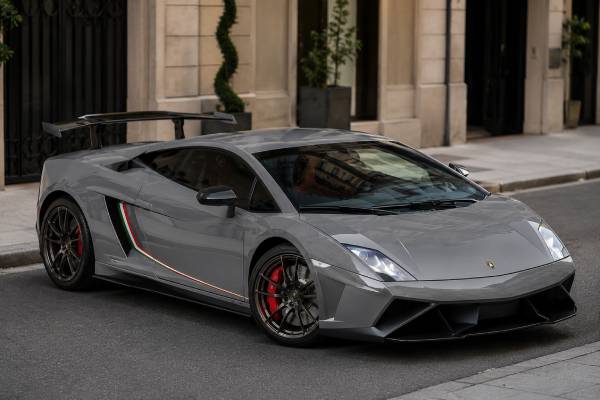
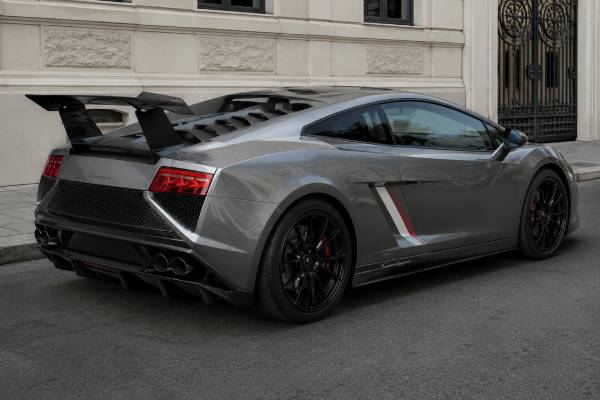
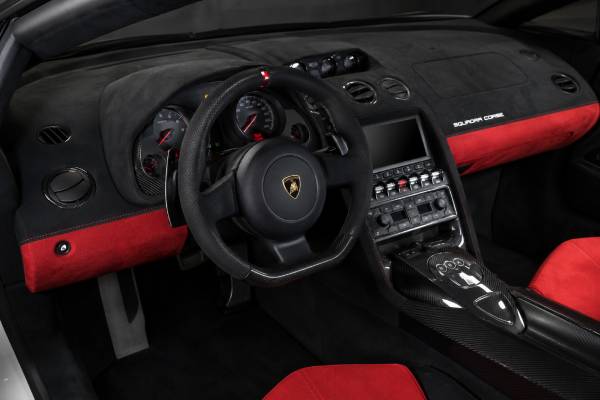
The Lamborghini Gallardo LP 570-4 Squadra Corse is the sharpest road-going Gallardo: a short-run, V10, all-wheel-drive coupe that borrowed its attitude from the Super Trofeo race car. It arrived in 2013, near the end of the L140 Gallardo line, when Lamborghini was preparing the Huracán but still had one final statement to make with its long-serving V10 platform. The result was not a comfort-focused special edition. It was lighter, louder, visually more aggressive, and more closely tied to Lamborghini’s one-make racing program than the normal LP 560-4 or even many LP 570-4 variants. For buyers, it matters because production was tiny, specifications were very specific, and originality can change value dramatically. For enthusiasts, it matters because it captures the late Gallardo at its most raw: naturally aspirated, compact, mechanical, and unfiltered by the complexity that later supercars would bring.
Table of Contents
- Why the Squadra Corse Still Matters
- V10 Specs, Chassis, and Performance Data
- Production, Colors, Options, and Authenticity
- Race-Car Hardware Made Road Legal
- How the Squadra Corse Drives
- Maintenance, Reliability, and Ownership Risks
- Market Value and Buying Strategy
Why the Squadra Corse Still Matters
The Squadra Corse is important because it was the final and most track-flavored street version of the Gallardo coupe. It was introduced in 2013 as the Gallardo era was closing, which gives it a natural place in Lamborghini history: not the first Gallardo, not the best-known Gallardo, but one of the most focused.
The Gallardo itself was a turning point for Lamborghini. It gave the brand a smaller V10 model below the V12 flagship and helped make Lamborghini a far more stable modern supercar maker. By the time the Squadra Corse arrived, the Gallardo had already been refined through LP 560-4, Superleggera, Spyder Performante, Super Trofeo Stradale, and other special versions. The Squadra Corse took that late-development knowledge and added a direct motorsport link.
The name came from Lamborghini’s racing department, the group responsible for customer racing and Super Trofeo activity. That link was not just branding. The car used the same basic 5.2-liter V10 output as the Super Trofeo race car, wore a large fixed carbon rear wing, and used a quick-release carbon engine cover inspired by race service access. It was based on the LP 570-4 Superleggera technical package, but the Squadra Corse looked and felt more like a road car wearing factory race hardware.
Its reputation today rests on four things:
- Rarity: commonly reported production was only about 50 cars worldwide, with a very small North American allocation.
- Timing: it was one of the last Gallardo special editions before the Huracán replaced the model line.
- Powertrain character: the naturally aspirated 5.2-liter V10 is the main event, especially at high rpm.
- Factory specification: the wing, carbon engine cover, carbon-ceramic brakes, forged wheels, Alcantara cabin, and tricolore graphics make the car easy to recognize but also easy to misrepresent if parts are missing.
Collectors care because it is a finite, identifiable version of a major Lamborghini model line. Drivers care because it combines compact size, all-wheel-drive traction, and a high-revving V10 without turbos, hybrid assistance, or heavy driver filtering.
V10 Specs, Chassis, and Performance Data
The Squadra Corse uses the LP 570-4 formula: a 5.2-liter naturally aspirated V10, six-speed e-gear automated manual transmission, and permanent all-wheel drive. Its published factory performance figures put it among the quickest Gallardo road cars, with 0–100 km/h in 3.4 seconds and a 320 km/h top speed.
The article title identifies the engine as CEH because many parts and registration references use engine-code shorthand for the final Gallardo 5.2 V10 family. For a purchase, treat that code as a starting point, not proof. Confirm the engine number, VIN data, service book, and factory build information.
| Category | Specification |
|---|---|
| Model code | Gallardo L140 |
| Production introduction | 2013 |
| Body style | 2-door coupe |
| Engine | 5.2-liter naturally aspirated V10 |
| Displacement | 5,204 cc |
| Valvetrain | DOHC, 40 valves |
| Fuel system | Gasoline direct injection |
| Maximum power | 570 CV / 419 kW at 8,000 rpm |
| Torque | 540 Nm / 398 lb-ft at 6,500 rpm |
| Lubrication | Dry sump |
| Transmission | 6-speed e-gear automated manual with paddle shift |
| Drivetrain | Permanent all-wheel drive with viscous coupling |
| Rear differential | Limited-slip differential |
| Frame | Aluminum spaceframe |
| Suspension | Aluminum double wishbones front and rear |
| Brakes | Carbon-ceramic discs standard |
| Wheels | 19-inch forged alloy wheels |
| Tires | 235/35 ZR19 front, 295/30 ZR19 rear |
| Dry weight | 1,340 kg / 2,954 lb |
| Power-to-weight ratio | 2.35 kg per hp |
| 0–100 km/h | 3.4 seconds |
| 0–200 km/h | 10.4 seconds |
| Top speed | 320 km/h / 199 mph |
| Fuel capacity | 90 liters / 23.8 US gallons |
One useful detail is the power rating. Lamborghini quoted 570 CV, which is metric horsepower. In some US materials, the same engine may appear as about 562 hp using SAE-style conversion. That difference does not mean the car has a different engine tune. It usually reflects the rating standard.
The transmission also needs context. The e-gear is not a torque-converter automatic and not a dual-clutch gearbox. It is an automated single-clutch manual. It can shift quickly and feels dramatic under load, but it also needs more mechanical sympathy than a modern dual-clutch transmission, especially in traffic and during low-speed maneuvering.
Production, Colors, Options, and Authenticity
The most valuable Squadra Corse examples are the ones that still match their original factory specification. Because production was so limited, missing carbon parts, changed wheels, altered graphics, non-original exhausts, or undocumented paintwork can matter more than they would on a normal Gallardo.
The model was presented in 2013, and market records often list examples as 2014 model-year cars, especially in North America. That can confuse buyers who expect the production year and registration year to match exactly. The better approach is to verify the VIN, build record, delivery market, and original selling dealer paperwork.
| Area | What to look for |
|---|---|
| Exterior colors | Giallo Midas, Bianco Monocerus, Grigio Thalasso, and Rosso Mars were the key launch colors |
| Graphics | Italian tricolore side stripe associated with the Squadra Corse theme |
| Rear wing | Large fixed carbon-composite rear wing with matte black finish and body-color contrast details |
| Engine cover | Carbon-composite removable cover with quick-release-style race influence |
| Wheels | Gloss-black 19-inch forged wheels |
| Brakes | Carbon-ceramic braking system with caliper color choices |
| Cabin trim | Alcantara with extensive visible carbon fiber |
| Seats | Carbon racing seats standard; comfort seats may appear on some cars |
| Transmission | Six-speed e-gear standard for the Squadra Corse |
Originality checks should go beyond a simple visual inspection. A buyer should ask for the service book, warranty booklet, original sales invoice if available, option sheet, recall records, invoices from Lamborghini dealers or recognized specialists, and any factory correspondence. A clean history report is useful, but it is not enough for a car this rare.
Be especially careful with cars advertised as “Squadra Corse style” or “Superleggera with Squadra parts.” A genuine car should have the correct VIN identity, original allocation history, proper body equipment, and documentation that supports the claim. Factory carbon pieces can be expensive and difficult to source, so a car missing original parts may not be a bargain even if the asking price looks attractive.
Race-Car Hardware Made Road Legal
The Squadra Corse feels special because its design is functional rather than decorative. The big wing, carbon engine cover, black forged wheels, stripped-back cabin details, and Alcantara surfaces all reinforce the same idea: reduce weight, increase stability, and make the road car feel closer to Lamborghini’s Super Trofeo program.
The exterior is more aggressive than a normal Gallardo LP 560-4. The rear wing is the defining piece. It gives the car a motorsport profile and adds high-speed stability, though it also creates drag. That helps explain why the Squadra Corse’s published top speed is slightly lower than some LP 570-4 Superleggera figures despite the same core output.
The carbon-composite engine cover is another important feature. It is not just a cosmetic panel. It visually links the car to race servicing and helps separate a real Squadra Corse from a normal Gallardo with aftermarket aero parts. The black front intakes, rear diffuser, wheels, and wing create a clear contrast against the bright factory body colors.
Inside, the car is closer to a lightweight special than a grand tourer. The most desirable cabins have carbon racing buckets, carbon door panels, pull-strap-style details, Alcantara trim, and a simple driver-focused layout. The cabin is still recognizably late Gallardo, with Audi-era switchgear and a more usable interface than older Lamborghinis, but the materials make it feel more purposeful.
The engine is the emotional center. The V10 uses a 90-degree layout, direct injection, dry-sump lubrication, and a high-rpm power peak. The firing character gives it a hard, uneven, metallic voice that becomes sharper as it climbs toward the top of the tachometer. Unlike turbocharged supercars, it does not hide the driver from the engine’s work. Response, sound, and revs are the point.
The all-wheel-drive system gives the car a different personality from rear-drive limited editions. It is not the lightest-feeling Gallardo through every phase of a corner, but it gives the Squadra Corse huge traction on corner exit and makes the car easier to drive hard than its looks suggest. That mix of theater and security is a major part of its appeal.
How the Squadra Corse Drives
The Squadra Corse drives like a late Gallardo turned up for track use: fast, loud, secure, and more physical than a modern dual-clutch supercar. It is not delicate, but it is precise, and its appeal grows the harder the V10 is allowed to work.
At low speed, the car can feel stiff and slightly impatient. The e-gear transmission needs clean throttle inputs, especially when parking, reversing, or creeping in traffic. Smooth drivers get smoother shifts. Impatient drivers create heat and clutch wear. This is one reason a test drive should include both slow maneuvering and hard acceleration.
Once moving, the V10 dominates the experience. Throttle response is immediate, and the engine feels strongest when revved. The car does not deliver the easy low-rpm shove of a modern turbo engine. Instead, it builds urgency as the tachometer rises, rewarding commitment with sound and speed. The last few thousand rpm are what make the car memorable.
The steering is direct and confidence-building. It does not have the light, filtered feel of many newer supercars. The front axle needs proper tires and alignment to feel its best, but when set up correctly, the car gives clear information. The all-wheel-drive system adds stability, especially when the driver goes back to throttle early.
Ride quality depends heavily on tire age, road surface, and wheel condition. On smooth pavement, the Squadra Corse feels tight and serious. On broken roads, it can feel busy. This is not a car for buyers who want a soft exotic cruiser. It is best on fast roads, track days, and short special drives where the sound and response can be used.
The brakes are powerful, but condition matters. Carbon-ceramic discs can last a long time in road use, yet track use, impact damage, incorrect cleaning chemicals, and worn pads can turn them into a major expense. A proper inspection should measure rotor wear and check for chips, cracks, heat marks, and uneven surfaces.
Visibility is better than the car’s dramatic shape suggests, but the rear wing and low nose require care. Front lift, if fitted, is highly useful. The front splitter and underbody should be checked carefully because steep driveways, trailer loading, and city use can leave damage that sellers may not mention.
Maintenance, Reliability, and Ownership Risks
The Squadra Corse can be dependable when maintained correctly, but it is still an exotic, low-volume Lamborghini with expensive consumables. The safest ownership strategy is to buy the best-documented car, not the cheapest car.
The 5.2-liter V10 is generally strong when serviced on time, kept properly lubricated, and allowed to warm before hard use. The dry-sump system, high output, and heat load mean routine maintenance should be treated seriously. Oil quality, correct fluid specifications, and specialist knowledge matter.
The e-gear system is one of the biggest inspection areas. It can work well, but clutch wear depends heavily on driving style, software calibration, traffic use, and adjustment. A pre-purchase inspection should include a clutch wear reading, engagement behavior, hydraulic pressure checks, actuator operation, and confirmation that the system has been calibrated correctly.
Common ownership areas to inspect include:
- E-gear clutch and hydraulics: look for harsh engagement, slow shifts, warning lights, pump cycling issues, and poor low-speed behavior.
- Carbon-ceramic brakes: check rotor condition, pad life, surface damage, and replacement history.
- Front lift system: inspect for leaks, weak operation, uneven lifting, or warning lights.
- Cooling system: check radiators, hoses, fans, coolant leaks, and debris trapped in front intakes.
- Suspension: inspect control-arm bushings, dampers, ball joints, alignment, and tire wear patterns.
- Electrical systems: check instrument warnings, battery health, infotainment, alarm behavior, and control modules.
- Interior materials: Alcantara wear, sticky switch surfaces, loose carbon trim, and seat-bolster damage can all affect presentation.
- Body and underbody: inspect the nose, diffuser, sills, wheel arches, carbon panels, and signs of poor paint repair.
There was a safety recall affecting certain 2011–2014 Gallardo coupe and Spyder vehicles for engine-control software that could erase trouble codes after the ignition was switched off, potentially preventing warning lamps from alerting the driver later. A buyer should confirm recall completion by VIN, not by model year alone.
Service records should show more than oil changes. Look for brake-fluid services, gearbox and differential fluid work, tire date codes, alignment records, clutch data, battery replacements, and documentation for any aftermarket exhaust or ECU change. Track use is not automatically bad, but undocumented track use is a risk.
Originality also affects maintenance decisions. An aftermarket exhaust may improve sound, but it can affect emissions readiness, warranty history, and collector value. A manual conversion, twin-turbo kit, non-factory wheels, or suspension change may appeal to some drivers, but it moves the car out of normal collectible territory. On a Squadra Corse, factory-correct usually matters.
Market Value and Buying Strategy
The Squadra Corse market is thin, so a narrow price guide can be misleading. Public sales are rare, condition varies widely, and modified examples should not be used as direct comparables for low-mile original cars.
As a practical guide, the best original examples tend to sit well above normal LP 560-4 and standard LP 570-4 Superleggera values. European listings and public market trackers have often placed usable cars in the high six-figure euro range or around the upper-$200,000 to $300,000-plus zone when converted, while very special North American cars can command far more when mileage, provenance, allocation, and originality line up. Modified examples can sell for less or more depending on the buyer, but they should be judged separately.
The biggest value drivers are:
- Verified identity: genuine Squadra Corse VIN and factory documentation.
- Original specification: correct carbon wing, engine cover, wheels, graphics, brakes, seats, and trim.
- Mileage: ultra-low mileage helps value, but a carefully used and serviced car may be safer to drive.
- Color and market: Giallo Midas North American cars are especially recognizable; other factory colors can appeal to collectors seeking rarity.
- Maintenance history: complete Lamborghini dealer or respected specialist records carry real weight.
- Condition: paint quality, carbon condition, brake life, tire age, clutch data, and underbody condition all matter.
- Provenance: single-owner history, original books, tools, window sticker, delivery photos, and known collector ownership help.
- Lack of modifications: reversible exhaust changes are one thing; forced induction, gearbox conversions, or missing factory parts are another.
A proper buying process should be methodical:
- Confirm the VIN and build identity before negotiating.
- Request original sales documents, service records, and recall proof.
- Compare the car’s equipment against known Squadra Corse factory features.
- Have a Lamborghini specialist perform a pre-purchase inspection.
- Obtain clutch wear data and e-gear diagnostics.
- Inspect carbon-ceramic brakes, tires, lift system, and underbody condition.
- Price the car based on originality and risk, not just mileage.
The best cars to seek are complete, original, documented, and recently serviced by a credible specialist. The cars to avoid are those with vague identity claims, missing carbon parts, heavy undocumented modifications, accident repairs without proper invoices, old tires, weak clutch data, or sellers who will not allow a specialist inspection.
Long-term collectability looks strong because the Squadra Corse sits at the end of an important Lamborghini line and represents the naturally aspirated, pre-Huracán V10 era in one of its most focused forms. It is not the cheapest Gallardo to own, and it is not the easiest one to buy confidently. But for the right collector-driver, that is exactly why it matters.
References
- Lamborghini Gallardo LP 570-4 Squadra Corse – Race track emotion direct to the road. | Lamborghini Dallas 2013 (Press Release)
- Heritage | Lamborghini.com 2026 (Manufacturer Page)
- Recall Campaign | Lamborghini.com 2026 (Recall Information)
- 2013 Lamborghini Gallardo Recalls | Cars.com 2018 (Recall Database)
- Lamborghini Gallardo LP570-4 Squadra Corse Market – CLASSIC.COM 2026 (Market Data)
Disclaimer
This article is for informational purposes only and is not a substitute for professional diagnosis, repair, valuation, or inspection. Specifications, torque values, service intervals, procedures, software campaigns, and equipment can vary by VIN, market, model year registration, and factory configuration. Always verify details against official Lamborghini service documentation and have any purchase candidate inspected by a qualified Lamborghini specialist.
If this guide helped you, please share it on Facebook, X/Twitter, or your favorite automotive community to support our work.