
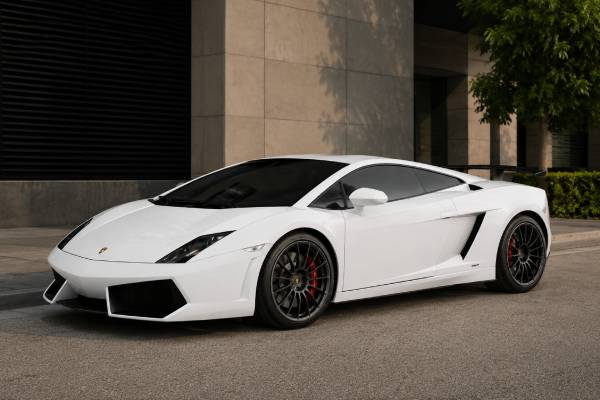
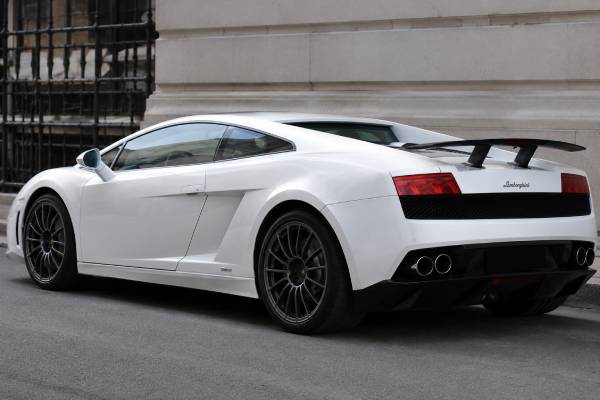
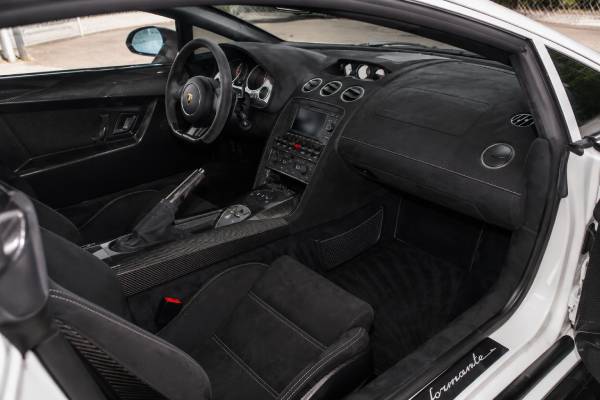
The Lamborghini Gallardo LP 560-2 50° Anniversario is one of the most interesting late Gallardos because it combines the sharpened 5.2-liter V10, rear-wheel drive, anniversary-only details, and genuine end-of-era appeal. It arrived during Lamborghini’s 50th birthday year, just before the Gallardo line gave way to the Huracán, and it now attracts two very different buyers: drivers who want a raw, naturally aspirated V10 Lamborghini and collectors who understand how rare a rear-drive, limited-edition Gallardo can be.
The important point is this: the 50° Anniversario is not just another white Gallardo with trim parts. It sits at the intersection of the final L140 platform, the last years of the gated-manual Lamborghini era, and the naturally aspirated V10 character that made the Gallardo a modern landmark. Condition, originality, transmission, documentation, and market specification matter as much as mileage.
Table of Contents
- Why the 50° Anniversario Gallardo Matters
- CEH V10 Specs and Chassis Hardware
- Production Details, Options, and Identification
- Design and Engineering That Set It Apart
- How It Drives on Road and Track
- Maintenance Risks and Ownership Reality
- Values, Inspection Priorities, and Buying Advice
Why the 50° Anniversario Gallardo Matters
The LP 560-2 50° Anniversario matters because it is a rare rear-wheel-drive finale-era Gallardo built for Lamborghini’s 50th anniversary. It blends the late facelift body, the stronger 5.2-liter direct-injection V10, and special-series visual parts that separate it from ordinary LP 550-2 and LP 560-4 cars.
The Gallardo itself was the car that changed Lamborghini’s business. Earlier Lamborghinis were often spectacular but fragile, low-volume, and intimidating to own. The Gallardo arrived in 2003 as the smaller V10 companion to the V12 Murciélago, using Audi-era engineering discipline without losing the Sant’Agata drama. By the time production ended in 2013, it had become one of the most important Lamborghinis ever made.
The L140 project had deep roots. Lamborghini had wanted a smaller car below the V12 flagship for decades, and the Gallardo finally delivered that idea in a modern form. Its compact proportions, aluminum structure, mid-engine layout, and V10 power made it easier to use than a Murciélago but still exotic enough to feel special every time the engine fired.
The LP 560-2 50° Anniversario came very late in that story. By 2013, the Gallardo had already gone through several major phases:
- the original 5.0-liter Gallardo coupe and Spyder
- the 2008 LP 560-4 facelift with the 5.2-liter direct-injection V10
- lighter and sharper Superleggera and Performante variants
- rear-wheel-drive LP 550-2 models influenced by the Valentino Balboni edition
- regional and commemorative limited editions
- final anniversary and track-flavored special versions
The 50° Anniversario sits closest in spirit to the rear-drive driver’s Gallardo. It carries the “LP 560-2” naming logic: “LP” means longitudinal posteriore, or longitudinal rear-mounted engine; “560” refers to the metric horsepower rating; and “2” identifies two driven wheels. Unlike the LP 560-4, it sends power to the rear axle only.
That rear-drive layout is a major part of its character. Lamborghini was strongly associated with all-wheel drive through much of the Gallardo and Murciélago era, so rear-drive Gallardos feel more direct, lighter in response, and more old-school. They are not necessarily faster in every test, but they are more communicative.
The anniversary connection also gives the car historical weight. Lamborghini celebrated 50 years in 2013 with several special models and events, and the Gallardo was nearing the end of production. That makes the LP 560-2 50° Anniversario a bridge between two eras: the Audi-refined first modern Lamborghini volume platform and the Huracán generation that followed with a dual-clutch gearbox and more advanced electronics.
For collectors, the attraction is simple. A late-production, limited, naturally aspirated, rear-drive V10 Lamborghini with genuine factory identification has a stronger story than a standard Gallardo. For drivers, the attraction is just as clear: it keeps the noise, throttle response, steering feel, compact size, and mechanical honesty that newer supercars often filter out.
CEH V10 Specs and Chassis Hardware
The core specification is a 5,204 cc naturally aspirated V10, rear-wheel drive, and either a six-speed gated manual or Lamborghini’s six-speed E-gear automated manual depending on market and individual build. The metric output is 560 PS, commonly described as 560 hp, with about 552 hp under SAE-style conversion.
The CEH-family 5.2-liter V10 is the key technical difference between late Gallardos and the early 5.0-liter cars. It uses direct fuel injection, a dry-sump oiling system, four valves per cylinder, chain-driven camshafts, and variable valve timing. It is a high-revving engine, but it is not a peaky race motor that only works near redline. It has enough midrange torque to feel flexible in normal road driving, then becomes sharper and louder as it climbs toward 8,000 rpm.
| Item | Lamborghini Gallardo LP 560-2 50° Anniversario |
|---|---|
| Platform | L140 Gallardo |
| Production focus | 2013 50th anniversary limited edition; some cars may be titled or registered later depending on market |
| Body style | 2-door coupe |
| Layout | Longitudinal mid-engine, rear-wheel drive |
| Engine code family | CEH 5.2-liter V10 family |
| Displacement | 5,204 cc |
| Induction | Naturally aspirated |
| Fuel system | Direct injection |
| Power | 560 PS, often listed as 560 hp; approximately 552 SAE hp |
| Torque | 540 Nm / about 398 lb-ft |
| Transmission | 6-speed manual or 6-speed E-gear automated manual, depending on build |
| Drivetrain | Rear-wheel drive with rear limited-slip differential |
| Oiling | Dry sump |
| Fuel capacity | About 90 liters / 23.8 U.S. gallons |
| Area | Typical late Gallardo coupe data |
|---|---|
| Chassis construction | Aluminum structural chassis with aluminum and composite exterior panels |
| Front suspension | Independent double wishbone with coil springs and anti-roll bar |
| Rear suspension | Independent double wishbone with coil springs and anti-roll bar |
| Steering | Hydraulic power-assisted rack-and-pinion |
| Brakes | Ventilated discs; carbon-ceramic brakes may appear depending on specification |
| Wheels | 19-inch Scorpius-style dark grey wheels are associated with the anniversary specification |
| Typical tires | 235/35 ZR19 front and 295/30 ZR19 rear performance tires |
| Wheelbase | 2,560 mm |
| Length | About 4,345 mm |
| Width | About 1,900 mm excluding mirrors |
| Height | About 1,165 mm |
Performance figures vary with transmission, tire condition, surface, and testing method. A realistic reference point is about 0–100 km/h in the high-3-second range and a top speed around 320 km/h, or just under 200 mph. The rear-drive layout can be slightly less explosive off the line than the all-wheel-drive LP 560-4, but it gives the driver more steering purity and throttle-adjustable balance.
The E-gear system deserves clear explanation. It is not a modern dual-clutch transmission. It is a single-clutch automated manual that uses hydraulic actuators to operate the clutch and shift mechanism. In Sport or Corsa-style aggressive driving, it can feel dramatic and period-correct. In traffic, it can feel jerky, and clutch wear depends heavily on driver behavior and calibration.
The gated manual is simpler to understand and more valuable to many collectors. It gives the Gallardo a tactile, mechanical layer that later Lamborghinis largely abandoned. A manual car is not automatically better as a driver, but it is usually more desirable as a collectible specification when originality and condition are equal.
Production Details, Options, and Identification
The buyer’s first job is to prove that the car is a real 50° Anniversario, not a standard rear-drive Gallardo with cosmetic additions. Public factory data for this exact subvariant is limited, so build documentation, VIN-specific dealer records, and Lamborghini heritage support matter more than repeated internet claims.
The most commonly cited figure for the LP 560-2 50° Anniversario coupe is about 100 units worldwide, with some specialists also citing a smaller U.S. allocation. Treat those numbers as useful market context, not a substitute for factory paperwork. On a car this rare, a seller should be able to show more than a badge and a story.
Important identification points include:
- Bianco Opalis anniversary paint, commonly described as a shimmering or metallic white
- carbon-fiber rear wing derived from Superleggera-style hardware
- transparent engine cover
- dark grey Scorpius-style wheels
- anniversary badging or 50° details
- rear-wheel-drive LP 560-2 configuration
- late facelift front and rear styling
- build records matching the car’s VIN, trim, paint, market, and transmission
The transmission is one of the biggest value dividers. Gated-manual cars carry special collector energy because they represent the end of the open-gate Lamborghini era. E-gear cars can still be rare and desirable, especially if extremely original, low-mileage, or market-specific, but they usually need a more careful value adjustment because single-clutch automated manuals are less fashionable than true manuals today.
Market labeling can create confusion. Some cars built for the 2013 anniversary year may appear in listings or registrations as 2014 model-year cars, especially in the United States or other markets that use different title-year practices. The article’s focus is the 2013 anniversary production context, but buyers should verify the actual build date, VIN sequence, delivery country, and first registration date rather than arguing from a listing headline.
Factory options still matter, even on a special edition. Look for documentation around:
- transmission type
- brake type, especially steel versus carbon-ceramic
- front lifting system
- seat type and upholstery
- stitching color and interior trim
- navigation and audio specification
- market equipment
- original wheels and tire specification
- original exhaust and emissions equipment
Color originality is especially important. A wrap is not a problem if the underlying paint is correct and undamaged, but a respray needs explanation. Bianco Opalis is part of the model’s identity. A car repainted in another color, or a car that began life in another color and now wears white, should be valued differently unless the documentation supports a rare factory special order.
Interior condition also affects authenticity. Many Gallardos suffer from sticky switchgear, worn bolsters, sagging trim, or non-original audio installations. These issues may look minor, but they tell you how the car was used and whether it has been maintained with the right parts. On a limited edition, incorrect interior retrim work can hurt value even if it looks clean.
Documentation should include as much of the following as possible:
- original bill of sale or dealer delivery paperwork
- service book and stamped maintenance history
- invoices from Lamborghini dealers or recognized specialists
- warranty records, recall completion records, and diagnostic printouts
- owner’s manuals, tool kit, tire inflator, keys, and factory accessories
- paint-protection-film records if the car has PPF
- photos from earlier ownership, especially before any modifications
- import and compliance documents for cross-border cars
The best examples are not always the lowest-mileage examples. A properly serviced, lightly used car with complete records can be safer than a long-stored car that has covered almost no miles but needs tires, fluids, clutch work, battery replacement, sticky-button repair, and brake attention.
Design and Engineering That Set It Apart
The 50° Anniversario looks special because it combines the clean late Gallardo facelift shape with anniversary paint, a transparent engine cover, and Superleggera-influenced carbon aero pieces. It is aggressive, but it is not overloaded with the extreme appendages of a full track edition.
The original Gallardo shape was compact and wedge-like, with strong shoulders, short overhangs, and a low cabin. The late facelift sharpened the design with more angular front intakes and a more horizontal rear treatment. On the 50° Anniversario, the Bianco Opalis paint highlights those surfaces in a way that darker colors often hide.
The carbon rear wing changes the car’s visual balance. Standard Gallardos can look compact and almost understated by Lamborghini standards. The wing gives the Anniversario a clearer motorsport signal without turning it into a Super Trofeo Stradale. It also links the car visually to the lighter, harder Superleggera side of the family.
The transparent engine cover is more than a showpiece. Lamborghini buyers expect drama, and the exposed V10 delivers it at rest. The cover frames the engine as part of the design, not just a hidden mechanical unit. On inspection, however, the cover must fit correctly and show no signs of heat damage, poor repainting, or incorrect replacement panels.
Engineering-wise, the most important feature is the rear-drive chassis tune. Removing the front-drive hardware changes more than weight. It changes steering feel, corner-entry behavior, throttle response in bends, and how the stability control works. Lamborghini specifically tuned the rear-drive Gallardo’s springs, dampers, stabilizers, tires, aerodynamics, and electronic stability program for the new power flow. That matters because a good rear-drive Gallardo should feel engineered, not simply converted.
The hydraulic steering is another major part of the appeal. Many later supercars moved toward electric assistance and heavier software filtering. The Gallardo’s steering is not delicate like a small sports car, but it gives useful front-end information and a clear sense of tire load. On a properly aligned car with fresh tires, the steering is one of the reasons the LP 560-2 feels more alive than its spec sheet suggests.
The V10’s sound is central to the experience. The 5.2-liter engine has a sharper, harder-edged character than many turbocharged modern engines. Intake noise, mechanical vibration, and exhaust tone build together. An aftermarket exhaust can make it louder, but not always better. Cheap or badly tuned systems can drone, trigger warning lights, affect emissions readiness, or reduce collector value.
The cabin is pure late-2000s Audi-era Lamborghini. That means a mixture of exotic theater and familiar switchgear. The driving position is low, the windshield is shallow, and the center tunnel gives the car a serious cockpit feel. It is not spacious, but it is less punishing than older Lamborghinis and easier to use than many V12 models.
The best design detail may be restraint. The 50° Anniversario is special enough to stand out, yet close enough to the basic Gallardo form to age well. That balance helps collectability because buyers can recognize the limited edition without feeling that it belongs only on a track or in a themed collection.
How It Drives on Road and Track
The LP 560-2 50° Anniversario feels fast, sharp, loud, and mechanical, but its real charm is balance rather than raw numbers. It is more playful than the all-wheel-drive Gallardo and more usable than a full lightweight track variant.
At low speed, the V10 is tractable. It can move cleanly through town, but it always feels like a supercar. The clutch, steering, ride height, rear visibility, and cabin noise remind you that this is not a normal sports coupe. The nose is low, so front-lift equipment, if fitted, is valuable in cities with steep driveways or speed bumps.
Acceleration is immediate because there are no turbos to spool. The engine responds cleanly to small throttle movements, then hardens as the revs rise. Above the midrange, the V10 becomes the center of the car. It pulls with urgency, and the sound becomes metallic and urgent near the top of the tachometer.
A manual car rewards timing. The open gate makes every shift an event, and clean downshifts become part of the pleasure. It is not the fastest way to move a Gallardo, but it is one of the most satisfying. A bad manual car, however, can feel obstructive if the clutch, linkage, engine mounts, or gearbox condition are poor.
An E-gear car has a different rhythm. Driven gently in automatic mode, it can feel dated because the system pauses and slips the clutch in ways that modern dual-clutch drivers may not expect. Driven assertively, with deliberate throttle inputs and manual paddle control, it makes more sense. The shift event becomes part of the drama. The tradeoff is clutch wear and higher diagnostic importance.
The rear-drive chassis makes the car more adjustable. The front end feels less burdened than an all-wheel-drive Gallardo, and the rear axle responds clearly to throttle. It is not a beginner’s drift toy. It has wide rear tires, strong grip, and stability control, but it will rotate more naturally than a 560-4 if the driver is abrupt.
On a mountain road, the LP 560-2 is at its best when the driver is smooth. Brake in a straight line, let the front settle, turn in cleanly, and use the V10’s torque to shape the exit. Old or mismatched tires can ruin this balance. Tire age matters as much as tread depth on a car that may sit for long periods.
On track, the car is capable but expensive to run. The brakes, tires, clutch, fluids, and cooling system all need to be in excellent condition. Carbon-ceramic brakes can handle heat well when healthy, but replacement cost is high. Steel brakes may be easier to service for road use, but repeated track work still demands careful inspection.
Everyday usability is better than people expect but still limited. The cabin is snug, luggage space is small, rear visibility is poor, and the ride can be firm. Still, a sorted Gallardo can handle highway miles, weekend trips, and regular exercise better than many older exotics. That usability is part of why the model became so successful.
The driving experience changes dramatically between a neglected car and a properly maintained one. A fresh alignment, healthy dampers, correct tires, properly bled brakes, clean throttle response, and a well-adjusted clutch can make the car feel ten years younger. A tired example can feel nervous, noisy, and expensive within the first mile.
Maintenance Risks and Ownership Reality
The Gallardo is one of the more usable modern Lamborghinis, but the 50° Anniversario is still an exotic car with exotic inspection needs. The engine can be strong, yet deferred maintenance, clutch wear, aging electronics, brake costs, and accident history can overwhelm any savings from buying a cheaper car.
The V10 itself is usually not the biggest fear when maintained correctly. It uses timing chains rather than a routine timing-belt service, and the dry-sump system is designed for sustained performance use. The risk is improper servicing. Oil level must be checked correctly, the correct fluids matter, and short-trip storage can cause more problems than careful driving.
Key maintenance areas include:
- annual fluid service regardless of mileage
- correct engine oil service procedure for the dry-sump system
- gearbox and differential fluid history
- coolant age and radiator condition
- brake fluid changes, especially before spirited driving
- spark plugs, coils, and ignition components as the car ages
- oxygen sensors, emissions readiness, and catalytic converter health
- battery condition and use of a proper maintainer
- tire age, not just tire tread depth
Clutch condition is one of the first things to check. E-gear cars can show clutch wear through diagnostic readouts, but the number must be interpreted by someone who understands the system. Driving style, calibration, bite point, and actuator health all matter. A car with a low mileage reading can still have a worn clutch if it spent its life creeping through traffic or being reversed up inclines.
Manual cars need different checks. Look for smooth engagement, no slipping under load, no grinding during fast shifts, no excessive gear lever play, and no signs of abuse. The gated shifter should feel precise and mechanical, not vague or sticky.
The E-gear hydraulic system adds parts and labor risk. Pumps, accumulators, sensors, actuators, and calibration can all affect shift quality. A harsh or inconsistent E-gear car should not be dismissed as “normal Lamborghini behavior” until a specialist has scanned and tested it.
Brakes require careful identification. Steel brakes are less terrifying to replace, but still not cheap. Carbon-ceramic brakes can last a long time on road-driven cars, yet they need proper measurement and visual inspection. Chips, cracks, heat damage, uneven wear, or low rotor mass can turn a desirable option into a major bill.
The suspension and steering should feel tight. Listen for control-arm bushing noise, ball-joint play, damper leaks, lift-system leaks, wheel-bearing hum, and steering rack issues. Because the car is low and wide, undertray damage and front bumper repairs are common. A clean underside is a meaningful value signal.
Body and structure inspection is essential. The Gallardo’s aluminum chassis does not tolerate casual repair work like an ordinary steel-bodied car. Accident damage, poor panel alignment, hidden frame repair, non-original paintwork, or incorrect fasteners can reduce value sharply. A paint-meter reading is useful, but it is not enough. The car should go on a lift with undertrays inspected where appropriate.
Interior aging is common. Sticky buttons, worn climate controls, shrinking trim, leather bolster wear, sagging headliners, and aftermarket electronics all affect ownership satisfaction. These repairs may seem cosmetic, but originality matters on a limited edition.
A known U.S. recall area for 2011–2014 Gallardo models involved engine ECU software that could fail to store trouble codes correctly after key-off. Any buyer should verify recall status by VIN, not by model name alone, because market, production date, and individual campaign completion determine what applies.
Parts availability is generally better than for older low-volume Lamborghinis, but limited-edition trim can be harder to replace. Anniversary-specific wheels, badges, carbon parts, interior details, and paint-matched pieces deserve extra care. A missing original part may be far more difficult to source than a normal maintenance item.
The safest ownership pattern is simple: buy the best documented car, service it before it needs service, drive it enough to keep systems healthy, and store it correctly. The riskiest pattern is buying a modified, under-documented, low-price car and assuming Gallardo usability means ordinary-car costs.
Values, Inspection Priorities, and Buying Advice
The right LP 560-2 50° Anniversario is a collector-grade Gallardo, not just a used exotic. Value depends heavily on transmission, originality, mileage, factory documentation, accident history, market specification, and whether the car still carries its anniversary-specific parts.
Current market data is thin because few cars trade publicly. Public trackers and auction records show a wide spread, with strong cars reaching high collector territory and weaker or less desirable examples selling much lower. That spread is normal for rare modern exotics. A single average price can mislead because one manual, original, low-mileage car and one modified, E-gear, higher-mileage car are not the same product.
The strongest value factors are:
- verified 50° Anniversario identity
- original Bianco Opalis paint
- gated manual transmission
- low but believable mileage
- complete Lamborghini or respected-specialist service history
- original carbon wing, transparent engine cover, wheels, and badges
- no accident history or structural repair
- clean emissions and recall records
- original exhaust and catalytic converters
- complete books, tools, keys, and accessories
- market rarity, especially desirable left-hand-drive or right-hand-drive allocations
The weakest value factors are:
- unclear identity or missing build documentation
- repaint without a clear reason
- aftermarket bodywork or incorrect wheels
- heavily modified exhaust or tune
- incomplete service history
- high clutch wear
- sticky interior left unrepaired
- old tires on a supposedly “ready to drive” car
- accident damage hidden behind cosmetic correction
- missing anniversary-specific parts
- import paperwork gaps
A proper pre-purchase inspection should be model-specific. A normal used-car inspection is not enough. The specialist should understand late Gallardos, rear-drive variants, E-gear diagnostics, manual clutch behavior, carbon-ceramic brake measurement, and aluminum chassis repair clues.
Use this inspection sequence:
- Confirm the VIN, build data, market, transmission, paint, and anniversary specification.
- Review all service invoices, not just stamped books.
- Run Lamborghini-capable diagnostics and check readiness, stored faults, clutch data where applicable, and campaign completion.
- Inspect the body on a lift, including undertrays, front structure, suspension mounting points, and cooling duct areas.
- Measure brake condition properly, especially on carbon-ceramic cars.
- Check tire brand, size, date codes, and wear pattern.
- Road-test from cold and warm conditions, checking clutch behavior, shift quality, steering, braking, suspension noise, and cooling stability.
- Verify that every special-edition part is present and original or documented.
Do not buy based only on mileage. A 2,000-mile car may need expensive recommissioning if it sat for years. A 15,000-mile car with annual services, fresh tires, clean diagnostics, and careful ownership may be easier to trust. Mileage matters, but condition and proof matter more.
For investment-minded buyers, the best long-term bet is a manual, highly original, complete-documentation car in correct anniversary specification. For drivers, an E-gear car can make sense if priced correctly and maintained properly, especially if the buyer wants the look, sound, and rarity without chasing the manual premium.
For owners, the best decision is to preserve the car without turning it into a museum object. Keep the original exhaust, wheels, trim, and documents. Any reversible upgrades should be documented and stored with the original parts. Drive the car enough to keep seals, fluids, battery, hydraulics, and tires healthy.
The LP 560-2 50° Anniversario is likely to remain collectible because it has the right ingredients: limited production, anniversary significance, late Gallardo development, rear-wheel drive, naturally aspirated V10 power, and a connection to the final era of manual Lamborghini road cars. The market will continue to separate excellent cars from ordinary ones. Buy the example, not the badge.
References
- Celebrating The Lamborghini Gallardo 2023
- Lamborghini Gallardo LP 560-4 Coupé – Technical Specifications, Pictures 2008
- Lamborghini Gallardo 550-2 – Technical Specifications, Pictures 2010
- Part 573 Safety Recall Report 18V-833 2018 (Recall Database)
- Lamborghini Gallardo LP560-2 50th Anniversary Market – CLASSIC.COM 2026 (Market Data)
Disclaimer
This article is for informational purposes only and is not a substitute for professional diagnosis, repair, valuation, or pre-purchase inspection. Specifications, torque values, service intervals, recall applicability, and repair procedures can vary by VIN, market, equipment, production date, and previous service history. Always verify details against official Lamborghini service documentation and have any prospective purchase inspected by a qualified Lamborghini specialist.
If this guide helped you, please consider sharing it on Facebook, X/Twitter, or your preferred car community to support our work.