
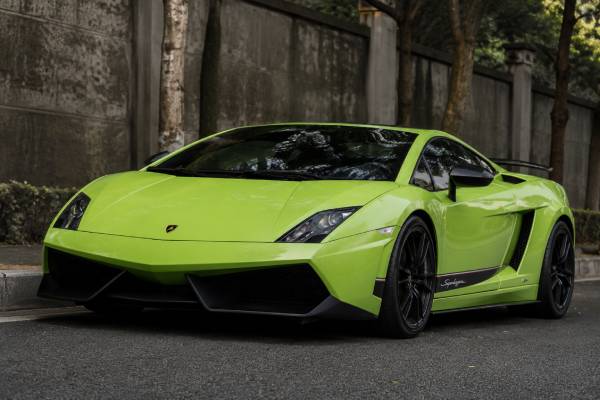
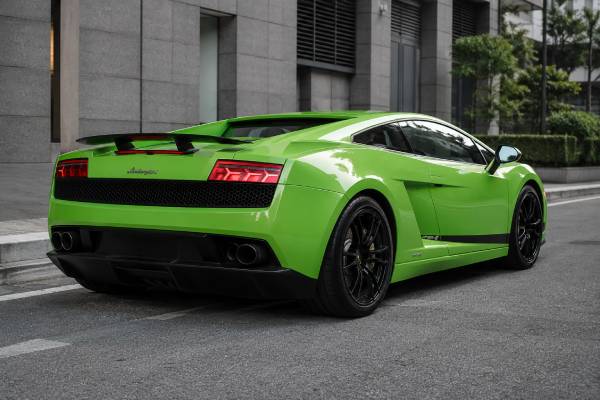
The Lamborghini Gallardo LP 550-2 Indonesia Limited Edition is one of the more unusual late-production Gallardo specials: a rear-wheel-drive 5.2-liter V10 coupe dressed with Superleggera-style visual hardware and built for a specific market rather than global showroom volume. It matters because it combines three things collectors notice: the final-era L140 Gallardo platform, the purer LP 550-2 rear-drive chassis, and market-specific factory equipment that can be difficult to verify years later. It is not a stripped Superleggera, and it is not simply a standard LP 550-2 with a badge. The appeal is more specific: a 550 hp naturally aspirated V10, e-Gear automated manual transmission, dramatic Verde Ithaca presentation, and the look of the lighter LP 570-4 family without the all-wheel-drive hardware. For buyers, the main challenge is proving originality, checking expensive mechanical systems, and understanding that rarity only adds value when the car’s documents support the story.
Table of Contents
- Why This Indonesian RWD Gallardo Matters
- 5.2 V10 Specs and Chassis Data
- Indonesia Limited Edition Equipment and Identification
- Superleggera-Style Design and RWD Engineering
- How the LP 550-2 Drives
- Maintenance Risks and Specialist Ownership
- Market Value, Inspection, and Buying Priorities
Why This Indonesian RWD Gallardo Matters
The Indonesia Limited Edition is best understood as a late Gallardo LP 550-2 with market-specific styling and equipment, not as a separate mechanical model. Its importance comes from timing: it appeared near the end of Gallardo production, when Lamborghini was turning the long-running L140 platform into a broad family of special editions before the Huracán arrived.
The Gallardo itself was Lamborghini’s first modern volume supercar. Launched in the early 2000s under Audi ownership, it brought a smaller V10 model beneath the Murciélago and gave the brand a much wider buyer base. The car kept traditional Lamborghini drama, but it added a level of build quality, daily usability, and service structure that earlier Lamborghinis did not always provide.
The LP 550-2 changed the Gallardo story because it moved away from the all-wheel-drive formula that defined most of the model line. “LP” means the engine is mounted longitudinally behind the cabin, “550” refers to the output figure, and “2” means two driven wheels. In this case, those two wheels are the rears. That single number changes the car’s character. Compared with the LP 560-4, the LP 550-2 is less about launch traction and more about steering feel, throttle balance, and driver involvement.
The rear-drive idea first gained major attention with the Gallardo LP 550-2 Valentino Balboni, named after Lamborghini’s long-serving test driver. Lamborghini then extended the concept to regular LP 550-2 Coupe and Spyder models. The Indonesia Limited Edition belongs to this later period, when the LP 550-2 was no longer just a one-off tribute idea but still felt special inside a lineup dominated by all-wheel-drive variants.
For collectors, the car sits in an interesting middle ground. It is not as widely recognized as the Balboni, not as track-focused as the LP 570-4 Superleggera, and not as universal in appeal as a gated manual Gallardo. Yet it has traits that can become more attractive over time:
- It uses the final 5.2-liter direct-injection V10 rather than the earlier 5.0-liter engine.
- It has rear-wheel drive, a relatively rare layout for the Gallardo family.
- It was linked to a specific market and factory equipment package.
- It carries Superleggera-style body pieces while keeping LP 550-2 driveline simplicity.
- It arrived in the final year of Gallardo production, which helps its collector narrative.
The biggest caution is documentation. Public information on the Indonesia Limited Edition is thinner than on globally promoted Lamborghini specials. A buyer should avoid relying on sales descriptions alone. The right car needs a build sheet, delivery paperwork, service book, option codes, and ideally written confirmation from Lamborghini or an authorized dealer showing that it left the factory in the correct specification.
5.2 V10 Specs and Chassis Data
The core specification is the LP 550-2 formula: a naturally aspirated 5.2-liter V10, rear-wheel drive, and a chassis retuned specifically for two-wheel-drive behavior. The Indonesia Limited Edition’s special value comes from its equipment and presentation, while its performance foundation is the standard LP 550-2 Coupe.
| Area | Specification |
|---|---|
| Model code | Lamborghini Gallardo L140 |
| Edition | LP 550-2 Indonesia Limited Edition |
| Model year covered | 2013 |
| Engine | 5.2-liter naturally aspirated V10 |
| Engine code reference | CEH / CEH-family listing, to be verified by VIN and build label |
| Displacement | 5,204 cc |
| Power | 550 hp at 8,000 rpm; some sources convert the European PS figure to about 543–544 SAE hp |
| Torque | 540 Nm / 398 lb-ft at 6,500 rpm |
| Fuel system | Gasoline direct injection |
| Transmission | 6-speed e-Gear single-clutch automated manual |
| Drivetrain | Rear-wheel drive with rear limited-slip differential |
| 0–100 km/h | About 3.9 seconds for the LP 550-2 Coupe specification |
| Top speed | About 320 km/h / 199 mph |
| Chassis | Aluminum spaceframe construction |
| Suspension | Double wishbones with coil springs, dampers, and anti-roll bars |
| Steering | Hydraulic power-assisted rack-and-pinion |
| Wheelbase | 2,560 mm |
| Length | 4,345 mm |
| Width | 1,900 mm excluding mirrors |
| Height | 1,165 mm for coupe specification |
| Fuel capacity | 90 liters / 23.8 US gallons |
The 5.2 V10 is the later Gallardo engine family introduced after the earlier 5.0-liter cars. It uses a high-revving character rather than turbocharged torque. The engine pulls strongly in the middle of the rev range, but it becomes most memorable near the top end, where the sound hardens and the car feels much more exotic than its compact footprint suggests.
The 550 hp figure needs a small explanation. Lamborghini and European material often use metric horsepower or PS-style output figures, while U.S. material may show slightly different SAE horsepower after conversion. For this article, the car is treated as the 550 hp LP 550-2 because that is the model identity and the commonly used output figure.
The e-Gear transmission is not a modern dual-clutch gearbox. It is an electrohydraulic automated manual. Mechanically, it works through a clutch and gearbox architecture closer to a manual transmission, but shifts are controlled by paddles and hydraulic actuators. When adjusted well, it gives the car a sharp, mechanical feel. When worn, poorly calibrated, or driven like a torque-converter automatic, it can feel jerky and expensive.
The rear-drive chassis is also not a casual parts deletion. Lamborghini retuned the LP 550-2’s suspension, stability control, damping, tire behavior, and aerodynamics around rear-drive power delivery. The result is a car with less front-end driveline mass and more communication through the steering than an all-wheel-drive Gallardo, but also one that demands more respect in rain, on cold tires, and during abrupt throttle inputs.
Indonesia Limited Edition Equipment and Identification
The Indonesia Limited Edition’s desirability depends on proving that its body, color, equipment, and market specification are factory-correct. Because many Gallardos have been modified with Superleggera-style parts, the paperwork matters as much as the visual impression.
The known Indonesia Limited Edition theme centers on a Verde Ithaca exterior, Superleggera-style bodywork, glossy black Apollo wheels, e-Gear transmission, glass engine cover with engine-bay lighting, front lift, and added comfort or branding equipment. It was described as a limited-market model for Indonesia, available from early 2013, but public production-number information is not as clear as it is for heavily publicized specials such as the Balboni.
That uncertainty affects the buying process. A seller may claim rarity, but rarity must be proven. A proper inspection should confirm:
- VIN and market specification.
- Original exterior color and paint code.
- Factory option list or build sheet.
- Correct Superleggera-style bumper and side-skirt fitment.
- Glass engine cover and LED engine-bay lighting as factory equipment.
- Front lift system operation and related service history.
- e-Gear transmission specification.
- Wheel design, finish, and tire sizes.
- Interior leather, branding, and dashboard equipment matching the build record.
How it differs from a standard LP 550-2
A standard LP 550-2 Coupe is already a rare-feeling car because it has rear-wheel drive. The Indonesia Limited Edition adds a more aggressive visual package and a market-specific specification. The key difference is not extra power. It is presentation and equipment.
The Superleggera-style bumpers and side skirts give the car a sharper, lower, more track-inspired look. The glass engine cover with lighting makes the V10 part of the visual drama, especially at night or in a showroom. The glossy black Apollo wheels contrast strongly with Verde Ithaca paint, giving the car a brighter, more extroverted personality than many darker or silver Gallardos.
What it is not
It is important not to confuse this car with the LP 570-4 Superleggera. The Indonesia Limited Edition uses Superleggera-style exterior parts, but the LP 570-4 Superleggera is a separate all-wheel-drive, higher-output, lightweight model with a different mission. The Indonesia car is closer to a factory-dressed LP 550-2 than to a full lightweight homologation-style variant.
It is also not the same as the Valentino Balboni edition. The Balboni has its own numbered identity, stripe treatment, and stronger collector recognition. The Indonesia Limited Edition has a different appeal: market specificity, visual aggression, and final-year rarity.
For authenticity, buyers should be careful with cars that have been repainted, wrapped, fitted with aftermarket body kits, or advertised with vague “limited edition” wording. A correct car should not need a long story to explain itself. The VIN, factory records, and physical details should align.
Superleggera-Style Design and RWD Engineering
The Indonesia Limited Edition looks more aggressive than a regular LP 550-2 because it borrows the visual language of the Superleggera family. The engineering underneath, however, is still focused on rear-drive balance rather than maximum all-wheel-drive lap-time efficiency.
The Gallardo’s basic shape is compact, low, and wedge-like. Unlike later supercars with heavy active-aero theatrics, the Gallardo relies on clean proportions, sharp intakes, a short nose, and a cabin pushed forward by the mid-engine layout. The 2013-era styling became more angular, with stronger geometric forms in the bumpers and lighting areas. On the Indonesia Limited Edition, the Superleggera-style exterior pieces push that theme further.
The exterior details matter because they change how the car reads visually:
- The front bumper makes the nose look wider and lower.
- The side skirts reduce the plainness of the standard profile.
- The black wheels make the Verde Ithaca paint appear even brighter.
- The glass engine cover turns the V10 into a display feature.
- The LED engine-bay lighting adds showroom drama rather than performance.
- The front lift system is practical, especially in markets with steep ramps and uneven road surfaces.
The mid-engine package defines the entire design. The V10 sits behind the cabin but ahead of the rear axle line, giving the car the “longitudinale posteriore” layout referenced by the LP name. Cooling needs shape the side intakes and rear openings. The short front luggage area and tight cabin are not flaws in concept; they are direct results of packaging a large naturally aspirated engine into a compact supercar.
Rear-wheel drive also shapes the driving hardware. Removing drive from the front axle changes the way steering loads build. The front tires no longer need to pull the car out of corners, so the steering can feel cleaner and more natural than in the all-wheel-drive Gallardo. Lamborghini compensated with a specific stability-control strategy, suspension tuning, and aerodynamic balancing so the car would not become a crude slide machine.
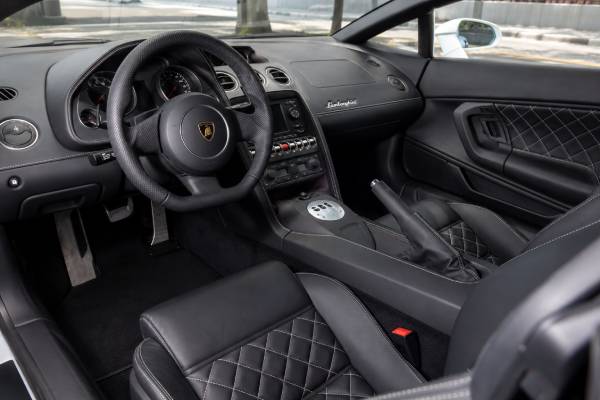
The cabin is very much an Audi-era Lamborghini cabin. That is both good and bad. It feels better assembled than many older Italian exotics, and basic ergonomics are more usable than in a Countach or Diablo. At the same time, some switchgear and infotainment elements feel more corporate than hand-built exotic. For collectors, condition is more important than novelty. Worn seat bolsters, sticky switch surfaces, loose trim, faded leather, and damaged carbon or painted interior pieces can all reduce the car’s appeal.
The sound remains one of the car’s strongest features. The direct-injection V10 has a harder-edged voice than the earlier 5.0-liter Gallardo, and the rear-drive layout encourages the driver to use throttle position carefully. The car does not need artificial sound enhancement. Intake noise, mechanical vibration, and exhaust character do the work.
How the LP 550-2 Drives
The LP 550-2 feels more alive than the all-wheel-drive Gallardo because the front axle is freed from power delivery. It is not necessarily the fastest Gallardo in every condition, but it is one of the most involving.
Acceleration is strong rather than brutally turbocharged. The engine rewards revs, and the best part of the experience comes from letting the V10 climb toward its upper range. Low-speed torque is enough for normal driving, but the car’s personality appears when the engine is working hard. Above the midrange, the response sharpens and the soundtrack becomes the main event.
The e-Gear gearbox defines much of the experience. In gentle traffic, it can feel abrupt if the driver treats it like a modern automatic. It is happier when the driver lifts slightly on upshifts, plans low-speed maneuvers, and avoids creeping on the clutch. In fast driving, the transmission can feel exciting and mechanical, especially when shifts are timed with throttle openings. A poorly adjusted e-Gear system, however, can make the same car feel tired.
Steering is one of the LP 550-2’s best qualities. Hydraulic assistance gives more texture than many newer electric systems. The car is wide, and visibility is not generous, but once placed on a road the front end feels honest. Compared with an LP 560-4, the rear-drive model feels less locked down and more adjustable with throttle.
Cornering balance depends heavily on tires, alignment, and surface temperature. On warm, correct tires, the car has strong grip and a playful rear axle. On old tires, cold tires, or wet pavement, it can become much less forgiving. Buyers should remember that many collector-mile supercars sit on aged rubber with good tread but poor real grip. Tire date codes matter.
The brakes should feel firm and confidence-inspiring. Steel brakes are less glamorous but can be easier and cheaper to live with. Carbon-ceramic brakes, if fitted, are desirable to some buyers but require careful inspection for cracks, edge damage, wear limits, and previous track use. Replacement cost can change the economics of a purchase.
Ride quality is firm, but not unbearable for a supercar of this era. The Gallardo is short, wide, and low, so speed bumps, driveways, and rough city streets require attention. The front lift is not a luxury add-on; it is a practical tool that can prevent expensive bumper damage. Any buyer should test the lift repeatedly from cold and warm conditions.
On a mountain road, the LP 550-2 makes sense. The engine is responsive, the steering communicates, and the rear-drive chassis lets the driver feel what the car is doing. On a tight urban commute, it is less charming: the turning circle, width, low nose, gearbox behavior, and heat soak make it feel like an exotic machine rather than a normal car. That split personality is part of the appeal, but owners should be honest about their intended use.
Maintenance Risks and Specialist Ownership
A Gallardo LP 550-2 can be a durable exotic when serviced correctly, but deferred maintenance quickly becomes expensive. The Indonesia Limited Edition adds extra concern because special body pieces, market-specific equipment, and originality-sensitive trim can be harder to source or verify.
The engine itself has a strong reputation when maintained, warmed properly, and kept on clean oil. The danger is not usually a weak basic design. It is age, low-use deterioration, poor previous work, and owners who spend on cosmetics while delaying mechanical service.
Common inspection areas include:
- Oil leaks from cam covers, timing covers, oil lines, and dry-sump-related fittings.
- Cooling-system leaks, aged hoses, weak fans, and corrosion around radiators.
- Coil, sensor, and misfire issues that may appear only under load.
- Intake carbon build-up risk on direct-injection engines.
- Exhaust leaks, cracked mounts, or heat-shield damage.
- Engine mounts and gearbox mounts that allow excess movement.
- Underbody scrape damage from low front and side bodywork.
The e-Gear system deserves its own inspection. A scan should show clutch wear data, but the number should not be read in isolation. The technician should also evaluate engagement quality, clutch position setup, hydraulic pressure behavior, actuator condition, pump cycling frequency, and any stored faults. A car with low indicated wear can still shift poorly if calibration or hydraulics are wrong.
Clutch life depends heavily on use. Highway miles are gentle. Stop-start traffic, driveway reversing, parking ramps, launch starts, and creeping in traffic are hard on the clutch. Indonesia-market usage can make this especially relevant if the car spent much of its life in dense urban conditions.
The front lift system should operate evenly, hold pressure, and return cleanly. Slow movement, warning lights, uneven height, fluid leaks, or pump noise all require specialist diagnosis. Because the Indonesia Limited Edition’s front bumper is part of its visual identity, nose damage from a failed or unused lift system matters for value.
Brakes and suspension are other cost centers. Inspect:
- Brake disc condition, especially if carbon ceramics are fitted.
- Caliper finish and signs of overheating.
- Brake fluid age.
- Tire age, brand, and matching specification.
- Shock absorber leaks.
- Ball joints, bushings, tie rods, and wheel bearings.
- Alignment records after tire or suspension work.
Electronics should not be dismissed as minor. The Gallardo has control modules, e-Gear electronics, engine-management software, lift controls, lighting systems, and interior electronics that need proper diagnostic tools. A known recall affected certain 2011–2014 Gallardo Coupe and Spyder vehicles related to ECU software that could fail to store trouble codes after key-off. A buyer should check the VIN with an authorized Lamborghini dealer or official recall database and confirm completion in writing.
For long-term ownership, originality is a maintenance issue, not just a concours issue. Aftermarket exhausts, non-factory body parts, lowered suspension, wheel changes, ECU tunes, and interior retrims may make the car more exciting to one owner but less desirable to the next. On a rare market edition, every change should be reversible and documented.
A sensible maintenance file should include annual service invoices, brake-fluid records, gearbox and hydraulic checks, clutch readings over time, tire invoices with date codes, battery replacement history, recall completion, alignment sheets, and photos of any body or paint repairs. Service stamps alone are not enough.
Market Value, Inspection, and Buying Priorities
The Indonesia Limited Edition should be valued as a documented rare specification first and as a Gallardo LP 550-2 second. Without proof, it risks being priced like a modified or cosmetically upgraded LP 550-2 rather than a genuine market-limited factory car.
Recent standard LP 550-2 market data shows that late Gallardo rear-drive coupes often sit in the broad six-figure range, with mileage, transmission, condition, service history, and originality causing large swings. Clean examples can trade far above tired cars, while modified cars may be harder to price. A properly documented Indonesia Limited Edition may command a premium, but the size of that premium is difficult to prove because public sale data is limited.
Value drivers include:
- Factory documentation proving Indonesia Limited Edition specification.
- Original Verde Ithaca paint rather than later repaint or wrap.
- Correct body components and factory equipment.
- Low but usable mileage, not long-term neglected storage.
- Complete Lamborghini dealer or respected specialist service history.
- Healthy e-Gear clutch and hydraulic system.
- No accident history or structural repair.
- Original wheels, books, tools, keys, and accessories.
- Market-correct registration and import documentation.
- Clean interior with correct leather, branding, and trim.
The best cars are usually not the cheapest or the lowest-mileage examples. They are the ones with a coherent paper trail. A 2,000-mile car with old tires, weak battery history, sticky controls, no clutch data, and patchy service may be riskier than a 15,000-mile car serviced annually by a known specialist.
Pre-purchase inspection priorities
A proper pre-purchase inspection should be done by a Lamborghini specialist with diagnostic access and Gallardo experience. General exotic familiarity is helpful, but this car needs LP 550-2 and e-Gear knowledge.
The inspection should cover:
- Confirm identity through VIN, build record, option list, color, and market specification.
- Check body panels, paint depth, bumper fitment, side skirts, underbody, and front lift damage.
- Scan all modules and confirm recall completion.
- Record e-Gear clutch data and test shift quality in real driving.
- Inspect hydraulic system behavior, leaks, and pump cycling.
- Check engine cold start, hot restart, misfire data, leaks, and cooling fans.
- Inspect brakes, tires, suspension, alignment, and wheel condition.
- Review all invoices against mileage and date, not just service stamps.
- Verify that original parts removed for modifications are present.
- Confirm import, registration, tax, and compliance status before money changes hands.
For U.S. buyers, a non-U.S.-market Indonesia car may have import and compliance complications unless it was properly federalized or qualifies under age-based rules. For buyers in right-hand-drive or left-hand-drive markets, steering position and certification should be checked before assuming the car can be registered easily.
The long-term collectability case is positive but selective. The final Gallardo generation has aged well because it offers a naturally aspirated V10, hydraulic steering, compact proportions, and a more mechanical feel than many newer supercars. The LP 550-2 adds rear-drive involvement, and the Indonesia Limited Edition adds rarity. But the market will reward only the examples that are clearly authentic, properly maintained, and not diluted by undocumented modifications.
The simplest buying rule is this: buy the paperwork before the paint color. Verde Ithaca and Superleggera-style parts make the car exciting, but documents, condition, and specialist inspection decide whether it is a collectible Gallardo or an expensive story.
References
- Lamborghini Gallardo 550-2 – Technical Specifications, Pictures 2013 (Manufacturer Specifications)
- Lamborghini Gallardo LP 550-2 Spyder – Technical Specifications, Pictures 2012 (Manufacturer Specifications)
- Part 573 Safety Recall Report 18V-833 2018 (Recall Database)
- 2013 Lamborghini Gallardo LP550-2 Indonesia Limited Edition 2012 (Model-Specific Reference)
- 2013 Lamborghini Gallardo LP550-2 Market 2026 (Market Data)
Disclaimer
This article is for informational purposes only and is not a substitute for professional diagnosis, repair, valuation, or legal import advice. Specifications, torque values, maintenance intervals, software campaigns, and procedures can vary by VIN, market, model year, equipment, and prior service history. Always verify details against official Lamborghini service documentation, factory build records, recall databases, and a qualified Lamborghini specialist before buying, repairing, or modifying a vehicle.
If this guide helped, please share it on Facebook, X/Twitter, or your preferred automotive community to support our work.