
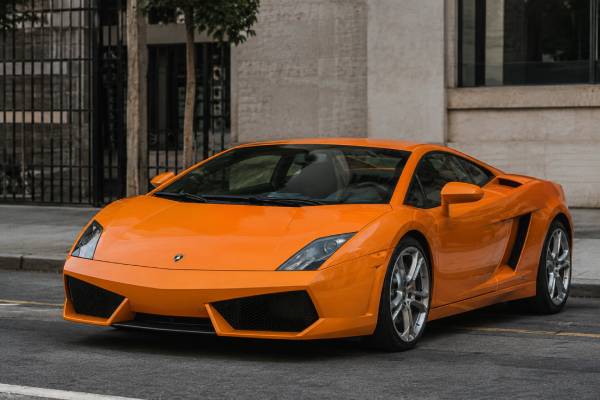
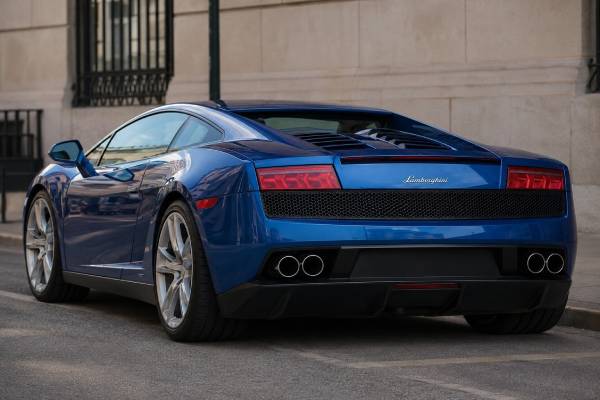
The Lamborghini Gallardo LP 550-2 Coupé is the rear-wheel-drive version of Lamborghini’s L140 V10 supercar, built during the final and most mature years of the Gallardo line. It pairs the 5.2-liter CEH-family naturally aspirated V10 with 550 hp, a mid-engine layout, and rear-wheel drive instead of the all-wheel-drive system used by most Gallardos. That change made the LP 550-2 lighter, simpler, more playful, and more appealing to drivers who wanted a Lamborghini with sharper steering feel and a more traditional sports-car balance. It also matters to collectors because manual cars are scarce, good E-gear cars need careful inspection, and late Gallardos now sit between modern usability and old-school analog appeal. For buyers, the right car is not just the lowest-mileage example; it is the one with factory-correct specification, strong service records, clean diagnostics, and no hidden clutch, suspension, brake, or accident-history surprises.
Table of Contents
- Why the LP 550-2 Coupé Matters
- V10 Specifications and Chassis Data
- Production, Variants, and Factory Options
- Rear-Drive Engineering and Design Details
- Road and Track Driving Character
- Maintenance, Reliability, and Specialist Inspection
- Market Values and Buying Priorities
Why the LP 550-2 Coupé Matters
The LP 550-2 Coupé matters because it is one of the clearest driver-focused Gallardo versions: naturally aspirated V10, rear-wheel drive, compact proportions, and a choice of manual or E-gear transmission. It is not the most powerful Gallardo, but it is one of the most involving.
The Gallardo was Lamborghini’s volume-changing model. Launched in 2003 under Audi ownership, it gave Lamborghini a more usable, more reliable, and more repeatable mid-engine supercar below the V12 flagship. The L140 platform carried the brand through a major growth period and stayed in production until 2013, when it was replaced by the Huracán. During that decade, the Gallardo became the first Lamborghini that many owners could drive regularly without treating every outing like a special operation.
Most Gallardos used all-wheel drive. That gave them huge traction and made them easier to deploy in poor weather, but it also added weight and muted some steering and throttle-adjustment feel. The LP 550-2 changed that equation. The name tells the story: “LP” refers to the longitudinal rear-mid-engine layout, “550” indicates the power rating, and “2” means two driven wheels. Lamborghini did not merely remove the front-drive hardware. The company retuned the suspension, stability control, tires, and aerodynamics for the rear-drive setup.
The LP 550-2 Coupé followed the limited Gallardo LP 550-2 Valentino Balboni, a 250-unit tribute to Lamborghini’s famous test driver. The regular-production LP 550-2 brought the same basic idea to a wider audience without the Balboni stripe and numbered plaque. It also arrived when the Gallardo platform had already benefited from years of updates: the 5.2-liter direct-injection V10, improved cabin quality, sharper front and rear styling, better electronics, and stronger daily usability than early 5.0-liter cars.
Today, the LP 550-2 sits in an interesting collector position. It is newer and more refined than the first Gallardos, less common than all-wheel-drive LP 560-4 models, and more analog than the dual-clutch Huracán that replaced it. The best examples appeal to buyers who want one of Lamborghini’s last old-school V10 cars before the brand moved fully into faster, more digital, more software-heavy performance.
The model’s reputation depends heavily on specification. A clean gated manual LP 550-2 Coupé is the prize for many collectors because it combines rear-wheel drive with a traditional shifter. E-gear cars are still exciting and often better value, but they need more careful clutch and hydraulic-system checks. In both cases, provenance matters. A documented, original, well-serviced car with factory options is usually more desirable than a modified car with patchy records, even if the modified car looks more dramatic.
V10 Specifications and Chassis Data
The LP 550-2’s core specification is simple and strong: a 5,204 cc naturally aspirated V10, 550 hp, rear-wheel drive, and a compact aluminum-intensive chassis. The figures still feel serious because the engine revs hard, the car is relatively small by modern supercar standards, and the rear-drive layout gives the powertrain a direct character.
| Category | Specification |
|---|---|
| Model code | L140 Gallardo LP 550-2 Coupé |
| Production era covered | 2010–2013 |
| Engine | CEH-family 5.2-liter naturally aspirated V10 |
| Displacement | 5,204 cc |
| Valvetrain | DOHC, 40 valves |
| Fuel system | Direct injection |
| Maximum power | 550 hp at 8,000 rpm |
| Maximum torque | 540 Nm / about 398 lb-ft at 6,500 rpm |
| Transmission | 6-speed manual or 6-speed E-gear automated manual |
| Drivetrain | Rear-wheel drive with model-specific stability control tuning |
| Suspension | Double wishbones front and rear with anti-roll bars |
| Steering | Hydraulic rack-and-pinion |
| Front tires | 235/35 ZR19 |
| Rear tires | 295/30 ZR19 |
| Wheelbase | 2,560 mm / 100.8 in |
| Length | About 4,345 mm / 171.1 in |
| Width | 1,900 mm / 74.8 in, excluding mirrors |
| Height | About 1,165 mm / 45.9 in |
| 0–100 km/h | About 3.9 seconds |
| Top speed | About 320 km/h / 199 mph |
The V10 is the main event. Unlike turbocharged modern engines, it builds speed through revs, throttle response, and sound rather than boost. Peak power arrives high in the range, so the car rewards drivers who use the upper half of the tachometer. Peak torque also arrives high, which gives the engine a progressive feel instead of a sudden punch.
The transmission choice changes the car’s personality. The 6-speed gated manual is slower on paper but more valuable and more engaging. It makes the LP 550-2 feel like a mechanical exotic from the end of an era. The E-gear is a single-clutch automated manual, not a modern dual-clutch gearbox. It can shift quickly when driven hard, but it is less smooth in traffic and depends heavily on proper calibration, clutch condition, and driver technique.
The chassis is compact and stiff enough to make the Gallardo feel alert even today. Its wheelbase is short compared with many newer supercars, and the seating position places the driver close to the front axle. That gives the car a sense of immediacy. The wide rear tires help traction, but the LP 550-2 is still more throttle-sensitive than an all-wheel-drive Gallardo.
Braking equipment varies by market and option package. Steel brakes were common, while carbon-ceramic brakes were available on many cars. Carbon ceramics save unsprung weight and resist fade well, but replacement costs are high and condition must be checked carefully. For road use, a well-maintained steel-brake car can be easier and cheaper to own.
Production, Variants, and Factory Options
The LP 550-2 Coupé was part of a wider rear-drive Gallardo family, not a single isolated special edition. The most valuable cars are usually those with rare factory specification, original paint and trim, complete books, and clean Lamborghini or specialist service history.
The rear-drive story began with the Gallardo LP 550-2 Valentino Balboni. That limited model established the concept: less weight, rear-wheel drive, a 550 hp version of the 5.2-liter V10, and chassis tuning aimed at greater driver involvement. The regular LP 550-2 Coupé removed the numbered collector framing but kept the core mechanical appeal.
Related versions and special trims include:
- LP 550-2 Valentino Balboni: the limited 250-unit tribute car, prized for its stripe, plaque, rear-drive layout, and connection to Lamborghini history.
- LP 550-2 Coupé: the main rear-drive fixed-roof model covered here, offered with manual or optional E-gear depending on market and specification.
- LP 550-2 Bicolore: a two-tone special edition with a black upper body treatment and rear-drive mechanical layout.
- LP 550-2 Tricolore: a special edition linked to Italian unification themes, with distinctive tricolor detailing.
- LP 550-2 Spyder: the open-top rear-drive version, introduced after the Coupé and usually valued differently because of its different body style and driving feel.
- Ad Personam cars: individualized factory-order examples with special colors, stitching, leather, carbon trim, or other personalization details.
Factory options matter because they affect value and use. A front-axle lift is highly useful because the Gallardo’s nose is low and vulnerable to ramps, driveways, and transport loading. Transparent engine covers make the V10 more visible and are often desirable. Carbon-ceramic brakes appeal to some collectors, though they can scare buyers if discs show damage or heavy wear. Q-citura diamond stitching, special leather colors, contrasting stitching, Alcantara, carbon-fiber interior trim, colored brake calipers, navigation, rear camera, travel packages, and upgraded audio can all influence desirability.
Manual versus E-gear is the biggest specification split. Manual cars are rarer and usually bring a premium because they are among the last gated Lamborghini V10 cars. A manual LP 550-2 Coupé with low mileage, original paint, desirable colors, and complete records can attract collector attention even if it is not a numbered special edition. E-gear cars are more plentiful and can be excellent drivers, but buyers should price them around clutch condition, hydraulic health, service records, and how the gearbox behaves when cold, hot, and creeping in traffic.
Market-specific differences also matter. Some regions received different option availability, lighting, emissions equipment, and trim combinations. Imported cars should have clear federalization or registration history where required. Buyers should compare the VIN, build data, service book, option stickers, invoices, and any factory documentation before paying collector-level money.
Originality is usually more valuable than visual drama. Wheels, exhausts, wraps, aftermarket carbon panels, lowered suspension, and ECU tuning may appeal to some drivers, but they reduce the buyer pool if the original parts are missing. A reversible exhaust with documentation is easier to accept than a heavily altered car with cut wiring, missing catalysts, unknown tune files, or accident-repaired body panels.
Rear-Drive Engineering and Design Details
The LP 550-2 is distinctive because its design looks familiar but its engineering balance is different from the all-wheel-drive Gallardo. The visual changes are subtle, while the rear-drive calibration changes the way the whole car behaves.
The Gallardo’s shape is classic Audi-era Lamborghini: low, wedge-like, short-tailed, and compact. It does not have the scissor doors of the V12 models, but it has a clean cab-forward stance, wide rear haunches, and strong side intakes that feed the mid-mounted engine bay. The original Gallardo design is closely associated with Luc Donckerwolke, while the later LP-era cars received sharper detailing that better matched Lamborghini’s late-2000s design language.
The LP 550-2 Coupé does not shout about its rear-drive layout. Badging and trim details identify it, but the core shape remains close to the LP 560-4. That understatement is part of the appeal. The car gives knowledgeable buyers the special mechanical layout without the visual excess of the more track-focused LP 570-4 Superleggera.
The engineering changes are more important than the cosmetic ones. Removing the front-drive hardware reduces weight and shifts the car’s feel toward classic oversteer-adjustable balance. Lamborghini also recalibrated the springs, dampers, anti-roll bars, tires, aerodynamics, and electronic stability system. A rear-drive mid-engine supercar can be nervous if the chassis is not tuned as a complete system, so the LP 550-2 was set up to be playful without becoming crude.
The engine placement defines the experience. The V10 sits behind the cabin and sends intake and exhaust noise directly into the car’s structure. The sound is sharper and more metallic than many modern turbocharged engines. At low rpm it feels cultured; near the top of the rev range it becomes hard-edged, urgent, and unmistakably exotic.
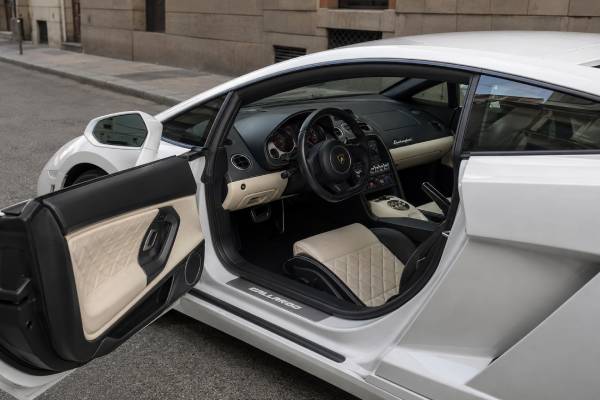
The cabin is low, tight, and more practical than older Lamborghinis. The seating position is better than the Countach-era stereotype, and the controls are more logical thanks to Audi influence. That said, the car still feels like a compact exotic. Rear visibility is limited, the nose is hard to judge, the doors open normally but wide, and parking requires patience. A rear camera is a useful option, especially for cars used in cities.
Materials and switchgear can divide opinion. The leather, stitching, and optional carbon trim feel special, but some controls show the Volkswagen Group parts-sharing of the period. For ownership, that is not all bad. The car is generally more usable than earlier Lamborghinis, and some shared electrical logic helps reliability. For collectors, condition matters more than whether every switch feels bespoke. Sticky buttons, worn seat bolsters, scratched sill plates, sagging headliners, and damaged leather lower the sense that the car has been carefully kept.
Road and Track Driving Character
The LP 550-2 feels best when driven as a fast, responsive road car rather than judged only by modern acceleration numbers. Its appeal comes from throttle response, steering feel, sound, and rear-drive balance.
At low speed, the Gallardo feels wide but not huge. The steering is heavy enough to remind you that the front tires are serious performance rubber, yet it has more communication than many newer electric-assist systems. The ride is firm, especially on older tires or rough roads, but the Coupé body feels solid. It is more usable than its shape suggests, though ground clearance remains a real-world limitation.
The V10 is flexible enough for normal driving, but it becomes special as revs rise. Below midrange it is clean and responsive. Above that, it pulls harder, sounds angrier, and makes the car feel alive. Because there is no turbo lag, small throttle movements matter. That directness is one reason enthusiasts still care about the LP 550-2 even though newer cars are quicker.
Manual cars turn every drive into an event. The open-gate shift requires deliberate timing, and the clutch rewards smooth inputs. It is not the fastest way down a road, but it gives the driver more involvement and makes the car feel more mechanical. A worn manual clutch, weak synchros, or poor shift feel should not be dismissed as “normal exotic behavior.” A good one feels precise once warm.
E-gear cars need a different approach. The system works best when the driver treats it like an automated clutch rather than a smooth automatic. Lift slightly on upshifts during relaxed driving, avoid long crawling in traffic, and check that engagement is clean. In sportier modes and at higher throttle, shifts become quicker and more dramatic. A poorly calibrated or worn E-gear car can feel jerky, hesitant, or abusive to the clutch.
The rear-drive chassis changes cornering character. Compared with an LP 560-4, the LP 550-2 feels lighter through the front end and more adjustable with throttle. The car can be friendly when the tires are warm and the road is dry, but it still deserves respect. A mid-engine rear-drive Lamborghini with 550 hp will not forgive careless inputs, old tires, cold pavement, or abrupt throttle lifts in the same way a more benign sports car might.
On track, the LP 550-2 is entertaining but maintenance-sensitive. Brakes, tires, clutch, fluids, and cooling system health matter more than lap-time claims. Carbon-ceramic brakes handle heat well if healthy, while steel brakes need careful pad, fluid, and rotor management. Tires should be fresh, matched, and correctly rated. Old P Zero tires can make a good car feel nervous and can trigger unnecessary concern about alignment or suspension.
Maintenance, Reliability, and Specialist Inspection
A good LP 550-2 can be robust by exotic-car standards, but it is still an aging Lamborghini with expensive parts and labor. The smartest ownership strategy is preventive maintenance, annual specialist checks, and diagnostics before small issues become large invoices.
The 5.2-liter V10 is generally strong when serviced correctly. It dislikes neglect more than mileage. Oil changes, correct fluids, clean cooling systems, fresh plugs, healthy coils, and good battery voltage all matter. Cars that sit for long periods can develop more issues than cars that are exercised properly. Heat cycles, old seals, stale fuel, flat-spotted tires, and weak batteries create problems even on low-mileage examples.
Key mechanical areas to inspect include:
- Clutch condition: vital on both manual and E-gear cars, but especially on E-gear because usage pattern and calibration strongly affect wear.
- E-gear hydraulics: pump, actuator, accumulator, sensors, and system pressure should be checked by a specialist with the right diagnostic tools.
- Gearbox behavior: cold and hot shifts should be consistent, without grinding, slipping, harsh engagement, or warning lights.
- Cooling system: front radiators and air-conditioning condensers sit in vulnerable positions and collect debris.
- Brakes: check steel rotor wear or carbon-ceramic disc condition, pad life, caliper health, and brake-fluid history.
- Suspension: look for worn bushings, dampers, ball joints, lift-system leaks if fitted, and uneven tire wear.
- Engine electronics: misfires, oxygen sensors, catalyst efficiency faults, and stored codes need proper diagnosis.
- Exhaust system: check valves, cats, heat shielding, and the legality and quality of any aftermarket parts.
- Interior condition: sticky controls, worn leather, failed screens, weak HVAC performance, and broken trim can be costly to correct properly.
The most important recall-related issue for this era is the 2011–2014 Gallardo ECU software campaign in the United States. Affected cars could erase trouble codes after key-off, preventing warning lamps from alerting drivers to certain faults. Any buyer should confirm by VIN that all recalls and campaigns have been completed, especially because imported cars, stored cars, and cars that passed through independent dealers may have incomplete records.
Tires deserve more attention than many buyers give them. A Gallardo on old tires can feel harsh, twitchy, and noisy. Check date codes, not just tread depth. A low-mileage car on decade-old rubber is not ready for serious driving. Budget for a full matching set if the tires are aged, mismatched, or unevenly worn.
Service records should show more than oil changes. A strong file includes annual inspections, brake-fluid changes, gearbox or E-gear service where applicable, clutch readings for E-gear cars, battery replacements, tire dates, alignment records, campaign completion, and invoices from Lamborghini dealers or respected specialists. Gaps do not automatically kill a purchase, but they should lower the price and trigger deeper inspection.
A pre-purchase inspection should include paint-depth readings, underbody inspection, diagnostic scan, clutch measurement where possible, road test from cold, lift-system check if fitted, brake inspection, suspension inspection, leak check, and confirmation that original parts are included if the car has reversible modifications. Accident repair is especially important because aluminum structure and exotic body-panel work can be expensive and difficult to correct.
Market Values and Buying Priorities
The LP 550-2 Coupé is now a modern collector Lamborghini, and values depend more on specification and condition than on model year alone. Manual, rear-drive, low-mileage, original cars sit at the top of buyer interest, while higher-mileage E-gear cars can be excellent value if mechanically strong.
Recent market behavior shows a broad spread. Driver-quality E-gear LP 550-2 Coupés often trade well below the best manual cars. Clean, lower-mileage E-gear cars with good options can sit in the middle. Gated manual cars, especially in desirable colors with complete documentation, can bring a much stronger premium because supply is thin and demand comes from collectors, not just drivers.
Value drivers usually include:
- Transmission: manual cars are usually most desirable; E-gear cars depend heavily on clutch and hydraulic condition.
- Mileage: low mileage helps, but ultra-low mileage does not erase age-related needs.
- Color: classic Lamborghini colors, strong metallics, and tasteful Ad Personam specifications can help.
- Options: front lift, transparent engine cover, carbon trim, Q-citura stitching, rear camera, and carbon-ceramic brakes can matter.
- Originality: factory paint, factory wheels, factory exhaust, and retained original parts support value.
- Documentation: service books, invoices, campaign records, manuals, tools, keys, and build data make a car easier to sell later.
- Condition: paint, underbody, interior controls, leather, glass, wheels, and brake condition can separate a good car from a risky one.
- Ownership history: long-term enthusiast ownership usually beats repeated auction or dealer flips.
The best car to buy is not always the cheapest or the lowest-mileage one. A lightly used car with annual servicing, fresh tires, clean diagnostics, documented clutch life, and original paint may be a better buy than a garage queen with old fluids, weak battery, original tires, and no recent specialist inspection. For E-gear cars, clutch wear and system behavior should be priced into the deal. For manual cars, shift quality, clutch take-up, and proof of originality carry extra weight.
Avoid cars with vague stories. “Recent service” should mean invoices, not a verbal claim. “Minor paintwork” should be checked with readings and body-panel inspection. “Aftermarket exhaust” should come with the original system and proof that the car will pass local emissions and inspection rules. “No warning lights” is not enough; stored fault codes and readiness monitors should still be checked.
A strong buying process is simple:
- Confirm the exact variant, VIN, market, transmission, and factory options.
- Review service records before traveling or paying for inspection.
- Check recall and campaign completion by VIN.
- Have a Lamborghini dealer or respected independent specialist inspect the car.
- Price the car around immediate needs: clutch, tires, brakes, fluids, lift repair, sticky interior parts, and paint correction.
- Keep a reserve fund after purchase, even for a clean car.
Long-term collectability looks strongest for original gated manual LP 550-2 Coupés and rare, tasteful factory-color cars. E-gear examples are less likely to match manual-car premiums, but good ones still offer one of the most accessible ways into a late naturally aspirated Lamborghini V10. As modern supercars become heavier, faster, and more digital, the LP 550-2’s appeal becomes clearer: it is quick enough, dramatic enough, and mechanical enough to feel special without being impossible to use.
References
- Lamborghini Gallardo 550-2 – Technical Specifications, Pictures 2026 (Manufacturer Specifications)
- Celebrating The Lamborghini Gallardo 2023 (Manufacturer History)
- Part 573 Safety Recall Report 18V-833 2018 (Recall Database)
- Lamborghini Gallardo LP550-2 Market – CLASSIC.COM 2026 (Market Data)
- Lamborghini Gallardo Buyers Guide | Hagerty UK 2026 (Buying Guide)
Disclaimer
This article is for informational purposes only and is not a substitute for professional diagnosis, repair, valuation, or inspection. Specifications, torque values, service intervals, procedures, recalls, and equipment can vary by VIN, market, production date, transmission, and factory options. Always verify critical information against official Lamborghini service documentation and have any purchase or repair decision checked by a qualified Lamborghini specialist.
Please share this article on Facebook, X/Twitter, or your favorite automotive community if it helped you. Sharing supports our work and helps other owners, buyers, and enthusiasts make better-informed decisions.