
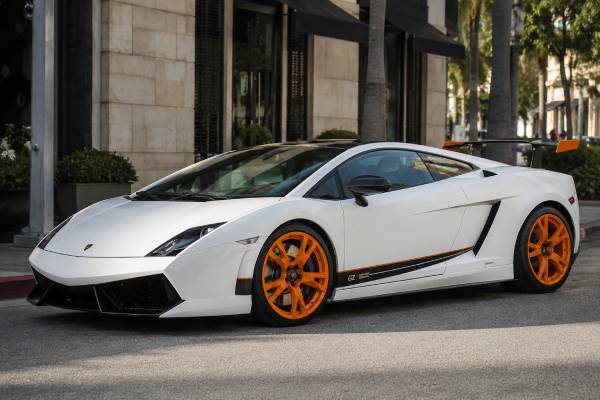
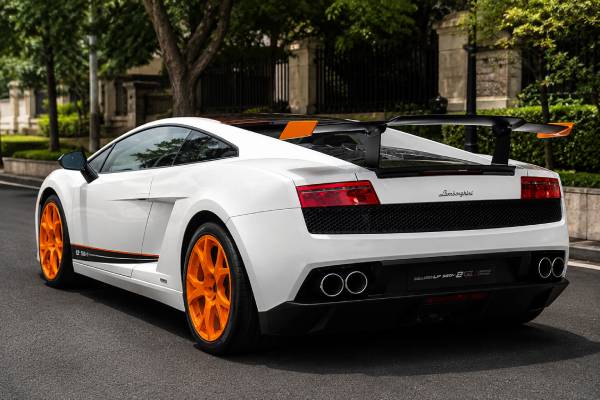
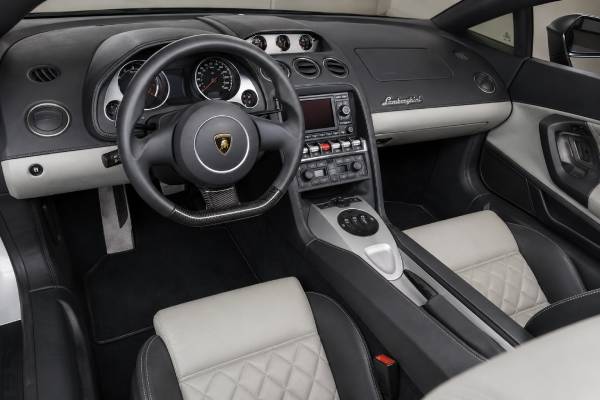
The Lamborghini Gallardo LP 550-2 GZ8 Edizione Limitata is one of the most obscure factory-linked late Gallardo specials: an eight-car, China-market limited edition built around the rear-wheel-drive LP 550-2 coupe. It used the 5.2-liter naturally aspirated V10 rated at 550 hp, but its appeal comes just as much from its market story, Guangzhou connection, Super Trofeo Stradale-inspired visual parts, orange accents, carbon trim, and “GZ8” identifiers. In the Gallardo timeline, it belongs to the final phase of the L140 generation, when Lamborghini was using regional special editions to keep interest high before the Huracán arrived. For collectors, the GZ8 matters because ordinary Gallardo condition checks are not enough. A real example needs proof of identity, market provenance, original GZ8 parts, correct badging, documented service history, and careful inspection by a Lamborghini specialist.
Table of Contents
- GZ8 Place in Gallardo History
- V10 Drivetrain, Chassis, and Specs
- Eight-Car Production and Identification
- Carbon Aero, Design, and GZ8 Details
- Rear-Drive Performance and Road Character
- Maintenance Risks and Specialist Care
- Market Value and Buying Checks
GZ8 Place in Gallardo History
The GZ8 is best understood as a rare regional edition of the late Gallardo, not as a separate mechanical model. It sits on the LP 550-2 rear-wheel-drive platform and adds China-market exclusivity, visual drama, and special-edition identity.
The Gallardo itself was a turning point for Lamborghini. Launched in the Audi era, it made the brand more usable, more reliable, and more commercially stable without giving up the mid-engine V10 drama buyers expected. The L140 project gave Lamborghini a smaller car beneath the Murciélago and later the Aventador, and over a decade it became one of the company’s most important models.
By 2012, the Gallardo was near the end of its life. The 5.0-liter early cars had already given way to the later 5.2-liter direct-injection V10, the LP 560-4 had refreshed the design, and the Superleggera, Super Trofeo Stradale, Balboni, Bicolore, Tricolore, and other regional editions had turned the model line into a deep collector field.
The LP 550-2 was the purist branch of that family. Most Gallardos used all-wheel drive, but the LP 550-2 sent power only to the rear wheels. That made it lighter, simpler, and more playful. Lamborghini retuned the suspension, aerodynamics, tires, stability control, and rear differential setup so the car was not just an all-wheel-drive Gallardo with the front axle removed.
The GZ8 added another layer. “GZ” refers to Guangzhou, while “8” refers both to the eight-car production run and the lucky-number meaning of eight in China. It was created for the Chinese market, reportedly through the Guangzhou dealer, during a period when Lamborghini was producing several highly specific regional Gallardo editions for Asian markets.
That context matters today. A normal LP 550-2 is already desirable because it is rear-drive and available with a manual or e-gear automated manual depending on specification. The GZ8 is rarer, but it is also harder to authenticate because it was not widely sold, not globally marketed, and not supported by the same volume of public factory material as better-known editions.
For buyers, this means the car’s story is part of the car’s value. A GZ8 without documentation is not simply “a rare Gallardo.” It is a major verification project. A correct car should have evidence connecting it to the original China-market edition, not just a rear wing, orange wheels, side stripes, and added badges.
V10 Drivetrain, Chassis, and Specs
The GZ8 uses the LP 550-2’s 5.2-liter naturally aspirated V10 and rear-wheel-drive layout. The key mechanical appeal is the combination of a high-revving V10, less driveline weight than all-wheel-drive Gallardos, and a more adjustable rear-drive chassis.
| Item | Specification |
|---|---|
| Model | Lamborghini Gallardo LP 550-2 GZ8 Edizione Limitata |
| Generation / project code | L140 Gallardo |
| Model year covered | 2012 |
| Engine | 5.2-liter 90-degree V10, naturally aspirated |
| Displacement | 5,204 cc |
| Valvetrain | DOHC, four valves per cylinder |
| Fuel system | Direct fuel injection |
| Output | 550 hp at 8,000 rpm |
| Torque | 540 Nm / about 397 lb-ft at 6,500 rpm |
| Drivetrain | Rear-wheel drive |
| Transmission family | Six-speed manual or six-speed e-gear automated manual on LP 550-2 platform; verify each GZ8 by build record |
| Limited-slip differential | Mechanical rear limited-slip differential |
| Claimed 0–100 km/h | About 3.9 seconds for LP 550-2 coupe specification |
| Claimed top speed | About 320 km/h / 199 mph for LP 550-2 coupe specification |
The engine is the centerpiece. It is not turbocharged, hybrid-assisted, or softened by modern filtering. It makes its best power high in the rev range, and the torque peak is also high by ordinary road-car standards. That gives the LP 550-2 a different feel from many modern supercars: it rewards revs, throttle precision, and gear choice.
The chassis follows the Gallardo formula: a compact two-seat body, mid-mounted longitudinal engine, aluminum-intensive structure, double-wishbone suspension, wide rear tires, and a low seating position. The rear-drive version removed the front-drive hardware used by all-wheel-drive Gallardos, which helped sharpen the front end and made the car feel more transparent at the limit.
| Area | Typical LP 550-2 coupe data |
|---|---|
| Length | 4,345 mm / 171.1 in |
| Width | 1,900 mm / 74.8 in |
| Height | 1,165 mm / 45.9 in |
| Wheelbase | 2,560 mm / 100.8 in |
| Front tires | 235/35 ZR19 |
| Rear tires | 295/30 ZR19 |
| Fuel capacity | About 90 liters / 23.8 US gal |
| Layout | Mid-engine, rear-wheel drive |
Do not treat every published Gallardo number as GZ8-specific. The GZ8 added exterior and interior equipment, and public sources do not provide a full factory technical sheet for each of the eight cars. For a purchase, the build sheet, dealer file, service book, and VIN-specific Lamborghini documentation matter more than a generic specification table.
Eight-Car Production and Identification
The GZ8 was reportedly limited to eight cars, all intended for China. That tiny production run is the main reason authentication carries more weight than normal Gallardo model-year checks.
Unlike a mass-market trim level, the GZ8 is a regional special edition. The most important identifiers are not just mechanical. A standard LP 550-2 can be repainted, fitted with a wing, given orange wheels, and dressed with decals. That does not make it a GZ8. A buyer should look for a complete pattern of original details and paperwork.
Expected GZ8-specific or GZ8-associated features include:
- “GZ8 Edizione Limitata” exterior script or badging.
- GZ8 logos on the headrests.
- Black-and-white interior treatment.
- Q-Citura diamond-pattern seat stitching.
- Orange exterior accent details.
- Orange wheels or orange-highlighted wheel treatment as supplied for the edition.
- Carbon fiber rear wing inspired by the Super Trofeo Stradale.
- Matte black engine cover treatment.
- Gloss black roof treatment on white cars.
- Carbon fiber exterior mirrors.
- Carbon fiber side skirts.
- Superleggera-style side striping.
- A more aggressive front bumper treatment tied to the late Gallardo special-edition look.
The original car was not promoted as a broad global edition. That means many normal buying tools are weaker here. Auction descriptions, dealer advertisements, and registry entries should be treated as starting points, not proof. The best evidence is a paper trail that connects the exact VIN to the original China-market GZ8 allocation.
Documents that matter most
For a genuine GZ8, documentation is not a bonus. It is central to value. The file should ideally include:
- Original sales invoice or dealer delivery paperwork.
- Lamborghini dealer records from China or the original supplying market.
- Service book with stamps that match mileage and ownership history.
- VIN-specific build data from Lamborghini or an authorized dealer.
- Import and export documents if the car left China.
- Photos from early ownership showing the car before any later changes.
- Receipts for any paint, trim, carbon, wheel, or interior repairs.
The strongest cars will show continuity. They will not rely on a single statement from a seller or a later registry entry. They will show that the car was delivered, maintained, transported, and preserved as a GZ8 from new.
How it differs from other Gallardo specials
The GZ8 should not be confused with the LP 550-2 Valentino Balboni, Tricolore, Bicolore, HK20, India Serie Speciale, Malaysia Limited Edition, or LP 570-4 Super Trofeo Stradale. Some of these share ideas: rear-wheel drive, special colors, market-specific production, carbon trim, or race-inspired bodywork. The GZ8’s identity is the Guangzhou story, eight-car run, and its specific orange-and-carbon visual package on the LP 550-2 base.
That overlap is exactly why inspection matters. A car can borrow parts from several Gallardo variants. Collectors pay for original specification, not just an attractive combination.
Carbon Aero, Design, and GZ8 Details
The GZ8 is visually louder than a normal LP 550-2 because it borrows the mood of Lamborghini’s track-influenced Gallardos. Its carbon parts, orange accents, black roof, wing, and graphics make it look closer to the Super Trofeo Stradale world than to a simple rear-drive coupe.
The standard Gallardo shape is compact and angular. It has the cab-forward mid-engine stance, short front overhang, wedge profile, and sharply cut surfaces that define the Audi-era Lamborghini design language. The late Gallardo cars became more aggressive through revised fascias, larger intakes, angular graphics, and more visible aerodynamic pieces.
The GZ8 pushes that visual language further. The rear wing is the dominant element. It changes the car’s silhouette and gives the rear view much more presence than a standard deployable-spoiler Gallardo. The carbon side skirts and mirrors add texture and signal that this is not an ordinary LP 550-2 cosmetic package.
The matte black engine cover and gloss black roof help break up the body color. On a white car, that creates a high-contrast roofline and rear deck. The orange wheels and accents are divisive, but they are part of the point. This was not meant to be a subtle collector specification. It was built to be instantly identifiable in a wealthy regional supercar market.
Inside, the black-and-white cabin with Q-Citura stitching fits the final-era Gallardo special-edition theme. Q-Citura is Lamborghini’s diamond-pattern upholstery style, and it gives the cabin more visual depth than plain leather. The headrest logos are especially important because they are harder to replicate convincingly when inspected closely. Stitching quality, leather wear, logo placement, and material aging should all match the mileage and claimed originality.
Why the design affects value
On ordinary used Gallardos, modifications can sometimes be tolerated if the price is right. On a GZ8, changes can be much more damaging. Refinished wheels in the wrong shade, missing badging, replaced carbon parts, aftermarket wings, non-original upholstery, or repainted panels without documentation can all weaken the car’s identity.
Collectors will usually prefer a GZ8 that still looks exactly like a GZ8, even if it has modest age marks, over a heavily refreshed car with uncertain parts. Preservation can be more valuable than cosmetic perfection if the original components remain intact.
Rear-Drive Performance and Road Character
The LP 550-2 GZ8 should feel sharper, more communicative, and more throttle-adjustable than an all-wheel-drive Gallardo. It is still a fast, stable, mid-engine supercar, but the rear-drive layout gives it a more traditional driver’s-car character.
The V10 defines the experience. At low speed, it is tractable enough for city driving, but it never feels ordinary. The sound hardens as revs rise, and the engine becomes more urgent past the midrange. The best part of the car is not just the 550 hp number. It is the way the power builds, the way the induction and exhaust sound fill the cabin, and the way the car encourages the driver to use the upper half of the tachometer.
Steering feel is one of the LP 550-2’s strengths. Without drive going to the front wheels, the front axle feels cleaner and lighter than in many all-wheel-drive Gallardos. The car still has wide tires and a short, low stance, so it is not delicate in the old sports-car sense, but it gives better information than many people expect from a 2000s supercar.
The chassis balance is more playful than the LP 560-4. The rear limited-slip differential and stability-control tuning help manage the power, but the driver still needs respect for cold tires, wet roads, old rubber, and abrupt throttle inputs. A rear-drive Gallardo is forgiving by exotic standards when healthy and properly aligned, yet it is not a beginner’s performance car.
Transmission choice changes the personality. A manual LP 550-2 is more valuable to many collectors because gated Lamborghini manuals are now historically important. The e-gear automated manual is quicker in a period-correct sense and gives the paddle-shift drama many Gallardo buyers wanted when new, but it needs careful clutch-wear evaluation. Because public GZ8 production details are limited, a buyer should verify the exact gearbox on the specific car rather than assume.
Ride quality is firm but not unbearable. The Gallardo is lower, louder, wider, and more demanding than a modern grand tourer, but it can cover road miles if maintained correctly. Visibility is acceptable forward but restricted to the rear quarters. Parking, ramps, underground garages, and tight city streets need care, especially on cars with carbon aero parts and front-end paint protection issues.
On track, the GZ8 has the basic ingredients: strong brakes, wide tires, a stiff structure, and a responsive V10. But a collector-grade GZ8 is better treated as an occasional fast-road and event car than a track-day tool. Heavy circuit use can consume clutches, tires, brakes, wheel bearings, suspension joints, and carbon parts quickly, and it may reduce the value of such a rare edition unless documented with care.
Maintenance Risks and Specialist Care
A GZ8 is not difficult because the Gallardo is fragile; it is difficult because it is an exotic, aging, low-volume car with rare edition-specific trim. The right ownership approach is preventive, documented, and specialist-led.
The 5.2-liter V10 has a strong reputation when serviced properly. Many Gallardos have covered meaningful mileage, and the Audi-era build quality helped the model avoid the fragile image of older Italian exotics. Still, age matters. A 2012 car now needs close attention to rubber parts, fluids, seals, sensors, cooling components, electrical modules, suspension wear, and previous repair quality.
Key maintenance and inspection areas include:
- Engine oil service history and correct oil specification.
- Coolant condition, radiator health, hose age, and evidence of overheating.
- Coil packs, plugs, oxygen sensors, and misfire history.
- Oil leaks around covers, seals, and ancillary components.
- Air-conditioning function and HVAC control behavior.
- Battery health, charging-system output, and parasitic drain.
- Suspension bushings, dampers, ball joints, tie rods, and alignment.
- Brake disc condition, pad life, caliper health, and brake-fluid age.
- Tire age, correct size, matching brand/model, and heat-cycle condition.
- Front axle lift operation if equipped.
- Exhaust condition, catalyst readiness, and emissions monitor behavior.
- Evidence of ECU updates or recall-related software work where applicable.
The e-gear system, if fitted, deserves special attention. It is a single-clutch automated manual, not a modern dual-clutch gearbox. It can feel abrupt at low speed, and clutch life depends heavily on traffic use, hill starts, reversing, driver habits, and calibration. A proper diagnostic scan should show clutch wear data, actuator behavior, stored faults, and adaptation status.
Manual cars avoid e-gear actuator concerns, but they are not free of risk. The clutch, flywheel, shifter mechanism, cables, synchros, and gated shift hardware still need inspection. A poorly shifting manual Gallardo can become expensive quickly, and manual-specific parts can be difficult and costly to source.
GZ8-specific restoration concerns
The GZ8’s rare parts are the real restoration challenge. Mechanical Gallardo parts are generally more available than edition-specific trim, but the GZ8 pieces may be hard to replace correctly.
Before buying, inspect:
- Carbon rear wing for cracks, repairs, clouded clear coat, and correct mounting.
- Carbon mirrors and side skirts for scrape damage and incorrect refinishing.
- Orange wheels for true roundness, correct finish, and evidence of repainting.
- Roof and engine-cover finish for correct gloss/matte contrast.
- Decals and script for placement, age, font, and finish quality.
- Headrest logos for correct stitching and wear consistent with the seats.
- Interior leather for shrinkage, dye work, bolster wear, and retrim evidence.
Do not dismiss cosmetic problems as minor. On a normal LP 550-2, a scuffed side skirt is a repair bill. On a GZ8, it can become an authenticity problem if the replacement part or finish does not match the original edition.
Recall and software checks
Late Gallardos were included in an ECU software recall affecting certain 2011–2014 Gallardo Coupe and Spyder vehicles. The concern involved trouble codes and warning lamps not being retained correctly after key-off if software was not reflashed using the proper procedure. A buyer should verify by VIN whether the car was affected and whether the campaign was completed by an authorized Lamborghini dealer.
This is not a reason to avoid a car by itself. It is a reason to ask for proof. A specialist should scan the car, check readiness monitors, confirm warning-light behavior, and review dealer records before purchase.
Market Value and Buying Checks
The GZ8 does not fit normal Gallardo price guides. Its value depends on proof, originality, condition, and the willingness of rare Lamborghini collectors to pay for a China-market eight-car edition.
A standard LP 550-2 coupe has a visible market, with values affected by mileage, gearbox, color, condition, service history, and originality. Manual cars are usually more collectible than e-gear cars, especially with low mileage and strong documentation. The GZ8 is different. Public sales are scarce, and many cars may remain in private hands. That means a buyer cannot rely on a simple average price.
The strongest GZ8 examples should have:
- Clear VIN-specific evidence that the car is one of the original eight.
- Original GZ8 visual components still fitted.
- No unexplained repaint or accident history.
- Complete Lamborghini dealer and specialist service records.
- Correct China-market provenance or import/export paper trail.
- Mileage that matches wear, diagnostics, service stamps, and ownership records.
- No aftermarket power upgrades or irreversible cosmetic changes.
- Original books, tools, keys, manuals, covers, and accessories where available.
Cars to approach carefully include:
- Examples advertised as GZ8 because they “look like one.”
- Cars missing original badging, headrest logos, or carbon aero pieces.
- Vehicles with unexplained repainting around the front bumper, roof, rear deck, or side skirts.
- Cars with inconsistent mileage history.
- E-gear cars with no clutch-wear report.
- Cars with old tires, old fluids, and little recent use.
- Imported cars with incomplete customs or registration history.
- Cars stored long-term without evidence of proper recommissioning.
A pre-purchase inspection should be done by a Lamborghini specialist who understands Gallardo diagnostics and collector authentication. The inspection should include a lift check, paint-depth readings, diagnostic scan, clutch data if applicable, road test, underbody check, cooling-system inspection, brake measurement, tire-date check, and review of service records.
| Area | What to confirm | Why it matters |
|---|---|---|
| Identity | VIN, build documentation, original dealer file | Separates a real GZ8 from a modified LP 550-2 |
| Exterior | Carbon wing, side skirts, mirrors, roof, decals, wheels | Edition-specific parts drive collector value |
| Interior | Headrest logos, Q-Citura stitching, leather condition | Retrims or missing logos weaken authenticity |
| Mechanical | V10 health, cooling, leaks, brakes, suspension | Deferred Gallardo maintenance is expensive |
| Gearbox | Manual shift quality or e-gear clutch data | Transmission condition strongly affects cost and value |
| Software | Campaign completion and diagnostic readiness | Late Gallardo ECU history should be verified by VIN |
| Market position | Comparable LP 550-2 values plus rarity premium | GZ8 pricing is private and proof-sensitive |
For long-term collectability, the GZ8 has several advantages: an eight-car run, rear-wheel-drive LP 550-2 basis, late Gallardo timing, naturally aspirated V10, regional-market story, and bold factory-style identity. Its weakness is obscurity. Better-known limited Gallardos may attract broader bidder confidence because their specifications are easier to verify.
That makes the buying rule simple: buy the paper trail first, the condition second, and the color-and-wing drama third. A documented, correct, lightly used GZ8 should remain interesting to Lamborghini collectors. An undocumented car, even if visually convincing, should be priced with caution because the cost of proving or correcting it can be high.
References
- Lamborghini Gallardo 550-2 – Technical Specifications, Pictures 2026 (Manufacturer Model Page)
- Celebrating The Lamborghini Gallardo 2023 (Manufacturer History)
- Part 573 Safety Recall Report 18V-833 2018 (Recall Report)
- Recall Campaign | Lamborghini.com 2026 (Recall Lookup Guidance)
- 2012 Lamborghini Gallardo LP550-2 GZ8 Edizione Limitata | LamboCARS.com 2012 (Model-Specific Reference)
Disclaimer
This article is for informational purposes only and is not a substitute for professional diagnosis, repair, valuation, or authentication. Specifications, torque values, service intervals, software campaigns, and procedures can vary by VIN, market, equipment, and later updates. Owners and buyers should verify all details against official Lamborghini service documentation and use a qualified Lamborghini specialist before making maintenance or purchase decisions.
If this guide was useful, please share it on Facebook, X/Twitter, or your preferred enthusiast community to support our work.