
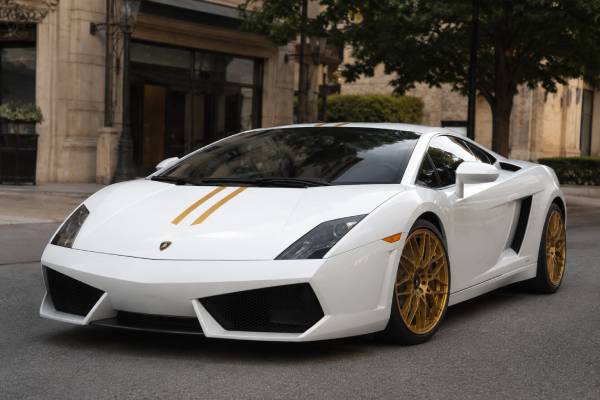
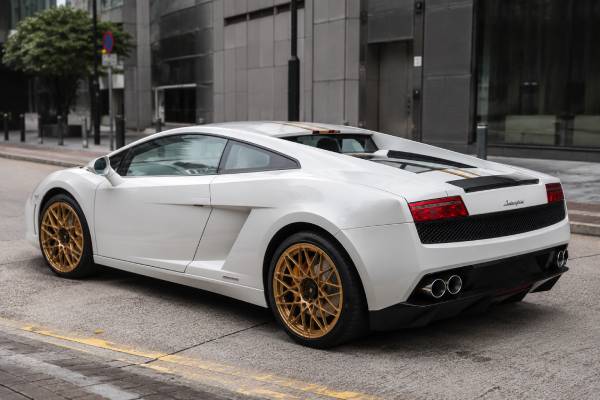
The Lamborghini Gallardo LP 550-2 Hong Kong 20th Anniversary Edition is one of the rarest late-run Gallardo specials: a rear-wheel-drive 2012 LP 550-2 coupé built to mark 20 years of Lamborghini sales in Hong Kong. It uses the CEH-family 5.2-liter naturally aspirated V10, rated at 550 hp, and keeps the standard LP 550-2’s driver-focused rear-drive layout rather than the all-wheel-drive system found in most Gallardos. Its importance is not based on mechanical reinvention. It matters because only eight examples were announced, each tied to a specific market, dealer history, and visual specification. For buyers and collectors, the car sits in a narrow space between usable modern Lamborghini and region-specific collectible. Condition, originality, documentation, and correct HK20 details matter more than ordinary Gallardo mileage alone.
Table of Contents
- Why the HK20 Gallardo Still Matters
- CEH V10, Chassis, and Key Specs
- Eight-Car Build and Identification Details
- Hong Kong Edition Design and Engineering
- Rear-Drive V10 Road Character
- Maintenance Risks and Specialist Care
- Market Value and Buying Checks
Why the HK20 Gallardo Still Matters
The HK20 Gallardo matters because it combines the most engaging late Gallardo drivetrain with a tiny market-specific production run. It is not the fastest Gallardo, but it is one of the most specific: a 2012 Hong Kong celebratory edition based on the LP 550-2 coupé.
The Gallardo itself was a turning point for Lamborghini. Earlier “small” Lamborghinis such as the Urraco, Silhouette, and Jalpa had charm, but they never gave the company the broad, repeatable success it needed. The Gallardo did. It arrived in 2003 as the V10 companion to the Murciélago, bringing Audi-era build discipline, a more compact footprint, and far higher production volume than Lamborghini had managed before.
The L140 project had been in the works in different forms for years before the production Gallardo arrived. The final car kept the classic Lamborghini layout of a longitudinal mid-mounted engine, but it was smaller and more usable than the V12 flagship. It could be driven hard, serviced through a growing dealer network, and used more often than many earlier Italian exotics.
By 2012, the Gallardo was near the end of its life. That timing is important. Late Gallardos had the improved 5.2-liter V10, updated electronics, revised styling, and a more mature parts and service base. The LP 550-2 version also returned something many enthusiasts wanted from Lamborghini: rear-wheel drive.
Most Gallardos were all-wheel drive. That suited Lamborghini’s modern image of secure, explosive traction, but it added weight and filtered some of the car’s balance. The LP 550-2 changed the feel by sending power only to the rear wheels. Lamborghini did more than remove front-drive hardware; the car received specific tuning for springs, dampers, stabilizers, tires, aerodynamics, power delivery, and stability control logic.
The Hong Kong 20th Anniversary Edition builds on that LP 550-2 foundation. It celebrated 20 years of Lamborghini in Hong Kong through the local dealer relationship, commonly associated with Kingsway Cars. The edition was announced as an eight-car run, making it much rarer than the already special Valentino Balboni, Tricolore, Bicolore, and other regional Gallardo editions.
Its collector appeal rests on four things:
- Tiny production: eight examples is low even by Lamborghini special-edition standards.
- Rear-drive layout: the LP 550-2 is more involving than the all-wheel-drive LP 560-4 for many drivers.
- Late-production maturity: the 2012 car benefits from years of Gallardo development.
- Market identity: the HK20 graphics, white-and-gold color scheme, and Hong Kong connection make authenticity easy to value but hard to recreate convincingly.
For enthusiasts, the appeal is more emotional. This is a compact, naturally aspirated V10 Lamborghini with a high-revving engine, hydraulic-feeling controls by modern standards, and a body shape that has aged into a clean, sharp, pre-hybrid supercar silhouette. For collectors, the challenge is proving that the car is a real HK20 and that its special details have not been repainted, removed, or recreated without factory support.
CEH V10, Chassis, and Key Specs
The HK20 uses the regular LP 550-2 mechanical package: a 5.2-liter naturally aspirated V10, rear-wheel drive, and a 6-speed single-clutch E-gear automated manual. The special edition’s value comes from specification and rarity, not a unique engine tune.
The “LP 550-2” name explains the basics. “LP” stands for Longitudinale Posteriore, meaning the engine is mounted longitudinally behind the cabin. “550” refers to the horsepower rating, and “2” means two driven wheels. The CEH engine code is commonly associated with the 5.2-liter LP 550-2 application, but buyers should verify the exact engine code and build data by VIN because Lamborghini documentation, registration systems, and parts catalogs can vary by market.
| Item | Lamborghini Gallardo LP 550-2 HK20 |
|---|---|
| Model year | 2012 |
| Platform | L140 Gallardo |
| Body style | 2-door coupé |
| Engine | 5.2-liter naturally aspirated V10 |
| Engine code reference | CEH-family 5.2 V10, subject to VIN confirmation |
| Displacement | 5,204 cc |
| Valvetrain | DOHC, 4 valves per cylinder |
| Fuel system | Direct injection |
| Induction | Naturally aspirated |
| Output | 550 hp at 8,000 rpm |
| Torque | 540 Nm / 398 lb-ft at 6,500 rpm |
| Drivetrain | Rear-wheel drive |
| Transmission | 6-speed E-gear automated manual on the HK20 edition |
| Limited-slip differential | Rear mechanical limited-slip differential |
| 0–100 km/h | About 3.9 seconds |
| Top speed | About 320 km/h / 199 mph |
The 5.2-liter V10 is the later Gallardo engine, replacing the earlier 5.0-liter unit used in the first-generation cars. It has a sharper, more mechanical character than many newer turbocharged engines because it builds power through revs rather than boost. Peak torque arrives high in the range, so the car rewards drivers who use the upper half of the tachometer.
The chassis is a lightweight aluminum structure with double-wishbone suspension at each corner. The rear-drive LP 550-2 is lighter and simpler than the all-wheel-drive LP 560-4, but it is not just a de-contented Gallardo. The chassis setup was retuned for the different power flow and rear-biased behavior.
| Area | Specification |
|---|---|
| Construction | Aluminum spaceframe with aluminum and composite exterior panels |
| Suspension | Independent double wishbones front and rear |
| Steering | Power-assisted rack-and-pinion |
| Wheelbase | 2,560 mm / 100.8 in |
| Length | 4,345 mm / 171.1 in |
| Width | 1,900 mm / 74.8 in |
| Height | 1,165 mm / 45.9 in |
| Front tires | 235/35 ZR19 |
| Rear tires | 295/30 ZR19 |
| Dry weight commonly quoted | About 1,380 kg / 3,042 lb |
| Curb weight commonly quoted | About 1,455 kg / 3,208 lb, depending on market and equipment |
The weight figures need context. Lamborghini and enthusiast sources often quote dry weight, while registration, valuation, and comparison sites may quote curb weight. A buyer should not reject a car because a listing uses a different weight basis, but should be careful when comparing figures across markets.
Eight-Car Build and Identification Details
The HK20 edition is best understood as an eight-car, Hong Kong-market visual and commemorative specification built on the LP 550-2 coupé. It was not a separate mechanical model like a Superleggera or Super Trofeo Stradale.
That distinction matters when buying one. Many Gallardos have aftermarket stripes, wheels, carbon trim, or special-edition-style graphics. A real HK20 should have a paper trail connecting it to the Hong Kong 20th Anniversary Edition, not just a similar color scheme.
The announced HK20 package centered on a specific exterior and interior identity:
- Bianco Monocerus white paint
- Matte gold stripes running over the front bonnet, roof, and engine cover area
- Matte black exterior accents
- HK20 graphics on selected exterior areas
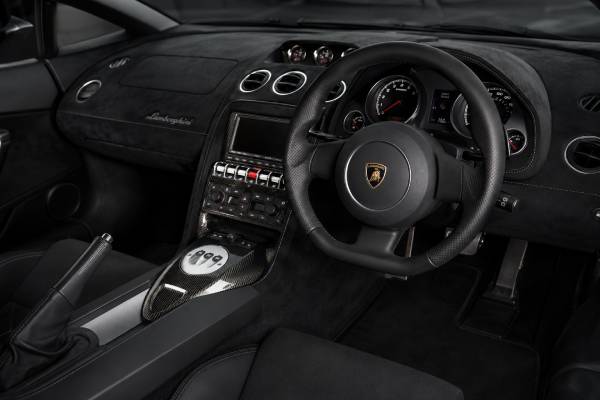
- Special interior HK20 details, including headrest and cabin markings
- Gold Cordelia-style wheels, commonly described as part of the visual package
- E-gear transmission, matching the announced special-edition configuration
The production number is the headline: only eight units were announced. That makes normal used-car comparison difficult. A typical LP 550-2 can be valued against dozens of listings and sales. An HK20 cannot. It needs a provenance-led valuation.
What buyers should verify
A proper inspection should confirm the car’s identity before focusing on mileage or paint condition. The most important documents are the original sales paperwork, dealer correspondence, service book, factory option information, and any Lamborghini or dealer certification that identifies the car as an HK20 edition.
The buyer should check:
- VIN and market delivery history
- Original selling dealer and first registration location
- Factory or dealer paperwork naming the HK20 edition
- Correct paint and stripe specification
- Interior HK20 details and headrest embroidery
- Wheel design and finish
- Evidence of repainting, stripe replacement, or repaired accident damage
- Service invoices from Lamborghini or known specialists
- Recall completion and software update records
- Clutch wear printout for the E-gear system
On an ordinary Gallardo, a high-quality repaint may be acceptable if disclosed. On an eight-unit special edition, repaint history is more serious because the visual identity is part of the collectible value. Repainting the front bumper after stone chips is not automatically a deal-breaker, but poorly matched whites, incorrect stripe dimensions, missing HK20 markings, or unverified replacement decals should affect value.
How it compares with other Gallardo specials
The HK20 sits among a group of late Gallardo regional and commemorative editions. The Valentino Balboni is more widely known because it launched the rear-drive formula and was tied to Lamborghini’s legendary test driver. The Tricolore and Bicolore have broader recognition. Regional editions for markets such as Singapore, Malaysia, India, Indonesia, and Hong Kong often have much lower production numbers but can be harder to price because fewer change hands publicly.
For collectors, that creates a tradeoff. A Balboni may be easier to explain to a global buyer. The HK20 is rarer, but its value depends on finding someone who appreciates Hong Kong market history and accepts the documentation. The best HK20 examples will be those that are visibly correct, mechanically sorted, and supported by paperwork strong enough that the car does not need a long explanation.
Hong Kong Edition Design and Engineering
The HK20’s design is bold but not random: white paint, gold striping, black contrast trim, and edition graphics give it a ceremonial look while keeping the standard Gallardo proportions. The engineering beneath is the LP 550-2’s rear-drive setup, which is the real reason it feels different from most Gallardos.
The Gallardo shape is compact, wedge-like, and less theatrical than the V12 Lamborghinis of the same era. It does not have scissor doors; those remained tied to the flagship models. Instead, its drama comes from its low roof, short overhangs, large side intakes, and wide rear stance.
The HK20 color treatment changes how the shape reads. Bianco Monocerus makes the surfaces look crisp, while matte gold striping adds a ceremonial special-edition identity. Matte black rear and side details reduce visual mass and help separate it from a standard white LP 550-2. The effect is more regional celebration than track special, which is correct for the model’s purpose.
The rear-wheel-drive engineering is more important than the graphics. In the LP 550-2, Lamborghini removed the front-drive hardware and retuned the car around rear traction. That changed weight, steering feel, throttle behavior, and corner exit balance. It also required a unique stability-control calibration, because a rear-drive Gallardo behaves differently at the limit than an all-wheel-drive Gallardo.
Important engineering traits include:
- Longitudinal mid-engine layout: the V10 sits behind the cabin, giving the car a compact supercar balance.
- Dry-sump lubrication: the oil system supports high cornering loads and helps package the engine lower.
- Rear mechanical differential: the limited-slip rear differential helps put power down without the front axle assisting.
- Specific RWD chassis tuning: springs, dampers, anti-roll bars, tires, and aero balance were adjusted for the LP 550-2.
- E-gear paddle-shift transaxle: the gearbox is a single-clutch automated manual, not a modern dual-clutch transmission.
The cockpit reflects its era. It feels more analog than a modern Lamborghini, but it is not a stripped racing car. The driving position is low, the central tunnel is broad, and the forward view over the short nose is better than many expect. Rear visibility is limited, and the thick rear haunches make parking and tight maneuvers something to approach carefully.
The sound is one of the car’s strongest features. The 5.2-liter V10 has a hard-edged tone that rises with revs rather than flattening into turbocharged torque. Intake noise, valve-train texture, and exhaust pitch all build toward the top of the rpm range. That matters because the HK20’s collector status should not overshadow the fact that it is still a high-revving, naturally aspirated Lamborghini built before electrification, particulate filters, and turbocharging changed the modern supercar soundscape.
Rear-Drive V10 Road Character
The LP 550-2 drives like a lighter, more talkative Gallardo because the front wheels steer without also pulling the car out of corners. It demands more respect than an all-wheel-drive LP 560-4, but that is also why many enthusiasts prefer it.
Throttle response is immediate by modern standards. There is no turbo lag, no hybrid torque fill, and no soft low-rpm calibration trying to disguise the engine’s nature. Below the midrange, the V10 is tractable but not effortless. Above that, it becomes urgent and loud, with peak power arriving near the top of the rev range. The car wants space, warm tires, and a driver who understands weight transfer.
The rear-drive layout changes cornering behavior. An all-wheel-drive Gallardo can feel secure and point-and-shoot, especially on imperfect roads. The LP 550-2 is more transparent. The steering feels cleaner because the front axle is not dealing with drive torque. On corner exit, the rear tires matter more. Smooth throttle application is rewarded, while clumsy inputs can make the car feel lively.
The E-gear transmission defines much of the day-to-day experience. It is not a modern dual-clutch gearbox, and buyers should not expect it to shift like one. It is an automated single-clutch manual with hydraulic actuation. Driven smoothly, it has character and drama. Driven in stop-start traffic, it can feel jerky and can wear the clutch quickly if the driver creeps forward like in a torque-converter automatic.
Best practice with E-gear is simple: drive it like a manual that shifts itself. Avoid long creeping maneuvers, avoid holding the car on throttle on slopes, and lift slightly during normal upshifts if smoothness matters. In Corsa or harder driving modes, shifts are faster and more forceful, but wear and heat also rise with aggressive use.
Ride quality is firm but usable for a supercar of its period. The Gallardo is compact enough for city streets, but the low nose, wide body, and limited rear visibility make urban use more stressful than the size suggests. A front lift system, if fitted, is valuable and should work correctly. Tires strongly affect ride, steering, and noise; old high-performance tires can make a good car feel nervous and harsh.
Braking performance is strong, but inspection matters. Some cars use steel brakes, while others may have carbon-ceramic equipment depending on configuration and option history. Steel brakes are cheaper to maintain and often better for regular road use. Carbon ceramics are desirable to some buyers but expensive if worn, damaged, or heat-cycled from track use.
On a mountain road, the HK20’s appeal is clear. It has enough power to feel serious but not so much that every throttle input becomes unusable. Compared with newer Lamborghinis, it feels narrower, more mechanical, and more dependent on driver rhythm. Compared with older exotics, it starts, cools, idles, and behaves with far more modern consistency when maintained correctly.
Maintenance Risks and Specialist Care
The HK20 should be maintained like a rare collector Lamborghini and inspected like a hard-used exotic. The Gallardo has a better reliability reputation than many earlier Italian supercars, but deferred maintenance on a V10 E-gear car can still become expensive quickly.
The engine itself is generally robust when serviced correctly. The biggest risk is not a fragile basic design; it is neglect, heat, age, low use, poor diagnostics, and incorrect repairs. A low-mile car that has sat for long periods can be more troublesome than a higher-mile car that was serviced annually by a competent specialist.
Key maintenance areas include:
- Engine oil and filters: annual servicing is wise even at low mileage.
- Cooling system: check radiators, fans, coolant pipes, expansion tank condition, and evidence of dried coolant.
- Ignition and fuel injection: misfires, warning lights, and stored codes need proper diagnosis, not quick clearing.
- E-gear clutch wear: request a clutch wear reading and confirm calibration history.
- E-gear hydraulics: pump operation, accumulator condition, actuator behavior, and fluid quality are critical.
- Suspension: inspect dampers, bushings, ball joints, alignment, and uneven tire wear.
- Brakes: measure disc condition, pad life, caliper condition, and brake fluid age.
- Tires: replace old tires regardless of tread depth.
- Battery and electrical systems: weak batteries cause many misleading fault warnings in modern exotics.
- Front lift system: if equipped, confirm it raises, lowers, and holds pressure correctly.
The E-gear system deserves special attention. Many buyers focus on whether the transmission is “good” or “bad,” but the better question is whether it has been maintained, calibrated, and driven correctly. A healthy E-gear car should select gears cleanly, engage predictably, and not give repeated warning messages. Jerky low-speed behavior can be normal to a point, but harsh engagement, refusal to select reverse, slow pump priming, or frequent neutral selection needs expert diagnosis.
Clutch life varies widely. City driving, parking maneuvers, steep driveways, and creeping traffic can shorten it. A clutch wear printout is useful, but it is not the only evidence. The inspection should also consider bite-point behavior, gear engagement quality, service history, and whether the system has been calibrated after clutch or actuator work.
The 2011–2014 Gallardo range was subject to an ECU-related safety recall involving engine software and warning lamp behavior. Any 2012 example should be checked by VIN for open campaigns and documented completion. A recall record matters for safety, emissions readiness, and buyer confidence.
Age-related issues to expect
Even a carefully stored HK20 is now old enough to have age-related concerns. Rubber hardens, adhesives weaken, headliner and interior trim can loosen, clear film can yellow, and fluids absorb moisture. The engine bay generates heat, so wiring insulation, sensors, and plastic fittings should be inspected carefully.
Common inspection concerns include:
- Sticky or worn interior switchgear
- Sagging headliner or trim separation
- Stone chips and low-nose scrape damage
- Cracked paint protection film
- Wheel refinishing that changes the original gold tone
- Exhaust modifications that affect emissions compliance
- ECU tunes or aftermarket parts with no paperwork
- Accident repair hidden under paint correction
- Missing tools, books, keys, battery charger, or special-edition documents
Originality matters more on this car than on a normal Gallardo. Exhaust upgrades, wheel changes, carbon add-ons, and aftermarket stereo work may be reversible, but they should be valued accordingly. A buyer should prefer a car with all original parts retained, even if tasteful upgrades are currently fitted.
Market Value and Buying Checks
The HK20’s value cannot be measured by ordinary Gallardo averages alone. A normal 2012 LP 550-2 gives a baseline, but an authentic eight-unit HK20 with correct details, strong documents, and low mileage should command a rarity premium.
The broader LP 550-2 market has recently shown many standard cars trading or asking in the low-to-mid six figures in U.S. dollar terms, with mileage, transmission, condition, originality, and market location creating wide variation. Manual LP 550-2 examples can command a much higher premium because gated manual late Gallardos are highly sought after. The HK20 is different because it is known as an E-gear special edition, so the premium is tied more to rarity and provenance than manual transmission desirability.
A realistic buyer should think in layers:
| Factor | Effect on value |
|---|---|
| Documented HK20 identity | Essential; without it, the car should be valued much closer to a modified LP 550-2 |
| Original paint and graphics | Major positive if condition is strong and measurements support originality |
| Correct wheels and trim | Important because visual specification defines the edition |
| Low mileage with annual service | Positive, but only if the car has not suffered from storage neglect |
| Complete Lamborghini service history | Strong positive, especially for E-gear and recall documentation |
| Clutch wear and E-gear condition | Can materially affect price because repairs are costly |
| Accident or repaint history | Significant negative unless minor, documented, and corrected to a high standard |
| Missing edition-specific details | Major negative because replacement or verification may be difficult |
A collector-grade example should have a clean ownership chain, strong paint-meter results, full service records, no unresolved warning lights, correct special-edition trim, and a recent inspection from a Lamborghini dealer or respected independent specialist. A driver-grade example can still be attractive, but it should be priced for any missing originality, clutch wear, cosmetic needs, and upcoming major service.
Pre-purchase inspection checklist
Use a Lamborghini specialist, not a general exotic-car showroom inspection. The inspection should include diagnostics, road test, underbody lift inspection, paint measurement, and documentation review.
Before purchase, confirm:
- The VIN and paperwork support the HK20 identity.
- The car’s paint, stripes, HK20 graphics, wheels, and interior details match the edition.
- No accident repair is hidden under paint correction or film.
- The E-gear clutch wear reading is acceptable and supported by driving behavior.
- The gearbox shifts cleanly in normal, sport, and reverse operation.
- The ECU recall and any relevant campaigns have been completed.
- The front lift, air conditioning, infotainment, lighting, windows, mirrors, and instruments all work.
- Tire dates are recent and match in brand, model, size, and condition.
- Brake discs and pads have measurable life remaining.
- The seller has books, keys, tools, charger, invoices, import records, and any original HK20 material.
The examples to seek are original, documented, lightly used but not dormant, and serviced by known Lamborghini technicians. The examples to avoid are those with vague “special edition” claims, missing HK20 details, unexplained repainting, aftermarket stripes, unresolved E-gear faults, or a service history that begins long after the car was built.
Long-term collectability looks favorable if the car is genuine. Naturally aspirated V10 Lamborghinis are becoming more historically distinct as the brand moves into hybridized and electrified performance. The Gallardo is also old enough to be appreciated as a modern classic but still new enough to be usable. The HK20 adds scarcity and regional story to that base.
The risk is liquidity. Rare regional specials can take longer to sell because the buyer pool is smaller. The owner may need patience to achieve a premium over a standard LP 550-2. For the right collector, though, that is part of the attraction: the HK20 is not just another white Gallardo. It is a documented eight-car celebration of Lamborghini’s Hong Kong history, built on one of the most enjoyable versions of the late Gallardo platform.
References
- Lamborghini Gallardo 550-2 – Technical Specifications, Pictures 2010 (Manufacturer Specifications)
- Celebrating The Lamborghini Gallardo 2023 (Manufacturer History)
- Part 573 Safety Recall Report 18V-833 2018 (Recall Database)
- Lamborghini Gallardo LP550-2 Market – CLASSIC.COM 2026 (Market Data)
- Official: Lamborghini Gallardo LP550-2 HK 20th Anniversary Edition 2012 (Special Edition Report)
Disclaimer
This article is for informational purposes only and is not a substitute for professional diagnosis, repair advice, valuation, or inspection. Specifications, torque values, service intervals, software campaigns, part numbers, and procedures can vary by VIN, market, equipment, and service history. Always verify details against official Lamborghini service documentation and have any purchase inspected by a qualified Lamborghini specialist.
If you found this guide useful, please share it on Facebook, X/Twitter, or your preferred enthusiast community to support our work.